
 My Inquiry
 My Account


Renesas R5F523E6ADFL#10
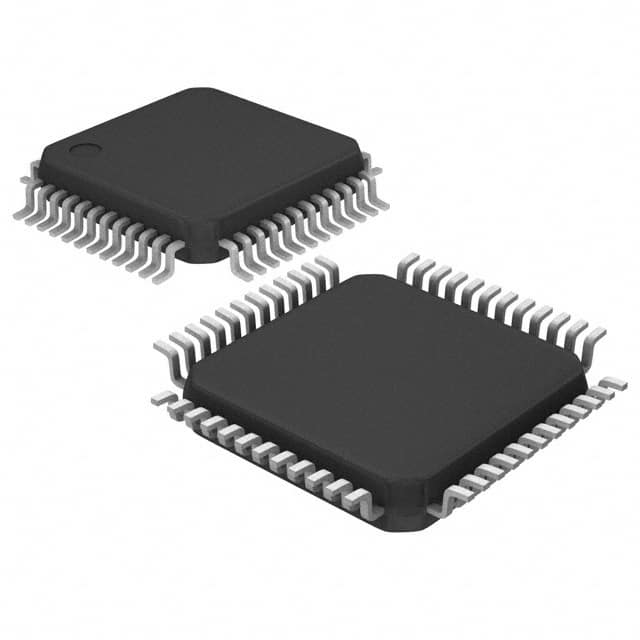
- Part No.:
- R5F523E6ADFL#10
- Manufacturer:
- Renesas
- Category:
- Microcontrollers
- Package:
- 48-LQFP
- Datasheet:
-
 R5F523E6ADFL#10.pdf
- Description:
- IC MCU 32BIT 256KB FLASH 48LFQFP
- Quantity:
- Payment:

- Shipping:

Inventory:1,994
Please send an inquiry. Send us your inquiry, and we will respond immediately.
Product details
Overview
R5F523E6ADFL#10 from Renesas is a 32-bit RXv2 microcontroller optimized for high-precision industrial sensor measurement, integrating two 24-bit delta-sigma ADCs (DSAD), rail-to-rail programmable gain instrumentation amplifiers (PGA), a 2.5-V low-drift voltage reference, and four excitation current sources - all operating at up to 32 MHz with 256 KB flash, 32 KB SRAM, and 8 KB data flash.
For engineers reviewing the R5F523E6ADFL#10 datasheet, R5F523E6ADFL#10 pinout, R5F523E6ADFL#10 application, or R5F523E6ADFL#10 equivalent, this MCU delivers deterministic real-time control, IEC60730-compliant self-test support, simultaneous 50/60 Hz rejection, and CAN 2.0B communication - critical for thermocouple, RTD, and load cell interface designs requiring <10 nV/°C offset drift and ±0.2% current matching.
Technical Context
The R5F523E6ADFL#10 implements a Harvard-architecture RXv2 CPU core with IEEE 754-compliant FPU, memory protection unit (MPU), and event link controller (ELC) enabling interrupt-free peripheral coordination during CPU sleep. Its analog subsystem features dual 24-bit DSAD units with fourth-order sinc filters, selectable normal/low-power modes, and inter-unit synchronized conversion start.
It supports 32-MHz operation across 1.8–5.5 V supply, includes a dedicated low-speed oscillator for IWDT and LPT, and integrates hardware-assisted diagnostics for A/D converter, clock accuracy (CAC), RAM, and analog input disconnect detection - all aligned with IEC60730 Class B requirements.
Key Specifications
| Parameter | Value and Actual Design Meaning |
|---|---|
| CPU Core | RXv2 32-bit CISC with 5-stage pipeline, 64 DMIPS @ 32 MHz, IEEE 754 FPU, and MPU |
| Flash / RAM / Data Flash | 256 KB on-chip flash (no wait states @ 32 MHz), 32 KB SRAM, 8 KB data flash (1M erase/program cycles) |
| Delta-Sigma ADC | Two independent 24-bit DSAD units; 23-bit effective resolution @ 7.6 SPS, simultaneous 50/60 Hz rejection |
| PGA & Reference | Rail-to-rail PGA (gain ×1 to ×128), 30 nVRMS noise @ gain=128, 2.5-V reference (10 ppm/°C drift, ±10 mA) |
| Excitation & Diagnostics | Four 50–1000 µA excitation sources (±0.2% matching), built-in A/D disconnect detection, offset/gain calibration |
| Communication | CAN 2.0B (1 Mbps), 3× SCIg + 1× SCIh, 1× RIIC (400 kbps), 1× RSPI (16 Mbps), ELC-triggered transfers |
| Package & Temp | 48-pin LFQFP (PLQP0048KB-B, 7×7 mm, 0.5 mm pitch), –40°C to +85°C (D-grade) |
Pinout & Package
48-pin LFQFP (PLQP0048KB-B) package with 0.5 mm pitch, 7×7 mm body size, and exposed thermal pad. Pin functions include dual DSAD analog inputs (AIN0–AIN11), reference pins (REF0P/REF0N, REF1P/REF1N), excitation outputs (IEXC0–IEXC3), low-side switch (LSW), and CAN transceiver interface (CRXD0/CTXD0).
| Pin/Terminal | Circuit Role | Design Meaning |
|---|---|---|
| AIN0–AIN11 | Differential/single-ended analog inputs | Support up to 6 differential or 11 single-ended channels per DSAD unit; configurable via AMUX |
| REF0P/REF0N, REF1P/REF1N | Delta-sigma ADC reference inputs | Accept external reference or internal VREF; enable ratiometric measurement with excitation sources |
| IEXC0–IEXC3 | Programmable excitation current outputs | Four 50–1000 µA sources with ±0.2% matching and 5 ppm/°C drift matching for precision bridge sensing |
| LSW | Low-side switch output | 10 Ω max on-resistance, 30 mA max current; enables controlled grounding of sensor return paths |
| CRXD0 / CTXD0 | CAN physical layer interface | Dedicated differential CAN bus pins compliant with ISO 11898-1; require external transceiver for bus connection |
| REFOUT | Internal voltage reference output | 2.5 V ±1%, 10 ppm/°C drift; requires 0.47 µF capacitor to AVSS0 for stability |
Key Features
| Feature | Design Value |
|---|---|
| IEC60730 Class B Support | Hardware-accelerated self-test for RAM, clock accuracy (CAC), IWDT, A/D converter, and analog input disconnect |
| Simultaneous 50/60 Hz Rejection | Configurable output data rates (10/54 SPS) enable real-time power-line interference cancellation without software filtering |
| Background Operation (BGO) | Data flash programming/erasing proceeds concurrently with CPU execution - no interruption to real-time tasks |
| Event Link Controller (ELC) | 56 event signals trigger peripheral actions (e.g., DSAD conversion start, PWM update) without CPU intervention or IRQ latency |
| Low-Power Timer (LPT) | 16-bit timer running from IWDT oscillator during software standby mode - enables wake-up at precise intervals without full system restart |
Applications
| Industrial Temperature Monitoring | High-Accuracy Load Cell Interface |
|---|---|
|
Use Scenario: Continuous monitoring of thermocouple and RTD sensors in PLC analog input modules under varying ambient conditions. IC Role / Device Role / Timing Role: Primary signal conditioner and digital controller; performs cold-junction compensation, linearization, and CAN-based reporting at 100-ms intervals. Use Value: Achieves ±0.1°C accuracy over –40°C to +85°C using integrated temperature sensor, 2.5-V reference, and PGA gain drift compensation (1 ppm/°C). |
Use Scenario: Weighing terminal in commercial scales requiring sub-0.01% linearity and EMC robustness in noisy factory environments. IC Role / Device Role / Timing Role: Front-end AFE and real-time processor; digitizes mV-level bridge outputs, applies offset/gain calibration, and transmits results via CAN. Use Value: 23-bit effective resolution at 7.6 SPS and simultaneous 50/60 Hz rejection eliminate need for external notch filters or DSP post-processing. |
| Smart Pressure Transmitter | Multi-Sensor Industrial Gateway |
|
Use Scenario: Field-mounted HART-enabled pressure transmitter with integrated diagnostics and loop-powered operation. IC Role / Device Role / Timing Role: Sensor interface MCU; drives 4–20 mA loop via DAC (external), manages HART FSK modulation, and executes sensor health checks. Use Value: Four matched excitation sources (±0.2%) and low-side switch (LSW) enable true 4-wire bridge biasing and fault-safe open-circuit detection. |
Use Scenario: Edge node aggregating data from multiple analog sensors (thermocouples, strain gauges, humidity) before forwarding via CAN or RS485. IC Role / Device Role / Timing Role: Multi-channel sensor hub; time-synchronizes conversions across both DSAD units and routes data via SCI/RSPI to host processor. Use Value: ELC-linked inter-unit synchronized start ensures phase-aligned sampling across 12+ analog channels - critical for FFT-based vibration analysis. |
Equivalent & Alternatives
The following parts are listed as comparable options for similar high-precision analog microcontroller applications.
| Alternative Part | Technical Difference | Application Difference | Selection Advice |
|---|---|---|---|
| R5F523E6AGFL#30 | Same core, flash, and analog peripherals; rated for –40°C to +105°C (G-grade) vs. D-grade (–40°C to +85°C) | Required for extended-temperature industrial enclosures or motor-drive proximity mounting | Select when ambient operating temperature exceeds +85°C; otherwise identical firmware and PCB layout |
| R5F523E5ADFL#30 | 128 KB flash / 16 KB RAM (vs. 256 KB / 32 KB); same DSAD, PGA, reference, and excitation specs | Suitable for cost-sensitive designs with smaller firmware footprint and reduced data logging depth | Choose when application code size remains under 120 KB and SRAM usage stays below 14 KB |
Compared with R5F523E6AGFL#30 and R5F523E5ADFL#30, the R5F523E6ADFL#10 provides optimal balance of memory headroom, industrial temperature range, and analog precision - making it the default choice for new designs targeting IEC60730 compliance and long-term supply stability.
Availability
R5F523E6ADFL#10 is available at Aetrix Electronics and suitable for industrial sensor modules, PLC analog input cards, and smart field instruments requiring stable component supply, long lifecycle support, and guaranteed traceability.
Supply support for R5F523E6ADFL#10 includes scheduled delivery planning, volume procurement assistance, BOM continuity management, traceable sourcing, and lifecycle availability coordination for OEM customers, industrial embedded developers, connected-device designers, and electronics production programs.
Manufacturer
Renesas Electronics is a global semiconductor leader specializing in microcontrollers, analog, and power solutions for industrial, automotive, and IoT applications.
The RX23E-A Group - including R5F523E6ADFL#10 - was designed specifically for high-accuracy sensor signal conditioning in industrial automation, featuring integrated delta-sigma ADCs, PGAs, excitation sources, and IEC60730 diagnostic hardware.
FAQ
What is the maximum effective resolution and data rate of the delta-sigma ADCs in R5F523E6ADFL#10?
The R5F523E6ADFL#10 integrates two 24-bit delta-sigma ADCs (DSAD0 and DSAD1) achieving up to 23-bit effective resolution at 7.6 SPS in normal mode. At higher output data rates (e.g., 15625 SPS), resolution decreases due to oversampling trade-offs, but simultaneous 50/60 Hz rejection remains active at 10 and 54 SPS. The R5F523E6ADFL#10 supports programmable modulator clock (500 kHz typ.) and oversampling ratios from 32 to 65536.
Does R5F523E6ADFL#10 support IEC60730 Class B compliance out of the box?
Yes, the R5F523E6ADFL#10 includes hardware-assisted self-test features required for IEC60730 Class B certification: RAM test via DOC, clock frequency accuracy measurement (CAC), independent watchdog timer (IWDT) with dedicated oscillator, A/D converter diagnostic assist, and analog input disconnect detection. These features reduce software validation effort and are documented in Renesas Application Note R01AN3917.
What are the key differences between R5F523E6ADFL#10 and R5F523E6AGFL#30?
The R5F523E6ADFL#10 and R5F523E6AGFL#30 share identical core architecture, memory sizes (256 KB flash, 32 KB RAM), analog peripherals (dual DSAD, PGA, VREF, IEXC), and pinout. The sole difference is operating temperature grade: R5F523E6ADFL#10 is rated for –40°C to +85°C (D-grade), while R5F523E6AGFL#30 extends to –40°C to +105°C (G-grade). Firmware and PCB layout are fully interchangeable.
Can R5F523E6ADFL#10 drive a 4-wire load cell directly without external components?
Yes - the R5F523E6ADFL#10 integrates four precision excitation current sources (IEXC0–IEXC3) with ±0.2% matching and 5 ppm/°C drift matching, plus a low-side switch (LSW) with 10 Ω max on-resistance. This allows direct 4-wire bridge biasing and return-path switching. External components needed are only decoupling capacitors and optional ESD protection; no op-amps or discrete current sources are required.
How does the Event Link Controller (ELC) improve real-time performance in R5F523E6ADFL#10?
The ELC in R5F523E6ADFL#10 enables 56 types of hardware events (e.g., timer overflow, GPIO edge, SCI receive complete) to directly trigger peripheral actions - such as starting a DSAD conversion or updating a PWM duty cycle - without CPU involvement or interrupt latency. This reduces jitter, lowers ISR overhead, and allows the CPU to remain in deep sleep during background sensor acquisition cycles.
R5F523E6ADFL#10 Specifications
- Product attributes
- Attribute value
- Manufacturer:
- Renesas
- Package/Case:
- 48-LQFP
- Series:
- RX23E-A
- Packaging:
- Tray
- Product Status:
- Active
- Programmable:
- Not Verified
- Core Processor:
- RXv2
- Core Size:
- 32-Bit Single-Core
- Speed:
- 32MHz
- Connectivity:
- CANbus, I2C, SCI, SPI
- Peripherals:
- DMA, LVD, POR, PWM, WDT
- Number of I/O:
- 16
- Program Memory Size:
- 256KB (256K x 8)
- Program Memory Type:
- FLASH
- EEPROM Size:
- 8K x 8
- RAM Size:
- 32K x 8
- Voltage - Supply (Vcc/Vdd):
- 1.8V ~ 5.5V
- Data Converters:
- A/D 6x12/24b SAR, Sigma-Delta
- Oscillator Type:
- Internal
- Operating Temperature:
- -40°C ~ 85°C (TA)
- Grade:
- -
- Qualification:
- -
- Mounting Type:
- Surface Mount
- Supplier Device Package:
R5F523E6ADFL#10 FAQ
1.How can I place an order for R5F523E6ADFL#10 through Aetrix?
Please submit a Request for Quotation (RFQ) for R5F523E6ADFL#10 on Aetrix. Our sales agent will provide a competitive quotation and guide you through the order confirmation once you accept the terms.
2.Are the price and stock information for R5F523E6ADFL#10 reliable?
The price and inventory of R5F523E6ADFL#10 are updated periodically and may fluctuate due to market conditions. Stock and pricing data are typically refreshed every 24 hours. Quotation validity for R5F523E6ADFL#10 is usually 5 days.
3.What payment methods are accepted for R5F523E6ADFL#10?
We accept Wire Transfer, PayPal, Credit Card, Western Union, MoneyGram, and Escrow for R5F523E6ADFL#10 transactions.
Note: Certain payment methods may incur a processing fee.
4.How is shipping managed for R5F523E6ADFL#10?
R5F523E6ADFL#10 orders can be shipped via leading logistics carriers, including DHL, UPS, FedEx, TNT, or Registered Mail.
Once your R5F523E6ADFL#10 order is processed, you will receive an email with the shipment details and tracking number.
Note: Tracking information may take up to 24 hours to appear. Express delivery typically takes 3–5 business days.
5.How can I obtain technical support or documentation for R5F523E6ADFL#10?
For technical support, including R5F523E6ADFL#10 datasheets, pinout diagrams, or application guidance, please contact our engineering support team. They can provide detailed documentation and assistance for your R5F523E6ADFL#10 requirements.
6.How does Aetrix verify that R5F523E6ADFL#10 is sourced from the original manufacturer or authorized distributors?
All R5F523E6ADFL#10 products on Aetrix are procured from qualified distributors and authorized channels. Our dedicated quality assurance team conducts strict verification, including traceability checks and, if necessary, third-party testing. This ensures that R5F523E6ADFL#10 meets industry standards.
7.What is the process for return or replacement of R5F523E6ADFL#10?
All R5F523E6ADFL#10 units undergo pre-shipment inspection (PSI). If there is an issue with R5F523E6ADFL#10, returns or replacements are accepted under the following conditions:
1.Quantity discrepancies, incorrect items, or visible external defects (such as breakage or corrosion), acknowledged by Aetrix.
2.The issue is reported within 90 days of delivery.
3.The R5F523E6ADFL#10 part is unused and in its original packaging.
Return procedure for R5F523E6ADFL#10:
1.Submit a request within 90 days.
2.Obtain a Return Material Authorization (RMA) from Aetrix.
R5F523E6ADFL#10 Tags

-
ATTINY4-TSHR
Microchip Technology
-
ATTINY10-TSHR
Microchip Technology
-
ATTINY10-TS8R
Microchip Technology

-
ATTINY202-SSNR
Microchip Technology
-
ATTINY202-SSFR
Microchip Technology
-
ATTINY402-SSNR
Microchip Technology

-
PIC16F15213T-I/MF
Microchip Technology
-
PIC16F15213-E/MF
Microchip Technology

-
PIC10F200T-I/OT
Microchip Technology
-
ATTINY412-SSNR
Microchip Technology
-
PIC10F202T-I/OT
Microchip Technology

-
ATTINY404-SSNR
Microchip Technology
Tech Hub

TTL and CMOS logic families differ in thresholds, loading, output drive, power and timing. This engineering guide compares 74HC and 74HCT, calculates noise margins and checks 3.3 V/5 V compatibility.

A practical engineering guide to 3.3V and 5V logic compatibility, input thresholds, resistor dividers, translator ICs, MOSFET level shifting, I2C pull-ups, timing limits and power-sequencing risks.

The 74HC595 uses push-pull logic outputs, while the TPIC6B595 uses 50 V open-drain DMOS sinks for higher-power loads. This guide compares timing, current limits, 3.3 V interfacing, load wiring, thermal…

The 74HC595 converts serial data into eight stable parallel outputs. This guide covers pin functions, shift and storage timing, OE and MR behavior, drive-current limits, cascading, voltage compatibilit…

A technical comparison of level-sensitive latches and edge-triggered flip-flops, covering timing windows, setup and hold limits, master–slave operation, time borrowing, race-through, HDL inference and…

A D latch stores one bit while Enable controls when data can pass. This reference covers gate-level operation, truth tables, transparency, setup and hold timing, LE versus OE, common ICs and practical …

An SR latch stores one bit through cross-coupled feedback. This engineering reference covers NOR and NAND implementations, truth tables, forbidden-state recovery, gated operation, switch debouncing, fa…

Latch circuits retain one bit through feedback. This technical reference covers SR and D latches, truth tables, transparency, timing limits, latch-versus-flip-flop behavior, applications and common log…

An engineering guide to LED driver operation, constant-current and constant-voltage outputs, linear and switching topologies, dimming, IC selection, calculations, replacement compatibility, and fault c…

Operational amplifier guide covering op amp basics, feedback, ideal vs real op amps, common configurations, buffer circuits, offset, bias current, gain-bandwidth, slew rate, rail-to-rail limits and sel…


