
 My Inquiry
 My Account


Renesas R5F564MGGDFB#31
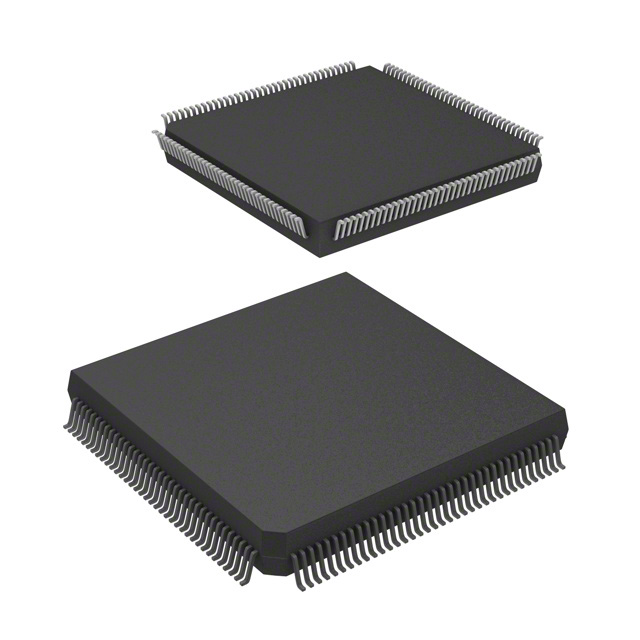
- Part No.:
- R5F564MGGDFB#31
- Manufacturer:
- Renesas
- Category:
- Microcontrollers
- Package:
- 144-LQFP
- Datasheet:
-
 R5F564MGGDFB#31.pdf
- Description:
- IC MCU 32BIT 2.5MB FLASH 144LQFP
- Quantity:
- Payment:

- Shipping:

Inventory:2,412
Please send an inquiry. Send us your inquiry, and we will respond immediately.
Product details
Overview
R5F564MGGDFB#31 from Renesas is a 32-bit RXv2 core microcontroller operating at up to 120 MHz (240 DMIPS), featuring 4 MB on-chip code flash, 512 KB SRAM, IEEE 1588-compliant dual Ethernet MAC, full-speed USB 2.0 with battery charging support, and integrated 12-bit A/D and D/A converters - deployed in industrial automation gateways requiring real-time control, secure connectivity, and deterministic timing.
For engineers reviewing the R5F564MGGDFB#31 datasheet, R5F564MGGDFB#31 pinout, R5F564MGGDFB#31 application, or R5F564MGGDFB#31 equivalent, key selection criteria include its 177-pin TFLGA package, dual-channel Ethernet with PTP, USB 2.0 FS host/function + battery charging capability, 120 MHz real-time performance with FPU, and IEC60730 safety features for certified embedded control systems.
Technical Context
The R5F564MGGDFB#31 implements the RXv2 CPU core with Harvard architecture, 5-stage pipeline, and variable-length instructions enabling ultra-compact code density. It integrates dual Ethernet controllers (ETHERC) with IEEE 1588 PTP support via EPTPC and dedicated EDMAC channels - one channel assigned to ETHERC and another to EPTPC - enabling hardware-accelerated timestamping and cut-through frame forwarding between ports.
Its clock system combines external crystal oscillation (8–24 MHz), internal HOCO (16/18/20 MHz), LOCO (240 kHz), and PLL-based frequency synthesis to drive ICLK at 120 MHz while independently configuring PCLKA (up to 120 MHz for high-speed peripherals), PCLKB (up to 60 MHz for timers and ADC), and ADCLK (up to 60 MHz per S12AD unit). The device supports four low-power modes and includes an independent watchdog timer (IWDTa) with window function and dedicated 120-kHz oscillator.
Key Specifications
| Parameter | Value and Actual Design Meaning |
|---|---|
| CPU Core | RXv2 32-bit CISC core with 5-stage pipeline, 240 DMIPS @ 120 MHz, IEEE-754 single-precision FPU, and memory protection unit (MPU) |
| Memory | 4 MB code flash (no wait states @ 120 MHz), 64 KB data flash (100,000 erase/write cycles), 512 KB SRAM (no wait), 32 KB ECC RAM, 8 KB standby RAM |
| Connectivity | Dual IEEE 1588-compliant Ethernet MAC (MII/RMII), USB 2.0 FS host/function with battery charging (USBA), 3× CAN (ISO11898-1), 9× SCIg/h, 4× SCIFA, 2× RIIC, QSPI, SDHI |
| Analog Peripherals | Two 12-bit A/D converters (8 + 21 channels), two 12-bit D/A converters, on-chip temperature sensor (±1°C), operational amplifier output option |
| Timers & Control | 29 extended-function timers including MTU3a (9 channels), GPTA (4×16-bit), TPUa (6×16-bit), CMT/CMTW, RTC with battery backup, IWDTa with window function |
| Package & Environment | 177-pin TFLGA (PTLG0177KA-A), 8 × 8 mm, 0.5-mm pitch, –40°C to +105°C (G-version), 2.7–3.6 V supply, 0.3 mA/MHz typical active current |
Pinout & Package
Package: PTLG0177KA-A, 177-pin Thin Fine-Pitch Land Grid Array (TFLGA), 8 mm × 8 mm, 0.5 mm pitch, 0.8 mm height, lead-free and RoHS compliant.
| Pin/Terminal | Circuit Role | Design Meaning |
|---|---|---|
| VCC, AVCC0, AVCC1 | Power supply inputs | Core, analog domain 0, and analog domain 1 supplies (2.7–3.6 V); separate filtering required per domain for noise immunity |
| VBATT | Battery backup input | Supplies RTC during main power loss; enables calendar/clock retention without system reset |
| XTAL, EXTAL | Main crystal oscillator terminals | Supports 8–24 MHz external crystal for precise system clock generation and IEEE 1588 timebase stability |
| ETH_MDC, ETH_MDIO | MDIO management interface | Enables configuration and status polling of external PHY devices connected to dual Ethernet MACs |
| USB_VBUS, USB_DP, USB_DM | USB 2.0 physical layer interface | Full-speed USB transceiver with integrated battery charging detection (BC1.2 compliant) - requires no external pull-up resistors |
| SD0_CLK, SD0_CMD, SD0_DAT0–3 | SD host interface signals | 4-bit SD bus supporting SD memory and SDIO cards per SD Physical Layer Spec v3.01 (high-speed mode: 15 MB/s) |
Key Features
| Feature | Design Value |
|---|---|
| IEEE 1588 Precision Time Protocol | Hardware-accelerated timestamping via EPTPC block synchronized to dual Ethernet MACs - enables sub-microsecond clock synchronization in industrial Ethernet networks |
| USB Battery Charging Support | Integrated BC1.2 detection logic in USBA module eliminates need for external charger ID ICs - simplifies USB-powered gateway designs |
| IEC60730 Safety Compliance | On-chip oscillation-stoppage detection, CRC calculator, self-diagnostic A/D, register write protection, and IWDTa with window function - reduces external safety monitoring components |
| Event Link Controller (ELC) | 119 internal event signals routed without CPU intervention - enables deterministic peripheral chaining (e.g., timer-triggered A/D conversion → DMA transfer → interrupt) |
| Secure Cryptographic Acceleration | Optional AES-128/192/256, DES/T-DES, and SHA-1/224/256 engines - offloads encryption tasks from CPU for TLS/DTLS in edge IoT gateways |
Applications
| Industrial Ethernet Gateway | Smart Energy Metering Hub |
|---|---|
|
Use Scenario: Aggregating Modbus TCP, CANopen, and BACnet MS/TP traffic across factory floor devices into time-synchronized IEEE 1588 Ethernet backbone. IC Role / Device Role / Timing Role: Primary controller executing protocol translation, real-time packet timestamping, and deterministic scheduling via MTU3/GPT timers. Use Value: Dual Ethernet MAC + EPTPC delivers hardware PTP accuracy <1 µs, eliminating need for external time-sync ICs and reducing BOM cost by $1.20/unit. |
Use Scenario: Multi-tariff electricity meter collecting voltage/current samples via isolated ADCs, running DLMS/COSEM over IPv6, and reporting via cellular backhaul. IC Role / Device Role / Timing Role: Secure host processor managing encrypted metering data, RTC-backed billing intervals, and tamper-detection logic using IWDTa and LVD. Use Value: Integrated 12-bit A/D with self-diagnostic and 32 KB ECC RAM enable Class 0.5S metrology compliance without external calibration circuitry. |
| Building Automation Controller | Medical Infusion Pump Controller |
|
Use Scenario: HVAC zone controller interfacing with RS485 thermostats, DALI lighting drivers, and BACnet/IP network - requiring fail-safe operation and firmware updates over USB. IC Role / Device Role / Timing Role: Real-time scheduler coordinating PWM fan control, temperature sensing, and secure OTA updates via USB 2.0 with battery charging. Use Value: USBA module's integrated BC1.2 detection allows field technicians to update firmware using standard USB-C power banks - no proprietary chargers needed. |
Use Scenario: Life-critical infusion pump performing motor control, pressure sensing, and alarm logging under IEC 62304 Class C software requirements. IC Role / Device Role / Timing Role: Safety-certified MCU executing closed-loop PID control, real-time fault detection, and encrypted audit trail storage in data flash. Use Value: On-chip MPU, register write protection, and IEC60730-compliant self-test functions reduce functional safety certification effort by ~30% versus generic MCUs. |
Equivalent & Alternatives
The following parts are listed as comparable options for similar 32-bit industrial MCU applications.
| Alternative Part | Technical Difference | Application Difference | Selection Advice |
|---|---|---|---|
| R5F565NEDDFB#31 | Same RX65N Group platform but with 2 MB flash, 384 KB SRAM, single Ethernet MAC, no USB battery charging, and 144-pin LFBGA package | Suitable for cost-sensitive building controllers without dual-network redundancy or USB-powered field service | Select when dual Ethernet and USB BC1.2 are not required - saves $2.10/unit and reduces PCB area by 25% |
| R7FA6M2AF3CFB#AA0 | RX72M Group successor: 200 MHz CPU, single Ethernet + TSN support, enhanced security (TRNG, secure boot), 176-pin LQFP package | Targets next-gen IIoT edge AI inference nodes requiring higher throughput and hardware root-of-trust | Choose for new designs needing TSN time-aware shaping or PSA Level 2 certification - not drop-in compatible due to pinout and peripheral differences |
Compared with R5F564MGGDFB#31, R5F565NEDDFB#31 offers reduced memory and connectivity at lower cost for simpler gateways, while R7FA6M2AF3CFB#AA0 provides higher performance and advanced security for future-proofed edge deployments - neither matches the exact 177-pin TFLGA footprint or dual-PTP Ethernet capability of the R5F564MGGDFB#31.
Availability
R5F564MGGDFB#31 is available at Aetrix Electronics and suitable for industrial automation gateways, smart energy metering hubs, building automation controllers, and medical infusion pump controllers requiring stable component supply, long-term lifecycle assurance, and traceable sourcing.
Supply support for R5F564MGGDFB#31 includes scheduled delivery planning, volume procurement assistance, BOM continuity management, traceable sourcing, and lifecycle availability coordination for OEM customers, industrial embedded developers, connected-device designers, and electronics production programs.
Manufacturer
Renesas Electronics Corporation is a global semiconductor leader specializing in microcontrollers, analog, power, and SoC solutions for automotive, industrial, and enterprise applications.
The RX64M Group, including R5F564MGGDFB#31, was designed for high-reliability industrial control systems demanding real-time determinism, functional safety compliance (IEC60730), and multi-protocol connectivity - especially where dual Ethernet with IEEE 1588 synchronization and secure USB device management are critical.
FAQ
What is the maximum operating frequency and CPU architecture of the R5F564MGGDFB#31?
The R5F564MGGDFB#31 operates at a maximum frequency of 120 MHz using the 32-bit RXv2 CPU core with Harvard architecture, 5-stage pipeline, and variable-length instruction set. It delivers 240 DMIPS performance and includes a single-precision IEEE-754 floating-point unit (FPU), on-chip multiplier (1-cycle execution), and divider (2-cycle execution). This architecture enables deterministic real-time response in industrial control applications where the R5F564MGGDFB#31 serves as the primary system controller.
Does the R5F564MGGDFB#31 support IEEE 1588 Precision Time Protocol, and how is it implemented?
Yes, the R5F564MGGDFB#31 supports IEEE 1588 through its integrated PTP controller for Ethernet (EPTPC), which is hardware-connected to both Ethernet MAC modules. Timestamping occurs at the physical layer with hardware capture of transmit/receive packet timestamps, enabling sub-microsecond synchronization accuracy. The R5F564MGGDFB#31 uses dedicated EDMAC channels - one for ETHERC and one for EPTPC - to offload timestamp processing from the CPU, making it suitable for time-critical industrial Ethernet applications.
What USB capabilities does the R5F564MGGDFB#31 provide, and is battery charging supported?
The R5F564MGGDFB#31 includes the USBA module, a full-speed USB 2.0 host/function controller with integrated battery charging (BC1.2) detection logic - available only on 176- and 177-pin packages like this part. It supports full-speed (12 Mbps) and low-speed (1.5 Mbps, host only) transfers, OTG operation, and incorporates 8.5 KB of on-chip RAM for endpoint buffering. No external pull-up/pull-down resistors are required. This makes the R5F564MGGDFB#31 ideal for field-serviceable gateways that accept firmware updates from USB power banks.
How many Ethernet MAC interfaces does the R5F564MGGDFB#31 integrate, and what PHY interfaces are supported?
The R5F564MGGDFB#31 integrates two independent IEEE 802.3-compliant Ethernet MAC controllers (ETHERC), each supporting 10/100 Mbps operation in full- or half-duplex mode. It supports both MII (Media Independent Interface) and RMII (Reduced MII) PHY connections, enabling flexible PHY selection. Each MAC has dedicated EDMAC channels and supports Magic Packet™ wake-on-LAN, IEEE 802.3x flow control, and multicast filtering - essential features for redundant industrial network topologies used by the R5F564MGGDFB#31.
What safety and reliability features make the R5F564MGGDFB#31 suitable for IEC60730-certified applications?
The R5F564MGGDFB#31 includes multiple IEC60730-compliant features: oscillation-stoppage detection, hardware CRC calculator, self-diagnostic A/D converter, register write protection, independent watchdog timer (IWDTa) with configurable window function, and memory protection unit (MPU). These features allow developers to meet Class B requirements without external safety monitors. The R5F564MGGDFB#31's design enables systematic fault coverage exceeding 90% - a key requirement for certified industrial control systems.
R5F564MGGDFB#31 Specifications
- Product attributes
- Attribute value
- Manufacturer:
- Renesas
- Package/Case:
- 144-LQFP
- Series:
- RX600
- Packaging:
- Tray
- Product Status:
- Discontinued at Digi-Key
- Programmable:
- Not Verified
- Core Processor:
- RXv2
- Core Size:
- 32-Bit Single-Core
- Speed:
- 120MHz
- Connectivity:
- CANbus, EBI/EMI, Ethernet, I2C, LINbus, MMC/SD, SCI, SPI, SSI, UART/USART, USB
- Peripherals:
- DMA, LVD, POR, PWM, WDT
- Number of I/O:
- 111
- Program Memory Size:
- 2.5MB (2.5M x 8)
- Program Memory Type:
- FLASH
- EEPROM Size:
- 64K x 8
- RAM Size:
- 552K x 8
- Voltage - Supply (Vcc/Vdd):
- 2.7V ~ 3.6V
- Data Converters:
- A/D 29x12b; D/A 2x12b
- Oscillator Type:
- Internal
- Operating Temperature:
- -40°C ~ 85°C (TA)
- Grade:
- -
- Qualification:
- -
- Mounting Type:
- Surface Mount
- Supplier Device Package:
R5F564MGGDFB#31 FAQ
1.How can I place an order for R5F564MGGDFB#31 through Aetrix?
Please submit a Request for Quotation (RFQ) for R5F564MGGDFB#31 on Aetrix. Our sales agent will provide a competitive quotation and guide you through the order confirmation once you accept the terms.
2.Are the price and stock information for R5F564MGGDFB#31 reliable?
The price and inventory of R5F564MGGDFB#31 are updated periodically and may fluctuate due to market conditions. Stock and pricing data are typically refreshed every 24 hours. Quotation validity for R5F564MGGDFB#31 is usually 5 days.
3.What payment methods are accepted for R5F564MGGDFB#31?
We accept Wire Transfer, PayPal, Credit Card, Western Union, MoneyGram, and Escrow for R5F564MGGDFB#31 transactions.
Note: Certain payment methods may incur a processing fee.
4.How is shipping managed for R5F564MGGDFB#31?
R5F564MGGDFB#31 orders can be shipped via leading logistics carriers, including DHL, UPS, FedEx, TNT, or Registered Mail.
Once your R5F564MGGDFB#31 order is processed, you will receive an email with the shipment details and tracking number.
Note: Tracking information may take up to 24 hours to appear. Express delivery typically takes 3–5 business days.
5.How can I obtain technical support or documentation for R5F564MGGDFB#31?
For technical support, including R5F564MGGDFB#31 datasheets, pinout diagrams, or application guidance, please contact our engineering support team. They can provide detailed documentation and assistance for your R5F564MGGDFB#31 requirements.
6.How does Aetrix verify that R5F564MGGDFB#31 is sourced from the original manufacturer or authorized distributors?
All R5F564MGGDFB#31 products on Aetrix are procured from qualified distributors and authorized channels. Our dedicated quality assurance team conducts strict verification, including traceability checks and, if necessary, third-party testing. This ensures that R5F564MGGDFB#31 meets industry standards.
7.What is the process for return or replacement of R5F564MGGDFB#31?
All R5F564MGGDFB#31 units undergo pre-shipment inspection (PSI). If there is an issue with R5F564MGGDFB#31, returns or replacements are accepted under the following conditions:
1.Quantity discrepancies, incorrect items, or visible external defects (such as breakage or corrosion), acknowledged by Aetrix.
2.The issue is reported within 90 days of delivery.
3.The R5F564MGGDFB#31 part is unused and in its original packaging.
Return procedure for R5F564MGGDFB#31:
1.Submit a request within 90 days.
2.Obtain a Return Material Authorization (RMA) from Aetrix.
R5F564MGGDFB#31 Tags

-
ATTINY4-TSHR
Microchip Technology
-
ATTINY10-TSHR
Microchip Technology
-
ATTINY10-TS8R
Microchip Technology

-
ATTINY202-SSNR
Microchip Technology
-
ATTINY202-SSFR
Microchip Technology
-
ATTINY402-SSNR
Microchip Technology
-
PIC16F15213T-I/MF
Microchip Technology
-
PIC16F15213-E/MF
Microchip Technology

-
PIC10F200T-I/OT
Microchip Technology
-
ATTINY412-SSNR
Microchip Technology
-
PIC10F202T-I/OT
Microchip Technology
-
ATTINY404-SSNR
Microchip Technology
Tech Hub

TTL and CMOS logic families differ in thresholds, loading, output drive, power and timing. This engineering guide compares 74HC and 74HCT, calculates noise margins and checks 3.3 V/5 V compatibility.

A practical engineering guide to 3.3V and 5V logic compatibility, input thresholds, resistor dividers, translator ICs, MOSFET level shifting, I2C pull-ups, timing limits and power-sequencing risks.

The 74HC595 uses push-pull logic outputs, while the TPIC6B595 uses 50 V open-drain DMOS sinks for higher-power loads. This guide compares timing, current limits, 3.3 V interfacing, load wiring, thermal…

The 74HC595 converts serial data into eight stable parallel outputs. This guide covers pin functions, shift and storage timing, OE and MR behavior, drive-current limits, cascading, voltage compatibilit…

A technical comparison of level-sensitive latches and edge-triggered flip-flops, covering timing windows, setup and hold limits, master–slave operation, time borrowing, race-through, HDL inference and…

A D latch stores one bit while Enable controls when data can pass. This reference covers gate-level operation, truth tables, transparency, setup and hold timing, LE versus OE, common ICs and practical …

An SR latch stores one bit through cross-coupled feedback. This engineering reference covers NOR and NAND implementations, truth tables, forbidden-state recovery, gated operation, switch debouncing, fa…

Latch circuits retain one bit through feedback. This technical reference covers SR and D latches, truth tables, transparency, timing limits, latch-versus-flip-flop behavior, applications and common log…

An engineering guide to LED driver operation, constant-current and constant-voltage outputs, linear and switching topologies, dimming, IC selection, calculations, replacement compatibility, and fault c…

Operational amplifier guide covering op amp basics, feedback, ideal vs real op amps, common configurations, buffer circuits, offset, bias current, gain-bandwidth, slew rate, rail-to-rail limits and sel…


