
 My Inquiry
 My Account


Renesas R5F571MFDDLJ#20
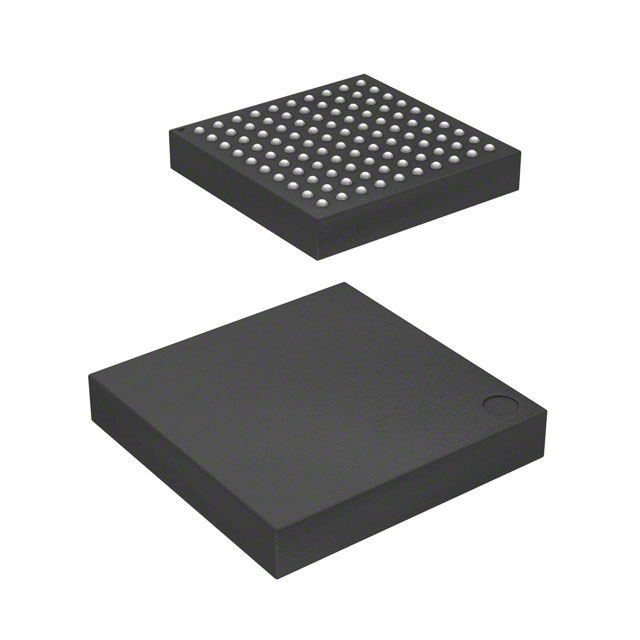
- Part No.:
- R5F571MFDDLJ#20
- Manufacturer:
- Renesas
- Category:
- Microcontrollers
- Package:
- 100-TFLGA
- Datasheet:
-
 R5F571MFDDLJ#20.pdf
- Description:
- IC MCU 32BIT 2MB FLASH 100TFLGA
- Quantity:
- Payment:

- Shipping:

Inventory:416
Please send an inquiry. Send us your inquiry, and we will respond immediately.
Product details
Overview
R5F571MFDDLJ#20 from Renesas is a 32-bit RXv2 core microcontroller operating at up to 240 MHz (480 DMIPS), featuring 4 MB on-chip code flash, 512 KB SRAM, IEEE 1588-compliant dual Ethernet MAC, high-speed USB 2.0 with battery charging, CAN v2.0B (3 channels), and dual 12-bit A/D converters (29 total channels). It targets industrial automation controllers requiring deterministic real-time networking, secure firmware updates, and analog sensor fusion.
For engineers reviewing the R5F571MFDDLJ#20 datasheet, R5F571MFDDLJ#20 pinout, R5F571MFDDLJ#20 application, or R5F571MFDDLJ#20 equivalent, this MCU delivers verified 240-MHz deterministic execution, dual Ethernet with hardware PTP timestamping, on-chip AES/SHA encryption, and full IEC 60730 Class B compliance support - critical for safety-certified motor drives and smart grid edge nodes.
Technical Context
The R5F571MFDDLJ#20 implements the RXv2 CPU core with single-precision IEEE-754 FPU, two MAC units, and memory protection unit (MPU) for secure partitioning. Its clock system supports independent domain clocks: ICLK up to 240 MHz, PCLKA up to 120 MHz (for Ethernet, USB, AES), and PCLKB up to 60 MHz (for timers, ADC, serial interfaces).
It integrates dual Ethernet MACs with dedicated EPTPC (IEEE 1588) and EDMAC controllers, plus USBAa (high-speed USB 2.0 host/function with battery charging) and USBb (full-speed host/function/OTG) - all physically present only in 176-/177-pin packages like this LFBGA variant. The device includes 127 GPIOs with 5-V tolerance on 19 pins, and operates from 2.7–3.6 V across –40°C to +85°C.
Key Specifications
| Parameter | Value and Actual Design Meaning |
|---|---|
| CPU Core | RXv2 32-bit CISC Harvard architecture with 5-stage pipeline, 480 DMIPS @ 240 MHz |
| Flash Memory | 4 MB code flash with background programming, zero wait states ≤120 MHz, one wait state >120 MHz |
| RAM | 512 KB SRAM (256 KB no-wait @ 240 MHz), 32 KB ECC RAM (SEC-DED), 8 KB standby RAM |
| ADC | Dual 12-bit S12ADC: Unit 0 (8 ch), Unit 1 (21 ch); conversion time 0.48 µs/channel @ 12-bit |
| Ethernet | Dual IEEE 802.3 10/100 Mbps MAC with MII/RMII, IEEE 1588 PTP controller (EPTPC), and 3-channel EDMAC |
| USB | USBAa: High-speed USB 2.0 host/function/OTG with battery charging; USBb: Full-speed host/function/OTG |
| CAN | Three ISO 11898-1 compliant CAN modules, each with 32 mailboxes and FIFO buffering |
Pinout & Package
Package: PLQP0176KB-A, 176-pin LFBGA, 24 × 24 mm, 0.5-mm pitch, RoHS compliant.
| Pin/Terminal | Circuit Role | Design Meaning |
|---|---|---|
| VCC / AVCC0 / AVCC1 | Core & analog power supply | Single 2.7–3.6 V supply; AVCC0/AVCC1 decoupled for analog precision |
| RES# | Active-low reset input | Asynchronous hardware reset; triggers nine reset sources including POR and LVD |
| CLKIN / CLKOUT | External crystal oscillator interface | Supports 8–24 MHz crystal; enables PLL lock for 240 MHz system clock |
| ETXD0–7 / ETXCK / ERXD0–7 / ERXCK | Ethernet PHY interface (MII) | Dual 8-bit MII buses for independent 10/100 Mbps Ethernet channels |
| USBDP / USBDM | High-speed USB 2.0 differential pair | Direct connection to USB HS transceiver (USBAa); requires 90-Ω differential impedance |
| TXD0 / RXD0 | SCI0 asynchronous UART | Boot-mode-capable serial interface; supports 16-byte FIFO, baud rate generator, and LIN framing |
Key Features
| Feature | Design Value |
|---|---|
| IEEE 1588 Precision Time Protocol | Hardware timestamping in EPTPC block synchronized to Ethernet frames; sub-100 ns resolution |
| IEC 60730 Class B Support | Integrated oscillation-stop detection, CRC calculator, IWDTa windowed watchdog, and A/D self-diagnostic |
| Secure Firmware Execution | Trusted Memory (TM) blocks 8–9 prevent external readout; AES-128/192/256 + SHA-224/256 acceleration |
| Dual Ethernet with Cut-Through | Direct frame forwarding between ETHERC channels without CPU intervention; reduces latency by ≥3 µs |
| Flexible Power Management | Four low-power modes (sleep, module-stop, software standby, deep software standby); RTC runs from VBATT |
Applications
| Industrial PLC Controller | Smart Grid Edge Node |
|---|---|
|
Use Scenario: Real-time motion control and fieldbus gateway in compact PLCs with dual Ethernet redundancy. IC Role / Device Role / Timing Role: Primary application processor executing IEC 61131-3 logic, managing EtherCAT/PROFINET over dual MACs, and synchronizing servo axes via GPTA PWM. Use Value: 240-MHz deterministic execution ensures <50 µs cycle times; IEEE 1588 PTP enables sub-microsecond clock synchronization across distributed I/O. |
Use Scenario: Distribution automation terminal unit (DTU) aggregating fault current, voltage, and temperature data from line sensors. IC Role / Device Role / Timing Role: Secure data concentrator with encrypted TLS offload (AES/SHA), dual Ethernet for SCADA backhaul and local HMI, and 29-channel ADC for multi-sensor monitoring. Use Value: On-chip encryption accelerates firmware OTA updates; 12-bit ADC with self-diagnostic meets IEC 61850-3 immunity requirements. |
| Medical Infusion Pump | Building HVAC Controller |
|
Use Scenario: Safety-critical drug delivery system requiring functional safety certification and precise flow-rate control. IC Role / Device Role / Timing Role: Safety monitor MCU running IEC 62304-compliant firmware, validating motor driver signals, reading pressure/flow sensors via S12ADC, and logging events to data flash. Use Value: MPU-enforced memory isolation separates safety-critical tasks; 100,000-cycle data flash enables 10+ years of audit logs without wear leveling. |
Use Scenario: BACnet/IP-enabled HVAC controller managing chillers, VAV boxes, and CO₂ sensors across large facilities. IC Role / Device Role / Timing Role: Networked application processor handling BACnet MS/TP over SCIh, Modbus TCP over Ethernet, and real-time PID loop execution on MTU3 timers. Use Value: Dual Ethernet supports redundant building networks; 127 GPIOs drive relays, triacs, and analog outputs while maintaining 5-V tolerance for legacy field wiring. |
Equivalent & Alternatives
The following parts are listed as comparable options for similar 32-bit industrial MCU applications.
| Alternative Part | Technical Difference | Application Difference | Selection Advice |
|---|---|---|---|
| R5F571MLDLJ#20 | Same RX71M family, identical 176-pin LFBGA package, but with 2 MB flash and 256 KB SRAM | Limited firmware footprint and reduced data buffering; suitable for cost-sensitive gateways without complex UI or logging | Select when application code size <1.5 MB and real-time data buffering needs are modest |
| R5F566TEADFP#30 | RX66T group; 160 MHz max, 1 MB flash, single Ethernet MAC, no IEEE 1588, no high-speed USB | Targeted at motor control only; lacks dual Ethernet, PTP, and security accelerators required for networked safety systems | Choose only for standalone servo/inverter control where networking and security are handled externally |
Compared with R5F571MFDDLJ#20, the R5F571MLDLJ#20 reduces memory capacity but maintains identical pinout and peripheral set, enabling layout reuse; the R5F566TEADFP#30 trades networking depth and security for higher PWM resolution and motor-specific timers, making it unsuitable for converged IoT edge nodes.
Availability
R5F571MFDDLJ#20 is available at Aetrix Electronics and suitable for industrial PLC controllers, smart grid edge nodes, medical infusion pumps, and building HVAC controllers requiring stable component supply, long-term lifecycle assurance, and traceable sourcing.
Supply support for R5F571MFDDLJ#20 includes scheduled delivery planning, volume procurement assistance, BOM continuity management, traceable sourcing, and lifecycle availability coordination for OEM customers, industrial embedded developers, connected-device designers, and electronics production programs.
Manufacturer
Renesas Electronics is a Japanese semiconductor manufacturer specializing in microcontrollers, analog, and power devices for industrial, automotive, and infrastructure markets.
The RX71M Group is designed for real-time industrial IoT edge nodes demanding deterministic networking (dual Ethernet + IEEE 1588), functional safety (IEC 60730), and secure firmware execution - targeting PLCs, energy meters, and medical equipment.
FAQ
What is the maximum operating frequency and DMIPS rating of the R5F571MFDDLJ#20?
The R5F571MFDDLJ#20 operates at a maximum frequency of 240 MHz and delivers 480 DMIPS performance. This is achieved using the RXv2 CPU core with a 5-stage pipeline, single-cycle 32-bit multiply, and integrated single-precision IEEE-754 floating-point unit. The R5F571MFDDLJ#20 sustains this performance with zero wait states for code fetch up to 120 MHz and efficient branch prediction.
Does the R5F571MFDDLJ#20 support IEEE 1588 Precision Time Protocol?
Yes, the R5F571MFDDLJ#20 includes a dedicated IEEE 1588-compliant PTP controller (EPTPCa) tightly coupled to both Ethernet MACs. It provides hardware timestamping of ingress/egress frames with sub-100 ns resolution, supports peer-to-peer and end-to-end delay measurement, and enables synchronization accuracy better than 1 µs in controlled industrial networks - a core capability of the R5F571MFDDLJ#20.
How many Ethernet MAC interfaces does the R5F571MFDDLJ#20 integrate?
The R5F571MFDDLJ#20 integrates two fully independent IEEE 802.3 10/100 Mbps Ethernet MAC modules, each with MII/RMII physical layer support and dedicated DMA channels (EDMACa). This dual-MAC capability is physically implemented only in 176- and 177-pin packages like the R5F571MFDDLJ#20's PLQP0176KB-A LFBGA, enabling redundant networking or protocol segregation (e.g., one for control, one for diagnostics).
What security features are included in the R5F571MFDDLJ#20?
The R5F571MFDDLJ#20 includes optional hardware-accelerated cryptography: AES (128/192/256-bit), DES/T-DES, and SHA-1/SHA-2 (224/256)/HMAC. It also supports Trusted Memory (blocks 8–9) to prevent external code readout, MPU-based memory protection, and IEC 60730 Class B features including oscillation-stop detection and A/D self-test. These capabilities are integral to the R5F571MFDDLJ#20's design for secure firmware updates and safety-critical operation.
What is the ADC configuration of the R5F571MFDDLJ#20?
The R5F571MFDDLJ#20 integrates two independent 12-bit S12ADC units: Unit 0 with 8 input channels and Unit 1 with 21 input channels, totaling 29 analog inputs. Conversion time is 0.48 µs per channel at 12-bit resolution, with selectable 8-/10-/12-bit modes, sample-and-hold circuitry, and built-in self-diagnostic functions - all confirmed specifications for the R5F571MFDDLJ#20 in its 176-pin configuration.
R5F571MFDDLJ#20 Specifications
- Product attributes
- Attribute value
- Manufacturer:
- Renesas
- Package/Case:
- 100-TFLGA
- Series:
- RX71M
- Packaging:
- Tray
- Product Status:
- Active
- Programmable:
- Not Verified
- Core Processor:
- RXv2
- Core Size:
- 32-Bit Single-Core
- Speed:
- 240MHz
- Connectivity:
- CANbus, EBI/EMI, Ethernet, I2C, MMC/SD, QSPI, SCI, SPI, SSI, USB OTG
- Peripherals:
- DMA, LVD, POR, PWM, WDT
- Number of I/O:
- 78
- Program Memory Size:
- 2MB (2M x 8)
- Program Memory Type:
- FLASH
- EEPROM Size:
- 64K x 8
- RAM Size:
- 512K x 8
- Voltage - Supply (Vcc/Vdd):
- 2.7V ~ 3.6V
- Data Converters:
- A/D 8x12b, 14x12b; D/A 1x12
- Oscillator Type:
- Internal
- Operating Temperature:
- -40°C ~ 85°C (TA)
- Grade:
- -
- Qualification:
- -
- Mounting Type:
- Surface Mount
- Supplier Device Package:
R5F571MFDDLJ#20 FAQ
1.How can I place an order for R5F571MFDDLJ#20 through Aetrix?
Please submit a Request for Quotation (RFQ) for R5F571MFDDLJ#20 on Aetrix. Our sales agent will provide a competitive quotation and guide you through the order confirmation once you accept the terms.
2.Are the price and stock information for R5F571MFDDLJ#20 reliable?
The price and inventory of R5F571MFDDLJ#20 are updated periodically and may fluctuate due to market conditions. Stock and pricing data are typically refreshed every 24 hours. Quotation validity for R5F571MFDDLJ#20 is usually 5 days.
3.What payment methods are accepted for R5F571MFDDLJ#20?
We accept Wire Transfer, PayPal, Credit Card, Western Union, MoneyGram, and Escrow for R5F571MFDDLJ#20 transactions.
Note: Certain payment methods may incur a processing fee.
4.How is shipping managed for R5F571MFDDLJ#20?
R5F571MFDDLJ#20 orders can be shipped via leading logistics carriers, including DHL, UPS, FedEx, TNT, or Registered Mail.
Once your R5F571MFDDLJ#20 order is processed, you will receive an email with the shipment details and tracking number.
Note: Tracking information may take up to 24 hours to appear. Express delivery typically takes 3–5 business days.
5.How can I obtain technical support or documentation for R5F571MFDDLJ#20?
For technical support, including R5F571MFDDLJ#20 datasheets, pinout diagrams, or application guidance, please contact our engineering support team. They can provide detailed documentation and assistance for your R5F571MFDDLJ#20 requirements.
6.How does Aetrix verify that R5F571MFDDLJ#20 is sourced from the original manufacturer or authorized distributors?
All R5F571MFDDLJ#20 products on Aetrix are procured from qualified distributors and authorized channels. Our dedicated quality assurance team conducts strict verification, including traceability checks and, if necessary, third-party testing. This ensures that R5F571MFDDLJ#20 meets industry standards.
7.What is the process for return or replacement of R5F571MFDDLJ#20?
All R5F571MFDDLJ#20 units undergo pre-shipment inspection (PSI). If there is an issue with R5F571MFDDLJ#20, returns or replacements are accepted under the following conditions:
1.Quantity discrepancies, incorrect items, or visible external defects (such as breakage or corrosion), acknowledged by Aetrix.
2.The issue is reported within 90 days of delivery.
3.The R5F571MFDDLJ#20 part is unused and in its original packaging.
Return procedure for R5F571MFDDLJ#20:
1.Submit a request within 90 days.
2.Obtain a Return Material Authorization (RMA) from Aetrix.
R5F571MFDDLJ#20 Tags

-
ATTINY4-TSHR
Microchip Technology
-
ATTINY10-TSHR
Microchip Technology
-
ATTINY10-TS8R
Microchip Technology

-
ATTINY202-SSNR
Microchip Technology
-
ATTINY202-SSFR
Microchip Technology
-
ATTINY402-SSNR
Microchip Technology

-
PIC16F15213T-I/MF
Microchip Technology
-
PIC16F15213-E/MF
Microchip Technology

-
PIC10F200T-I/OT
Microchip Technology
-
ATTINY412-SSNR
Microchip Technology
-
PIC10F202T-I/OT
Microchip Technology

-
ATTINY404-SSNR
Microchip Technology
Tech Hub

TTL and CMOS logic families differ in thresholds, loading, output drive, power and timing. This engineering guide compares 74HC and 74HCT, calculates noise margins and checks 3.3 V/5 V compatibility.

A practical engineering guide to 3.3V and 5V logic compatibility, input thresholds, resistor dividers, translator ICs, MOSFET level shifting, I2C pull-ups, timing limits and power-sequencing risks.

The 74HC595 uses push-pull logic outputs, while the TPIC6B595 uses 50 V open-drain DMOS sinks for higher-power loads. This guide compares timing, current limits, 3.3 V interfacing, load wiring, thermal…

The 74HC595 converts serial data into eight stable parallel outputs. This guide covers pin functions, shift and storage timing, OE and MR behavior, drive-current limits, cascading, voltage compatibilit…

A technical comparison of level-sensitive latches and edge-triggered flip-flops, covering timing windows, setup and hold limits, master–slave operation, time borrowing, race-through, HDL inference and…

A D latch stores one bit while Enable controls when data can pass. This reference covers gate-level operation, truth tables, transparency, setup and hold timing, LE versus OE, common ICs and practical …

An SR latch stores one bit through cross-coupled feedback. This engineering reference covers NOR and NAND implementations, truth tables, forbidden-state recovery, gated operation, switch debouncing, fa…

Latch circuits retain one bit through feedback. This technical reference covers SR and D latches, truth tables, transparency, timing limits, latch-versus-flip-flop behavior, applications and common log…

An engineering guide to LED driver operation, constant-current and constant-voltage outputs, linear and switching topologies, dimming, IC selection, calculations, replacement compatibility, and fault c…

Operational amplifier guide covering op amp basics, feedback, ideal vs real op amps, common configurations, buffer circuits, offset, bias current, gain-bandwidth, slew rate, rail-to-rail limits and sel…


