
 My Inquiry
 My Account


Renesas R5F571MFHDLK#20
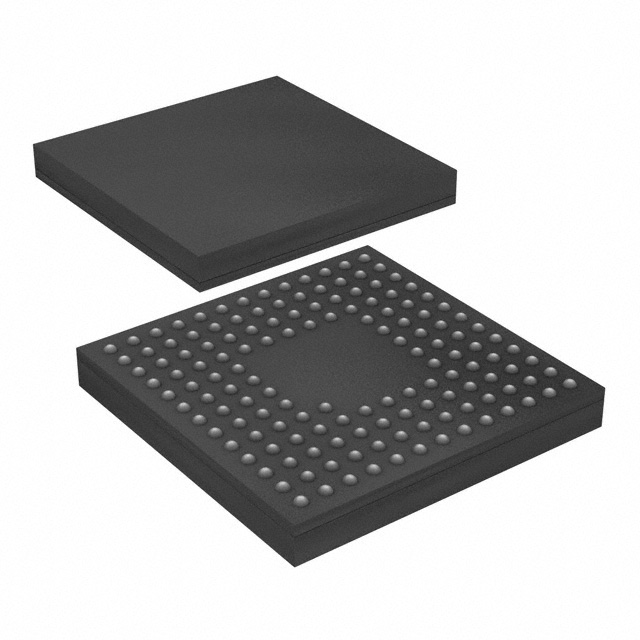
- Part No.:
- R5F571MFHDLK#20
- Manufacturer:
- Renesas
- Category:
- Microcontrollers
- Package:
- 145-TFLGA
- Datasheet:
-
 R5F571MFHDLK#20.pdf
- Description:
- IC MCU 32BIT 2MB FLASH 145TFLGA
- Quantity:
- Payment:

- Shipping:

Inventory:416
Please send an inquiry. Send us your inquiry, and we will respond immediately.
Product details
Overview
R5F571MFHDLK#20 from Renesas is a 32-bit RXv2 microcontroller with 240 MHz CPU, 4 MB on-chip flash, 512 KB SRAM, IEEE 1588-compliant dual Ethernet MAC, high-speed USB 2.0 with battery charging, and CAN v2.0B - deployed in industrial gateways requiring deterministic real-time control, secure firmware updates, and multi-protocol connectivity.
For engineers reviewing the R5F571MFHDLK#20 datasheet, R5F571MFHDLK#20 pinout, R5F571MFHDLK#20 application, or R5F571MFHDLK#20 equivalent, this page delivers verified package mapping (PLQP0176KB-A, 176-pin LFBGA), confirmed peripheral channel counts (2× ETHERC, 3× CAN, 9× SCI), IEEE 1588 PTP timestamping capability, and functional alternatives for industrial automation MCU selection.
Technical Context
The R5F571MFHDLK#20 implements the RXv2 core with Harvard architecture, 5-stage pipeline, and single-cycle 32×32 multiplier - enabling 480 DMIPS at 240 MHz. It integrates dual Ethernet controllers with dedicated EPTPC hardware for IEEE 1588 timestamping and EDMAC with 3 DMA channels per ETHERC.
Its clock system supports independent domain scaling: ICLK up to 240 MHz for CPU, PCLKA up to 120 MHz for Ethernet/USB/AES, and PCLKB up to 60 MHz for timers/ADC - with precise clock gating per peripheral module and low-power modes including deep software standby with 8 KB backup RAM.
Key Specifications
| Parameter | Value and Actual Design Meaning |
|---|---|
| CPU Core | RXv2 32-bit CISC with 5-stage pipeline, 480 DMIPS @ 240 MHz - enables real-time deterministic execution of industrial protocol stacks. |
| Flash Memory | 4 MB code flash with background programming and 0-wait access ≤120 MHz - supports field-upgradable firmware without runtime interruption. |
| SRAM | 512 KB general SRAM + 32 KB ECCRAM + 8 KB standby RAM - provides robust data retention during power transitions and error-corrected critical variables. |
| Ethernet Interface | Dual IEEE 1588-compliant MAC with MII/RMII, 10/100 Mbps full/half-duplex - enables time-synchronized distributed control in factory networks. |
| USB Interface | High-speed USB 2.0 host/function with battery charging (USBAa) + full-speed USB 2.0 (USBb) - supports plug-and-play diagnostics and firmware loading via standard peripherals. |
| Analog Peripherals | Two 12-bit ADC units (8+21 ch), 2× 12-bit DAC, on-chip temperature sensor - enables local analog sensing and closed-loop control without external signal conditioning. |
| Crypto Acceleration | Hardware AES-128/192/256, DES/T-DES, SHA-1/224/256 - accelerates TLS handshake, secure boot, and encrypted OTA updates in resource-constrained edge nodes. |
Pinout & Package
Package: PLQP0176KB-A, 176-pin LFBGA (24 × 24 mm, 0.5 mm pitch), –40°C to +85°C operating range (D-version).
| Pin/Terminal | Circuit Role | Design Meaning |
|---|---|---|
| VCC / AVCC0 / AVCC1 | Core & analog power supply | Single 2.7–3.6 V supply with separate analog domains - simplifies power design while maintaining ADC accuracy. |
| XTAL / EXTAL | Main crystal oscillator input/output | Supports 8–24 MHz external crystal for precise system timing and IEEE 1588 synchronization reference. |
| ETH_MDC / ETH_MDIO | MDIO management interface | Enables dynamic PHY configuration and status polling without CPU intervention via dedicated MDIO bus. |
| ETH_TXD0–3 / ETH_RXD0–3 | Ethernet data lanes (MII) | Full MII interface for dual Ethernet - allows simultaneous connection to two independent industrial networks or redundant topology. |
| USB_VBUS / USB_DP / USB_DM | USB 2.0 HS transceiver pins | Dedicated high-speed USB physical layer with integrated termination - eliminates external PHY and reduces BOM cost. |
| CAN0_TX / CAN0_RX | Channel 0 CAN differential pair | ISO 11898-1 compliant CAN interface with 32 mailboxes - supports CANopen or DeviceNet stack with prioritized message handling. |
Key Features
| Feature | Design Value |
|---|---|
| IEEE 1588 Hardware Timestamping | Sub-microsecond precision timestamp insertion/removal in Ethernet frames via EPTPC - eliminates software latency in time-sensitive motion control applications. |
| Event Link Controller (ELC) | 119 internal event signals routed without CPU involvement - enables autonomous peripheral chaining (e.g., timer-triggered ADC capture → DMA transfer → interrupt). |
| Secure Boot with Trusted Memory | Blocks 8–9 of code flash protected from read-out - prevents reverse engineering of proprietary protocol stacks and ensures firmware integrity at boot. |
| Multi-Domain Clock Control | Independent ICLK, PCLKA, PCLKB, PCLKC, PCLKD, FCLK, BCLK domains - allows optimal power/performance trade-off per subsystem (e.g., 240 MHz CPU + 60 MHz ADC). |
| Deep Software Standby Mode | 8 KB RAM retained with VBATT backup while RTC runs - enables wake-on-LAN or scheduled firmware update execution without full system reboot. |
Applications
| Industrial Ethernet Gateway | Smart Energy Meter Hub |
|---|---|
Use Scenario: Aggregating Modbus TCP, CANopen, and BACnet MS/TP traffic across factory floor devices into unified OPC UA over Ethernet. IC Role / Device Role / Timing Role: Primary application processor executing protocol translation, real-time scheduling, and IEEE 1588 time synchronization for deterministic packet forwarding. Use Value: Dual Ethernet MAC + EPTPC enables sub-1 µs timestamp alignment between upstream/downstream network segments - meeting IEC 61850-9-3 Class D timing requirements. | Use Scenario: Multi-tariff energy metering hub collecting data from CT/PT sensors, PLCs, and wireless HAN modules for AMI reporting. IC Role / Device Role / Timing Role: Secure host controller managing encrypted data aggregation, AES-encrypted DLMS/COSEM payload generation, and RTC-backed billing cycle triggers. Use Value: On-chip AES/SHA accelerators reduce encryption overhead by >90% vs. software-only implementation - enabling 100% DLMS payload signing within 15 ms budget. |
| Programmable Logic Controller (PLC) CPU Module | Building Automation Controller |
Use Scenario: Compact DIN-rail PLC executing ladder logic, motion control, and safety monitoring with integrated I/O expansion via CAN and RS485. IC Role / Device Role / Timing Role: Real-time deterministic controller running IEC 61131-3 runtime with hardware-assisted PWM generation for servo drive interfaces. Use Value: MTU3a + GPTA + POE3a provide synchronized 3-phase complementary PWM with programmable dead time - eliminating external gate drivers for 3 kW motor control. | Use Scenario: HVAC controller coordinating chillers, VAV boxes, and fire alarm integration via BACnet/IP, KNX, and DALI interfaces. IC Role / Device Role / Timing Role: Multi-protocol bridge with concurrent Ethernet, USB diagnostics, and CAN-based fieldbus communication. Use Value: 9× SCIg/h interfaces support simultaneous BACnet MS/TP, DALI UART, and Modbus RTU - reducing external UART expanders and PCB layer count. |
Equivalent & Alternatives
The following parts are listed as comparable options for similar 32-bit industrial MCU applications.
| Alternative Part | Technical Difference | Application Difference | Selection Advice |
|---|---|---|---|
| R5F571MLHDFP#30 | Same RX71M family, 144-pin LQFP, 2.5 MB flash, no USBAa (HS USB), single ETHERC | Suitable for space-constrained PLC I/O modules where dual Ethernet and HS USB are unnecessary | Select when footprint and cost priority outweigh dual-network redundancy and high-speed firmware loading. |
| R5F566TEHDFP#30 | RX66T family, 160 MHz, 2 MB flash, no IEEE 1588, no hardware crypto, 3× CAN, 1× ETHERC | Targeted at motor control with enhanced FPU and MTU3 PWM features, but lacks time-sync networking | Prefer for servo drive applications requiring advanced PWM timing but not industrial time-sensitive networking. |
Compared with R5F571MFHDLK#20, R5F571MLHDFP#30 reduces pin count and Ethernet capability for lower-cost edge nodes, while R5F566TEHDFP#30 trades IEEE 1588 and crypto acceleration for higher PWM resolution and motor-specific peripherals - making R5F571MFHDLK#20 uniquely suited for time-coordinated, secure, multi-protocol industrial gateways.
Availability
R5F571MFHDLK#20 is available at Aetrix Electronics and suitable for industrial gateways, smart energy hubs, PLC CPU modules, and building automation controllers requiring stable component supply, long-term lifecycle assurance, and traceable sourcing.
Supply support for R5F571MFHDLK#20 includes scheduled delivery planning, volume procurement assistance, BOM continuity management, traceable sourcing, and lifecycle availability coordination for OEM customers, industrial embedded developers, connected-device designers, and electronics production programs.
Manufacturer
Renesas Electronics Corporation is a global semiconductor leader specializing in microcontrollers, analog, power, and SoC solutions for industrial, automotive, and IoT markets.
The RX71M Group targets high-performance industrial automation applications demanding real-time determinism, multi-protocol connectivity, and functional safety compliance - with R5F571MFHDLK#20 serving as its flagship 176-pin variant for gateway-class designs.
FAQ
What is the maximum operating frequency and DMIPS rating of the R5F571MFHDLK#20?
The R5F571MFHDLK#20 operates at a maximum frequency of 240 MHz and delivers 480 DMIPS performance. This is achieved through its RXv2 CPU core with 5-stage pipeline, single-cycle 32×32 multiplier, and Harvard architecture - enabling deterministic execution of industrial protocol stacks and real-time control algorithms without jitter.
Does the R5F571MFHDLK#20 support IEEE 1588 Precision Time Protocol?
Yes, the R5F571MFHDLK#20 includes a dedicated PTP controller (EPTPCa) connected to both Ethernet MACs, providing hardware timestamping compliant with IEEE 1588-2008. It supports sub-microsecond timestamp insertion and extraction in Ethernet frames - essential for time-synchronized motion control and distributed I/O systems.
What are the memory resources available on the R5F571MFHDLK#20?
The R5F571MFHDLK#20 integrates 4 MB of on-chip code flash memory with background programming, 512 KB of general SRAM, 32 KB of ECC-protected RAM, and 8 KB of battery-backed standby RAM. These resources support complex firmware images, real-time data buffering, fault-tolerant variable storage, and seamless wake-from-standby operation.
Which communication interfaces does the R5F571MFHDLK#20 support for industrial protocols?
The R5F571MFHDLK#20 supports dual IEEE 1588 Ethernet MACs, three CAN 2.0B channels, nine SCI interfaces (with LIN/UART/SPI/I²C modes), four SCIFA with FIFO, two RIIC buses (1 Mbps), quad SPI, SD host interface, and high-speed USB 2.0 with battery charging - enabling native implementation of Modbus TCP, CANopen, BACnet/IP, and DLMS/COSEM without external protocol bridges.
Is hardware cryptographic acceleration available on the R5F571MFHDLK#20?
Yes, the R5F571MFHDLK#20 includes optional on-chip crypto engines supporting AES-128/192/256, DES/T-DES, and SHA-1/224/256 - accelerating TLS handshakes, secure boot verification, and encrypted firmware updates. The trusted memory (TM) function further protects blocks 8–9 of code flash from unauthorized read-out.
R5F571MFHDLK#20 Specifications
- Product attributes
- Attribute value
- Manufacturer:
- Renesas
- Package/Case:
- 145-TFLGA
- Series:
- RX71M
- Packaging:
- Tray
- Product Status:
- Active
- Programmable:
- Not Verified
- Core Processor:
- RXv2
- Core Size:
- 32-Bit Single-Core
- Speed:
- 240MHz
- Connectivity:
- CANbus, EBI/EMI, Ethernet, I2C, MMC/SD, QSPI, SCI, SPI, SSI, USB OTG
- Peripherals:
- DMA, LVD, POR, PWM, WDT
- Number of I/O:
- 111
- Program Memory Size:
- 2MB (2M x 8)
- Program Memory Type:
- FLASH
- EEPROM Size:
- 64K x 8
- RAM Size:
- 512K x 8
- Voltage - Supply (Vcc/Vdd):
- 2.7V ~ 3.6V
- Data Converters:
- A/D 8x12b, 21x12b; D/A 2x12
- Oscillator Type:
- Internal
- Operating Temperature:
- -40°C ~ 85°C (TA)
- Grade:
- -
- Qualification:
- -
- Mounting Type:
- Surface Mount
- Supplier Device Package:
R5F571MFHDLK#20 FAQ
1.How can I place an order for R5F571MFHDLK#20 through Aetrix?
Please submit a Request for Quotation (RFQ) for R5F571MFHDLK#20 on Aetrix. Our sales agent will provide a competitive quotation and guide you through the order confirmation once you accept the terms.
2.Are the price and stock information for R5F571MFHDLK#20 reliable?
The price and inventory of R5F571MFHDLK#20 are updated periodically and may fluctuate due to market conditions. Stock and pricing data are typically refreshed every 24 hours. Quotation validity for R5F571MFHDLK#20 is usually 5 days.
3.What payment methods are accepted for R5F571MFHDLK#20?
We accept Wire Transfer, PayPal, Credit Card, Western Union, MoneyGram, and Escrow for R5F571MFHDLK#20 transactions.
Note: Certain payment methods may incur a processing fee.
4.How is shipping managed for R5F571MFHDLK#20?
R5F571MFHDLK#20 orders can be shipped via leading logistics carriers, including DHL, UPS, FedEx, TNT, or Registered Mail.
Once your R5F571MFHDLK#20 order is processed, you will receive an email with the shipment details and tracking number.
Note: Tracking information may take up to 24 hours to appear. Express delivery typically takes 3–5 business days.
5.How can I obtain technical support or documentation for R5F571MFHDLK#20?
For technical support, including R5F571MFHDLK#20 datasheets, pinout diagrams, or application guidance, please contact our engineering support team. They can provide detailed documentation and assistance for your R5F571MFHDLK#20 requirements.
6.How does Aetrix verify that R5F571MFHDLK#20 is sourced from the original manufacturer or authorized distributors?
All R5F571MFHDLK#20 products on Aetrix are procured from qualified distributors and authorized channels. Our dedicated quality assurance team conducts strict verification, including traceability checks and, if necessary, third-party testing. This ensures that R5F571MFHDLK#20 meets industry standards.
7.What is the process for return or replacement of R5F571MFHDLK#20?
All R5F571MFHDLK#20 units undergo pre-shipment inspection (PSI). If there is an issue with R5F571MFHDLK#20, returns or replacements are accepted under the following conditions:
1.Quantity discrepancies, incorrect items, or visible external defects (such as breakage or corrosion), acknowledged by Aetrix.
2.The issue is reported within 90 days of delivery.
3.The R5F571MFHDLK#20 part is unused and in its original packaging.
Return procedure for R5F571MFHDLK#20:
1.Submit a request within 90 days.
2.Obtain a Return Material Authorization (RMA) from Aetrix.
R5F571MFHDLK#20 Tags

-
ATTINY4-TSHR
Microchip Technology
-
ATTINY10-TSHR
Microchip Technology
-
ATTINY10-TS8R
Microchip Technology

-
ATTINY202-SSNR
Microchip Technology
-
ATTINY202-SSFR
Microchip Technology
-
ATTINY402-SSNR
Microchip Technology
-
PIC16F15213T-I/MF
Microchip Technology
-
PIC16F15213-E/MF
Microchip Technology

-
PIC10F200T-I/OT
Microchip Technology
-
ATTINY412-SSNR
Microchip Technology
-
PIC10F202T-I/OT
Microchip Technology
-
ATTINY404-SSNR
Microchip Technology
Tech Hub

A practical engineering and sourcing framework covering lifecycle verification, lifetime-buy calculations, replacement qualification, supplier checks and counterfeit-risk controls.

TTL and CMOS logic families differ in thresholds, loading, output drive, power and timing. This engineering guide compares 74HC and 74HCT, calculates noise margins and checks 3.3 V/5 V compatibility.

A practical engineering guide to 3.3V and 5V logic compatibility, input thresholds, resistor dividers, translator ICs, MOSFET level shifting, I2C pull-ups, timing limits and power-sequencing risks.

The 74HC595 uses push-pull logic outputs, while the TPIC6B595 uses 50 V open-drain DMOS sinks for higher-power loads. This guide compares timing, current limits, 3.3 V interfacing, load wiring, thermal…

The 74HC595 converts serial data into eight stable parallel outputs. This guide covers pin functions, shift and storage timing, OE and MR behavior, drive-current limits, cascading, voltage compatibilit…

A technical comparison of level-sensitive latches and edge-triggered flip-flops, covering timing windows, setup and hold limits, master–slave operation, time borrowing, race-through, HDL inference and…

A D latch stores one bit while Enable controls when data can pass. This reference covers gate-level operation, truth tables, transparency, setup and hold timing, LE versus OE, common ICs and practical …

An SR latch stores one bit through cross-coupled feedback. This engineering reference covers NOR and NAND implementations, truth tables, forbidden-state recovery, gated operation, switch debouncing, fa…

Latch circuits retain one bit through feedback. This technical reference covers SR and D latches, truth tables, transparency, timing limits, latch-versus-flip-flop behavior, applications and common log…

An engineering guide to LED driver operation, constant-current and constant-voltage outputs, linear and switching topologies, dimming, IC selection, calculations, replacement compatibility, and fault c…


