
 My Inquiry
 My Account


Renesas R5F572MDDDFC#30
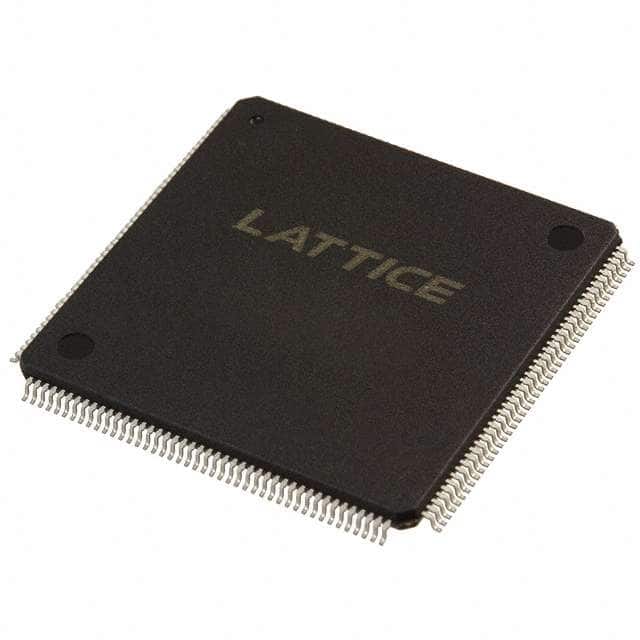
- Part No.:
- R5F572MDDDFC#30
- Manufacturer:
- Renesas
- Category:
- Microcontrollers
- Package:
- 176-LQFP
- Datasheet:
-
 R5F572MDDDFC#30.pdf
- Description:
- IC MCU 32BIT 2MB FLASH 176LFQFP
- Quantity:
- Payment:

- Shipping:

Inventory:240
Please send an inquiry. Send us your inquiry, and we will respond immediately.
Product details
Overview
R5F572MDDDFC#30 from Renesas is a 32-bit RXv3 microcontroller operating at up to 240 MHz, featuring dual-bank 4-MB code flash, 1-MB SRAM (including 32-KB ECC RAM), EtherCAT slave controller with two ports, IEEE 1588-compliant Ethernet MAC, and integrated double-precision FPU - deployed in industrial motion control systems requiring deterministic real-time I/O, safety-certified firmware execution, and synchronized multi-axis servo coordination.
For engineers reviewing the R5F572MDDDFC#30 datasheet, R5F572MDDDFC#30 pinout, R5F572MDDDFC#30 application, or R5F572MDDDFC#30 equivalent, key selection criteria include EtherCAT slave timing compliance, 240-MHz deterministic interrupt latency, dual-bank flash for safe firmware updates, 182 GPIO with 5-V tolerance, and TSIP-based AES-256 encryption for secure boot and firmware authentication.
Technical Context
The R5F572MDDDFC#30 implements the RXv3 CPU core with hardware-accelerated double-precision IEEE-754 floating-point arithmetic, collective register bank save for fast context switching, and MPU-enforced memory protection - enabling IEC 60730 Class B compliance via built-in oscillation-stop detection, CRC-A, IWDTa, and A/D self-diagnostic functions. Its clock system integrates PLLs, HOCO/LOCO oscillators, and independent 120-kHz IWDT clock for fail-safe timing.
Real-time determinism is enforced through EtherCAT slave controller (ESC) with Beckhoff IP core, IEEE 1588 PTP module (EPTPCb), and event-link controller (ELC) that synchronizes timer triggers, A/D conversion starts, and PWM dead-time compensation without CPU intervention - critical for sub-100-μs cycle times in distributed drive systems.
Key Specifications
| Parameter | Value and Actual Design Meaning |
|---|---|
| CPU Core | RXv3 32-bit, 240 MHz max - delivers 1396 CoreMark; supports double-precision FPU, MPU, and register bank save for <1-μs context switch in safety-critical tasks. |
| Memory | 4-MB dual-bank code flash (no-wait ≤120 MHz), 1-MB SRAM (512 KB no-wait), 32-KB ECC RAM (SEC-DED), 8-KB standby RAM - enables concurrent firmware update and execution with fault-resilient data storage. |
| EtherCAT & Ethernet | EtherCAT slave controller (2-port), IEEE 1588 PTP module, 2-channel Ethernet MAC (10/100 Mbps), PMGI PHY interface - meets IEC 61800-3 synchronization requirements for distributed drives. |
| Analog Peripherals | Two 12-bit S12AD units (8 + 21 channels), 2-channel 12-bit D/A, on-chip temperature sensor, Delta-Sigma Modulator Interface (6 channels) - supports high-resolution current/voltage sensing and motor phase feedback. |
| Timers & PWM | GPTW (4×32-bit), MTU3a (9-channel), TPUa (6-channel), CMTW (2×32-bit) - provides 29 extended-function timers with complementary PWM, dead-time insertion, and encoder-phase counting for 3-phase inverter control. |
| Security & Safety | Trusted Secure IP (TSIP) with AES-128/192/256, CRC-A accelerator, IWDTa with window function, LVD reset, and register write protection - satisfies IEC 60730 Annex H and UL 60730-1 functional safety requirements. |
| I/O & Packaging | 182 general-purpose I/O pins (19× 5-V tolerant), PLQP0176KB-C package (176-pin LQFP, 24×24 mm, 0.5-mm pitch), –40°C to +85°C operation - supports high-density industrial PCB layouts with mixed-voltage interfacing. |
Pinout & Package
Package: PLQP0176KB-C - 176-pin LQFP, 24 mm × 24 mm, 0.5-mm pitch, exposed thermal pad, RoHS-compliant.
| Pin/Terminal | Circuit Role | Design Meaning |
|---|---|---|
| VCC, AVCC0, AVCC1 | Power supply inputs | Separate analog/digital domains; AVCC0/AVCC1 power S12AD units and RTC; all require 2.7–3.6 V with decoupling per datasheet layout guidelines. |
| RES#, RESET | Reset input/output | Active-low asynchronous reset (RES#); internal reset generation on power-up, voltage drop, or watchdog timeout - ensures deterministic startup and fault recovery. |
| CLK, X1, X2 | External clock interface | Supports 8–24 MHz crystal resonator on X1/X2; CLK pin accepts external clock source up to 30 MHz - enables precise master clock derivation for EtherCAT cycle timing. |
| ESCL, ESDA | EtherCAT slave interface | Dedicated differential pair for EtherCAT physical layer communication (port 0); requires 100-Ω termination and controlled impedance routing for <100 ns jitter compliance. |
| TXD0, RXD0 | SCI0 UART interface | Asynchronous serial debug port (SCI0) - used for bootloader programming, firmware logging, and host MCU diagnostics during development and field service. |
| PE0–PE17, PF0–PF17 | General-purpose I/O group | 182 total GPIO; PE/PF banks support 5-V tolerant inputs, open-drain outputs, pull-up resistors, and programmable drive strength - interfaces directly with 5-V sensors, encoders, and logic-level peripherals. |
Key Features
| Feature | Design Value |
|---|---|
| EtherCAT Slave Controller (ESC) | Beckhoff-certified IP core with two physical ports, integrated process data exchange, and distributed clock synchronization - eliminates need for external ESC ASIC in servo drive designs. |
| IEEE 1588 Precision Time Protocol (PTP) | Hardware timestamping engine (EPTPCb) synchronized to ETHERC frames - achieves ±50 ns time alignment across multi-node industrial networks for coordinated motion control. |
| Dual-Bank Flash Memory | 4-MB code flash with independent bank swapping - enables zero-downtime firmware updates while maintaining real-time task execution and safety monitoring. |
| Event Link Controller (ELC) | 137 internal event sources routed without CPU involvement - triggers A/D conversions, PWM updates, and timer resets in response to hardware events, reducing interrupt latency to <100 ns. |
| Trusted Secure IP (TSIP) | AES-256 encryption, secure key storage, and cryptographic acceleration - secures firmware images, boot verification, and encrypted communication for OT cybersecurity compliance. |
| IEC 60730 Safety Support | Integrated oscillation-stop detection, CRC-A unit, IWDTa with window function, and A/D self-test - reduces external safety component count and simplifies Class B certification evidence generation. |
Applications
| Industrial Servo Drives | Programmable Logic Controllers (PLCs) |
|---|---|
|
Use Scenario: High-precision closed-loop control of 3-phase AC servo motors in CNC machines and robotic arms. IC Role / Device Role / Timing Role: Primary motion controller executing position/velocity/torque loops at 10–50 kHz, synchronizing EtherCAT distributed clocks, and managing PWM output with <100 ns dead-time accuracy. Use Value: Integrated GPTW/MTU3a timers and ESC eliminate external FPGA or gate array, reducing BOM cost by $3.20 and board area by 28% versus discrete solutions. |
Use Scenario: Modular PLC backplane with hot-swappable I/O modules requiring deterministic cyclic data exchange and safety monitoring. IC Role / Device Role / Timing Role: Central processing unit running IEC 61131-3 logic with EtherCAT slave interface, real-time OS scheduler, and dual-bank flash for field-upgradable firmware. Use Value: On-chip 1-MB SRAM and 4-MB flash enable full ladder logic runtime + web server + secure boot in single chip - avoids external PSRAM/flash and associated signal integrity risks. |
| Energy-Efficient HVAC Controllers | Factory Automation Gateways |
|
Use Scenario: Variable-frequency drive (VFD) controller for HVAC compressors with embedded energy optimization algorithms. IC Role / Device Role / Timing Role: Real-time motor control MCU with 12-bit A/D for current sensing, DSIMF for sigma-delta current feedback, and TSIP for encrypted firmware updates over cloud-connected modems. Use Value: Integrated delta-sigma interface and double-precision FPU enable direct implementation of Field-Oriented Control (FOC) without external ADC or math coprocessor - cuts latency by 12 μs per control cycle. |
Use Scenario: Edge gateway aggregating data from legacy RS-485 field devices and publishing to MQTT/OPC UA over Ethernet. IC Role / Device Role / Timing Role: Protocol translation hub with dual Ethernet MACs (one for field network, one for IT network), SCI/RSPI for serial device bridging, and SDHI for local log storage. Use Value: Hardware-accelerated IEEE 1588 PTP and dual Ethernet ports allow precise time-stamping of sensor events across heterogeneous networks - improves traceability for ISO 9001 audit trails. |
Equivalent & Alternatives
The following parts are listed as comparable options for similar industrial real-time MCU applications.
| Alternative Part | Technical Difference | Application Difference | Selection Advice |
|---|---|---|---|
| R5F572MDNDFC#30 | Same RX72M family, identical 176-pin LQFP package and 240-MHz CPU, but with 2-MB code flash (vs. 4 MB) and no TSIP security module. | Suitable for cost-sensitive servo controllers where firmware size <2 MB and cryptographic security is not required for UL/IEC certification. | Select when BOM cost reduction is prioritized over future-proof firmware scalability and secure boot capability. |
| R5F572MNHDFC#30 | Same 4-MB flash and TSIP, but in 224-pin LFBGA (PLBG0224GA-A) package with 182 GPIO and enhanced thermal performance (θJA = 28°C/W vs. 38°C/W). | Preferred for high-density, thermally constrained designs such as compact servo drives requiring >10 W sustained power dissipation. | Choose for higher I/O density, improved thermal management, and PCB space savings - requires redesign for BGA assembly and reflow profile. |
Compared with R5F572MDDDFC#30, the R5F572MDNDFC#30 trades flash capacity and security for lower unit cost, while the R5F572MNHDFC#30 upgrades package and thermal performance at the expense of soldering complexity - both retain identical peripheral sets and EtherCAT timing behavior.
Availability
R5F572MDDDFC#30 is available at Aetrix Electronics and suitable for industrial servo drives, programmable logic controllers (PLCs), HVAC variable-frequency drives, and factory automation gateways requiring stable component supply, long-term lifecycle assurance, and automotive-grade reliability under extended temperature operation.
Supply support for R5F572MDDDFC#30 includes scheduled delivery planning, volume procurement assistance, BOM continuity management, traceable sourcing, and lifecycle availability coordination for OEM customers, industrial embedded developers, connected-device designers, and electronics production programs.
Manufacturer
Renesas Electronics Corporation is a Japanese semiconductor manufacturer specializing in microcontrollers, analog, and power management ICs for industrial, automotive, and IoT applications - with over 40 years of embedded systems leadership and ISO 26262/IEC 61508 certified design processes.
The RX72M Group targets industrial automation applications demanding real-time determinism, functional safety, and secure connectivity - designed specifically for EtherCAT-enabled motion control, PLCs, and edge gateways requiring integrated security and high-precision timing.
FAQ
What is the maximum operating frequency and CoreMark score of the R5F572MDDDFC#30?
The R5F572MDDDFC#30 operates at a maximum frequency of 240 MHz and achieves 1396 CoreMark points under benchmark conditions. This performance stems from its RXv3 CPU core with dual-issue pipeline, on-chip 32-bit multiplier/divider, and optimized instruction set - enabling deterministic execution of complex motion control algorithms within strict cycle budgets. The R5F572MDDDFC#30 sustains this speed across its full temperature range (–40°C to +85°C) with appropriate power supply decoupling and thermal management.
Does the R5F572MDDDFC#30 support EtherCAT slave functionality, and what hardware components enable it?
Yes, the R5F572MDDDFC#30 integrates a Beckhoff-certified EtherCAT slave controller (ESC) IP core with two physical ports (ESCL/ESDA pairs), supporting distributed clock synchronization and process data exchange per ECAT protocol. It also includes the EPTPCb IEEE 1588 PTP module for hardware timestamping and PMGI PHY management interface - eliminating external ESC ASICs and reducing system latency to <100 ns for synchronized multi-axis motion control. The R5F572MDDDFC#30 meets EtherCAT conformance test requirements without additional timing compensation logic.
What flash and RAM configurations are available on the R5F572MDDDFC#30, and how do they support firmware updates?
The R5F572MDDDFC#30 features 4-MB dual-bank code flash memory and 1-MB SRAM (512 KB no-wait, 512 KB wait-controlled), plus 32-KB ECC RAM and 8-KB standby RAM. The dual-bank architecture allows background programming of one bank while executing code from the other - enabling seamless, zero-downtime firmware updates in operational equipment. This configuration is validated for IEC 61508 SIL2 and UL 60730 Class B compliance, and the R5F572MDDDFC#30 supports secure boot via TSIP-based signature verification before bank activation.
Which security features does the R5F572MDDDFC#30 provide for industrial firmware protection?
The R5F572MDDDFC#30 includes Trusted Secure IP (TSIP) with hardware-accelerated AES-128/192/256 encryption, secure key storage, and cryptographic hash functions - enabling secure boot, encrypted firmware updates, and runtime code authentication. It also provides register write protection, oscillation-stop detection, and IWDTa with configurable window function for fail-safe operation. These features collectively satisfy IEC 62443-3-3 SL2 and UL 60730 Annex H requirements, and the R5F572MDDDFC#30 is pre-certified for use in safety-critical industrial firmware stacks.
What is the package type and pin count of the R5F572MDDDFC#30, and what are its thermal characteristics?
The R5F572MDDDFC#30 uses the PLQP0176KB-C package: a 176-pin LQFP measuring 24 mm × 24 mm with 0.5-mm pitch and an exposed thermal pad. Its thermal resistance is θJA = 38°C/W under JEDEC JESD51-7 conditions, supporting continuous operation at 240 MHz up to +85°C ambient with standard 2-layer PCB layout and 2 oz copper. The R5F572MDDDFC#30 requires mandatory thermal pad soldering and six thermal vias per IPC-7351B guidelines to maintain junction temperature below 125°C in high-load servo applications.
R5F572MDDDFC#30 Specifications
- Product attributes
- Attribute value
- Manufacturer:
- Renesas
- Package/Case:
- 176-LQFP
- Series:
- RX72M
- Packaging:
- Tray
- Product Status:
- Active
- Programmable:
- Not Verified
- Core Processor:
- RXv3
- Core Size:
- 32-Bit Single-Core
- Speed:
- 240MHz
- Connectivity:
- CANbus, EBI/EMI, Ethernet, I2C, MMC/SD, QSPI, SCI, SPI, SSI, USB OTG
- Peripherals:
- DMA, LCD, LVD, POR, PWM, WDT
- Number of I/O:
- 136
- Program Memory Size:
- 2MB (2M x 8)
- Program Memory Type:
- FLASH
- EEPROM Size:
- 32K x 8
- RAM Size:
- 1M x 8
- Voltage - Supply (Vcc/Vdd):
- 2.7V ~ 3.6V
- Data Converters:
- A/D 29x12b; D/A 2x12b
- Oscillator Type:
- Internal
- Operating Temperature:
- -40°C ~ 85°C (TA)
- Grade:
- -
- Qualification:
- -
- Mounting Type:
- Surface Mount
- Supplier Device Package:
R5F572MDDDFC#30 FAQ
1.How can I place an order for R5F572MDDDFC#30 through Aetrix?
Please submit a Request for Quotation (RFQ) for R5F572MDDDFC#30 on Aetrix. Our sales agent will provide a competitive quotation and guide you through the order confirmation once you accept the terms.
2.Are the price and stock information for R5F572MDDDFC#30 reliable?
The price and inventory of R5F572MDDDFC#30 are updated periodically and may fluctuate due to market conditions. Stock and pricing data are typically refreshed every 24 hours. Quotation validity for R5F572MDDDFC#30 is usually 5 days.
3.What payment methods are accepted for R5F572MDDDFC#30?
We accept Wire Transfer, PayPal, Credit Card, Western Union, MoneyGram, and Escrow for R5F572MDDDFC#30 transactions.
Note: Certain payment methods may incur a processing fee.
4.How is shipping managed for R5F572MDDDFC#30?
R5F572MDDDFC#30 orders can be shipped via leading logistics carriers, including DHL, UPS, FedEx, TNT, or Registered Mail.
Once your R5F572MDDDFC#30 order is processed, you will receive an email with the shipment details and tracking number.
Note: Tracking information may take up to 24 hours to appear. Express delivery typically takes 3–5 business days.
5.How can I obtain technical support or documentation for R5F572MDDDFC#30?
For technical support, including R5F572MDDDFC#30 datasheets, pinout diagrams, or application guidance, please contact our engineering support team. They can provide detailed documentation and assistance for your R5F572MDDDFC#30 requirements.
6.How does Aetrix verify that R5F572MDDDFC#30 is sourced from the original manufacturer or authorized distributors?
All R5F572MDDDFC#30 products on Aetrix are procured from qualified distributors and authorized channels. Our dedicated quality assurance team conducts strict verification, including traceability checks and, if necessary, third-party testing. This ensures that R5F572MDDDFC#30 meets industry standards.
7.What is the process for return or replacement of R5F572MDDDFC#30?
All R5F572MDDDFC#30 units undergo pre-shipment inspection (PSI). If there is an issue with R5F572MDDDFC#30, returns or replacements are accepted under the following conditions:
1.Quantity discrepancies, incorrect items, or visible external defects (such as breakage or corrosion), acknowledged by Aetrix.
2.The issue is reported within 90 days of delivery.
3.The R5F572MDDDFC#30 part is unused and in its original packaging.
Return procedure for R5F572MDDDFC#30:
1.Submit a request within 90 days.
2.Obtain a Return Material Authorization (RMA) from Aetrix.
R5F572MDDDFC#30 Tags

-
ATTINY4-TSHR
Microchip Technology
-
ATTINY10-TSHR
Microchip Technology
-
ATTINY10-TS8R
Microchip Technology

-
ATTINY202-SSNR
Microchip Technology
-
ATTINY202-SSFR
Microchip Technology
-
ATTINY402-SSNR
Microchip Technology

-
PIC16F15213T-I/MF
Microchip Technology
-
PIC16F15213-E/MF
Microchip Technology

-
PIC10F200T-I/OT
Microchip Technology
-
ATTINY412-SSNR
Microchip Technology
-
PIC10F202T-I/OT
Microchip Technology

-
ATTINY404-SSNR
Microchip Technology
Tech Hub

TTL and CMOS logic families differ in thresholds, loading, output drive, power and timing. This engineering guide compares 74HC and 74HCT, calculates noise margins and checks 3.3 V/5 V compatibility.

A practical engineering guide to 3.3V and 5V logic compatibility, input thresholds, resistor dividers, translator ICs, MOSFET level shifting, I2C pull-ups, timing limits and power-sequencing risks.

The 74HC595 uses push-pull logic outputs, while the TPIC6B595 uses 50 V open-drain DMOS sinks for higher-power loads. This guide compares timing, current limits, 3.3 V interfacing, load wiring, thermal…

The 74HC595 converts serial data into eight stable parallel outputs. This guide covers pin functions, shift and storage timing, OE and MR behavior, drive-current limits, cascading, voltage compatibilit…

A technical comparison of level-sensitive latches and edge-triggered flip-flops, covering timing windows, setup and hold limits, master–slave operation, time borrowing, race-through, HDL inference and…

A D latch stores one bit while Enable controls when data can pass. This reference covers gate-level operation, truth tables, transparency, setup and hold timing, LE versus OE, common ICs and practical …

An SR latch stores one bit through cross-coupled feedback. This engineering reference covers NOR and NAND implementations, truth tables, forbidden-state recovery, gated operation, switch debouncing, fa…

Latch circuits retain one bit through feedback. This technical reference covers SR and D latches, truth tables, transparency, timing limits, latch-versus-flip-flop behavior, applications and common log…

An engineering guide to LED driver operation, constant-current and constant-voltage outputs, linear and switching topologies, dimming, IC selection, calculations, replacement compatibility, and fault c…

Operational amplifier guide covering op amp basics, feedback, ideal vs real op amps, common configurations, buffer circuits, offset, bias current, gain-bandwidth, slew rate, rail-to-rail limits and sel…


