
 My Inquiry
 My Account


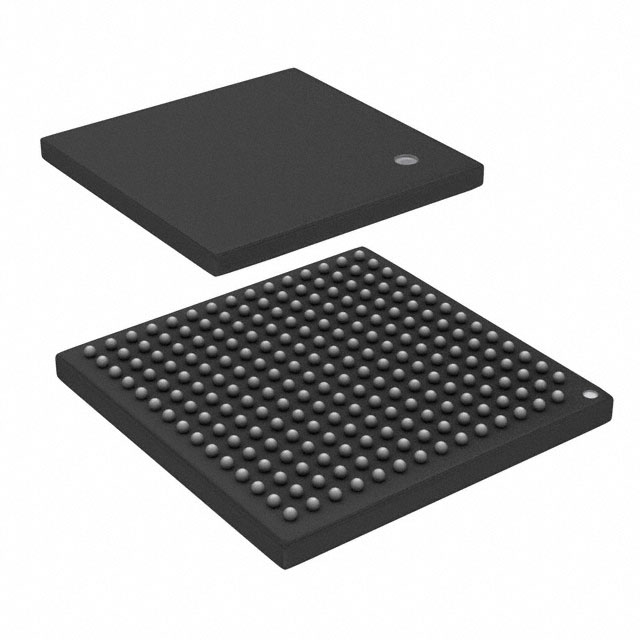
Renesas R5F572MNDDBD#20
- Part No.:
- R5F572MNDDBD#20
- Manufacturer:
- Renesas
- Category:
- Microcontrollers
- Package:
- 224-LFBGA
- Datasheet:
-
 R5F572MNDDBD#20.pdf
- Description:
- IC MCU 32BIT 4MB FLASH 224LFBGA
- Quantity:
- Payment:

- Shipping:

Inventory:4,344
Please send an inquiry. Send us your inquiry, and we will respond immediately.
Product details
Overview
R5F572MNDDBD#20 from Renesas is a 32-bit RXv3 microcontroller operating at up to 240 MHz, featuring double-precision IEEE-754 FPU, 2 Mbytes of on-chip code flash, 1 Mbyte of SRAM (512 KB + 512 KB expansion), and integrated EtherCAT slave controller with dual-port support. It targets industrial motion control systems requiring deterministic real-time Ethernet, high-precision analog acquisition (dual 12-bit ADCs), and secure firmware execution.
For engineers reviewing the R5F572MNDDBD#20 datasheet, R5F572MNDDBD#20 pinout, R5F572MNDDBD#20 application, or R5F572MNDDBD#20 equivalent, key selection criteria include EtherCAT slave timing compliance, dual-bank flash for safe firmware updates, 182-pin LFBGA package compatibility, IEEE 1588 PTP synchronization capability, and TSIP-based AES-128/192/256 encryption support.
Technical Context
The R5F572MNDDBD#20 implements the RXv3 CPU core with hardware-accelerated double-precision floating-point arithmetic (64-bit IEEE-754), 16 register banks for fast context switching, and memory protection unit (MPU) enforcement. Its clock architecture supports independent domain scaling: ICLK up to 240 MHz for CPU execution, PCLKA up to 120 MHz for Ethernet/ESC/GPTW, and PCLKB up to 60 MHz for timers and serial interfaces.
Real-time determinism is enabled by dedicated hardware blocks: EtherCAT Slave Controller (ESC) compliant with Beckhoff IP Core v10.2, IEEE 1588-2008 PTP module (EPTPC) with hardware timestamping, and event-link controller (ELC) for zero-CPU-latency peripheral interconnection. The device integrates dual 12-bit ADC units (8+21 channels), two 12-bit DACs, and six-channel Delta-Sigma Modulator Interface (DSMIF) for high-resolution sensor signal conditioning.
Key Specifications
| Parameter | Value and Actual Design Meaning |
|---|---|
| CPU Core | RXv3 32-bit core with 240 MHz max frequency and 1396 CoreMark score - enables real-time C++ motion control algorithms without external co-processors. |
| Memory | 2 Mbytes code flash (dual-bank), 32 Kbytes data flash (100k write cycles), 1 Mbyte SRAM (512 KB no-wait ≤120 MHz), 32 KB ECC RAM - supports robust firmware update, parameter storage, and safety-critical data integrity. |
| Real-Time Ethernet | EtherCAT slave controller (2-port), IEEE 1588 PTP module, 2-channel Ethernet MAC, 3-channel EDMAC - delivers sub-1 µs jitter for synchronized multi-axis servo drives. |
| Analog Peripherals | Dual 12-bit S12AD (8+21 channels), 2×12-bit D/A, on-chip temperature sensor, DSMIF (6 channels) - enables closed-loop current/voltage sensing and motor phase feedback without external ADCs. |
| Security & Safety | Trusted Secure IP (TSIP) with AES-128/192/256, CRC accelerator, IWDT with window function, oscillation-stop detection, and IEC60730 self-test functions - meets SIL2/PLd functional safety requirements. |
| Package & I/O | 176-pin LFBGA (PLQP0176KB-C, 24 × 24 mm, 0.5 mm pitch), 136 general-purpose I/O pins with 5-V tolerance, open-drain, and pull-up - fits compact industrial PCB layouts with mixed-voltage interfacing. |
| Power & Temp | 2.7–3.6 V supply, –40°C to +85°C operation (D-version), four low-power modes including deep software standby with 8 KB backup RAM - suitable for fanless enclosures and battery-backed RTC applications. |
Pinout & Package
Package: PLQP0176KB-C - 176-pin Low-Profile Quad Flat Package (LFBGA), 24 mm × 24 mm body, 0.5 mm pitch, 1.0 mm height, RoHS-compliant matte tin finish.
| Pin/Terminal | Circuit Role | Design Meaning |
|---|---|---|
| VCC, AVCC0, AVCC1 | Core & analog power supply | Separate 2.7–3.6 V domains isolate digital noise from precision ADC/DAC references; AVCC0/AVCC1 feed S12AD units independently. |
| XTAL, EXTAL | Main crystal oscillator input/output | Supports 8–24 MHz external crystal for precise system clock generation; required for IEEE 1588 PTP accuracy and EtherCAT cycle timing. |
| ESCL, ESDA | EtherCAT slave interface (port A) | Dedicated differential pair for EtherCAT physical layer; connects directly to standard EtherCAT PHY (e.g., TJA1100) without level-shifting. |
| ESCL1, ESDA1 | EtherCAT slave interface (port B) | Second independent EtherCAT port enabling ring topology or redundant line configuration per IEC 61784-2. |
| MDIO, MDC | PHY management interface | Two-wire bus for configuring external Ethernet PHY registers (e.g., link speed, duplex, auto-negotiation) without CPU intervention. |
| USB_VBUS, USB_DP, USB_DM | USB 2.0 Full-Speed interface | Integrated transceiver supports host/device/OTG; VBUS detection enables automatic role switching in field-service tools. |
| AD00–AD20 | Analog input channels | 21 dedicated pins for S12AD unit 1; support simultaneous sampling across multiple motor phases or power stages. |
| DA0, DA1 | Analog output channels | Two buffered 12-bit outputs for analog setpoint generation or calibration reference signals. |
Key Features
| Feature | Design Value |
|---|---|
| EtherCAT Slave Controller (ESC) | Beckhoff-certified IP core with dual-port support, 100BASE-TX PHY interface, and hardware mailbox handling - eliminates need for external ESC ASIC in servo drive designs. |
| IEEE 1588 Precision Time Protocol (PTP) | Hardware timestamping engine synchronized to Ethernet frames with <100 ns resolution - enables sub-microsecond clock synchronization across distributed motion axes. |
| Dual-Bank Code Flash | Independent bank switching allows background firmware update while executing from active bank - ensures zero-downtime field upgrades in production machinery. |
| Event Link Controller (ELC) | 137 internal event sources routed without CPU involvement - e.g., ADC conversion complete triggers GPTW PWM reload, enabling jitter-free current loop closure. |
| Trusted Secure IP (TSIP) | AES encryption/decryption acceleration + key management + RNG - enables secure boot, encrypted firmware download, and runtime IP protection without software overhead. |
| Delta-Sigma Modulator Interface (DSMIF) | 6-channel sinc filter engine supporting external ΣΔ sensors (e.g., AMR current sensors) - achieves >16-bit effective resolution for high-fidelity motor current measurement. |
Applications
| Industrial Servo Drives | Programmable Logic Controllers (PLCs) |
|---|---|
|
Use Scenario: High-performance 3-phase servo amplifier controlling PMSM/BLDC motors with field-oriented control (FOC) and current loop bandwidth >10 kHz. IC Role / Device Role / Timing Role: Main motion control MCU executing FOC algorithm, managing EtherCAT I/O exchange, generating PWM via GPTW, and acquiring current/voltage via dual S12AD and DSMIF. Use Value: Integrated ESC and PTP eliminate external timing ICs; dual-bank flash enables safe firmware updates during machine operation; 240 MHz CPU sustains complex observer-based control loops. |
Use Scenario: Modular PLC CPU module supporting EtherCAT I/O expansion, motion control, and secure remote diagnostics over industrial Ethernet. IC Role / Device Role / Timing Role: Central programmable controller running IEC 61131-3 logic, coordinating distributed I/O via EtherCAT, and enforcing security policies using TSIP. Use Value: Dual-port EtherCAT simplifies topology design; 136 GPIOs support native digital I/O expansion; AES acceleration secures firmware updates against unauthorized access. |
| Robotics Motion Controllers | Energy Monitoring Gateways |
|
Use Scenario: Compact 6-axis robot controller requiring synchronized trajectory planning, real-time joint control, and safety monitoring. IC Role / Device Role / Timing Role: Real-time motion engine with MTU3a timer cascade for multi-axis position capture, ESC for distributed servo coordination, and TSIP for safety-critical firmware validation. Use Value: Hardware ELC links encoder Z-phase to GPTW reset for exact commutation timing; 182-pin I/O accommodates encoder inputs, PWM outputs, and safety signals on single chip. |
Use Scenario: DIN-rail mounted gateway aggregating current/voltage measurements from CT/PT sensors and reporting via MQTT over Ethernet. IC Role / Device Role / Timing Role: Sensor fusion processor acquiring synchronized 3-phase analog data via dual S12AD, computing RMS/power via FPU, and transmitting securely via Ethernet + TSIP. Use Value: On-chip 64-bit FPU computes harmonic analysis in real time; DSMIF interfaces high-accuracy ΣΔ current sensors; IEEE 1588 enables time-aligned waveform capture across multiple gateways. |
Equivalent & Alternatives
The following parts are listed as comparable options for similar industrial real-time MCU applications.
| Alternative Part | Technical Difference | Application Difference | Selection Advice |
|---|---|---|---|
| R5F572MNDDBG#20 | Same RX72M core, identical peripherals, but in 224-pin LFBGA (PLBG0224GA-A) with 182 GPIOs and 4 Mbytes flash - larger footprint, higher I/O count, more memory. | Used where full 182 GPIOs or 4 MB flash are required; not pin-compatible due to different package size and pinout. | Select R5F572MNDDBG#20 only when board layout supports 224-pin LFBGA and application demands >2 MB flash or >136 GPIOs. |
| R5F566TEBDFP#30 | RX66T group MCU: 160 MHz max, no EtherCAT slave, no IEEE 1588, 1.5 MB flash, 384 KB SRAM, 144-pin LQFP - lower performance, no industrial Ethernet hardware acceleration. | Suitable for cost-sensitive inverters or simpler motion controllers without distributed EtherCAT I/O. | Choose R5F566TEBDFP#30 only for non-EtherCAT applications where 160 MHz CPU and basic CAN/USB suffice; requires PCB redesign. |
Compared with R5F572MNDDBD#20, R5F572MNDDBG#20 offers greater I/O and memory in a physically incompatible package, while R5F566TEBDFP#30 sacrifices EtherCAT, PTP, and FPU capability for lower cost and simpler packaging - neither is pin-compatible, and both require distinct hardware and firmware adaptation.
Availability
R5F572MNDDBD#20 is available at Aetrix Electronics and suitable for industrial servo drives, EtherCAT-enabled PLCs, robotics motion controllers, and energy monitoring gateways requiring stable component supply, long-term lifecycle assurance, and traceable sourcing.
Supply support for R5F572MNDDBD#20 includes scheduled delivery planning, volume procurement assistance, BOM continuity management, traceable sourcing, and lifecycle availability coordination for OEM customers, industrial embedded developers, connected-device designers, and electronics production programs.
Manufacturer
Renesas Electronics Corporation is a Japanese semiconductor manufacturer specializing in microcontrollers, analog, and power solutions for industrial, automotive, and infrastructure markets.
The RX72M Group is designed specifically for industrial automation applications demanding real-time Ethernet connectivity, high-precision analog processing, and functional safety - with R5F572MNDDBD#20 targeting compact, high-density servo and motion control implementations.
FAQ
What is the maximum operating frequency and CoreMark score of the R5F572MNDDBD#20?
The R5F572MNDDBD#20 operates at a maximum frequency of 240 MHz and achieves 1396 CoreMark points under benchmark conditions. This performance level enables execution of complex motion control algorithms, such as field-oriented control (FOC) and model-predictive control, in real time without external co-processors. The RXv3 core's instruction efficiency and double-precision FPU further enhance computational throughput for industrial applications.
Does the R5F572MNDDBD#20 support EtherCAT slave functionality, and what interface does it use?
Yes, the R5F572MNDDBD#20 integrates a certified Beckhoff EtherCAT Slave Controller (ESC) IP core supporting two independent ports (ESCL/ESDA and ESCL1/ESDA1). It interfaces directly with standard 100BASE-TX PHY devices via differential pairs and supports mailbox communication, DC synchronization, and process data exchange per IEC 61784-2. No external ESC ASIC is required.
What flash and RAM resources does the R5F572MNDDBD#20 provide, and how are they structured?
The R5F572MNDDBD#20 includes 2 Mbytes of on-chip code flash with dual-bank architecture, 32 Kbytes of reprogrammable data flash (rated for 100,000 erase/write cycles), 1 Mbyte of SRAM (split into 512 KB main + 512 KB expansion), 32 KB of ECC-protected RAM, and 8 KB of standby RAM. This memory hierarchy supports safe firmware updates, safety-critical data retention, and real-time buffer management for high-speed communications.
Which analog peripherals are integrated into the R5F572MNDDBD#20, and what are their key capabilities?
The R5F572MNDDBD#20 integrates two independent 12-bit A/D converters (S12AD0 with 8 channels, S12AD1 with 21 channels), two 12-bit D/A converters, an on-chip temperature sensor, and a six-channel Delta-Sigma Modulator Interface (DSMIF). These enable simultaneous high-resolution current/voltage sensing, analog setpoint generation, thermal monitoring, and direct connection to ΣΔ current sensors for motor control applications.
Is the R5F572MNDDBD#20 qualified for functional safety standards like IEC 60730 or IEC 61508?
Yes, the R5F572MNDDBD#20 includes hardware features required for IEC 60730 Class B compliance, including oscillation-stop detection, CRC accelerator, independent watchdog timer (IWDT) with window function, self-diagnostic A/D converter test, and register write protection. While not pre-certified for IEC 61508, its TSIP, MPU, and error-correcting memory support SIL2 development when used within a qualified safety framework.
R5F572MNDDBD#20 Specifications
- Product attributes
- Attribute value
- Manufacturer:
- Renesas
- Package/Case:
- 224-LFBGA
- Series:
- RX700
- Packaging:
- Tray
- Product Status:
- Active
- Programmable:
- Not Verified
- Core Processor:
- RXv3
- Core Size:
- 32-Bit Single-Core
- Speed:
- 240MHz
- Connectivity:
- CANbus, EBI/EMI, Ethernet, I2C, MMC/SD, QSPI, SCI, SPI, SSI, USB OTG
- Peripherals:
- DMA, LCD, LVD, POR, PWM, WDT
- Number of I/O:
- 182
- Program Memory Size:
- 4MB (4M x 8)
- Program Memory Type:
- FLASH
- EEPROM Size:
- 32K x 8
- RAM Size:
- 1M x 8
- Voltage - Supply (Vcc/Vdd):
- 2.7V ~ 3.6V
- Data Converters:
- A/D 8x12b, 21x12b; D/A 2x12b
- Oscillator Type:
- Internal
- Operating Temperature:
- -40°C ~ 85°C (TA)
- Grade:
- -
- Qualification:
- -
- Mounting Type:
- Surface Mount
- Supplier Device Package:
R5F572MNDDBD#20 FAQ
1.How can I place an order for R5F572MNDDBD#20 through Aetrix?
Please submit a Request for Quotation (RFQ) for R5F572MNDDBD#20 on Aetrix. Our sales agent will provide a competitive quotation and guide you through the order confirmation once you accept the terms.
2.Are the price and stock information for R5F572MNDDBD#20 reliable?
The price and inventory of R5F572MNDDBD#20 are updated periodically and may fluctuate due to market conditions. Stock and pricing data are typically refreshed every 24 hours. Quotation validity for R5F572MNDDBD#20 is usually 5 days.
3.What payment methods are accepted for R5F572MNDDBD#20?
We accept Wire Transfer, PayPal, Credit Card, Western Union, MoneyGram, and Escrow for R5F572MNDDBD#20 transactions.
Note: Certain payment methods may incur a processing fee.
4.How is shipping managed for R5F572MNDDBD#20?
R5F572MNDDBD#20 orders can be shipped via leading logistics carriers, including DHL, UPS, FedEx, TNT, or Registered Mail.
Once your R5F572MNDDBD#20 order is processed, you will receive an email with the shipment details and tracking number.
Note: Tracking information may take up to 24 hours to appear. Express delivery typically takes 3–5 business days.
5.How can I obtain technical support or documentation for R5F572MNDDBD#20?
For technical support, including R5F572MNDDBD#20 datasheets, pinout diagrams, or application guidance, please contact our engineering support team. They can provide detailed documentation and assistance for your R5F572MNDDBD#20 requirements.
6.How does Aetrix verify that R5F572MNDDBD#20 is sourced from the original manufacturer or authorized distributors?
All R5F572MNDDBD#20 products on Aetrix are procured from qualified distributors and authorized channels. Our dedicated quality assurance team conducts strict verification, including traceability checks and, if necessary, third-party testing. This ensures that R5F572MNDDBD#20 meets industry standards.
7.What is the process for return or replacement of R5F572MNDDBD#20?
All R5F572MNDDBD#20 units undergo pre-shipment inspection (PSI). If there is an issue with R5F572MNDDBD#20, returns or replacements are accepted under the following conditions:
1.Quantity discrepancies, incorrect items, or visible external defects (such as breakage or corrosion), acknowledged by Aetrix.
2.The issue is reported within 90 days of delivery.
3.The R5F572MNDDBD#20 part is unused and in its original packaging.
Return procedure for R5F572MNDDBD#20:
1.Submit a request within 90 days.
2.Obtain a Return Material Authorization (RMA) from Aetrix.
R5F572MNDDBD#20 Tags

-
ATTINY4-TSHR
Microchip Technology
-
ATTINY10-TSHR
Microchip Technology
-
ATTINY10-TS8R
Microchip Technology

-
ATTINY202-SSNR
Microchip Technology
-
ATTINY202-SSFR
Microchip Technology
-
ATTINY402-SSNR
Microchip Technology
-
PIC16F15213T-I/MF
Microchip Technology
-
PIC16F15213-E/MF
Microchip Technology

-
PIC10F200T-I/OT
Microchip Technology
-
ATTINY412-SSNR
Microchip Technology
-
PIC10F202T-I/OT
Microchip Technology
-
ATTINY404-SSNR
Microchip Technology
Tech Hub

A practical engineering and sourcing framework covering lifecycle verification, lifetime-buy calculations, replacement qualification, supplier checks and counterfeit-risk controls.

TTL and CMOS logic families differ in thresholds, loading, output drive, power and timing. This engineering guide compares 74HC and 74HCT, calculates noise margins and checks 3.3 V/5 V compatibility.

A practical engineering guide to 3.3V and 5V logic compatibility, input thresholds, resistor dividers, translator ICs, MOSFET level shifting, I2C pull-ups, timing limits and power-sequencing risks.

The 74HC595 uses push-pull logic outputs, while the TPIC6B595 uses 50 V open-drain DMOS sinks for higher-power loads. This guide compares timing, current limits, 3.3 V interfacing, load wiring, thermal…

The 74HC595 converts serial data into eight stable parallel outputs. This guide covers pin functions, shift and storage timing, OE and MR behavior, drive-current limits, cascading, voltage compatibilit…

A technical comparison of level-sensitive latches and edge-triggered flip-flops, covering timing windows, setup and hold limits, master–slave operation, time borrowing, race-through, HDL inference and…

A D latch stores one bit while Enable controls when data can pass. This reference covers gate-level operation, truth tables, transparency, setup and hold timing, LE versus OE, common ICs and practical …

An SR latch stores one bit through cross-coupled feedback. This engineering reference covers NOR and NAND implementations, truth tables, forbidden-state recovery, gated operation, switch debouncing, fa…

Latch circuits retain one bit through feedback. This technical reference covers SR and D latches, truth tables, transparency, timing limits, latch-versus-flip-flop behavior, applications and common log…

An engineering guide to LED driver operation, constant-current and constant-voltage outputs, linear and switching topologies, dimming, IC selection, calculations, replacement compatibility, and fault c…


