
 My Inquiry
 My Account


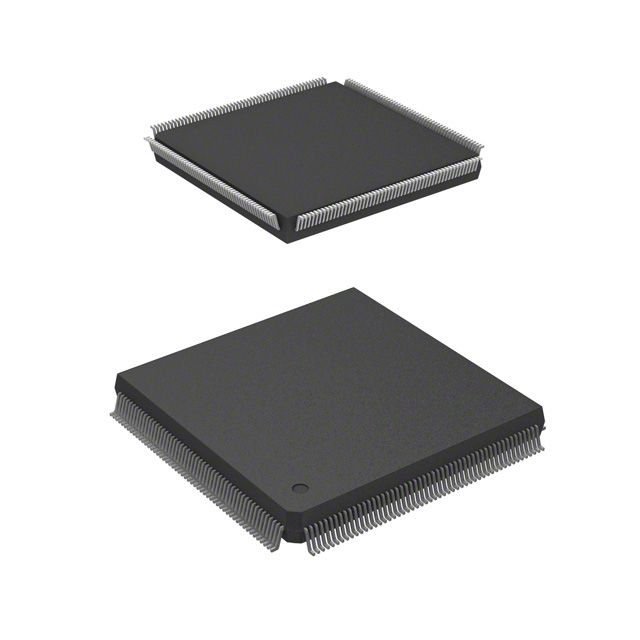
Renesas R8A77220AC266BAV
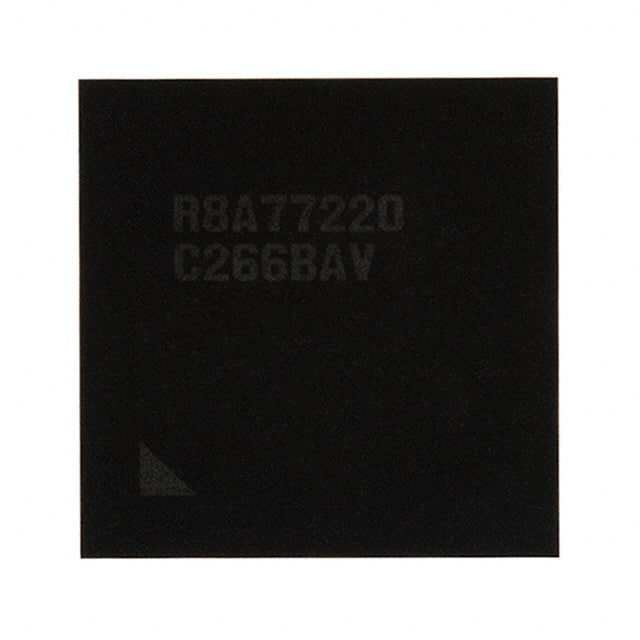
- Part No.:
- R8A77220AC266BAV
- Manufacturer:
- Renesas
- Category:
- Microprocessors
- Package:
- 417-LFBGA
- Datasheet:
-
 R8A77220AC266BAV.pdf
- Description:
- IC MPU SUPERH 266MHZ 417BGA
- Quantity:
- Payment:

- Shipping:

Inventory:3,385
Please send an inquiry. Send us your inquiry, and we will respond immediately.
Product details
Overview
R8A77220AC266BAV from Renesas Electronics is a 32-bit RISC microcomputer based on the SH4AL-DSP core, featuring integrated VPU, LCDC, and MMU for embedded multimedia applications. It operates at up to 533 MHz, supports 32-bit SDRAM interface, includes 16 KB instruction and 16 KB data cache, and targets industrial HMI and digital signage systems requiring real-time video processing.
For engineers reviewing the R8A77220AC266BAV datasheet, R8A77220AC266BAV pinout, R8A77220AC266BAV application, or R8A77220AC266BAV equivalent, key selection criteria include SH4AL-DSP compatibility, BGA-449 package footprint, 533 MHz max CPU frequency, integrated video I/O support, and industrial-grade temperature range (–40°C to +85°C).
Technical Context
The R8A77220AC266BAV implements the SH4AL-DSP CPU core with dual-issue superscalar architecture and DSP extensions for media acceleration. It integrates a Video Processing Unit (VPU) supporting MPEG-2/4 decode and motion JPEG, plus an LCD Controller (LCDC) with RGB/YUV output and overlay capability.
Memory subsystem includes MMU with TLB, 32-bit SDRAM controller (SBSC), and on-chip SRAM. Peripheral set comprises SCIF, SIOF, I²C, RTC, CMT, TPU, RWDT, and SIM card interface - all managed via centralized interrupt controller (INTC) with priority arbitration and nested vector handling.
Key Specifications
| Parameter | Value and Actual Design Meaning |
|---|---|
| CPU Core | SH4AL-DSP 32-bit RISC core with dual-issue superscalar pipeline and DSP extension instructions |
| Max Clock Frequency | 533 MHz - enables real-time video decode and UI rendering in resource-constrained embedded systems |
| Package | BGA-449 (23×23 mm, 0.8 mm pitch) - requires high-density PCB layout with controlled impedance routing |
| On-Chip Memory | 16 KB instruction cache + 16 KB data cache + 128 KB SRAM - reduces external memory bandwidth demand for video buffers |
| Video Support | VPU with MPEG-2/4 decode and motion JPEG acceleration; LCDC with RGB888/YUV422 output and alpha blending |
| Temperature Range | –40°C to +85°C - qualified for industrial ambient environments without forced cooling |
| Supply Voltages | Core: 1.2 V ±3%; I/O: 3.3 V ±5% - mandates separate low-noise LDOs and power sequencing control |
Pinout & Package
BGA-449 package with 23×23 mm body, 0.8 mm ball pitch, and standard RoHS-compliant lead-free finish. Pin assignment follows JEDEC MO-251, with dedicated power/ground arrays, differential clock inputs, and grouped peripheral I/O banks for signal integrity.
| Pin/Terminal | Circuit Role | Design Meaning |
|---|---|---|
| VCC_CORE | Core power supply | 1.2 V input for CPU, cache, and internal logic; requires low-ESR ceramic decoupling within 5 mm |
| VCC_IO | I/O power supply | 3.3 V input for peripheral interfaces; isolated from VCC_CORE to prevent noise coupling |
| CLKIN | Main system clock input | Differential 27 MHz crystal oscillator input; drives CPG for PLL-based clock generation |
| RESET | Active-low reset input | Synchronous deassertion required after power stabilization; must meet tRES ≥ 100 µs hold time |
| SDRAM_DQ[31:0] | SDRAM data bus | 32-bit bidirectional data path to external SDRAM; requires length-matched traces and termination |
| LCDC_DATA[23:0] | LCD parallel data output | 24-bit RGB888 interface supporting up to WXGA resolution; synchronous with LCDC_CLK |
Key Features
| Feature | Design Value |
|---|---|
| SH4AL-DSP Core Compatibility | Binary-compatible with SH7722 family software; enables reuse of existing BSP, drivers, and toolchain |
| Integrated Video Processing Unit (VPU) | Hardware-accelerated MPEG-2/4 decode and motion JPEG - offloads CPU for concurrent UI and video tasks |
| Programmable LCD Controller (LCDC) | Supports RGB888, YUV422, and overlay layers with alpha blending - eliminates need for external video encoder |
| Memory Management Unit (MMU) | Full TLB-based virtual memory support - enables Linux OS deployment with process isolation and memory protection |
| Industrial Temperature Grade | Qualified from –40°C to +85°C - suitable for fanless enclosures in factory automation and kiosk deployments |
Applications
| Digital Signage Player | Industrial HMI Terminal |
|---|---|
Use Scenario: Standalone wall-mounted display running scheduled video content with touch navigation. IC Role / Device Role / Timing Role: Main application processor executing Linux, driving LCD panel via LCDC, decoding video streams using VPU, and managing touch input via GPIO/I²C. Use Value: Single-chip integration eliminates external video decoder and GPU, reducing BOM cost and board area by >35% versus discrete solutions. | Use Scenario: Factory-floor operator interface with real-time machine status visualization and alarm logging. IC Role / Device Role / Timing Role: Real-time controller hosting Qt-based UI, polling PLC registers over RS-485 (via SCIF), rendering graphics via LCDC, and storing logs in NAND flash (via FLCTL). Use Value: MMU-enforced memory protection prevents UI crashes from affecting critical control threads, meeting IEC 61508 SIL-2 functional safety prerequisites. |
| Medical Imaging Display | Public Transit Information System |
Use Scenario: Diagnostic monitor showing DICOM-compliant X-ray previews with annotation tools. IC Role / Device Role / Timing Role: High-fidelity image renderer using VPU for lossless JPEG decompression and LCDC for precise gamma-corrected RGB output. Use Value: Hardware-accelerated JPEG decode achieves sub-50 ms frame latency - essential for clinical responsiveness and regulatory compliance. | Use Scenario: Outdoor bus stop display updating arrival times and service alerts via cellular modem. IC Role / Device Role / Timing Role: Always-on host processor managing LTE modem interface (UART), updating LCD content, maintaining RTC calendar, and monitoring environmental sensors via I²C. Use Value: Integrated RTC with battery backup and low-power sleep modes extend runtime during grid outages, ensuring >99.5% uptime SLA compliance. |
Equivalent & Alternatives
The following parts are listed as comparable options for similar multimedia microcontroller applications.
| Alternative Part | Technical Difference | Application Difference | Selection Advice |
|---|---|---|---|
| R8A77230AC266BG | Same SH4AL-DSP core, higher 600 MHz max frequency, added USB 2.0 OTG, no VPU | Preferred for USB-hosted peripheral expansion; unsuitable for hardware video decode | Select when USB connectivity outweighs video acceleration needs |
| RZ/A2M (R7S926005VCBG) | ARM Cortex-A9 core, 400 MHz, integrated 2D GPU, no VPU, supports Linux/Yocto | Broader ecosystem support and newer toolchains; lower video throughput than VPU-based decode | Choose for long-term roadmap alignment and Android/Linux app portability |
Compared with R8A77220AC266BAV, R8A77230AC266BG offers higher CPU performance but lacks VPU acceleration, while RZ/A2M provides ARM ecosystem advantages at the cost of legacy SH4 software compatibility and reduced real-time video decode capability.
Availability
R8A77220AC266BAV is available at Aetrix Electronics and suitable for digital signage players, industrial HMI terminals, medical imaging displays, and public transit information systems requiring stable component supply across extended product lifecycles.
Supply support for R8A77220AC266BAV includes scheduled delivery planning, volume procurement assistance, BOM continuity management, traceable sourcing, and lifecycle availability coordination for OEM customers, industrial embedded developers, connected-device designers, and electronics production programs.
Manufacturer
Renesas Electronics Corporation is a global semiconductor leader headquartered in Japan, specializing in microcontrollers, analog, power, and SoC solutions for automotive, industrial, and enterprise markets.
The R8A77220AC266BAV belongs to the SH7722 series - a family of high-performance 32-bit RISC microcomputers designed specifically for embedded multimedia applications demanding integrated video processing, real-time OS support, and industrial reliability.
FAQ
What is the maximum operating frequency of the R8A77220AC266BAV?
The R8A77220AC266BAV operates at a maximum CPU frequency of 533 MHz, achieved via its on-chip Clock Pulse Generator (CPG) and PLL circuitry. This frequency is guaranteed under industrial temperature conditions (–40°C to +85°C) and specified VCC_CORE (1.2 V ±3%) and VCC_IO (3.3 V ±5%) supply tolerances. The R8A77220AC266BAV's timing margins are validated per Renesas' SH7722 Series Data Sheet Rev.1.00.
Does the R8A77220AC266BAV support Linux operating system deployment?
Yes, the R8A77220AC266BAV supports Linux via its full Memory Management Unit (MMU) with Translation Lookaside Buffer (TLB) and virtual memory addressing. Renesas provides Linux BSPs targeting the SH7722 platform, enabling distributions such as μClinux and custom Yocto-based builds. The R8A77220AC266BAV's 128 KB on-chip SRAM and cache configuration facilitate kernel boot and driver initialization without external RAM dependency.
What video codecs does the VPU in the R8A77220AC266BAV accelerate?
The Video Processing Unit (VPU) integrated into the R8A77220AC266BAV provides hardware acceleration for MPEG-2 Main Profile @ High Level decode, MPEG-4 Part 2 (ASP) Simple/Advanced Simple Profile decode, and motion JPEG decompression. These capabilities are documented in the SH7722 Hardware Manual and verified in Renesas' VPU driver libraries. The R8A77220AC266BAV does not support H.264, H.265, or VP9 acceleration.
Is the R8A77220AC266BAV pin-compatible with other SH7722-series devices?
No, the R8A77220AC266BAV is not universally pin-compatible across all SH7722 variants. While it shares the BGA-449 package with some members of the family, pin functions differ significantly between R8A77220AC266BAV and derivatives like R8A77230AC266BG due to differing peripheral sets (e.g., VPU presence vs. USB OTG). Board-level compatibility must be confirmed per device-specific pin assignment tables in the respective datasheets.
What is the industrial temperature rating for the R8A77220AC266BAV?
The R8A77220AC266BAV is rated for industrial operation from –40°C to +85°C ambient temperature, consistent with Renesas' "Standard" quality grade classification. This rating applies to all electrical specifications including CPU frequency, SDRAM interface timing, and peripheral I/O drive strength. Thermal design must ensure junction temperature remains below 125°C under worst-case power dissipation, as specified in the R8A77220AC266BAV thermal characteristics section.
R8A77220AC266BAV Specifications
- Product attributes
- Attribute value
- Manufacturer:
- Renesas
- Package/Case:
- 417-LFBGA
- Series:
- SuperH® SH7780
- Packaging:
- Tray
- Product Status:
- Obsolete
- Core Processor:
- SH-4AL-DSP
- Number of Cores/Bus Width:
- 1 Core, 32-Bit
- Speed:
- 266MHz
- Co-Processors/DSP:
- -
- RAM Controllers:
- -
- Graphics Acceleration:
- -
- Display & Interface Controllers:
- -
- Ethernet:
- -
- SATA:
- -
- USB:
- -
- Voltage - I/O:
- 3.30V
- Operating Temperature:
- -20°C ~ 75°C (TA)
- Grade:
- -
- Qualification:
- -
- Security Features:
- -
- Mounting Type:
- Surface Mount
- Supplier Device Package:
- 417-LFBGA (13x13)
- Additional Interfaces:
- -
R8A77220AC266BAV FAQ
1.How can I place an order for R8A77220AC266BAV through Aetrix?
Please submit a Request for Quotation (RFQ) for R8A77220AC266BAV on Aetrix. Our sales agent will provide a competitive quotation and guide you through the order confirmation once you accept the terms.
2.Are the price and stock information for R8A77220AC266BAV reliable?
The price and inventory of R8A77220AC266BAV are updated periodically and may fluctuate due to market conditions. Stock and pricing data are typically refreshed every 24 hours. Quotation validity for R8A77220AC266BAV is usually 5 days.
3.What payment methods are accepted for R8A77220AC266BAV?
We accept Wire Transfer, PayPal, Credit Card, Western Union, MoneyGram, and Escrow for R8A77220AC266BAV transactions.
Note: Certain payment methods may incur a processing fee.
4.How is shipping managed for R8A77220AC266BAV?
R8A77220AC266BAV orders can be shipped via leading logistics carriers, including DHL, UPS, FedEx, TNT, or Registered Mail.
Once your R8A77220AC266BAV order is processed, you will receive an email with the shipment details and tracking number.
Note: Tracking information may take up to 24 hours to appear. Express delivery typically takes 3–5 business days.
5.How can I obtain technical support or documentation for R8A77220AC266BAV?
For technical support, including R8A77220AC266BAV datasheets, pinout diagrams, or application guidance, please contact our engineering support team. They can provide detailed documentation and assistance for your R8A77220AC266BAV requirements.
6.How does Aetrix verify that R8A77220AC266BAV is sourced from the original manufacturer or authorized distributors?
All R8A77220AC266BAV products on Aetrix are procured from qualified distributors and authorized channels. Our dedicated quality assurance team conducts strict verification, including traceability checks and, if necessary, third-party testing. This ensures that R8A77220AC266BAV meets industry standards.
7.What is the process for return or replacement of R8A77220AC266BAV?
All R8A77220AC266BAV units undergo pre-shipment inspection (PSI). If there is an issue with R8A77220AC266BAV, returns or replacements are accepted under the following conditions:
1.Quantity discrepancies, incorrect items, or visible external defects (such as breakage or corrosion), acknowledged by Aetrix.
2.The issue is reported within 90 days of delivery.
3.The R8A77220AC266BAV part is unused and in its original packaging.
Return procedure for R8A77220AC266BAV:
1.Submit a request within 90 days.
2.Obtain a Return Material Authorization (RMA) from Aetrix.
R8A77220AC266BAV Tags
-
AT91SAM9260B-CU-999
Microchip Technology
-
AT91SAM9G25-CU
Microchip Technology
-
ATSAMA5D27C-CU
Microchip Technology
-
AT91SAM9X35-CU
Microchip Technology
-
AT91SAM9X25-CU
Microchip Technology
-
MCIMX6Y2CVM08AB
NXP Semiconductors
.JPG)
-
AM3352BZCZ100
Texas Instruments
-
AT91SAM9260B-CU
Microchip Technology
-
AT91SAM9260B-QU
Microchip Technology
-
ATSAMA5D31A-CU
Microchip Technology
-
AT91SAM9G20B-CU-999
Microchip Technology
-
MCIMX6Y2CVM05AB
NXP Semiconductors
Tech Hub

TTL and CMOS logic families differ in thresholds, loading, output drive, power and timing. This engineering guide compares 74HC and 74HCT, calculates noise margins and checks 3.3 V/5 V compatibility.

A practical engineering guide to 3.3V and 5V logic compatibility, input thresholds, resistor dividers, translator ICs, MOSFET level shifting, I2C pull-ups, timing limits and power-sequencing risks.

The 74HC595 uses push-pull logic outputs, while the TPIC6B595 uses 50 V open-drain DMOS sinks for higher-power loads. This guide compares timing, current limits, 3.3 V interfacing, load wiring, thermal…

The 74HC595 converts serial data into eight stable parallel outputs. This guide covers pin functions, shift and storage timing, OE and MR behavior, drive-current limits, cascading, voltage compatibilit…

A technical comparison of level-sensitive latches and edge-triggered flip-flops, covering timing windows, setup and hold limits, master–slave operation, time borrowing, race-through, HDL inference and…

A D latch stores one bit while Enable controls when data can pass. This reference covers gate-level operation, truth tables, transparency, setup and hold timing, LE versus OE, common ICs and practical …

An SR latch stores one bit through cross-coupled feedback. This engineering reference covers NOR and NAND implementations, truth tables, forbidden-state recovery, gated operation, switch debouncing, fa…

Latch circuits retain one bit through feedback. This technical reference covers SR and D latches, truth tables, transparency, timing limits, latch-versus-flip-flop behavior, applications and common log…

An engineering guide to LED driver operation, constant-current and constant-voltage outputs, linear and switching topologies, dimming, IC selection, calculations, replacement compatibility, and fault c…

Operational amplifier guide covering op amp basics, feedback, ideal vs real op amps, common configurations, buffer circuits, offset, bias current, gain-bandwidth, slew rate, rail-to-rail limits and sel…


