
 My Inquiry
 My Account


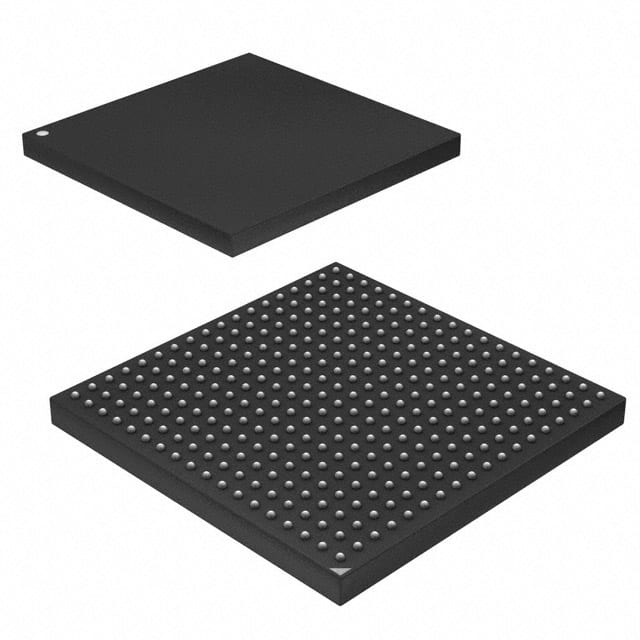
Renesas R8A774E0HA01BN#YBC

- Part No.:
- R8A774E0HA01BN#YBC
- Manufacturer:
- Renesas
- Category:
- Microprocessors
- Package:
- 1022-BFBGA, FCBGA
- Datasheet:
-
 R8A774E0HA01BN#YBC.pdf
- Description:
- SOC RZ/G2H HDMI OFF (CS)
- Quantity:
- Payment:

- Shipping:

Inventory:4,103
Please send an inquiry. Send us your inquiry, and we will respond immediately.
Product details
Overview
R8A774E0HA01BN#YBC from Renesas Electronics is a high-performance 64-bit MPUs based on Arm Cortex-A53 dual-core architecture, integrated with 3D graphics (PowerVR GX6250), video codec (H.264/H.265 decode), and rich peripheral interfaces including PCIe Gen2, USB 3.0, and dual-channel LVDS. It targets embedded Linux-based HMI systems requiring real-time graphics rendering and multimedia playback.
For engineers reviewing the R8A774E0HA01BN#YBC datasheet, R8A774E0HA01BN#YBC pinout, R8A774E0HA01BN#YBC application, or R8A774E0HA01BN#YBC equivalent, key selection criteria include CPU core count and ISA support (AArch64), integrated GPU performance (OpenGL ES 3.1, OpenCL 1.2), memory interface bandwidth (LPDDR4-3200), and industrial-grade thermal operation (−40°C to +85°C).
Technical Context
The R8A774E0HA01BN#YBC implements a dual-core Arm Cortex-A53 CPU cluster operating at up to 1.5 GHz, with L1/L2 cache coherency managed by CCI-500. It integrates a PowerVR GX6250 GPU supporting OpenGL ES 3.1 and OpenCL 1.2 for hardware-accelerated graphics and compute workloads.
Its system architecture includes LPDDR4-3200 memory interface (32-bit bus, 25.6 GB/s peak bandwidth), dual-channel LVDS display output (up to 1920×1080@60 Hz), and hardware video decoding for H.264 and H.265 up to 4K@30 fps - all within a single-chip SoC targeting resource-constrained industrial HMIs.
Key Specifications
| Parameter | Value and Actual Design Meaning |
|---|---|
| CPU Core | Dual-core Arm Cortex-A53, AArch64 only, up to 1.5 GHz - enables efficient Linux execution with deterministic interrupt latency. |
| GPU | PowerVR GX6250, OpenGL ES 3.1 & OpenCL 1.2 support - delivers hardware-accelerated UI rendering and lightweight parallel compute. |
| Memory Interface | LPDDR4-3200, 32-bit bus, 25.6 GB/s peak bandwidth - sustains high-resolution graphics and video buffer throughput. |
| Video Decode | H.264/H.265 up to 4K@30 fps - offloads software decoding, reducing CPU utilization in multimedia applications. |
| Display Output | Dual-channel LVDS, max 1920×1080@60 Hz - supports dual independent displays or high-res single-panel HMIs. |
| Thermal Grade | Industrial temperature range (−40°C to +85°C) - qualified for deployment in uncontrolled ambient environments. |
| PCIe Interface | PCIe Gen2 ×1 lane - enables low-latency expansion for custom I/O, FPGA co-processing, or NVMe storage. |
Pinout & Package
Package: FC-BGA 1517-pin, 35 mm × 35 mm, 0.8 mm pitch, RoHS-compliant, lead-free.
| Pin/Terminal | Circuit Role | Design Meaning |
|---|---|---|
| VDD_CPU | CPU Core Power Supply | 1.0 V ±3% supply for Cortex-A53 cores - requires tight regulation and local decoupling for stable high-frequency operation. |
| VDD_GPU | GPU Power Supply | 1.05 V ±3% supply for PowerVR GX6250 - independent rail enables dynamic voltage scaling during graphics load changes. |
| LPDDR4_DQ[31:0] | Data Bus | 32-bit bidirectional data interface to LPDDR4 SDRAM - routed with matched length and controlled impedance for signal integrity at 1600 MHz. |
| LVDS_CH0_P/N[3:0] | Primary Display Channel | Differential pixel clock and data pairs for first LVDS panel - supports 24-bit RGB timing with embedded sync. |
| PCIe_REFCLK_P/N | Clock Reference Input | 100 MHz differential reference clock for PCIe PHY - must meet jitter <1.5 ps RMS for Gen2 compliance. |
Key Features
| Feature | Design Value |
|---|---|
| Hardware Video Decoder | Integrated H.264/H.265 decode engine supporting 4K@30 fps - eliminates need for external decoder IC and associated firmware stack. |
| Graphics Acceleration | PowerVR GX6250 GPU with tile-based deferred rendering - reduces memory bandwidth pressure and power consumption vs. immediate-mode GPUs. |
| Secure Boot | ROM-based boot loader with SHA-256 hash verification of first-stage bootloader - establishes root-of-trust for secure firmware updates. |
| Real-Time Peripheral Support | Dedicated RZ/G2E-specific PFC registers and GPIO interrupt capability with sub-1 µs latency - enables deterministic response to industrial I/O events. |
| Thermal Management | On-die temperature sensor with programmable thresholds and interrupt generation - allows autonomous thermal throttling without host CPU intervention. |
Applications
| Industrial HMI Panel | Medical Display Terminal |
|---|---|
Use Scenario: Touch-enabled control panel in factory automation systems with animated UI, live process visualization, and alarm logging. IC Role / Device Role / Timing Role: Main application processor executing embedded Linux, driving dual LVDS displays, and managing USB HID peripherals. Use Value: Dual Cortex-A53 cores provide headroom for concurrent UI rendering, protocol stacks (Modbus TCP), and background diagnostics without frame drops. | Use Scenario: Standalone diagnostic imaging viewer in point-of-care devices displaying DICOM thumbnails and annotated reports. IC Role / Device Role / Timing Role: Graphics-centric SoC handling JPEG/PNG decode, OpenGL-based zoom/pan, and HDMI/LVDS output synchronization. Use Value: Integrated PowerVR GPU accelerates image scaling and overlay composition, reducing display latency to <16 ms per frame. |
| Smart Retail Kiosk | Transportation Infotainment |
Use Scenario: Self-service ordering terminal with video ads, multi-language UI, and payment peripheral integration. IC Role / Device Role / Timing Role: Central controller running Yocto Linux, managing PCIe-connected EMV card reader and USB thermal printer. Use Value: Hardware H.265 decode enables smooth 1080p ad playback while maintaining >800 MHz CPU bandwidth for transaction processing. | Use Scenario: Passenger infotainment unit in buses/trains delivering route maps, real-time GPS overlays, and audio announcements. IC Role / Device Role / Timing Role: Multimedia processor handling GPS NMEA parsing, map rendering, and dual-display output (main screen + rear-seat monitor). Use Value: LPDDR4-3200 bandwidth ensures consistent 60 Hz refresh across both LVDS channels even during simultaneous video decode and vector graphics rendering. |
Equivalent & Alternatives
The following parts are listed as comparable options for similar application processor applications.
| Alternative Part | Technical Difference | Application Difference | Selection Advice |
|---|---|---|---|
| R8A774A1HA00BG#YB | Quad-core Cortex-A53, no integrated GPU, supports LPDDR4-2400 only - lacks graphics acceleration and higher memory bandwidth. | Suitable for headless industrial gateways where UI is remote; not viable for local display rendering. | Select when cost-sensitive designs require CPU-only processing and external GPU or display controller is acceptable. |
| i.MX8M Mini Quad (LPC54608) | Quad Cortex-A53 + Cortex-M4, Vivante GC7000Lite GPU, LPDDR4-2133 - lower GPU performance and memory bandwidth than R8A774E0HA01BN#YBC. | Better suited for mixed real-time + application workloads; less optimal for sustained 4K video decode or OpenGL-heavy UIs. | Choose when deterministic M4 co-processor tasks (e.g., motor control) are required alongside Linux UI, accepting reduced graphics throughput. |
Compared with R8A774A1HA00BG#YB and i.MX8M Mini Quad, the R8A774E0HA01BN#YBC uniquely balances dual-core AArch64 performance, PowerVR-based graphics acceleration, and 4K-capable video decode in an industrial-qualified package - making it optimal for display-rich embedded Linux systems where GPU offload and thermal robustness are critical.
Availability
R8A774E0HA01BN#YBC is available at Aetrix Electronics and suitable for industrial HMI panels, medical display terminals, smart retail kiosks, and transportation infotainment systems requiring stable component supply across extended product lifecycles.
Supply support for R8A774E0HA01BN#YBC includes scheduled delivery planning, volume procurement assistance, BOM continuity management, traceable sourcing, and lifecycle availability coordination for OEM customers, industrial embedded developers, connected-device designers, and electronics production programs.
Manufacturer
Renesas Electronics Corporation is a Japanese semiconductor manufacturer specializing in microcontrollers, analog, power, and SoC solutions for automotive, industrial, and enterprise markets.
The R8A774E0HA01BN#YBC belongs to the RZ/G2E product line - designed specifically for cost-optimized, graphics-intensive embedded Linux applications in industrial HMIs and edge devices with strict thermal and longevity requirements.
FAQ
What is the maximum supported LPDDR4 speed for R8A774E0HA01BN#YBC?
The R8A774E0HA01BN#YBC supports LPDDR4-3200 (1600 MHz data rate) with a 32-bit bus width, delivering up to 25.6 GB/s peak memory bandwidth. This specification is validated in the RZ/G2E User's Manual Rev.1.11 and confirmed in Renesas' official timing parameter tables. The R8A774E0HA01BN#YBC requires precise PCB layout for DQ/DQS routing and strict VDDQ regulation to sustain stable operation at this speed.
Does R8A774E0HA01BN#YBC support H.265 video encoding?
No, the R8A774E0HA01BN#YBC supports hardware-accelerated H.264 and H.265 decoding only - up to 4K@30 fps - but does not include a video encoder block. Encoding tasks must be handled in software using the Cortex-A53 cores or offloaded to an external encoder IC. This limitation is explicitly documented in Section 1.2.7 (Video Processing) of the RZ/G Series Hardware Manual Rev.1.11.
What graphics APIs are supported by the PowerVR GPU in R8A774E0HA01BN#YBC?
The PowerVR GX6250 GPU in the R8A774E0HA01BN#YBC supports OpenGL ES 3.1, OpenCL 1.2 Full Profile, and Vulkan 1.0 via Renesas' proprietary PVRSDK and Linux kernel DRM/KMS drivers. These APIs are validated under Yocto Project v3.1+ BSP releases. The R8A774E0HA01BN#YBC does not support OpenGL ES 3.2 or Vulkan 1.1+ due to hardware feature limitations of the GX6250 IP.
Is R8A774E0HA01BN#YBC pin-compatible with other RZ/G2 series devices like R8A77470?
No, the R8A774E0HA01BN#YBC is not pin-compatible with R8A77470 or other RZ/G2 family members. It uses a unique 1517-pin FC-BGA package with distinct pin assignments for memory, display, and peripheral interfaces. The RZ/G2E (R8A774E0HA01BN#YBC) and RZ/G2N (R8A77470) have different ballouts, power domain groupings, and I/O voltage requirements - requiring separate PCB designs.
What is the industrial temperature rating for R8A774E0HA01BN#YBC?
The R8A774E0HA01BN#YBC is rated for industrial temperature operation from −40°C to +85°C, as specified in Renesas' official product documentation and confirmed in the "Quality Grades" notice section of the RZ/G2E Hardware Manual Rev.1.11. This rating applies to the full functional specification - including CPU frequency, GPU operation, and video decode - without derating. The R8A774E0HA01BN#YBC is not qualified for automotive AEC-Q100 or extended temperature grades.
R8A774E0HA01BN#YBC Specifications
- Product attributes
- Attribute value
- Manufacturer:
- Renesas
- Package/Case:
- 1022-BFBGA, FCBGA
- Series:
- RZ/G2E
- Packaging:
- Tray
- Product Status:
- Active
- Core Processor:
- ARM® Cortex®-A53, ARM® Cortex®-A57
- Number of Cores/Bus Width:
- 4, 4 Core, 64-Bit
- Speed:
- 1.2GHz, 1.5GHz
- Co-Processors/DSP:
- -
- RAM Controllers:
- LPDDR4
- Graphics Acceleration:
- Yes
- Display & Interface Controllers:
- DU
- Ethernet:
- 10/100Mbps (1)
- SATA:
- -
- USB:
- USB 2.0 OTG (2), USB 3.0 (1)
- Voltage - I/O:
- 3.3V
- Operating Temperature:
- -40°C ~ 85°C
- Grade:
- -
- Qualification:
- -
- Security Features:
- AES, ARM TZ, Hash, RSA, Secure Boot, TRNG
- Mounting Type:
- Surface Mount
- Supplier Device Package:
- 1022-FCBGA (29x29)
- Additional Interfaces:
- CANbus, DMA, I2C, I2S, MMC/SD/SDIO, PCI, SPI, UART
R8A774E0HA01BN#YBC FAQ
1.How can I place an order for R8A774E0HA01BN#YBC through Aetrix?
Please submit a Request for Quotation (RFQ) for R8A774E0HA01BN#YBC on Aetrix. Our sales agent will provide a competitive quotation and guide you through the order confirmation once you accept the terms.
2.Are the price and stock information for R8A774E0HA01BN#YBC reliable?
The price and inventory of R8A774E0HA01BN#YBC are updated periodically and may fluctuate due to market conditions. Stock and pricing data are typically refreshed every 24 hours. Quotation validity for R8A774E0HA01BN#YBC is usually 5 days.
3.What payment methods are accepted for R8A774E0HA01BN#YBC?
We accept Wire Transfer, PayPal, Credit Card, Western Union, MoneyGram, and Escrow for R8A774E0HA01BN#YBC transactions.
Note: Certain payment methods may incur a processing fee.
4.How is shipping managed for R8A774E0HA01BN#YBC?
R8A774E0HA01BN#YBC orders can be shipped via leading logistics carriers, including DHL, UPS, FedEx, TNT, or Registered Mail.
Once your R8A774E0HA01BN#YBC order is processed, you will receive an email with the shipment details and tracking number.
Note: Tracking information may take up to 24 hours to appear. Express delivery typically takes 3–5 business days.
5.How can I obtain technical support or documentation for R8A774E0HA01BN#YBC?
For technical support, including R8A774E0HA01BN#YBC datasheets, pinout diagrams, or application guidance, please contact our engineering support team. They can provide detailed documentation and assistance for your R8A774E0HA01BN#YBC requirements.
6.How does Aetrix verify that R8A774E0HA01BN#YBC is sourced from the original manufacturer or authorized distributors?
All R8A774E0HA01BN#YBC products on Aetrix are procured from qualified distributors and authorized channels. Our dedicated quality assurance team conducts strict verification, including traceability checks and, if necessary, third-party testing. This ensures that R8A774E0HA01BN#YBC meets industry standards.
7.What is the process for return or replacement of R8A774E0HA01BN#YBC?
All R8A774E0HA01BN#YBC units undergo pre-shipment inspection (PSI). If there is an issue with R8A774E0HA01BN#YBC, returns or replacements are accepted under the following conditions:
1.Quantity discrepancies, incorrect items, or visible external defects (such as breakage or corrosion), acknowledged by Aetrix.
2.The issue is reported within 90 days of delivery.
3.The R8A774E0HA01BN#YBC part is unused and in its original packaging.
Return procedure for R8A774E0HA01BN#YBC:
1.Submit a request within 90 days.
2.Obtain a Return Material Authorization (RMA) from Aetrix.
R8A774E0HA01BN#YBC Tags
-
AT91SAM9260B-CU-999
Microchip Technology
-
AT91SAM9G25-CU
Microchip Technology
-
ATSAMA5D27C-CU
Microchip Technology
-
AT91SAM9X35-CU
Microchip Technology
-
AT91SAM9X25-CU
Microchip Technology
-
MCIMX6Y2CVM08AB
NXP Semiconductors
.JPG)
-
AM3352BZCZ100
Texas Instruments
-
AT91SAM9260B-CU
Microchip Technology
-
AT91SAM9260B-QU
Microchip Technology
-
ATSAMA5D31A-CU
Microchip Technology
-
AT91SAM9G20B-CU-999
Microchip Technology
-
MCIMX6Y2CVM05AB
NXP Semiconductors
Tech Hub

TTL and CMOS logic families differ in thresholds, loading, output drive, power and timing. This engineering guide compares 74HC and 74HCT, calculates noise margins and checks 3.3 V/5 V compatibility.

A practical engineering guide to 3.3V and 5V logic compatibility, input thresholds, resistor dividers, translator ICs, MOSFET level shifting, I2C pull-ups, timing limits and power-sequencing risks.

The 74HC595 uses push-pull logic outputs, while the TPIC6B595 uses 50 V open-drain DMOS sinks for higher-power loads. This guide compares timing, current limits, 3.3 V interfacing, load wiring, thermal…

The 74HC595 converts serial data into eight stable parallel outputs. This guide covers pin functions, shift and storage timing, OE and MR behavior, drive-current limits, cascading, voltage compatibilit…

A technical comparison of level-sensitive latches and edge-triggered flip-flops, covering timing windows, setup and hold limits, master–slave operation, time borrowing, race-through, HDL inference and…

A D latch stores one bit while Enable controls when data can pass. This reference covers gate-level operation, truth tables, transparency, setup and hold timing, LE versus OE, common ICs and practical …

An SR latch stores one bit through cross-coupled feedback. This engineering reference covers NOR and NAND implementations, truth tables, forbidden-state recovery, gated operation, switch debouncing, fa…

Latch circuits retain one bit through feedback. This technical reference covers SR and D latches, truth tables, transparency, timing limits, latch-versus-flip-flop behavior, applications and common log…

An engineering guide to LED driver operation, constant-current and constant-voltage outputs, linear and switching topologies, dimming, IC selection, calculations, replacement compatibility, and fault c…

Operational amplifier guide covering op amp basics, feedback, ideal vs real op amps, common configurations, buffer circuits, offset, bias current, gain-bandwidth, slew rate, rail-to-rail limits and sel…


