
 My Inquiry
 My Account


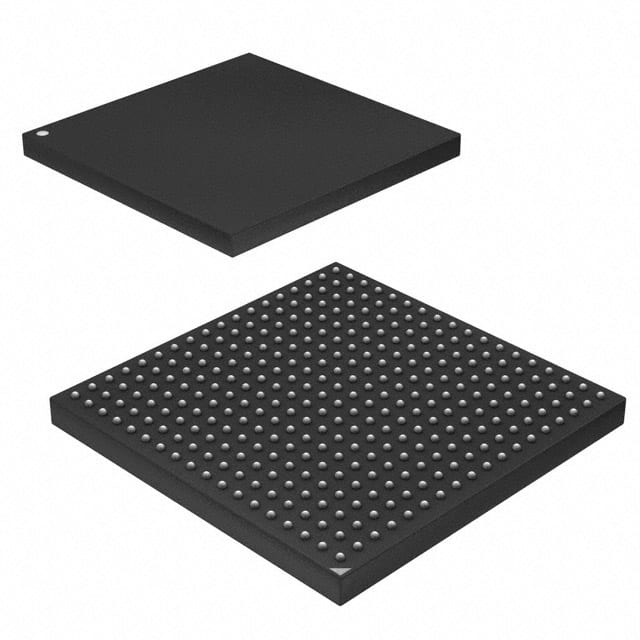
Renesas R9A06G033PGBG#AC1

- Part No.:
- R9A06G033PGBG#AC1
- Manufacturer:
- Renesas
- Category:
- Microprocessors
- Package:
- 324-LFBGA
- Datasheet:
-
 R9A06G033PGBG#AC1.pdf
- Description:
- SOC RZ/N1S 324PIN SECURITY
- Quantity:
- Payment:

- Shipping:

Inventory:119
Please send an inquiry. Send us your inquiry, and we will respond immediately.
Product details
Overview
R9A06G033PGBG#AC1 from Renesas is a single-core Arm Cortex-A7 (500 MHz) + Cortex-M3 (125 MHz) industrial communication SoC with integrated 4 MB ECC SRAM, dual 1 Gbps GMACs, Advanced 5-Port Ethernet Switch (A5PSW), EtherCAT Slave Controller (3 ports), SercosIII Slave Controller (2 ports), and dual CAN interfaces. It targets real-time industrial Ethernet gateways requiring deterministic timing, redundancy protocols (PRP/HSR), and co-processing for protocol stack offload.
For engineers reviewing the R9A06G033PGBG#AC1 datasheet, R9A06G033PGBG#AC1 pinout, R9A06G033PGBG#AC1 application, or R9A06G033PGBG#AC1 equivalent, this device delivers verified support for EtherCAT, SercosIII, Profinet, IEEE 1588-2008 PTP, PRP (IEC 62439-3 Ed2.0), HSR, and DLR - all within a single 324-pin LFBGA package operating from −40°C to +110°C junction temperature.
Technical Context
The R9A06G033PGBG#AC1 implements a heterogeneous dual-CPU architecture: a single Cortex-A7 core handles high-level Linux-based protocol stacks and application logic, while the dedicated Cortex-M3 core-integrated into the R-IN Engine-executes real-time Ethernet acceleration tasks including hardware RTOS scheduling, Ethernet frame processing, and EtherCAT/SercosIII telegram handling. The A5PSW provides full Layer 2 switching with IEEE 1588 timestamping, QoS queues, VLAN filtering, and PRP/HSR redundancy support.
Memory subsystem includes 4 MB on-chip SRAM with SEC-DED ECC, DDR2/3-1000 controller (16-bit bus), NAND Flash controller with BCH ECC up to 32-bit correction, and dual Quad SPI interfaces. Peripherals include 8 UARTs (with RS485/MODBUS support), 6 SPI (4 master/2 slave), 2 I²C, 2 × 12-bit ADCs (1 MSPS), LCD controller, and MSEBI parallel interface.
Key Specifications
| Parameter | Value and Actual Design Meaning |
|---|---|
| CPU Core | Single Arm Cortex-A7 @ 500 MHz + Arm Cortex-M3 @ 125 MHz - enables Linux + real-time co-processing without external MCU. |
| On-chip Memory | 4 MB SRAM with SEC-DED ECC - eliminates need for external RAM in many industrial gateway designs; supports fault-tolerant operation. |
| Ethernet Interfaces | 2 × independent GMAC (10/100/1000 Mbps) + A5PSW 5-port switch (4+1) with IEEE 1588 v2, PRP, and HSR - enables redundant ring/star topologies with sub-microsecond synchronization. |
| Real-time Protocols | EtherCAT Slave (3 ports), SercosIII Slave (2 ports), DLR - hardware-accelerated, deterministic execution without CPU load on Cortex-A7. |
| Package & Temp | 324-pin LFBGA, 15×15 mm, 0.8 mm pitch; −40°C to +110°C junction - qualified for harsh industrial environments and convection-cooled enclosures. |
| Security Options | Secure Boot, JTAG lock, 64-bit Chip-ID - supports secure firmware authentication and debug lockdown for certified industrial deployments. |
| Analog Input | 2 × 12-bit ADC, 1 MSPS max, 8-channel input (5+3 S/H) - suitable for sensor monitoring and closed-loop control feedback in gateway edge nodes. |
Pinout & Package
Package: 324-pin LFBGA, 15×15 mm, 0.8 mm pitch, RoHS-compliant, lead-free.
| Pin/Terminal | Circuit Role | Design Meaning |
|---|---|---|
| GND / VDD11 / VDD33 / DDR_VREF | Power and reference supply pins | Dedicated power domains for core (1.15 V), I/O (3.3 V), DDR (1.5/1.8 V), and analog references - enable clean signal integrity and noise isolation. |
| RGMII1–RGMII4_VDDQ | Ethernet PHY power supply | Separate 1.0 V supply per RGMII port - ensures stable high-speed Ethernet signaling and meets IEEE 802.3 compliance margins. |
| DDR_DQ[0:15], DDR_CLKP/CLKN, DDR_CS0/CS1 | DDR2/3 memory interface | 16-bit bidirectional data bus with differential clock and chip selects - supports DDR2-500/DDR3-1000 at up to 2 GB address space with configurable ODT and ECC. |
| GPIO0–GPIO170 (shared) | Multiplexed I/O bank | 132 GPIOs with programmable drive strength, pull-up/down, and peripheral function remapping - simplifies board layout and enables flexible peripheral routing. |
| USB_DP1/DM1, USB_DP2/DM2 | USB 2.0 differential pairs | Two USB 2.0 ports (one host-only, one host/function configurable) - supports field service via USB mass storage or CDC ACM virtual COM port. |
| ADC1_IN0–ADC1_IN8, ADC2_IN0–ADC2_IN8 | Analog input channels | Two independent 12-bit ADC units with dedicated analog supplies (AVDD/AGND) and reference inputs (VREFP/VREFN) - supports simultaneous sampling and priority-based conversion sequencing. |
Key Features
| Feature | Design Value |
|---|---|
| Hardware Ethernet Acceleration (R-IN Engine) | Offloads EtherCAT/SercosIII telegram processing, IEEE 1588 timestamping, and real-time task scheduling from Cortex-A7 - reduces Linux jitter and enables <100 µs cycle times. |
| Advanced 5-Port Switch (A5PSW) | Full Layer 2 switching with 4+1 port topology, 8192 MAC address table, per-port QoS, VLAN tagging, and PRP/HSR redundancy - eliminates need for external switch IC in multi-protocol gateways. |
| Dual Independent GMACs | Two fully compliant IEEE 802.3 10/100/1000 Mbps MACs with native DMA, jumbo frame support (up to 16 KB), and PPS output (GMAC1 only) - enables separate control and data plane traffic isolation. |
| Secure Boot & Debug Lock | Verifies signed boot image and disables JTAG interface upon lock - prevents unauthorized firmware modification and runtime debugging in deployed systems. |
| Industrial Temperature Range | −40°C to +110°C junction rating - validated for operation in uncooled control cabinets, railway onboard units, and factory-floor automation equipment. |
| Integrated 4 MB ECC SRAM | On-die memory with SEC-DED error correction - removes external RAM BOM cost and PCB area while ensuring data integrity for critical real-time buffers and protocol stacks. |
Applications
| Industrial Ethernet Gateway | Multi-Protocol Field Controller |
|---|---|
Use Scenario: Aggregating EtherCAT drives, SercosIII sensors, and standard Ethernet I/O modules into a unified PROFINET or EtherNet/IP network. IC Role / Device Role / Timing Role: Real-time protocol bridge with hardware-accelerated EtherCAT/SercosIII slave engines and A5PSW-based topology management. Use Value: Eliminates need for discrete protocol ASICs and external Ethernet switches; achieves <50 µs EtherCAT cycle time with Linux application layer running concurrently. |
Use Scenario: Controlling hydraulic valves, servo axes, and safety I/O in packaging machinery using synchronized motion and safety logic. IC Role / Device Role / Timing Role: Deterministic real-time controller executing motion profiles and safety interlocks via R-IN Engine's HW-RTOS scheduler and dual GMACs. Use Value: Enables sub-100 µs I/O update cycles and synchronized axis control without external FPGA or motion controller ICs. |
| Redundant Network Node | Smart Power Substation Gateway |
Use Scenario: Deploying PRP/HSR-capable nodes in power distribution automation where zero recovery time after link failure is mandatory. IC Role / Device Role / Timing Role: Redundancy-aware Ethernet switch node with dual homing, duplicate frame filtering, and IEEE 1588 PTP grandmaster capability. Use Value: Meets IEC 62439-3 Ed2.0 requirements for PRP/HSR without external redundancy ICs; supports 16-node HSR loops with dynamic frame buffer allocation. |
Use Scenario: Interfacing IEC 61850 GOOSE and SV streams between legacy RTUs and modern SCADA systems in substations. IC Role / Device Role / Timing Role: Time-synchronized protocol gateway with IEEE 1588 v2 PTP hardware timestamping, dual GMACs for separate process/bus networks, and secure boot for regulatory compliance. Use Value: Achieves <1 µs timestamp accuracy and C37.238 profile compliance for substation automation, reducing reliance on external PTP grandmasters. |
Equivalent & Alternatives
The following parts are listed as comparable options for similar industrial Ethernet SoC applications.
| Alternative Part | Technical Difference | Application Difference | Selection Advice |
|---|---|---|---|
| R9A06G032EGBG | Dual Cortex-A7 (500 MHz), 2 MB SRAM, 400-pin BGA - higher compute throughput but larger footprint and no PRP/HSR option. | Better suited for Linux-heavy gateway applications requiring dual-core parallelism; lacks PRP/HSR hardware support in RZ/N1D-324 variants. | Select when dual A7 cores and maximum DDR bandwidth are required over redundancy protocol hardware acceleration. |
| R9A06G033EGBA | Same RZ/N1S family, 196-pin BGA, 132 GPIOs, no PRP/HSR - smaller package and lower cost, but omits redundancy protocol engines. | Ideal for cost-sensitive, non-redundant industrial controllers where EtherCAT/SercosIII are not required. | Choose for compact, low-BOM-cost nodes where PRP/HSR and A5PSW switching are unnecessary. |
Compared with R9A06G033PGBG#AC1, R9A06G032EGBG offers higher CPU performance but sacrifices PRP/HSR and increases PCB area, while R9A06G033EGBA reduces size and cost but removes critical redundancy features - making R9A06G033PGBG#AC1 the optimal balance for certified redundant industrial gateways.
Availability
R9A06G033PGBG#AC1 is available at Aetrix Electronics and suitable for industrial Ethernet gateways, multi-protocol field controllers, and redundant network nodes requiring stable component supply across extended product lifecycles.
Supply support for R9A06G033PGBG#AC1 includes scheduled delivery planning, volume procurement assistance, BOM continuity management, traceable sourcing, and lifecycle availability coordination for OEM customers, industrial embedded developers, connected-device designers, and electronics production programs.
Manufacturer
Renesas Electronics Corporation is a global semiconductor leader delivering trusted embedded solutions for automotive, industrial, infrastructure, and IoT applications.
The RZ/N1 series is designed specifically for industrial Ethernet communication - integrating real-time protocol accelerators, redundancy engines, and robust I/O to replace multi-chip gateway architectures with a single SoC.
FAQ
What is the maximum operating frequency of the Cortex-A7 core in R9A06G033PGBG#AC1?
The Cortex-A7 core in R9A06G033PGBG#AC1 operates at up to 500 MHz. This frequency is fixed and verified under industrial temperature conditions (−40°C to +110°C junction). Clock scaling is supported via software configuration, but the maximum guaranteed performance remains 500 MHz across the full operating range. R9A06G033PGBG#AC1 does not support overclocking beyond this specification.
Does R9A06G033PGBG#AC1 support both PRP and HSR simultaneously?
No, R9A06G033PGBG#AC1 does not support PRP and HSR simultaneously. According to the official datasheet (R01DS0323EJ0130 Rev.1.30, Note 5), HW-RTOS and HSR are mutually exclusive, and Note 6 states that SERCOSIII, ETHERCAT, and HSR functions cannot be enabled at the same time. PRP is implemented in the A5PSW, while HSR uses a dedicated switch block - only one can be active per device configuration. R9A06G033PGBG#AC1 supports PRP as a standard feature and HSR as an optional configuration.
How much on-chip SRAM does R9A06G033PGBG#AC1 include, and is ECC enabled by default?
R9A06G033PGBG#AC1 integrates 4 MB of on-chip SRAM with SEC-DED (Single Error Correction, Double Error Detection) ECC protection. ECC is hardware-implemented and always active for all SRAM accesses - it cannot be disabled. The memory is partitioned into two 2 MB banks with separate access ports, enabling concurrent read/write operations without contention. This eliminates the need for external RAM in most industrial gateway implementations.
Which Ethernet protocols are hardware-accelerated in the R-IN Engine of R9A06G033PGBG#AC1?
The R-IN Engine in R9A06G033PGBG#AC1 provides hardware acceleration for EtherCAT Slave (3 ports), SercosIII Slave (2 ports), and IEEE 1588-2008 timestamping. It also includes a hardware RTOS scheduler, dedicated DMA, and buffer allocator optimized for real-time Ethernet frame processing. These functions execute independently of the Cortex-A7 core, enabling deterministic sub-100 µs cycle times while Linux runs on the application processor. R9A06G033PGBG#AC1 does not accelerate PROFINET or EtherNet/IP in hardware - those run in software on the Cortex-A7.
What is the GPIO count and pin multiplexing capability of R9A06G033PGBG#AC1?
R9A06G033PGBG#AC1 provides 132 GPIO pins in its 324-pin LFBGA package. Each GPIO supports programmable drive strength, on-chip pull-up/pull-down resistors, and multiplexing across multiple peripheral functions (UART, SPI, I²C, CAN, etc.). Pin locations for peripherals are selectable from multiple pins via the IO Multiplexing Controller - allowing flexible PCB routing and reuse of pin resources across different board revisions. This capability is documented in Section 1.3 (Function Comparison) and Figure 1.4 of the datasheet.
R9A06G033PGBG#AC1 Specifications
- Product attributes
- Attribute value
- Manufacturer:
- Renesas
- Package/Case:
- 324-LFBGA
- Series:
- RZ/N1S
- Packaging:
- Tray
- Product Status:
- Active
- Core Processor:
- ARM® Cortex®-A7
- Number of Cores/Bus Width:
- 1 Core, 32-Bit
- Speed:
- 500MHz
- Co-Processors/DSP:
- ARM® Cortex®-M3
- RAM Controllers:
- DDR2, DDR3
- Graphics Acceleration:
- No
- Display & Interface Controllers:
- LCD
- Ethernet:
- 10/100/1000Mbps
- SATA:
- -
- USB:
- USB 2.0 (2)
- Voltage - I/O:
- 1.5V, 1.8V, 2.5V, 3.3V
- Operating Temperature:
- -40°C ~ 110°C (TJ)
- Grade:
- -
- Qualification:
- -
- Security Features:
- AES, DES, 3DES, MD5, SHA-1, SHA-224, SHA-256
- Mounting Type:
- Surface Mount
- Supplier Device Package:
- 324-LFBGA (15x15)
- Additional Interfaces:
- CANbus, eMMC/SD/SDIO, I2C, SPI, UART
R9A06G033PGBG#AC1 FAQ
1.How can I place an order for R9A06G033PGBG#AC1 through Aetrix?
Please submit a Request for Quotation (RFQ) for R9A06G033PGBG#AC1 on Aetrix. Our sales agent will provide a competitive quotation and guide you through the order confirmation once you accept the terms.
2.Are the price and stock information for R9A06G033PGBG#AC1 reliable?
The price and inventory of R9A06G033PGBG#AC1 are updated periodically and may fluctuate due to market conditions. Stock and pricing data are typically refreshed every 24 hours. Quotation validity for R9A06G033PGBG#AC1 is usually 5 days.
3.What payment methods are accepted for R9A06G033PGBG#AC1?
We accept Wire Transfer, PayPal, Credit Card, Western Union, MoneyGram, and Escrow for R9A06G033PGBG#AC1 transactions.
Note: Certain payment methods may incur a processing fee.
4.How is shipping managed for R9A06G033PGBG#AC1?
R9A06G033PGBG#AC1 orders can be shipped via leading logistics carriers, including DHL, UPS, FedEx, TNT, or Registered Mail.
Once your R9A06G033PGBG#AC1 order is processed, you will receive an email with the shipment details and tracking number.
Note: Tracking information may take up to 24 hours to appear. Express delivery typically takes 3–5 business days.
5.How can I obtain technical support or documentation for R9A06G033PGBG#AC1?
For technical support, including R9A06G033PGBG#AC1 datasheets, pinout diagrams, or application guidance, please contact our engineering support team. They can provide detailed documentation and assistance for your R9A06G033PGBG#AC1 requirements.
6.How does Aetrix verify that R9A06G033PGBG#AC1 is sourced from the original manufacturer or authorized distributors?
All R9A06G033PGBG#AC1 products on Aetrix are procured from qualified distributors and authorized channels. Our dedicated quality assurance team conducts strict verification, including traceability checks and, if necessary, third-party testing. This ensures that R9A06G033PGBG#AC1 meets industry standards.
7.What is the process for return or replacement of R9A06G033PGBG#AC1?
All R9A06G033PGBG#AC1 units undergo pre-shipment inspection (PSI). If there is an issue with R9A06G033PGBG#AC1, returns or replacements are accepted under the following conditions:
1.Quantity discrepancies, incorrect items, or visible external defects (such as breakage or corrosion), acknowledged by Aetrix.
2.The issue is reported within 90 days of delivery.
3.The R9A06G033PGBG#AC1 part is unused and in its original packaging.
Return procedure for R9A06G033PGBG#AC1:
1.Submit a request within 90 days.
2.Obtain a Return Material Authorization (RMA) from Aetrix.
R9A06G033PGBG#AC1 Tags
-
AT91SAM9260B-CU-999
Microchip Technology
-
AT91SAM9G25-CU
Microchip Technology
-
ATSAMA5D27C-CU
Microchip Technology
-
AT91SAM9X35-CU
Microchip Technology
-
AT91SAM9X25-CU
Microchip Technology
-
MCIMX6Y2CVM08AB
NXP Semiconductors
.JPG)
-
AM3352BZCZ100
Texas Instruments
-
AT91SAM9260B-CU
Microchip Technology
-
AT91SAM9260B-QU
Microchip Technology
-
ATSAMA5D31A-CU
Microchip Technology
-
AT91SAM9G20B-CU-999
Microchip Technology
-
MCIMX6Y2CVM05AB
NXP Semiconductors
Tech Hub

TTL and CMOS logic families differ in thresholds, loading, output drive, power and timing. This engineering guide compares 74HC and 74HCT, calculates noise margins and checks 3.3 V/5 V compatibility.

A practical engineering guide to 3.3V and 5V logic compatibility, input thresholds, resistor dividers, translator ICs, MOSFET level shifting, I2C pull-ups, timing limits and power-sequencing risks.

The 74HC595 uses push-pull logic outputs, while the TPIC6B595 uses 50 V open-drain DMOS sinks for higher-power loads. This guide compares timing, current limits, 3.3 V interfacing, load wiring, thermal…

The 74HC595 converts serial data into eight stable parallel outputs. This guide covers pin functions, shift and storage timing, OE and MR behavior, drive-current limits, cascading, voltage compatibilit…

A technical comparison of level-sensitive latches and edge-triggered flip-flops, covering timing windows, setup and hold limits, master–slave operation, time borrowing, race-through, HDL inference and…

A D latch stores one bit while Enable controls when data can pass. This reference covers gate-level operation, truth tables, transparency, setup and hold timing, LE versus OE, common ICs and practical …

An SR latch stores one bit through cross-coupled feedback. This engineering reference covers NOR and NAND implementations, truth tables, forbidden-state recovery, gated operation, switch debouncing, fa…

Latch circuits retain one bit through feedback. This technical reference covers SR and D latches, truth tables, transparency, timing limits, latch-versus-flip-flop behavior, applications and common log…

An engineering guide to LED driver operation, constant-current and constant-voltage outputs, linear and switching topologies, dimming, IC selection, calculations, replacement compatibility, and fault c…

Operational amplifier guide covering op amp basics, feedback, ideal vs real op amps, common configurations, buffer circuits, offset, bias current, gain-bandwidth, slew rate, rail-to-rail limits and sel…


