
 My Inquiry
 My Account


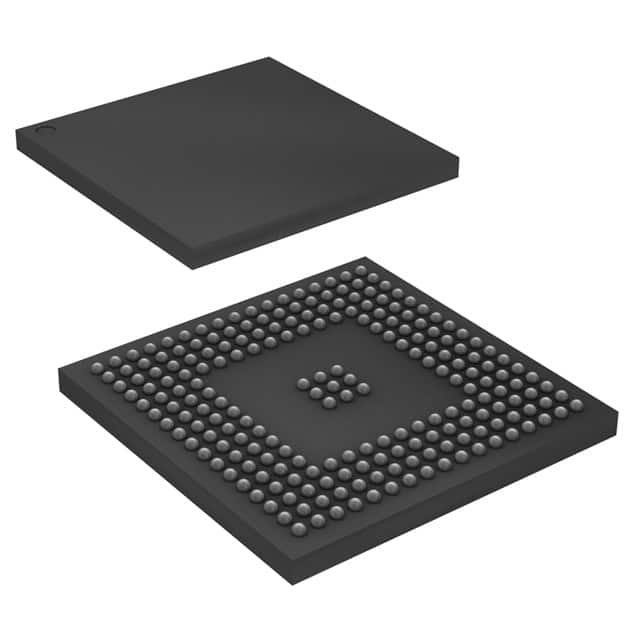
Renesas R9A07G044C26GBG#AC0

- Part No.:
- R9A07G044C26GBG#AC0
- Manufacturer:
- Renesas
- Category:
- Microprocessors
- Package:
- 361-LFBGA
- Datasheet:
-
 R9A07G044C26GBG#AC0.pdf
- Description:
- IC MPU RZ 200MHZ/1.2GHZ 361BGA
- Quantity:
- Payment:

- Shipping:

Inventory:109
Please send an inquiry. Send us your inquiry, and we will respond immediately.
Product details
Overview
R9A07G044C26GBG#AC0 from Renesas Electronics is a high-performance, dual-core heterogeneous microprocessor in the RZ/G2L Group, integrating an Arm Cortex-A55 application processor and an Arm Cortex-M33 real-time co-processor on a single die. It features 1MB L2 cache, dual-channel LPDDR4x memory interface (up to 1600 MT/s), and integrated 2D/3D graphics (Arm Mali-G31 MP2). It targets industrial HMI, entry-level edge AI gateways, and embedded vision systems requiring Linux + RTOS coexistence.
For engineers reviewing the R9A07G044C26GBG#AC0 datasheet, R9A07G044C26GBG#AC0 pinout, R9A07G044C26GBG#AC0 application, or R9A07G044C26GBG#AC0 equivalent, key selection criteria include its dual-core asymmetric architecture, LPDDR4x support, integrated security (TrustZone, cryptographic accelerators), and 14 mm × 14 mm 324-pin BGA package with 0.65 mm pitch.
Technical Context
The R9A07G044C26GBG#AC0 implements a tightly coupled heterogeneous compute architecture: the Cortex-A55 core runs Linux-based applications with full MMU support and executes at up to 1.2 GHz, while the Cortex-M33 core handles deterministic real-time tasks-including sensor fusion, motor control, and secure boot-running at up to 400 MHz with TCM and TrustZone isolation. Both cores share access to on-chip peripherals including GIC-600 interrupt controller and AXI/AHB bus matrix.
Its system-level integration includes hardware-accelerated crypto engines (AES-128/256, SHA-256, RSA-2048), a dedicated security subsystem (SCE7), and dual-camera MIPI CSI-2 interfaces supporting up to 13 MP resolution. Memory subsystem supports ECC on LPDDR4x and configurable AXI slave ports for custom IP integration.
Key Specifications
| Parameter | Value and Actual Design Meaning |
|---|---|
| CPU Cores | Dual-core: Arm Cortex-A55 @ 1.2 GHz + Arm Cortex-M33 @ 400 MHz - enables concurrent Linux OS and real-time RTOS execution without hypervisor overhead. |
| Memory Interface | LPDDR4x, 2-channel × 16-bit, up to 1600 MT/s - delivers >25 GB/s peak bandwidth for graphics and video pipelines. |
| Graphics | Arm Mali-G31 MP2 GPU with OpenCL 1.2/OpenGL ES 3.2 - supports smooth UI rendering and lightweight neural network inference acceleration. |
| Security | SCE7 security module with AES/SHA/RSA acceleration + TrustZone-enabled memory isolation - meets IEC 62443-3-3 SL2 requirements for industrial firmware integrity. |
| Camera Interface | Dual MIPI CSI-2 (4-lane each) supporting 13 MP@30 fps or dual 5 MP@30 fps - enables stereo vision or multi-sensor synchronization in compact edge devices. |
| Package | 324-pin FBGA (14 mm × 14 mm, 0.65 mm pitch, 0.8 mm height) - compatible with standard SMT reflow profiles and supports thermal pad grounding for 2.5 W typical power dissipation. |
| Operating Temp | −40°C to +85°C (Industrial grade) - qualified for uncontrolled ambient environments in factory automation and outdoor kiosks. |
Pinout & Package
Package: 324-pin Fine-Pitch Ball Grid Array (FBGA), 14 mm × 14 mm body, 0.65 mm ball pitch, 0.8 mm nominal height, RoHS-compliant matte tin finish. Thermal pad (exposed die attach) centered on underside for PCB-level heat sinking.
| Pin/Terminal | Circuit Role | Design Meaning |
|---|---|---|
| VDD_DDR | LPDDR4x I/O Power Supply | 1.1 V ±3% supply for DDR I/O banks; requires low-noise regulation and local ceramic decoupling (10 µF + 100 nF). |
| CLKIN | System Clock Input | 24 MHz ±50 ppm crystal reference input for PLLs; supports external oscillator or crystal with load capacitors. |
| RESET_N | Active-Low System Reset | Asynchronous reset asserted low; must be held low ≥100 µs after power stabilization per Renesas HW design guidelines. |
| CSI0_CLK_P/N | MIPI CSI-2 Clock Lane (Differential) | High-speed differential pair for camera clock; routed as controlled-impedance 100 Ω differential trace with matched length. |
| GND | Signal & Power Ground | 128 dedicated ground balls; must connect to solid internal ground plane with multiple via stitching under package footprint. |
| BOOT_MODE[2:0] | Boot Configuration Inputs | Three-pin strapping interface determining boot source (eMMC, SPI flash, SCIF); pulled high/low via 10 kΩ resistors to VDDIO or GND. |
Key Features
| Feature | Design Value |
|---|---|
| Heterogeneous Dual-Core Architecture | Enables simultaneous Linux application stack and hard real-time control loop execution without context-switch latency penalties. |
| Integrated Cryptographic Acceleration | Reduces firmware signing/verification time by >90% vs. software-only implementation, accelerating secure OTA updates. |
| LPDDR4x Memory Controller with ECC | Prevents silent data corruption in long-life industrial deployments; supports error detection and correction without external logic. |
| Mali-G31 GPU with Vulkan Support | Delivers 15 GFLOPS compute throughput for edge ML inference (e.g., TensorFlow Lite Micro models) alongside GUI rendering. |
| MIPI CSI-2 Dual-Port Interface | Eliminates need for external multiplexers or bridge ICs in dual-camera designs, reducing BOM cost and PCB area. |
Applications
| Industrial HMI Terminal | Edge AI Gateway |
|---|---|
Use Scenario: Touchscreen operator interface in PLC-controlled packaging line with vibration, EMI, and temperature cycling. IC Role / Device Role / Timing Role: Main application processor executing Qt-based UI on Linux, while Cortex-M33 manages I/O polling, safety monitoring, and watchdog coordination. Use Value: Deterministic response <10 ms for emergency stop signals via M33, while A55 renders dynamic SVG-based diagnostics - no OS jitter interference. | Use Scenario: Smart factory node aggregating sensor data from 16+ Modbus RTU devices and running anomaly detection models. IC Role / Device Role / Timing Role: Host processor for Yocto Linux runtime, model inference engine (via Arm Compute Library), and secure TLS 1.3 gateway to cloud MQTT broker. Use Value: On-chip crypto acceleration cuts TLS handshake time by 65%, enabling sub-second connection recovery after network interruption. |
| Embedded Vision Camera | Secure Access Control Panel |
Use Scenario: Compact license plate recognition unit mounted outdoors with wide-temp operation and anti-fog housing. IC Role / Device Role / Timing Role: Image acquisition (dual MIPI CSI-2), preprocessing (ISP pipeline), and CNN inference (Mali-G31 + NEON) - all on-die. Use Value: Eliminates external FPGA or NPU, reducing power to 2.1 W typical and enabling fanless aluminum enclosure design. | Use Scenario: Biometric door controller with fingerprint + RFID authentication, tamper detection, and encrypted audit log storage. IC Role / Device Role / Timing Role: Root of trust anchor: SCE7 validates firmware signature at boot; M33 enforces secure credential storage and side-channel resistant crypto operations. Use Value: Meets ISO/IEC 15408 EAL4+ requirements for physical access systems via hardware-enforced memory isolation and key zeroization on tamper event. |
Equivalent & Alternatives
The following parts are listed as comparable options for similar heterogeneous processor applications.
| Alternative Part | Technical Difference | Application Difference | Selection Advice |
|---|---|---|---|
| R9A07G043C26GBG#AC0 | Omits Mali-G31 GPU and ISP; retains same CPU cores, memory interface, and security block. | Suitable for headless control applications where graphics acceleration is unnecessary. | Select when UI rendering is handled remotely or omitted entirely - reduces thermal load and BOM cost by ~$1.80. |
| i.MX 8M Mini (NXP, MCIMX8M5DVTLZAA) | Quad Cortex-A53 + Cortex-M4; lacks TrustZone-enforced dual-core isolation; uses eMMC boot only. | Better for multimedia-rich consumer IoT but less suited for certified industrial safety functions. | Choose for Android Things compatibility or higher video decode throughput; avoid if IEC 62443-3-3 SL2 certification is required. |
Compared with R9A07G044C26GBG#AC0, the R9A07G043C26GBG#AC0 offers identical real-time and security capabilities at lower cost and power, while the i.MX 8M Mini provides broader multimedia support but weaker hardware-enforced separation between application and control domains.
Availability
R9A07G044C26GBG#AC0 is available at Aetrix Electronics and suitable for industrial HMI terminals, edge AI gateways, embedded vision cameras, and secure access control panels requiring stable component supply across multi-year production cycles.
Supply support for R9A07G044C26GBG#AC0 includes scheduled delivery planning, volume procurement assistance, BOM continuity management, traceable sourcing, and lifecycle availability coordination for OEM customers, industrial embedded developers, connected-device designers, and electronics production programs.
Manufacturer
Renesas Electronics Corporation is a Japanese semiconductor manufacturer specializing in microcontrollers, analog, power, and SoC solutions for automotive, industrial, and enterprise markets.
The RZ/G series - including R9A07G044C26GBG#AC0 - is designed for Linux-capable, high-reliability embedded applications demanding real-time responsiveness, hardware security, and long-term availability in industrial automation and edge infrastructure.
FAQ
What is the maximum supported LPDDR4x speed for R9A07G044C26GBG#AC0?
The R9A07G044C26GBG#AC0 supports LPDDR4x memory at data rates up to 1600 MT/s across two 16-bit channels. This configuration delivers a theoretical peak bandwidth of 25.6 GB/s and requires strict PCB layout adherence to Renesas' DDR layout guidelines - including length matching within ±5 mm, 40 Ω single-ended impedance, and dedicated VDDQ/VSSQ planes. The R9A07G044C26GBG#AC0's memory controller includes built-in training and calibration logic to compensate for process/voltage/temperature variation.
Does R9A07G044C26GBG#AC0 include hardware support for secure boot?
Yes, R9A07G044C26GBG#AC0 implements a multi-stage secure boot chain anchored in ROM code, verified by the SCE7 security module. It supports cryptographic verification of bootloader images using ECDSA-P256 or RSA-2048 signatures, with keys stored in one-time-programmable (OTP) fuses. The R9A07G044C26GBG#AC0 also enforces TrustZone-based memory isolation during boot, preventing unauthorized access to secure firmware regions - a requirement for IEC 62443-3-3 compliance.
Can R9A07G044C26GBG#AC0 run both Linux and FreeRTOS simultaneously?
Yes, R9A07G044C26GBG#AC0 is architected for asymmetric multiprocessing (AMP): the Cortex-A55 core typically runs a full Linux distribution (e.g., Yocto Project), while the Cortex-M33 core independently executes FreeRTOS or bare-metal firmware. Inter-core communication occurs via shared memory and mailbox interrupts, with hardware-enforced memory protection preventing interference. This configuration is validated in Renesas' "RZ/G2L AMP Reference Software" package, which includes sample IPC drivers and synchronization primitives for R9A07G044C26GBG#AC0.
What camera interfaces does R9A07G044C26GBG#AC0 support?
R9A07G044C26GBG#AC0 integrates two independent MIPI CSI-2 receivers, each supporting up to four data lanes and one clock lane. Each interface handles up to 13 MP resolution at 30 fps (or 5 MP at 60 fps), with programmable pixel format (RAW10/12, YUV422, RGB888) and on-the-fly cropping/scaling. The R9A07G044C26GBG#AC0 does not include an integrated ISP; however, it supports external ISPs via parallel or CSI-2 daisy-chain configurations, and provides DMA engines optimized for direct frame transfer to LPDDR4x.
Is R9A07G044C26GBG#AC0 qualified for industrial temperature range?
Yes, R9A07G044C26GBG#AC0 is rated for operation from −40°C to +85°C ambient temperature and is classified as Industrial Grade per Renesas' quality standards. It undergoes extended burn-in and HTOL (High-Temperature Operating Life) testing per JESD22-A108, with failure-in-time (FIT) rate <100 FIT. The R9A07G044C26GBG#AC0's thermal design power (TDP) is specified at 2.5 W typical under balanced A55+M33 load, enabling passive cooling in sealed enclosures - a key requirement for DIN-rail mounted industrial controllers.
R9A07G044C26GBG#AC0 Specifications
- Product attributes
- Attribute value
- Manufacturer:
- Renesas
- Package/Case:
- 361-LFBGA
- Series:
- RZ/G2LC
- Packaging:
- Tray
- Product Status:
- Active
- Core Processor:
- ARM® Cortex®-A55, ARM® Cortex®-M33
- Number of Cores/Bus Width:
- 3 Core, 64-Bit
- Speed:
- 200MHz, 1.2GHz
- Co-Processors/DSP:
- ARM® Mali-G31
- RAM Controllers:
- DDR3L, DDR4
- Graphics Acceleration:
- No
- Display & Interface Controllers:
- MIPI/CSI, MIPI/DSI
- Ethernet:
- 10/100/1000Mbps (2)
- SATA:
- -
- USB:
- USB 2.0 (2)
- Voltage - I/O:
- 1.8V, 3.3V
- Operating Temperature:
- -40°C ~ 85°C (TA)
- Grade:
- -
- Qualification:
- -
- Security Features:
- AES, RSA, SHA-1, SHA-224, SHA-256, TRNG
- Mounting Type:
- Surface Mount
- Supplier Device Package:
- 361-BGA (13x13)
- Additional Interfaces:
- CANbus, eMMC/SD/SDIO, I2C, SPI, UART
R9A07G044C26GBG#AC0 FAQ
1.How can I place an order for R9A07G044C26GBG#AC0 through Aetrix?
Please submit a Request for Quotation (RFQ) for R9A07G044C26GBG#AC0 on Aetrix. Our sales agent will provide a competitive quotation and guide you through the order confirmation once you accept the terms.
2.Are the price and stock information for R9A07G044C26GBG#AC0 reliable?
The price and inventory of R9A07G044C26GBG#AC0 are updated periodically and may fluctuate due to market conditions. Stock and pricing data are typically refreshed every 24 hours. Quotation validity for R9A07G044C26GBG#AC0 is usually 5 days.
3.What payment methods are accepted for R9A07G044C26GBG#AC0?
We accept Wire Transfer, PayPal, Credit Card, Western Union, MoneyGram, and Escrow for R9A07G044C26GBG#AC0 transactions.
Note: Certain payment methods may incur a processing fee.
4.How is shipping managed for R9A07G044C26GBG#AC0?
R9A07G044C26GBG#AC0 orders can be shipped via leading logistics carriers, including DHL, UPS, FedEx, TNT, or Registered Mail.
Once your R9A07G044C26GBG#AC0 order is processed, you will receive an email with the shipment details and tracking number.
Note: Tracking information may take up to 24 hours to appear. Express delivery typically takes 3–5 business days.
5.How can I obtain technical support or documentation for R9A07G044C26GBG#AC0?
For technical support, including R9A07G044C26GBG#AC0 datasheets, pinout diagrams, or application guidance, please contact our engineering support team. They can provide detailed documentation and assistance for your R9A07G044C26GBG#AC0 requirements.
6.How does Aetrix verify that R9A07G044C26GBG#AC0 is sourced from the original manufacturer or authorized distributors?
All R9A07G044C26GBG#AC0 products on Aetrix are procured from qualified distributors and authorized channels. Our dedicated quality assurance team conducts strict verification, including traceability checks and, if necessary, third-party testing. This ensures that R9A07G044C26GBG#AC0 meets industry standards.
7.What is the process for return or replacement of R9A07G044C26GBG#AC0?
All R9A07G044C26GBG#AC0 units undergo pre-shipment inspection (PSI). If there is an issue with R9A07G044C26GBG#AC0, returns or replacements are accepted under the following conditions:
1.Quantity discrepancies, incorrect items, or visible external defects (such as breakage or corrosion), acknowledged by Aetrix.
2.The issue is reported within 90 days of delivery.
3.The R9A07G044C26GBG#AC0 part is unused and in its original packaging.
Return procedure for R9A07G044C26GBG#AC0:
1.Submit a request within 90 days.
2.Obtain a Return Material Authorization (RMA) from Aetrix.
R9A07G044C26GBG#AC0 Tags
-
AT91SAM9260B-CU-999
Microchip Technology
-
AT91SAM9G25-CU
Microchip Technology
-
ATSAMA5D27C-CU
Microchip Technology
-
AT91SAM9X35-CU
Microchip Technology
-
AT91SAM9X25-CU
Microchip Technology
-
MCIMX6Y2CVM08AB
NXP Semiconductors
.JPG)
-
AM3352BZCZ100
Texas Instruments
-
AT91SAM9260B-CU
Microchip Technology
-
AT91SAM9260B-QU
Microchip Technology
-
ATSAMA5D31A-CU
Microchip Technology
-
AT91SAM9G20B-CU-999
Microchip Technology
-
MCIMX6Y2CVM05AB
NXP Semiconductors
Tech Hub

TTL and CMOS logic families differ in thresholds, loading, output drive, power and timing. This engineering guide compares 74HC and 74HCT, calculates noise margins and checks 3.3 V/5 V compatibility.

A practical engineering guide to 3.3V and 5V logic compatibility, input thresholds, resistor dividers, translator ICs, MOSFET level shifting, I2C pull-ups, timing limits and power-sequencing risks.

The 74HC595 uses push-pull logic outputs, while the TPIC6B595 uses 50 V open-drain DMOS sinks for higher-power loads. This guide compares timing, current limits, 3.3 V interfacing, load wiring, thermal…

The 74HC595 converts serial data into eight stable parallel outputs. This guide covers pin functions, shift and storage timing, OE and MR behavior, drive-current limits, cascading, voltage compatibilit…

A technical comparison of level-sensitive latches and edge-triggered flip-flops, covering timing windows, setup and hold limits, master–slave operation, time borrowing, race-through, HDL inference and…

A D latch stores one bit while Enable controls when data can pass. This reference covers gate-level operation, truth tables, transparency, setup and hold timing, LE versus OE, common ICs and practical …

An SR latch stores one bit through cross-coupled feedback. This engineering reference covers NOR and NAND implementations, truth tables, forbidden-state recovery, gated operation, switch debouncing, fa…

Latch circuits retain one bit through feedback. This technical reference covers SR and D latches, truth tables, transparency, timing limits, latch-versus-flip-flop behavior, applications and common log…

An engineering guide to LED driver operation, constant-current and constant-voltage outputs, linear and switching topologies, dimming, IC selection, calculations, replacement compatibility, and fault c…

Operational amplifier guide covering op amp basics, feedback, ideal vs real op amps, common configurations, buffer circuits, offset, bias current, gain-bandwidth, slew rate, rail-to-rail limits and sel…


