Silicon Labs RD-0020-0601
- Part No.:
- RD-0020-0601
- Manufacturer:
- Silicon Labs
- Category:
- RF, RFID, Wireless Evaluation Boards
- Package:
- Datasheet:
-
RD-0020-0601.pdf
- Description:
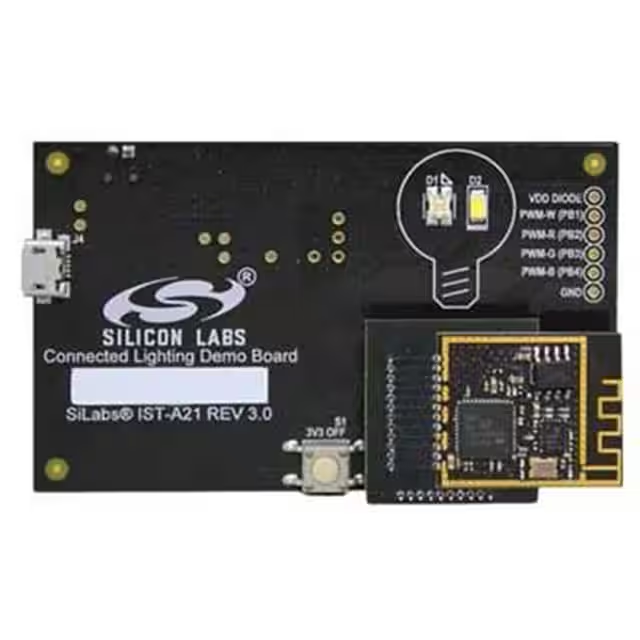
- DEMO KIT ZB LIGHT EM357 PCB ANT
- Quantity:
- Payment:

- Shipping:

Inventory:2,732
Please send an inquiry. Send us your inquiry, and we will respond immediately.
Product details
Overview
RD-0020-0601 from Silicon Laboratories is a high-performance, integrated ZigBee/IEEE 802.15.4 System-on-Chip featuring a 32-bit ARM® Cortex-M3 processor, 128 kB flash, 12 kB RAM, AES128 encryption accelerator, and a 2.4 GHz transceiver with configurable RX sensitivity down to –102 dBm and TX output up to +8 dBm. It serves as the central wireless SoC in battery-powered smart home sensors and industrial monitoring nodes.
For engineers reviewing the RD-0020-0601 datasheet, RD-0020-0601 pinout, RD-0020-0601 application, or RD-0020-0601 equivalent, key selection considerations include deep-sleep current (400 nA), 24-pin GPIO flexibility with Schmitt-trigger inputs, RF coexistence robustness against Wi-Fi/Bluetooth, and support for external power amplifiers in compact 7×7 mm QFN48 packaging.
Technical Context
The RD-0020-0601 integrates an ARM Cortex-M3 CPU running at 6/12/24 MHz with nested vectored interrupt controller (NVIC) and memory protection unit (MPU), coupled directly to a fully compliant IEEE 802.15.4-2003 PHY/MAC radio subsystem. Its dual-oscillator architecture combines a 24 MHz crystal for main system timing and optional 32.768 kHz crystal for precision sleep timers, while internal 1.8 V and 1.25 V regulators enable single-supply 2.1–3.6 V operation.
RF performance is defined by configurable link budget (up to 110 dB), programmable TX power (+3 dBm nominal, up to +8 dBm), and multi-mode RX sensitivity (–100 dBm standard, –102 dBm in boost mode). The chip supports non-intrusive packet trace via dedicated PTI port and full ARM-standard debug interfaces (SWD/JTAG) with DWT, ITM, and FPB capabilities.
Key Specifications
| Parameter | Value and Actual Design Meaning |
|---|---|
| CPU Core | ARM Cortex-M3, 32-bit RISC, operates at 6/12/24 MHz with Thumb-2 instruction set and NVIC |
| Memory | 128 kB flash (with read protection option) + 12 kB RAM - sufficient for ZigBee PRO stack and application logic |
| RF Performance | –100 dBm RX sensitivity (1% PER, 20-byte packet); +3 dBm nominal TX output; configurable up to +8 dBm |
| Power Consumption | 400 nA deep-sleep current (RAM retained, no sleep timer); 26 mA RX current (CPU active, 3.0 V) |
| GPIO & Peripherals | 24 highly configurable GPIOs with Schmitt-trigger inputs; UART/SPI/TWI; flexible ADC; AES128 hardware accelerator |
| Package | 7×7 mm, 48-pin QFN - RoHS-compliant, exposed thermal pad, compatible with standard reflow profiles |
| Supply Range | 2.1–3.6 V single supply; internal 1.8 V and 1.25 V regulators eliminate need for external LDOs |
Pinout & Package
RD-0020-0601 is housed in a 7×7 mm, 48-pin QFN package with exposed thermal pad. Pin functions are validated per Silicon Labs EM357 reference design and datasheet Rev 1.3 (Section 19.1).
| Pin/Terminal | Circuit Role | Design Meaning |
|---|---|---|
| VDD_PADS (Pins 1, 23, 28, 37) | Digital I/O supply rail | Sets logic voltage level (2.1–3.6 V) for all GPIOs; must be decoupled locally |
| nRESET (Pin 12) | Active-low reset input | Asynchronous reset with internal pull-up (24–34 kΩ); triggers full system initialization |
| RF_P / RF_N (Pins 3, 4) | Differential RF antenna interface | Connects to balun for 50 Ω antenna matching; supports 2.4 GHz IEEE 802.15.4 operation |
| OSCA / OSCB (Pins 48, 47) | 24 MHz crystal oscillator terminals | Drives primary system clock; requires external 24 MHz ±25 ppm crystal and load caps |
| PA0–PA7, PB0–PB7, PC0–PC7 | General-purpose I/O ports | 24 total GPIOs; configurable as digital I/O, analog input (ADC), or peripheral functions (UART/SPI/TWI) |
| SWCLK / JTCK (Pin 32) | JTAG/SWD debug clock | Enables full ARM-standard debugging (flash programming, breakpoints, trace) without halting real-time operation |
Key Features
| Feature | Design Value |
|---|---|
| Integrated ZigBee/802.15.4 Stack Support | Hardware-accelerated MAC layer and baseband processing reduce host CPU overhead and ensure deterministic timing |
| AES128 Encryption Accelerator | Dedicated crypto engine enables secure over-the-air updates and end-to-end encryption without software latency penalty |
| Ultra-Low Deep-Sleep Current | 400 nA retention mode allows >10-year battery life in sensor nodes with periodic wake-up intervals |
| Flexible Clock Architecture | Internal HF RC oscillator enables 110 µs wake-from-sleep startup; optional 32.768 kHz crystal improves timer accuracy to ±20 ppm |
| Robust RF Coexistence | Proven rejection of Wi-Fi and Bluetooth interferers (>36 dB adjacent channel, >59 dB 2nd adjacent) maintains link reliability in dense RF environments |
Applications
| Smart Home Sensor Node | Industrial Wireless Monitor |
|---|---|
|
Use Scenario: Battery-powered temperature/humidity sensor transmitting data every 5 minutes to a ZigBee coordinator. IC Role / Device Role / Timing Role: Primary SoC handling RF communication, sensor interface, low-power scheduling, and security. Use Value: 400 nA deep-sleep current extends CR2032 battery life beyond 5 years; integrated AES128 secures OTA firmware updates. |
Use Scenario: DIN-rail mounted vibration monitor in factory machinery, reporting anomalies via ZigBee mesh to gateway. IC Role / Device Role / Timing Role: Real-time RF transceiver with deterministic MAC timing and robust coexistence in electrically noisy environments. Use Value: –102 dBm RX sensitivity and >59 dB 2nd adjacent rejection maintain link integrity near variable-frequency drives and Wi-Fi APs. |
| Lighting Control Endpoint | Medical Asset Tracker |
|
Use Scenario: LED driver module receiving group commands and dimming profiles over ZigBee network. IC Role / Device Role / Timing Role: Low-latency command processor with fast wake-up (110 µs) and precise PWM generation via GPIO/timers. Use Value: 24 configurable GPIOs support direct LED control, current sensing, and status indication without external logic. |
Use Scenario: Small-form-factor BLE/ZigBee hybrid tag tracking medical equipment location and usage history. IC Role / Device Role / Timing Role: Dual-role SoC managing both ZigBee mesh backhaul and local BLE advertising for proximity detection. Use Value: Single 2.1–3.6 V supply simplifies power design; 7×7 mm QFN enables integration into space-constrained enclosures. |
Equivalent & Alternatives
The following parts are listed as comparable options for similar ZigBee/802.15.4 SoC applications.
| Alternative Part | Technical Difference | Application Difference | Selection Advice |
|---|---|---|---|
| EM3581 | Successor device with 192 kB flash, enhanced RF front-end, and improved ESD rating (±4 kV HBM) | Better suited for complex mesh routers requiring larger code footprint and higher reliability in harsh environments | Select EM3581 when upgrading legacy designs needing extended memory or certified industrial robustness |
| CC2531 | 8051-based core, 256 kB flash, no ARM debug infrastructure, lower RX sensitivity (–97 dBm) | Limited to simpler star-topology networks; lacks SWD/JTAG trace and advanced power management | Choose CC2531 only for cost-sensitive, low-complexity applications where ARM toolchain compatibility is not required |
Compared with EM3581, RD-0020-0601 offers proven field reliability and smaller memory footprint ideal for endpoint devices; versus CC2531, it delivers superior debug visibility, lower deep-sleep current, and deterministic ARM-based real-time performance critical for time-sensitive sensor fusion.
Availability
RD-0020-0601 is available at Aetrix Electronics and suitable for smart home sensor nodes, industrial wireless monitors, lighting control endpoints, and medical asset trackers requiring stable component supply and long-term lifecycle support.
Supply support for RD-0020-0601 includes scheduled delivery planning, volume procurement assistance, BOM continuity management, traceable sourcing, and lifecycle availability coordination for OEM customers, industrial embedded developers, connected-device designers, and electronics production programs.
Manufacturer
Silicon Laboratories is a fabless semiconductor company specializing in silicon, software, and solutions for IoT, timing, and wireless applications.
RD-0020-0601 belongs to the EM35x family of ZigBee/802.15.4 SoCs designed specifically for ultra-low-power, standards-compliant wireless mesh networking in resource-constrained edge devices.
FAQ
What is the maximum configurable transmit output power for RD-0020-0601?
The RD-0020-0601 supports configurable TX output power up to +8 dBm in boost mode, verified on Silicon Labs' EM357 reference design. At +3 dBm nominal setting, total TX current is 30.0 mA (25 °C, 3.0 V, ARM Cortex-M3 running at 12 MHz). This range enables optimization between link margin and battery lifetime in end-node deployments.
Does RD-0020-0601 require an external crystal oscillator?
Yes, RD-0020-0601 requires a 24 MHz crystal connected to OSCA/OSCB pins (Pins 48/47) for primary system clocking. An optional 32.768 kHz crystal may be added for high-accuracy sleep timers, but the internal low-frequency RC oscillator (400 nA quiescent) suffices for basic deep-sleep timing.
How many GPIOs does RD-0020-0601 provide, and what are their key electrical characteristics?
RD-0020-0601 provides 24 highly configurable GPIOs across PA/PB/PC ports. All support Schmitt-trigger inputs with switch thresholds of 0.42–0.50 × VDD_PADS (low) and 0.62–0.80 × VDD_PADS (high). Eight pins (PA6, PA7, PB6, PB7, PC0) support 8 mA sink/source; others support 4 mA, with total I/O current limited to 40 mA.
What debug interfaces are supported by RD-0020-0601?
RD-0020-0601 supports full ARM-standard debug via Serial Wire Debug (SWD) and JTAG using pins SWCLK (Pin 32) and associated TMS/TDO/TDI. It includes Data Watchpoint & Trace (DWT), Instrumentation Trace Macrocell (ITM), Flash Patch & Breakpoint (FPB), and Packet Trace Interface (PTI) for non-intrusive RF packet analysis.
Is RD-0020-0601 pin-compatible with other EM35x variants like EM357 or EM3581?
No, RD-0020-0601 is not pin-compatible with EM357 or EM3581. While all share the same 48-pin QFN package outline, pin assignments differ significantly - for example, RF_TX_ALT_P/N placement and VDD domain routing vary across revisions. Migration requires PCB redesign and firmware adaptation.
RD-0020-0601 Specifications
- Product attributes
- Attribute value
- Manufacturer:
- Silicon Labs
- Series:
- Ember®
- Packaging:
- Box
- Product Status:
- Obsolete
- Type:
- Transceiver; 802.15.4 (Zigbee®)
- Frequency:
- 2.4GHz
- Contents:
- Board(s)
- Utilized IC / Part:
- EM357
RD-0020-0601 FAQ
1.How can I place an order for RD-0020-0601 through Aetrix?
Please submit a Request for Quotation (RFQ) for RD-0020-0601 on Aetrix. Our sales agent will provide a competitive quotation and guide you through the order confirmation once you accept the terms.
2.Are the price and stock information for RD-0020-0601 reliable?
The price and inventory of RD-0020-0601 are updated periodically and may fluctuate due to market conditions. Stock and pricing data are typically refreshed every 24 hours. Quotation validity for RD-0020-0601 is usually 5 days.
3.What payment methods are accepted for RD-0020-0601?
We accept Wire Transfer, PayPal, Credit Card, Western Union, MoneyGram, and Escrow for RD-0020-0601 transactions.
Note: Certain payment methods may incur a processing fee.
4.How is shipping managed for RD-0020-0601?
RD-0020-0601 orders can be shipped via leading logistics carriers, including DHL, UPS, FedEx, TNT, or Registered Mail.
Once your RD-0020-0601 order is processed, you will receive an email with the shipment details and tracking number.
Note: Tracking information may take up to 24 hours to appear. Express delivery typically takes 3–5 business days.
5.How can I obtain technical support or documentation for RD-0020-0601?
For technical support, including RD-0020-0601 datasheets, pinout diagrams, or application guidance, please contact our engineering support team. They can provide detailed documentation and assistance for your RD-0020-0601 requirements.
6.How does Aetrix verify that RD-0020-0601 is sourced from the original manufacturer or authorized distributors?
All RD-0020-0601 products on Aetrix are procured from qualified distributors and authorized channels. Our dedicated quality assurance team conducts strict verification, including traceability checks and, if necessary, third-party testing. This ensures that RD-0020-0601 meets industry standards.
7.What is the process for return or replacement of RD-0020-0601?
All RD-0020-0601 units undergo pre-shipment inspection (PSI). If there is an issue with RD-0020-0601, returns or replacements are accepted under the following conditions:
1.Quantity discrepancies, incorrect items, or visible external defects (such as breakage or corrosion), acknowledged by Aetrix.
2.The issue is reported within 90 days of delivery.
3.The RD-0020-0601 part is unused and in its original packaging.
Return procedure for RD-0020-0601:
1.Submit a request within 90 days.
2.Obtain a Return Material Authorization (RMA) from Aetrix.
RD-0020-0601 Tags
-
113991054
Seeed Technology Co., Ltd
-
SC0918
Raspberry Pi

-
113991114
Seeed Technology Co., Ltd

-
ESP32-C6-DEVKITM-1-N4
Espressif Systems
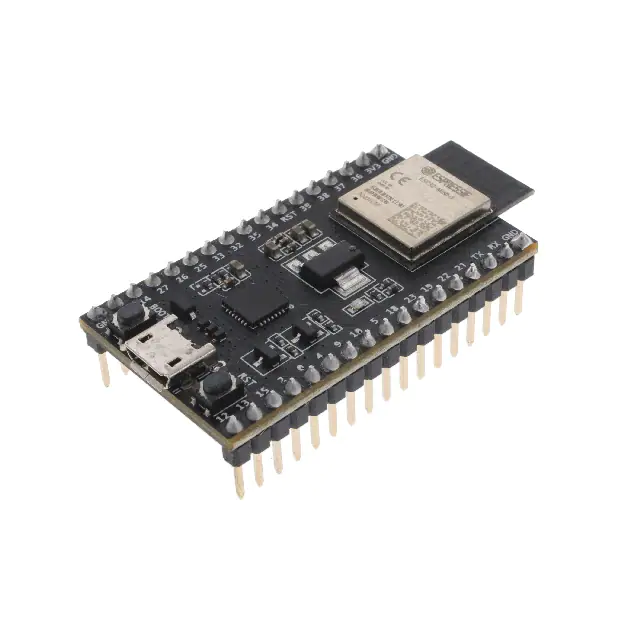
-
ESP32-DEVKITM-1
Espressif Systems
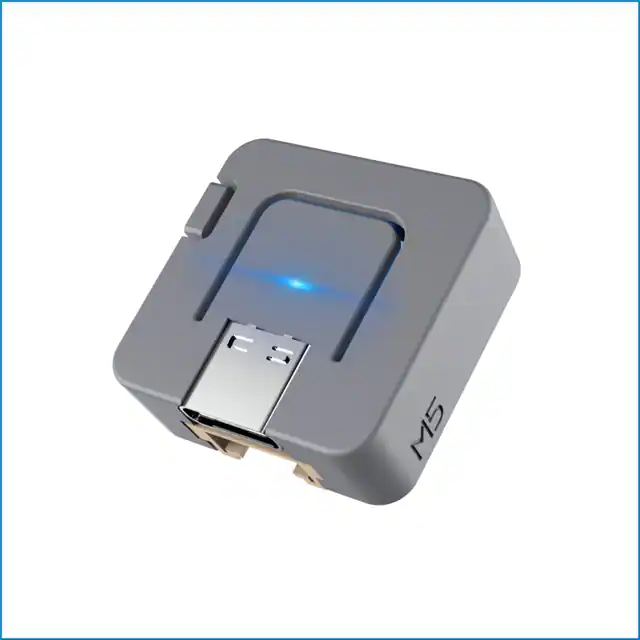
-
C008
M5Stack Technology Co., Ltd.
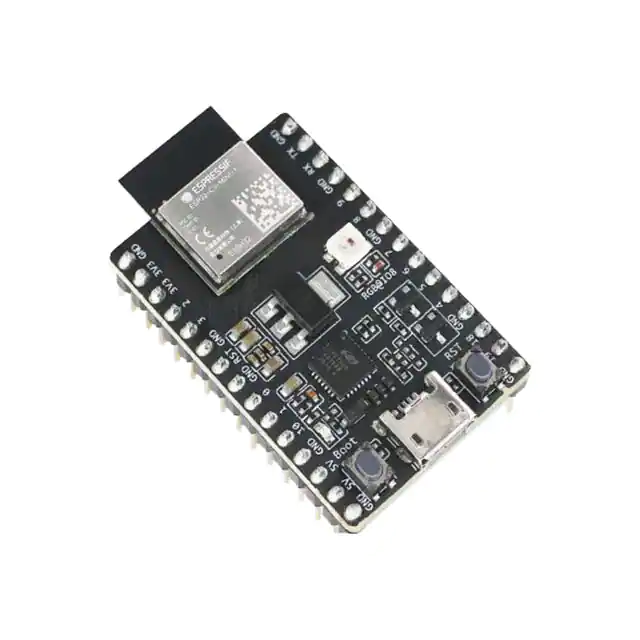
-
ESP32-C3-DEVKITC-02
Espressif Systems

-
ESP32-C6-DEVKITC-1-N8
Espressif Systems
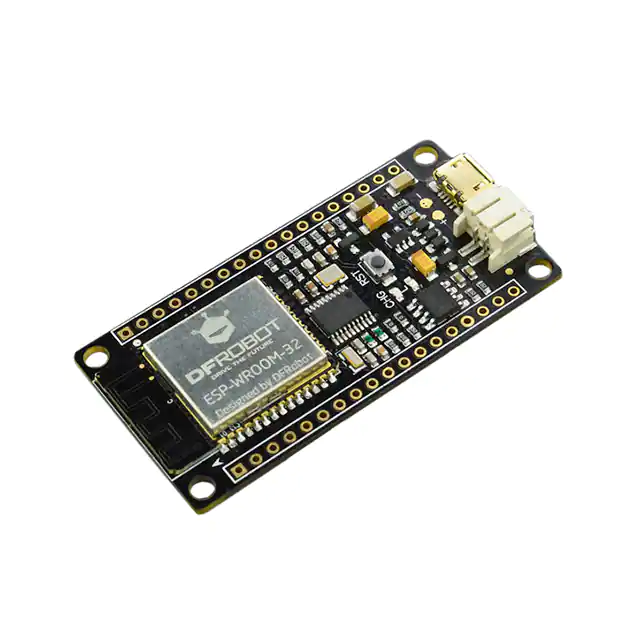
-
DFR0478
DFRobot
-
102010448
Seeed Technology Co., Ltd
-
ESP32-DEVKITC-32E
Espressif Systems
-
ESP32-DEVKITC-32UE
Espressif Systems
Tech Hub
Schmitt triggers use separate rising and falling thresholds to stabilize slow or noisy signals. This guide covers hysteresis, 74HC14 and 74HCT14 selection, comparator calculations, RC oscillators and p…
Counterfeit components can hide behind convincing markings and passing basic function tests. This engineering reference covers source traceability, external inspection, X-ray, XRF, electrical testing, …
A practical engineering and sourcing framework covering lifecycle verification, lifetime-buy calculations, replacement qualification, supplier checks and counterfeit-risk controls.
TTL and CMOS logic families differ in thresholds, loading, output drive, power and timing. This engineering guide compares 74HC and 74HCT, calculates noise margins and checks 3.3 V/5 V compatibility.
A practical engineering guide to 3.3V and 5V logic compatibility, input thresholds, resistor dividers, translator ICs, MOSFET level shifting, I2C pull-ups, timing limits and power-sequencing risks.
The 74HC595 uses push-pull logic outputs, while the TPIC6B595 uses 50 V open-drain DMOS sinks for higher-power loads. This guide compares timing, current limits, 3.3 V interfacing, load wiring, thermal…
The 74HC595 converts serial data into eight stable parallel outputs. This guide covers pin functions, shift and storage timing, OE and MR behavior, drive-current limits, cascading, voltage compatibilit…
A technical comparison of level-sensitive latches and edge-triggered flip-flops, covering timing windows, setup and hold limits, master–slave operation, time borrowing, race-through, HDL inference and…
A D latch stores one bit while Enable controls when data can pass. This reference covers gate-level operation, truth tables, transparency, setup and hold timing, LE versus OE, common ICs and practical …
An SR latch stores one bit through cross-coupled feedback. This engineering reference covers NOR and NAND implementations, truth tables, forbidden-state recovery, gated operation, switch debouncing, fa…