
 My Inquiry
 My Account


Renesas RD3.3E-T1-AZ

- Part No.:
- RD3.3E-T1-AZ
- Manufacturer:
- Renesas
- Category:
- Single Zener Diodes
- Package:
- -
- Datasheet:
-
 RD3.3E-T1-AZ.pdf
- Description:
- DIODE ZENER
- Quantity:
- Payment:

- Shipping:

Inventory:26,000
Please send an inquiry. Send us your inquiry, and we will respond immediately.
Product details
Overview
RD3.3E-T1-AZ from Micrel is a monolithic UHF ASK transmitter IC operating in the 800MHz–1GHz band, delivering –3dBm EIRP output power with automatic antenna tuning and 115kbps data rate support. It functions as a "data-in, antenna-out" RF transmitter for battery-powered remote control systems, requiring only a single external crystal and minimal passive components.
For engineers reviewing the RD3.3E-T1-AZ datasheet, RD3.3E-T1-AZ pinout, RD3.3E-T1-AZ application, or RD3.3E-T1-AZ equivalent, key selection considerations include its integrated varactor-based antenna alignment, low standby current (<1µA), ASK/OOK modulation compatibility, and SOIC-8 packaging for compact PCB integration in cost-sensitive wireless links.
Technical Context
The RD3.3E-T1-AZ implements a fully integrated UHF synthesizer with quadrature I/Q outputs: the in-phase (I) signal drives the power amplifier while the quadrature (Q) signal feeds a phase detector for closed-loop antenna tuning. Its internal varactor capacitance (2.6–3.3pF range) dynamically compensates for antenna impedance drift across temperature and supply voltage.
Transmit frequency is derived from a REFOSC input clock divided by 64, supporting crystal or AC-coupled reference sources. Calibration occurs at power-up or after STBY exit (20ms), and PA bias is regulated via the PC pin (0.1–0.4V) to maintain constant output power up to regulatory limits over battery life.
Key Specifications
| Parameter | Value and Actual Design Meaning |
|---|---|
| Frequency Range | 800MHz to 1GHz - supports global unlicensed UHF bands including 868MHz and 915MHz ISM allocations. |
| Output Power (EIRP) | –3dBm - compliant with ETSI EN 300 220 and FCC Part 15.247 radiated emission limits for short-range devices. |
| Data Rate | Up to 115kbps - enables responsive remote actuation and sensor telemetry without intersymbol interference. |
| Standby Current | <1µA - extends battery life in intermittent-use applications such as key fobs and wireless sensors. |
| Modulation Type | ASK/OOK - compatible with standard super-regenerative and super-heterodyne receivers across vendor families. |
| Supply Voltage | 4.75V to 5.5V - matches common 5V logic and LDO-regulated battery systems. |
| Operating Temp | –40°C to +85°C - qualified for automotive RKE, industrial controls, and outdoor consumer electronics. |
Pinout & Package
RD3.3E-T1-AZ is housed in an 8-pin SOIC (Small Outline Integrated Circuit) package, 3.9mm × 4.9mm body size, 1.27mm pitch, with gull-wing leads and JEDEC MS-012AC compliance.
| Pin/Terminal | Circuit Role | Design Meaning |
|---|---|---|
| PC | Power Control Input | 0.1–0.4V analog voltage sets PA bias; enables precise output power regulation independent of battery decay. |
| VDD | Positive Supply | 4.75–5.5V main power rail; requires local 0.1µF + 4.7µF bypassing to VSS for RF stability. |
| VSS | Ground Reference | Common return for analog/digital/RF sections; shortest possible trace to bypass capacitors minimizes noise coupling. |
| REFOSC | Reference Oscillator Input | Accepts 13.5625MHz crystal (ESR <20Ω) or AC-coupled 0.5Vpp clock; defines transmit carrier via ÷64 division. |
| STBY | Standby Enable | Logic-high (≥0.8VDD) activates transmission; logic-low (≤0.1VDD) reduces current to <1µA. |
| ANTM / ANTP | Differential RF Output | True differential 50Ω RF ports; drive balanced antennas or SAW filters without external balun. |
| ASK | Amplitude Shift Key Input | Digital ASK data input (0.1VDD/0.8VDD thresholds); CW mode enabled by tying to VDD. |
Key Features
| Feature | Design Value |
|---|---|
| Integrated Antenna Tuning | On-chip varactor and phase detector eliminate manual antenna matching, reducing production calibration time and test fixture cost. |
| Single-Chip Transmitter Architecture | Replaces discrete oscillator, PA, modulator, and tuning circuitry - cuts BOM count to ≤5 external parts (crystal, caps, resistors). |
| Regulatory-Compliant Output Power | Fixed –3dBm EIRP with ±2dBm variation over temp/supply ensures consistent certification across production lots. |
| Low-Power Standby Mode | <1µA quiescent current enables multi-year operation on coin-cell batteries in infrequently used remotes. |
| Fast Wake-Up & Stabilization | 20ms calibration + 9ms stabilization from STBY to valid transmission enables rapid burst-mode communication. |
Applications
| Remote Keyless Entry (RKE) | Garage Door Opener |
|---|---|
Use Scenario: Handheld fob transmits encrypted door unlock command within 10m line-of-sight. IC Role / Device Role / Timing Role: Primary ASK transmitter generating 868MHz carrier synchronized to microcontroller data stream. Use Value: Automatic antenna tuning maintains link margin despite mechanical stress or temperature shifts in plastic enclosure. | Use Scenario: Wall-mounted button sends one-shot open/close signal to motor controller via 315MHz or 433MHz band. IC Role / Device Role / Timing Role: Low-cost, high-reliability OOK transmitter interfaced directly to momentary switch and MCU GPIO. Use Value: Sub-1µA standby current enables 5+ year battery life in rarely operated residential units. |
| Wireless Light/Fan Control | Industrial Sensor Telemetry |
Use Scenario: Battery-powered wall switch controls ceiling fan speed and light dimming via bidirectional RF link. IC Role / Device Role / Timing Role: ASK transmitter encoding PWM-derived digital commands at ≤10kbps for interference resilience. Use Value: 115kbps headroom allows future firmware upgrades adding status feedback or encryption handshake. | Use Scenario: Environmental sensor node reports temperature/humidity every 5 minutes using ultra-low-duty-cycle transmission. IC Role / Device Role / Timing Role: Burst-mode transmitter activated only during scheduled data upload; otherwise held in STBY. Use Value: Integrated power regulation via PC pin sustains consistent –3dBm output across 3.0–4.2V Li-ion discharge curve. |
Equivalent & Alternatives
The following parts are listed as comparable options for similar UHF ASK transmitter applications.
| Alternative Part | Technical Difference | Application Difference | Selection Advice |
|---|---|---|---|
| Silicon Labs Si4010 | Integrated EEPROM, higher output (+10dBm), no external crystal required (internal RC oscillator). | Supports longer-range (>100m) and self-contained firmware updates; requires different layout for higher-power RF routing. | Choose when system-level reprogrammability and extended range outweigh BOM simplicity and cost sensitivity. |
| ON Semiconductor NB3N502 | Fixed-frequency (315/433MHz), no automatic tuning, lower data rate (up to 20kbps), SOIC-8 pinout. | Limited to legacy sub-GHz bands; lacks adaptive antenna compensation for variable enclosures or mounting conditions. | Choose only for cost-optimized, fixed-band designs where antenna environment is highly controlled and certified. |
Compared with RD3.3E-T1-AZ, Si4010 offers greater integration and range but increases layout complexity and unit cost, while NB3N502 simplifies design for static installations at the expense of adaptability and data throughput - RD3.3E-T1-AZ balances tunability, power efficiency, and manufacturability for high-volume consumer remotes.
Availability
RD3.3E-T1-AZ is available at Aetrix Electronics and suitable for remote keyless entry systems, wireless home automation controllers, and industrial sensor telemetry nodes requiring stable component supply across multi-year production cycles.
Supply support for RD3.3E-T1-AZ includes scheduled delivery planning, volume procurement assistance, BOM continuity management, traceable sourcing, and lifecycle availability coordination for OEM customers, industrial embedded developers, connected-device designers, and electronics production programs.
Manufacturer
Micrel, Inc. was a U.S.-based semiconductor company specializing in analog, power management, and RF solutions before its acquisition by Microchip Technology in 2015. Known for high-reliability, cost-optimized ICs for industrial and consumer markets.
The RD3.3E-T1-AZ belongs to Micrel's QwikRadio™ family of single-chip RF transceivers, designed specifically to reduce development time and production cost for battery-operated wireless remote controls and sensor links.
FAQ
What is the recommended crystal specification for RD3.3E-T1-AZ?
The RD3.3E-T1-AZ requires a fundamental-mode crystal with nominal frequency of 13.5625MHz, load capacitance of 12pF, ESR ≤20Ω, and stability of ±100ppm over –40°C to +85°C. This value yields 868MHz (×64) or 915MHz (×64) carrier frequencies. The RD3.3E-T1-AZ datasheet specifies crystal drive level must not exceed 100µW to avoid aging or frequency drift.
Does RD3.3E-T1-AZ support both 868MHz and 915MHz operation?
Yes, RD3.3E-T1-AZ supports both 868MHz and 915MHz operation through selection of the REFOSC crystal frequency: 13.5625MHz yields 868MHz (13.5625 × 64), while 14.2969MHz yields 915MHz. The RD3.3E-T1-AZ's internal synthesizer and antenna tuner automatically adapt to either frequency without hardware changes.
How does RD3.3E-T1-AZ maintain constant output power over battery discharge?
RD3.3E-T1-AZ uses its PC pin (0.1–0.4V input) to set a reference for closed-loop PA bias control. Combined with internal power detection and varactor tuning, this ensures stable –3dBm EIRP output across 4.75–5.5V supply range - critical for maintaining regulatory compliance and link budget as the battery voltage drops from 4.2V to 3.0V.
Can RD3.3E-T1-AZ be used with a PCB trace antenna?
Yes, RD3.3E-T1-AZ is explicitly designed for use with PCB monopole or differential antennas. Its integrated antenna tuner compensates for trace length, width, and substrate variations. Application Note AN-127 shows validated 868MHz PCB antenna layouts with 50Ω differential feed; no balun or matching network is required due to ANTP/ANTM differential output architecture.
What is the minimum ASK input pulse width supported by RD3.3E-T1-AZ?
The RD3.3E-T1-AZ supports ASK data rates up to 115kbps, corresponding to a minimum pulse width of ≈4.3µs (50% duty cycle). The device's modulation envelope rise/fall time is <1µs, enabling clean transitions even at high data rates. For reliable decoding, receiver-side bandwidth must exceed 115kHz to avoid intersymbol interference.
RD3.3E-T1-AZ Specifications
- Product attributes
- Attribute value
- Manufacturer:
- Renesas
- Series:
- *
- Package/Case:
- -
- Packaging:
- Bulk
- Product Status:
- Active
- Voltage - Zener (Nom) (Vz):
- -
- Tolerance:
- -
- Power - Max:
- -
- Impedance (Max) (Zzt):
- -
- Current - Reverse Leakage @ Vr:
- -
- Voltage - Forward (Vf) (Max) @ If:
- -
- Operating Temperature:
- -
- Grade:
- -
- Qualification:
- -
- Mounting Type:
- -
- Supplier Device Package:
- -
RD3.3E-T1-AZ FAQ
1.How can I place an order for RD3.3E-T1-AZ through Aetrix?
Please submit a Request for Quotation (RFQ) for RD3.3E-T1-AZ on Aetrix. Our sales agent will provide a competitive quotation and guide you through the order confirmation once you accept the terms.
2.Are the price and stock information for RD3.3E-T1-AZ reliable?
The price and inventory of RD3.3E-T1-AZ are updated periodically and may fluctuate due to market conditions. Stock and pricing data are typically refreshed every 24 hours. Quotation validity for RD3.3E-T1-AZ is usually 5 days.
3.What payment methods are accepted for RD3.3E-T1-AZ?
We accept Wire Transfer, PayPal, Credit Card, Western Union, MoneyGram, and Escrow for RD3.3E-T1-AZ transactions.
Note: Certain payment methods may incur a processing fee.
4.How is shipping managed for RD3.3E-T1-AZ?
RD3.3E-T1-AZ orders can be shipped via leading logistics carriers, including DHL, UPS, FedEx, TNT, or Registered Mail.
Once your RD3.3E-T1-AZ order is processed, you will receive an email with the shipment details and tracking number.
Note: Tracking information may take up to 24 hours to appear. Express delivery typically takes 3–5 business days.
5.How can I obtain technical support or documentation for RD3.3E-T1-AZ?
For technical support, including RD3.3E-T1-AZ datasheets, pinout diagrams, or application guidance, please contact our engineering support team. They can provide detailed documentation and assistance for your RD3.3E-T1-AZ requirements.
6.How does Aetrix verify that RD3.3E-T1-AZ is sourced from the original manufacturer or authorized distributors?
All RD3.3E-T1-AZ products on Aetrix are procured from qualified distributors and authorized channels. Our dedicated quality assurance team conducts strict verification, including traceability checks and, if necessary, third-party testing. This ensures that RD3.3E-T1-AZ meets industry standards.
7.What is the process for return or replacement of RD3.3E-T1-AZ?
All RD3.3E-T1-AZ units undergo pre-shipment inspection (PSI). If there is an issue with RD3.3E-T1-AZ, returns or replacements are accepted under the following conditions:
1.Quantity discrepancies, incorrect items, or visible external defects (such as breakage or corrosion), acknowledged by Aetrix.
2.The issue is reported within 90 days of delivery.
3.The RD3.3E-T1-AZ part is unused and in its original packaging.
Return procedure for RD3.3E-T1-AZ:
1.Submit a request within 90 days.
2.Obtain a Return Material Authorization (RMA) from Aetrix.
RD3.3E-T1-AZ Tags
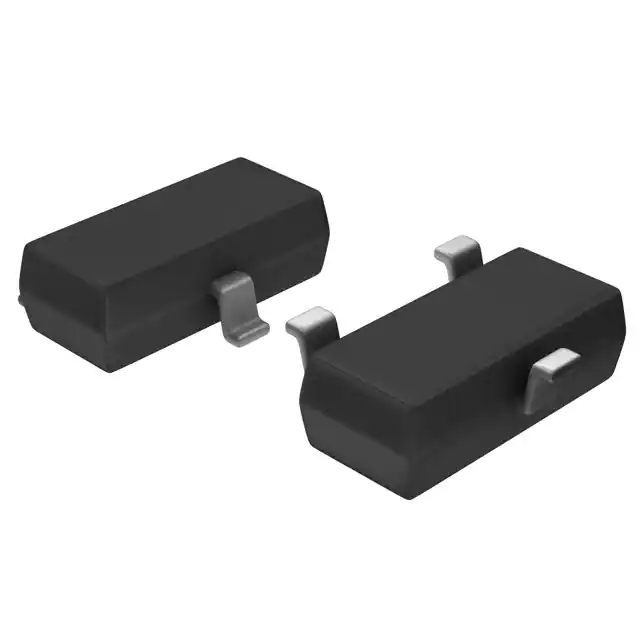
-
MMBZ5240B-7-F
Diodes Incorporated
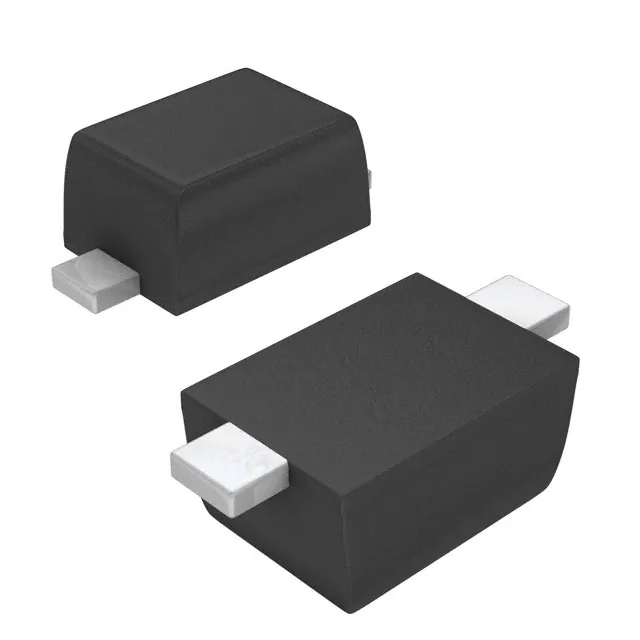
-
BZT52C5V6T-7
Diodes Incorporated
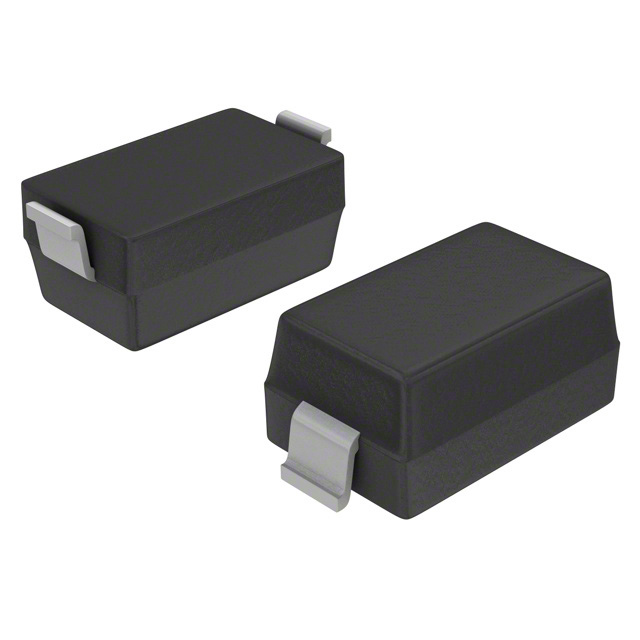
-
MMSZ5231B-7-F
Diodes Incorporated
-
BZT52C15-7-F
Diodes Incorporated
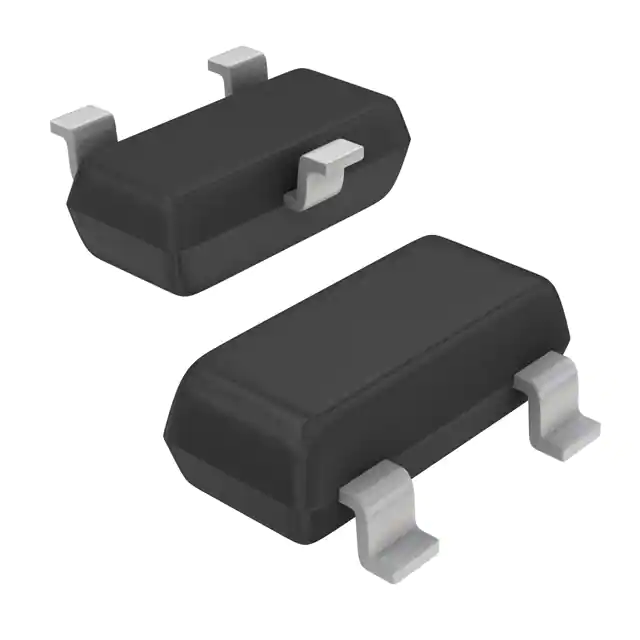
-
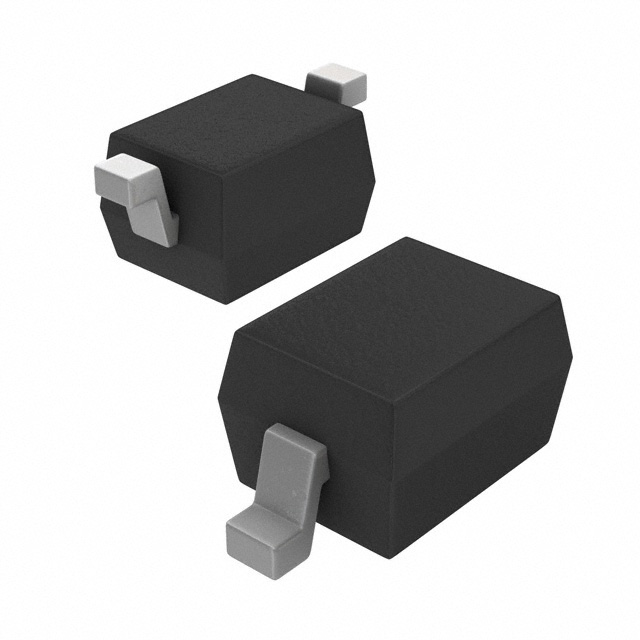
BZX84C3V3LT1G
onsemi
-
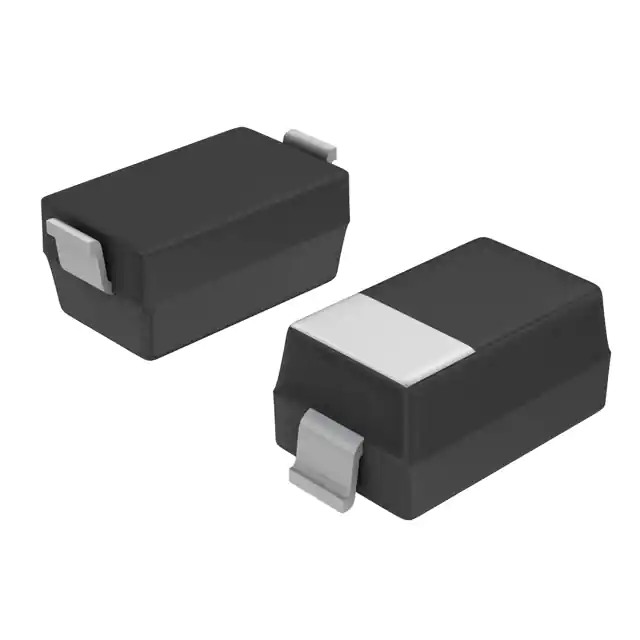
MMSZ5245BS-7-F
Diodes Incorporated
-
MMSZ4682T1G
onsemi
-
BZT52C15S-7-F
Diodes Incorporated
-
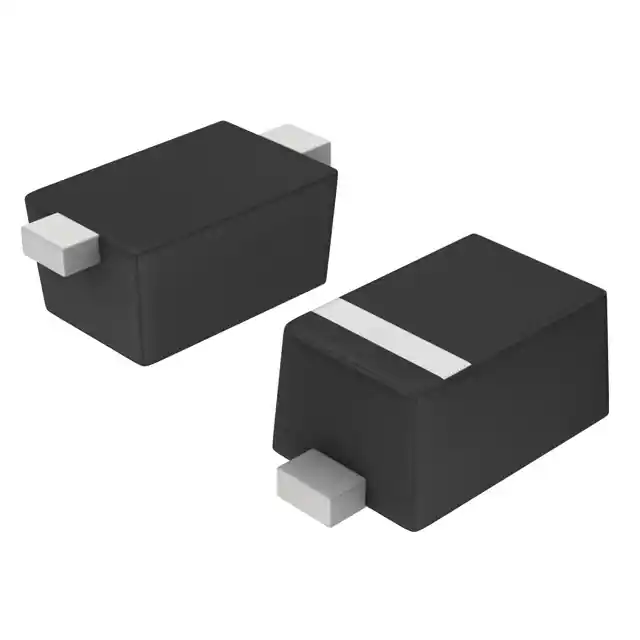
MM5Z5V1ST1G
onsemi
-
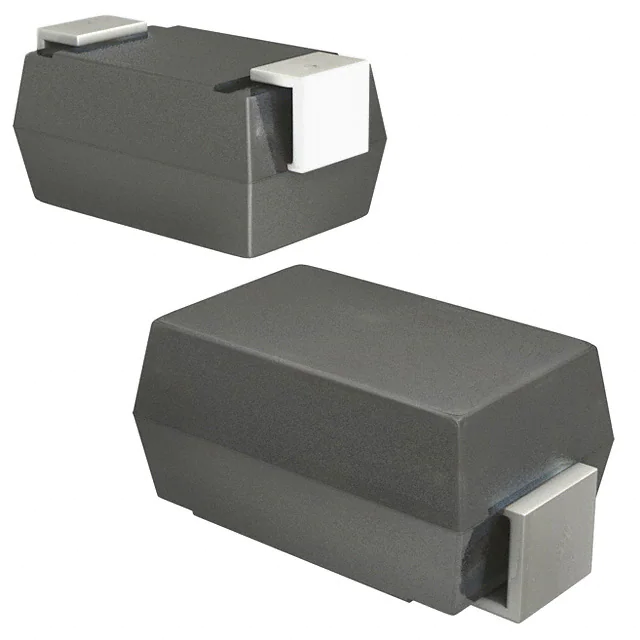
SMAJ4744A-TP
Micro Commercial Co
-
BZT52C3V6LP-7
Diodes Incorporated
-
SMAZ12-13-F
Diodes Incorporated
Tech Hub

TTL and CMOS logic families differ in thresholds, loading, output drive, power and timing. This engineering guide compares 74HC and 74HCT, calculates noise margins and checks 3.3 V/5 V compatibility.

A practical engineering guide to 3.3V and 5V logic compatibility, input thresholds, resistor dividers, translator ICs, MOSFET level shifting, I2C pull-ups, timing limits and power-sequencing risks.

The 74HC595 uses push-pull logic outputs, while the TPIC6B595 uses 50 V open-drain DMOS sinks for higher-power loads. This guide compares timing, current limits, 3.3 V interfacing, load wiring, thermal…

The 74HC595 converts serial data into eight stable parallel outputs. This guide covers pin functions, shift and storage timing, OE and MR behavior, drive-current limits, cascading, voltage compatibilit…

A technical comparison of level-sensitive latches and edge-triggered flip-flops, covering timing windows, setup and hold limits, master–slave operation, time borrowing, race-through, HDL inference and…

A D latch stores one bit while Enable controls when data can pass. This reference covers gate-level operation, truth tables, transparency, setup and hold timing, LE versus OE, common ICs and practical …

An SR latch stores one bit through cross-coupled feedback. This engineering reference covers NOR and NAND implementations, truth tables, forbidden-state recovery, gated operation, switch debouncing, fa…

Latch circuits retain one bit through feedback. This technical reference covers SR and D latches, truth tables, transparency, timing limits, latch-versus-flip-flop behavior, applications and common log…

An engineering guide to LED driver operation, constant-current and constant-voltage outputs, linear and switching topologies, dimming, IC selection, calculations, replacement compatibility, and fault c…

Operational amplifier guide covering op amp basics, feedback, ideal vs real op amps, common configurations, buffer circuits, offset, bias current, gain-bandwidth, slew rate, rail-to-rail limits and sel…


