
 My Inquiry
 My Account


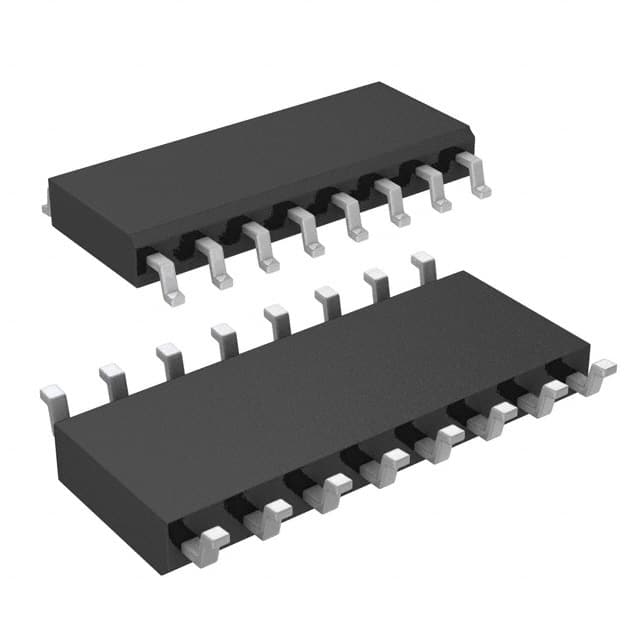
Microchip Technology RE46C109S16TF
- Part No.:
- RE46C109S16TF
- Manufacturer:
- Microchip Technology
- Category:
- Sensor and Detector Interfaces
- Package:
- 16-SOIC (0.154", 3.90mm Width)
- Datasheet:
-
 RE46C109S16TF.pdf
- Description:
- IC HORN DRIVER DUAL 16SOIC
- Quantity:
- Payment:

- Shipping:

Inventory:4,863
Please send an inquiry. Send us your inquiry, and we will respond immediately.
Product details
Overview
RE46C109S16TF from R&E International (a Microchip Technology subsidiary) is a monolithic CMOS integrated circuit combining a 3V low-dropout voltage regulator, a 12V switched-capacitor boost converter, and dual-output piezoelectric horn driver. It features low-quiescent current (6.5µA), analog low-battery detection (LBAT), power-good monitoring (PG), and bi-directional interconnect logic (IO1/IO2/IODIR) for multi-unit alarm systems. It is used in battery-powered smoke and CO detectors requiring regulated microprocessor supply and audible alert generation.
For engineers reviewing the RE46C109S16TF datasheet, RE46C109S16TF pinout, RE46C109S16TF application, or RE46C109S16TF equivalent, key selection considerations include its 12V VPOS output capability, 3V VREG regulation with ±5% tolerance, LBST-strobed low-battery sensing, HRNEN-controlled horn activation, and SOIC-16 package compatibility with DIP-16 footprints.
Technical Context
The RE46C109S16TF integrates three core functional blocks: a bandgap-referenced LDO regulator delivering 3V at up to 50mA; a charge-pump-based boost converter generating 10.7–12.7V RMS at VPOS with 85% power efficiency under 16mA load; and complementary high-side horn drivers (HORNB/HORNS) supporting full VPOS-to-VSS swing. All blocks share a common VDD input (6–12V) and are controlled via TTL-compatible digital inputs (HRNEN, LBST, IODIR).
Its interconnect logic enables peer-to-peer communication between multiple units using IO1/IO2 pins under IODIR direction control, while PG provides open-drain status signaling tied to VREG regulation window (72–94% of VREG), and LBAT delivers a proportional analog voltage for external ADC sampling. Brownout protection disables VREG when VDD falls below 4.5–5.5V.
Key Specifications
| Parameter | Value and Actual Design Meaning |
|---|---|
| VREG Output | 3.0V ±5%, supplies microcontrollers or sensors with stable low-noise rail; requires ≥10µF output capacitor |
| VPOS Output | 10.7–12.7V RMS at -16mA load, powers piezoelectric horns directly without external transformers |
| Quiescent Current | ≤6.5µA (HRNEN/LBST inactive), enables >5-year battery life in standby-mode smoke alarms |
| Low-Battery Detection | LBAT output = 0.17–0.23×VDD; strobed by LBST pulse for periodic battery health checks |
| Charge Pump Frequency | 150kHz internal oscillator, determines ripple frequency and capacitor sizing for C1/C2 |
| Power-Good Threshold | PG asserts when VREG rises above 77–94% of nominal; deasserts at 72–88%, with 500µs delay |
| Brownout Protection | Disables VREG when VDD drops below 4.5–5.5V, preventing erratic microcontroller operation |
Pinout & Package
RE46C109S16TF is housed in a 16-pin SOIC package (body width 3.9mm, lead pitch 1.27mm), pin-compatible with the DIP-16 variant (RE46C109P16TF). The package supports RoHS-compliant Pb-free soldering and operates from -40°C to +85°C.
| Pin/Terminal | Circuit Role | Design Meaning |
|---|---|---|
| VDD (1) | Main power input | Supplies all internal blocks; accepts 6–12V DC; connects to bulk input capacitor |
| IO1 (2) | Bi-directional interconnect | Enables daisy-chained alarm coordination; direction set by IODIR; logic-level compatible |
| IODIR (3) | Interconnect direction control | Configures IO1/IO2 as input or output per truth table; driven by external uP or master unit |
| IO2 (4) | Bi-directional interconnect | Interfaces with TTL/CMOS I/O of host controller; supports status polling or command receipt |
| LBST (5) | Low-battery strobe enable | Pulse-activated input triggering LBAT sampling; minimizes average current draw |
| PG (6) | Open-drain power-good indicator | Sinks current when VREG is within regulation window; requires external pull-up resistor |
| HRNEN (7) | Horn and boost enable | Active-high control activating both VPOS generation and HORNB/HORNS drivers simultaneously |
| VSS (8) | Ground reference | Common return path for regulator, boost, and horn circuits; must be low-impedance |
| FEED (9) | Horn feedback input | Accepts -10V to +22V signal for closed-loop horn drive; enables resonant frequency tracking |
| HORNS (10) | Horn driver output A | Push-pull output swinging from VPOS to VSS; drives one terminal of piezo transducer |
| HORNB (11) | Horn driver output B | Complementary push-pull output; enables differential drive for higher SPL and lower EMI |
| LBAT (12) | Analog low-battery monitor | Voltage follower output proportional to VDD; used with external ADC for battery SOC estimation |
| VREG (13) | 3V regulated output | Stable supply for MCU or sensor; includes overvoltage clamp (3.7–4.3V) and load regulation ≤90mV |
| VCAP− (14) | Charge pump negative fly capacitor | Connects to negative terminal of external 1µF ceramic capacitor (C1) |
| VCAP+ (15) | Charge pump positive fly capacitor | Connects to positive terminal of C1; forms flying capacitor network with C2 (10µF) |
| VPOS (16) | Boosted output rail | 12V RMS source for horn drivers; requires low-ESR 10µF filter capacitor (C4) near pin |
Key Features
| Feature | Design Value |
|---|---|
| Dual-mode horn drive (HORNB/HORNS) | Supports single-ended or differential piezo excitation, improving acoustic output and reducing electromagnetic interference |
| Strobed low-battery sensing (LBST) | Enables on-demand battery voltage sampling without continuous current draw, extending shelf life in sealed detectors |
| Integrated interconnect logic (IO1/IO2/IODIR) | Eliminates external logic for multi-unit synchronization-e.g., coordinated alarm escalation across interconnected smoke detectors |
| Charge-pump voltage efficiency ≥95% | Minimizes heat generation and input current demand during horn activation, critical for coin-cell or alkaline-powered devices |
| VREG overvoltage clamp (3.7–4.3V) | Protects downstream 3V logic from external voltage injection or regulator fault conditions without external components |
| Brownout reset (4.5–5.5V threshold) | Prevents microcontroller lockup or data corruption during battery depletion by cleanly disabling VREG before undervoltage instability |
Applications
| Smoke Detector Systems | CO Gas Detectors |
|---|---|
Use Scenario: Standalone or interconnected residential smoke alarms powered by 9V alkaline batteries. IC Role / Device Role / Timing Role: RE46C109S16TF serves as the central power management and audible alert subsystem-regulating MCU supply, boosting voltage for piezo horn, and enabling synchronized multi-unit alarms via IO pins. Use Value: 6.5µA quiescent current extends battery life beyond 5 years; VPOS-driven horn achieves >85dB SPL without external transformers or discrete MOSFETs. |
Use Scenario: Portable or wall-mounted carbon monoxide detectors with battery backup and local audible warning. IC Role / Device Role / Timing Role: RE46C109S16TF provides regulated 3V for electrochemical sensor interface and MCU, while LBAT and PG signals support battery health monitoring and safe shutdown sequencing. Use Value: Strobed LBST input reduces average current during periodic gas sampling cycles; brownout protection prevents false alarms during low-VDD conditions. |
| Personal Security Alarms | Hand-Held Instrument Audible Alerts |
Use Scenario: Keychain or wearable panic alarms with piezoelectric sounder and long shelf life. IC Role / Device Role / Timing Role: RE46C109S16TF acts as combined voltage regulator and high-SPL audio driver-activating horn only on button press via HRNEN, with VREG powering ultra-low-power wake-on-interrupt logic. Use Value: HRNEN-triggered activation eliminates standby leakage through horn circuitry; FEED input allows adaptive drive tuning for varying piezo impedance. |
Use Scenario: Field-service multimeters or thermal imagers requiring audible pass/fail feedback during measurements. IC Role / Device Role / Timing Role: RE46C109S16TF delivers clean 3V rail for precision analog front-end and generates sharp, localized alerts using HORNB/HORNS differential drive. Use Value: Dual horn outputs reduce radiated emissions compared to single-ended drive-critical for EMC compliance in handheld test equipment. |
Equivalent & Alternatives
The following parts are listed as comparable options for similar voltage regulator and piezoelectric horn driver applications.
| Alternative Part | Technical Difference | Application Difference | Selection Advice |
|---|---|---|---|
| RE46C110S16TF | Same pinout and architecture but includes integrated temperature-compensated low-battery threshold; no external resistor divider needed for LBAT scaling | Better suited for designs requiring factory-calibrated battery monitoring without trimming components | Select RE46C110S16TF if precise, temperature-stable battery voltage thresholds are required without calibration overhead |
| MAX6326–30D2T+T | 3V LDO only-no boost converter or horn drivers; includes reset supervisor and watchdog timer; SOT23-5 package | Applicable only where horn functionality is handled externally (e.g., discrete MOSFET + transformer), and system-level supervision is prioritized over integrated audio drive | Choose MAX6326–30D2T+T when replacing legacy supervisory ICs in space-constrained designs lacking piezo drive requirements |
Compared with RE46C109S16TF, RE46C110S16TF adds temperature compensation for battery sensing but retains identical horn drive capability, whereas MAX6326–30D2T+T omits all audio functions and requires external circuitry for audible alerts-making it suitable only for supervisory-only roles.
Availability
RE46C109S16TF is available at Aetrix Electronics and suitable for smoke detector systems, CO gas detectors, and personal security alarms requiring stable component supply, long-term lifecycle support, and RoHS-compliant manufacturing.
Supply support for RE46C109S16TF includes scheduled delivery planning, volume procurement assistance, BOM continuity management, traceable sourcing, and lifecycle availability coordination for OEM customers, industrial embedded developers, connected-device designers, and electronics production programs.
Manufacturer
R&E International is a wholly owned subsidiary of Microchip Technology Inc., specializing in highly integrated analog and mixed-signal ICs for safety-critical and battery-operated consumer and industrial applications.
The RE46C109S16TF belongs to R&E's alarm and audible notification product line, designed specifically to consolidate power regulation, battery monitoring, and piezoelectric drive into a single SOIC package for UL-listed life-safety devices.
FAQ
What is the maximum continuous output current capability of the RE46C109S16TF's VPOS pin?
The RE46C109S16TF's VPOS pin supports a continuous operating current of 50mA, as specified in the Absolute Maximum Ratings table. This rating applies to both horn driver outputs (HORNB and HORNS) when driving piezoelectric loads. Exceeding this limit risks thermal overstress and permanent damage, especially under sustained 12V output conditions.
Can the RE46C109S16TF operate from a 6V supply, and what is its minimum VDD requirement?
Yes, the RE46C109S16TF operates from a minimum VDD of 6V, as confirmed in the Electrical Characteristics table (Vdd MIN = 6V). At 6V input, the charge pump maintains VPOS output within specification (10.7–12.7V RMS at -16mA), and VREG remains regulated at 3.0V ±5%. Operation below 6V violates the absolute minimum and may cause brownout or regulator dropout.
How does the LBST pin function in the RE46C109S16TF, and why is it not continuously asserted?
The LBST pin on the RE46C109S16TF is a strobe input that enables the low-battery detection circuit only during active sampling-reducing average current consumption. When pulsed high, it activates the internal resistor-divider measurement path feeding LBAT. Keeping LBST low between readings ensures quiescent current stays at ≤6.5µA, preserving battery life in multi-year deployments like smoke detectors.
What external components are mandatory for stable operation of the RE46C109S16TF?
Four external components are mandatory: (1) a ≥10µF capacitor between VREG and VSS for LDO stability; (2) a 1µF ceramic capacitor (C1) between VCAP+ and VCAP−; (3) a 10µF capacitor (C2) between VCAP+ and VSS; and (4) a low-ESR 10µF capacitor (C4) between VPOS and VSS. Omitting any compromises regulation, boost efficiency, or horn performance.
Is the RE46C109S16TF pin-compatible with the RE46C109P16TF DIP variant?
Yes, the RE46C109S16TF (SOIC-16) and RE46C109P16TF (DIP-16) share identical pin numbering, signal mapping, and electrical specifications. They differ only in package type and thermal characteristics-SOIC offers smaller footprint and surface-mount assembly, while DIP supports through-hole prototyping and legacy board designs.
RE46C109S16TF Specifications
- Product attributes
- Attribute value
- Manufacturer:
- Microchip Technology
- Package/Case:
- 16-SOIC (0.154", 3.90mm Width)
- Series:
- -
- Packaging:
- Tape & Reel (TR)
- Product Status:
- Active
- Programmable:
- Not Verified
- Type:
- Horn Driver
- Input Type:
- Logic
- Output Type:
- Logic
- Current - Supply:
- 350 µA
- Operating Temperature:
- -40°C ~ 85°C
- Grade:
- -
- Qualification:
- -
- Mounting Type:
- Surface Mount
- Supplier Device Package:
- 16-SOIC
RE46C109S16TF FAQ
1.How can I place an order for RE46C109S16TF through Aetrix?
Please submit a Request for Quotation (RFQ) for RE46C109S16TF on Aetrix. Our sales agent will provide a competitive quotation and guide you through the order confirmation once you accept the terms.
2.Are the price and stock information for RE46C109S16TF reliable?
The price and inventory of RE46C109S16TF are updated periodically and may fluctuate due to market conditions. Stock and pricing data are typically refreshed every 24 hours. Quotation validity for RE46C109S16TF is usually 5 days.
3.What payment methods are accepted for RE46C109S16TF?
We accept Wire Transfer, PayPal, Credit Card, Western Union, MoneyGram, and Escrow for RE46C109S16TF transactions.
Note: Certain payment methods may incur a processing fee.
4.How is shipping managed for RE46C109S16TF?
RE46C109S16TF orders can be shipped via leading logistics carriers, including DHL, UPS, FedEx, TNT, or Registered Mail.
Once your RE46C109S16TF order is processed, you will receive an email with the shipment details and tracking number.
Note: Tracking information may take up to 24 hours to appear. Express delivery typically takes 3–5 business days.
5.How can I obtain technical support or documentation for RE46C109S16TF?
For technical support, including RE46C109S16TF datasheets, pinout diagrams, or application guidance, please contact our engineering support team. They can provide detailed documentation and assistance for your RE46C109S16TF requirements.
6.How does Aetrix verify that RE46C109S16TF is sourced from the original manufacturer or authorized distributors?
All RE46C109S16TF products on Aetrix are procured from qualified distributors and authorized channels. Our dedicated quality assurance team conducts strict verification, including traceability checks and, if necessary, third-party testing. This ensures that RE46C109S16TF meets industry standards.
7.What is the process for return or replacement of RE46C109S16TF?
All RE46C109S16TF units undergo pre-shipment inspection (PSI). If there is an issue with RE46C109S16TF, returns or replacements are accepted under the following conditions:
1.Quantity discrepancies, incorrect items, or visible external defects (such as breakage or corrosion), acknowledged by Aetrix.
2.The issue is reported within 90 days of delivery.
3.The RE46C109S16TF part is unused and in its original packaging.
Return procedure for RE46C109S16TF:
1.Submit a request within 90 days.
2.Obtain a Return Material Authorization (RMA) from Aetrix.
RE46C109S16TF Tags

-
RE46C100S8TF
Microchip Technology
-
XTR111AIDRCR
Texas Instruments
-
XTR111AIDGQR
Texas Instruments
-
XTR117AIDGKR
Texas Instruments
-
XTR111AIDGQT
Texas Instruments

-
XTR115UA/2K5
Texas Instruments
-
MAX14626ETT+T
Analog Devices Inc./Maxim Integrated
-
XTR116UA/2K5
Texas Instruments
-
XTR115U/2K5
Texas Instruments
-
XTR116U/2K5
Texas Instruments
-
PGA308AIDGSR
Texas Instruments
-
XTR300AIRGWR
Texas Instruments
Tech Hub

TTL and CMOS logic families differ in thresholds, loading, output drive, power and timing. This engineering guide compares 74HC and 74HCT, calculates noise margins and checks 3.3 V/5 V compatibility.

A practical engineering guide to 3.3V and 5V logic compatibility, input thresholds, resistor dividers, translator ICs, MOSFET level shifting, I2C pull-ups, timing limits and power-sequencing risks.

The 74HC595 uses push-pull logic outputs, while the TPIC6B595 uses 50 V open-drain DMOS sinks for higher-power loads. This guide compares timing, current limits, 3.3 V interfacing, load wiring, thermal…

The 74HC595 converts serial data into eight stable parallel outputs. This guide covers pin functions, shift and storage timing, OE and MR behavior, drive-current limits, cascading, voltage compatibilit…

A technical comparison of level-sensitive latches and edge-triggered flip-flops, covering timing windows, setup and hold limits, master–slave operation, time borrowing, race-through, HDL inference and…

A D latch stores one bit while Enable controls when data can pass. This reference covers gate-level operation, truth tables, transparency, setup and hold timing, LE versus OE, common ICs and practical …

An SR latch stores one bit through cross-coupled feedback. This engineering reference covers NOR and NAND implementations, truth tables, forbidden-state recovery, gated operation, switch debouncing, fa…

Latch circuits retain one bit through feedback. This technical reference covers SR and D latches, truth tables, transparency, timing limits, latch-versus-flip-flop behavior, applications and common log…

An engineering guide to LED driver operation, constant-current and constant-voltage outputs, linear and switching topologies, dimming, IC selection, calculations, replacement compatibility, and fault c…

Operational amplifier guide covering op amp basics, feedback, ideal vs real op amps, common configurations, buffer circuits, offset, bias current, gain-bandwidth, slew rate, rail-to-rail limits and sel…


