
 My Inquiry
 My Account


Microchip Technology RE46C143SW16F
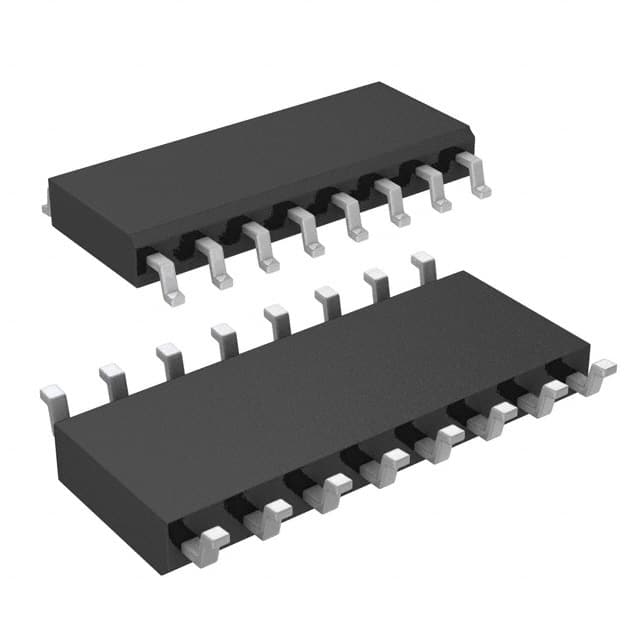
- Part No.:
- RE46C143SW16F
- Manufacturer:
- Microchip Technology
- Category:
- Sensor and Detector Interfaces
- Package:
- 16-SOIC (0.154", 3.90mm Width)
- Datasheet:
-
 RE46C143SW16F.pdf
- Description:
- IC SMOKE DETECTOR CMOS 16-SOIC
- Quantity:
- Payment:

- Shipping:

Inventory:1,454
Please send an inquiry. Send us your inquiry, and we will respond immediately.
Product details
Overview
RE46C143SW16F from R&E International (a Microchip Technology subsidiary) is a CMOS photoelectric smoke detector ASIC with integrated interconnect functionality, low-power standby current (4 µA typical at 9 V), programmable gain photoamplifier (via external C1/C2), and UL217/UL268 recognition. It drives infrared emitters and piezoelectric horns in residential/commercial smoke alarms.
For engineers reviewing the RE46C143SW16F datasheet, RE46C143SW16F pinout, RE46C143SW16F application, or RE46C143SW16F equivalent, key selection criteria include interconnect scalability (up to 40 units), 75% horn duty cycle, chamber integrity self-test every 40 s, strobe-gated 100 µs IRED pulses, and compatibility with Motorola MC145010.
Technical Context
The RE46C143SW16F implements a dual-gain photoamplifier architecture: C2 sets normal standby gain (e.g., for smoke detection), while C1 enables high-gain mode during push-button test or chamber integrity check. Its internal oscillator controls periodic sampling-every 8.1 s in standby, accelerating to 336 ms during TEST activation.
It features bidirectional interconnect via open-drain IO pin with 500 ms digital filtering, constant-current drive for remote alarm propagation, and automatic charge dump (~1.46 s) post-alarm to discharge line capacitance. Horn output uses complementary HB/HS drivers for piezoelectric transducers with THON1 = 252 ms (typ) on-time and THOF1 = 84 ms (typ) off-time in local alarm.
Key Specifications
| Parameter | Value and Actual Design Meaning |
|---|---|
| Supply Voltage | 6–12 V - Supports standard 9 V alkaline and 12 V backup battery configurations without external regulation. |
| Standby Current | 4 µA (typ @ 9 V) - Enables >5-year battery life in smoke detectors using common 9 V alkaline cells. |
| Interconnect Capacity | Up to 40 units - Bidirectional IO pin supports daisy-chained alarm systems without external logic or repeaters. |
| Horn Duty Cycle | 75% - Optimized acoustic output for audible alarm compliance under UL217/UL268 standards. |
| Smoke Detection Interval | 8.1 s (standby), 336 ms (TEST mode) - Adaptive sampling balances power savings and rapid response during manual verification. |
| Low Battery Threshold | 7.2 V (typ) - Programmable via LBSET resistor divider; triggers 10 ms chirp every 40 s when breached. |
| UL Recognition | UL217 & UL268 - Certified for use in listed photoelectric smoke detectors; file S24036. |
Pinout & Package
RE46C143SW16F is supplied in a 16-lead SOIC-W (Wide) package (body width 7.5 mm), RoHS-compliant and Pb-free.
| Pin/Terminal | Circuit Role | Design Meaning |
|---|---|---|
| C1 | High-gain photoamp capacitor input | Sets gain >10× for push-to-test and chamber background reflection sensing (A = 1 + C1/10 pF). |
| C2 | Normal-gain photoamp capacitor input | Sets baseline sensitivity for smoke detection (A = 1 + C2/10 pF); gain increased ~10% in alarm hysteresis. |
| DETECT | Photo diode cathode input | Zero-bias input to photoamplifier; interfaces directly with photodiode in optical chamber. |
| STROBE | Regulated negative supply rail | Provides VDD−5 V during smoke sampling; powers photoamp circuitry only during 100 µs active window. |
| IRED | Infrared emitter pre-driver | Open-collector NMOS output driving NPN base; delivers 100–200 µs pulsed current to IR LED. |
| IO | Bidirectional interconnect node | Internal pull-down + constant-current source + 1 s NMOS dump; enables multi-unit alarm synchronization. |
| HORNB / HORNS | Piezoelectric transducer electrodes | Complementary outputs (HB metal / HS ceramic) deliver differential drive for maximum SPL. |
| FEED | Chamber feedback electrode interface | Accepts −10 V to +22 V; used for chamber contamination monitoring or hysteresis enable. |
Key Features
| Feature | Design Value |
|---|---|
| Adaptive sampling rate | Switches from 8.1 s (standby) to 336 ms (TEST) and <1.5 s (confirmed smoke), reducing false alarms while ensuring rapid alarm confirmation. |
| Dual-gain photoamplifier | Separate C1 (test/chamber) and C2 (smoke) capacitors allow independent optimization of sensitivity and noise immunity. |
| Integrated chamber integrity test | Automatically verifies optical path cleanliness every 40 s using high-gain C1 mode and background reflection analysis. |
| UL-recognized interconnect | IO pin meets UL217/UL268 requirements for multi-station alarm signaling, including ESD protection and fault-tolerant voltage tolerance (−10 V to +22 V). |
| Low-battery management | Monitors VDD via resistor divider on LBSET; latches condition at LED pulse end and triggers distinct 10 ms chirp pattern every 40 s. |
Applications
| Residential Smoke Alarms | Commercial Ceiling-Mounted Detectors |
|---|---|
Use Scenario: Battery-powered ceiling-mounted unit in single-family homes requiring UL217 certification and 10-year battery life. IC Role / Device Role / Timing Role: Primary smoke sensing ASIC managing IRED pulsing, photoamp signal conditioning, alarm decision logic, and piezo horn drive. Use Value: 4 µA standby current extends alkaline battery life beyond 5 years; 75% horn duty cycle ensures audibility ≥85 dB at 3 m per UL requirements. |
Use Scenario: Interconnected network of ceiling-mounted detectors in office buildings with centralized alarm notification. IC Role / Device Role / Timing Role: Local decision node with bidirectional IO enabling up to 40-unit daisy chain; remote alarm propagation without external bus controllers. Use Value: Eliminates need for separate interconnect ICs or microcontrollers; built-in 500 ms digital filter rejects spurious pulses from CO or heat detectors sharing same wiring. |
| Push-to-Test Enabled Units | Multi-Sensor Alarm Systems |
Use Scenario: Consumer-facing smoke alarm with mechanical test button requiring immediate visual (LED) and audible (horn) feedback. IC Role / Device Role / Timing Role: TEST pin activation triggers high-gain C1 mode, accelerated 336 ms sampling, and synchronized LED/horn response within one clock cycle. Use Value: Confirms full signal chain operation-including optical chamber, amplifier, comparator, and output drivers-in <1 second without external test equipment. |
Use Scenario: Hybrid alarm system integrating RE46C143SW16F smoke nodes with CO or heat sensors on shared interconnect wiring. IC Role / Device Role / Timing Role: Interconnect receiver with robust input filtering (600 ms min pulse width rejection) and voltage-tolerant FEED/IO pins (−10 V to +22 V). Use Value: Accepts pulsed or DC interconnect signals from non-smoke sensors; prevents false triggering due to mismatched signaling protocols or supply rail differences. |
Equivalent & Alternatives
The following parts are listed as comparable options for similar photoelectric smoke detector ASIC applications.
| Alternative Part | Technical Difference | Application Difference | Selection Advice |
|---|---|---|---|
| MC145010P | Legacy Motorola part; no interconnect pin; requires external transistor for horn drive; higher standby current (~10 µA). | Lacks native multi-unit interconnect; needs discrete components for chamber test and low-battery indication. | Choose only if legacy design reuse is mandatory and interconnect scalability is unnecessary. |
| RE46C123SW16F | No interconnect (IO pin absent); identical photoamp, strobe, and horn timing; same UL recognition and package. | Designed for standalone units only; cannot participate in daisy-chained alarm networks. | Select when system-level interconnect is handled externally or not required; lower BOM cost where IO functionality is unused. |
Compared with MC145010P and RE46C123SW16F, the RE46C143SW16F uniquely integrates UL-certified interconnect, dual-gain chamber testing, and sub-5 µA standby current-enabling compact, certified, battery-optimized designs without added discrete logic or firmware.
Availability
RE46C143SW16F is available at Aetrix Electronics and suitable for residential fire safety systems, commercial interconnected alarm networks, and battery-powered smoke detector modules requiring stable component supply, long-life operation, and UL217/UL268 compliance.
Supply support for RE46C143SW16F includes scheduled delivery planning, volume procurement assistance, BOM continuity management, traceable sourcing, and lifecycle availability coordination for OEM customers, industrial embedded developers, connected-device designers, and electronics production programs.
Manufacturer
R&E International is a wholly owned subsidiary of Microchip Technology Inc., specializing in analog and mixed-signal ASICs for safety-critical sensing applications.
The RE46C143SW16F belongs to R&E's smoke detector ASIC product line, engineered specifically for low-power, UL-recognized photoelectric smoke sensing with integrated interconnect and self-test capabilities in consumer and commercial fire alarm systems.
FAQ
What is the function of the STROBE pin on the RE46C143SW16F?
The STROBE pin on the RE46C143SW16F provides a regulated VDD−5 V output that powers the photoamplifier circuitry only during the 100 µs smoke sampling window. This gated power delivery is central to achieving the device's 4 µA typical standby current. In the RE46C143SW16F, STROBE is not a control signal but a precision low-noise supply rail synchronized to the internal oscillator, minimizing continuous power draw while maintaining signal integrity during detection.
How does the RE46C143SW16F perform chamber integrity testing?
The RE46C143SW16F performs chamber integrity testing every 40 seconds by switching the photoamplifier to high-gain mode using capacitor C1 and measuring background reflections in the optical chamber. If two consecutive tests fail-indicating dust accumulation, insect intrusion, or lens obstruction-the device triggers a distinct 10 ms horn chirp every 40 seconds, offset by 20 s from the low-battery chirp. This self-test is fully autonomous and requires no external microcontroller intervention in the RE46C143SW16F implementation.
What is the maximum number of RE46C143SW16F-based detectors that can be interconnected?
The RE46C143SW16F supports interconnection of up to 40 detectors on a single shared IO line, as specified in its UL217/UL268 recognition documentation. This scalability is achieved through low-leakage bidirectional IO pin design, internal pull-down, constant-current drive capability, and 1-second NMOS charge dump to manage line capacitance. Each RE46C143SW16F contributes minimal loading, enabling reliable signal propagation across the full 40-unit chain without external repeaters or level shifters.
Does the RE46C143SW16F require external components for basic operation?
Yes, the RE46C143SW16F requires external passive components for core functionality: capacitors C1 and C2 set photoamplifier gain; COSC and ROSC configure the internal oscillator period and IRED pulse width; resistors on LBSET define low-battery threshold; and an NPN transistor is needed to drive the infrared emitter from the IRED pin. The RE46C143SW16F integrates all signal conditioning, timing, logic, and output drivers-but relies on these minimal external elements to complete the smoke detection signal chain.
Is the RE46C143SW16F compatible with existing MC145010-based designs?
The RE46C143SW16F is pin-compatible and functionally compatible with the Motorola MC145010 in core smoke detection functionality, including photoamplifier interface, IRED drive, horn timing, and LED control. However, the RE46C143SW16F adds the IO interconnect pin, STROBE rail, and enhanced chamber test features-requiring minor PCB layout updates (e.g., adding IO routing and C1/C2 caps) but no redesign of the optical chamber or transducer interface. Migration preserves existing firmware-free operation while adding UL-recognized interconnect.
RE46C143SW16F Specifications
- Product attributes
- Attribute value
- Manufacturer:
- Microchip Technology
- Package/Case:
- 16-SOIC (0.154", 3.90mm Width)
- Series:
- -
- Packaging:
- Tube
- Product Status:
- Active
- Programmable:
- Not Verified
- Type:
- Smoke Detector
- Input Type:
- Photoelectric
- Output Type:
- Voltage
- Current - Supply:
- 8 µA
- Operating Temperature:
- -25°C ~ 75°C
- Grade:
- -
- Qualification:
- -
- Mounting Type:
- Surface Mount
- Supplier Device Package:
- 16-SOIC
RE46C143SW16F FAQ
1.How can I place an order for RE46C143SW16F through Aetrix?
Please submit a Request for Quotation (RFQ) for RE46C143SW16F on Aetrix. Our sales agent will provide a competitive quotation and guide you through the order confirmation once you accept the terms.
2.Are the price and stock information for RE46C143SW16F reliable?
The price and inventory of RE46C143SW16F are updated periodically and may fluctuate due to market conditions. Stock and pricing data are typically refreshed every 24 hours. Quotation validity for RE46C143SW16F is usually 5 days.
3.What payment methods are accepted for RE46C143SW16F?
We accept Wire Transfer, PayPal, Credit Card, Western Union, MoneyGram, and Escrow for RE46C143SW16F transactions.
Note: Certain payment methods may incur a processing fee.
4.How is shipping managed for RE46C143SW16F?
RE46C143SW16F orders can be shipped via leading logistics carriers, including DHL, UPS, FedEx, TNT, or Registered Mail.
Once your RE46C143SW16F order is processed, you will receive an email with the shipment details and tracking number.
Note: Tracking information may take up to 24 hours to appear. Express delivery typically takes 3–5 business days.
5.How can I obtain technical support or documentation for RE46C143SW16F?
For technical support, including RE46C143SW16F datasheets, pinout diagrams, or application guidance, please contact our engineering support team. They can provide detailed documentation and assistance for your RE46C143SW16F requirements.
6.How does Aetrix verify that RE46C143SW16F is sourced from the original manufacturer or authorized distributors?
All RE46C143SW16F products on Aetrix are procured from qualified distributors and authorized channels. Our dedicated quality assurance team conducts strict verification, including traceability checks and, if necessary, third-party testing. This ensures that RE46C143SW16F meets industry standards.
7.What is the process for return or replacement of RE46C143SW16F?
All RE46C143SW16F units undergo pre-shipment inspection (PSI). If there is an issue with RE46C143SW16F, returns or replacements are accepted under the following conditions:
1.Quantity discrepancies, incorrect items, or visible external defects (such as breakage or corrosion), acknowledged by Aetrix.
2.The issue is reported within 90 days of delivery.
3.The RE46C143SW16F part is unused and in its original packaging.
Return procedure for RE46C143SW16F:
1.Submit a request within 90 days.
2.Obtain a Return Material Authorization (RMA) from Aetrix.
RE46C143SW16F Tags

-
RE46C100S8TF
Microchip Technology
-
XTR111AIDRCR
Texas Instruments
-
XTR111AIDGQR
Texas Instruments
-
XTR117AIDGKR
Texas Instruments
-
XTR111AIDGQT
Texas Instruments

-
XTR115UA/2K5
Texas Instruments
-
MAX14626ETT+T
Analog Devices Inc./Maxim Integrated
-
XTR116UA/2K5
Texas Instruments
-
XTR115U/2K5
Texas Instruments
-
XTR116U/2K5
Texas Instruments
-
PGA308AIDGSR
Texas Instruments
-
XTR300AIRGWR
Texas Instruments
Tech Hub

TTL and CMOS logic families differ in thresholds, loading, output drive, power and timing. This engineering guide compares 74HC and 74HCT, calculates noise margins and checks 3.3 V/5 V compatibility.

A practical engineering guide to 3.3V and 5V logic compatibility, input thresholds, resistor dividers, translator ICs, MOSFET level shifting, I2C pull-ups, timing limits and power-sequencing risks.

The 74HC595 uses push-pull logic outputs, while the TPIC6B595 uses 50 V open-drain DMOS sinks for higher-power loads. This guide compares timing, current limits, 3.3 V interfacing, load wiring, thermal…

The 74HC595 converts serial data into eight stable parallel outputs. This guide covers pin functions, shift and storage timing, OE and MR behavior, drive-current limits, cascading, voltage compatibilit…

A technical comparison of level-sensitive latches and edge-triggered flip-flops, covering timing windows, setup and hold limits, master–slave operation, time borrowing, race-through, HDL inference and…

A D latch stores one bit while Enable controls when data can pass. This reference covers gate-level operation, truth tables, transparency, setup and hold timing, LE versus OE, common ICs and practical …

An SR latch stores one bit through cross-coupled feedback. This engineering reference covers NOR and NAND implementations, truth tables, forbidden-state recovery, gated operation, switch debouncing, fa…

Latch circuits retain one bit through feedback. This technical reference covers SR and D latches, truth tables, transparency, timing limits, latch-versus-flip-flop behavior, applications and common log…

An engineering guide to LED driver operation, constant-current and constant-voltage outputs, linear and switching topologies, dimming, IC selection, calculations, replacement compatibility, and fault c…

Operational amplifier guide covering op amp basics, feedback, ideal vs real op amps, common configurations, buffer circuits, offset, bias current, gain-bandwidth, slew rate, rail-to-rail limits and sel…


