
 My Inquiry
 My Account


Microchip Technology RE46C190S16TF
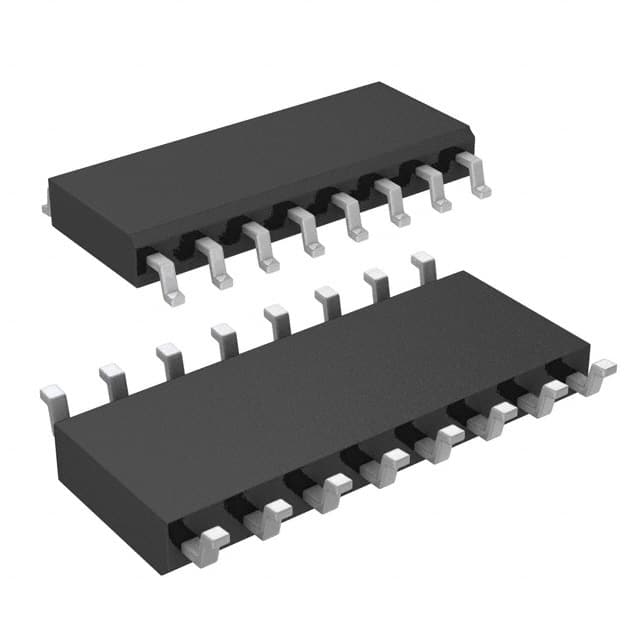
- Part No.:
- RE46C190S16TF
- Manufacturer:
- Microchip Technology
- Category:
- Sensor and Detector Interfaces
- Package:
- 16-SOIC (0.154", 3.90mm Width)
- Datasheet:
-
 RE46C190S16TF.pdf
- Description:
- IC PHOTOELECTR SMOKE DET 16SOIC
- Quantity:
- Payment:

- Shipping:

Inventory:4,600
Please send an inquiry. Send us your inquiry, and we will respond immediately.
Product details
Overview
RE46C190S16TF from Microchip Technology is a low-power, low-voltage CMOS photoelectric smoke detector ASIC with integrated IRED driver, programmable gain photo amplifier, 9-minute hush timer, NFPA 72 temporal horn pattern support, and interconnect capability for up to 40 detectors. It operates from two AA batteries, features internal power-on reset, 2% low-battery detection set point, and supports UL217/UL268 compliance in standalone or interconnected systems.
For engineers reviewing the RE46C190S16TF datasheet, RE46C190S16TF pinout, RE46C190S16TF application, or RE46C190S16TF equivalent, this device serves as a complete system-on-chip solution for battery-powered photoelectric smoke alarms - requiring no external oscillator, minimal passive components, and supporting critical safety functions including chamber integrity test, local alarm memory, and end-of-life indication.
Technical Context
The RE46C190S16TF integrates a gain-selectable photo amplifier with four user-programmable integration limits (Normal/Hysteresis, Hush, Chamber Test), programmable IRED drive current (50–200 mA), and adjustable IRED pulse width (100–400 µs). Its internal trimmed oscillator triggers smoke sampling every 10 seconds in standby, increasing frequency upon detection to confirm alarm conditions.
Supervisory functions include low-battery checks every 86 s (with loaded/unloaded sampling) and chamber integrity tests every 43 s using high-gain mode. The bidirectional IO pin enables interconnect signaling with 336 ms digital filtering, charge-dump discharge (1.31 s), and voltage-tolerant input protection for mixed-alarm-system compatibility.
Key Specifications
| Parameter | Value and Actual Design Meaning |
|---|---|
| Supply Voltage Range | 2.0–5.0 V - Supports two-AA-cell operation with headroom for aging battery discharge. |
| Standby Current | 1 µA typical - Enables >5-year battery life in UL-compliant standby mode. |
| IRED Drive Current | 50–200 mA programmable - Configurable optical output intensity for chamber sensitivity tuning. |
| Low Battery Threshold | 2.1–2.8 V selectable (100 mV steps) - Matches battery chemistry and aging profile. |
| Horn Output Drive | VBST = 9.6 V nominal at 40 mA - Powers piezoelectric transducer directly without external boost stage. |
| Interconnect Capacity | Up to 40 units - Bidirectional IO pin supports daisy-chained alarm propagation with noise immunity. |
| Alarm Pattern Compliance | NFPA 72 temporal 3:1 pattern - Built-in timing logic meets U.S. fire alarm evacuation standard. |
| Operating Temperature | –10°C to +60°C - Validated for residential and commercial indoor smoke detector environments. |
Pinout & Package
RE46C190S16TF is housed in a 16-lead narrow SOIC (150 mil) package with θJA = 86.1°C/W thermal resistance, optimized for compact PCB layout in battery-powered enclosures.
| Pin/Terminal | Circuit Role | Design Meaning |
|---|---|---|
| VSS (1) | Negative supply reference | Ground return path for all analog/digital blocks; requires low-impedance connection to battery negative. |
| IRED (2) | Programmable IRED sink driver | Delivers pulsed current (50–200 mA) to infrared emitter diode; current level set via EEPROM programming. |
| VDD (3) | Positive supply input | Connects to battery anode; powers internal logic, oscillator, and supervisory circuits. |
| TEST (4) | Mode control input | Internal pull-down; initiates push-to-test, hush, reduced-sensitivity, and timer modes on VIH assertion. |
| TEST2 (5) | Programming enable input | Used with TEST to enter calibration and parametric programming modes; held at VDD during setup. |
| IRP (6) | Photo diode anode interface | Connects to IR photodiode anode; forms transimpedance input with IRN for smoke chamber signal conditioning. |
| IRN (7) | Photo diode cathode interface | Completes photo diode bias path; differential input pair with IRP enables ambient-light rejection. |
| RLED (8) | Red LED indicator output | Open-drain NMOS; drives red LED for low-battery warning, alarm status, and hush indication. |
| GLED (9) | Green LED indicator output | Open-drain NMOS; provides latched visual alarm memory (3× flash every 43 s for 24 h). |
| FEED (10) | Feedback electrode input | Optional connection to feedback electrode; if unused, must be tied to VDD or VSS to prevent floating. |
| IRCAP (11) | IRED capacitor charge node | Charges from VBST to enable high-current IRED pulses; voltage monitored for smoke detection timing. |
| IO (12) | Bidirectional interconnect | Drives high-boost voltage during local alarm; senses remote alarm signals with 336 ms digital filter. |
| HB (13) | Horn metal-electrode driver | High-side output for piezoelectric transducer; complements HS for full-bridge horn drive. |
| HS (14) | Horn ceramic-electrode driver | Low-side complementary output; paired with HB to deliver 9.6 V peak-to-peak horn drive. |
| VBST (15) | Boost converter output | Internally generated 9.6 V (typ.) for horn and IRED drive; regulated by internal reference for consistent audibility. |
| LX (16) | Boost converter switch node | Open-drain NMOS driving external inductor; requires low-resistance path to battery positive for <0.3 Ω total loop resistance. |
Key Features
| Feature | Design Value |
|---|---|
| All-in-one smoke detection ASIC | Integrates photo amplifier, IRED driver, boost converter, horn driver, LED drivers, and interconnect logic - eliminates need for discrete timing, power, or interface ICs. |
| Programmable IRED pulse parameters | Four selectable pulse widths (100–400 µs) and four current levels (50–200 mA) enable precise chamber sensitivity calibration across production batches. |
| UL217/UL268-compliant timing engine | Hardwired temporal horn pattern (470–530 ms on/off), 9-minute hush timer, and 43 s chamber test interval meet exact regulatory timing requirements. |
| Local alarm memory with visual indicator | GLED flashes three times every 43 s for 24 h after local alarm - allows rapid identification of triggered unit in multi-detector installations. |
| Interconnect with fault-tolerant signaling | IO pin supports mixed-alarm-system interoperability via 336 ms digital filter and voltage-tolerant input protection - compatible with CO and heat alarm interconnect signals. |
| End-of-life (EOL) monitoring | Tracks powered operating time in EEPROM; triggers 3× chirp every 43 s after 10 years - satisfies UL requirement for mandatory replacement notification. |
Applications
| Residential Smoke Alarm | Commercial Interconnected System |
|---|---|
Use Scenario: Standalone ceiling-mounted smoke detector powered by two AA alkaline cells in single-family dwelling. IC Role / Device Role / Timing Role: Primary smoke sensing and alarm generation ASIC - performs periodic chamber sampling, low-battery supervision, and NFPA-compliant temporal horn activation. Use Value: Enables UL217 certification with zero external timing components; 1 µA standby current extends battery life beyond 5 years. |
Use Scenario: Multi-unit office building with 32 interconnected photoelectric smoke detectors wired in daisy-chain topology. IC Role / Device Role / Timing Role: Interconnect-capable alarm controller - detects local smoke, asserts IO high to trigger all connected units, and filters external CO alarm signals. Use Value: Eliminates need for external interconnect transceivers; 40-unit capacity and 336 ms digital filter ensure reliable cross-alarm-type communication. |
| Hotel Room Safety Module | Smart Home Integration Node |
Use Scenario: Hotel room smoke detector with hush functionality for transient nuisance alarms (e.g., cooking steam). IC Role / Device Role / Timing Role: Programmable hush controller - activates 9-minute reduced-sensitivity mode on TEST button press and resets alarm memory on second press. Use Value: Meets NFPA 72 hush requirements without firmware; GLED visual confirmation prevents accidental deactivation. |
Use Scenario: Battery-powered smart smoke detector with BLE module that reports alarm status and battery health to cloud platform. IC Role / Device Role / Timing Role: Analog front-end and safety-critical alarm generator - handles all UL-mandated timing, horn drive, and chamber testing independently of MCU. Use Value: Offloads safety-critical functions from host MCU; RLED/GLED outputs provide direct status indicators for wireless reporting logic. |
Equivalent & Alternatives
The following parts are listed as comparable options for similar photoelectric smoke detector ASIC applications.
| Alternative Part | Technical Difference | Application Difference | Selection Advice |
|---|---|---|---|
| RE46C191S16TF | Improved version with enhanced long-term drift compensation, updated EOL algorithm, and extended temperature range (–20°C to +70°C). | Required for new designs targeting UL217 8th edition or LTD (long-term drift) compliance. | Select RE46C191S16TF for all new product development; RE46C190S16TF remains valid for legacy replacements and existing certified designs. |
| SM5201-16 | Competing photoelectric ASIC with fixed 100 µs IRED pulse, no programmable hush timer, and no built-in EOL counter. | Limited to basic smoke detection without UL268 interconnect or 10-year EOL indication. | Choose SM5201-16 only when cost sensitivity outweighs regulatory feature requirements; lacks RE46C190S16TF's programmability and certification breadth. |
Compared with RE46C190S16TF, the RE46C191S16TF adds long-term drift compensation and wider temperature operation for next-gen certifications, while SM5201-16 omits hush timing, interconnect filtering, and EOL tracking - making RE46C190S16TF the only option supporting full UL217/UL268 dual compliance with field-configurable sensitivity.
Availability
RE46C190S16TF is available at Aetrix Electronics and suitable for residential smoke alarm manufacturing, commercial interconnected fire safety systems, hotel room safety modules, and smart home integration nodes requiring stable component supply and long-lifecycle support.
Supply support for RE46C190S16TF includes scheduled delivery planning, volume procurement assistance, BOM continuity management, traceable sourcing, and lifecycle availability coordination for OEM customers, industrial embedded developers, connected-device designers, and electronics production programs.
Manufacturer
Microchip Technology Inc. is a global semiconductor company specializing in microcontrollers, analog devices, and security ICs, with deep expertise in safety-critical and ultra-low-power applications.
The RE46C190S16TF belongs to Microchip's RE46C family of photoelectric smoke detector ASICs, designed specifically to integrate all analog, timing, and power functions required for UL217/UL268-certified battery-operated smoke alarms - eliminating external oscillators, boost controllers, and discrete horn drivers.
FAQ
What is the primary function of the RE46C190S16TF in a smoke detector system?
The RE46C190S16TF serves as the central analog and timing controller in photoelectric smoke detectors, integrating IRED drive, photo-amplifier signal conditioning, programmable smoke detection thresholds, NFPA 72-compliant horn timing, interconnect signaling, and battery supervision - enabling full UL217/UL268 certification with minimal external components. RE46C190S16TF replaces multiple discrete functions in traditional designs.
How does the RE46C190S16TF support UL217 and UL268 compliance?
The RE46C190S16TF embeds hardwired timing logic for UL-mandated functions: 470–530 ms temporal horn on/off periods, 43 s chamber test intervals, 86 s low-battery checks, and 9-minute hush mode duration. Its programmable IRED current and integration limits allow calibration to meet sensitivity and false-alarm requirements across production units. RE46C190S16TF also supports interconnect signaling per UL268 Annex D.
Can the RE46C190S16TF operate from two AA batteries throughout its service life?
Yes - RE46C190S16TF draws only 1 µA typical in standby mode and uses pulsed IRED operation (100–400 µs every 10 s) to minimize average current. Combined with its 2.1–2.8 V programmable low-battery threshold and 9.6 V internal boost for horn drive, RE46C190S16TF enables >5-year battery life in UL-certified two-AA configurations under defined environmental conditions.
What is the role of the IO pin on the RE46C190S16TF?
The IO pin on RE46C190S16TF is a bidirectional interconnect terminal: during local alarm, it actively drives high-boost voltage to trigger other detectors; when idle, it monitors remote alarm signals with a 336 ms digital filter to reject noise and support mixed-alarm-system compatibility (e.g., CO detectors). RE46C190S16TF's IO pin enables daisy-chained networks of up to 40 units without external transceivers.
Is the RE46C190S16TF still recommended for new designs?
No - Microchip explicitly states "Not Recommended for New Designs" and recommends RE46C191S16TF instead, which adds long-term drift compensation, improved EOL tracking, and extended temperature range. However, RE46C190S16TF remains fully supported for legacy production, repair, and replacement in existing UL-certified products where design change validation is not feasible.
RE46C190S16TF Specifications
- Product attributes
- Attribute value
- Manufacturer:
- Microchip Technology
- Package/Case:
- 16-SOIC (0.154", 3.90mm Width)
- Series:
- -
- Packaging:
- Tape & Reel (TR)
- Product Status:
- Obsolete
- Programmable:
- Not Verified
- Type:
- Smoke Detector
- Input Type:
- Photoelectric
- Output Type:
- Voltage
- Current - Supply:
- 1 µA
- Operating Temperature:
- -10°C ~ 60°C
- Grade:
- -
- Qualification:
- -
- Mounting Type:
- Surface Mount
- Supplier Device Package:
- 16-SOIC
RE46C190S16TF FAQ
1.How can I place an order for RE46C190S16TF through Aetrix?
Please submit a Request for Quotation (RFQ) for RE46C190S16TF on Aetrix. Our sales agent will provide a competitive quotation and guide you through the order confirmation once you accept the terms.
2.Are the price and stock information for RE46C190S16TF reliable?
The price and inventory of RE46C190S16TF are updated periodically and may fluctuate due to market conditions. Stock and pricing data are typically refreshed every 24 hours. Quotation validity for RE46C190S16TF is usually 5 days.
3.What payment methods are accepted for RE46C190S16TF?
We accept Wire Transfer, PayPal, Credit Card, Western Union, MoneyGram, and Escrow for RE46C190S16TF transactions.
Note: Certain payment methods may incur a processing fee.
4.How is shipping managed for RE46C190S16TF?
RE46C190S16TF orders can be shipped via leading logistics carriers, including DHL, UPS, FedEx, TNT, or Registered Mail.
Once your RE46C190S16TF order is processed, you will receive an email with the shipment details and tracking number.
Note: Tracking information may take up to 24 hours to appear. Express delivery typically takes 3–5 business days.
5.How can I obtain technical support or documentation for RE46C190S16TF?
For technical support, including RE46C190S16TF datasheets, pinout diagrams, or application guidance, please contact our engineering support team. They can provide detailed documentation and assistance for your RE46C190S16TF requirements.
6.How does Aetrix verify that RE46C190S16TF is sourced from the original manufacturer or authorized distributors?
All RE46C190S16TF products on Aetrix are procured from qualified distributors and authorized channels. Our dedicated quality assurance team conducts strict verification, including traceability checks and, if necessary, third-party testing. This ensures that RE46C190S16TF meets industry standards.
7.What is the process for return or replacement of RE46C190S16TF?
All RE46C190S16TF units undergo pre-shipment inspection (PSI). If there is an issue with RE46C190S16TF, returns or replacements are accepted under the following conditions:
1.Quantity discrepancies, incorrect items, or visible external defects (such as breakage or corrosion), acknowledged by Aetrix.
2.The issue is reported within 90 days of delivery.
3.The RE46C190S16TF part is unused and in its original packaging.
Return procedure for RE46C190S16TF:
1.Submit a request within 90 days.
2.Obtain a Return Material Authorization (RMA) from Aetrix.
RE46C190S16TF Tags

-
RE46C100S8TF
Microchip Technology
-
XTR111AIDRCR
Texas Instruments
-
XTR111AIDGQR
Texas Instruments
-
XTR117AIDGKR
Texas Instruments
-
XTR111AIDGQT
Texas Instruments

-
XTR115UA/2K5
Texas Instruments
-
MAX14626ETT+T
Analog Devices Inc./Maxim Integrated
-
XTR116UA/2K5
Texas Instruments
-
XTR115U/2K5
Texas Instruments
-
XTR116U/2K5
Texas Instruments
-
PGA308AIDGSR
Texas Instruments
-
XTR300AIRGWR
Texas Instruments
Tech Hub

TTL and CMOS logic families differ in thresholds, loading, output drive, power and timing. This engineering guide compares 74HC and 74HCT, calculates noise margins and checks 3.3 V/5 V compatibility.

A practical engineering guide to 3.3V and 5V logic compatibility, input thresholds, resistor dividers, translator ICs, MOSFET level shifting, I2C pull-ups, timing limits and power-sequencing risks.

The 74HC595 uses push-pull logic outputs, while the TPIC6B595 uses 50 V open-drain DMOS sinks for higher-power loads. This guide compares timing, current limits, 3.3 V interfacing, load wiring, thermal…

The 74HC595 converts serial data into eight stable parallel outputs. This guide covers pin functions, shift and storage timing, OE and MR behavior, drive-current limits, cascading, voltage compatibilit…

A technical comparison of level-sensitive latches and edge-triggered flip-flops, covering timing windows, setup and hold limits, master–slave operation, time borrowing, race-through, HDL inference and…

A D latch stores one bit while Enable controls when data can pass. This reference covers gate-level operation, truth tables, transparency, setup and hold timing, LE versus OE, common ICs and practical …

An SR latch stores one bit through cross-coupled feedback. This engineering reference covers NOR and NAND implementations, truth tables, forbidden-state recovery, gated operation, switch debouncing, fa…

Latch circuits retain one bit through feedback. This technical reference covers SR and D latches, truth tables, transparency, timing limits, latch-versus-flip-flop behavior, applications and common log…

An engineering guide to LED driver operation, constant-current and constant-voltage outputs, linear and switching topologies, dimming, IC selection, calculations, replacement compatibility, and fault c…

Operational amplifier guide covering op amp basics, feedback, ideal vs real op amps, common configurations, buffer circuits, offset, bias current, gain-bandwidth, slew rate, rail-to-rail limits and sel…


