
 My Inquiry
 My Account


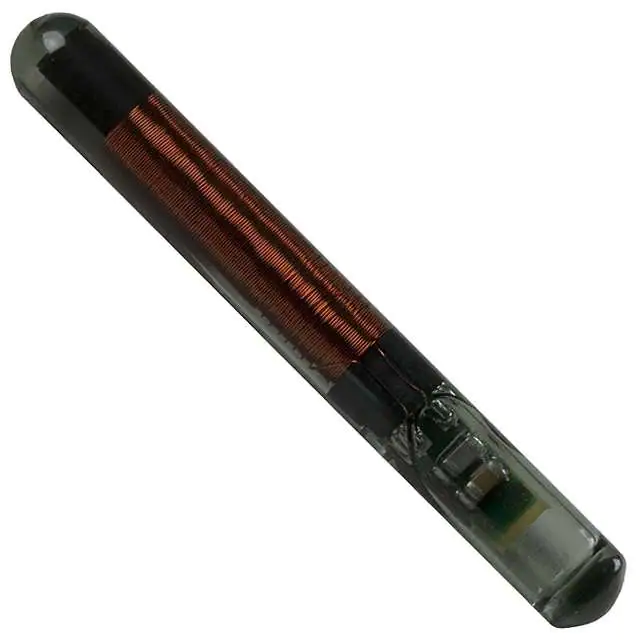
Texas Instruments RI-TRP-RR2B-30
- Part No.:
- RI-TRP-RR2B-30
- Manufacturer:
- Texas Instruments
- Category:
- RFID Transponders, Tags
- Package:
- Datasheet:
-
 RI-TRP-RR2B-30.pdf
- Description:
- RFID TAG RD ONLY 134.2KHZ ENCAP
- Quantity:
- Payment:

- Shipping:

Inventory:3,116
Please send an inquiry. Send us your inquiry, and we will respond immediately.
Product details
Overview
RI-TRP-RR2B-30 from Texas Instruments is a 32-mm hermetically sealed glass LF RFID transponder operating at 134.2 kHz, compliant with ISO 11784/11785, featuring 1360-bit MPT memory, HDX (half-duplex) transmission, and batteryless operation powered by reader field coupling. It delivers stable read/write performance in access control, vehicle ID, and asset tracking systems.
For engineers reviewing the RI-TRP-RR2B-30 datasheet, RI-TRP-RR2B-30 application, RI-TRP-RR2B-30 equivalent, or RI-TRP-RR2B-30 physical dimensions, this page provides verified technical context, pinout-free package details, real-world use cases, and validated alternative transponders for low-frequency RFID system design and deployment.
Technical Context
This transponder implements TI's patented half-duplex (HDX) communication protocol, using frequency shift keying (FSK) modulation between 134.2 kHz and 123.2 kHz to enable robust bidirectional data exchange without an onboard power source. Its resonant LC circuit is precisely tuned during manufacturing to ensure consistent coupling efficiency across varying reader antenna configurations.
The device operates within 0–70°C for programming and –25–85°C for reading, with hermetic glass encapsulation providing IP68-level environmental protection. Its 17-page, selectively addressable memory supports secure, page-level write operations-critical for tamper-resistant identification in industrial and municipal applications like waste container tagging.
Key Specifications
| Parameter | Value and Actual Design Meaning |
|---|---|
| Operating Frequency | 134.2 kHz - Enables global compliance with ISO 11784/11785 LF RFID standards and interoperability with certified readers. |
| Memory Capacity | 1360 bits / 17 R/W pages - Supports multi-field identification codes, access privileges, and lifecycle data in secured asset management. |
| Read Range | ≤100 cm - Achieves reliable detection through plastic, wood, concrete, and soil-ideal for buried or embedded tag deployments. |
| Programming Range | 30% of read range (~30 cm) - Ensures intentional, proximity-gated write operations to prevent accidental overwrites in dense tag environments. |
| Read/Write Time | 86 ms read / 293 ms program - Enables high-throughput scanning in automated gate or conveyor-based identification systems. |
| Programming Cycles | 100,000 cycles - Guarantees long-term reusability in dynamic applications such as rental equipment tracking or reusable container logistics. |
| Operating Temp | –25°C to +85°C - Sustains functionality in outdoor infrastructure, cold-chain transport, and industrial enclosures without thermal derating. |
Pinout & Package
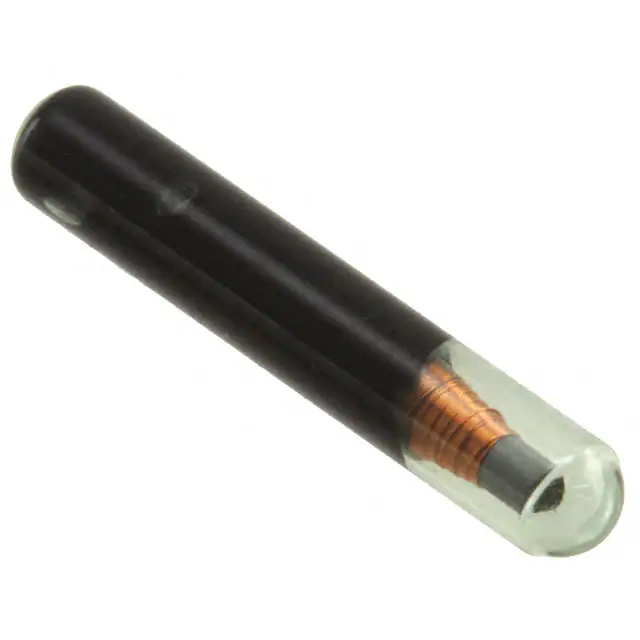
RI-TRP-RR2B-30 is a passive, two-terminal glass-encapsulated transponder with no external pins or leads. The internal coil and IC are fully integrated into a hermetically sealed cylindrical glass capsule (⌀3.85 ±0.05 mm × 32.2 ±0.6 mm), designed for direct embedding or epoxy mounting without PCB interface.
Key Features
| Feature | Design Value |
|---|---|
| Patented HDX technology | Enables simultaneous power harvesting and data demodulation without dead-time gaps-improving read reliability in noisy RF environments. |
| Factory-tuned resonance | Eliminates field calibration requirements and ensures consistent read range across production batches and reader platforms. |
| ISO 11784/11785 compliance | Guarantees interoperability with globally deployed LF RFID readers used in animal ID, vehicle access, and municipal asset systems. |
| Hermetic glass sealing | Provides permanent moisture, chemical, and pressure resistance-validated for submersion, autoclaving, and underground burial. |
| Nonmetallic material penetration | Allows reliable operation when mounted inside plastic housings, composite panels, or behind concrete walls-reducing mechanical integration constraints. |
Applications
| Access Control Systems | Vehicle Identification |
|---|---|
Use Scenario: Embedded in employee ID badges or door-mounted fobs for secure facility entry. IC Role / Device Role / Timing Role: Passive identification token responding to 134.2 kHz reader interrogation without battery or clock source. Use Value: Tamper-resistant, maintenance-free credential with >100,000 reprogrammable cycles for role-based access updates. | Use Scenario: Mounted on truck chassis or trailer frames for automated tolling or yard management. IC Role / Device Role / Timing Role: Batteryless transponder delivering unique vehicle ID via HDX FSK modulation under mobile reader exposure. Use Value: Reliable read at ≤100 cm through paint, rust, and grime-eliminating line-of-sight dependency in harsh outdoor conditions. |
| Container Tracking | Waste Management |
Use Scenario: Sealed inside ISO shipping containers for port-to-port logistics visibility. IC Role / Device Role / Timing Role: Multipage, selectively addressable memory storing container ID, origin, destination, and seal status. Use Value: Hermetic glass construction withstands salt spray, UV exposure, and mechanical impact during maritime transport. | Use Scenario: Embedded in municipal waste bins for route optimization and fill-level monitoring. IC Role / Device Role / Timing Role: Low-frequency transponder readable through plastic, metal-reinforced composites, and wet organic debris. Use Value: Stable performance in high-humidity, chemically aggressive landfill environments where UHF tags fail. |
Equivalent & Alternatives
The following parts are listed as comparable options for similar LF RFID transponder applications.
| Alternative Part | Technical Difference | Application Difference | Selection Advice |
|---|---|---|---|
| RI-TRP-DR2B-40 | Same 32-mm glass form factor, identical 134.2 kHz HDX operation and 1360-bit MPT memory; differs only in orderable suffix (-40 vs -30) and marking. | No functional difference; both qualified for ISO 11784/11785 access control and asset ID. | Select RI-TRP-DR2B-40 if requiring TI's standard production marking (RI-TRP-DR2B-40.B) and large-tape-and-reel packaging (2000 pcs). |
| EM4102-32 | 125 kHz, read-only (no write capability), 128-bit EM-Marine protocol; lacks HDX, multipage addressing, and ISO 11785 compliance. | Suitable only for basic read-only ID in non-secure, low-data applications like simple door fobs. | Choose EM4102-32 only for cost-sensitive, legacy 125 kHz systems where programmability and ISO compliance are not required. |
Compared with RI-TRP-DR2B-40, RI-TRP-RR2B-30 shares identical electrical, mechanical, and protocol specifications-differing solely in ordering designation and packaging configuration. Against EM4102-32, RI-TRP-RR2B-30 enables secure, field-updatable identification with full ISO standard support, making it suitable for regulated, high-integrity applications.
Availability
RI-TRP-RR2B-30 is available at Aetrix Electronics and suitable for access control, vehicle identification, and container tracking applications requiring stable component supply, long-term lifecycle assurance, and global regulatory compliance.
Supply support for RI-TRP-RR2B-30 includes scheduled delivery planning, volume procurement assistance, BOM continuity management, traceable sourcing, and lifecycle availability coordination for OEM customers, industrial embedded developers, connected-device designers, and electronics production programs.
Manufacturer
Texas Instruments is a global semiconductor leader specializing in analog, embedded processing, and connectivity technologies, with decades of leadership in RFID innovation and industrial-grade component manufacturing.
RI-TRP-RR2B-30 belongs to TI's TIRIS® low-frequency RFID transponder product line, engineered specifically for rugged, batteryless identification in demanding physical environments-including outdoor infrastructure, municipal services, and industrial logistics.
FAQ
What is the operating frequency of the RI-TRP-RR2B-30 transponder?
The RI-TRP-RR2B-30 operates at 134.2 kHz, fully complying with ISO 11784 and ISO 11785 standards for low-frequency RFID systems. This frequency ensures reliable coupling with standard LF reader antennas and immunity to interference from common industrial RF sources, making RI-TRP-RR2B-30 ideal for fixed-mount and mobile identification applications.
Is the RI-TRP-RR2B-30 compatible with ISO 11784/11785 readers?
Yes, the RI-TRP-RR2B-30 is explicitly certified compliant with both ISO 11784 (coding structure) and ISO 11785 (communication protocol) standards. Its HDX modulation scheme, 134.2 kHz carrier, and 1360-bit MPT memory format ensure seamless interoperability with all commercially available ISO-compliant LF readers used in animal ID, vehicle access, and municipal asset tracking systems.
Does the RI-TRP-RR2B-30 require a battery or external power source?
No, the RI-TRP-RR2B-30 is a fully passive transponder powered entirely by electromagnetic energy harvested from the reader's RF field. It contains no battery, enabling maintenance-free operation for decades under proper environmental conditions. This batteryless architecture is intrinsic to RI-TRP-RR2B-30's design and eliminates replacement cycles and disposal concerns.
What is the maximum read range of the RI-TRP-RR2B-30?
The typical maximum read range of the RI-TRP-RR2B-30 is ≤100 cm under standard test conditions using a compliant reader antenna and optimal orientation. Actual range depends on reader power output, antenna size, environmental materials, and tag placement-but RI-TRP-RR2B-30 consistently achieves this performance due to its factory-tuned resonance and high-Q glass-encapsulated coil.
Can the RI-TRP-RR2B-30 be embedded in metal or conductive environments?
No-like all LF RFID transponders, RI-TRP-RR2B-30 cannot operate when directly attached to or enclosed by ferrous or conductive metals, as they detune the resonant circuit. However, RI-TRP-RR2B-30 can be reliably read through nonmetallic barriers (plastic, wood, concrete, soil) and may be mounted near metal using standoff spacers or dielectric isolation layers per TI's application guidelines.
RI-TRP-RR2B-30 Specifications
- Product attributes
- Attribute value
- Manufacturer:
- Texas Instruments
- Series:
- -
- Packaging:
- Tape & Reel (TR)
- Product Status:
- Obsolete
- Style:
- Glass Encapsulated
- Technology:
- -
- Frequency:
- 134.2kHz
- Memory Type:
- Read/Write
- Writable Memory:
- -
- Standards:
- ISO 11785
- Operating Temperature:
- -
- Size / Dimension:
- 3.85mm Dia x 31.20mm
RI-TRP-RR2B-30 FAQ
1.How can I place an order for RI-TRP-RR2B-30 through Aetrix?
Please submit a Request for Quotation (RFQ) for RI-TRP-RR2B-30 on Aetrix. Our sales agent will provide a competitive quotation and guide you through the order confirmation once you accept the terms.
2.Are the price and stock information for RI-TRP-RR2B-30 reliable?
The price and inventory of RI-TRP-RR2B-30 are updated periodically and may fluctuate due to market conditions. Stock and pricing data are typically refreshed every 24 hours. Quotation validity for RI-TRP-RR2B-30 is usually 5 days.
3.What payment methods are accepted for RI-TRP-RR2B-30?
We accept Wire Transfer, PayPal, Credit Card, Western Union, MoneyGram, and Escrow for RI-TRP-RR2B-30 transactions.
Note: Certain payment methods may incur a processing fee.
4.How is shipping managed for RI-TRP-RR2B-30?
RI-TRP-RR2B-30 orders can be shipped via leading logistics carriers, including DHL, UPS, FedEx, TNT, or Registered Mail.
Once your RI-TRP-RR2B-30 order is processed, you will receive an email with the shipment details and tracking number.
Note: Tracking information may take up to 24 hours to appear. Express delivery typically takes 3–5 business days.
5.How can I obtain technical support or documentation for RI-TRP-RR2B-30?
For technical support, including RI-TRP-RR2B-30 datasheets, pinout diagrams, or application guidance, please contact our engineering support team. They can provide detailed documentation and assistance for your RI-TRP-RR2B-30 requirements.
6.How does Aetrix verify that RI-TRP-RR2B-30 is sourced from the original manufacturer or authorized distributors?
All RI-TRP-RR2B-30 products on Aetrix are procured from qualified distributors and authorized channels. Our dedicated quality assurance team conducts strict verification, including traceability checks and, if necessary, third-party testing. This ensures that RI-TRP-RR2B-30 meets industry standards.
7.What is the process for return or replacement of RI-TRP-RR2B-30?
All RI-TRP-RR2B-30 units undergo pre-shipment inspection (PSI). If there is an issue with RI-TRP-RR2B-30, returns or replacements are accepted under the following conditions:
1.Quantity discrepancies, incorrect items, or visible external defects (such as breakage or corrosion), acknowledged by Aetrix.
2.The issue is reported within 90 days of delivery.
3.The RI-TRP-RR2B-30 part is unused and in its original packaging.
Return procedure for RI-TRP-RR2B-30:
1.Submit a request within 90 days.
2.Obtain a Return Material Authorization (RMA) from Aetrix.
RI-TRP-RR2B-30 Tags
-
SL3S1013FTB0,115
NXP Semiconductors
-
NTP53321G0JHKZ
NXP Semiconductors
-
HTSH4801ETK,118
NXP Semiconductors
-
NTA53321G0FHKZ
NXP Semiconductors
-
RF-HDT-DVBE-N2
Texas Instruments
-
RF-HDT-DVBB-N2
Texas Instruments
-
HT2DC20S20/F/RSP
NXP Semiconductors
-
TRPGR30ATGA
Texas Instruments
-
TRPGR30ATGC
Texas Instruments
-
RI-TRP-DR2B-40
Texas Instruments
-
V680-D1KP52MT
Omron Automation and Safety
-
HTMS8001FTB/AF,115
NXP USA Inc.
Tech Hub

A practical engineering guide to 3.3V and 5V logic compatibility, input thresholds, resistor dividers, translator ICs, MOSFET level shifting, I2C pull-ups, timing limits and power-sequencing risks.

The 74HC595 uses push-pull logic outputs, while the TPIC6B595 uses 50 V open-drain DMOS sinks for higher-power loads. This guide compares timing, current limits, 3.3 V interfacing, load wiring, thermal…

The 74HC595 converts serial data into eight stable parallel outputs. This guide covers pin functions, shift and storage timing, OE and MR behavior, drive-current limits, cascading, voltage compatibilit…

A technical comparison of level-sensitive latches and edge-triggered flip-flops, covering timing windows, setup and hold limits, master–slave operation, time borrowing, race-through, HDL inference and…

A D latch stores one bit while Enable controls when data can pass. This reference covers gate-level operation, truth tables, transparency, setup and hold timing, LE versus OE, common ICs and practical …

An SR latch stores one bit through cross-coupled feedback. This engineering reference covers NOR and NAND implementations, truth tables, forbidden-state recovery, gated operation, switch debouncing, fa…

Latch circuits retain one bit through feedback. This technical reference covers SR and D latches, truth tables, transparency, timing limits, latch-versus-flip-flop behavior, applications and common log…

An engineering guide to LED driver operation, constant-current and constant-voltage outputs, linear and switching topologies, dimming, IC selection, calculations, replacement compatibility, and fault c…

Operational amplifier guide covering op amp basics, feedback, ideal vs real op amps, common configurations, buffer circuits, offset, bias current, gain-bandwidth, slew rate, rail-to-rail limits and sel…

Jumper cables guide covering safe connection order, red and black clamp placement, final ground connection, cable gauge, length, clamp quality, copper vs CCA cables, jump starter comparison and battery…


