
 My Inquiry
 My Account


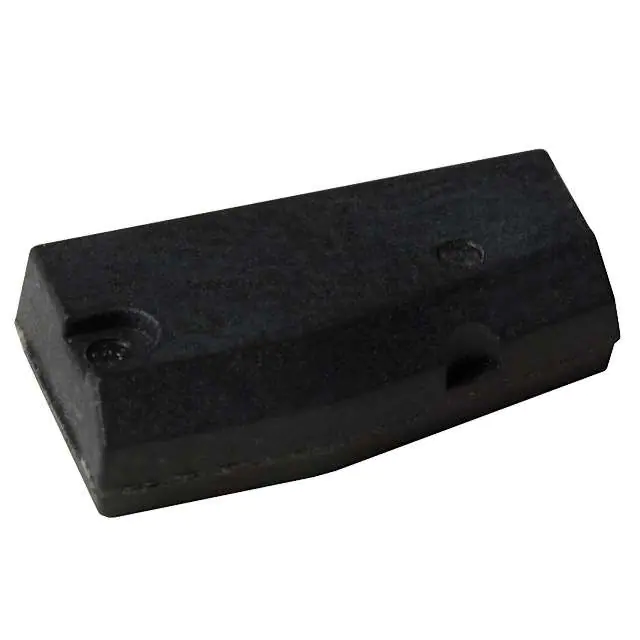
Texas Instruments RI-TRP-W9WK-20
- Part No.:
- RI-TRP-W9WK-20
- Manufacturer:
- Texas Instruments
- Category:
- RFID Transponders, Tags
- Package:
- Datasheet:
-
 RI-TRP-W9WK-20.pdf
- Description:
- RFID TAG R/W 134.2KHZ ENCAP
- Quantity:
- Payment:

- Shipping:

Inventory:4,963
Please send an inquiry. Send us your inquiry, and we will respond immediately.
Product details
Overview
RI-TRP-W9WK-20 from Texas Instruments is a batteryless, read/write LF RFID transponder operating at 134.2 kHz with HDX (Half Duplex) transmission, 80-bit memory (64 user + 16-bit CRC), IP68 rating, and 12 mm × 6 mm × 3 mm wedge-shaped plastic package - used in industrial asset tagging and animal identification systems.
For engineers reviewing the RI-TRP-W9WK-20 datasheet, RI-TRP-W9WK-20 pinout, RI-TRP-W9WK-20 application, or RI-TRP-W9WK-20 equivalent, key selection factors include its HDX modulation scheme, 309 ms typical programming time, -40°C to +70°C programming temperature range, 100,000-programming-cycle endurance, and non-metallic material signal penetration capability.
Technical Context
The RI-TRP-W9WK-20 implements HDX (Half Duplex) communication: the reader supplies power via magnetic field coupling, then pauses to allow the transponder to transmit its response using FSK modulation between 134.2 kHz and 123.2 kHz. It requires no internal power source and draws energy solely from the reader's RF field.
Memory is organized as one 80-bit page, with TI recommending 64 bits for user data and 16 bits reserved for CCITT CRC - enforced by TI-RFID LF readers. Programming is supported only within -40°C to +70°C, while read operation extends to +85°C.
Key Specifications
| Parameter | Value and Actual Design Meaning |
|---|---|
| Operating Frequency | 134.2 kHz - defines resonant coupling frequency with reader antenna; mandates matching inductor-capacitor tuning. |
| Memory Capacity | 80 bits (1 page) - supports 64 user bits + 16-bit CCITT CRC; fixed single-page architecture limits data segmentation. |
| Transmission Principle | HDX (Half Duplex) - requires precise reader timing control; reader powers device, then pauses for transponder reply. |
| Modulation | FSK (134.2 / 123.2 kHz) - enables robust demodulation in noisy industrial environments without requiring complex receiver circuitry. |
| Reading Range | ≤ 20 cm - highly dependent on reader antenna size, coil geometry, and local RF regulations; not guaranteed in metal-rich environments. |
| Programming Cycles | 100,000 - specifies maximum write endurance before bit error rate exceeds specification; critical for reusable tag applications. |
| Operating Temp (Program) | -40°C to +70°C - narrower than read range; programming must be suspended above +70°C to prevent memory corruption. |
Pinout & Package
RI-TRP-W9WK-20 is a fully encapsulated, passive RFID transponder with no external electrical terminals or pins. It contains an integrated ferrite-core coil antenna and EEPROM, housed in a black plastic wedge package measuring 12 mm × 6 mm × 3 mm ±0.05 mm. No PCB mounting or soldering is required - it operates via inductive coupling only.
Key Features
| Feature | Design Value |
|---|---|
| Batteryless HDX Operation | Enables maintenance-free deployment in sealed or embedded environments where battery replacement is impractical or prohibited. |
| IP68 Encapsulation | Guarantees full dust ingress protection and continuous submersion in water up to 1 m for 30 minutes - suitable for washdown and outdoor asset tracking. |
| Non-Metallic Signal Penetration | Allows reliable reading through plastic, rubber, wood, concrete, and biological tissue - enabling implantable and embedded tagging. |
| EMI/X-ray Immunity | Preserves programmed data integrity during exposure to industrial EMI sources and medical/industrial X-ray inspection equipment. |
| Robust Mechanical Rating | Withstands 200 g shock (IEC 68-2-27) and 20 g vibration (IEC 68-2-6), supporting use in transportation, logistics, and heavy machinery. |
Applications
| Animal Identification | Industrial Asset Tagging |
|---|---|
Use Scenario: Subcutaneous implantation in livestock for lifetime traceability across farms, slaughterhouses, and export checkpoints. IC Role / Device Role / Timing Role: Passive read/write transponder storing ISO-compliant ID and health records; responds only when energized by handheld or portal reader. Use Value: Eliminates need for batteries or external power; IP68 and mechanical ruggedness ensure survival under physiological stress and repeated handling. | Use Scenario: Mounting inside metal-housed valves, pumps, or motors in oil & gas facilities for maintenance logging and calibration history. IC Role / Device Role / Timing Role: Read/write data carrier interfacing exclusively with TI-compatible LF readers; stores serial number, service date, and firmware version. Use Value: Signal penetrates non-metallic housings (e.g., epoxy-coated enclosures); HDX timing ensures reliable reads despite electromagnetic noise near motors and drives. |
| Reusable Tool Tracking | Medical Instrument Sterilization Logging |
Use Scenario: Embedding in hand tools subjected to repeated autoclaving, chemical cleaning, and impact in aerospace MRO facilities. IC Role / Device Role / Timing Role: Batteryless memory node storing tool ID, usage count, and calibration status; programmed during depot check-in. Use Value: Withstands 100,000 programming cycles and 125°C for 1000 hours - survives >500 autoclave cycles without data loss or physical degradation. | Use Scenario: Integration into surgical instrument trays to log sterilization cycles, exposure time, and temperature profiles per WHO/ISO 15883 standards. IC Role / Device Role / Timing Role: Passive data logger element powered and interrogated by fixed LF readers at sterilizer exits; stores cycle timestamp and validation flags. Use Value: EMI immunity preserves log integrity during RF-intensive sterilization; IP68 prevents moisture ingress during steam exposure and rinsing. |
Equivalent & Alternatives
The following parts are listed as comparable options for similar passive LF RFID transponder applications.
| Alternative Part | Technical Difference | Application Difference | Selection Advice |
|---|---|---|---|
| RI-TRP-W9WK-10 | Same die and memory structure; differs only in wedge geometry - 10 mm length vs. 12 mm for W9WK-20. | Preferred where space-constrained mounting (e.g., narrow-diameter syringes or dental tools) requires shorter form factor. | Select W9WK-10 when mechanical envelope is tighter; verify antenna coupling efficiency remains sufficient at reduced coil area. |
| RI-TRP-W9WK-30 | Identical electrical specs and memory map; features extended 15 mm length for higher read range in low-coupling scenarios. | Suitable for large-diameter assets (e.g., pipeline flanges, transformer bushings) where increased coil inductance improves link budget. | Choose W9WK-30 when ≥25 cm read distance is required under same reader conditions; confirm mechanical fit in host assembly. |
Compared with RI-TRP-W9WK-10 and RI-TRP-W9WK-30, the RI-TRP-W9WK-20 offers the balanced trade-off of mechanical robustness, coupling efficiency, and compactness - making it the default choice for general-purpose industrial and animal ID deployments where standardized 12 mm wedge integration is specified.
Availability
RI-TRP-W9WK-20 is available at Aetrix Electronics and suitable for industrial asset tagging, animal identification, reusable tool tracking, and medical instrument sterilization logging requiring stable component supply across multi-year production programs.
Supply support for RI-TRP-W9WK-20 includes scheduled delivery planning, volume procurement assistance, BOM continuity management, traceable sourcing, and lifecycle availability coordination for OEM customers, industrial embedded developers, connected-device designers, and electronics production programs.
Manufacturer
Texas Instruments is a global semiconductor company specializing in analog, embedded processing, and connectivity technologies, with decades of leadership in RFID system design and industrial sensing solutions.
The RI-TRP-W9WK-20 belongs to TI's legacy LF RFID transponder family, engineered specifically for high-reliability, batteryless identification in harsh environments - targeting ISO/IEC 11784/11785-compliant animal ID and industrial traceability systems.
FAQ
What is the memory organization of the RI-TRP-W9WK-20?
The RI-TRP-W9WK-20 contains a single 80-bit memory page. Texas Instruments recommends allocating 64 bits for user data and reserving the remaining 16 bits for a CCITT CRC block check character - a requirement enforced by TI-RFID LF readers to ensure data integrity during programming and verification cycles of the RI-TRP-W9WK-20.
Does the RI-TRP-W9WK-20 require a battery or external power source?
No, the RI-TRP-W9WK-20 is a fully passive transponder. It derives all operating power from the magnetic field generated by a compatible LF reader via inductive coupling. Its batteryless design eliminates maintenance, leakage risk, and temperature-related failure modes - a core reliability feature of the RI-TRP-W9WK-20.
What is the maximum operating temperature for programming the RI-TRP-W9WK-20?
The RI-TRP-W9WK-20 supports programming only within -40°C to +70°C. While read operations function up to +85°C, programming above +70°C risks EEPROM corruption. This thermal limitation is documented in TI's official datasheet for the RI-TRP-W9WK-20 and must be respected in sterilization or engine-bay deployment scenarios.
Can the RI-TRP-W9WK-20 be read through metal?
No - the RI-TRP-W9WK-20 cannot be reliably read through metal. Its 134.2 kHz magnetic coupling is disrupted by conductive materials. However, TI confirms the RI-TRP-W9WK-20 can be read through virtually all non-metallic substances including plastic, rubber, concrete, and biological tissue, as verified in TI's signal penetration testing for the RI-TRP-W9WK-20.
What mechanical standards does the RI-TRP-W9WK-20 meet for shock and vibration?
The RI-TRP-W9WK-20 complies with IEC 68-2-27 (200 g, half-sine, 3 ms, 3 axes) for shock and IEC 68-2-6 (20 g, 1–500 Hz, 3 axes, 24 hours/axis) for vibration. These validated ratings ensure operational integrity in high-dynamic environments such as vehicle-mounted asset tracking and rotating machinery monitoring - confirmed in TI's qualification report for the RI-TRP-W9WK-20.
RI-TRP-W9WK-20 Specifications
- Product attributes
- Attribute value
- Manufacturer:
- Texas Instruments
- Series:
- -
- Packaging:
- Bulk
- Product Status:
- Obsolete
- Style:
- Encapsulated
- Technology:
- Passive
- Frequency:
- 134.2kHz
- Memory Type:
- Read/Write
- Writable Memory:
- 80b (User)
- Standards:
- -
- Operating Temperature:
- -40°C ~ 85°C
- Size / Dimension:
- 0.472" L x 0.236" W (12.00mm x 6.00mm)
RI-TRP-W9WK-20 FAQ
1.How can I place an order for RI-TRP-W9WK-20 through Aetrix?
Please submit a Request for Quotation (RFQ) for RI-TRP-W9WK-20 on Aetrix. Our sales agent will provide a competitive quotation and guide you through the order confirmation once you accept the terms.
2.Are the price and stock information for RI-TRP-W9WK-20 reliable?
The price and inventory of RI-TRP-W9WK-20 are updated periodically and may fluctuate due to market conditions. Stock and pricing data are typically refreshed every 24 hours. Quotation validity for RI-TRP-W9WK-20 is usually 5 days.
3.What payment methods are accepted for RI-TRP-W9WK-20?
We accept Wire Transfer, PayPal, Credit Card, Western Union, MoneyGram, and Escrow for RI-TRP-W9WK-20 transactions.
Note: Certain payment methods may incur a processing fee.
4.How is shipping managed for RI-TRP-W9WK-20?
RI-TRP-W9WK-20 orders can be shipped via leading logistics carriers, including DHL, UPS, FedEx, TNT, or Registered Mail.
Once your RI-TRP-W9WK-20 order is processed, you will receive an email with the shipment details and tracking number.
Note: Tracking information may take up to 24 hours to appear. Express delivery typically takes 3–5 business days.
5.How can I obtain technical support or documentation for RI-TRP-W9WK-20?
For technical support, including RI-TRP-W9WK-20 datasheets, pinout diagrams, or application guidance, please contact our engineering support team. They can provide detailed documentation and assistance for your RI-TRP-W9WK-20 requirements.
6.How does Aetrix verify that RI-TRP-W9WK-20 is sourced from the original manufacturer or authorized distributors?
All RI-TRP-W9WK-20 products on Aetrix are procured from qualified distributors and authorized channels. Our dedicated quality assurance team conducts strict verification, including traceability checks and, if necessary, third-party testing. This ensures that RI-TRP-W9WK-20 meets industry standards.
7.What is the process for return or replacement of RI-TRP-W9WK-20?
All RI-TRP-W9WK-20 units undergo pre-shipment inspection (PSI). If there is an issue with RI-TRP-W9WK-20, returns or replacements are accepted under the following conditions:
1.Quantity discrepancies, incorrect items, or visible external defects (such as breakage or corrosion), acknowledged by Aetrix.
2.The issue is reported within 90 days of delivery.
3.The RI-TRP-W9WK-20 part is unused and in its original packaging.
Return procedure for RI-TRP-W9WK-20:
1.Submit a request within 90 days.
2.Obtain a Return Material Authorization (RMA) from Aetrix.
RI-TRP-W9WK-20 Tags
-
SL3S1013FTB0,115
NXP Semiconductors
-
NTP53321G0JHKZ
NXP Semiconductors
-
HTSH4801ETK,118
NXP Semiconductors
-
NTA53321G0FHKZ
NXP Semiconductors
-
RF-HDT-DVBE-N2
Texas Instruments
-
RF-HDT-DVBB-N2
Texas Instruments
-
HT2DC20S20/F/RSP
NXP Semiconductors
-
TRPGR30ATGA
Texas Instruments
-
TRPGR30ATGC
Texas Instruments
-
RI-TRP-DR2B-40
Texas Instruments
-
V680-D1KP52MT
Omron Automation and Safety
-
HTMS8001FTB/AF,115
NXP USA Inc.
Tech Hub

A practical engineering guide to 3.3V and 5V logic compatibility, input thresholds, resistor dividers, translator ICs, MOSFET level shifting, I2C pull-ups, timing limits and power-sequencing risks.

The 74HC595 uses push-pull logic outputs, while the TPIC6B595 uses 50 V open-drain DMOS sinks for higher-power loads. This guide compares timing, current limits, 3.3 V interfacing, load wiring, thermal…

The 74HC595 converts serial data into eight stable parallel outputs. This guide covers pin functions, shift and storage timing, OE and MR behavior, drive-current limits, cascading, voltage compatibilit…

A technical comparison of level-sensitive latches and edge-triggered flip-flops, covering timing windows, setup and hold limits, master–slave operation, time borrowing, race-through, HDL inference and…

A D latch stores one bit while Enable controls when data can pass. This reference covers gate-level operation, truth tables, transparency, setup and hold timing, LE versus OE, common ICs and practical …

An SR latch stores one bit through cross-coupled feedback. This engineering reference covers NOR and NAND implementations, truth tables, forbidden-state recovery, gated operation, switch debouncing, fa…

Latch circuits retain one bit through feedback. This technical reference covers SR and D latches, truth tables, transparency, timing limits, latch-versus-flip-flop behavior, applications and common log…

An engineering guide to LED driver operation, constant-current and constant-voltage outputs, linear and switching topologies, dimming, IC selection, calculations, replacement compatibility, and fault c…

Operational amplifier guide covering op amp basics, feedback, ideal vs real op amps, common configurations, buffer circuits, offset, bias current, gain-bandwidth, slew rate, rail-to-rail limits and sel…

Jumper cables guide covering safe connection order, red and black clamp placement, final ground connection, cable gauge, length, clamp quality, copper vs CCA cables, jump starter comparison and battery…


