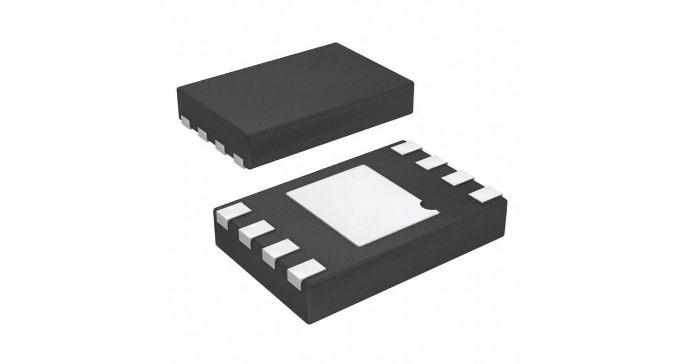
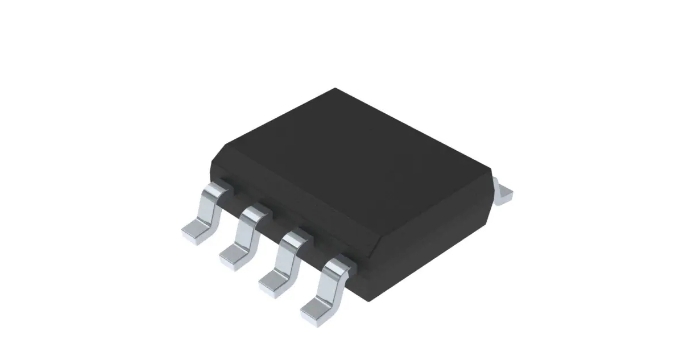
Semtech Corporation S3HVM10
- Part No.:
- S3HVM10
- Manufacturer:
- Semtech Corporation
- Category:
- Single Diodes
- Package:
- Module
- Datasheet:
-
S3HVM10.pdf
- Description:
- DIODE GEN PURP 10KV 1.2A MODULE
- Quantity:
- Payment:

- Shipping:

Inventory:5,134
Please send an inquiry. Send us your inquiry, and we will respond immediately.
Product details
Overview
S3HVM10 from Semtech is a transient diverting suppressor designed for high-energy EOS protection of 22V-rated power or I/O lines, featuring ±30kV IEC 61000-4-2 ESD immunity, 40A (8/20μs) peak pulse current handling, and stable 27.5–28V clamping voltage across temperature and current range - deployed in USB Type-C PD input protection and industrial load switch front-end circuits.
For engineers reviewing the S3HVM10 datasheet, pinout, applications, or equivalent options, this page delivers verified electrical parameters, DFN-6 package layout guidance, real-world clamping behavior vs. conventional TVS, and validated alternatives for 22V bus protection in high-reliability embedded and power delivery systems.
Technical Context
The S3HVM10 uses a surge-rated FET as its primary protection element, activated by a precision trigger circuit that turns on the shunt path when transient voltage exceeds breakdown. Unlike standard TVS diodes, its clamping voltage remains nearly constant (27.5–28V) from 24A to 40A peak pulse current due to decreasing RDS(on) under surge conditions.
It operates over –40°C to +125°C with <20mΩ dynamic resistance, 175pF junction capacitance at 22V/1MHz, and reverse leakage ≤600nA at VRWM = 22V - enabling robust protection without thermal derating penalties seen in junction-based TVS devices.
Key Specifications
| Parameter | Value and Actual Design Meaning |
|---|---|
| Working Voltage | 22V - supports nominal USB PD bus and industrial 24V rail inputs without DC blocking. |
| Clamping Voltage | 27.5–28V at 40A (8/20μs) - stays within safe margin below typical 30V+ IC damage thresholds. |
| Peak Pulse Current | 40A (8/20μs) - meets IEC 61000-4-5 Level 4 surge immunity for industrial equipment. |
| ESD Withstand | ±30kV contact & air (IEC 61000-4-2) - eliminates need for secondary ESD stages in connector-facing designs. |
| Junction Capacitance | 175pF at 22V/1MHz - low enough for 22V power line use; not suitable for high-speed data lines. |
| Dynamic Resistance | 20mΩ - enables flat clamping curve and minimal voltage overshoot during fast transients. |
Pinout & Package
Package: DFN 1.6mm × 1.6mm × 0.55mm, 6-lead, RoHS-compliant, UL 94V-0 molding compound, lead-free finish.
| Pin/Terminal | Circuit Role | Design Meaning |
|---|---|---|
| 1, 2, 3 | GND | Common ground return path for surge current; all three pins must be connected to maximize current sharing and minimize inductance. |
| 4, 5, 6 | IN | Protected line input - tied together to handle full 40A surge; requires direct routing from connector with minimal trace length. |
Key Features
| Feature | Design Value |
|---|---|
| FET-based shunt architecture | Enables near-constant clamping voltage across 24–40A and –40°C to +125°C - avoids thermal runaway and derating issues of TVS diodes. |
| Low dynamic resistance | 20mΩ ensures minimal IR drop during surge, preserving clamping accuracy and reducing localized heating. |
| High-energy surge rating | 1120W peak pulse power (8/20μs) supports repeated lightning-surge events in industrial and outdoor equipment. |
| Ultra-low leakage | ≤600nA at 22V enables use in always-on battery-backed systems without measurable standby drain. |
Applications
| USB Type-C Power Delivery Input Protection | Industrial Load Switch Front-End Protection |
|---|---|
|
Use Scenario: Protecting VBUS lines in USB-C receptacles supporting up to 20V/5A PD negotiation. IC Role / Device Role / Timing Role: Primary EOS suppression device placed immediately after the connector, before the PD controller and load switch. Use Value: Maintains 27.5–28V clamping across temperature - prevents false OVP trips and ensures reliable PD communication under ESD/lightning stress. |
Use Scenario: Safeguarding enable and input pins of high-side load switches (e.g., HS2950P) in remote meters and robotics. IC Role / Device Role / Timing Role: Transient shunt placed between VIN and GND to clamp surges before they reach the switch's internal FET gate or drain. Use Value: Prevents latch-up or permanent damage to load switch ICs by limiting voltage excursion to ≤28V during 40A transients. |
| IoT Edge Node Power Rail Protection | Storage Device 22V Backup Supply Protection |
|
Use Scenario: Securing 22V auxiliary rails powering cellular modems or sensor hubs in battery-operated IoT gateways. IC Role / Device Role / Timing Role: Standalone transient suppressor on main DC input, operating continuously across wide ambient temperatures. Use Value: Delivers stable clamping without derating - critical for field-deployed units exposed to uncontrolled surge environments. |
Use Scenario: Protecting 22V backup power inputs in NVMe SSD enclosures and enterprise storage controllers. IC Role / Device Role / Timing Role: High-reliability surge guard on external 22V supply path, co-located with input capacitor. Use Value: Survives repeated 1kV/42Ω surges per IEC 61000-4-5 while maintaining low leakage (<600nA) to avoid backup battery discharge. |
Equivalent & Alternatives
The following parts are listed as comparable options for similar transient suppression applications.
| Alternative Part | Technical Difference | Application Difference | Selection Advice |
|---|---|---|---|
| TDS2211P | Same manufacturer, identical function and specs - confirmed drop-in replacement per Semtech documentation. | Identical pinout, footprint, and performance; used interchangeably in production designs. | Select TDS2211P when sourcing from Semtech-authorized channels with full traceability and lifecycle support. |
| SP1003-02HTG | TVS diode (not FET-based); higher clamping (~38V at 24A/125°C), 30% larger DFN-6 package (2.0×2.0mm). | Limited to lower-temperature or lower-current applications where clamping margin allows. | Choose SP1003-02HTG only if legacy design compatibility or dual-source strategy requires non-FET solution - expect higher clamping and thermal sensitivity. |
Compared with TDS2211P and SP1003-02HTG, the S3HVM10 offers identical FET-based clamping performance and footprint but is designated under Semtech's alternate part numbering scheme - ensuring same reliability, qualification, and manufacturing lot traceability as TDS2211P.
Availability
S3HVM10 is available at Aetrix Electronics and suitable for USB Type-C PD interfaces, industrial load switch inputs, IoT edge node power rails, and storage device backup supplies requiring stable component supply across extended temperature and surge stress conditions.
Supply support for S3HVM10 includes scheduled delivery planning, volume procurement assistance, BOM continuity management, traceable sourcing, and lifecycle availability coordination for OEM customers, industrial embedded developers, connected-device designers, and electronics production programs.
Manufacturer
Semtech Corporation is a U.S.-based fabless semiconductor company specializing in high-performance analog and mixed-signal ICs for precision protection, sensing, and signal integrity.
The S3HVM10 belongs to Semtech's Transient Diverting Suppressor (TDS) product line - engineered specifically to replace conventional TVS diodes in high-energy, temperature-critical 22V bus protection applications.
FAQ
What is the exact package type and dimensions of the S3HVM10?
The S3HVM10 uses a DFN package measuring 1.6mm × 1.6mm × 0.55mm with 6 leads. Pins 1–3 are ground terminals and pins 4–6 are input terminals - all must be soldered to maximize surge current capability. The land pattern matches Semtech's official DFN-6 outline drawing, and the device is RoHS-compliant with UL 94V-0 flammability rating.
How does the S3HVM10 differ from standard TVS diodes in clamping behavior?
The S3HVM10 uses a surge-rated FET and precision trigger circuit instead of a pn-junction, resulting in near-constant clamping voltage (27.5–28V) across its full 24–40A peak pulse current range and –40°C to +125°C operating temperature. In contrast, standard TVS diodes exhibit rising clamping voltage with both current and temperature due to fixed dynamic resistance.
Can the S3HVM10 be used on high-speed data lines like USB SuperSpeed or PCIe?
No - the S3HVM10 has 175pF junction capacitance at 22V, which is too high for signal integrity on high-speed differential pairs. It is intended exclusively for 22V power or low-frequency I/O lines. For USB SS, DP/DM, or CC/SBU lines, Semtech recommends low-capacitance devices like RClamp3371ZC or uClamp2411ZA alongside the S3HVM10.
What is the maximum continuous operating voltage for the S3HVM10?
The S3HVM10 has a reverse stand-off voltage (VRWM) of 22V, meaning it can safely operate with up to 22V DC applied continuously without leakage exceeding 600nA. Its reverse breakdown voltage (VBR) starts at 25V (min), confirming reliable blocking up to rated working voltage.
Is the S3HVM10 pin-compatible with the TDS2211P?
Yes - the S3HVM10 is a Semtech-authorized alternate marking for the TDS2211P. Both share identical DFN-6 package dimensions, pin configuration (pins 1–3 = GND, pins 4–6 = IN), electrical specifications, thermal characteristics, and qualification data. No PCB or schematic changes are required when substituting S3HVM10 for TDS2211P.
S3HVM10 Specifications
- Product attributes
- Attribute value
- Manufacturer:
- Semtech Corporation
- Series:
- -
- Package/Case:
- Module
- Packaging:
- Bulk
- Product Status:
- Discontinued at Digi-Key
- Technology:
- Standard
- Voltage - DC Reverse (Vr) (Max):
- 10000 V
- Current - Average Rectified (Io):
- 1.2A
- Voltage - Forward (Vf) (Max) @ If:
- 11.5 V @ 3 A
- Speed:
- Standard Recovery >500ns, > 200mA (Io)
- Reverse Recovery Time (trr):
- 2.5 µs
- Current - Reverse Leakage @ Vr:
- 1 µA @ 10000 V
- Capacitance @ Vr, F:
- -
- Grade:
- -
- Qualification:
- -
- Mounting Type:
- Chassis, Stud Mount
- Supplier Device Package:
- -
- Operating Temperature - Junction:
- -55°C ~ 150°C
S3HVM10 FAQ
1.How can I place an order for S3HVM10 through Aetrix?
Please submit a Request for Quotation (RFQ) for S3HVM10 on Aetrix. Our sales agent will provide a competitive quotation and guide you through the order confirmation once you accept the terms.
2.Are the price and stock information for S3HVM10 reliable?
The price and inventory of S3HVM10 are updated periodically and may fluctuate due to market conditions. Stock and pricing data are typically refreshed every 24 hours. Quotation validity for S3HVM10 is usually 5 days.
3.What payment methods are accepted for S3HVM10?
We accept Wire Transfer, PayPal, Credit Card, Western Union, MoneyGram, and Escrow for S3HVM10 transactions.
Note: Certain payment methods may incur a processing fee.
4.How is shipping managed for S3HVM10?
S3HVM10 orders can be shipped via leading logistics carriers, including DHL, UPS, FedEx, TNT, or Registered Mail.
Once your S3HVM10 order is processed, you will receive an email with the shipment details and tracking number.
Note: Tracking information may take up to 24 hours to appear. Express delivery typically takes 3–5 business days.
5.How can I obtain technical support or documentation for S3HVM10?
For technical support, including S3HVM10 datasheets, pinout diagrams, or application guidance, please contact our engineering support team. They can provide detailed documentation and assistance for your S3HVM10 requirements.
6.How does Aetrix verify that S3HVM10 is sourced from the original manufacturer or authorized distributors?
All S3HVM10 products on Aetrix are procured from qualified distributors and authorized channels. Our dedicated quality assurance team conducts strict verification, including traceability checks and, if necessary, third-party testing. This ensures that S3HVM10 meets industry standards.
7.What is the process for return or replacement of S3HVM10?
All S3HVM10 units undergo pre-shipment inspection (PSI). If there is an issue with S3HVM10, returns or replacements are accepted under the following conditions:
1.Quantity discrepancies, incorrect items, or visible external defects (such as breakage or corrosion), acknowledged by Aetrix.
2.The issue is reported within 90 days of delivery.
3.The S3HVM10 part is unused and in its original packaging.
Return procedure for S3HVM10:
1.Submit a request within 90 days.
2.Obtain a Return Material Authorization (RMA) from Aetrix.
S3HVM10 Tags
-
1N4448X-TP
Micro Commercial Co
-
1N4148WX-TP
Micro Commercial Co

-
1N4148TR
onsemi
-
MMSD4148T1G
onsemi
-
MMBD914LT3G
onsemi
-
BAS16HT1G
onsemi
-
1N914BWT
onsemi

-
BAS21LT1G
onsemi
-
LL4148
onsemi
-
BAS16LT1G
onsemi

-
MMSD914T1G
onsemi
-
BAV21W-7-F
Diodes Incorporated
Tech Hub

Comparator circuit design covering voltage thresholds, input limits, open-collector outputs, LM393 wiring, op-amp differences, hysteresis, timing, window detection and practical fault diagnosis.
Schmitt triggers use separate rising and falling thresholds to stabilize slow or noisy signals. This guide covers hysteresis, 74HC14 and 74HCT14 selection, comparator calculations, RC oscillators and p…
Counterfeit components can hide behind convincing markings and passing basic function tests. This engineering reference covers source traceability, external inspection, X-ray, XRF, electrical testing, …
A practical engineering and sourcing framework covering lifecycle verification, lifetime-buy calculations, replacement qualification, supplier checks and counterfeit-risk controls.
TTL and CMOS logic families differ in thresholds, loading, output drive, power and timing. This engineering guide compares 74HC and 74HCT, calculates noise margins and checks 3.3 V/5 V compatibility.
A practical engineering guide to 3.3V and 5V logic compatibility, input thresholds, resistor dividers, translator ICs, MOSFET level shifting, I2C pull-ups, timing limits and power-sequencing risks.
The 74HC595 uses push-pull logic outputs, while the TPIC6B595 uses 50 V open-drain DMOS sinks for higher-power loads. This guide compares timing, current limits, 3.3 V interfacing, load wiring, thermal…
The 74HC595 converts serial data into eight stable parallel outputs. This guide covers pin functions, shift and storage timing, OE and MR behavior, drive-current limits, cascading, voltage compatibilit…
A technical comparison of level-sensitive latches and edge-triggered flip-flops, covering timing windows, setup and hold limits, master–slave operation, time borrowing, race-through, HDL inference and…
A D latch stores one bit while Enable controls when data can pass. This reference covers gate-level operation, truth tables, transparency, setup and hold timing, LE versus OE, common ICs and practical …