
 My Inquiry
 My Account


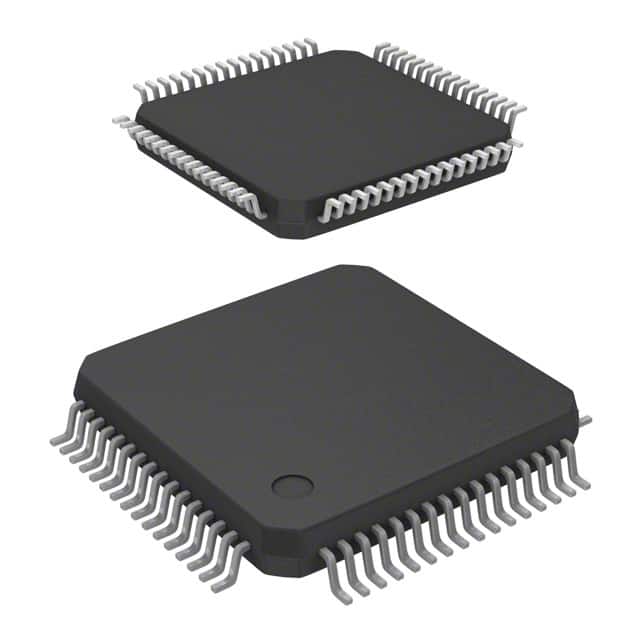
NXP Semiconductors SAA7129H/V1,518
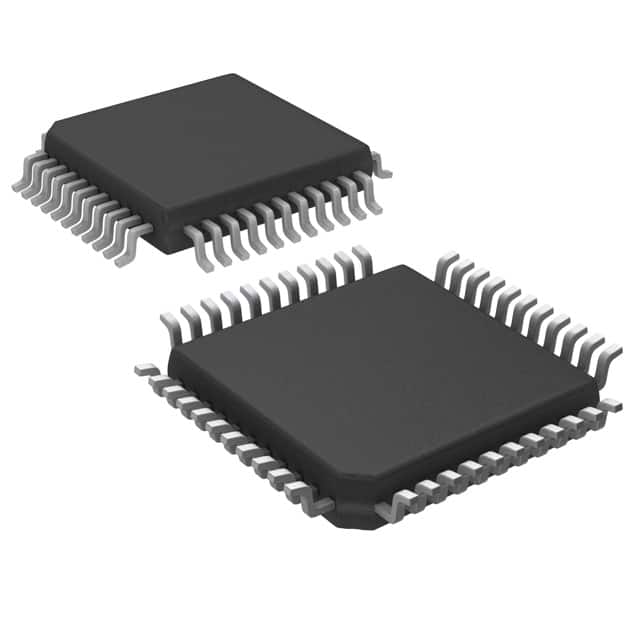
- Part No.:
- SAA7129H/V1,518
- Manufacturer:
- NXP Semiconductors
- Category:
- Encoders, Decoders, Converters
- Package:
- 44-QFP
- Datasheet:
-
 SAA7129H/V1,518.pdf
- Description:
- IC DIGITAL VIDEO DECODER 44QFP
- Quantity:
- Payment:

- Shipping:

Inventory:4,444
Please send an inquiry. Send us your inquiry, and we will respond immediately.
Product details
Overview
SAA7129H/V1,518 from NXP Semiconductors (formerly Philips Semiconductors) is a monolithic 3.3 V CMOS digital video encoder that converts ITU-R BT.656-compliant CR-Y-CB data into analog NTSC/PAL/SECAM CVBS, S-video, and RGB outputs. It features dual 54 MHz multiplexed D1 input ports, three 10-bit DACs for CVBS/VBS/C signals, three 9-bit DACs for RGB, and integrated teletext (WST/NABTS), VPS, closed caption, and CGMS encoding - used in broadcast-grade set-top boxes and professional video playback systems.
For engineers reviewing the SAA7129H/V1,518 datasheet, SAA7129H/V1,518 pinout, SAA7129H/V1,518 application, or SAA7129H/V1,518 equivalent, key selection considerations include its dual-stream fader capability for OSD blending, programmable subcarrier phase control, 27 MHz line-locked clock interface, and QFP44 package compatibility with legacy Philips video SoC designs.
Technical Context
The SAA7129H/V1,518 implements a fully integrated video encoding pipeline with independent luminance (Y) and chrominance (C) processing paths. Its encoder supports interlaced and non-interlaced operation across NTSC-M, PAL-B/G, and SECAM standards, using 10-bit DACs for CVBS/VBS/C outputs and 9-bit DACs for RGB - all oversampled at 2× the pixel clock (13.5 MHz → 27 MHz).
It integrates an on-chip crystal oscillator (fundamental or 3rd-harmonic), real-time subcarrier control via RTCI input, and a versatile fader supporting three independent fade factors (FADE1–FADE3) with YUV color-space keying thresholds (KEY1L/KEY1U, KEY2L/KEY2U) for smooth overlay transitions between two BT.656 streams.
Key Specifications
| Parameter | Value and Actual Design Meaning |
|---|---|
| Video Standards | NTSC-M, PAL-B/G, SECAM - full compliance including burst insertion, blanking, and field sequencing per RS170A/ITU-R BT.470-3 |
| Digital Input | 54 MHz double-speed multiplexed D1 port accepting two ITU-R BT.656 CR-Y-CB streams (720 active pixels/line, 4:2:2) |
| DAC Resolution | 10-bit for CVBS, VBS, C outputs; 9-bit for RED (CR), GREEN (Y), BLUE (CB) RGB outputs |
| System Clock | 27 MHz line-locked clock (LLC1); internal oscillator supports 3rd-harmonic or fundamental crystal (XCLK output provided) |
| I²C Interface | Fast-mode 400 kHz I²C-bus with 7-bit slave address (88h or 8Ch selectable via SA pin), auto-increment subaddressing |
| Power Supply | VDDD = 3.0–3.6 V (digital), VDDA = 3.15–3.45 V (analog); operates from 0 °C to 70 °C ambient |
| Output Sync | Programmable horizontal/vertical sync phase; advanced composite sync on CVBS for RGB display centering |
Pinout & Package
Package: QFP44 (plastic quad flat package; 44 leads; body 10 × 10 × 1.75 mm; lead length 1.3 mm; SOT307-2).
| Pin/Terminal | Circuit Role | Design Meaning |
|---|---|---|
| LLC1 (Pin 4) | Line-locked clock input | 27 MHz master timing reference for BT.656 data latching and internal synchronization |
| MP0–MP7 (Pins 9–16) | Double-speed MPEG port inputs | Accepts 54 MHz multiplexed CR-Y-CB data; rising/falling edge sampling separates encoded vs. RGB streams |
| CVBS (Pin 30) | Analog composite output | 10-bit DAC output carrying luminance + chrominance + CSYNC; includes early sync pulse for RGB display centering |
| RED/GREEN/BLUE (Pins 23/26/29) | RGB analog outputs | 9-bit DAC outputs for SCART-compatible RGB drive; support bypassed CR-Y-CB interpolation |
| TTX/TTXRQ (Pins 44/43) | Teletext interface | TTX receives WST/NABTS bitstream; TTXRQ provides programmable request signal for line-accurate text insertion |
| RESET_N (Pin 40) | Active-low reset input | Forces all digital I/Os to input mode; initializes PAL black burst on CVBS/VBS/C and minimum voltage on RGB outputs |
Key Features
| Feature | Design Value |
|---|---|
| Dual-stream fader with YUV keying | Three independent fade factors (FADE1–FADE3) enable precise overlay blending between two BT.656 streams using 24-bit YUV thresholds |
| Integrated teletext & captioning | Hardware-accelerated WST/NABTS teletext insertion (line 23), closed caption (line 21), and VPS (line 16) encoding via I²C configuration |
| CGMS-A copy protection | 20-bit CGMS-A data insertion in lines 20/283 (NTSC) per EIAJ CPR-1204 standard, loaded via I²C-bus |
| Programmable sync generation | RCV1/RCV2 pins support VS/HS/FSEQ input or output; horizontal sync phase programmable in half-line steps for precise blanking alignment |
| On-chip oscillator & clock control | Internal crystal oscillator (XTALI/XTALO) eliminates external clock source; XCLK output available for system clock distribution |
Applications
| Set-Top Box Video Output | Professional Broadcast Monitor |
|---|---|
Use Scenario: Converting decoded MPEG-2 video with on-screen display (OSD) menus to analog CVBS/S-video for legacy TV distribution. IC Role / Device Role / Timing Role: Digital video encoder handling dual BT.656 streams - one routed to CVBS encoder (video only), the other to RGB path (video + OSD) via fader-controlled blending. Use Value: Enables seamless menu overlay without external mixing hardware; 10-bit CVBS DAC ensures broadcast-compliant signal fidelity and low differential linearity error (±1 LSB). | Use Scenario: Generating calibrated RGB and CVBS outputs from studio-grade digital sources for multi-format monitoring. IC Role / Device Role / Timing Role: Precision timing generator and analog output driver - uses RTCI-linked subcarrier phase lock with SAA7113 decoder and programmable sync phase for zero-jitter display alignment. Use Value: Delivers stable PAL/NTSC/SECAM outputs with <±3 LSB integral linearity error and controlled rise/fall times for clean post-DAC filtering. |
| Teletext-Enabled DVD Player | Legacy Industrial Video Recorder |
Use Scenario: Embedding WST teletext pages and closed caption data into NTSC/PAL video output of consumer DVD players. IC Role / Device Role / Timing Role: Teletext and caption encoder - accepts serial TTX bitstream synchronized to LLC1, inserts data into line 23 (WST) or line 21 (CC) with programmable timing windows. Use Value: Eliminates need for external teletext ASIC; supports both European WST and North American NABTS protocols with single hardware implementation. | Use Scenario: Providing analog video output with VPS (line 16) and CGMS-A (lines 20/283) metadata for time-based recording and copy management in industrial DVRs. IC Role / Device Role / Timing Role: Metadata encoder and analog output interface - loads VPS five-byte payload and CGMS-A 20-bit flags via I²C, inserts them into standardized line positions per EIAJ/ITU-R specs. Use Value: Ensures VCR-compatible automatic start/stop and compliant copy generation management without firmware-level video stream manipulation. |
Equivalent & Alternatives
The following parts are listed as comparable options for similar digital video encoder applications.
| Alternative Part | Technical Difference | Application Difference | Selection Advice |
|---|---|---|---|
| SAA7128H | Identical pinout and core encoding functionality; includes Macrovision® 6.1/7.01 anti-taping (SAA7129H omits this) | Suitable for pay-per-view or commercial broadcast where copy protection is mandated; not required for consumer playback-only use | Select SAA7128H only if Macrovision licensing and AGC super-white pulse insertion are needed |
| ADV7170KSTZ | 10-bit DACs, NTSC/PAL support, but no SECAM, no teletext/VPS/CGMS hardware blocks, no dual-stream fader | Targeted at cost-sensitive consumer electronics without broadcast metadata requirements | Choose ADV7170KSTZ when SECAM, teletext, or overlay fader functionality is unnecessary and BOM cost is critical |
Compared with SAA7129H/V1,518, SAA7128H adds Macrovision anti-taping but shares identical encoding architecture and pinout, while ADV7170KSTZ reduces feature set to basic NTSC/PAL conversion - making SAA7129H/V1,518 the optimal choice for broadcast-compliant, metadata-rich, dual-stream video systems requiring SECAM and fader-based OSD.
Availability
SAA7129H/V1,518 is available at Aetrix Electronics and suitable for broadcast equipment, professional video monitors, teletext-enabled DVD players, and industrial DVRs requiring stable component supply and long-term lifecycle support.
Supply support for SAA7129H/V1,518 includes scheduled delivery planning, volume procurement assistance, BOM continuity management, traceable sourcing, and lifecycle availability coordination for OEM customers, industrial embedded developers, connected-device designers, and electronics production programs.
Manufacturer
NXP Semiconductors is a global semiconductor leader focused on secure connectivity solutions for automotive, industrial, and IoT applications, with deep heritage in broadcast and multimedia ICs from its Philips Semiconductors roots.
The SAA7129H/V1,518 belongs to NXP's legacy video encoder product line, designed specifically for high-fidelity analog video output in broadcast- and professional-grade equipment requiring full NTSC/PAL/SECAM compliance, metadata encoding, and dual-stream processing.
FAQ
What video standards does the SAA7129H/V1,518 support?
The SAA7129H/V1,518 supports NTSC-M, PAL-B/G, and SECAM standards with full compliance to RS170A and ITU-R BT.470-3 specifications. It handles both interlaced and non-interlaced operation, generates correct burst amplitudes and phases, and supports standard-specific blanking and synchronization structures. The SAA7129H/V1,518 does not implement Macrovision anti-taping - that feature is exclusive to the SAA7128H variant.
How does the dual-stream fader in the SAA7129H/V1,518 work?
The SAA7129H/V1,518 fader processes two independent BT.656 streams sampled on rising and falling edges of LLC1. It applies three programmable fade factors (FADE1–FADE3) based on YUV color-space keying (KEY1L/KEY1U, KEY2L/KEY2U) to blend streams for OSD overlay. Fade control is implemented entirely in hardware, enabling real-time, glitch-free transitions without CPU intervention - a core capability of the SAA7129H/V1,518 for menu-integrated video systems.
Does the SAA7129H/V1,518 include teletext and closed caption encoding?
Yes, the SAA7129H/V1,518 includes dedicated hardware for WST and NABTS teletext insertion (line 23), closed caption encoding (line 21), and Video Programming System (VPS) data insertion (line 16). Teletext bits are accepted via TTX pin synchronized to LLC1, with TTXRQ providing programmable request timing. All metadata is loaded via I²C-bus registers - a defining feature of the SAA7129H/V1,518 for broadcast-compliant applications.
What is the function of the RTCI pin on the SAA7129H/V1,518?
The RTCI (Real-Time Control Input) pin on the SAA7129H/V1,518 accepts subcarrier phase and PAL-ID signals from compatible Philips decoders (e.g., SAA7113 or SAA7118) via their RTCO pin. This connection enables precise subcarrier phase locking and eliminates timing jitter between decode and encode stages - a critical design element for maintaining broadcast-quality chrominance integrity in the SAA7129H/V1,518 video chain.
Can the SAA7129H/V1,518 operate without an external crystal?
Yes, the SAA7129H/V1,518 includes an on-chip crystal oscillator with support for either fundamental or 3rd-harmonic crystals connected to XTALI/XTALO pins. When enabled, it generates the internal 27 MHz timing reference distributed as XCLK. If unused, XTALI must be grounded. This integrated oscillator eliminates the need for external clock sources - a key system-level simplification enabled by the SAA7129H/V1,518's architecture.
SAA7129H/V1,518 Specifications
- Product attributes
- Attribute value
- Manufacturer:
- NXP Semiconductors
- Series:
- -
- Package/Case:
- 44-QFP
- Packaging:
- Tape & Reel (TR)
- Product Status:
- Obsolete
- Type:
- Video Encoder
- Applications:
- -
- Voltage - Supply, Analog:
- 3.1V ~ 3.5V
- Voltage - Supply, Digital:
- 3V ~ 3.6V
- Grade:
- -
- Qualification:
- -
- Mounting Type:
- Surface Mount
- Supplier Device Package:
- 44-PQFP (10x10)
SAA7129H/V1,518 FAQ
1.How can I place an order for SAA7129H/V1,518 through Aetrix?
Please submit a Request for Quotation (RFQ) for SAA7129H/V1,518 on Aetrix. Our sales agent will provide a competitive quotation and guide you through the order confirmation once you accept the terms.
2.Are the price and stock information for SAA7129H/V1,518 reliable?
The price and inventory of SAA7129H/V1,518 are updated periodically and may fluctuate due to market conditions. Stock and pricing data are typically refreshed every 24 hours. Quotation validity for SAA7129H/V1,518 is usually 5 days.
3.What payment methods are accepted for SAA7129H/V1,518?
We accept Wire Transfer, PayPal, Credit Card, Western Union, MoneyGram, and Escrow for SAA7129H/V1,518 transactions.
Note: Certain payment methods may incur a processing fee.
4.How is shipping managed for SAA7129H/V1,518?
SAA7129H/V1,518 orders can be shipped via leading logistics carriers, including DHL, UPS, FedEx, TNT, or Registered Mail.
Once your SAA7129H/V1,518 order is processed, you will receive an email with the shipment details and tracking number.
Note: Tracking information may take up to 24 hours to appear. Express delivery typically takes 3–5 business days.
5.How can I obtain technical support or documentation for SAA7129H/V1,518?
For technical support, including SAA7129H/V1,518 datasheets, pinout diagrams, or application guidance, please contact our engineering support team. They can provide detailed documentation and assistance for your SAA7129H/V1,518 requirements.
6.How does Aetrix verify that SAA7129H/V1,518 is sourced from the original manufacturer or authorized distributors?
All SAA7129H/V1,518 products on Aetrix are procured from qualified distributors and authorized channels. Our dedicated quality assurance team conducts strict verification, including traceability checks and, if necessary, third-party testing. This ensures that SAA7129H/V1,518 meets industry standards.
7.What is the process for return or replacement of SAA7129H/V1,518?
All SAA7129H/V1,518 units undergo pre-shipment inspection (PSI). If there is an issue with SAA7129H/V1,518, returns or replacements are accepted under the following conditions:
1.Quantity discrepancies, incorrect items, or visible external defects (such as breakage or corrosion), acknowledged by Aetrix.
2.The issue is reported within 90 days of delivery.
3.The SAA7129H/V1,518 part is unused and in its original packaging.
Return procedure for SAA7129H/V1,518:
1.Submit a request within 90 days.
2.Obtain a Return Material Authorization (RMA) from Aetrix.
SAA7129H/V1,518 Tags
-
MCP2120T-I/SL
Microchip Technology

-
LICAL-ENC-MS001
TE Connectivity Linx
-
TW9990AT-NA1-GR
Renesas
-
TVP5151IPBSR
Texas Instruments
-
TVP5150AM1IPBSR
Texas Instruments
-
LICAL-DEC-MS001-T
TE Connectivity Linx
-
ADV7391BCPZ
Analog Devices Inc.
-
ADV7393BCPZ-REEL
Analog Devices Inc.
-
ADV7393BCPZ
Analog Devices Inc.
-
ADV7391WBCPZ
Analog Devices Inc.
-
ADV7181DBCPZ
Analog Devices Inc.
-
ADV7181CBSTZ-REEL
Analog Devices Inc.
Tech Hub

A practical engineering guide to 3.3V and 5V logic compatibility, input thresholds, resistor dividers, translator ICs, MOSFET level shifting, I2C pull-ups, timing limits and power-sequencing risks.

The 74HC595 uses push-pull logic outputs, while the TPIC6B595 uses 50 V open-drain DMOS sinks for higher-power loads. This guide compares timing, current limits, 3.3 V interfacing, load wiring, thermal…

The 74HC595 converts serial data into eight stable parallel outputs. This guide covers pin functions, shift and storage timing, OE and MR behavior, drive-current limits, cascading, voltage compatibilit…

A technical comparison of level-sensitive latches and edge-triggered flip-flops, covering timing windows, setup and hold limits, master–slave operation, time borrowing, race-through, HDL inference and…

A D latch stores one bit while Enable controls when data can pass. This reference covers gate-level operation, truth tables, transparency, setup and hold timing, LE versus OE, common ICs and practical …

An SR latch stores one bit through cross-coupled feedback. This engineering reference covers NOR and NAND implementations, truth tables, forbidden-state recovery, gated operation, switch debouncing, fa…

Latch circuits retain one bit through feedback. This technical reference covers SR and D latches, truth tables, transparency, timing limits, latch-versus-flip-flop behavior, applications and common log…

An engineering guide to LED driver operation, constant-current and constant-voltage outputs, linear and switching topologies, dimming, IC selection, calculations, replacement compatibility, and fault c…

Operational amplifier guide covering op amp basics, feedback, ideal vs real op amps, common configurations, buffer circuits, offset, bias current, gain-bandwidth, slew rate, rail-to-rail limits and sel…

Jumper cables guide covering safe connection order, red and black clamp placement, final ground connection, cable gauge, length, clamp quality, copper vs CCA cables, jump starter comparison and battery…


