
 My Inquiry
 My Account


NXP Semiconductors SAA7377GP/M1,518
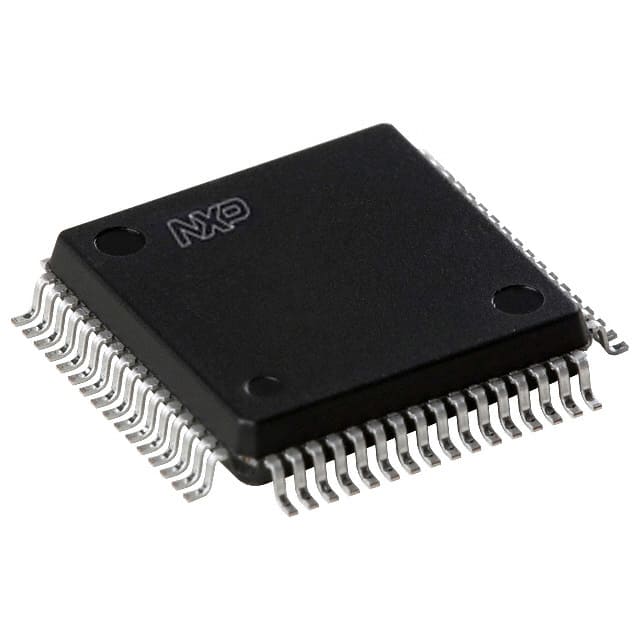
- Part No.:
- SAA7377GP/M1,518
- Manufacturer:
- NXP Semiconductors
- Category:
- Video Processing
- Package:
- 64-BQFP
- Datasheet:
-
 SAA7377GP/M1,518.pdf
- Description:
- IC VIDEO PROCESSOR 64QFP
- Quantity:
- Payment:

- Shipping:

Inventory:2,725
Please send an inquiry. Send us your inquiry, and we will respond immediately.
Product details
Overview
SAA7377GP/M1,518 from NXP Semiconductors (formerly Philips) is a single-chip digital servo processor and Compact Disc decoder (CD7) integrating EFM demodulation, t=2/e=4 error correction, 2×/4× digital oversampling filter, EBU IEC958 bi-phase output, and full spindle/focus/radial servo control for CD players. It operates at 44.1 kHz audio sampling rate with 8.4672 MHz crystal input and supports I²C and 4-wire microcontroller interfaces.
For engineers reviewing the SAA7377GP/M1,518 datasheet, SAA7377GP/M1,518 pinout, SAA7377GP/M1,518 application, or SAA7377GP/M1,518 equivalent, this device serves as a complete CD playback SoC requiring no external decoder or servo ICs - critical for legacy CD transport design, optical drive refurbishment, and embedded audio system maintenance where CD7 compliance and rotational shock resilience are mandatory.
Technical Context
The SAA7377GP/M1,518 implements a fully digital PLL-based clock regenerator and EFM demodulator with frame sync protection using dual timing validation. Its error corrector performs C1 (32-symbol) and C2 (28-symbol) decoding with ±8-frame FIFO buffering and flag-based concealment logic.
Servo functionality includes analog front-end current inputs (D1–D4, R1–R2), programmable focus/radial actuator outputs (FO, RA), sledge control (SL), and motor outputs (MOTO1/MOTO2) with PWM/PDM mode support in standby. The integrated crystal oscillator accepts 8–35 MHz crystals, with internal PLL enabling use of 8.4672 MHz fundamental sources.
Key Specifications
| Parameter | Value and Actual Design Meaning |
|---|---|
| Supply voltage | 3.4–5.5 V - supports standard 5 V CD player power rails with ±0.5 V tolerance margin |
| Crystal frequency | 8.4672 MHz - enables internal PLL multiplication to generate 16.9344 MHz and 33.8688 MHz system clocks |
| Error correction | t = 2, e = 4 - corrects up to two errors per C1 frame and four per C2 frame, meeting CD-DA Red Book requirements |
| Oversampling filter | 2× or 4× IIR - provides ≥25 dB stopband attenuation at 24 kHz; −0.5 dB gain scaling prevents DAC overflow on full-scale sine |
| Digital audio interface | EBU IEC958 bi-phase mark (DOBM) - delivers channel status, subcode Q–W, and error flags in standardized 32-bit subframes |
| Operating temperature | −40 °C to +85 °C - qualified for consumer and industrial CD mechanism environments |
| Package | QFP64 (SOT393-1) - 14 × 14 × 2.7 mm body with 1.6 mm lead length, compatible with standard CD player PCB layouts |
Pinout & Package
QFP64 plastic quad flat package (SOT393-1), 14 × 14 × 2.7 mm body, 64 leads with 1.6 mm lead length. All supply pins share same external 5 V rail; analog/digital grounds separated into four domains (VSSA1–VSSA3, VSSD1–VSSD4).
| Pin/Terminal | Circuit Role | Design Meaning |
|---|---|---|
| VSSA1, VSSA2, VSSA3 | Analog ground references | Isolate analog front-end (diode inputs, ADC, slicer) from digital noise; require separate low-impedance PCB pours |
| D1–D4, R1–R2 | Unipolar current inputs | Accept photodiode currents directly (no external transimpedance amps needed); support focus/radial error signal generation |
| FO, RA, SL | Servo actuator outputs | Drive focus coil, radial actuator, and sled motor via integrated drivers; support closed-loop gain control |
| MOTO1, MOTO2 | Spindle motor outputs | Versatile 3-state outputs configurable for PWM or PDM spindle control; enter high-Z in CD-STOP/CD-PAUSE modes |
| DOBM | EBU digital audio output | Bi-phase mark encoded IEC958 stream carrying left/right samples, subcode Q–W, and error flags - connects directly to coaxial/optical transmitter |
| SCL, SDA, RAB, SILD | Microcontroller interface | Support both I²C-bus (SCL/SDA) and 4-wire parallel bus (RAB/SILD) for register access and status reads; open-drain outputs require pull-ups |
| CFLG, C2FAIL | Error status indicators | Open-drain flags: CFLG signals frame-level correction status (7.35 kHz update); C2FAIL pulses LOW for 140 µs on uncorrectable C2 failure |
Key Features
| Feature | Design Value |
|---|---|
| FIFO overflow concealment | Enables rotational shock resistance by interpolating or holding audio samples during disc wobble or seek-induced buffer underrun |
| Integrated digital PLL clock regenerator | Eliminates external analog PLL components; locks to HF signal without requiring crystal-derived bit clock |
| Full CD graphics interface | Supports EIAJ CP-2401 3-wire/4-wire subcode (P–W) and V4 RS232-style Q–W output for CD+G display systems |
| KILL circuit with dual-channel silence detection | Asserts open-drain KILL (and optionally V3) after 250 ms of all-zero/all-ones data - disables DAC to prevent pop noise during mute or track gaps |
| Programmable de-emphasis and phase compensation | Automatically applies de-emphasis when Q-channel pre-emphasis flag detected; otherwise maintains ≤±1° phase linearity from 0–16 kHz |
Applications
| CD Transport Subsystem | Legacy Audio Equipment Repair |
|---|---|
Use Scenario: Integrated CD mechanism controller in portable or desktop CD players requiring full Red Book compliance and mechanical shock resilience. IC Role / Device Role / Timing Role: Single-chip CD7 decoder and servo processor handling EFM demodulation, C1/C2 error correction, focus/radial loop control, and spindle motor regulation. Use Value: Eliminates need for discrete TDA1301 + SAA7345 pairing; reduces BOM count by 2 ICs and associated passive components while maintaining ABEX TCD-721R/TCD-725 playability. | Use Scenario: Replacement component for failed CD decoder ICs in vintage CD receivers, mini-systems, and automotive head units manufactured 1995–2005. IC Role / Device Role / Timing Role: Drop-in functional replacement for SAA7377 variants with identical pinout, register map, and timing behavior - preserves original firmware compatibility. Use Value: Restores full CD-DA playback, subcode display (track/time), and EBU digital output without PCB redesign or microcontroller firmware changes. |
| Embedded Optical Drive Controller | CD-Based Industrial Data Reader |
Use Scenario: Core processing unit in custom CD-ROM drives used for firmware loading or configuration data storage in industrial test equipment. IC Role / Device Role / Timing Role: Digital front-end for CD data extraction - performs EFM demodulation, error correction, and subcode parsing (Q-channel CRC, peak detection) before host MCU transfer. Use Value: Provides validated Q-channel peak level detection (bits 81–96) and subcode-ready signaling (SUBQREADY-I) enabling reliable track indexing and metadata retrieval. | Use Scenario: Playback engine in CD-based kiosks, medical device calibration tools, or avionics maintenance readers where CD media stores certified calibration data or software images. IC Role / Device Role / Timing Role: Robust CD decoder with FIFO overflow concealment and rotational shock resistance - ensures uninterrupted data streaming during vibration-prone operation. Use Value: Maintains audio/data integrity under mechanical stress via t=2/e=4 correction and ±8-frame FIFO, critical for mission-critical CD-read applications where re-read is not feasible. |
Equivalent & Alternatives
The following parts are listed as comparable options for similar CD decoder and servo processor applications.
| Alternative Part | Technical Difference | Application Difference | Selection Advice |
|---|---|---|---|
| SAA7377GP | Same die, identical QFP64 package and pinout; /M1,518 denotes tape-and-reel packaging variant per Philips ordering code | No functional difference - /M1,518 is factory-marked version with moisture-sensitive packaging and reel orientation per JEDEC J-STD-033 | Select SAA7377GP/M1,518 for automated SMT assembly; SAA7377GP for manual prototyping or small-batch repair |
| TDA1301T + SAA7345 | Two-chip solution: TDA1301T handles servo only; SAA7345 handles CD6 decoding with weaker t=1/e=2 correction | Lacks integrated EBU output, FIFO overflow concealment, and CD graphics interface - requires external logic for subcode routing and digital audio formatting | Only suitable when existing board layout uses separate servo/decoder ICs and firmware supports dual-device register mapping |
Compared with SAA7377GP/M1,518, the monolithic SAA7377GP offers identical functionality with identical footprint and timing, while the TDA1301T+SAA7345 alternative requires additional PCB area, interconnect routing, and lacks CD7-level error correction and EBU compliance - making SAA7377GP/M1,518 the sole direct upgrade path for CD7-compliant designs.
Availability
SAA7377GP/M1,518 is available at Aetrix Electronics and suitable for CD transport subsystems, legacy audio equipment repair, embedded optical drive controllers, and CD-based industrial data readers requiring stable component supply across extended product lifecycles.
Supply support for SAA7377GP/M1,518 includes scheduled delivery planning, volume procurement assistance, BOM continuity management, traceable sourcing, and lifecycle availability coordination for OEM customers, industrial embedded developers, connected-device designers, and electronics production programs.
Manufacturer
NXP Semiconductors acquired Philips Semiconductors in 2006 and maintains legacy product support for high-reliability analog and mixed-signal ICs used in consumer audio and optical storage.
The SAA7377GP/M1,518 belongs to Philips' CD7 family of single-chip Compact Disc decoders designed specifically for cost-sensitive, space-constrained CD player implementations requiring full Red Book compliance and mechanical robustness.
FAQ
What is the primary function of the SAA7377GP/M1,518 in a CD player system?
The SAA7377GP/M1,518 serves as a complete CD7-compliant digital servo processor and Compact Disc decoder. It performs EFM demodulation, t=2/e=4 error correction, digital audio filtering, EBU IEC958 output generation, and closed-loop control of focus, radial, sledge, and spindle motors - replacing multiple discrete ICs in legacy CD transport designs. Its integration reduces system complexity while maintaining full Red Book audio playback fidelity.
Does the SAA7377GP/M1,518 support modern digital audio interfaces like I²S or SPDIF?
The SAA7377GP/M1,518 supports EBU IEC958 (SPDIF-compatible) bi-phase mark output on pin DOBM, compliant with IEC958 format including channel status, subcode Q–W, and error flags. It does not provide native I²S output; however, register 3 allows selection of Philips I2S-bus format (16/18-bit MSB-first) on DATA/WCLK/SCLK pins - requiring external level-shifting for 3.3 V logic if interfacing with modern DACs.
How does the SAA7377GP/M1,518 handle disc read errors and audio concealment?
The SAA7377GP/M1,518 implements a t=2/e=4 error corrector operating on C1 (32-symbol) and C2 (28-symbol) frames, with ±8-frame FIFO buffering. When uncorrectable errors occur, its 1-sample linear interpolator replaces isolated bad samples with the midpoint between adjacent good samples; consecutive errors trigger sample hold. This concealment logic is synchronized to the CFLG flag output and applied before DAC interface transmission.
Can the SAA7377GP/M1,518 be used with crystals other than 8.4672 MHz?
Yes - the SAA7377GP/M1,518 supports 8.4672 MHz, 16.9344 MHz, and 33.8688 MHz crystals via register B and SELPLL configuration. With SELPLL=1 and 8.4672 MHz crystal, the internal PLL multiplies to generate higher system clocks. With SELPLL=0, it accepts 16.9344 MHz or 33.8688 MHz directly. Crystal oscillator design must follow Figures 3–4 in the datasheet for fundamental or third-overtone operation.
What are the key differences between SAA7377GP/M1,518 and the earlier SAA7345 CD6 decoder?
The SAA7377GP/M1,518 integrates full servo functionality (absent in SAA7345) and upgrades error correction from t=1/e=2 (SAA7345) to t=2/e=4. It adds EBU IEC958 output, FIFO overflow concealment, CD graphics interfaces (EIAJ/RS232 subcode), and programmable KILL circuitry - making it a true CD7-compliant successor rather than a drop-in replacement. Firmware and register maps are not backward-compatible due to expanded servo control registers.
SAA7377GP/M1,518 Specifications
- Product attributes
- Attribute value
- Manufacturer:
- NXP Semiconductors
- Series:
- -
- Package/Case:
- 64-BQFP
- Packaging:
- Tape & Reel (TR)
- Product Status:
- Obsolete
- Function:
- Processor
- Applications:
- Consumer Video
- Standards:
- -
- Control Interface:
- I2C
- Voltage - Supply:
- 3.4V ~ 5.5V
- Mounting Type:
- Surface Mount
- Grade:
- -
- Qualification:
- -
- Supplier Device Package:
- 64-QFP (14x14)
SAA7377GP/M1,518 FAQ
1.How can I place an order for SAA7377GP/M1,518 through Aetrix?
Please submit a Request for Quotation (RFQ) for SAA7377GP/M1,518 on Aetrix. Our sales agent will provide a competitive quotation and guide you through the order confirmation once you accept the terms.
2.Are the price and stock information for SAA7377GP/M1,518 reliable?
The price and inventory of SAA7377GP/M1,518 are updated periodically and may fluctuate due to market conditions. Stock and pricing data are typically refreshed every 24 hours. Quotation validity for SAA7377GP/M1,518 is usually 5 days.
3.What payment methods are accepted for SAA7377GP/M1,518?
We accept Wire Transfer, PayPal, Credit Card, Western Union, MoneyGram, and Escrow for SAA7377GP/M1,518 transactions.
Note: Certain payment methods may incur a processing fee.
4.How is shipping managed for SAA7377GP/M1,518?
SAA7377GP/M1,518 orders can be shipped via leading logistics carriers, including DHL, UPS, FedEx, TNT, or Registered Mail.
Once your SAA7377GP/M1,518 order is processed, you will receive an email with the shipment details and tracking number.
Note: Tracking information may take up to 24 hours to appear. Express delivery typically takes 3–5 business days.
5.How can I obtain technical support or documentation for SAA7377GP/M1,518?
For technical support, including SAA7377GP/M1,518 datasheets, pinout diagrams, or application guidance, please contact our engineering support team. They can provide detailed documentation and assistance for your SAA7377GP/M1,518 requirements.
6.How does Aetrix verify that SAA7377GP/M1,518 is sourced from the original manufacturer or authorized distributors?
All SAA7377GP/M1,518 products on Aetrix are procured from qualified distributors and authorized channels. Our dedicated quality assurance team conducts strict verification, including traceability checks and, if necessary, third-party testing. This ensures that SAA7377GP/M1,518 meets industry standards.
7.What is the process for return or replacement of SAA7377GP/M1,518?
All SAA7377GP/M1,518 units undergo pre-shipment inspection (PSI). If there is an issue with SAA7377GP/M1,518, returns or replacements are accepted under the following conditions:
1.Quantity discrepancies, incorrect items, or visible external defects (such as breakage or corrosion), acknowledged by Aetrix.
2.The issue is reported within 90 days of delivery.
3.The SAA7377GP/M1,518 part is unused and in its original packaging.
Return procedure for SAA7377GP/M1,518:
1.Submit a request within 90 days.
2.Obtain a Return Material Authorization (RMA) from Aetrix.
SAA7377GP/M1,518 Tags
-
HDMI2C1-6C1
STMicroelectronics
-
ADA4430-1YKSZ-R7
Analog Devices Inc.

-
LM1881MX/NOPB
Texas Instruments
-
SN75DP130SSRGZR
Texas Instruments
-
EQCO30T5.2
Microchip Technology
-
LMH1980MM/NOPB
Texas Instruments
-
EQCO30R5.D
Microchip Technology

-
SII9022ACNU
Lattice Semiconductor Corporation
-
SN65DP159RGZR
Texas Instruments
-
SN65DP159RSBR
Texas Instruments
-
SN65DP141RLJR
Texas Instruments
-
LMH0303SQ/NOPB
Texas Instruments
Tech Hub

A practical engineering guide to 3.3V and 5V logic compatibility, input thresholds, resistor dividers, translator ICs, MOSFET level shifting, I2C pull-ups, timing limits and power-sequencing risks.

The 74HC595 uses push-pull logic outputs, while the TPIC6B595 uses 50 V open-drain DMOS sinks for higher-power loads. This guide compares timing, current limits, 3.3 V interfacing, load wiring, thermal…

The 74HC595 converts serial data into eight stable parallel outputs. This guide covers pin functions, shift and storage timing, OE and MR behavior, drive-current limits, cascading, voltage compatibilit…

A technical comparison of level-sensitive latches and edge-triggered flip-flops, covering timing windows, setup and hold limits, master–slave operation, time borrowing, race-through, HDL inference and…

A D latch stores one bit while Enable controls when data can pass. This reference covers gate-level operation, truth tables, transparency, setup and hold timing, LE versus OE, common ICs and practical …

An SR latch stores one bit through cross-coupled feedback. This engineering reference covers NOR and NAND implementations, truth tables, forbidden-state recovery, gated operation, switch debouncing, fa…

Latch circuits retain one bit through feedback. This technical reference covers SR and D latches, truth tables, transparency, timing limits, latch-versus-flip-flop behavior, applications and common log…

An engineering guide to LED driver operation, constant-current and constant-voltage outputs, linear and switching topologies, dimming, IC selection, calculations, replacement compatibility, and fault c…

Operational amplifier guide covering op amp basics, feedback, ideal vs real op amps, common configurations, buffer circuits, offset, bias current, gain-bandwidth, slew rate, rail-to-rail limits and sel…

Jumper cables guide covering safe connection order, red and black clamp placement, final ground connection, cable gauge, length, clamp quality, copper vs CCA cables, jump starter comparison and battery…


