
 My Inquiry
 My Account


NXP Semiconductors SAA7706H/N210S,557
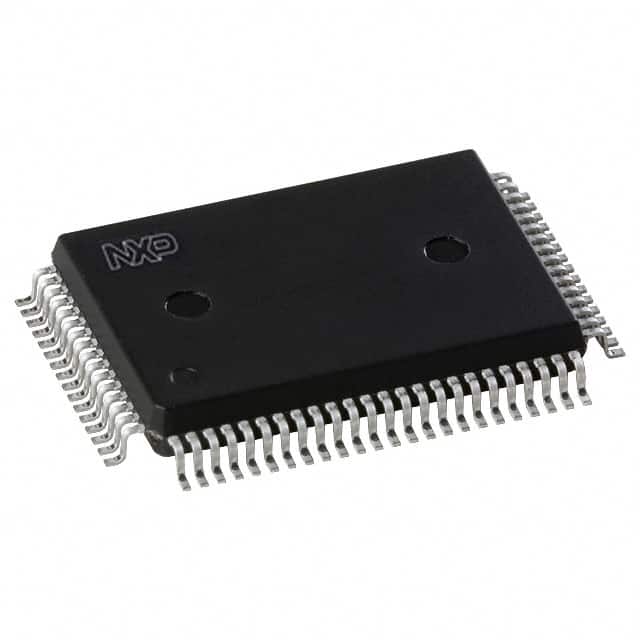
- Part No.:
- SAA7706H/N210S,557
- Manufacturer:
- NXP Semiconductors
- Category:
- DSP (Digital Signal Processors)
- Package:
- 80-BQFP
- Datasheet:
-
 SAA7706H/N210S,557.pdf
- Description:
- IC DSP CAR RADIO 80QFP
- Quantity:
- Payment:

- Shipping:

Inventory:1,219
Please send an inquiry. Send us your inquiry, and we will respond immediately.
Product details
Overview
SAA7706H/N210S,557 from NXP Semiconductors (formerly Philips Semiconductors) is a car radio–specific Digital Signal Processor (DSP) integrating dual DSP cores (DSP1 at 50 MHz and DSP2 at 62.9 MHz), five sigma-delta ADCs (three stereo, one mono, one level), four FSDAC outputs (FLV, FRV, RLV, RRV), and embedded RDS demodulation. It performs FM/AM stereo decoding, interference absorption (IAC), Dolby-B tape noise reduction, and dual-media audio routing for front/rear seat independent sources.
For engineers reviewing the SAA7706H/N210S,557 datasheet, SAA7706H/N210S,557 pinout, SAA7706H/N210S,557 application, or SAA7706H/N210S,557 equivalent, this device supports I²C-bus control (fast-mode compatible), SPDIF/I²S digital audio interfaces, GSM-immune analog inputs (PHONE, NAV, AM_L/NAV, AM_R/AM), and crystal-based clock generation (11.2896 MHz). Designers evaluating automotive infotainment signal chains must verify RDS buffer interface timing, VREFDA/VREFAD reference stability, and POM-controlled power-on mute behavior.
Technical Context
The SAA7706H/N210S,557 implements two dedicated DSP cores: DSP1 handles FM/AM weak-signal processing (soft mute, sliding stereo, high-cut), RDS update logic, and level analysis; DSP2 manages baseband audio (5-band parametric EQ, tone generator, dynamics compression) and digital source routing. Its analog front-end includes three stereo-capable sigma-delta ADCs (ADC1/ADC2 with anti-aliasing broadband filters, ADC3 for RDS) and one dedicated level-ADC with 9-bit resolution and 38 kHz sampling.
Digital audio paths support simultaneous I²S/LSB-justified (16–24 bit) and SPDIF (two inputs) formats, with internal clock recovery (CL_GEN block) and phase-locked loop (PLL) deriving all system clocks from a single 11.2896 MHz crystal. The Filter Stream DAC (FSDAC) integrates 128× oversampling, noise shaping, and no-external-filter architecture, delivering four analog outputs with short-circuit protection and A-weighted SNR ≥105 dB.
Key Specifications
| Parameter | Value and Actual Design Meaning |
|---|---|
| Operating Supply Voltage | 3.0–3.6 V (VDD); enables stable operation in automotive 12 V battery systems with ±10% regulation tolerance. |
| DSP Core Frequencies | DSP1 at 50 MHz, DSP2 at 62.9 MHz; defines real-time processing capability for concurrent FM stereo decoding, RDS demodulation, and 5-band EQ. |
| ADC Architecture | Five sigma-delta converters: three stereo (ADC1/ADC2/ADC3), one mono level-ADC; provides >81 dB SNR for FM input and 90 dB THD+N for FSDAC output. |
| Crystal Frequency | 11.2896 MHz; serves as sole timing reference for PLL-derived clocks including 256fs SYSCLK (LOOPO pin) and I²S master clocks. |
| Operating Temperature | −40 °C to +85 °C; qualified for under-dash automotive environments without derating. |
| Digital Input Tolerance | All I²C, SPDIF, and I²S pins tolerate 5 V logic levels; simplifies interface with legacy microcontrollers and external co-processors. |
| GSM Immunity | All analog inputs (PHONE, NAV, AM_L/NAV, AM_R/AM, TAPE, AUX) feature integrated GSM rejection; eliminates cellular-induced audio artifacts in vehicle cabins. |
Pinout & Package
Package: QFP80 (plastic quad flat package, 80 leads, body size 14 × 20 × 2.8 mm, lead length 1.95 mm, SOT318-2).
| Pin/Terminal | Circuit Role | Design Meaning |
|---|---|---|
| VDACP / VDACN1 / VDACN2 | Analog reference voltage inputs | Provide positive/negative references for all ADCs and level-ADC; require direct connection to filtered VDDA1/VSSA1 for optimal CMRR and SNR. |
| LEVEL | FM/AM signal level input | Accepts 0–3.3 V DC level signal from tuner; feeds 9-bit sigma-delta level-ADC used for multipath detection and soft mute triggering. |
| POM | Power-on mute control | External capacitor sets mute duration during startup; prevents audible "plop" at FSDAC power-up. |
| FLV / FRV / RLV / RRV | Quad FSDAC analog outputs | Four buffered voltage outputs supporting front-left/right and rear-left/right channels; each short-circuit protected and internally referenced to VREFDA. |
| RDS_CLOCK / RDS_DATA | RDS demodulator interface | Deliver recovered RDS bit clock and data stream; support buffered output mode for microcontroller polling without interrupt overhead. |
| IIS_IN1 / IIS_IN2 / IIS_OUT1 / IIS_OUT2 | Co-processor I²S interface | Enable daisy-chained audio processing (e.g., subwoofer EQ or headphone amp); operate at system fs rates up to 48 kHz. |
Key Features
| Feature | Design Value |
|---|---|
| Dual-media audio routing | Independent front-seat (FLV/FRV) and rear-seat (RLV/RRV) signal paths with separate volume, tone, and source selection-enables OEM cabin zoning without external switches. |
| Integrated FM interference suppression (IAC) | Hardware-accelerated circuit removes impulse noise (e.g., ignition spikes) before stereo decoding; no DSP core cycles consumed. |
| Dolby-B tape noise reduction | Real-time 44.1 kHz-only processing applied to TAPE input; eliminates need for external Dolby IC and reduces BOM count. |
| 9-band mono audio spectrum analyzer | On-chip FFT-like analysis engine feeds display driver via I²C; enables dynamic UI visualization without host CPU intervention. |
| Soft audio mute | Gradual attenuation ramp (not hard cut) during FM weak-signal events; prevents audible clicks during station search or multipath fade. |
| Boot-up ROM | Embedded firmware enables <100 ms start-up time from power-on; meets automotive head-unit fast-boot requirements. |
Applications
| Front/Rear Seat Audio Zoning | FM/AM Radio Head Unit |
|---|---|
|
Use Scenario: High-end automotive infotainment system requiring independent audio zones for driver and rear passengers. IC Role / Device Role / Timing Role: SAA7706H/N210S,557 acts as central audio processor-routing CD/TAPE/AUX to front outputs and NAV/PHONE to rear outputs while applying zone-specific EQ and volume. Use Value: Eliminates need for dual-DSP or external analog switches; reduces PCB area by 35% versus discrete solution with separate FM decoder, RDS IC, and DAC. |
Use Scenario: OEM car radio platform supporting AM/FM reception, RDS traffic announcements, and tape playback. IC Role / Device Role / Timing Role: SAA7706H/N210S,557 performs full signal chain: FM MPX digitization → stereo decoding → IAC noise removal → RDS demodulation → baseband processing → FSDAC output. Use Value: Integrates 12+ discrete functions (ADCs, DACs, decoders, filters, EQ) into single QFP80 package; cuts component count by 60% vs. 1990s-era radio designs. |
| Tape Deck Noise Reduction | Navigation Voice-Over System |
|
Use Scenario: Aftermarket car stereo adding Dolby-B support for legacy cassette decks. IC Role / Device Role / Timing Role: SAA7706H/N210S,557 applies real-time Dolby-B encoding/decoding only on TAPE_L/TAPE_R inputs at 44.1 kHz sample rate. Use Value: Restores high-frequency response lost to tape hiss without requiring external Dolby-certified IC or licensing fees beyond Philips' bundled IP. |
Use Scenario: In-vehicle navigation system overlaying turn-by-turn voice prompts over active audio sources (FM, CD). IC Role / Device Role / Timing Role: SAA7706H/N210S,557 mixes PHONE/NAV signals into front DAC outputs using MIXC-controlled volume scaling and priority mute logic. Use Value: Enables seamless voice-over without pausing music-achieved via hardware mixer stage that bypasses DSP latency bottlenecks. |
Equivalent & Alternatives
The following parts are listed as comparable options for similar car radio DSP applications.
| Alternative Part | Technical Difference | Application Difference | Selection Advice |
|---|---|---|---|
| SAA7705 | Pin-compatible but lacks RDS demodulator and dual-media routing; no NAV/PHONE CMRR inputs. | Suitable for cost-sensitive AM/FM-only radios without navigation voice-over or RDS display. | Select SAA7705 only if RDS and dual-zone features are excluded from system requirements. |
| SAA7708 | Pin-compatible with enhanced 24-bit I²S support and extended temperature range (−40 °C to +105 °C); same DSP core set. | Required for premium vehicles operating in extreme climates or demanding higher-resolution digital audio paths. | Choose SAA7708 when extended thermal margin or LSB-justified 24-bit audio fidelity is mandatory. |
Compared with SAA7705, the SAA7706H/N210S,557 adds RDS demodulation and NAV/PHONE mixing-critical for modern connected cars-while SAA7708 extends thermal rating and bit-depth support without altering core audio processing architecture.
Availability
SAA7706H/N210S,557 is available at Aetrix Electronics and suitable for high-end car radio systems, automotive infotainment head units, and navigation-integrated audio platforms requiring stable component supply across multi-year production cycles.
Supply support for SAA7706H/N210S,557 includes scheduled delivery planning, volume procurement assistance, BOM continuity management, traceable sourcing, and lifecycle availability coordination for OEM customers, industrial embedded developers, connected-device designers, and electronics production programs.
Manufacturer
NXP Semiconductors (originally Philips Semiconductors) is a global leader in automotive semiconductor solutions, with deep expertise in analog signal processing, radio frequency integration, and safety-critical embedded systems.
The SAA7706H/N210S,557 belongs to NXP's car radio DSP product line, designed specifically to consolidate FM/AM signal processing, RDS, tape/CD audio handling, and multi-zone output routing into a single automotive-qualified IC.
FAQ
What is the primary function of the LEVEL pin on the SAA7706H/N210S,557?
The LEVEL pin on the SAA7706H/N210S,557 accepts a 0–3.3 V DC signal from the tuner representing FM or AM received signal strength. This feeds a dedicated 9-bit sigma-delta level-ADC used by DSP1 for multipath detection, soft mute activation, and sliding stereo control. The SAA7706H/N210S,557 uses this input to dynamically adjust audio processing without host MCU intervention.
Does the SAA7706H/N210S,557 support Dolby-B noise reduction on all sample rates?
No-the SAA7706H/N210S,557 implements Dolby-B tape noise reduction exclusively at 44.1 kHz, as specified in its software feature set. It does not support Dolby-B at 32 kHz or 48 kHz sample rates. The SAA7706H/N210S,557 applies this processing only to the TAPE_L/TAPE_R analog inputs and requires proper I²C configuration of the tape equalization mode.
How does the POM pin control power-on mute behavior in the SAA7706H/N210S,557?
The POM (Power-On Mute) pin on the SAA7706H/N210S,557 connects to an external capacitor that sets the mute release timing after power-up. During startup, the FSDAC outputs remain muted until the capacitor charges to threshold; this prevents audible "plop" transients. The SAA7706H/N210S,557 datasheet specifies typical capacitor values between 10 nF and 100 nF for mute durations of 10–100 ms.
Can the SAA7706H/N210S,557 decode digital AM CQUAM stereo signals?
Digital AM CQUAM stereo decoding is implemented in the SAA7706H/N210S,557 firmware but is not enabled in all ROM code versions. Its availability depends on the specific mask set and factory programming-designers must verify ROM code revision (e.g., "ROM_CODE_03") against Philips application notes. The SAA7706H/N210S,557 supports it only when shipped with CQUAM-enabled firmware; otherwise, it operates in mono AM mode.
What is the purpose of the SEL_FR pin on the SAA7706H/N210S,557?
The SEL_FR (Select FM_RDS) pin on the SAA7706H/N210S,557 is a hardware control that routes the FM_RDS analog input through the FM_MPX signal path during RDS acquisition. When asserted HIGH, it disables FM_MPX coupling and enables fast RDS data capture without retuning. The SAA7706H/N210S,557 uses this to synchronize RDS updates with tuner search operations while maintaining continuous audio playback.
SAA7706H/N210S,557 Specifications
- Product attributes
- Attribute value
- Manufacturer:
- NXP Semiconductors
- Series:
- -
- Package/Case:
- 80-BQFP
- Packaging:
- Tray
- Product Status:
- Obsolete
- Type:
- Car Signal Processor
- Interface:
- I2C, I2S, LSB, SPDIF
- Clock Rate:
- -
- Non-Volatile Memory:
- -
- On-Chip RAM:
- -
- Voltage - I/O:
- 3.30V
- Voltage - Core:
- 3.30V
- Operating Temperature:
- -40°C ~ 85°C (TA)
- Grade:
- -
- Qualification:
- -
- Mounting Type:
- Surface Mount
- Supplier Device Package:
- 80-PQFP (14x20)
SAA7706H/N210S,557 FAQ
1.How can I place an order for SAA7706H/N210S,557 through Aetrix?
Please submit a Request for Quotation (RFQ) for SAA7706H/N210S,557 on Aetrix. Our sales agent will provide a competitive quotation and guide you through the order confirmation once you accept the terms.
2.Are the price and stock information for SAA7706H/N210S,557 reliable?
The price and inventory of SAA7706H/N210S,557 are updated periodically and may fluctuate due to market conditions. Stock and pricing data are typically refreshed every 24 hours. Quotation validity for SAA7706H/N210S,557 is usually 5 days.
3.What payment methods are accepted for SAA7706H/N210S,557?
We accept Wire Transfer, PayPal, Credit Card, Western Union, MoneyGram, and Escrow for SAA7706H/N210S,557 transactions.
Note: Certain payment methods may incur a processing fee.
4.How is shipping managed for SAA7706H/N210S,557?
SAA7706H/N210S,557 orders can be shipped via leading logistics carriers, including DHL, UPS, FedEx, TNT, or Registered Mail.
Once your SAA7706H/N210S,557 order is processed, you will receive an email with the shipment details and tracking number.
Note: Tracking information may take up to 24 hours to appear. Express delivery typically takes 3–5 business days.
5.How can I obtain technical support or documentation for SAA7706H/N210S,557?
For technical support, including SAA7706H/N210S,557 datasheets, pinout diagrams, or application guidance, please contact our engineering support team. They can provide detailed documentation and assistance for your SAA7706H/N210S,557 requirements.
6.How does Aetrix verify that SAA7706H/N210S,557 is sourced from the original manufacturer or authorized distributors?
All SAA7706H/N210S,557 products on Aetrix are procured from qualified distributors and authorized channels. Our dedicated quality assurance team conducts strict verification, including traceability checks and, if necessary, third-party testing. This ensures that SAA7706H/N210S,557 meets industry standards.
7.What is the process for return or replacement of SAA7706H/N210S,557?
All SAA7706H/N210S,557 units undergo pre-shipment inspection (PSI). If there is an issue with SAA7706H/N210S,557, returns or replacements are accepted under the following conditions:
1.Quantity discrepancies, incorrect items, or visible external defects (such as breakage or corrosion), acknowledged by Aetrix.
2.The issue is reported within 90 days of delivery.
3.The SAA7706H/N210S,557 part is unused and in its original packaging.
Return procedure for SAA7706H/N210S,557:
1.Submit a request within 90 days.
2.Obtain a Return Material Authorization (RMA) from Aetrix.
SAA7706H/N210S,557 Tags
-
TMS320C5535AZAY10
Texas Instruments
-
TMS320VC5501PGF300
Texas Instruments
-
ADSP-BF592KCPZ
Analog Devices Inc.
-
ADAU1463WBCPZ150
Analog Devices Inc.
-
TMS320VC5402PGE100
Texas Instruments
-
ADAU1701JSTZ-RL
Analog Devices Inc.
-
ADAU1701JSTZ
Analog Devices Inc.
-
TMS320VC5502PGF300
Texas Instruments
-
ADAU1462WBCPZ300RL
Analog Devices Inc.
-
ADAU1452KCPZRL
Analog Devices Inc.
-
ADAU1452WBCPZ-RL
Analog Devices Inc.
-
TMS320C6747DZKB3
Texas Instruments
Tech Hub

A practical engineering guide to 3.3V and 5V logic compatibility, input thresholds, resistor dividers, translator ICs, MOSFET level shifting, I2C pull-ups, timing limits and power-sequencing risks.

The 74HC595 uses push-pull logic outputs, while the TPIC6B595 uses 50 V open-drain DMOS sinks for higher-power loads. This guide compares timing, current limits, 3.3 V interfacing, load wiring, thermal…

The 74HC595 converts serial data into eight stable parallel outputs. This guide covers pin functions, shift and storage timing, OE and MR behavior, drive-current limits, cascading, voltage compatibilit…

A technical comparison of level-sensitive latches and edge-triggered flip-flops, covering timing windows, setup and hold limits, master–slave operation, time borrowing, race-through, HDL inference and…

A D latch stores one bit while Enable controls when data can pass. This reference covers gate-level operation, truth tables, transparency, setup and hold timing, LE versus OE, common ICs and practical …

An SR latch stores one bit through cross-coupled feedback. This engineering reference covers NOR and NAND implementations, truth tables, forbidden-state recovery, gated operation, switch debouncing, fa…

Latch circuits retain one bit through feedback. This technical reference covers SR and D latches, truth tables, transparency, timing limits, latch-versus-flip-flop behavior, applications and common log…

An engineering guide to LED driver operation, constant-current and constant-voltage outputs, linear and switching topologies, dimming, IC selection, calculations, replacement compatibility, and fault c…

Operational amplifier guide covering op amp basics, feedback, ideal vs real op amps, common configurations, buffer circuits, offset, bias current, gain-bandwidth, slew rate, rail-to-rail limits and sel…

Jumper cables guide covering safe connection order, red and black clamp placement, final ground connection, cable gauge, length, clamp quality, copper vs CCA cables, jump starter comparison and battery…


