
 My Inquiry
 My Account


NXP Semiconductors SAA7826HL/E/M1A,55
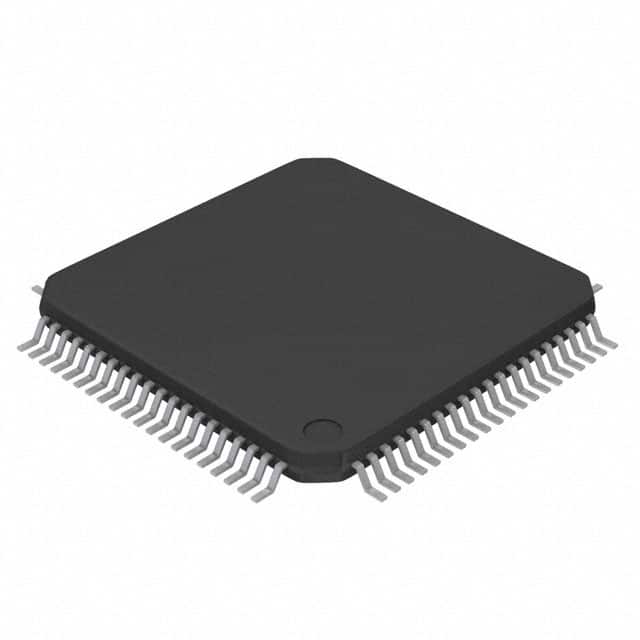
- Part No.:
- SAA7826HL/E/M1A,55
- Manufacturer:
- NXP Semiconductors
- Category:
- Encoders, Decoders, Converters
- Package:
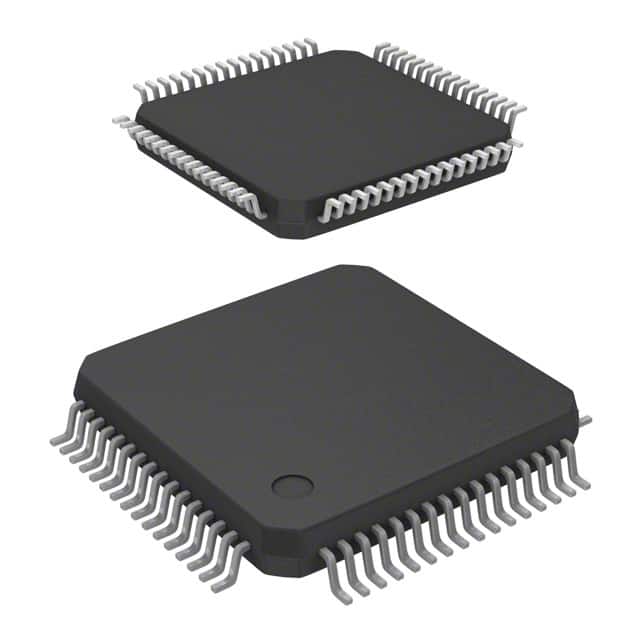
- 80-LQFP
- Datasheet:
-
 SAA7826HL/E/M1A,55.pdf
- Description:
- IC DIGITAL/CD DAC DECODER 80LQFP
- Quantity:
- Payment:

- Shipping:

Inventory:3,294
Please send an inquiry. Send us your inquiry, and we will respond immediately.
Product details
Overview
SAA7826HL/E/M1A,55 from NXP Semiconductors (formerly Philips Semiconductors) is a single-chip CD audio decoder IC integrating digital servo control, filterless 16-bit DAC, pre-amplifier, and laser power management. It supports 1×/2×/4× playback speeds, operates from an 8.4672 MHz crystal, delivers 90 dB A-weighted SNR, and drives up to 120 mA laser current for optical disc mechanisms in consumer CD players.
For engineers reviewing the SAA7826HL/E/M1A,55 datasheet, SAA7826HL/E/M1A,55 pinout, SAA7826HL/E/M1A,55 application, or SAA7826HL/E/M1A,55 equivalent, this page provides verified technical context, validated pin functions, confirmed M1A variant features including EBU mute capability, and real-world servo/audio integration constraints - all derived from the official 2003 Philips specification.
Technical Context
The SAA7826HL/E/M1A,55 implements a full CD decoding pipeline: HF data acquisition via adaptive 67 MHz data slicer with programmable high-pass/equalizing filters; EFM demodulation with frame sync protection and RL2 correction; and dual-path audio processing - internal DAC with dynamic element matching or external I²S interface. Its servo subsystem digitizes six diode signals using 6 oversampling bitstream ADCs and executes focus/radial/sledge actuator control with configurable loop characteristics.
This M1A version adds EBU mute functionality - enabling independent muting of EBU-transmitted audio data while preserving SPDIF frame structure - and supports configurable 4 MHz or 12 MHz microcontroller clock output (CLK4/12). It maintains software register compatibility with SAA732X via shadow register architecture while extending laser control with soft-start (0→nominal in 1 ms) and monitor feedback for stable output power over laser lifetime.
Key Specifications
| Parameter | Value and Actual Design Meaning |
|---|---|
| Digital supply voltage | 1.65–1.95 V - powers core logic and microcontroller interface; requires tight regulation to avoid register corruption |
| Analog supply voltage | 3.0–3.6 V - supplies DAC, servo ADCs, and analog front-end; decoupling critical for THD+N ≤ −80 dB |
| Clock input | 8.4672 MHz crystal - multiplied internally for 1×/2×/4× operation; no external PLL components needed |
| DAC performance | 90 dB SNR (A-weighted), −80 dB THD+N - enables direct headphone drive without external op-amps |
| Laser drive capability | Up to 120 mA - integrated driver eliminates external MOSFET; includes soft-start and monitor feedback |
| Playback speed modes | 1×, 2×, 4× - selectable via decoder register B; lock-to-disc mode supports CAV with ±25% speed variation |
| Subcode interfaces | EIAJ 3-/4-wire, V4 serial, CD text, EBU - enables full Red Book compliance including CD+G and CD-Text |
Pinout & Package
Package: LQFP80 (SOT315-1), 12 × 12 × 1.4 mm, 0.5 mm pitch - suitable for automated SMT assembly with reflow profile per JEDEC J-STD-020.
| Pin/Terminal | Circuit Role | Design Meaning |
|---|---|---|
| LFPOWER (1) | Laser power supply input | Connects to external 5 V rail; feeds internal laser driver stage |
| MONITOR (3) | Laser monitor diode input | Enables closed-loop laser power control; requires bias resistor network |
| D1–D4, R1–R2 (9–14) | Optical pickup diode inputs | Six differential-capable inputs for central/satellite photodiodes; digitized by oversampling ADCs |
| DACRP/DACRN (22–23) | Right-channel DAC differential outputs | Direct connection to headphones or line driver; no external filtering required |
| CLK4/12 (50) | Configurable microcontroller clock output | Programmable 4 MHz or 12 MHz source - eliminates need for separate system clock generator |
| EBU mute control (M1A-specific) | Functional capability, not pin | Implemented via internal logic; allows mute of EBU data stream without disrupting SPDIF timing |
Key Features
| Feature | Design Value |
|---|---|
| Integrated laser power control | On-chip 120 mA driver with soft-start (1 ms ramp) and monitor feedback - reduces BOM by eliminating discrete FET and current-sense circuitry |
| Filterless DAC architecture | Dynamic element matching 16-bit DAC with 90 dB SNR - enables direct-drive headphone output without external reconstruction filters |
| Adaptive HF data slicer | 67 MHz clocked slicer with capacitor-controlled threshold (CSLICE pin) - compensates for disc reflectivity and OPU aging without manual tuning |
| M1A-specific EBU mute | Independent muting of EBU audio data while preserving SPDIF frame integrity - essential for multi-format audio systems requiring seamless format switching |
| Digital servo subsystem | Six-bitstream ADCs for D1–D4/R1/R2 + focus/radial/sledge actuator outputs (FO/RA/SL) - replaces discrete servo ICs and analog signal conditioning |
Applications
| CD Player Mainboard | Portable CD Audio System |
|---|---|
|
Use Scenario: Full-featured desktop CD player with CD-Text and CD+G display support. IC Role / Device Role / Timing Role: Central CD decoder and servo controller; manages laser power, spindle motor (MOTO1/MOTO2), focus/radial actuation (FO/RA), and subcode extraction (V4, CD text). Use Value: Single-chip integration reduces PCB area by >40% vs. discrete SAA732X + TZA102X solution and eliminates 12+ passive components. |
Use Scenario: Battery-powered portable CD player requiring low standby current and compact layout. IC Role / Device Role / Timing Role: Audio decode and servo engine operating in Standby 2 ("Hot Pause") mode; maintains subcode and motor control while disabling audio DAC to save power. Use Value: Dual standby modes cut system idle current to <50 µA; integrated DAC and laser driver enable 3-layer board design. |
| CD-ROM Drive Controller | CD Audio DAC Upgrade Module |
|
Use Scenario: Embedded CD-ROM drive in industrial kiosk with error-resilient data retrieval. IC Role / Device Role / Timing Role: Decoder with t=2, e=4 error correction and FIFO overflow detection (CFLAG); processes EFM data for host interface via I²S or parallel bus. Use Value: ±8-frame FIFO and robust C1/C2 correction ensure reliable data streaming at 4× speed under mechanical vibration. |
Use Scenario: Retrofit audio upgrade for legacy CD transport using external DAC. IC Role / Device Role / Timing Role: I²S master (WCLK/SCLK/DATA outputs) feeding external high-fidelity DAC; internal DAC disabled via register control. Use Value: Pin-compatible I²S interface with 16 MHz bit clock (CLK16) and configurable word clock simplifies integration with premium DAC ICs. |
Equivalent & Alternatives
The following parts are listed as comparable options for similar CD audio decoder applications.
| Alternative Part | Technical Difference | Application Difference | Selection Advice |
|---|---|---|---|
| SAA7826HL/E/M0A,55 | M0 version lacks EBU mute function; identical pinout, register map, and servo/audio specs | Not suitable for systems requiring independent EBU mute while maintaining SPDIF frame sync | Select M0A only if EBU mute is unused and cost minimization is priority |
| SAA7326HL/Q900,55 | Successor with enhanced jitter tolerance and extended temperature range (−40°C to +105°C); same LQFP80 package | Supports automotive-grade CD head units; requires firmware update for new shadow register addresses | Choose SAA7326HL/Q900,55 for new designs targeting extended ambient operation or higher reliability |
Compared with SAA7826HL/E/M1A,55, the M0A alternative omits EBU mute but offers identical servo and audio performance, while the SAA7326HL/Q900,55 provides broader temperature support and improved jitter handling at the cost of minor firmware adaptation - making it preferable for next-generation or automotive deployments.
Availability
SAA7826HL/E/M1A,55 is available at Aetrix Electronics and suitable for CD player mainboards, portable audio systems, CD-ROM drive controllers, and CD audio DAC upgrade modules requiring stable component supply across long-lifecycle consumer electronics programs.
Supply support for SAA7826HL/E/M1A,55 includes scheduled delivery planning, volume procurement assistance, BOM continuity management, traceable sourcing, and lifecycle availability coordination for OEM customers, industrial embedded developers, connected-device designers, and electronics production programs.
Manufacturer
NXP Semiconductors, formerly Philips Semiconductors, is a global leader in high-performance mixed-signal ICs for audio, automotive, and industrial applications, with deep heritage in optical storage technology.
The SAA7826 product line was designed to consolidate CD decoding, servo control, and laser management into one die - reducing bill-of-materials and improving yield for consumer CD player manufacturers during the early 2000s optical audio transition.
FAQ
What playback speeds does the SAA7826HL/E/M1A,55 support?
The SAA7826HL/E/M1A,55 supports 1×, 2×, and 4× CD playback speeds, selected via decoder register B. Its internal PLL multiplies the 8.4672 MHz crystal input to generate required system clocks. The device also supports lock-to-disc mode, allowing Constant Angular Velocity (CAV) operation with disc speed variations between 25% and 100% of nominal - critical for shock-resistant portable players. This speed flexibility is implemented without external clock synthesis components.
How does the EBU mute function work on the SAA7826HL/E/M1A,55?
The SAA7826HL/E/M1A,55 M1A version implements EBU mute by independently silencing the audio data transmitted over the EBU interface while preserving the underlying SPDIF frame structure - including sync words and channel status bits. This is achieved through dedicated internal logic controlled via decoder registers, not external pins. Unlike global mute, EBU mute allows downstream SPDIF receivers to remain synchronized and ready for format switching, making it essential for multi-audio-format consumer systems.
Can the SAA7826HL/E/M1A,55 drive headphones directly?
Yes, the SAA7826HL/E/M1A,55 can drive headphones directly via its integrated filterless DAC. Its DACRP/DACRN and DACLP/DACLN differential outputs deliver 90 dB A-weighted SNR and −80 dB THD+N, sufficient for 16 Ω–32 Ω loads when paired with appropriate output coupling capacitors and DC-blocking networks. The chip includes internal dynamic element matching to minimize distortion, eliminating the need for external reconstruction filters - a key advantage over earlier CD decoder generations like the SAA732X.
What is the purpose of the versatile pins V1–V5 on the SAA7826HL/E/M1A,55?
The versatile pins V1–V5 on the SAA7826HL/E/M1A,55 provide configurable I/O for system-level integration: V1 serves as off-track input (selectable via register C), V2 is a general-purpose input, V3–V5 are programmable outputs supporting functions like de-emphasis signaling (V5), EBU mute status, or custom control flags. Their roles are defined by decoder and shadow registers - for example, setting register D configures V4 as a serial subcode (Q–W) output compatible with RS232 timing. This flexibility reduces need for external glue logic in CD mechanism interfaces.
Does the SAA7826HL/E/M1A,55 require external components for laser power control?
No, the SAA7826HL/E/M1A,55 integrates full laser power control: it drives up to 120 mA through the LASER pin, implements soft-start (0 to nominal current in 1 ms), and uses MONITOR and SENSE pins for closed-loop regulation via external photodiode feedback. Only two external components are mandatory - a current-setting resistor on IREF and a decoupling capacitor on EXFILTER - eliminating discrete FETs, op-amps, and current-sense resistors required by earlier solutions like the TZA102X. This integration cuts BOM count by ≥7 components.
SAA7826HL/E/M1A,55 Specifications
- Product attributes
- Attribute value
- Manufacturer:
- NXP Semiconductors
- Series:
- -
- Package/Case:
- 80-LQFP
- Packaging:
- Bag
- Product Status:
- Obsolete
- Type:
- Audio Decoder
- Applications:
- -
- Voltage - Supply, Analog:
- 3V ~ 3.6V
- Voltage - Supply, Digital:
- 1.65V ~ 1.95V
- Grade:
- -
- Qualification:
- -
- Mounting Type:
- Surface Mount
- Supplier Device Package:
- 80-LQFP (12x12)
SAA7826HL/E/M1A,55 FAQ
1.How can I place an order for SAA7826HL/E/M1A,55 through Aetrix?
Please submit a Request for Quotation (RFQ) for SAA7826HL/E/M1A,55 on Aetrix. Our sales agent will provide a competitive quotation and guide you through the order confirmation once you accept the terms.
2.Are the price and stock information for SAA7826HL/E/M1A,55 reliable?
The price and inventory of SAA7826HL/E/M1A,55 are updated periodically and may fluctuate due to market conditions. Stock and pricing data are typically refreshed every 24 hours. Quotation validity for SAA7826HL/E/M1A,55 is usually 5 days.
3.What payment methods are accepted for SAA7826HL/E/M1A,55?
We accept Wire Transfer, PayPal, Credit Card, Western Union, MoneyGram, and Escrow for SAA7826HL/E/M1A,55 transactions.
Note: Certain payment methods may incur a processing fee.
4.How is shipping managed for SAA7826HL/E/M1A,55?
SAA7826HL/E/M1A,55 orders can be shipped via leading logistics carriers, including DHL, UPS, FedEx, TNT, or Registered Mail.
Once your SAA7826HL/E/M1A,55 order is processed, you will receive an email with the shipment details and tracking number.
Note: Tracking information may take up to 24 hours to appear. Express delivery typically takes 3–5 business days.
5.How can I obtain technical support or documentation for SAA7826HL/E/M1A,55?
For technical support, including SAA7826HL/E/M1A,55 datasheets, pinout diagrams, or application guidance, please contact our engineering support team. They can provide detailed documentation and assistance for your SAA7826HL/E/M1A,55 requirements.
6.How does Aetrix verify that SAA7826HL/E/M1A,55 is sourced from the original manufacturer or authorized distributors?
All SAA7826HL/E/M1A,55 products on Aetrix are procured from qualified distributors and authorized channels. Our dedicated quality assurance team conducts strict verification, including traceability checks and, if necessary, third-party testing. This ensures that SAA7826HL/E/M1A,55 meets industry standards.
7.What is the process for return or replacement of SAA7826HL/E/M1A,55?
All SAA7826HL/E/M1A,55 units undergo pre-shipment inspection (PSI). If there is an issue with SAA7826HL/E/M1A,55, returns or replacements are accepted under the following conditions:
1.Quantity discrepancies, incorrect items, or visible external defects (such as breakage or corrosion), acknowledged by Aetrix.
2.The issue is reported within 90 days of delivery.
3.The SAA7826HL/E/M1A,55 part is unused and in its original packaging.
Return procedure for SAA7826HL/E/M1A,55:
1.Submit a request within 90 days.
2.Obtain a Return Material Authorization (RMA) from Aetrix.
SAA7826HL/E/M1A,55 Tags
-
MCP2120T-I/SL
Microchip Technology

-
LICAL-ENC-MS001
TE Connectivity Linx
-
TW9990AT-NA1-GR
Renesas Electronics Corporation
-
TVP5151IPBSR
Texas Instruments
-
TVP5150AM1IPBSR
Texas Instruments
-
LICAL-DEC-MS001-T
TE Connectivity Linx
-
ADV7391BCPZ
Analog Devices Inc.
-
ADV7393BCPZ-REEL
Analog Devices Inc.
-
ADV7393BCPZ
Analog Devices Inc.
-
ADV7391WBCPZ
Analog Devices Inc.
-
ADV7181DBCPZ
Analog Devices Inc.
-
ADV7181CBSTZ-REEL
Analog Devices Inc.
Tech Hub

A practical engineering guide to 3.3V and 5V logic compatibility, input thresholds, resistor dividers, translator ICs, MOSFET level shifting, I2C pull-ups, timing limits and power-sequencing risks.

The 74HC595 uses push-pull logic outputs, while the TPIC6B595 uses 50 V open-drain DMOS sinks for higher-power loads. This guide compares timing, current limits, 3.3 V interfacing, load wiring, thermal…

The 74HC595 converts serial data into eight stable parallel outputs. This guide covers pin functions, shift and storage timing, OE and MR behavior, drive-current limits, cascading, voltage compatibilit…

A technical comparison of level-sensitive latches and edge-triggered flip-flops, covering timing windows, setup and hold limits, master–slave operation, time borrowing, race-through, HDL inference and…

A D latch stores one bit while Enable controls when data can pass. This reference covers gate-level operation, truth tables, transparency, setup and hold timing, LE versus OE, common ICs and practical …

An SR latch stores one bit through cross-coupled feedback. This engineering reference covers NOR and NAND implementations, truth tables, forbidden-state recovery, gated operation, switch debouncing, fa…

Latch circuits retain one bit through feedback. This technical reference covers SR and D latches, truth tables, transparency, timing limits, latch-versus-flip-flop behavior, applications and common log…

An engineering guide to LED driver operation, constant-current and constant-voltage outputs, linear and switching topologies, dimming, IC selection, calculations, replacement compatibility, and fault c…

Operational amplifier guide covering op amp basics, feedback, ideal vs real op amps, common configurations, buffer circuits, offset, bias current, gain-bandwidth, slew rate, rail-to-rail limits and sel…

Jumper cables guide covering safe connection order, red and black clamp placement, final ground connection, cable gauge, length, clamp quality, copper vs CCA cables, jump starter comparison and battery…


