
 My Inquiry
 My Account


NXP Semiconductors SAA7826HL/M1A,557
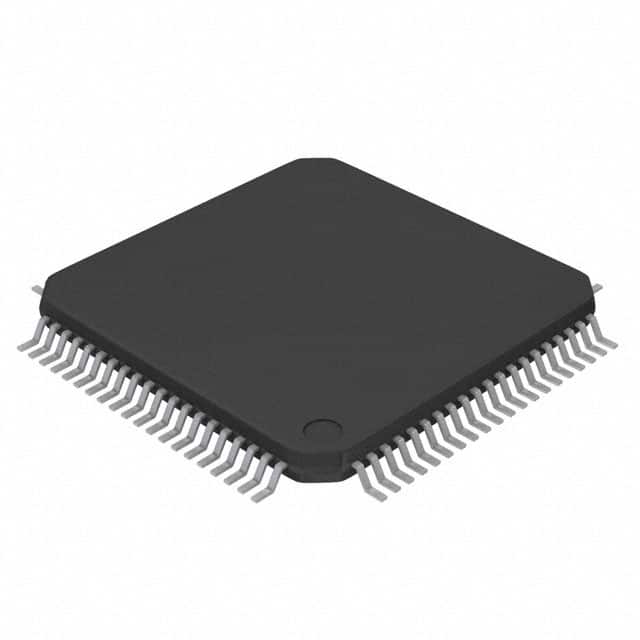
- Part No.:
- SAA7826HL/M1A,557
- Manufacturer:
- NXP Semiconductors
- Category:
- Encoders, Decoders, Converters
- Package:
- 80-LQFP
- Datasheet:
-
 SAA7826HL/M1A,557.pdf
- Description:
- IC DIGITAL/CD DAC DECODER 80LQFP
- Quantity:
- Payment:

- Shipping:

Inventory:1,203
Please send an inquiry. Send us your inquiry, and we will respond immediately.
Product details
Overview
SAA7826HL/M1A,557 from NXP Semiconductors (formerly Philips Semiconductors) is a single-chip CD audio decoder IC integrating digital servo control, filterless 16-bit DAC, pre-amplifier, and laser diode driver. It supports 1×/2×/4× playback speeds, operates from an 8.4672 MHz crystal, delivers 90 dB A-weighted SNR and −80 dB THD+N, and is used in consumer CD players for full audio decoding and optical pickup actuation.
For engineers reviewing the SAA7826HL/M1A,557 datasheet, SAA7826HL/M1A,557 pinout, SAA7826HL/M1A,557 application, or SAA7826HL/M1A,557 equivalent, key selection criteria include its integrated laser power control (up to 120 mA), EBU mute capability (M1 version only), dual-mode microcontroller interface (I²C or 4-wire), and on-chip DC offset cancellation for diode signal conditioning.
Technical Context
The SAA7826HL/M1A,557 implements a complete CD signal chain: HF data acquisition via adaptive 67 MHz data slicer with programmable high-pass/equalizing filters; EFM demodulation with frame sync protection and RL2 correction; and digital audio processing including de-emphasis, phase linearity compensation, and concealment. Its servo subsystem uses six oversampling bitstream ADCs for LF signal digitization and supports focus, radial, and sledge actuator control with configurable loop characteristics.
It features dual-domain architecture: decoder registers (0–F) manage audio and subcode functions, while shadow registers (bank 2/3) configure servo parameters, DC offset measurement timing, and laser soft-start. The M1 version adds EBU mute functionality-enabling independent muting of EBU-transmitted data without disrupting SPDIF frame structure-distinguishing it from the M0 variant.
Key Specifications
| Parameter | Value and Actual Design Meaning |
|---|---|
| Digital supply voltage | 1.65–1.95 V - powers core logic; requires tight regulation to maintain register stability and I²C interface integrity |
| Analog supply voltage | 3.0–3.6 V - supplies DAC, analog front-end, and servo ADCs; separate VDDA1/VDDA2/VDDA3 pins enable noise isolation |
| Clock input frequency | 8.4672 MHz - drives internal PLL multiplier for all system clocks (16 MHz, 4/12 MHz, I²S WCLK/SCLK) |
| DAC performance | 90 dB SNR (A-weighted), −80 dB THD+N - enables high-fidelity audio output without external reconstruction filter |
| Laser drive capability | Up to 120 mA - integrated laser driver with soft-start (0→nominal in 1 ms) and monitor feedback for lifetime power stability |
| Playback speed modes | 1×, 2×, 4× - selectable via decoder register B; supports CAV lock-to-disc mode with ±25% disc speed tolerance |
| Operating temperature | −40°C to +85°C - qualified for consumer-grade CD player chassis environments with passive cooling |
Pinout & Package
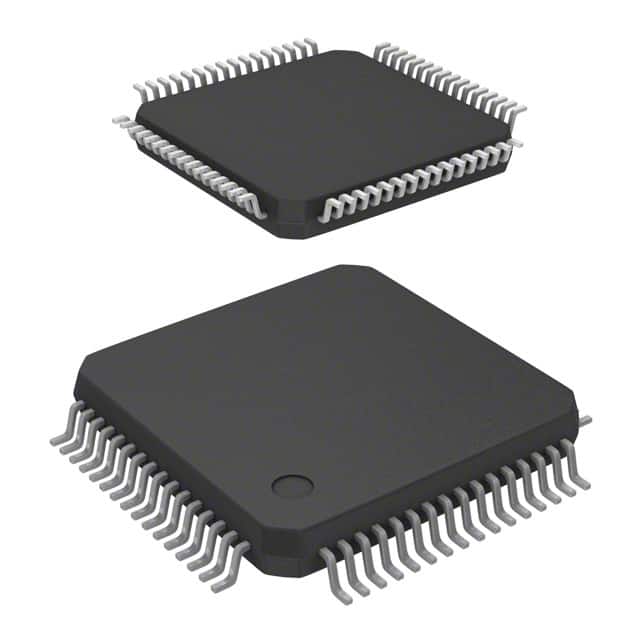
LQFP80 package (12 × 12 × 1.4 mm, SOT315-1); 80-pin low-profile quad flat package with exposed thermal pad (not electrically connected).
| Pin/Terminal | Circuit Role | Design Meaning |
|---|---|---|
| LFPOWER (1) | Laser power supply input | Connects to external 5 V rail; supplies current path for integrated laser driver stage |
| MONITOR (3) | Laser monitor diode input | Feedback node for closed-loop laser power regulation; referenced to SENSE (4) |
| D1–D4, R1–R2 (9–14) | Optical pickup diode inputs | Six differential-capable inputs for central/satellite photodiodes; digitized by oversampling bitstream ADCs |
| DACRP/DACRN (22–23) | Right-channel DAC differential outputs | Filterless 16-bit current-mode outputs; require external RC network for analog reconstruction |
| BUFOUTL/BUFOUTR (30–31) | Headphone buffer outputs | Integrated 30 mW/channel headphone drivers; eliminate need for external op-amps in portable designs |
| CLK4/12 (50) | Configurable clock output | Programmable 4 MHz or 12 MHz output for microcontroller timing; reduces external crystal count |
| SDA/SCL (52–53) | I²C-bus interface | Standard two-wire serial interface for register access; open-drain, 3.3 V tolerant |
| LKILL/RKILL (34–35) | Digital silence detection outputs | Open-drain flags indicating left/right channel silence; used for automatic muting or power-down sequencing |
Key Features
| Feature | Design Value |
|---|---|
| Integrated laser power control | On-chip 120 mA driver with soft-start and monitor feedback ensures stable optical output across laser lifetime |
| Filterless DAC architecture | Dynamic element matching 16-bit DAC eliminates external reconstruction filter, reducing BOM and PCB area |
| EBU mute function (M1 version) | Independent muting of EBU-interface data stream preserves SPDIF frame integrity during mute transitions |
| DC offset cancellation | Software-configurable measurement per diode (D1–D4, R1–R2) with UART-style STATUS pin readback |
| Dual microcontroller interface | Hardware-selectable I²C or 4-wire bus mode enables flexible host MCU integration without protocol translation |
| CD text decoder | On-chip R-to-W subcode parsing with CRC validation and ready-flag (CDTRDY) simplifies CD+G/CD-Text implementation |
Applications
| CD Player Audio Subsystem | CD-ROM Drive Servo Control |
|---|---|
Use Scenario: Standalone CD audio player with mechanical shock absorption and headphone output. IC Role / Device Role / Timing Role: Primary CD decoder and servo controller; manages HF data slicing, EFM demodulation, audio DAC, laser drive, and focus/radial actuator signals. Use Value: Reduces external component count by integrating pre-amplifier, DAC, laser driver, and servo ADCs-cutting BOM cost and board space vs. discrete SAA732X + TZA102X solution. |
Use Scenario: Embedded CD-ROM drive in industrial kiosk requiring reliable disc access under vibration. IC Role / Device Role / Timing Role: Digital servo processor handling off-track detection, defect identification, and motor control loops (spindle, focus, radial). Use Value: On-chip DC offset cancellation and configurable servo command parameters enable robust operation with aging optical pickups and variable mechanical tolerances. |
| CD Graphics (CD+G) Decoder | CD Text (CD-Text) Playback System |
Use Scenario: Karaoke machine displaying synchronized lyrics and graphics from CD+G discs. IC Role / Device Role / Timing Role: Subcode processor extracting P-to-W channels via EIAJ 3/4-wire interface; feeds graphics data to external display controller. Use Value: Hardware-accelerated subcode interface with frame/block sync outputs (SFSY, SBSY) eliminates software timing overhead for real-time graphics rendering. |
Use Scenario: Automotive head unit playing artist/title information from CD-Text enabled audio CDs. IC Role / Device Role / Timing Role: Dedicated CD text decoder capturing R-to-W subcode, performing CRC validation, and streaming PACK data via CDTRDY/CDTDATA/CDTCLK. Use Value: Integrated CRC checking and ready-flag signaling reduce host MCU firmware complexity and ensure accurate metadata extraction without packet loss. |
Equivalent & Alternatives
The following parts are listed as comparable options for similar CD audio decoder and servo control applications.
| Alternative Part | Technical Difference | Application Difference | Selection Advice |
|---|---|---|---|
| SAA7322HL/Q900,118 | Predecessor IC without integrated laser driver or DAC; requires external TZA102X pre-amp and external DAC | Lacks on-chip laser control and audio conversion-suitable only where discrete servo/audio paths are preferred | Select when legacy design reuse is required and BOM count is not constrained |
| SAA7827HL/M1A,557 | Pin-compatible successor with enhanced EBU interface timing compliance and extended subcode buffer depth | Supports higher-speed CD-ROM applications with improved error correction latency | Choose for new designs requiring extended lifecycle support and tighter EBU jitter specifications |
Compared with SAA7826HL/M1A,557, the SAA7322HL/Q900,118 increases system complexity with external components, while the SAA7827HL/M1A,557 offers backward compatibility with measurable improvements in subcode throughput and EBU signal integrity-making it the preferred upgrade path for production continuity.
Availability
SAA7826HL/M1A,557 is available at Aetrix Electronics and suitable for CD audio players, embedded CD-ROM drives, CD+G karaoke systems, and automotive CD text playback requiring stable component supply and long-term obsolescence management.
Supply support for SAA7826HL/M1A,557 includes scheduled delivery planning, volume procurement assistance, BOM continuity management, traceable sourcing, and lifecycle availability coordination for OEM customers, industrial embedded developers, connected-device designers, and electronics production programs.
Manufacturer
NXP Semiconductors is a global semiconductor leader focused on secure connectivity solutions for automotive, industrial, and consumer applications.
The SAA7826HL/M1A,557 belongs to NXP's legacy CD audio decoder product line, designed specifically to consolidate CD signal processing-including EFM demodulation, servo control, laser management, and audio conversion-into a single ASIC for cost-sensitive consumer audio equipment.
FAQ
What is the primary function of the SAA7826HL/M1A,557 in a CD player design?
The SAA7826HL/M1A,557 serves as the central CD signal processor, integrating audio decoding (EFM demodulation, de-emphasis, concealment), digital servo control (focus/radial actuator drive, off-track detection), filterless 16-bit DAC, laser diode driver (up to 120 mA), and CD text/subcode processing. It replaces multiple discrete ICs-such as the SAA732X decoder and TZA102X pre-amplifier-reducing bill-of-materials and board space in consumer CD players.
Does the SAA7826HL/M1A,557 support both I²C and 4-wire microcontroller interfaces?
Yes, the SAA7826HL/M1A,557 supports dual microcontroller interface modes: standard I²C-bus (via SDA/SCL pins) and a 4-wire parallel interface (using RAB, SILD, SDA, and SCL). Mode selection is hardware-configured via pin strapping or register settings, allowing flexible integration with different host MCUs without protocol translation layers.
How does the EBU mute function in the SAA7826HL/M1A,557 differ from standard mute implementations?
The EBU mute function in the SAA7826HL/M1A,557 (M1 version only) allows independent muting of audio data transmitted over the EBU interface while preserving the underlying SPDIF frame structure-including valid sync words and channel status bits. This prevents downstream receivers from losing frame lock during mute transitions, unlike conventional mute methods that insert invalid or zeroed frames.
What is the role of the STATUS pin in DC offset cancellation for the SAA7826HL/M1A,557?
The STATUS pin on the SAA7826HL/M1A,557 provides dual-mode serial communication for DC offset calibration: first toggling HIGH as a ready flag after measurement completion (configured via shadow register C), then streaming the 8-bit offset value UART-style (MSB inverted) for microcontroller readback. This enables precise per-diode (D1–D4, R1–R2) offset compensation without additional ADC resources.
Can the SAA7826HL/M1A,557 operate in lock-to-disc mode, and what are the constraints?
Yes, the SAA7826HL/M1A,557 supports lock-to-disc mode for electronic shock absorption, where the FIFO is blocked and the decoder dynamically adjusts its output data rate to match disc rotational speed. Disc speed must remain within 25% to 100% of nominal; outside this range, synchronization fails. Mode activation is controlled by decoder register E, and I²S clock frequencies (WCLK/SCLK) become speed-dependent.
SAA7826HL/M1A,557 Specifications
- Product attributes
- Attribute value
- Manufacturer:
- NXP Semiconductors
- Series:
- -
- Package/Case:
- 80-LQFP
- Packaging:
- Bag
- Product Status:
- Obsolete
- Type:
- Audio Decoder
- Applications:
- -
- Voltage - Supply, Analog:
- 3V ~ 3.6V
- Voltage - Supply, Digital:
- 1.65V ~ 1.95V
- Grade:
- -
- Qualification:
- -
- Mounting Type:
- Surface Mount
- Supplier Device Package:
- 80-LQFP (12x12)
SAA7826HL/M1A,557 FAQ
1.How can I place an order for SAA7826HL/M1A,557 through Aetrix?
Please submit a Request for Quotation (RFQ) for SAA7826HL/M1A,557 on Aetrix. Our sales agent will provide a competitive quotation and guide you through the order confirmation once you accept the terms.
2.Are the price and stock information for SAA7826HL/M1A,557 reliable?
The price and inventory of SAA7826HL/M1A,557 are updated periodically and may fluctuate due to market conditions. Stock and pricing data are typically refreshed every 24 hours. Quotation validity for SAA7826HL/M1A,557 is usually 5 days.
3.What payment methods are accepted for SAA7826HL/M1A,557?
We accept Wire Transfer, PayPal, Credit Card, Western Union, MoneyGram, and Escrow for SAA7826HL/M1A,557 transactions.
Note: Certain payment methods may incur a processing fee.
4.How is shipping managed for SAA7826HL/M1A,557?
SAA7826HL/M1A,557 orders can be shipped via leading logistics carriers, including DHL, UPS, FedEx, TNT, or Registered Mail.
Once your SAA7826HL/M1A,557 order is processed, you will receive an email with the shipment details and tracking number.
Note: Tracking information may take up to 24 hours to appear. Express delivery typically takes 3–5 business days.
5.How can I obtain technical support or documentation for SAA7826HL/M1A,557?
For technical support, including SAA7826HL/M1A,557 datasheets, pinout diagrams, or application guidance, please contact our engineering support team. They can provide detailed documentation and assistance for your SAA7826HL/M1A,557 requirements.
6.How does Aetrix verify that SAA7826HL/M1A,557 is sourced from the original manufacturer or authorized distributors?
All SAA7826HL/M1A,557 products on Aetrix are procured from qualified distributors and authorized channels. Our dedicated quality assurance team conducts strict verification, including traceability checks and, if necessary, third-party testing. This ensures that SAA7826HL/M1A,557 meets industry standards.
7.What is the process for return or replacement of SAA7826HL/M1A,557?
All SAA7826HL/M1A,557 units undergo pre-shipment inspection (PSI). If there is an issue with SAA7826HL/M1A,557, returns or replacements are accepted under the following conditions:
1.Quantity discrepancies, incorrect items, or visible external defects (such as breakage or corrosion), acknowledged by Aetrix.
2.The issue is reported within 90 days of delivery.
3.The SAA7826HL/M1A,557 part is unused and in its original packaging.
Return procedure for SAA7826HL/M1A,557:
1.Submit a request within 90 days.
2.Obtain a Return Material Authorization (RMA) from Aetrix.
SAA7826HL/M1A,557 Tags
-
MCP2120T-I/SL
Microchip Technology

-
LICAL-ENC-MS001
TE Connectivity Linx
-
TW9990AT-NA1-GR
Renesas
-
TVP5151IPBSR
Texas Instruments
-
TVP5150AM1IPBSR
Texas Instruments
-
LICAL-DEC-MS001-T
TE Connectivity Linx
-
ADV7391BCPZ
Analog Devices Inc.
-
ADV7393BCPZ-REEL
Analog Devices Inc.
-
ADV7393BCPZ
Analog Devices Inc.
-
ADV7391WBCPZ
Analog Devices Inc.
-
ADV7181DBCPZ
Analog Devices Inc.
-
ADV7181CBSTZ-REEL
Analog Devices Inc.
Tech Hub

A practical engineering guide to 3.3V and 5V logic compatibility, input thresholds, resistor dividers, translator ICs, MOSFET level shifting, I2C pull-ups, timing limits and power-sequencing risks.

The 74HC595 uses push-pull logic outputs, while the TPIC6B595 uses 50 V open-drain DMOS sinks for higher-power loads. This guide compares timing, current limits, 3.3 V interfacing, load wiring, thermal…

The 74HC595 converts serial data into eight stable parallel outputs. This guide covers pin functions, shift and storage timing, OE and MR behavior, drive-current limits, cascading, voltage compatibilit…

A technical comparison of level-sensitive latches and edge-triggered flip-flops, covering timing windows, setup and hold limits, master–slave operation, time borrowing, race-through, HDL inference and…

A D latch stores one bit while Enable controls when data can pass. This reference covers gate-level operation, truth tables, transparency, setup and hold timing, LE versus OE, common ICs and practical …

An SR latch stores one bit through cross-coupled feedback. This engineering reference covers NOR and NAND implementations, truth tables, forbidden-state recovery, gated operation, switch debouncing, fa…

Latch circuits retain one bit through feedback. This technical reference covers SR and D latches, truth tables, transparency, timing limits, latch-versus-flip-flop behavior, applications and common log…

An engineering guide to LED driver operation, constant-current and constant-voltage outputs, linear and switching topologies, dimming, IC selection, calculations, replacement compatibility, and fault c…

Operational amplifier guide covering op amp basics, feedback, ideal vs real op amps, common configurations, buffer circuits, offset, bias current, gain-bandwidth, slew rate, rail-to-rail limits and sel…

Jumper cables guide covering safe connection order, red and black clamp placement, final ground connection, cable gauge, length, clamp quality, copper vs CCA cables, jump starter comparison and battery…


