
 My Inquiry
 My Account


Infineon Technologies SAB 82525 H V2.2
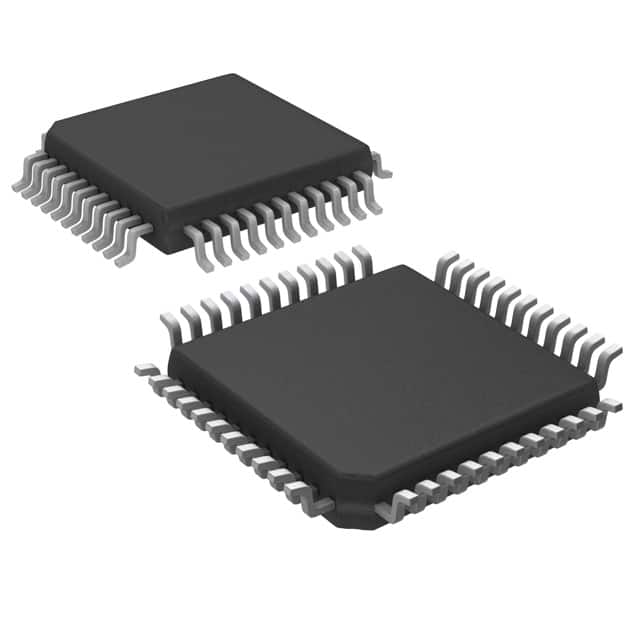
- Part No.:
- SAB 82525 H V2.2
- Manufacturer:
- Infineon Technologies
- Category:
- Specialized
- Package:
- 44-QFP
- Datasheet:
-
 SAB 82525 H V2.2.pdf
- Description:
- IC INTERFACE SPECIALIZED 44MQFP
- Quantity:
- Payment:

- Shipping:

Inventory:2,751
Please send an inquiry. Send us your inquiry, and we will respond immediately.
Product details
Overview
SAB 82525 H V2.2 from Siemens AG is a dual-channel High-Level Serial Communication Controller Extended (HSCX) IC implementing HDLC/LAPB/LAPD/SDLC Layer-2 protocol handling, featuring two independent 64-byte FIFOs, 4-channel DMA interface, and on-chip DPLL-based clock recovery per channel - used in ISDN terminal adapters and X.25 packet-switching gateways.
For engineers reviewing the SAB 82525 H V2.2 datasheet, SAB 82525 H V2.2 pinout, SAB 82525 H V2.2 application, or SAB 82525 H V2.2 equivalent, key selection criteria include dual-HDLC channel autonomy, programmable time-slot assignment (1–256 bit), 4 Mbit/s max data rate, and Intel/Motorola 8/16-bit bus compatibility with demultiplexed 8-bit address/data interface.
Technical Context
The SAB 82525 H V2.2 implements full-duplex LAPB/LAPD and half-duplex SDLC-NRM at Layer-2, with autonomous flag detection, bit stuffing, CRC-16 generation/checking, and address field recognition per channel. It supports auto-mode (MDS1/MDS0=00), non-auto mode (01), and multiple transparent modes (100/101/11).
Each channel integrates an independent baudrate generator, DPLL for clock recovery, and time-slot assignment logic enabling TDM applications like PCM systems. The 8-bit demultiplexed adaptive bus interface operates at up to 4 MHz with RES, INT, WR/IC0, RD/IC1, CS, ALE/IM0, IM1, and address lines A0–A6.
Key Specifications
| Parameter | Value and Actual Design Meaning |
|---|---|
| Channels | Dual independent full-duplex HDLC channels with separate 64-byte TX/RX FIFOs per channel. |
| Max Data Rate | 4 Mbit/s per channel - enables ISDN B-channel and high-speed X.25 link operation. |
| Protocol Support | LAPB (X.25), LAPD (ISDN D-channel), SDLC-NRM, and raw HDLC framing with I/S/U-frame handling. |
| FIFO Depth | 64 bytes per direction per channel - reduces CPU interrupt load and supports burst DMA transfers. |
| Bus Interface | 8-bit demultiplexed adaptive interface compatible with Intel 80C86/80C88 and Motorola 68000-series microprocessors. |
| Power Consumption | 25 mW active (4 MHz), 4 mW standby - suitable for low-power telecom line cards and embedded gateways. |
| Time-Slot Assignment | Programmable per channel (1–256 bit length) - enables direct integration into TDM-based PCM multiplexers. |
Pinout & Package
Package: P-MQFP-44-2 (SMD), 44-pin plastic metric quad flat pack with 0.8 mm lead pitch and exposed thermal pad.
| Pin/Terminal | Circuit Role | Design Meaning |
|---|---|---|
| RES | Asynchronous Reset Input | Active-low global reset; initializes all registers and FIFOs, disables DMA/IRQ until cleared. |
| INT | Interrupt Request Output | Open-drain, active-low signal indicating pending status (TX/RX complete, error, DMA request). |
| CS | Chip Select Input | Enables register access only when low; supports multi-device bus sharing with address decoding. |
| WR/IC0, RD/IC1 | Write/Read Control Inputs | Demultiplexed control signals - IC0=0/IC1=0 selects write; IC0=0/IC1=1 selects read. |
| ALE/IM0 | Address Latch Enable / Mode Input | Latches lower address byte during multiplexed access; also configures interrupt mode when used as IM0. |
| IM1 | Interrupt Mode Input | Selects interrupt vectoring mode (level-sensitive vs. edge-triggered) in conjunction with IM0. |
| D0–D7 | Data Bus I/O | 8-bit bidirectional data path for register reads/writes and FIFO data transfer. |
| A0–A6 | Address Bus Inputs | 7-bit address for internal register mapping (SP-REG, command/status, FIFO access). |
| DRQTA, DRQTB | DMA Request Outputs (Channel A/B Transmit) | Active-high requests to DMA controller when TX FIFO falls below threshold (programmable). |
| DRQRA, DRQRB | DMA Request Outputs (Channel A/B Receive) | Active-high requests when RX FIFO reaches threshold - enables zero-CPU-load streaming reception. |
| DACKA, DACKB | DMA Acknowledge Inputs | Indicates DMA controller readiness; gates data transfer timing for synchronous DMA bursts. |
| RxDA, RxDB | Receive Data Inputs (Channel A/B) | Differential or single-ended serial input; fed into DPLL for clock recovery and HDLC frame parsing. |
| TxDA, TxDB | Transmit Data Outputs (Channel A/B) | HDLC-framed serial output with flag insertion, bit stuffing, and CRC appended. |
| RTSA, RTSB | Request-to-Send Outputs | Flow control signals asserted before transmission; configurable for modem handshaking or channel enable. |
| CTSA/CxDA, CTSB/CxDB | Clear-to-Send / Carrier Detect Inputs | Modem status inputs - CTSA/CTSB enable transmit; CxDA/CxDB indicate remote carrier presence. |
| RxCLKA, RxCLKB | Receive Clock Inputs | External clock source option (bypasses DPLL); used for synchronous receive in master-clock systems. |
| TxCLKA, TxCLKB | Transmit Clock Inputs | Drives serial output timing; sourced from internal baudrate generator or external oscillator. |
| AxCLKA, AxCLKB | Alternate Clock Inputs | Secondary clock sources for auxiliary timing functions (e.g., time-slot synchronization). |
Key Features
| Feature | Design Value |
|---|---|
| Dual-channel HDLC offload | Full Layer-2 processing (flagging, CRC, bit stuffing, address recognition) per channel without CPU intervention. |
| Programmable time-slot assignment | Independent 1–256 bit time-slot length per channel - enables direct integration into PCM/TDM infrastructure. |
| 4-channel DMA interface | Separate DRQ/DACK lines for TX/RX of each channel - supports concurrent high-throughput data streaming. |
| On-chip DPLL per channel | Enables reliable clock recovery from noisy serial streams - critical for ISDN D-channel and leased-line links. |
| Transparent mode support | Raw byte pass-through without HDLC framing - used in proprietary protocols and firmware update channels. |
Applications
| ISDN Terminal Adapter | X.25 Packet Switching Gateway |
|---|---|
|
Use Scenario: Connecting analog PSTN devices to digital ISDN networks via NT1/TE2 interfaces. IC Role / Device Role / Timing Role: Dual-channel LAPD controller managing D-channel signaling and B-channel data framing with time-slot alignment. Use Value: Eliminates need for external protocol processors; supports simultaneous voice/data on B-channels with <10 µs frame latency. |
Use Scenario: Aggregating legacy serial terminals onto X.25 WAN backbone using PAD functionality. IC Role / Device Role / Timing Role: LAPB link-layer controller handling frame sequencing, retransmission, and flow control per virtual circuit. Use Value: Enables 32+ concurrent X.25 sessions per card with hardware-accelerated CRC and bit-stuffing. |
| PCM Multiplexer Control | Industrial SCADA RTU |
|
Use Scenario: Time-division multiplexing of sensor telemetry across E1/T1 lines in utility substations. IC Role / Device Role / Timing Role: TDM controller assigning fixed-length time slots to remote I/O modules with programmable slot length (1–256 bits). Use Value: Guarantees deterministic latency (<50 µs jitter) and eliminates software-based time-slot scheduling overhead. |
Use Scenario: Remote telemetry unit communicating over leased analog lines using SDLC-NRM protocol. IC Role / Device Role / Timing Role: Half-duplex SDLC controller managing poll-response cycles, CRC validation, and automatic retry on line faults. Use Value: Supports 128-node SDLC networks with hardware-implemented NRM state machine and 64-byte receive buffering. |
Equivalent & Alternatives
The following parts are listed as comparable options for similar HDLC communication controller applications.
| Alternative Part | Technical Difference | Application Difference | Selection Advice |
|---|---|---|---|
| Z85230 | Single-channel HDLC controller; no integrated DPLL; requires external clock recovery circuitry. | Limited to point-to-point SDLC/LAPB links without ISDN D-channel support. | Choose when cost sensitivity outweighs dual-channel and clock recovery requirements. |
| SAB 82526 | Pin/software compatible single-channel variant; shares same register map and FIFO architecture but omits Channel B peripherals. | Used where only one HDLC link is required (e.g., single-B-channel ISDN TA or dedicated X.25 PAD port). | Select for footprint-identical upgrade path or simplified design with reduced channel count. |
Compared with Z85230 and SAB 82526, the SAB 82525 H V2.2 uniquely delivers dual autonomous HDLC channels with on-chip DPLL, time-slot assignment, and 4-channel DMA - making it the only option for compact ISDN NT1+TA integration or multi-protocol TDM gateways requiring concurrent LAPD + LAPB operation.
Availability
SAB 82525 H V2.2 is available at Aetrix Electronics and suitable for ISDN terminal adapters, X.25 packet switching gateways, and PCM-based TDM multiplexers requiring stable component supply, long-lifecycle support, and legacy telecom qualification.
Supply support for SAB 82525 H V2.2 includes scheduled delivery planning, volume procurement assistance, BOM continuity management, traceable sourcing, and lifecycle availability coordination for OEM customers, industrial embedded developers, connected-device designers, and electronics production programs.
Manufacturer
Siemens AG Semiconductor Group (now Infineon Technologies) was a leading European semiconductor manufacturer specializing in industrial, telecom, and automotive ICs before spinning off its chip business in 1999.
The SAB 82525 belongs to Siemens' High-Level Serial Communication Controller (HSCX) product line, designed specifically for hardware-accelerated HDLC protocol handling in ISDN, X.25, and TDM infrastructure equipment.
FAQ
What is the maximum supported data rate per channel?
The SAB 82525 H V2.2 supports up to 4 Mbit/s per channel under specified electrical conditions (VDD = 5 V ± 5%, TA = 0–70 °C). This rate is achievable with external clock input or internal baudrate generator configured for highest division ratio, and is validated for LAPD and LAPB frame transmission with full CRC and bit-stuffing overhead.
Does it support both synchronous and asynchronous serial interfaces?
No - the SAB 82525 H V2.2 is a synchronous serial controller only. It requires a clock source (internal DPLL-recovered or external) on RxCLK/TxCLK pins and does not implement UART-style start/stop bit framing. Asynchronous operation must be handled externally via level-shifting or protocol conversion.
Can the two channels operate with different protocols simultaneously?
Yes - Channel A and Channel B are fully independent. One can run LAPD (ISDN D-channel) while the other runs LAPB (X.25) or SDLC-NRM, with separate register sets, FIFOs, and interrupt/DMA resources. Mode selection (MDS1/MDS0) is per-channel via dedicated control bits in the SP-REG.
Is there hardware support for CRC-32 or only CRC-16?
Only CRC-16 is implemented in hardware, per ISO/IEC 3309 standard, used for LAPB, LAPD, and HDLC frames. CRC-32 is not supported - applications requiring it must implement checksum calculation in host firmware or use external logic.
SAB 82525 H V2.2 Specifications
- Product attributes
- Attribute value
- Manufacturer:
- Infineon Technologies
- Series:
- -
- Package/Case:
- 44-QFP
- Packaging:
- Tray
- Product Status:
- Obsolete
- Applications:
- -
- Interface:
- Serial
- Voltage - Supply:
- 4.75V ~ 5.25V
- Supplier Device Package:
- PG-MQFP-44-2
- Grade:
- -
- Qualification:
- -
- Mounting Type:
- Surface Mount
SAB 82525 H V2.2 FAQ
1.How can I place an order for SAB 82525 H V2.2 through Aetrix?
Please submit a Request for Quotation (RFQ) for SAB 82525 H V2.2 on Aetrix. Our sales agent will provide a competitive quotation and guide you through the order confirmation once you accept the terms.
2.Are the price and stock information for SAB 82525 H V2.2 reliable?
The price and inventory of SAB 82525 H V2.2 are updated periodically and may fluctuate due to market conditions. Stock and pricing data are typically refreshed every 24 hours. Quotation validity for SAB 82525 H V2.2 is usually 5 days.
3.What payment methods are accepted for SAB 82525 H V2.2?
We accept Wire Transfer, PayPal, Credit Card, Western Union, MoneyGram, and Escrow for SAB 82525 H V2.2 transactions.
Note: Certain payment methods may incur a processing fee.
4.How is shipping managed for SAB 82525 H V2.2?
SAB 82525 H V2.2 orders can be shipped via leading logistics carriers, including DHL, UPS, FedEx, TNT, or Registered Mail.
Once your SAB 82525 H V2.2 order is processed, you will receive an email with the shipment details and tracking number.
Note: Tracking information may take up to 24 hours to appear. Express delivery typically takes 3–5 business days.
5.How can I obtain technical support or documentation for SAB 82525 H V2.2?
For technical support, including SAB 82525 H V2.2 datasheets, pinout diagrams, or application guidance, please contact our engineering support team. They can provide detailed documentation and assistance for your SAB 82525 H V2.2 requirements.
6.How does Aetrix verify that SAB 82525 H V2.2 is sourced from the original manufacturer or authorized distributors?
All SAB 82525 H V2.2 products on Aetrix are procured from qualified distributors and authorized channels. Our dedicated quality assurance team conducts strict verification, including traceability checks and, if necessary, third-party testing. This ensures that SAB 82525 H V2.2 meets industry standards.
7.What is the process for return or replacement of SAB 82525 H V2.2?
All SAB 82525 H V2.2 units undergo pre-shipment inspection (PSI). If there is an issue with SAB 82525 H V2.2, returns or replacements are accepted under the following conditions:
1.Quantity discrepancies, incorrect items, or visible external defects (such as breakage or corrosion), acknowledged by Aetrix.
2.The issue is reported within 90 days of delivery.
3.The SAB 82525 H V2.2 part is unused and in its original packaging.
Return procedure for SAB 82525 H V2.2:
1.Submit a request within 90 days.
2.Obtain a Return Material Authorization (RMA) from Aetrix.
SAB 82525 H V2.2 Tags
-
NVT4857UKAZ
NXP USA Inc.
-
TCA8418RTWR
Texas Instruments
-
PCA9546APWR
Texas Instruments
-
MD0100N8-G
Microchip Technology
-
PCA9548APW,118
NXP USA Inc.
-
PCA9540BDP,118
NXP USA Inc.
-
PCA9548APWR
Texas Instruments
-
PCA9546APW,118
NXP USA Inc.
-
PTN3360DBS,518
NXP USA Inc.
-
PCA9546ABS,118
NXP USA Inc.
-
PCA9518PWR
Texas Instruments
-
PCA9545APW,118
NXP USA Inc.
Tech Hub

An engineering guide to LED driver operation, constant-current and constant-voltage outputs, linear and switching topologies, dimming, IC selection, calculations, replacement compatibility, and fault c…

Operational amplifier guide covering op amp basics, feedback, ideal vs real op amps, common configurations, buffer circuits, offset, bias current, gain-bandwidth, slew rate, rail-to-rail limits and sel…

Jumper cables guide covering safe connection order, red and black clamp placement, final ground connection, cable gauge, length, clamp quality, copper vs CCA cables, jump starter comparison and battery…

LDO regulator guide covering low dropout voltage, power dissipation, thermal design, PSRR, output noise, capacitor stability, adjustable LDO circuits, LDO vs buck converter and datasheet selection chec…

Conditional Access Module guide covering CAM meaning, CI/CI+ interface, smart card authorization, DVB security workflow, TV and set-top box compatibility, internal electronics, ESD protection, connecto…

Guide to electronic component obsolescence covering EOL risk, PCN/PDN notices, last-time buy planning, replacement options, form-fit-function validation, counterfeit risk and BOM lifecycle management.

18650 battery guide covering lithium-ion cell basics, 3.6V/3.7V voltage, 4.2V charging, mAh and Wh capacity, protected cells, chargers, BMS, series-parallel packs, holders, welding and sourcing checks.…

Hall effect sensor guide covering working principle, linear and digital sensors, Arduino circuits, current sensing, speed detection, automotive applications, A3144 examples, signal filtering and datash…

Product Change Notification guide for electronic components, covering PCN meaning, PCN vs PDN/EOL, common change types, risk levels, form-fit-function review, engineering validation, BOM control, LTB/L…

A practical guide to blend door actuators, covering HVAC function, symptoms, location, AC and heater issues, reset and calibration, replacement cost, electrical diagnosis, compatibility checks, and rep…


