
 My Inquiry
 My Account


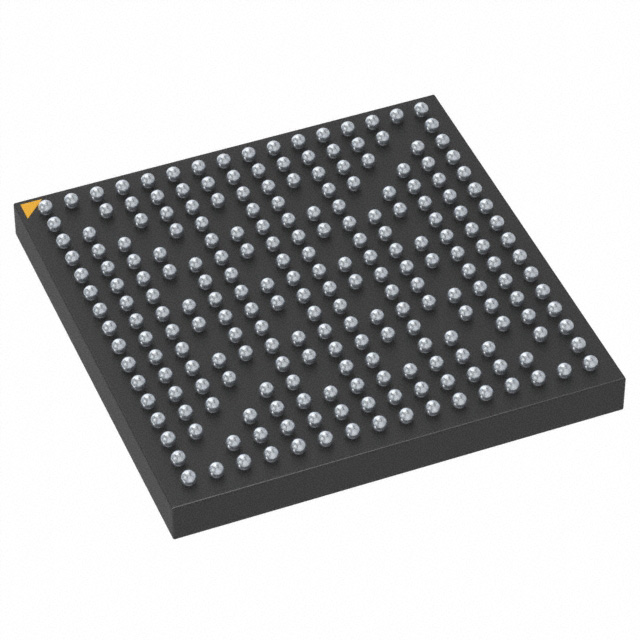
Microchip Technology SAM9X60T-V/DWB
- Part No.:
- SAM9X60T-V/DWB
- Manufacturer:
- Microchip Technology
- Category:
- Microprocessors
- Package:
- 228-TFBGA
- Datasheet:
-
 SAM9X60T-V/DWB.pdf
- Description:
- IC MPU SAM9X60 600MHZ 228TFBGA
- Quantity:
- Payment:

- Shipping:

Inventory:3,864
Please send an inquiry. Send us your inquiry, and we will respond immediately.
Product details
Overview
SAM9X60T-V/DWB from Microchip Technology is an ultra-low power ARM926EJ-S-based microprocessor unit (MPU) operating at 600 MHz, integrating dual 10/100 Ethernet MACs, two CAN controllers, LCD and 2D graphics controllers, QSPI, 13 FLEXCOMs, AES/SHA crypto accelerators, and a 12-bit ADC with touchscreen support. It targets industrial HMI, embedded vision, and secure gateway applications requiring real-time connectivity and low-power operation across -40°C to +105°C.
For engineers reviewing the SAM9X60T-V/DWB datasheet, SAM9X60T-V/DWB pinout, SAM9X60T-V/DWB application, or SAM9X60T-V/DWB equivalent, key selection considerations include its TFBGA228 package, 64 KB SRAM0 + 4 KB SRAM1 memory architecture, DDR2/LPDDR/SDRAM interface support, hardware-accelerated cryptographic engines compliant with FIPS PUB 197 and 180-2, and IEC 60730 Class B safety features for industrial control systems.
Technical Context
The SAM9X60T-V/DWB implements an ARM926EJ-S core with 32 KB instruction and 32 KB data caches plus MMU, enabling full Linux OS execution. Its system clocking includes dual PLLs-one for general system operation and one optimized for USB 2.0 High-Speed (480 MHz)-and two crystal oscillators (32.768 kHz and 12–48 MHz).
Peripherals are organized via a multi-layer bus matrix supporting concurrent high-bandwidth access: the MPDDRC controller manages DDR2/LPDDR with impedance-calibrated PHY, while the EBI supports NAND Flash with 24-bit BCH ECC and parallel SDRAM interfaces. Security is enforced through tamper-detectable OTP memory, secure bootloader in 64 KB ROM, and isolated private key bus for AES/TDES key loading.
Key Specifications
| Parameter | Value and Actual Design Meaning |
|---|---|
| CPU Core | ARM926EJ-S @ 600 MHz with MMU, 32 KB I-cache + 32 KB D-cache - enables full Linux kernel and user-space execution |
| Memory Interface | DDR2/LPDDR (16-bit), SDR/LPSDR (16/32-bit), QSPI, NAND Flash with 24-bit BCH ECC - supports boot from eMMC, SD card, SPI/QSPI, or NAND |
| Security Acceleration | AES-128/192/256, SHA-1/224/256/384/512, HMAC, TDES, TRNG - FIPS PUB 197/180-2 compliant hardware acceleration offloads CPU |
| Connectivity | Dual 10/100 Ethernet MACs (MII/RMII), 2× CAN 2.0B, 3× USB HS (2 host + 1 device), 13× FLEXCOMs (USART/SPI/I²C) - enables industrial networking and multi-protocol edge routing |
| Display & Vision | LCD controller (24-bit RGB, up to 1024×768@60 fps), 2D graphics engine, ITU-R BT.601/656 image sensor interface (12-bit) - supports embedded HMI and camera-based monitoring |
| Power Management | ULP0 (Very Slow Clock) and ULP1 (No-Clock) modes, RTC with 8 backup registers, shutdown controller - enables battery-backed operation and fast wake-up from deep sleep |
| Package | TFBGA228, 11×11 mm², 0.65 mm pitch - optimized for 4-layer PCB layout with dedicated power/ground ball assignment for EMI reduction |
Pinout & Package
The SAM9X60T-V/DWB is housed in a 228-ball Thin Fine-Pitch Ball Grid Array (TFBGA) package measuring 11 mm × 11 mm with 0.65 mm ball pitch. The package supports standard-class PCB design down to four layers and includes optimized power/ground ball placement for decoupling capacitor integration and EMI suppression.
| Pin/Terminal | Circuit Role | Design Meaning |
|---|---|---|
| VDDCORE | Core Power Supply | 1.15 V supply for ARM926EJ-S core and internal logic - requires tight regulation and local decoupling |
| VDDIOP0 / VDDIOP1 | I/O Power Rails | 3.3 V and 1.8 V supplies for GPIO banks and peripheral I/O - configurable voltage domains enable mixed-signal interfacing |
| PA0–PA31, PB0–PB25, PC0–PC31, PD0–PD21 | Programmable I/O Lines | Up to 112 multiplexed GPIOs with Schmitt-trigger inputs, programmable pull-up/pull-down, and interrupt-on-change - supports flexible peripheral mapping and HMI button/touch sensing |
| E0_TX[3:0], E0_RX[3:0], E1_TX[1:0], E1_RX[1:0] | Ethernet PHY Interface | Dual RMII/MII signals for independent 10/100 Mbps Ethernet links - enables redundant network paths or dual-interface gateways |
| CANTX0/CANRX0, CANTX1/CANRX1 | CAN Bus Transceivers | Dedicated differential CAN signal pairs compliant with ISO 11898-1 - supports automotive and industrial fieldbus communication |
| LCDDAT[23:0], LCDPCLK, LCDVSYNC, LCDHSYNC | LCD Timing & Data Bus | 24-bit parallel RGB interface with pixel clock and sync signals - drives TFT panels without external timing controller |
| ISI_D[11:0], ISI_PCK, ISI_HSYNC, ISI_VSYNC | Image Sensor Interface | Parallel 12-bit CMOS/CCD sensor input with embedded clock and frame sync - enables direct connection to industrial cameras |
| QIO0–QIO3, QSCK, QCS | Quad SPI Interface | 4-line bidirectional serial interface supporting XIP and high-speed flash access - replaces parallel NOR/NAND in space-constrained designs |
Key Features
| Feature | Design Value |
|---|---|
| Secure Bootloader in ROM | 64 KB internal ROM embedding OTP-configurable bootloader supporting authenticated boot from NAND, SD, SPI, or QSPI - prevents firmware tampering at power-on |
| Hardware Crypto Engines | Dedicated AES/TDES/SHA accelerators with integrity checking and tamper-responsive key erasure - meets FIPS 140-3 Level 1 requirements for secure data processing |
| IEC 60730 Class B Compliance | Integrated clock monitors (32.768 kHz & main oscillator), watchdog lock capability, and peripheral register write-protection - reduces software diagnostic overhead for safety-critical firmware |
| Low-Power Operation Modes | ULP0 (Very Slow Clock) and ULP1 (No-Clock) modes with RTC retention and <10 µA standby current - extends battery life in remote monitoring nodes |
| EMI-Optimized I/O Design | Slew-rate controlled drivers, DDR PHY impedance calibration, spread-spectrum PLLs, and dedicated power/ground ball layout - simplifies EMC certification for industrial deployments |
Applications
| Industrial HMI Terminal | Secure Edge Gateway |
|---|---|
Use Scenario: Touchscreen-based operator interface for PLC-controlled machinery with local data logging and alarm visualization. IC Role / Device Role / Timing Role: MPU executing Linux with Qt-based GUI, driving 1024×768 LCD via integrated LCDC and reading resistive touch via 12-bit ADC. Use Value: Eliminates external graphics controller and touch controller ICs; hardware 2D BLT engine accelerates UI rendering; AES/SHA engines secure OTA firmware updates. | Use Scenario: Field-deployed protocol translator connecting Modbus RTU devices to cloud via TLS-secured MQTT over dual Ethernet ports. IC Role / Device Role / Timing Role: Network processor handling TCP/IP stack, TLS offload, CAN/Modbus bridging, and secure key storage in OTP memory. Use Value: Dual Ethernet enables LAN/WAN separation; hardware crypto accelerators achieve >20 Mbps TLS throughput; tamper detection clears keys on physical intrusion. |
| Embedded Vision Node | Smart Energy Meter |
Use Scenario: Real-time visual inspection system capturing 720p video from CMOS sensor and performing edge analytics using lightweight neural networks. IC Role / Device Role / Timing Role: Vision processor interfacing to ITU-R BT.656 sensor via ISI, running inference on ARM9 core with DMA-accelerated frame buffering. Use Value: Direct sensor-to-memory path avoids FPGA co-processor; 2D graphics engine overlays analysis results on live video; LPDDR interface sustains 800 MB/s bandwidth. | Use Scenario: Revenue-grade electricity meter with anti-tampering features, time-of-use billing, and secure remote firmware updates via cellular backhaul. IC Role / Device Role / Timing Role: Safety-certified controller managing metrology ADC, RTC timestamping, secure boot, and encrypted communication stack. Use Value: IEC 60730 Class B features reduce functional safety validation effort; tamper pins log intrusion events with RTC timestamps; secure OTP stores calibration keys. |
Equivalent & Alternatives
The following parts are listed as comparable options for similar MPU applications.
| Alternative Part | Technical Difference | Application Difference | Selection Advice |
|---|---|---|---|
| ATSAMA5D27-CU | Cortex-A5 core @ 500 MHz, 128 KB L2 cache, no built-in LCD controller, single Ethernet MAC, no CAN | Better Linux performance and security (TrustZone), but lacks display and CAN peripherals needed for HMI or vehicle gateways | Select when higher application processor performance and TrustZone isolation are prioritized over integrated display/CAN support |
| STM32MP157C-DK2 | Cortex-A7 @ 650 MHz + Cortex-M4, dual Ethernet, no CAN, no hardware crypto acceleration for SHA-512/AES-256, different package (LFBGA361) | Strong M4 co-processor for real-time tasks, but lacks FIPS-compliant crypto engines and industrial temperature grade (-40°C to +105°C) | Select when dual-core heterogeneous processing is required and FIPS-level crypto compliance is not mandatory |
Compared with ATSAMA5D27-CU and STM32MP157C-DK2, the SAM9X60T-V/DWB uniquely combines ARM9 deterministic real-time response, integrated LCD/2D graphics, dual CAN, and FIPS-validated crypto acceleration in a compact TFBGA228 package rated for extended industrial temperatures - making it optimal for cost-sensitive, display-enabled, safety-aware edge nodes.
Availability
SAM9X60T-V/DWB is available at Aetrix Electronics and suitable for industrial HMI terminals, secure edge gateways, embedded vision nodes, and smart energy meters requiring stable component supply across extended temperature ranges and long product lifecycles.
Supply support for SAM9X60T-V/DWB includes scheduled delivery planning, volume procurement assistance, BOM continuity management, traceable sourcing, and lifecycle availability coordination for OEM customers, industrial embedded developers, connected-device designers, and electronics production programs.
Manufacturer
Microchip Technology Inc. is a leading provider of microcontrollers, analog components, FPGAs, and development tools, serving industrial, automotive, consumer, and communications markets with vertically integrated silicon solutions.
The SAM9X60 product line delivers ultra-low power, high-integration MPUs targeting industrial automation, human-machine interfaces, and secure IoT edge devices - emphasizing deterministic real-time performance, hardware-enforced security, and extended temperature reliability.
FAQ
What is the maximum operating frequency of the SAM9X60T-V/DWB CPU core?
The SAM9X60T-V/DWB integrates an ARM926EJ-S processor core rated for operation at up to 600 MHz. This frequency is sustained under full industrial temperature range (-40°C to +105°C) with appropriate thermal design and power supply regulation. The core includes 32 KB instruction and 32 KB data caches plus a Memory Management Unit (MMU), enabling robust Linux OS execution without external cache or memory controllers.
Does the SAM9X60T-V/DWB support secure boot, and how is it implemented?
Yes, the SAM9X60T-V/DWB supports hardware-enforced secure boot via a 64 KB internal ROM containing a configurable bootloader. Boot source selection (NAND, SD card, SPI/QSPI flash) is controlled by OTP bits, and authentication uses hardware SHA-256/HMAC engines. Encrypted images can be decrypted using AES keys stored in secure OTP memory, and tamper detection triggers immediate key erasure - all verified before code execution begins.
What display interfaces does the SAM9X60T-V/DWB support, and what resolutions are achievable?
The SAM9X60T-V/DWB integrates a full-featured LCD controller supporting 24-bit RGB parallel output with programmable pixel clock, HSYNC, VSYNC, and data enable signals. It achieves up to 1024×768 resolution at 60 fps, includes overlay, alpha-blending, rotation, scaling, and color conversion. Combined with the dedicated 2D graphics controller (BLT engine), it drives TFT displays directly without external timing controllers or GPU co-processors.
How many CAN interfaces does the SAM9X60T-V/DWB provide, and are they fully compliant?
The SAM9X60T-V/DWB provides two independent CAN 2.0B controllers supporting both standard and extended frame formats, bit rates up to 1 Mbps, and automatic retransmission. Each controller includes dedicated CANTX and CANRX pins routed to separate differential pairs on the TFBGA228 package. These interfaces comply fully with ISO 11898-1 and are validated for industrial fieldbus use across the -40°C to +105°C operating range.
What power management features make the SAM9X60T-V/DWB suitable for battery-operated applications?
The SAM9X60T-V/DWB supports ultra-low power modes including Backup mode (RTC + 8 GPBR registers active at <10 µA), ULP0 (Very Slow Clock), and ULP1 (No-Clock). Wake-up sources include 13 GPIO pins, RTC alarms, and peripheral events. The Shutdown Controller manages external power rails, and the slow RC oscillator remains active during deep sleep - enabling multi-year battery life in remote sensors and portable HMIs when paired with recommended PMICs like MCP16502AE.
SAM9X60T-V/DWB Specifications
- Product attributes
- Attribute value
- Manufacturer:
- Microchip Technology
- Package/Case:
- 228-TFBGA
- Series:
- SAM9X60
- Packaging:
- Tape & Reel (TR)
- Product Status:
- Active
- Core Processor:
- ARM926EJ-S
- Number of Cores/Bus Width:
- 1 Core, 32-Bit
- Speed:
- 600MHz
- Co-Processors/DSP:
- -
- RAM Controllers:
- LPDDR, LPSDR, DDR2, SDR, SRAM
- Graphics Acceleration:
- Yes
- Display & Interface Controllers:
- Keyboard, LCD, Touchscreen
- Ethernet:
- 10/100Mbps (2)
- SATA:
- -
- USB:
- USB 2.0 (3)
- Voltage - I/O:
- 3.3V
- Operating Temperature:
- -40°C ~ 105°C (TA)
- Grade:
- -
- Qualification:
- -
- Security Features:
- Boot Security, Cryptography, Memory Scrambling, Secure JTAG, Secure Key Storage, Secure RTC, Tamper Pins
- Mounting Type:
- Surface Mount
- Supplier Device Package:
- 228-TFBGA (11x11)
- Additional Interfaces:
- -
SAM9X60T-V/DWB FAQ
1.How can I place an order for SAM9X60T-V/DWB through Aetrix?
Please submit a Request for Quotation (RFQ) for SAM9X60T-V/DWB on Aetrix. Our sales agent will provide a competitive quotation and guide you through the order confirmation once you accept the terms.
2.Are the price and stock information for SAM9X60T-V/DWB reliable?
The price and inventory of SAM9X60T-V/DWB are updated periodically and may fluctuate due to market conditions. Stock and pricing data are typically refreshed every 24 hours. Quotation validity for SAM9X60T-V/DWB is usually 5 days.
3.What payment methods are accepted for SAM9X60T-V/DWB?
We accept Wire Transfer, PayPal, Credit Card, Western Union, MoneyGram, and Escrow for SAM9X60T-V/DWB transactions.
Note: Certain payment methods may incur a processing fee.
4.How is shipping managed for SAM9X60T-V/DWB?
SAM9X60T-V/DWB orders can be shipped via leading logistics carriers, including DHL, UPS, FedEx, TNT, or Registered Mail.
Once your SAM9X60T-V/DWB order is processed, you will receive an email with the shipment details and tracking number.
Note: Tracking information may take up to 24 hours to appear. Express delivery typically takes 3–5 business days.
5.How can I obtain technical support or documentation for SAM9X60T-V/DWB?
For technical support, including SAM9X60T-V/DWB datasheets, pinout diagrams, or application guidance, please contact our engineering support team. They can provide detailed documentation and assistance for your SAM9X60T-V/DWB requirements.
6.How does Aetrix verify that SAM9X60T-V/DWB is sourced from the original manufacturer or authorized distributors?
All SAM9X60T-V/DWB products on Aetrix are procured from qualified distributors and authorized channels. Our dedicated quality assurance team conducts strict verification, including traceability checks and, if necessary, third-party testing. This ensures that SAM9X60T-V/DWB meets industry standards.
7.What is the process for return or replacement of SAM9X60T-V/DWB?
All SAM9X60T-V/DWB units undergo pre-shipment inspection (PSI). If there is an issue with SAM9X60T-V/DWB, returns or replacements are accepted under the following conditions:
1.Quantity discrepancies, incorrect items, or visible external defects (such as breakage or corrosion), acknowledged by Aetrix.
2.The issue is reported within 90 days of delivery.
3.The SAM9X60T-V/DWB part is unused and in its original packaging.
Return procedure for SAM9X60T-V/DWB:
1.Submit a request within 90 days.
2.Obtain a Return Material Authorization (RMA) from Aetrix.
SAM9X60T-V/DWB Tags
-
AT91SAM9260B-CU-999
Microchip Technology
-
AT91SAM9G25-CU
Microchip Technology
-
ATSAMA5D27C-CU
Microchip Technology
-
AT91SAM9X35-CU
Microchip Technology
-
AT91SAM9X25-CU
Microchip Technology
-
MCIMX6Y2CVM08AB
NXP Semiconductors
.JPG)
-
AM3352BZCZ100
Texas Instruments
-
AT91SAM9260B-CU
Microchip Technology
-
AT91SAM9260B-QU
Microchip Technology
-
ATSAMA5D31A-CU
Microchip Technology
-
AT91SAM9G20B-CU-999
Microchip Technology
-
MCIMX6Y2CVM05AB
NXP Semiconductors
Tech Hub

TTL and CMOS logic families differ in thresholds, loading, output drive, power and timing. This engineering guide compares 74HC and 74HCT, calculates noise margins and checks 3.3 V/5 V compatibility.

A practical engineering guide to 3.3V and 5V logic compatibility, input thresholds, resistor dividers, translator ICs, MOSFET level shifting, I2C pull-ups, timing limits and power-sequencing risks.

The 74HC595 uses push-pull logic outputs, while the TPIC6B595 uses 50 V open-drain DMOS sinks for higher-power loads. This guide compares timing, current limits, 3.3 V interfacing, load wiring, thermal…

The 74HC595 converts serial data into eight stable parallel outputs. This guide covers pin functions, shift and storage timing, OE and MR behavior, drive-current limits, cascading, voltage compatibilit…

A technical comparison of level-sensitive latches and edge-triggered flip-flops, covering timing windows, setup and hold limits, master–slave operation, time borrowing, race-through, HDL inference and…

A D latch stores one bit while Enable controls when data can pass. This reference covers gate-level operation, truth tables, transparency, setup and hold timing, LE versus OE, common ICs and practical …

An SR latch stores one bit through cross-coupled feedback. This engineering reference covers NOR and NAND implementations, truth tables, forbidden-state recovery, gated operation, switch debouncing, fa…

Latch circuits retain one bit through feedback. This technical reference covers SR and D latches, truth tables, transparency, timing limits, latch-versus-flip-flop behavior, applications and common log…

An engineering guide to LED driver operation, constant-current and constant-voltage outputs, linear and switching topologies, dimming, IC selection, calculations, replacement compatibility, and fault c…

Operational amplifier guide covering op amp basics, feedback, ideal vs real op amps, common configurations, buffer circuits, offset, bias current, gain-bandwidth, slew rate, rail-to-rail limits and sel…


