
 My Inquiry
 My Account


NXP Semiconductors SC16C654BIBS,528
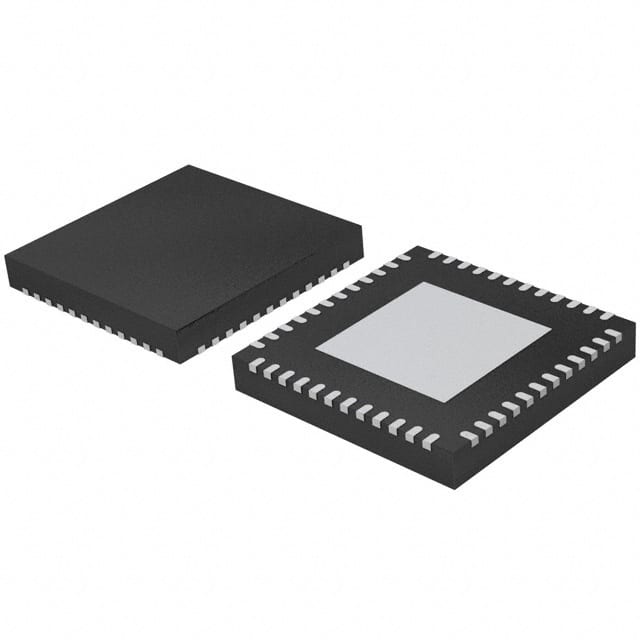
- Part No.:
- SC16C654BIBS,528
- Manufacturer:
- NXP Semiconductors
- Package:
- 48-VFQFN Exposed Pad
- Datasheet:
-
 SC16C654BIBS,528.pdf
- Description:
- IC QUAD UART 64BYTE 48HVQFN
- Quantity:
- Payment:

- Shipping:

Inventory:3,035
Please send an inquiry. Send us your inquiry, and we will respond immediately.
Product details
Overview
SC16C654BIBS,528 from NXP Semiconductors (formerly Philips) is a quad UART IC designed for high-throughput serial data communication in embedded industrial and networking systems. It delivers four independent asynchronous channels, 64-byte transmit/receive FIFOs, up to 5 Mbit/s data rate at 3.3 V/5 V, and supports both Intel (16-mode) and Motorola (68-mode) bus interfaces. It is used in multi-port RS-232/RS-485 interface cards and industrial gateways requiring low-CPU-overhead serial I/O.
For engineers reviewing the SC16C654BIBS,528 datasheet, SC16C654BIBS,528 pinout, SC16C654BIBS,528 application, or SC16C654BIBS,528 equivalent, this page provides verified technical context, HVQFN48 package-specific pin mapping, real-world UART channel allocation constraints, IrDA encoder/decoder capability, and validated drop-in alternatives for legacy 16C654-based designs.
Technical Context
The SC16C654BIBS,528 implements four fully independent UART channels with shared bus interface logic, supporting dual-mode operation (16/68) selected via the 16/68 input pin. Its architecture includes programmable baud rate generators, false start-bit detection, and prioritized interrupt control with individual TX/RX/line/modem status masking.
Unlike PLCC68 variants, the HVQFN48 package (SOT778-3) omits TXRDY/RXRDY signals and restricts modem pins per channel: only Channel C provides full DSR/CTS/RTS/DTR/RI/CD; Channels A/B provide RTS/CTS only; Channel D has no modem pins. Clock selection is handled exclusively via MCR[7], not CLKSEL (absent in HVQFN48).
Key Specifications
| Parameter | Value and Actual Design Meaning |
|---|---|
| Channels | 4 independent UARTs - enables simultaneous serial links without external multiplexing. |
| Max Data Rate | 5 Mbit/s at 3.3 V or 5 V - supports high-speed modem and industrial fieldbus protocols. |
| FIFO Depth | 64-byte TX + 64-byte RX per channel - reduces CPU interrupt frequency by ~4× vs. 16C554. |
| Supply Voltage | 2.5 V / 3.3 V / 5 V operation - allows direct interfacing with mixed-voltage system buses. |
| Interface Modes | Software-selectable Intel 16-mode or Motorola 68-mode - ensures compatibility with legacy x86 and ColdFire/68K platforms. |
| IrDA Support | Integrated infrared encoder/decoder - eliminates external IrDA PHY for remote control or short-range data transfer. |
| Operating Temp | −40 °C to +85 °C - qualified for industrial temperature environments without derating. |
Pinout & Package
SC16C654BIBS,528 is housed in a 6 × 6 × 0.85 mm HVQFN48 package (SOT778-3) with 48 terminals, thermal pad exposed on underside for enhanced power dissipation. Pin functions differ between 16-mode and 68-mode configurations; mode is selected by the 16/68 input (Pin 37). This package excludes TXRDY/RXRDY signals and limits modem pin availability per channel.
| Pin/Terminal | Circuit Role | Design Meaning |
|---|---|---|
| 16/68 | Interface mode select input | Logic HIGH = 16-mode (Intel bus); LOW = 68-mode (Motorola bus); determines IOR/IOW vs. R/W, INTA–INTD vs. IRQ, and CSx vs. A3/A4 addressing. |
| A0–A2 | Address select inputs | Select internal register address (0–7) within active UART channel; required for register access in both modes. |
| D0–D7 | Bi-directional data bus | 8-bit parallel interface to host CPU; 3-state TTL drive enables bus sharing with other peripherals. |
| RTSA–RTSD | Request-to-Send outputs | Active-LOW RTS per channel; only RTSA, RTSB, RTSC are available; RTSD is unimplemented in HVQFN48. |
| CTSA–CTSD | Clear-to-Send inputs | Active-LOW CTS per channel; only CTSA, CTSB, CTSC are available; CTSD is unimplemented. |
| RXA–RXD | Receive data inputs | Serial RX inputs for all four channels; RXD is functional; all four are present and usable. |
| TXA–TXD | Transmit data outputs | Serial TX outputs for all four channels; TXD is functional; all four are present and usable. |
| CSA–CSD | Chip select inputs (16-mode) | In 16-mode: individual channel enable (CSA=0 → Channel A active); in 68-mode: repurposed as A3/A4 address lines. |
| RESET | Active-HIGH reset input | Asynchronous reset of all registers and outputs; resets to 16C454-compatible state based on 16/68 pin level. |
| XTAL1/XTAL2 | Clock oscillator interface | Supports crystal (1–24 MHz) or external clock; enables precise baud rate generation without external PLL. |
Key Features
| Feature | Design Value |
|---|---|
| Auto hardware flow control | RTS/CTS handshaking per channel reduces software polling and prevents FIFO overrun in bursty traffic. |
| Programmable FIFO trigger levels | Four selectable interrupt thresholds (1, 4, 8, 14 bytes) per channel allow fine-grained CPU scheduling. |
| Sleep mode | Reduces current draw during idle periods while preserving register state - critical for battery-backed systems. |
| Modem control register (MCR) | Direct control of DTR/RTS outputs and loopback testing enables self-diagnostic capability without host intervention. |
| Enhanced Feature Register (EFR) | Enables Xon/Xoff characters, auto-RTS/CTS, and special character detection - extends protocol flexibility beyond basic UART. |
Applications
| Industrial Multi-Port Serial Server | Embedded Telecom Gateway |
|---|---|
|
Use Scenario: A DIN-rail mounted serial server aggregates 4 RS-232 lines into a single Ethernet uplink for SCADA telemetry. IC Role / Device Role / Timing Role: SC16C654BIBS,528 acts as the primary serial interface engine, handling concurrent full-duplex UART sessions with hardware flow control and 64-byte buffering. Use Value: Eliminates need for four discrete UARTs or FPGA logic; 64-byte FIFOs reduce interrupt load by >75% vs. 16C554, enabling deterministic packet forwarding on resource-constrained ARM9 hosts. |
Use Scenario: A VoIP gateway bridges PSTN analog lines to SIP networks using four independent serial control channels for line card management. IC Role / Device Role / Timing Role: SC16C654BIBS,528 provides isolated, timing-accurate UART control paths for each line card's firmware update and status reporting. Use Value: Dual 16/68 bus mode allows reuse of existing ColdFire-based control board layouts; IrDA support enables local firmware patching via handheld IR remotes. |
| Medical Device Communication Hub | Automated Test Equipment (ATE) Controller |
|
Use Scenario: A patient monitor hub collects data from ECG, SpO₂, and NIBP modules via isolated RS-485 links before forwarding to central station. IC Role / Device Role / Timing Role: SC16C654BIBS,528 serves as the central serial concentrator, managing four asynchronous streams with error flagging and framing integrity checks. Use Value: On-chip false start-bit detection and parity error reporting meet IEC 62304 Class C diagnostic requirements; 2.5 V/3.3 V operation simplifies integration with low-power sensor subsystems. |
Use Scenario: A rack-mounted ATE controller manages 4 DUT interfaces simultaneously, sending test vectors and capturing responses over RS-232. IC Role / Device Role / Timing Role: SC16C654BIBS,528 operates as a synchronized multi-channel stimulus/response engine with precise baud rate control and TXRDY-equivalent readiness signaling (via register polling). Use Value: Programmable baud rates (DC to 5 Mbit/s) support legacy and high-speed DUTs; sleep mode cuts quiescent current during idle test phases, improving thermal stability. |
Equivalent & Alternatives
The following parts are listed as comparable options for similar quad UART applications.
| Alternative Part | Technical Difference | Application Difference | Selection Advice |
|---|---|---|---|
| ST16C654CJ | PLCC68 package; includes TXRDY/RXRDY pins; full modem pin set on all 4 channels; no IrDA encoder/decoder. | Requires PCB redesign for PLCC68 footprint; supports full modem handshaking across all channels; lacks infrared capability. | Choose when full modem I/O per channel and ready-signals are mandatory, and board space permits larger package. |
| TL16C754BPTR | LQFP64 package; identical 64-byte FIFOs and 5 Mbit/s rating; pin/software compatible; adds automatic Xon/Xoff generation. | No HVQFN48 option; same 16/68 mode support; requires external IrDA transceiver for infrared use. | Choose for drop-in replacement where LQFP64 is acceptable and IrDA is not required; validated for TI-design reference boards. |
Compared with ST16C654CJ and TL16C754BPTR, SC16C654BIBS,528 uniquely combines HVQFN48 compactness, integrated IrDA, and per-channel RTS/CTS in a thermally optimized package - making it optimal for space-constrained industrial controllers where infrared diagnostics or dense multi-port serial I/O is required.
Availability
SC16C654BIBS,528 is available at Aetrix Electronics and suitable for industrial automation, telecom infrastructure, and medical device manufacturing requiring stable component supply, long-term lifecycle assurance, and RoHS-compliant sourcing.
Supply support for SC16C654BIBS,528 includes scheduled delivery planning, volume procurement assistance, BOM continuity management, traceable sourcing, and lifecycle availability coordination for OEM customers, industrial embedded developers, connected-device designers, and electronics production programs.
Manufacturer
NXP Semiconductors is a global semiconductor leader focused on secure connectivity solutions for automotive, industrial, and IoT applications, with deep heritage in UART and interface IP dating to Philips Semiconductor.
The SC16C654BIBS,528 belongs to NXP's legacy high-performance UART product line, engineered specifically for industrial-grade multi-channel serial communication where reliability, mixed-voltage operation, and minimal CPU overhead are critical design requirements.
FAQ
Does SC16C654BIBS,528 support both 16-mode and 68-mode bus interfaces?
Yes, SC16C654BIBS,528 supports both Intel-style 16-mode and Motorola-style 68-mode interfaces. The 16/68 pin (Pin 37) selects the mode at power-up: logic HIGH enables 16-mode (with IOR/IOW/CSA–CSD), logic LOW enables 68-mode (with R/W/CS/A3/A4). Mode selection is latched and affects register addressing, interrupt routing, and control signal assignment. SC16C654BIBS,528 retains full functionality in either configuration.
What modem control pins are available on each UART channel in the HVQFN48 package?
In the HVQFN48 package, SC16C654BIBS,528 allocates modem pins asymmetrically: Channel C provides full modem support (CTS, RTS, DTR, DSR, RI, CD); Channels A and B provide only RTS and CTS; Channel D has no modem pins. This reflects the package's terminal count limitation and is documented in Section 1 of the datasheet. Designers must route modem-critical functions to Channel C or implement external logic for full modem I/O on other channels.
Can SC16C654BIBS,528 achieve 5 Mbit/s operation at 2.5 V supply?
No, SC16C654BIBS,528 supports a maximum data rate of 3 Mbit/s at 2.5 V. The 5 Mbit/s rating applies only at 3.3 V and 5 V supplies. This voltage-dependent speed limit is specified in the "Features" section and confirmed in Section 6's functional description. Operating above 3 Mbit/s at 2.5 V may result in timing violations or data corruption and is outside guaranteed specifications.
Is IrDA functionality available on SC16C654BIBS,528, and what does it require externally?
Yes, SC16C654BIBS,528 integrates a compliant IrDA 1.0 encoder/decoder. It requires only an external IR LED driver (e.g., TSAL6100) and photodiode receiver (e.g., TFDU4101) connected to the TX/RX pins of a selected UART channel. No additional protocol controller or microcontroller firmware is needed - the SC16C654BIBS,528 handles pulse shaping, encoding (RZI), and decoding internally upon enabling the IrDA mode via the Enhanced Feature Register.
How does the FIFO interrupt trigger mechanism work in SC16C654BIBS,528?
SC16C654BIBS,528 provides four programmable receive/transmit FIFO interrupt trigger levels per channel: 1, 4, 8, or 14 bytes. These are set via bits in the FIFO Control Register (FCR). When the FIFO reaches the selected threshold, it asserts the corresponding channel interrupt (INTA–INTD in 16-mode or IRQ in 68-mode). This allows precise tuning of interrupt frequency to match host CPU bandwidth - e.g., setting 14-byte triggers minimizes interrupts during bulk transfers, while 1-byte triggers enable low-latency response.
SC16C654BIBS,528 Specifications
- Product attributes
- Attribute value
- Manufacturer:
- NXP Semiconductors
- Package/Case:
- 48-VFQFN Exposed Pad
- Series:
- -
- Packaging:
- Tape & Reel (TR)
- Product Status:
- Obsolete
- Features:
- -
- Number of Channels:
- 4, QUART
- FIFO's:
- 64 Byte
- Protocol:
- -
- Data Rate (Max):
- 5Mbps
- Voltage - Supply:
- 2.5V, 3.3V, 5V
- With Auto Flow Control:
- Yes
- With IrDA Encoder/Decoder:
- Yes
- With False Start Bit Detection:
- Yes
- With Modem Control:
- Yes
- Grade:
- -
- Qualification:
- -
- Mounting Type:
- Surface Mount
- Supplier Device Package:
- 48-HVQFN (6x6)
SC16C654BIBS,528 FAQ
1.How can I place an order for SC16C654BIBS,528 through Aetrix?
Please submit a Request for Quotation (RFQ) for SC16C654BIBS,528 on Aetrix. Our sales agent will provide a competitive quotation and guide you through the order confirmation once you accept the terms.
2.Are the price and stock information for SC16C654BIBS,528 reliable?
The price and inventory of SC16C654BIBS,528 are updated periodically and may fluctuate due to market conditions. Stock and pricing data are typically refreshed every 24 hours. Quotation validity for SC16C654BIBS,528 is usually 5 days.
3.What payment methods are accepted for SC16C654BIBS,528?
We accept Wire Transfer, PayPal, Credit Card, Western Union, MoneyGram, and Escrow for SC16C654BIBS,528 transactions.
Note: Certain payment methods may incur a processing fee.
4.How is shipping managed for SC16C654BIBS,528?
SC16C654BIBS,528 orders can be shipped via leading logistics carriers, including DHL, UPS, FedEx, TNT, or Registered Mail.
Once your SC16C654BIBS,528 order is processed, you will receive an email with the shipment details and tracking number.
Note: Tracking information may take up to 24 hours to appear. Express delivery typically takes 3–5 business days.
5.How can I obtain technical support or documentation for SC16C654BIBS,528?
For technical support, including SC16C654BIBS,528 datasheets, pinout diagrams, or application guidance, please contact our engineering support team. They can provide detailed documentation and assistance for your SC16C654BIBS,528 requirements.
6.How does Aetrix verify that SC16C654BIBS,528 is sourced from the original manufacturer or authorized distributors?
All SC16C654BIBS,528 products on Aetrix are procured from qualified distributors and authorized channels. Our dedicated quality assurance team conducts strict verification, including traceability checks and, if necessary, third-party testing. This ensures that SC16C654BIBS,528 meets industry standards.
7.What is the process for return or replacement of SC16C654BIBS,528?
All SC16C654BIBS,528 units undergo pre-shipment inspection (PSI). If there is an issue with SC16C654BIBS,528, returns or replacements are accepted under the following conditions:
1.Quantity discrepancies, incorrect items, or visible external defects (such as breakage or corrosion), acknowledged by Aetrix.
2.The issue is reported within 90 days of delivery.
3.The SC16C654BIBS,528 part is unused and in its original packaging.
Return procedure for SC16C654BIBS,528:
1.Submit a request within 90 days.
2.Obtain a Return Material Authorization (RMA) from Aetrix.
SC16C654BIBS,528 Tags
-
SC16IS741AIPWJ
NXP Semiconductors

-
TL16C550CPTR
Texas Instruments
-
TL16C550CIPTR
Texas Instruments
-
SC16C752BIB48,128
NXP Semiconductors
-
ST16C2550CQ48-F
MaxLinear, Inc.
-
ST16C2550CJ44-F
MaxLinear, Inc.
-
ST16C2552CJ44-F
MaxLinear, Inc.
-
ST16C1550IQ48-F
MaxLinear, Inc.
-
ST16C2550IQ48-F
MaxLinear, Inc.
-
ST16C554DIQ64-F
MaxLinear, Inc.
-
ST16C554DCQ64-F
MaxLinear, Inc.
-
XR17V352IB113-F
MaxLinear, Inc.
Tech Hub

A practical engineering guide to 3.3V and 5V logic compatibility, input thresholds, resistor dividers, translator ICs, MOSFET level shifting, I2C pull-ups, timing limits and power-sequencing risks.

The 74HC595 uses push-pull logic outputs, while the TPIC6B595 uses 50 V open-drain DMOS sinks for higher-power loads. This guide compares timing, current limits, 3.3 V interfacing, load wiring, thermal…

The 74HC595 converts serial data into eight stable parallel outputs. This guide covers pin functions, shift and storage timing, OE and MR behavior, drive-current limits, cascading, voltage compatibilit…

A technical comparison of level-sensitive latches and edge-triggered flip-flops, covering timing windows, setup and hold limits, master–slave operation, time borrowing, race-through, HDL inference and…

A D latch stores one bit while Enable controls when data can pass. This reference covers gate-level operation, truth tables, transparency, setup and hold timing, LE versus OE, common ICs and practical …

An SR latch stores one bit through cross-coupled feedback. This engineering reference covers NOR and NAND implementations, truth tables, forbidden-state recovery, gated operation, switch debouncing, fa…

Latch circuits retain one bit through feedback. This technical reference covers SR and D latches, truth tables, transparency, timing limits, latch-versus-flip-flop behavior, applications and common log…

An engineering guide to LED driver operation, constant-current and constant-voltage outputs, linear and switching topologies, dimming, IC selection, calculations, replacement compatibility, and fault c…

Operational amplifier guide covering op amp basics, feedback, ideal vs real op amps, common configurations, buffer circuits, offset, bias current, gain-bandwidth, slew rate, rail-to-rail limits and sel…

Jumper cables guide covering safe connection order, red and black clamp placement, final ground connection, cable gauge, length, clamp quality, copper vs CCA cables, jump starter comparison and battery…


