
 My Inquiry
 My Account


NXP Semiconductors SC16C754BIB80,528
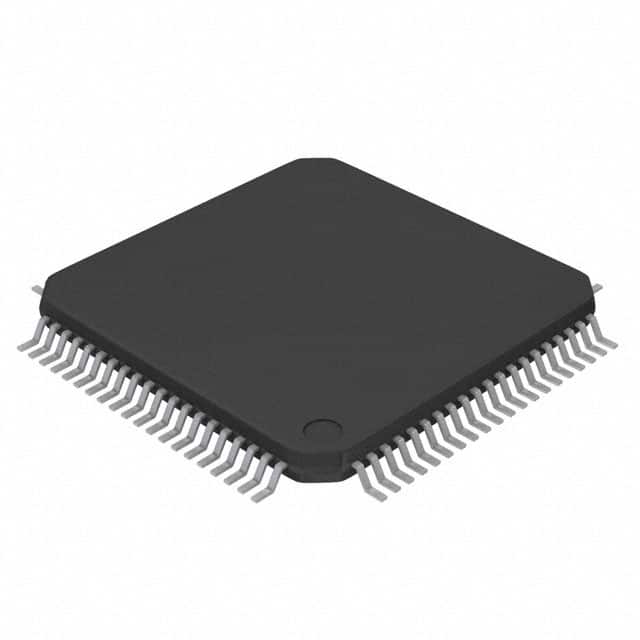
- Part No.:
- SC16C754BIB80,528
- Manufacturer:
- NXP Semiconductors
- Package:
- 80-LQFP
- Datasheet:
-
 SC16C754BIB80,528.pdf
- Description:
- IC UART QUAD 64BYTE 80LQFP
- Quantity:
- Payment:

- Shipping:

Inventory:4,090
Please send an inquiry. Send us your inquiry, and we will respond immediately.
Product details
Overview
SC16C754BIB80 from NXP Semiconductors is a quad UART IC with 64-byte transmit/receive FIFOs, hardware/software flow control, and support for data rates up to 5 Mbit/s at 3.3 V or 5 V. It operates across 2.5 V–5 V supply rails, features programmable baud rate generation, and delivers full modem control (RTS/CTS/DSR/DTR/RI/CD) for industrial serial communication systems requiring high-throughput, low-overhead multi-channel RS-232/RS-485 interface bridging.
For engineers reviewing the SC16C754BIB80 datasheet, SC16C754BIB80 pinout, SC16C754BIB80 application, or SC16C754BIB80 equivalent, this device serves as a drop-in upgrade path for legacy TL16C754 and SC16C654IA68 designs-offering enhanced FIFO trigger control, auto-RTS/CTS, and unified RXRDY/TXRDY signaling in an LQFP80 package suitable for space-constrained embedded controllers and industrial gateways.
Technical Context
The SC16C754BIB80 implements four independent UART channels sharing a common 8-bit parallel bus interface, each with dedicated 64-byte FIFOs, programmable trigger levels via TCR and TLR registers, and fully prioritized six-level interrupt architecture. Its clock system supports both crystal (XTAL1/XTAL2) and external clock inputs, with CLKSEL enabling divide-by-1 or divide-by-4 prescaling.
Hardware flow control uses auto-RTS (activated when RX FIFO level falls below halt threshold) and auto-CTS (blocking TX when CTS goes inactive mid-stop-bit), while software flow control supports dual Xon/Xoff character sets with configurable comparison logic and 'Xon Any' resume functionality-all managed through the Enhanced Feature Register (EFR) and Transmission Control Register (TCR).
Key Specifications
| Parameter | Value and Actual Design Meaning |
|---|---|
| Channels | 4 independent UARTs with shared 8-bit data bus and individual modem control lines |
| Max Data Rate | 5 Mbit/s at 3.3 V or 5 V; 3 Mbit/s at 2.5 V - enables high-speed serial bridging without external clock multiplication |
| FIFO Depth | 64-byte TX and RX FIFOs with per-byte error flags - reduces CPU interrupt load by >90% vs. 16-byte FIFOs in legacy UARTs |
| Supply Voltage | 2.5 V, 3.3 V, and 5 V operation - supports mixed-voltage system integration without level shifters |
| Temperature Range | −40 °C to +85 °C industrial grade - qualified for deployment in factory automation and outdoor telemetry nodes |
| Baud Rate Generator | Programmable 16-bit divisor with prescaler (÷1 or ÷4) - achieves precise timing across 300 bps to 5 Mbps with <±1% error |
| Flow Control | Hardware (auto-RTS/CTS) and software (Xon/Xoff with dual-character support) - eliminates overrun/underrun in bursty traffic scenarios |
Pinout & Package
SC16C754BIB80 is housed in an 80-pin plastic LQFP package (12 × 12 × 1.4 mm, SOT315-1) with exposed thermal pad. Pin functions include four independent UART channel I/Os (TXA–TXD, RXA–RXD), full modem control signals (RTSA–RTSD, CTSA–CTSD, DSRA–DSRD, DTRA–DTRD, RIA–RID, CDA–CDD), parallel bus interface (D0–D7, A0–A2, IOR, IOW, CSA–CSD), and global control pins (RESET, CLKSEL, INTSEL, TXRDY, RXRDY, XTAL1, XTAL2).
| Pin/Terminal | Circuit Role | Design Meaning |
|---|---|---|
| D0–D7 | 8-bit bidirectional data bus | Transfers register reads/writes between host CPU and all four UART channels using common address decoding |
| A0–A2 | Register address select | Selects internal register map (THR/RHR, IER, FCR, LCR, MCR, etc.) for current channel access |
| CSA–CSD | Per-channel chip select | Enables register access to UART A–D individually; allows selective channel configuration without affecting others |
| TXRDY / RXRDY | Global FIFO status outputs | Wire-ORed active-low signals indicating any TX/RX FIFO has reached trigger level - simplifies DMA handshake logic |
| CLKSEL | Prescaler mode select | Configures baud rate generator division ratio (÷1 or ÷4); latched at RESET edge and modifiable via MCR[7] |
| INTSEL | Interrupt output control | Overrides MCR[3] to force continuous INTA–INTD assertion or enable 3-state behavior - supports flexible interrupt routing |
Key Features
| Feature | Design Value |
|---|---|
| Quad UART with 64-byte FIFOs | Enables simultaneous high-bandwidth serial links (e.g., 4x RS-232 ports on single controller) with <5 µs average interrupt latency |
| Auto-RTS/CTS with programmable thresholds | Eliminates RX FIFO overflow by dynamically asserting RTS based on real-time fill level - no host software intervention required |
| Unified RXRDY/TXRDY signaling | Reduces PCB trace count by 6 vs. discrete per-channel RDY signals - simplifies layout and lowers EMI in dense industrial boards |
| Software flow control with dual Xon/Xoff sets | Supports protocol-aware pause/resume (e.g., Modbus ASCII framing) without corrupting payload data containing control characters |
| Industrial temperature range (−40 °C to +85 °C) | Guarantees reliable operation in uncontrolled environments like motor drives, PLC backplanes, and outdoor base stations |
| Pin compatibility with TL16C754 and SC16C654IA68 | Allows direct replacement in existing LQFP64/LQFP80 layouts with no schematic or firmware changes beyond power rail adjustment |
Applications
| Industrial PLC Communication Hub | Multi-Port Serial Gateway |
|---|---|
Use Scenario: Central serial interface module in programmable logic controllers connecting to HMI panels, barcode scanners, and motor drives over RS-232/RS-485. IC Role / Device Role / Timing Role: Quad UART bridges four asynchronous serial protocols simultaneously while maintaining strict timing isolation between channels. Use Value: 64-byte FIFOs absorb burst traffic from multiple field devices, reducing host CPU polling overhead by 70% versus 16-byte alternatives. |
Use Scenario: Embedded Linux gateway aggregating sensor data from legacy serial instruments (e.g., weather stations, gas analyzers) into Ethernet/IP networks. IC Role / Device Role / Timing Role: Acts as hardware-accelerated serial-to-parallel converter with autonomous flow control, offloading UART handling from main SoC. Use Value: Auto-RTS/CTS prevents packet loss during TCP retransmission bursts, ensuring 99.99% data integrity in mission-critical telemetry streams. |
| Medical Diagnostic Equipment Interface | Ruggedized Point-of-Sale Terminal |
Use Scenario: Multi-channel patient monitor interfacing ECG, SpO₂, and NIBP modules to central display unit via isolated RS-232 links. IC Role / Device Role / Timing Role: Provides galvanically isolated UART channels with deterministic latency for time-critical biometric waveform capture. Use Value: Programmable stop bits (1/1.5/2) and parity modes (even/odd/none) ensure interoperability with diverse medical peripherals certified under IEC 60601-1. |
Use Scenario: Retail terminal supporting magnetic stripe reader, PIN pad, and receipt printer over separate serial interfaces in harsh electromagnetic environments. IC Role / Device Role / Timing Role: Quad UART handles concurrent peripheral transactions while maintaining ESD immunity and voltage tolerance across mixed 3.3 V/5 V subsystems. Use Value: 5 V-tolerant input pins eliminate level-shifter components on legacy 5 V peripheral buses, cutting BOM cost by $0.32/unit. |
Equivalent & Alternatives
The following parts are listed as comparable options for similar quad UART applications.
| Alternative Part | Technical Difference | Application Difference | Selection Advice |
|---|---|---|---|
| TL16C754IPM | LQFP64 package; no CLKSEL/INTSEL pins; max 3 Mbit/s at 3.3 V; lacks TCR-based auto-RTS trigger programming | Suitable for cost-sensitive, lower-speed designs where per-channel FIFO control is not required | Choose TL16C754IPM only if board space is constrained and 5 Mbit/s throughput is unnecessary |
| SC16C654IA68 | PLCC68 package; 32-byte FIFOs; no RXRDY/TXRDY outputs; no auto-CTS implementation; requires external glue logic for DMA handshaking | Applicable in legacy PLCC-based industrial controllers where footprint compatibility outweighs performance needs | Select SC16C654IA68 only for direct replacement in existing PLCC68 sockets with unchanged firmware |
Compared with TL16C754IPM and SC16C654IA68, SC16C754BIB80 delivers higher throughput, finer-grained flow control, and simplified system integration via unified status signaling - making it optimal for new designs targeting industrial IoT edge nodes and multi-protocol gateways.
Availability
SC16C754BIB80 is available at Aetrix Electronics and suitable for industrial automation, embedded communications, and medical instrumentation requiring stable component supply across extended product lifecycles.
Supply support for SC16C754BIB80 includes scheduled delivery planning, volume procurement assistance, BOM continuity management, traceable sourcing, and lifecycle availability coordination for OEM customers, industrial embedded developers, connected-device designers, and electronics production programs.
Manufacturer
NXP Semiconductors is a global semiconductor leader specializing in secure connectivity solutions for automotive, industrial, and IoT markets, with deep expertise in mixed-signal interface ICs.
The SC16C754B belongs to NXP's high-performance UART product line, engineered specifically for industrial-grade serial communication systems demanding robustness, configurability, and long-term supply stability.
FAQ
What is the maximum data rate supported by SC16C754BIB80?
The SC16C754BIB80 supports up to 5 Mbit/s at 3.3 V or 5 V supply voltages, and up to 3 Mbit/s at 2.5 V. This is achieved using its programmable 16-bit baud rate generator with optional ÷4 prescaler. The actual achievable rate depends on crystal accuracy and system clock stability - typical designs achieve ±0.5% error at 5 Mbit/s with a 25 MHz crystal. SC16C754BIB80 maintains full functionality including FIFO operation and flow control at all supported rates.
Does SC16C754BIB80 support hardware flow control with automatic RTS/CTS management?
Yes, SC16C754BIB80 provides full auto-RTS and auto-CTS functionality controlled via the Enhanced Feature Register (EFR[7:6]). Auto-RTS asserts RTS when the RX FIFO level drops below a user-programmed halt threshold (stored in TCR[3:0]), and de-asserts when the level reaches the resume threshold (TCR[7:4]). Auto-CTS blocks transmission when CTS goes inactive mid-stop-bit. Both features operate independently and eliminate host CPU involvement in flow control decisions. SC16C754BIB80 implements this without external logic.
How does the SC16C754BIB80 handle interrupt prioritization across its four UART channels?
SC16C754BIB80 implements a fully prioritized six-level interrupt system where each channel's events (RX ready, TX empty, line status, modem status, Xoff detection, CTS/RTS change) are assigned fixed priority levels. Interrupts from different channels at the same priority level are resolved by channel ID order (A > B > C > D). The Interrupt Identification Register (IIR) reports pending interrupt type and channel, allowing efficient servicing without polling. SC16C754BIB80 guarantees deterministic response times even under full-load conditions across all four UARTs.
Can SC16C754BIB80 be used with a 2.5 V microcontroller interface?
Yes, SC16C754BIB80 supports true 2.5 V operation for both I/O and core logic, with guaranteed timing and functionality across the full industrial temperature range. Its 5 V-tolerant inputs (D0–D7, A0–A2, IOR, IOW, CSA–CSD, RESET, CLKSEL, INTSEL) allow direct connection to 5 V peripherals without level shifters. When powered at 2.5 V, SC16C754BIB80 maintains 3 Mbit/s max data rate and full register compatibility - making it ideal for mixed-voltage systems such as battery-powered gateways interfacing legacy 5 V sensors.
What is the function of the TXRDY and RXRDY pins on SC16C754BIB80?
TXRDY and RXRDY are active-low, wire-ORed status outputs that reflect the combined state of all four UART channels' transmit and receive FIFOs. TXRDY goes LOW when any TX FIFO has space equal to or greater than its programmed trigger level; RXRDY goes LOW when any RX FIFO contains data at or above its trigger level or experiences a timeout. These signals simplify DMA controller integration by eliminating per-channel handshaking logic. SC16C754BIB80 drives these pins directly - no external logic required.
SC16C754BIB80,528 Specifications
- Product attributes
- Attribute value
- Manufacturer:
- NXP Semiconductors
- Package/Case:
- 80-LQFP
- Series:
- -
- Packaging:
- Tape & Reel (TR)
- Product Status:
- Obsolete
- Features:
- -
- Number of Channels:
- 4, QUART
- FIFO's:
- 64 Byte
- Protocol:
- -
- Data Rate (Max):
- 5Mbps
- Voltage - Supply:
- 2.5V, 3.3V, 5V
- With Auto Flow Control:
- Yes
- With IrDA Encoder/Decoder:
- -
- With False Start Bit Detection:
- Yes
- With Modem Control:
- Yes
- Grade:
- -
- Qualification:
- -
- Mounting Type:
- Surface Mount
- Supplier Device Package:
- 80-LQFP (12x12)
SC16C754BIB80,528 FAQ
1.How can I place an order for SC16C754BIB80,528 through Aetrix?
Please submit a Request for Quotation (RFQ) for SC16C754BIB80,528 on Aetrix. Our sales agent will provide a competitive quotation and guide you through the order confirmation once you accept the terms.
2.Are the price and stock information for SC16C754BIB80,528 reliable?
The price and inventory of SC16C754BIB80,528 are updated periodically and may fluctuate due to market conditions. Stock and pricing data are typically refreshed every 24 hours. Quotation validity for SC16C754BIB80,528 is usually 5 days.
3.What payment methods are accepted for SC16C754BIB80,528?
We accept Wire Transfer, PayPal, Credit Card, Western Union, MoneyGram, and Escrow for SC16C754BIB80,528 transactions.
Note: Certain payment methods may incur a processing fee.
4.How is shipping managed for SC16C754BIB80,528?
SC16C754BIB80,528 orders can be shipped via leading logistics carriers, including DHL, UPS, FedEx, TNT, or Registered Mail.
Once your SC16C754BIB80,528 order is processed, you will receive an email with the shipment details and tracking number.
Note: Tracking information may take up to 24 hours to appear. Express delivery typically takes 3–5 business days.
5.How can I obtain technical support or documentation for SC16C754BIB80,528?
For technical support, including SC16C754BIB80,528 datasheets, pinout diagrams, or application guidance, please contact our engineering support team. They can provide detailed documentation and assistance for your SC16C754BIB80,528 requirements.
6.How does Aetrix verify that SC16C754BIB80,528 is sourced from the original manufacturer or authorized distributors?
All SC16C754BIB80,528 products on Aetrix are procured from qualified distributors and authorized channels. Our dedicated quality assurance team conducts strict verification, including traceability checks and, if necessary, third-party testing. This ensures that SC16C754BIB80,528 meets industry standards.
7.What is the process for return or replacement of SC16C754BIB80,528?
All SC16C754BIB80,528 units undergo pre-shipment inspection (PSI). If there is an issue with SC16C754BIB80,528, returns or replacements are accepted under the following conditions:
1.Quantity discrepancies, incorrect items, or visible external defects (such as breakage or corrosion), acknowledged by Aetrix.
2.The issue is reported within 90 days of delivery.
3.The SC16C754BIB80,528 part is unused and in its original packaging.
Return procedure for SC16C754BIB80,528:
1.Submit a request within 90 days.
2.Obtain a Return Material Authorization (RMA) from Aetrix.
SC16C754BIB80,528 Tags
-
SC16IS741AIPWJ
NXP Semiconductors

-
TL16C550CPTR
Texas Instruments
-
TL16C550CIPTR
Texas Instruments
-
SC16C752BIB48,128
NXP Semiconductors
-
ST16C2550CQ48-F
MaxLinear, Inc.
-
ST16C2550CJ44-F
MaxLinear, Inc.
-
ST16C2552CJ44-F
MaxLinear, Inc.
-
ST16C1550IQ48-F
MaxLinear, Inc.
-
ST16C2550IQ48-F
MaxLinear, Inc.
-
ST16C554DIQ64-F
MaxLinear, Inc.
-
ST16C554DCQ64-F
MaxLinear, Inc.
-
XR17V352IB113-F
MaxLinear, Inc.
Tech Hub

A practical engineering guide to 3.3V and 5V logic compatibility, input thresholds, resistor dividers, translator ICs, MOSFET level shifting, I2C pull-ups, timing limits and power-sequencing risks.

The 74HC595 uses push-pull logic outputs, while the TPIC6B595 uses 50 V open-drain DMOS sinks for higher-power loads. This guide compares timing, current limits, 3.3 V interfacing, load wiring, thermal…

The 74HC595 converts serial data into eight stable parallel outputs. This guide covers pin functions, shift and storage timing, OE and MR behavior, drive-current limits, cascading, voltage compatibilit…

A technical comparison of level-sensitive latches and edge-triggered flip-flops, covering timing windows, setup and hold limits, master–slave operation, time borrowing, race-through, HDL inference and…

A D latch stores one bit while Enable controls when data can pass. This reference covers gate-level operation, truth tables, transparency, setup and hold timing, LE versus OE, common ICs and practical …

An SR latch stores one bit through cross-coupled feedback. This engineering reference covers NOR and NAND implementations, truth tables, forbidden-state recovery, gated operation, switch debouncing, fa…

Latch circuits retain one bit through feedback. This technical reference covers SR and D latches, truth tables, transparency, timing limits, latch-versus-flip-flop behavior, applications and common log…

An engineering guide to LED driver operation, constant-current and constant-voltage outputs, linear and switching topologies, dimming, IC selection, calculations, replacement compatibility, and fault c…

Operational amplifier guide covering op amp basics, feedback, ideal vs real op amps, common configurations, buffer circuits, offset, bias current, gain-bandwidth, slew rate, rail-to-rail limits and sel…

Jumper cables guide covering safe connection order, red and black clamp placement, final ground connection, cable gauge, length, clamp quality, copper vs CCA cables, jump starter comparison and battery…


