
 My Inquiry
 My Account


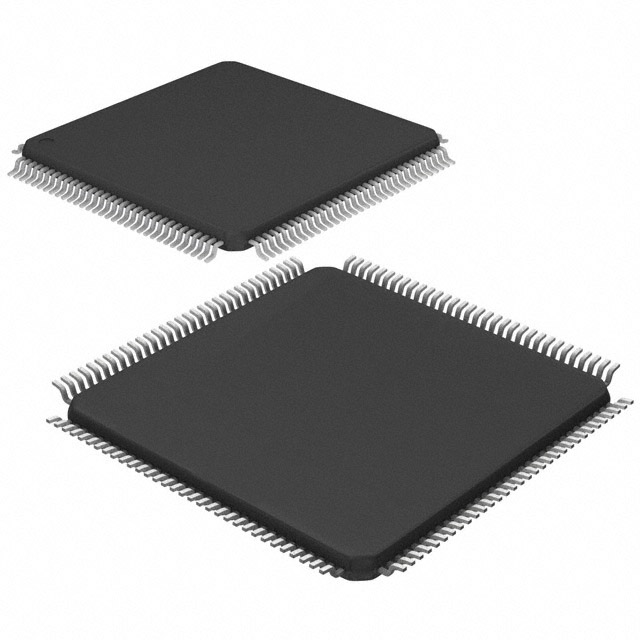
Microchip Technology SCH3112I-NU
- Part No.:
- SCH3112I-NU
- Manufacturer:
- Microchip Technology
- Category:
- Specialized
- Package:
- 128-TQFP
- Datasheet:
-
 SCH3112I-NU.pdf
- Description:
- IC INTFACE SPECIALIZED 128VTQFP
- Quantity:
- Payment:

- Shipping:

Inventory:1,979
Please send an inquiry. Send us your inquiry, and we will respond immediately.
Product details
Overview
SCH3112I-NU from Microchip Technology is an industrial-grade LPC Super I/O controller integrating keyboard/mouse control, dual NS16550-compatible UARTs, IEEE 1284 EPP/ECP parallel port, 2.88MB floppy disk controller, hardware monitoring (voltage, temperature, fan), and programmable clock output. It operates at 3.3V with 5V-tolerant SIO block and supports PC99/PC2001 and ACPI 2.0 standards in embedded industrial motherboard designs.
For engineers reviewing the SCH3112I-NU datasheet, SCH3112I-NU pinout, SCH3112I-NU application, or SCH3112I-NU equivalent, this page delivers verified technical context, exact pin functions, real-world use cases in legacy-compatible industrial systems, and validated alternative parts for design continuity and supply resilience.
Technical Context
The SCH3112I-NU implements a full ISA Plug-and-Play register set (v1.0a) with up to 480 I/O address options and serialized IRQ support for PCI systems. Its LPC interface operates at 19–33 MHz and integrates legacy blocks including an 8042-compatible keyboard controller with 2 kB ROM and 256 B RAM, plus Phoenix BIOS ROM support.
Hardware monitoring includes four analog voltage inputs (+2.5V, +5V, +12V, Vccp), internal/external temperature sensing (±1.5°C accuracy), three fan tachometer inputs, three PWM outputs, and dedicated nHWM_INT and THERMTRIP outputs for out-of-limit event signaling and system shutdown coordination.
Key Specifications
| Parameter | Value and Actual Design Meaning |
|---|---|
| LPC Bus Frequency | 19–33 MHz - Enables direct integration into modern low-pin-count motherboard architectures without bridge logic. |
| Serial Ports | 2 × NS16550-compatible UARTs - Each supports 16-byte FIFO, up to 1.5 Mbps baud, and RS485 auto-direction control. |
| Floppy Controller | CMOS 765B core - Provides 100% IBM PC/XT/AT software and register compatibility with vertical recording support. |
| Hardware Monitor Inputs | 4 voltage channels, 2 thermal diode inputs, 1 ambient sensor - Enables comprehensive power rail and thermal validation in headless industrial systems. |
| GPIO Count | 40 general-purpose I/O pins - Includes 6 VID-compatible inputs for processor voltage identification in x86-based platforms. |
| Package | 128-pin VTQFP (14×14×1.0 mm, 2 mm footprint) - RoHS-compliant surface-mount package suitable for automated PCB assembly. |
| Temperature Range | −40°C to +85°C - Qualified for uncontrolled industrial environments requiring extended thermal reliability. |
Pinout & Package
128-pin VTQFP RoHS-compliant package with 0.4 mm pitch, 14 mm × 14 mm body, and 1.0 mm height per Microchip Package Drawing DS00001730A-page 6.
| Pin/Terminal | Circuit Role | Design Meaning |
|---|---|---|
| LPC_CLK | LPC Interface Clock Input | Accepts 19–33 MHz system clock; synchronizes all LPC transactions including configuration and data transfers. |
| LPC_FRAME# | LPC Bus Frame Signal | Active-low signal indicating start of LPC cycle; required for proper timing alignment with host chipset. |
| LPC_RST# | LPC Reset Input | Asynchronous reset for internal LPC logic; asserts device initialization without affecting other SIO subsystems. |
| nSMI | System Management Interrupt Output | Open-drain signal asserted on SMI events (e.g., keyboard wake, security key access); requires external pull-up. |
| nHWM_INT | Hardware Monitor Interrupt Output | Active-low open-drain interrupt signaling voltage/temperature/fan fault conditions to host CPU or EC. |
| THERMTRIP# | Over-Temperature Shutdown Output | Active-low pulse output triggered by programmable thermal threshold violation; used for immediate system reset or power-off. |
| CLKOUT | Programmable Clock Output | Configurable to 16 Hz - provides precise timing reference for RTC or watchdog timeout circuits. |
Key Features
| Feature | Design Value |
|---|---|
| ACPI 2.0 Compliance | Enables standardized OS-directed power management (S0–S5 states) and wake-event handling via PME interface. |
| Security Key Register | 32-byte write-protected register for device authentication - supports secure boot chain verification in trusted platform designs. |
| ChiProtect™ Parallel Port | Integrated overvoltage protection on all parallel port pins - eliminates need for external TVS diodes in printer or scanner interface applications. |
| Enhanced Digital Data Separator | Supports 250–2000 kbps floppy data rates with programmable precompensation - ensures reliable read/write across diverse media types and drive ages. |
| Power Button Control Logic | Dedicated circuitry for PS/2 keyboard power button debouncing and AC power failure recovery - reduces firmware complexity in embedded BIOS implementations. |
Applications
| Industrial Control Panel | Ruggedized Point-of-Sale Terminal |
|---|---|
Use Scenario: Fan-cooled PLC enclosure with serial-connected HMI, parallel-connected receipt printer, and local floppy-based firmware update capability. IC Role / Device Role / Timing Role: Central Super I/O hub managing UART communication, ECP printer interface, floppy boot loader, and real-time thermal/voltage supervision. Use Value: Single-chip consolidation replaces discrete UARTs, parallel transceivers, and monitor ICs - reducing BOM count and improving thermal margin via integrated fan PWM control. |
Use Scenario: Self-service kiosk operating in retail environments with intermittent AC power, requiring graceful shutdown on brownout and fast resume after power restoration. IC Role / Device Role / Timing Role: Power management coordinator providing AC fail detection, IDE/PCI reset assertion, and SMI-triggered BIOS recovery sequence. Use Value: Eliminates external power supervisor ICs and simplifies firmware handling of power events - enabling deterministic restart behavior after grid instability. |
| Legacy-Dependent Medical Instrument | Embedded Test Equipment |
Use Scenario: FDA-cleared diagnostic analyzer relying on IBM-compatible floppy boot media and PS/2 keyboard input for field calibration and service mode access. IC Role / Device Role / Timing Role: 8042 keyboard controller with Phoenix BIOS ROM, CMOS 765B floppy engine, and security key register for service authorization. Use Value: Maintains full backward compatibility with certified software stacks while adding modern hardware monitoring for predictive maintenance alerts. |
Use Scenario: Automated test fixture requiring high-reliability serial communication to DUTs, parallel-controlled switching matrix, and real-time voltage drift tracking during burn-in. IC Role / Device Role / Timing Role: Multi-function I/O concentrator delivering synchronized UART timing, EPP handshaking, and millivolt-level ADC monitoring via analog inputs. Use Value: Replaces separate UART, parallel port, and analog monitor ICs - ensuring traceable correlation between stimulus timing and measurement data across test cycles. |
Equivalent & Alternatives
The following parts are listed as comparable options for similar Super I/O controller applications.
| Alternative Part | Technical Difference | Application Difference | Selection Advice |
|---|---|---|---|
| Winbond W83627DHG-P | 4 serial ports, no floppy controller, integrated SMBus host - lacks CMOS 765B core and vertical recording support. | Targeted at modern embedded systems without legacy floppy dependency; requires external FDC for boot-from-floppy functionality. | Select when prioritizing serial port count and SMBus connectivity over IBM-compatible floppy operation. |
| Nuvoton NCT6776D | 6 serial ports, no parallel port, no floppy controller - adds PCIe configuration space and enhanced GPIO routing. | Designed for newer chipsets lacking LPC legacy support; incompatible with PS/2 keyboard BIOS ROM requirements. | Choose for next-generation platforms migrating away from ISA-style peripherals and requiring PCIe-side configuration. |
Compared with SCH3112I-NU, W83627DHG-P offers higher serial port density but omits floppy control essential for legacy boot, while NCT6776D abandons parallel and floppy entirely in favor of PCIe integration - making SCH3112I-NU uniquely suited for industrial upgrades preserving full IBM PC/AT peripheral compatibility.
Availability
SCH3112I-NU is available at Aetrix Electronics and suitable for industrial control panels, ruggedized point-of-sale terminals, legacy-dependent medical instruments, and embedded test equipment requiring stable component supply across extended product lifecycles.
Supply support for SCH3112I-NU includes scheduled delivery planning, volume procurement assistance, BOM continuity management, traceable sourcing, and lifecycle availability coordination for OEM customers, industrial embedded developers, connected-device designers, and electronics production programs.
Manufacturer
Microchip Technology Inc. is a U.S.-based semiconductor manufacturer specializing in microcontrollers, analog devices, and interface solutions for industrial, automotive, and communications markets.
The SCH3112I-NU belongs to Microchip's LPC Super I/O product line, designed specifically to consolidate legacy PC peripherals (keyboard, floppy, parallel, serial) and hardware monitoring into a single IC for cost-sensitive, long-lifecycle industrial motherboards.
FAQ
What is the maximum supported baud rate for the serial ports on the SCH3112I-NU?
The SCH3112I-NU features two NS16550-compatible UARTs supporting data rates up to 1.5 Mbps. This is achieved using its programmable baud rate generator and 16-byte transmit/receive FIFOs, enabling high-throughput serial communication in industrial automation interfaces without CPU overhead.
Does the SCH3112I-NU include a built-in floppy disk controller, and what level of IBM compatibility does it provide?
Yes, the SCH3112I-NU integrates a licensed CMOS 765B floppy disk controller supporting 2.88 MB formats and vertical recording. It delivers 100% IBM PC/XT and PC/AT software and register compatibility, including overrun/underrun detection and sophisticated power control circuitry for reduced power consumption during idle states.
How many voltage rails can the SCH3112I-NU monitor, and which specific supplies are supported?
The SCH3112I-NU monitors four external voltage rails (+2.5V, +5V, +12V, and Vccp) plus internal supplies (VCC, Vbat, Vtr). All monitored values undergo limit comparison with programmable thresholds, and out-of-range conditions trigger the nHWM_INT signal for system-level alerting or automatic response.
Is the SCH3112I-NU compatible with ACPI 2.0, and what power management features does it enable?
Yes, the SCH3112I-NU is fully ACPI 2.0 compliant and supports multiple low-power-down modes. It enables OS-directed power state transitions (S0–S5), programmable wake-up events (PME), System Management Interrupt (SMI), and serial IRQ interface - allowing seamless integration into Windows and Linux power management frameworks.
What is the function of the Security Key Register in the SCH3112I-NU, and how is it accessed?
The SCH3112I-NU includes a 32-byte Security Key Register used for device authentication in secure boot or service authorization workflows. It is write-protected and accessible only through specific LPC configuration space registers, preventing unauthorized read or modification during normal system operation.
SCH3112I-NU Specifications
- Product attributes
- Attribute value
- Manufacturer:
- Microchip Technology
- Series:
- -
- Package/Case:
- 128-TQFP
- Packaging:
- Tray
- Product Status:
- Active
- Applications:
- Controller
- Interface:
- LPC
- Voltage - Supply:
- 3.3V
- Supplier Device Package:
- 128-VTQFP (14x14)
- Grade:
- -
- Qualification:
- -
- Mounting Type:
- Surface Mount
SCH3112I-NU FAQ
1.How can I place an order for SCH3112I-NU through Aetrix?
Please submit a Request for Quotation (RFQ) for SCH3112I-NU on Aetrix. Our sales agent will provide a competitive quotation and guide you through the order confirmation once you accept the terms.
2.Are the price and stock information for SCH3112I-NU reliable?
The price and inventory of SCH3112I-NU are updated periodically and may fluctuate due to market conditions. Stock and pricing data are typically refreshed every 24 hours. Quotation validity for SCH3112I-NU is usually 5 days.
3.What payment methods are accepted for SCH3112I-NU?
We accept Wire Transfer, PayPal, Credit Card, Western Union, MoneyGram, and Escrow for SCH3112I-NU transactions.
Note: Certain payment methods may incur a processing fee.
4.How is shipping managed for SCH3112I-NU?
SCH3112I-NU orders can be shipped via leading logistics carriers, including DHL, UPS, FedEx, TNT, or Registered Mail.
Once your SCH3112I-NU order is processed, you will receive an email with the shipment details and tracking number.
Note: Tracking information may take up to 24 hours to appear. Express delivery typically takes 3–5 business days.
5.How can I obtain technical support or documentation for SCH3112I-NU?
For technical support, including SCH3112I-NU datasheets, pinout diagrams, or application guidance, please contact our engineering support team. They can provide detailed documentation and assistance for your SCH3112I-NU requirements.
6.How does Aetrix verify that SCH3112I-NU is sourced from the original manufacturer or authorized distributors?
All SCH3112I-NU products on Aetrix are procured from qualified distributors and authorized channels. Our dedicated quality assurance team conducts strict verification, including traceability checks and, if necessary, third-party testing. This ensures that SCH3112I-NU meets industry standards.
7.What is the process for return or replacement of SCH3112I-NU?
All SCH3112I-NU units undergo pre-shipment inspection (PSI). If there is an issue with SCH3112I-NU, returns or replacements are accepted under the following conditions:
1.Quantity discrepancies, incorrect items, or visible external defects (such as breakage or corrosion), acknowledged by Aetrix.
2.The issue is reported within 90 days of delivery.
3.The SCH3112I-NU part is unused and in its original packaging.
Return procedure for SCH3112I-NU:
1.Submit a request within 90 days.
2.Obtain a Return Material Authorization (RMA) from Aetrix.
SCH3112I-NU Tags
-
NVT4857UKAZ
NXP Semiconductors
-
TCA8418RTWR
Texas Instruments

-
PCA9546APWR
Texas Instruments

-
MD0100N8-G
Microchip Technology
-
PCA9548APW,118
NXP Semiconductors
-
PCA9540BDP,118
NXP Semiconductors
-
PCA9548APWR
Texas Instruments
-
PCA9546APW,118
NXP Semiconductors
-
PTN3360DBS,518
NXP Semiconductors
-
PCA9546ABS,118
NXP Semiconductors
-
PCA9518PWR
Texas Instruments
-
PCA9545APW,118
NXP Semiconductors
Tech Hub

TTL and CMOS logic families differ in thresholds, loading, output drive, power and timing. This engineering guide compares 74HC and 74HCT, calculates noise margins and checks 3.3 V/5 V compatibility.

A practical engineering guide to 3.3V and 5V logic compatibility, input thresholds, resistor dividers, translator ICs, MOSFET level shifting, I2C pull-ups, timing limits and power-sequencing risks.

The 74HC595 uses push-pull logic outputs, while the TPIC6B595 uses 50 V open-drain DMOS sinks for higher-power loads. This guide compares timing, current limits, 3.3 V interfacing, load wiring, thermal…

The 74HC595 converts serial data into eight stable parallel outputs. This guide covers pin functions, shift and storage timing, OE and MR behavior, drive-current limits, cascading, voltage compatibilit…

A technical comparison of level-sensitive latches and edge-triggered flip-flops, covering timing windows, setup and hold limits, master–slave operation, time borrowing, race-through, HDL inference and…

A D latch stores one bit while Enable controls when data can pass. This reference covers gate-level operation, truth tables, transparency, setup and hold timing, LE versus OE, common ICs and practical …

An SR latch stores one bit through cross-coupled feedback. This engineering reference covers NOR and NAND implementations, truth tables, forbidden-state recovery, gated operation, switch debouncing, fa…

Latch circuits retain one bit through feedback. This technical reference covers SR and D latches, truth tables, transparency, timing limits, latch-versus-flip-flop behavior, applications and common log…

An engineering guide to LED driver operation, constant-current and constant-voltage outputs, linear and switching topologies, dimming, IC selection, calculations, replacement compatibility, and fault c…

Operational amplifier guide covering op amp basics, feedback, ideal vs real op amps, common configurations, buffer circuits, offset, bias current, gain-bandwidth, slew rate, rail-to-rail limits and sel…


