
 My Inquiry
 My Account


Microchip Technology SCH3221-7U
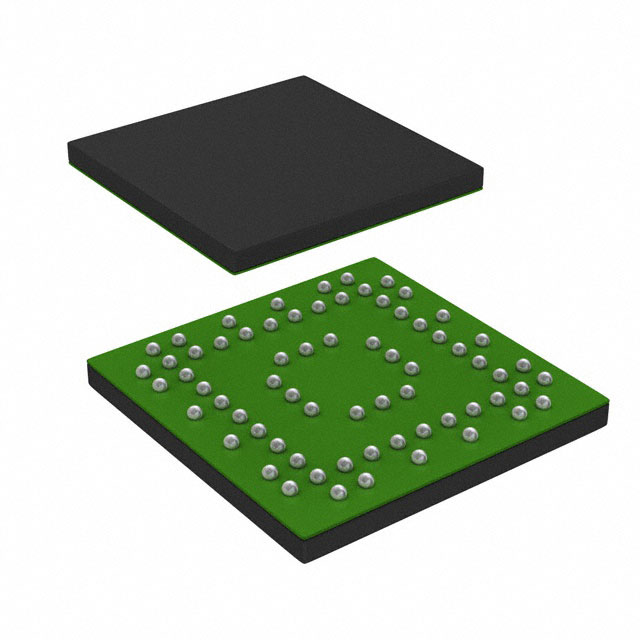
- Part No.:
- SCH3221-7U
- Manufacturer:
- Microchip Technology
- Category:
- Specialized
- Package:
- 64-WFBGA
- Datasheet:
-
 SCH3221-7U.pdf
- Description:
- IC INTFACE SPECIALIZED 64WFBGA
- Quantity:
- Payment:

- Shipping:

Inventory:2,711
Please send an inquiry. Send us your inquiry, and we will respond immediately.
Product details
Overview
SCH3221-7U from Microchip Technology is a 3.3V (5V-tolerant) LPC-based Super I/O controller compliant with PC99, PC2001, and ACPI standards. It integrates four NS16550-compatible UARTs with 16-byte FIFOs, dual IR ports supporting IrDA v1.2 (4 Mbps), 33 GPIOs, programmable PME wake sources (UART RI, GPIO, WDT), two LED drivers, and system management interrupt (SMI) capability - deployed in industrial embedded systems requiring legacy serial connectivity and low-power wake functionality.
For engineers reviewing the SCH3221-7U datasheet, SCH3221-7U pinout, SCH3221-7U application, or SCH3221-7U equivalent, key selection considerations include LPC bus timing compliance, VTR-powered wake logic behavior, 32.768 kHz clock sourcing options for WDT/LED, GP57/nDTR2 strap requirement, and 64-ball WFBGA package layout constraints.
Technical Context
The SCH3221-7U implements a Low Pin Count (LPC) host interface with PCI-compliant signaling (LAD[3:0], LFRAME#, LDRQ#, LPCPD#), supporting runtime register access and configuration via I/O cycles. Its power architecture separates VCC (3.3V main supply) and VTR (3.3V standby supply), enabling persistent PME detection and WDT operation during VCC removal.
Four UART blocks operate at up to 460 kbps with full 8-pin modem control (nRTS/nCTS/nDSR/nDCD/nRI/nDTR), while dual IR interfaces share GPIOs GP20–GP22 and GP52–GP53 for IRRX/IRTX/IRMODE functions. Wake logic monitors nRI1–nRI4, GP11–GP50, and WDT timeout - all routed through VTR-powered input buffers to assert IO_PME#.
Key Specifications
| Parameter | Value and Actual Design Meaning |
|---|---|
| Supply Voltage | 3.3V nominal VCC; 5V-tolerant on non-LPC pins; VTR must be ≤ VCC + 0.5V |
| LPC Interface | Compliant with Intel LPC Spec Rev 1.0; supports SER_IRQ, LAD[3:0], LFRAME#, LDRQ#, LPCPD# |
| UART Count & Type | 4 × NS16550-compatible UARTs; each with 16-byte TX/RX FIFOs and full modem control signals |
| Max UART Baud Rate | 460 kbps; programmable baud generator derived from 14.318 MHz clock |
| IR Support | IrDA v1.2 (4 Mbps), HPSIR, ASKIR, Consumer IR; two independent IR ports with shared GPIO resources |
| GPIO Count | 33 general-purpose I/O pins; 22 support PME wake under VTR power (GP11–GP13, GP16–GP17, GP20–GP23, GP30–GP37, GP40, GP50) |
| Package | 64-ball WFBGA (RoHS compliant); 5 mm × 5 mm footprint; 0.5 mm ball pitch |
Pinout & Package
64-ball WFBGA package with exposed thermal pad; RoHS compliant; requires controlled solder reflow profile per Microchip specification DS00002120A-page 117.
| Pin/Terminal | Circuit Role | Design Meaning |
|---|---|---|
| GP57 / nDTR2 | GPIO / Data Terminal Ready 2 | Must be externally pulled low at power-on to disable LPC memory cycle handling; failure causes bus contention and device damage |
| IO_PME# | Power Management Event Output | Open-drain output powered by VTR; asserts active-low to chipset upon wake event (RI, GPIO, WDT) |
| GP21 / IRTX2 / WDT | GPIO / IR Transmit 2 / Watchdog Timer | Tristate on VCC POR until UART2 enabled; reflects IR transmit state when configured as IRTX2; serves as WDT reset output |
| GP13 / IRQIN1 / nLED1 | GPIO / IRQ Input 1 / LED1 Control | VCC-powered; nLED1 active-low output only functional under VCC; IRQIN1 enables SMI or PME routing |
| GP23 / nLED2 / IRQIN2 | GPIO / LED2 Control / IRQ Input 2 | VTR-powered; nLED2 active-low output remains functional during VCC removal; supports wake via IRQIN2 |
| CLKI32 | 32.768 kHz Standby Clock Input | Required for WDT and LED blink under VTR power; if unused, must be grounded and CLK32_PRSN bit set to '1' |
Key Features
| Feature | Design Value |
|---|---|
| ACPI & PC2001 Compliance | Enables OS-directed power management in desktop/laptop platforms without custom BIOS extensions |
| Programmable Wake Sources | Supports wake from UART Ring Indicator (nRI1–nRI4), 22 GPIOs, or WDT timeout - all active under VTR-only power |
| Dual IR Port Architecture | Shares GPIO resources across two IR channels (IRRX2/IRTX2 and IRRX3/IRMODE) to reduce pin count while maintaining IrDA v1.2 4 Mbps throughput |
| 5V-Tolerant Non-LPC I/O | Allows direct connection to legacy 5V peripherals (e.g., RS-232 transceivers, modems) without level-shifting circuitry |
| Configurable Base Addresses | Serial port, runtime, and configuration register base addresses are software-programmable via CR registers - enabling flexible I/O space allocation |
Applications
| Industrial HMI Terminal | Legacy POS System |
|---|---|
Use Scenario: Embedded panel PC running Windows CE connects to barcode scanner, receipt printer, and cash drawer via RS-232 and IR links. IC Role / Device Role / Timing Role: SCH3221-7U provides four isolated serial ports, dual IR interfaces, and GPIO-controlled peripheral enable lines - acting as central I/O hub bridging LPC host to legacy peripherals. Use Value: Eliminates need for discrete UARTs and IR controllers; VTR-powered wake allows instant resume from deep sleep when barcode scanner triggers nRI1. | Use Scenario: Retail point-of-sale terminal uses RS-232 for magnetic stripe reader and customer display, while IR handles wireless receipt printing. IC Role / Device Role / Timing Role: SCH3221-7U serves as ACPI-compliant Super I/O managing serial communication, LED status indicators, and watchdog supervision - integrated directly into LPC bus of Intel Atom-based motherboard. Use Value: Reduces BOM cost by consolidating four UARTs, IR PHY, LED drivers, and WDT into single WFBGA package; 5V-tolerant I/O simplifies interface to existing 5V peripherals. |
| Medical Diagnostic Device | Network Appliance Console Server |
Use Scenario: Portable ultrasound machine requires reliable serial debug port, IR-based remote control, and fail-safe watchdog monitoring during battery operation. IC Role / Device Role / Timing Role: SCH3221-7U delivers UART1 for debug console, IR port for remote UI, and WDT with VTR-backed timeout - ensuring deterministic recovery even during main power brownout. Use Value: VTR-powered WDT and nRI wake maintain system responsiveness during low-power states; 32.768 kHz clock option enables precise 1–60 s timeout intervals without external crystal. | Use Scenario: Rack-mounted network switch includes out-of-band management port using RS-232 console, plus IR-based firmware update capability. IC Role / Device Role / Timing Role: SCH3221-7U acts as dedicated management I/O controller, isolating console traffic from main SoC and providing hardware-level watchdog reset independent of Linux kernel state. Use Value: Dual UARTs allow simultaneous console access and modem-based remote management; IO_PME# assertion enables chassis-level power-on via serial break signal detection. |
Equivalent & Alternatives
The following parts are listed as comparable options for similar Super I/O controller applications.
| Alternative Part | Technical Difference | Application Difference | Selection Advice |
|---|---|---|---|
| IT8786E-S | Integrated hardware monitor (temperature/voltage/fan), no IR support, 128-pin QFP package | Lacks IrDA v1.2 and consumer IR; suited for server BMC where thermal telemetry is critical | Select IT8786E-S only when hardware monitoring outweighs IR/legacy serial requirements and board space permits larger QFP |
| Winbond NCT6779D | Higher GPIO count (102), integrated fan controllers, PCIe-based configuration interface, no LPC PME support | Designed for modern UEFI platforms; lacks VTR-powered wake logic and 32.768 kHz WDT clocking | Choose NCT6779D for new designs targeting AMI/Aptio firmware ecosystems; avoid for VTR-dependent wake use cases |
Compared with IT8786E-S and NCT6779D, the SCH3221-7U uniquely balances legacy serial density, dual IR capability, and VTR-powered wake functionality in a compact WFBGA - making it irreplaceable in space-constrained industrial PCs requiring robust low-power resume.
Availability
SCH3221-7U is available at Aetrix Electronics and suitable for industrial HMI terminals, legacy POS systems, medical diagnostic devices, and network appliance console servers requiring stable component supply and long-term lifecycle support.
Supply support for SCH3221-7U includes scheduled delivery planning, volume procurement assistance, BOM continuity management, traceable sourcing, and lifecycle availability coordination for OEM customers, industrial embedded developers, connected-device designers, and electronics production programs.
Manufacturer
Microchip Technology is a global semiconductor company specializing in microcontrollers, analog devices, and connectivity solutions for embedded control applications.
The SCH3221-7U belongs to Microchip's Super I/O product line, designed specifically to consolidate legacy PC I/O functions - including UARTs, IR, GPIO, LED, and watchdog - into a single LPC-connected device for industrial and embedded computing platforms.
FAQ
What is the required external pull-down resistance for GP57/nDTR2 on SCH3221-7U?
The SCH3221-7U datasheet specifies that GP57/nDTR2 must be externally pulled low during VCC power-on reset (POR) to prevent improper LPC memory cycle handling. A weak pull-down resistor (typically 10–100 kΩ) is sufficient; failure to implement this causes bus contention, excessive current draw, and potential device/system damage. This requirement applies exclusively to SCH3221-7U and is documented in Note 3-12 of DS00002120A.
Does SCH3221-7U support both IrDA v1.2 and Consumer IR simultaneously?
Yes, the SCH3221-7U supports IrDA v1.2 (4 Mbps), HPSIR, ASKIR, and Consumer IR concurrently through its dual IR ports. Port 2 (GP52/GP53/GP20/GP21/GP22) and Port 3 (GP20/GP22/GP52/GP53) share physical pins but operate independently under software configuration. The SCH3221-7U datasheet confirms this multi-protocol capability in Section 1.1 and Table 1-1, enabling one port for high-speed IrDA and the other for low-speed Consumer IR remote control.
Can SCH3221-7U generate Power Management Events (PME) while VCC is removed?
Yes, the SCH3221-7U can assert IO_PME# under VTR-only power when VCC is removed, provided VTR ≥ 2.7V and the 32.768 kHz clock source (external CLKI32 or internal PLL-derived) is active. Valid wake sources include nRI1–nRI4, WDT timeout, and 22 designated GPIOs (GP11–GP13, GP16–GP17, GP20–GP23, GP30–GP37, GP40, GP50). This behavior is explicitly defined in Sections 5.5 and 5.7 of the SCH3221-7U datasheet.
What is the maximum baud rate supported by each UART in SCH3221-7U?
Each of the four UARTs in the SCH3221-7U supports a maximum baud rate of 460 kbps, achieved using the programmable baud rate generator synchronized to the 14.318 MHz input clock. All UARTs are NS16550-compatible with 16-byte FIFOs and full modem control (nRTS/nCTS/nDSR/nDCD/nRI/nDTR). This specification is confirmed in DS00002120A-page 4 and Section 6.4.1, and applies identically to SCH3221-7U across all temperature grades.
Is SCH3221-7U pin-compatible with earlier Microchip Super I/O devices like SCH3112?
No, the SCH3221-7U is not pin-compatible with SCH3112 or other prior Microchip Super I/O devices. It uses a 64-ball WFBGA package with unique ball mapping (e.g., GP57/nDTR2 strap, dual IR GPIO sharing, VTR-specific power domains), whereas SCH3112 uses 128-pin PQFP. The SCH3221-7U datasheet contains no pin-compatibility statements with legacy parts; migration requires PCB redesign and firmware adaptation due to differences in register layout, LPC timing, and wake logic implementation.
SCH3221-7U Specifications
- Product attributes
- Attribute value
- Manufacturer:
- Microchip Technology
- Series:
- -
- Package/Case:
- 64-WFBGA
- Packaging:
- Tray
- Product Status:
- Active
- Applications:
- I/O Controller
- Interface:
- -
- Voltage - Supply:
- 3.3V
- Supplier Device Package:
- 64-WFBGA (6x6)
- Grade:
- -
- Qualification:
- -
- Mounting Type:
- Surface Mount
SCH3221-7U FAQ
1.How can I place an order for SCH3221-7U through Aetrix?
Please submit a Request for Quotation (RFQ) for SCH3221-7U on Aetrix. Our sales agent will provide a competitive quotation and guide you through the order confirmation once you accept the terms.
2.Are the price and stock information for SCH3221-7U reliable?
The price and inventory of SCH3221-7U are updated periodically and may fluctuate due to market conditions. Stock and pricing data are typically refreshed every 24 hours. Quotation validity for SCH3221-7U is usually 5 days.
3.What payment methods are accepted for SCH3221-7U?
We accept Wire Transfer, PayPal, Credit Card, Western Union, MoneyGram, and Escrow for SCH3221-7U transactions.
Note: Certain payment methods may incur a processing fee.
4.How is shipping managed for SCH3221-7U?
SCH3221-7U orders can be shipped via leading logistics carriers, including DHL, UPS, FedEx, TNT, or Registered Mail.
Once your SCH3221-7U order is processed, you will receive an email with the shipment details and tracking number.
Note: Tracking information may take up to 24 hours to appear. Express delivery typically takes 3–5 business days.
5.How can I obtain technical support or documentation for SCH3221-7U?
For technical support, including SCH3221-7U datasheets, pinout diagrams, or application guidance, please contact our engineering support team. They can provide detailed documentation and assistance for your SCH3221-7U requirements.
6.How does Aetrix verify that SCH3221-7U is sourced from the original manufacturer or authorized distributors?
All SCH3221-7U products on Aetrix are procured from qualified distributors and authorized channels. Our dedicated quality assurance team conducts strict verification, including traceability checks and, if necessary, third-party testing. This ensures that SCH3221-7U meets industry standards.
7.What is the process for return or replacement of SCH3221-7U?
All SCH3221-7U units undergo pre-shipment inspection (PSI). If there is an issue with SCH3221-7U, returns or replacements are accepted under the following conditions:
1.Quantity discrepancies, incorrect items, or visible external defects (such as breakage or corrosion), acknowledged by Aetrix.
2.The issue is reported within 90 days of delivery.
3.The SCH3221-7U part is unused and in its original packaging.
Return procedure for SCH3221-7U:
1.Submit a request within 90 days.
2.Obtain a Return Material Authorization (RMA) from Aetrix.
SCH3221-7U Tags
-
NVT4857UKAZ
NXP Semiconductors
-
TCA8418RTWR
Texas Instruments

-
PCA9546APWR
Texas Instruments

-
MD0100N8-G
Microchip Technology
-
PCA9548APW,118
NXP Semiconductors
-
PCA9540BDP,118
NXP Semiconductors
-
PCA9548APWR
Texas Instruments
-
PCA9546APW,118
NXP Semiconductors
-
PTN3360DBS,518
NXP Semiconductors
-
PCA9546ABS,118
NXP Semiconductors
-
PCA9518PWR
Texas Instruments
-
PCA9545APW,118
NXP Semiconductors
Tech Hub

TTL and CMOS logic families differ in thresholds, loading, output drive, power and timing. This engineering guide compares 74HC and 74HCT, calculates noise margins and checks 3.3 V/5 V compatibility.

A practical engineering guide to 3.3V and 5V logic compatibility, input thresholds, resistor dividers, translator ICs, MOSFET level shifting, I2C pull-ups, timing limits and power-sequencing risks.

The 74HC595 uses push-pull logic outputs, while the TPIC6B595 uses 50 V open-drain DMOS sinks for higher-power loads. This guide compares timing, current limits, 3.3 V interfacing, load wiring, thermal…

The 74HC595 converts serial data into eight stable parallel outputs. This guide covers pin functions, shift and storage timing, OE and MR behavior, drive-current limits, cascading, voltage compatibilit…

A technical comparison of level-sensitive latches and edge-triggered flip-flops, covering timing windows, setup and hold limits, master–slave operation, time borrowing, race-through, HDL inference and…

A D latch stores one bit while Enable controls when data can pass. This reference covers gate-level operation, truth tables, transparency, setup and hold timing, LE versus OE, common ICs and practical …

An SR latch stores one bit through cross-coupled feedback. This engineering reference covers NOR and NAND implementations, truth tables, forbidden-state recovery, gated operation, switch debouncing, fa…

Latch circuits retain one bit through feedback. This technical reference covers SR and D latches, truth tables, transparency, timing limits, latch-versus-flip-flop behavior, applications and common log…

An engineering guide to LED driver operation, constant-current and constant-voltage outputs, linear and switching topologies, dimming, IC selection, calculations, replacement compatibility, and fault c…

Operational amplifier guide covering op amp basics, feedback, ideal vs real op amps, common configurations, buffer circuits, offset, bias current, gain-bandwidth, slew rate, rail-to-rail limits and sel…


