
 My Inquiry
 My Account


STMicroelectronics SCLT3-8BQ7-TR
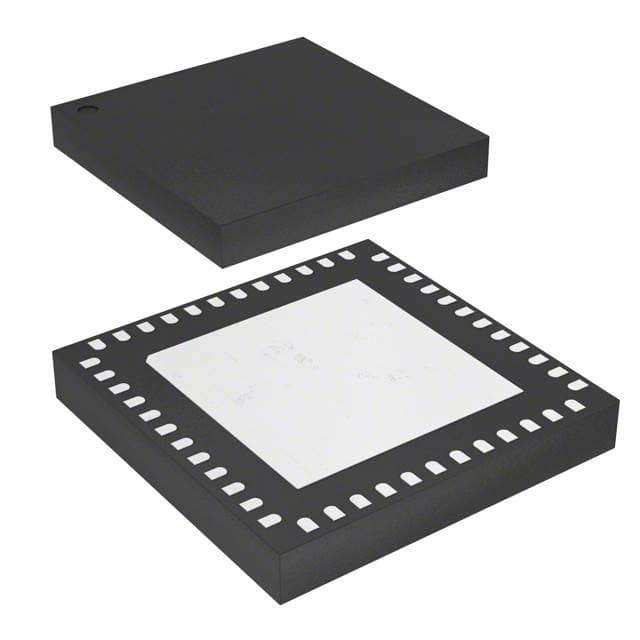
- Part No.:
- SCLT3-8BQ7-TR
- Manufacturer:
- STMicroelectronics
- Category:
- Current Regulation/Management
- Package:
- 48-VFQFN Exposed Pad
- Datasheet:
-
 SCLT3-8BQ7-TR.pdf
- Description:
- IC CURRENT LIMITING 48QFN
- Quantity:
- Payment:

- Shipping:

Inventory:2,529
Please send an inquiry. Send us your inquiry, and we will respond immediately.
Product details
Overview
SCLT3-8BQ7-TR from STMicroelectronics is an octal industrial digital input IC with current-sinking serializer, compliant with IEC 61131-2 Type 1/2/3 inputs, featuring 2.35 mA typ input current limitation, 20 µs–3 ms configurable digital filtering, and SPI serial interface (8-/16-bit mode with parity). It enables high-density PLC input modules in factory automation systems requiring low power dissipation and robust EMC performance.
For engineers reviewing the SCLT3-8BQ7-TR datasheet, SCLT3-8BQ7-TR pinout, SCLT3-8BQ7-TR application, or SCLT3-8BQ7-TR equivalent, this device delivers verified current-limiting accuracy, daisy-chain SPI capability for optocoupler reduction, integrated LED drivers for field-side status indication, and dual-package support (QFN-48L / HTSSOP-38) with -40 °C to 105 °C operation.
Technical Context
The SCLT3-8BQ7-TR implements a two-stage digital glitch filter controlled by an external oscillator resistor (ROSC = 15 kΩ–1.5 MΩ), enabling programmable filtering times from 20 µs to 3 ms via 8× or 64× clock division selected by the DVR pin. Its input comparators feature 1.0 V hysteresis and 4.3 V/3.3 V LTH/HTL thresholds referenced to COMS ground.
It integrates an on-chip 5 V regulator, reverse-polarity protection up to -35 V, and dual-mode SPI (CPOL=0, CPHA=0) supporting 8-bit data-only or 16-bit frames with UVA/OTA alarms and 4-bit parity checksum. The device enters sleep mode below 9 V VC and asserts POR to force MISO low during power loss detection.
Key Specifications
| Parameter | Value and Actual Design Meaning |
|---|---|
| Input current limit | 2.35 mA typ at 5.5–26 V input; ensures <100 mW per channel and meets IEC 61131-2 Type 1/3 power constraints |
| Digital filter range | 20 µs to 3 ms; selectable via ROSC and DVR pin to suppress ESD/surge-induced glitches without external RC networks |
| SPI interface mode | 8-bit (SPM=VDD) or 16-bit with parity & diagnostics (SPM=GND); enables daisy-chaining to reduce isolation channels by 75% |
| Operating temperature | -40 °C to 105 °C; validated for industrial control cabinets with 70 °C/W thermal resistance and 24 V bus operation |
| EMC immunity | IEC 61000-4-2 ±15 kV air / ±8 kV contact; IEC 61000-4-5 ±1 kV surge (42 Ω); eliminates need for discrete TVS on each input |
| Reverse polarity rating | -35 V on VC pin; allows direct connection to 24 V DC field wiring without external diode protection |
| LED driver capability | 8 dedicated LDX outputs; each drives 2 mA at ≤2.7 V, enabling energyless field-side status LEDs without external current sources |
Pinout & Package
Available in QFN-48L (7.0 × 7.0 × 0.9 mm, 0.5 mm pitch) and HTSSOP-38 (9.7 × 4.4 × 1.0 mm, 0.5 mm pitch) packages. Both are RoHS-compliant ECOPACK® variants with exposed thermal pad (TAB) connected to COMP.
| Pin/Terminal | Circuit Role | Design Meaning |
|---|---|---|
| INI 1–8 (pins 16–19, 21–24) | Current-sinking digital input | Configurable IEC 61131-2 Type 1/2/3 input; sinks 2.35 mA with internal reference; requires external RI = 2.2 kΩ for Type 1/3 |
| LDX 1–8 (pins 34–41) | LED driver output | Constant-current sink (2 mA) for field-side status indicators; must tie unused LDx to COMP to maintain input return path |
| /CS, SCK, MOSI, MISO, /MISO (pins 48, 47, 46, 44, 45) | SPI interface signals | CMOS-compatible 5 V logic; supports daisy-chain topology; /MISO enables wired-OR configuration for multi-device readout |
| VC (pin 13), VCS (pin 14), COMP (pins 7,15,20,31) | 24 V field supply interface | VC accepts -35 V to +35 V; VCS senses bus voltage for UVA alarm; COMP is dedicated ground return for field-side power |
| REF (pin 42), DVR (pin 2), OSC (pin 3), SPM (pin 4) | Configuration & timing control | REF sets current limit via RREF = 15 kΩ; DVR selects 8×/64× filter divider; OSC sets tOSC via ROSC; SPM selects 8-/16-bit SPI frame |
Key Features
| Feature | Design Value |
|---|---|
| Adjustable input current limitation | 2.35 mA typ with ±0.25 mA variation over -40 °C to 105 °C; reduces thermal load vs. fixed-resistor solutions |
| Dual-mode SPI serialization | 8-bit mode cuts isolation count; 16-bit mode adds real-time UVA/OTA alarms and 4-bit parity for functional safety diagnostics |
| Integrated digital input filter | Eliminates external RC filters and associated board space; achieves 20 µs–3 ms delay with single ROSC resistor |
| Energyless LED drivers | 8 dedicated LDX pins drive status LEDs directly from field supply; no separate logic-side current source required |
| Reverse-polarity protected VC input | Withstands -35 V on VC pin without damage; removes need for series diode and its 0.7 V drop in 24 V systems |
Applications
| Programmable Logic Controller (PLC) Input Modules | CNC Machine Tool I/O Expansion |
|---|---|
|
Use Scenario: High-channel-count digital input modules in modular PLC backplanes handling 24 V DC sensors. IC Role / Device Role / Timing Role: Octal current-sinking serializer replacing eight discrete optocouplers and resistors; provides synchronized SPI-read input states every 50 µs. Use Value: Reduces module power dissipation by >60% and doubles channel density per 25 mm slot width versus legacy designs. |
Use Scenario: Retrofitting legacy CNC controllers with additional isolated digital inputs for spindle monitoring and tool-change sequencing. IC Role / Device Role / Timing Role: Field-side digital input conditioner with integrated EMC filtering and daisy-chain SPI for compact retrofit boards. Use Value: Enables single-board expansion of 8 inputs without redesigning isolation barriers or adding external surge protection components. |
| Motor Control Safety Interlock Monitoring | Industrial HMI Panel Input Acquisition |
|
Use Scenario: Monitoring emergency stop buttons, door interlocks, and thermal cutouts in servo-driven motion systems. IC Role / Device Role / Timing Role: Fail-safe input conditioner with under-voltage (UVA) and over-temperature (OTA) alarms reported via SPI alongside input states. Use Value: Provides diagnostic coverage for SIL-2 compliance without external supervision circuitry; alarm flags update within one SPI frame (≤8 µs). |
Use Scenario: Reading pushbuttons, selector switches, and status indicators on operator panels in harsh factory environments. IC Role / Device Role / Timing Role: Robust front-end for 24 V DC panel inputs with integrated LED drivers for local visual feedback. Use Value: Eliminates discrete LED current-limiting resistors and simplifies BOM by integrating status indication into the input IC. |
Equivalent & Alternatives
The following parts are listed as comparable options for similar octal industrial digital input applications.
| Alternative Part | Technical Difference | Application Difference | Selection Advice |
|---|---|---|---|
| TIDA-01610 Reference Design | Reference design using SN65HVD230 + MSP430FR5969; discrete implementation with software-configurable filtering | Requires full firmware development for diagnostics and SPI framing; lacks integrated current limiting and LED drivers | Select when custom timing profiles or mixed analog/digital acquisition is needed beyond fixed 8-channel digital input |
| MAX14912 | Octal high-side switch with 60 V abs max; includes open-load detection but no built-in SPI serializer or EMC filtering | Designed for driving loads, not sensing; requires external ADC/SPI interface for input state readout | Select only for high-side switching applications where input conditioning is handled separately |
Compared with TIDA-01610 and MAX14912, the SCLT3-8BQ7-TR uniquely integrates current limiting, EMC filtering, SPI serialization, and LED drivers in a single IC-reducing component count by ≥12 parts per channel while delivering certified IEC 61131-2 compliance out-of-the-box.
Availability
SCLT3-8BQ7-TR is available at Aetrix Electronics and suitable for programmable logic controller input modules, CNC machine tool I/O expansion, and motor control safety interlock monitoring requiring stable component supply across extended industrial temperature ranges and long production lifecycles.
Supply support for SCLT3-8BQ7-TR includes scheduled delivery planning, volume procurement assistance, BOM continuity management, traceable sourcing, and lifecycle availability coordination for OEM customers, industrial embedded developers, connected-device designers, and electronics production programs.
Manufacturer
STMicroelectronics is a global semiconductor leader headquartered in Geneva, Switzerland, designing and manufacturing microcontrollers, power management ICs, and industrial interface solutions for automotive, industrial, and consumer markets.
The SCLT3 series belongs to ST's industrial digital input portfolio, engineered specifically to replace optocoupler-based PLC input stages with integrated current limiting, EMC robustness, and serialized data output for space- and power-constrained automation modules.
FAQ
What is the minimum external resistor value required for IEC 61131-2 Type 1 compliance?
The SCLT3-8BQ7-TR achieves Type 1 compliance with RI = 2.2 kΩ and RREF = 15 kΩ, yielding 2.35 mA input current at 11–30 V. No lower RI value is required or recommended, as reducing RI below 2.2 kΩ violates Type 1's 15 mA maximum current limit and risks exceeding absolute max ratings on INI pins.
How does the daisy-chain SPI configuration affect timing between multiple SCLT3-8BQ7-TR devices?
In daisy-chain mode, each device shifts its 8-bit or 16-bit frame sequentially onto the same MISO line; total readout time scales linearly with device count (e.g., 3 devices require 48 clocks for 8-bit mode). Propagation delay remains fixed at ≤80 ns per device, ensuring deterministic timing for synchronized input sampling across modules.
Can the SCLT3-8BQ7-TR drive standard 24 V indicator LEDs directly?
No-the LDX outputs are rated for ≤2.7 V and 2 mA, designed exclusively for low-voltage LEDs (e.g., red/green 2 V types) powered from the field-side 24 V bus through the internal current sink. Driving 24 V LEDs would exceed LDX voltage compliance and damage the output stage.
What failure modes are detected by the /UVA and /OTA signals in the SPI control word?
/UVA asserts low when VC drops below 17 V (typ), indicating undervoltage on the 24 V field bus; /OTA asserts low when junction temperature exceeds 150 °C (typ), signaling thermal overload. Both flags appear in bits 6–7 of the 16-bit SPI frame and remain latched until cleared by restoring nominal VC or cooling below 140 °C.
SCLT3-8BQ7-TR Specifications
- Product attributes
- Attribute value
- Manufacturer:
- STMicroelectronics
- Series:
- -
- Package/Case:
- 48-VFQFN Exposed Pad
- Packaging:
- Tape & Reel (TR)
- Product Status:
- Active
- Function:
- Current Limiting
- Sensing Method:
- High-Side
- Accuracy:
- -
- Voltage - Input:
- 15V ~ 35V
- Current - Output:
- 10mA
- Operating Temperature:
- -40°C ~ 105°C (TA)
- Grade:
- -
- Qualification:
- -
- Mounting Type:
- Surface Mount
- Supplier Device Package:
- 48-QFN (7x7)
SCLT3-8BQ7-TR FAQ
1.How can I place an order for SCLT3-8BQ7-TR through Aetrix?
Please submit a Request for Quotation (RFQ) for SCLT3-8BQ7-TR on Aetrix. Our sales agent will provide a competitive quotation and guide you through the order confirmation once you accept the terms.
2.Are the price and stock information for SCLT3-8BQ7-TR reliable?
The price and inventory of SCLT3-8BQ7-TR are updated periodically and may fluctuate due to market conditions. Stock and pricing data are typically refreshed every 24 hours. Quotation validity for SCLT3-8BQ7-TR is usually 5 days.
3.What payment methods are accepted for SCLT3-8BQ7-TR?
We accept Wire Transfer, PayPal, Credit Card, Western Union, MoneyGram, and Escrow for SCLT3-8BQ7-TR transactions.
Note: Certain payment methods may incur a processing fee.
4.How is shipping managed for SCLT3-8BQ7-TR?
SCLT3-8BQ7-TR orders can be shipped via leading logistics carriers, including DHL, UPS, FedEx, TNT, or Registered Mail.
Once your SCLT3-8BQ7-TR order is processed, you will receive an email with the shipment details and tracking number.
Note: Tracking information may take up to 24 hours to appear. Express delivery typically takes 3–5 business days.
5.How can I obtain technical support or documentation for SCLT3-8BQ7-TR?
For technical support, including SCLT3-8BQ7-TR datasheets, pinout diagrams, or application guidance, please contact our engineering support team. They can provide detailed documentation and assistance for your SCLT3-8BQ7-TR requirements.
6.How does Aetrix verify that SCLT3-8BQ7-TR is sourced from the original manufacturer or authorized distributors?
All SCLT3-8BQ7-TR products on Aetrix are procured from qualified distributors and authorized channels. Our dedicated quality assurance team conducts strict verification, including traceability checks and, if necessary, third-party testing. This ensures that SCLT3-8BQ7-TR meets industry standards.
7.What is the process for return or replacement of SCLT3-8BQ7-TR?
All SCLT3-8BQ7-TR units undergo pre-shipment inspection (PSI). If there is an issue with SCLT3-8BQ7-TR, returns or replacements are accepted under the following conditions:
1.Quantity discrepancies, incorrect items, or visible external defects (such as breakage or corrosion), acknowledged by Aetrix.
2.The issue is reported within 90 days of delivery.
3.The SCLT3-8BQ7-TR part is unused and in its original packaging.
Return procedure for SCLT3-8BQ7-TR:
1.Submit a request within 90 days.
2.Obtain a Return Material Authorization (RMA) from Aetrix.
SCLT3-8BQ7-TR Tags
.jpg)
-
PSSI2021SAY,115
Nexperia USA Inc.
-
BCR401RE6327HTSA1
Infineon Technologies
-
INA199B2DCKR
Texas Instruments
-
INA199A1DCKR
Texas Instruments
-
INA199B1DCKR
Texas Instruments
-
NSI45015WT1G
onsemi
-
NSI45020T1G
onsemi
-
NSI45030AT1G
onsemi
-
NSI45025AT1G
onsemi
-
NSI45020AT1G
onsemi
-
NSI50010YT1G
onsemi
-
LM334Z/NOPB
Texas Instruments
Tech Hub

A practical engineering guide to 3.3V and 5V logic compatibility, input thresholds, resistor dividers, translator ICs, MOSFET level shifting, I2C pull-ups, timing limits and power-sequencing risks.

The 74HC595 uses push-pull logic outputs, while the TPIC6B595 uses 50 V open-drain DMOS sinks for higher-power loads. This guide compares timing, current limits, 3.3 V interfacing, load wiring, thermal…

The 74HC595 converts serial data into eight stable parallel outputs. This guide covers pin functions, shift and storage timing, OE and MR behavior, drive-current limits, cascading, voltage compatibilit…

A technical comparison of level-sensitive latches and edge-triggered flip-flops, covering timing windows, setup and hold limits, master–slave operation, time borrowing, race-through, HDL inference and…

A D latch stores one bit while Enable controls when data can pass. This reference covers gate-level operation, truth tables, transparency, setup and hold timing, LE versus OE, common ICs and practical …

An SR latch stores one bit through cross-coupled feedback. This engineering reference covers NOR and NAND implementations, truth tables, forbidden-state recovery, gated operation, switch debouncing, fa…

Latch circuits retain one bit through feedback. This technical reference covers SR and D latches, truth tables, transparency, timing limits, latch-versus-flip-flop behavior, applications and common log…

An engineering guide to LED driver operation, constant-current and constant-voltage outputs, linear and switching topologies, dimming, IC selection, calculations, replacement compatibility, and fault c…

Operational amplifier guide covering op amp basics, feedback, ideal vs real op amps, common configurations, buffer circuits, offset, bias current, gain-bandwidth, slew rate, rail-to-rail limits and sel…

Jumper cables guide covering safe connection order, red and black clamp placement, final ground connection, cable gauge, length, clamp quality, copper vs CCA cables, jump starter comparison and battery…


