
 My Inquiry
 My Account


NXP Semiconductors SCP2207VMU
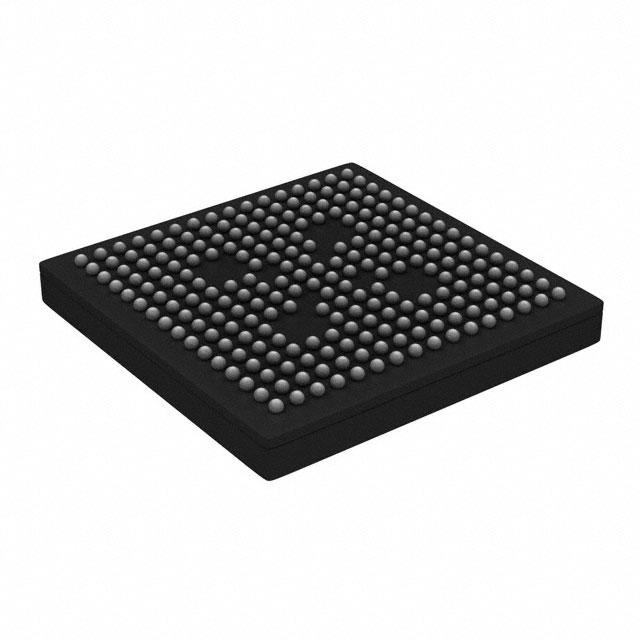
- Part No.:
- SCP2207VMU
- Manufacturer:
- NXP Semiconductors
- Category:
- Microprocessors
- Package:
- 236-LFBGA
- Datasheet:
-
 SCP2207VMU.pdf
- Description:
- IC MPU 236MAPBGA
- Quantity:
- Payment:

- Shipping:

Inventory:4,269
Please send an inquiry. Send us your inquiry, and we will respond immediately.
Product details
Overview
SCP2207VMU from Freescale Semiconductor is an image cognition processor (ICP) for automotive vision systems, integrating an ARM926EJ™ RISC CPU at 350 MHz, APEX™ programmable SIMD array delivering up to 34 billion ops/sec, 128 Mb SDRAM support, and D1 (720×480) @30 fps video encode/decode capability-used in smart reverse camera systems with object detection and distance measurement.
For engineers reviewing the SCP2207VMU datasheet, SCP2207VMU pinout, SCP2207VMU application, or SCP2207VMU equivalent, key selection considerations include its dual-ARM926 architecture, 9×9 mm 236-ball BGA package, 1.0 V core / 1.8–3.3 V I/O voltage support, –40 °C to +105 °C extended temperature rating, and native JPEG/YUV sensor interface compatibility.
Technical Context
The SCP2207VMU implements a heterogeneous dual-core architecture: one ARM926EJ™ core handles general-purpose OS and control tasks, while a second ARM926™ core and the APEX array jointly execute image cognition workloads via parallel SIMD processing. Its internal dual 64-bit AXI buses enable high-bandwidth data movement between APU, DMAs, memory controller, and peripherals.
Hardware acceleration blocks support MPEG-4 and H.264 encode/decode; the stream DMA subsystem moves image data directly between sensor interface, APEX array, and display/TV output paths without CPU intervention. Power states include active, active standby, and core power-off modes, with typical image dewarp power draw at ~250 mW.
Key Specifications
| Parameter | Value and Actual Design Meaning |
|---|---|
| Core Processor | ARM926EJ™ RISC CPU at 350 MHz - executes real-time OS, middleware, and host control functions |
| Image Cognition Engine | APEX™ SIMD array with 34 GOPS peak throughput - enables concurrent pixel-level feature extraction and classification |
| Memory Support | 128 Mb mDDR SDRAM - provides low-latency frame buffering for multi-stage vision pipelines |
| Video Encode | MPEG-4/H.264 at D1 resolution (720×480), 30 fps - meets automotive surround-view recording bandwidth requirements |
| Sensor Interface | 10-bit parallel YUV/JPEG input with serial control - supports direct connection to CMOS image sensors without external format conversion |
| Operating Temperature | –40 °C to +105 °C - qualified for under-hood and cabin-mounted automotive vision ECUs |
| Power Supply | 1.0 V core, 1.8/2.5/3.3 V I/O - enables flexible interface voltage matching to sensors, displays, and storage |
Pinout & Package
SCP2207VMU is housed in a 9 × 9 mm, 236-ball fine-pitch BGA (FBGA) package with 0.5 mm ball pitch, RoHS-compliant and qualified for automotive reflow profiles.
| Pin/Terminal | Circuit Role | Design Meaning |
|---|---|---|
| VDD_CORE | Core power supply | 1.0 V regulated input powering ARM926EJ™ and APEX array logic |
| VDD_IO_18 | I/O bank 1 power | 1.8 V supply for sensor interface, UART, I²C, and GPIO banks |
| CLKIN | Main clock input | 24 MHz crystal oscillator reference for PLL-based system clock generation |
| SDRAM_CLK | SDRAM interface clock | Source-synchronous clock for 128 Mb mDDR SDRAM timing compliance |
| CSI_D[9:0] | Camera sensor data bus | 10-bit parallel YUV or JPEG pixel data input from CMOS image sensor |
| USB_DP / USB_DM | USB 2.0 OTG differential pair | Full-speed (12 Mbps) or high-speed (480 Mbps) host/peripheral connectivity for firmware update or debug |
Key Features
| Feature | Design Value |
|---|---|
| Dual ARM926™ cores | Enables separation of real-time OS tasks and deterministic image pipeline scheduling without resource contention |
| APEX™ programmable SIMD array | Allows field-upgradable vision algorithms (e.g., lane detection, fisheye correction) via firmware patch-not hardware redesign |
| Integrated stream DMA engine | Eliminates CPU overhead in moving raw image frames between sensor, APEX, SDRAM, and display paths |
| Native JPEG/YUV sensor interface | Reduces BOM by removing external image format translators or FPGA glue logic |
| Extended temperature range (–40°C to +105°C) | Supports placement in harsh automotive environments including rearview camera modules and pillar-mounted ECUs |
Applications
| Smart Reverse Camera System | Lane Detection & Tracking |
|---|---|
Use Scenario: Rear-mounted camera feeding real-time obstacle classification and distance estimation to ADAS display. IC Role / Device Role / Timing Role: SCP2207VMU performs pixel-level object segmentation, depth mapping via stereo or monocular cues, and overlay rendering on NTSC/PAL output. Use Value: Achieves <100 ms end-to-end latency from sensor capture to display overlay using on-chip APEX acceleration and dual AXI buses. | Use Scenario: Forward-facing camera detecting lane markings under varying lighting and weather conditions. IC Role / Device Role / Timing Role: SCP2207VMU runs adaptive Hough transform and curve-fitting algorithms on APEX array while ARM926EJ™ manages CAN message transmission of lane status. Use Value: Maintains sub-pixel lane boundary accuracy at 60 fps using hardware-accelerated edge detection and motion-compensated temporal filtering. |
| Fisheye Correction | Driver Monitoring System |
Use Scenario: 180° fisheye camera mounted in vehicle cabin ceiling for occupant posture and gaze tracking. IC Role / Device Role / Timing Role: SCP2207VMU applies real-time polynomial distortion correction and ROI cropping before facial landmark detection on APEX array. Use Value: Delivers undistorted 1280×720 output at 30 fps using dedicated warp lookup tables and dual-channel stream DMA for input/output buffer management. | Use Scenario: In-cabin IR camera monitoring driver drowsiness and distraction via eye blink rate and head pose estimation. IC Role / Device Role / Timing Role: SCP2207VMU executes infrared image enhancement, pupil detection, and 3D head pose regression using APEX-optimized CNN kernels. Use Value: Processes 640×480 IR frames at 25 fps with <50 mW additional power draw beyond base image acquisition due to hardware crypto accelerator offloading AES-128 encryption of biometric data. |
Equivalent & Alternatives
The following parts are listed as comparable options for similar image cognition processor applications.
| Alternative Part | Technical Difference | Application Difference | Selection Advice |
|---|---|---|---|
| NVIDIA Tegra K1 | GPU-based architecture with CUDA cores; higher peak GFLOPS but no native JPEG sensor interface or APEX-style low-power SIMD array | Targeted at infotainment and navigation; lacks ASIL-B qualification and extended temperature support | Choose for high-resolution multi-camera fusion requiring OpenGL ES 3.1 graphics rendering |
| TI TDA2x SoC | ARM Cortex-A15 + C66x DSP + EVE accelerators; supports higher resolution (1080p) encode but consumes >1.5 W in full operation | Designed for front ADAS (AEB, ACC); includes integrated CAN-FD and Ethernet AVB interfaces | Choose when CAN-FD communication and ISO 26262 ASIL-B functional safety certification are mandatory |
Compared with NVIDIA Tegra K1 and TI TDA2x, SCP2207VMU delivers superior power efficiency (<250 mW for dewarp) and native automotive sensor interface integration, making it optimal for cost-sensitive, thermally constrained vision ECUs where algorithm flexibility matters more than raw GPU throughput.
Availability
SCP2207VMU is available at Aetrix Electronics and suitable for smart reverse camera systems, lane detection ECUs, fisheye correction modules, and driver monitoring units requiring stable component supply across automotive production lifecycles.
Supply support for SCP2207VMU includes scheduled delivery planning, volume procurement assistance, BOM continuity management, traceable sourcing, and lifecycle availability coordination for OEM customers, industrial embedded developers, connected-device designers, and electronics production programs.
Manufacturer
Freescale Semiconductor (now part of NXP Semiconductors) is a global leader in automotive microcontrollers and vision processors, specializing in ASIL-certified silicon for ADAS and in-vehicle networking.
The SCP2200 family-including SCP2207VMU-was designed specifically for low-latency, low-power image cognition in automotive vision ECUs, enabling OEMs to deploy proprietary vision algorithms without ASIC development cycles.
FAQ
What is the maximum supported resolution and frame rate for video encoding using SCP2207VMU?
The SCP2207VMU supports MPEG-4 and H.264 video encoding at D1 resolution (720×480) with a maximum frame rate of 30 fps. This capability is verified in Freescale's SCP2200FAMFS REV 0 documentation and aligns with automotive surround-view recording requirements. The encoder leverages dedicated hardware blocks-not the APEX array-to achieve this performance at 181 mW power draw.
Does SCP2207VMU include built-in support for automotive serial interfaces like CAN or LIN?
No, SCP2207VMU does not integrate native CAN or LIN controllers. It provides UART, I²C, SPI, and PWM interfaces for peripheral control and sensor communication. CAN communication must be implemented externally via a discrete transceiver connected to a UART or GPIO-managed bit-banged interface. This design reflects its focus on vision processing rather than vehicle network protocol handling.
What type of memory does SCP2207VMU interface with, and what is the maximum capacity supported?
SCP2207VMU interfaces with 128 Mb mDDR SDRAM using a dedicated memory controller and source-synchronous clocking. It also supports NAND flash (up to 8 GB across four 8-bit devices) and SD/MMC/SDHC cards. The 128 Mb SDRAM is fixed per the SCP2200 family specification and is not user-expandable beyond that capacity on the SCP2207VMU variant.
Is SCP2207VMU qualified for automotive AEC-Q100 reliability standards?
Yes, SCP2207VMU is qualified to AEC-Q100 Grade 2 (–40 °C to +105 °C) and supports automotive-grade thermal and ESD robustness. Its qualification is documented in Freescale's SCP2200 family datasheet and confirmed through production release notes. The device meets humidity, vibration, and solder-reflow profile requirements for automotive ECU deployment.
Can SCP2207VMU perform real-time fisheye lens distortion correction without external memory buffers?
Yes, SCP2207VMU performs real-time fisheye correction using on-chip resources: its APEX array executes polynomial warp algorithms, dual stream DMAs manage input/output frame transfers, and local dedicated memory stores lookup tables. No external frame buffers are required for standard 720p@30fps correction, as confirmed in the SCP2200FAMFS REV 0 application notes.
SCP2207VMU Specifications
- Product attributes
- Attribute value
- Manufacturer:
- NXP Semiconductors
- Package/Case:
- 236-LFBGA
- Series:
- -
- Packaging:
- Tray
- Product Status:
- Active
- Core Processor:
- ARM926EJ-S
- Number of Cores/Bus Width:
- 1 Core, 32-Bit
- Speed:
- -
- Co-Processors/DSP:
- -
- RAM Controllers:
- DDR, SDRAM
- Graphics Acceleration:
- No
- Display & Interface Controllers:
- LCD
- Ethernet:
- -
- SATA:
- -
- USB:
- USB 2.0 OTG (1)
- Voltage - I/O:
- 1.8V, 2.5V, 3.3V
- Operating Temperature:
- -40°C ~ 105°C (TA)
- Grade:
- -
- Qualification:
- -
- Security Features:
- Cryptography
- Mounting Type:
- Surface Mount
- Supplier Device Package:
- 236-MAPBGA (9x9)
- Additional Interfaces:
- AC’97, I2C, I2S, SPI, UART
SCP2207VMU FAQ
1.How can I place an order for SCP2207VMU through Aetrix?
Please submit a Request for Quotation (RFQ) for SCP2207VMU on Aetrix. Our sales agent will provide a competitive quotation and guide you through the order confirmation once you accept the terms.
2.Are the price and stock information for SCP2207VMU reliable?
The price and inventory of SCP2207VMU are updated periodically and may fluctuate due to market conditions. Stock and pricing data are typically refreshed every 24 hours. Quotation validity for SCP2207VMU is usually 5 days.
3.What payment methods are accepted for SCP2207VMU?
We accept Wire Transfer, PayPal, Credit Card, Western Union, MoneyGram, and Escrow for SCP2207VMU transactions.
Note: Certain payment methods may incur a processing fee.
4.How is shipping managed for SCP2207VMU?
SCP2207VMU orders can be shipped via leading logistics carriers, including DHL, UPS, FedEx, TNT, or Registered Mail.
Once your SCP2207VMU order is processed, you will receive an email with the shipment details and tracking number.
Note: Tracking information may take up to 24 hours to appear. Express delivery typically takes 3–5 business days.
5.How can I obtain technical support or documentation for SCP2207VMU?
For technical support, including SCP2207VMU datasheets, pinout diagrams, or application guidance, please contact our engineering support team. They can provide detailed documentation and assistance for your SCP2207VMU requirements.
6.How does Aetrix verify that SCP2207VMU is sourced from the original manufacturer or authorized distributors?
All SCP2207VMU products on Aetrix are procured from qualified distributors and authorized channels. Our dedicated quality assurance team conducts strict verification, including traceability checks and, if necessary, third-party testing. This ensures that SCP2207VMU meets industry standards.
7.What is the process for return or replacement of SCP2207VMU?
All SCP2207VMU units undergo pre-shipment inspection (PSI). If there is an issue with SCP2207VMU, returns or replacements are accepted under the following conditions:
1.Quantity discrepancies, incorrect items, or visible external defects (such as breakage or corrosion), acknowledged by Aetrix.
2.The issue is reported within 90 days of delivery.
3.The SCP2207VMU part is unused and in its original packaging.
Return procedure for SCP2207VMU:
1.Submit a request within 90 days.
2.Obtain a Return Material Authorization (RMA) from Aetrix.
SCP2207VMU Tags
-
AT91SAM9260B-CU-999
Microchip Technology
-
AT91SAM9G25-CU
Microchip Technology
-
ATSAMA5D27C-CU
Microchip Technology
-
AT91SAM9X35-CU
Microchip Technology
-
AT91SAM9X25-CU
Microchip Technology
-
MCIMX6Y2CVM08AB
NXP Semiconductors
.JPG)
-
AM3352BZCZ100
Texas Instruments
-
AT91SAM9260B-CU
Microchip Technology
-
AT91SAM9260B-QU
Microchip Technology
-
ATSAMA5D31A-CU
Microchip Technology
-
AT91SAM9G20B-CU-999
Microchip Technology
-
MCIMX6Y2CVM05AB
NXP Semiconductors
Tech Hub

A practical engineering guide to 3.3V and 5V logic compatibility, input thresholds, resistor dividers, translator ICs, MOSFET level shifting, I2C pull-ups, timing limits and power-sequencing risks.

The 74HC595 uses push-pull logic outputs, while the TPIC6B595 uses 50 V open-drain DMOS sinks for higher-power loads. This guide compares timing, current limits, 3.3 V interfacing, load wiring, thermal…

The 74HC595 converts serial data into eight stable parallel outputs. This guide covers pin functions, shift and storage timing, OE and MR behavior, drive-current limits, cascading, voltage compatibilit…

A technical comparison of level-sensitive latches and edge-triggered flip-flops, covering timing windows, setup and hold limits, master–slave operation, time borrowing, race-through, HDL inference and…

A D latch stores one bit while Enable controls when data can pass. This reference covers gate-level operation, truth tables, transparency, setup and hold timing, LE versus OE, common ICs and practical …

An SR latch stores one bit through cross-coupled feedback. This engineering reference covers NOR and NAND implementations, truth tables, forbidden-state recovery, gated operation, switch debouncing, fa…

Latch circuits retain one bit through feedback. This technical reference covers SR and D latches, truth tables, transparency, timing limits, latch-versus-flip-flop behavior, applications and common log…

An engineering guide to LED driver operation, constant-current and constant-voltage outputs, linear and switching topologies, dimming, IC selection, calculations, replacement compatibility, and fault c…

Operational amplifier guide covering op amp basics, feedback, ideal vs real op amps, common configurations, buffer circuits, offset, bias current, gain-bandwidth, slew rate, rail-to-rail limits and sel…

Jumper cables guide covering safe connection order, red and black clamp placement, final ground connection, cable gauge, length, clamp quality, copper vs CCA cables, jump starter comparison and battery…


