
 My Inquiry
 My Account


Diodes Incorporated SD1A180G
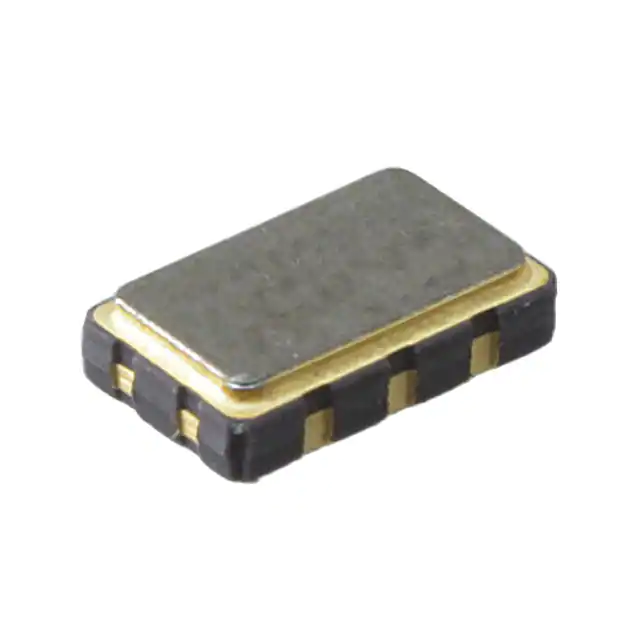
- Part No.:
- SD1A180G
- Manufacturer:
- Diodes Incorporated
- Category:
- SCRs
- Package:
- -
- Datasheet:
-
 SD1A180G.pdf
- Description:
- THYRISTOR DO-15 T&R 4K
- Quantity:
- Payment:

- Shipping:

Inventory:4,000
Please send an inquiry. Send us your inquiry, and we will respond immediately.
Product details
Overview
SD1A180G from Littelfuse (formerly acquired from KEC/LSC) is a unidirectional SIDAC thyristor designed for high-voltage, low-current trigger applications in gas igniters and pulse generators. It features a nominal breakover voltage of 180 Vdc (range 170–190 V), 1 A RMS on-state current rating, 150 V peak repetitive off-state voltage (VDRM), and holding current ≤60 mA at 25°C.
For engineers reviewing the SD1A180G datasheet, SD1A180G pinout, SD1A180G application, or SD1A180G equivalent, key selection criteria include verified VBO tolerance, di/dt capability ≥80 A/μs, thermal resistance (RthJC = 15 °C/W), RoHS-compliant DO-15 packaging, and UL recognition (File #E219635).
Technical Context
The SD1A180G operates as a two-terminal, voltage-triggered switching device with no gate control-conduction initiates when applied voltage exceeds its temperature-dependent breakover threshold (VBO). Its unidirectional structure supports forward-triggered, self-latching behavior once triggered, sustaining conduction until current falls below IH.
It exhibits a typical on-state voltage of 1.1–1.5 V at 1 A, critical rate of rise of on-state current (di/dt) ≥80 A/μs, and junction-to-case thermal resistance of 15 °C/W-enabling reliable pulsed operation in compact, thermally constrained igniter modules.
Key Specifications
| Parameter | Value and Actual Design Meaning |
|---|---|
| VBO (Breakover Voltage) | 170–190 Vdc at 5 µA; defines precise turn-on threshold for ignition timing control |
| VDRM | 150 V; maximum repetitive off-state blocking voltage-sets safe operating margin vs. supply |
| IT(RMS) | 1 A at TL = 80°C; continuous RMS current handling for intermittent spark generation |
| IH (Holding Current) | ≤60 mA; minimum current to sustain conduction-ensures clean dropout after spark discharge |
| di/dt Rating | ≥80 A/μs; supports fast, high-energy pulse triggering without false turn-on |
| RthJC | 15 °C/W; enables thermal management in sealed DO-15 packages with limited heatsinking |
Pinout & Package
Package: JEDEC DO-15 molded plastic case with lead-free plating; RoHS-compliant (2011/65/EU); UL Recognized (File #E219635). Dimensions: A = 25.4 mm max, B = 0.71–0.86 mm, C = 2.60–3.60 mm, D = 5.80–7.60 mm.
| Pin/Terminal | Circuit Role | Design Meaning |
|---|---|---|
| Anode (A) | High-side current entry terminal | Connected to HV supply rail; must withstand full VBO stress before conduction |
| Cathode (K) | Low-side current exit terminal | Reference node for trigger circuit; carries full load current during spark event |
Key Features
| Feature | Design Value |
|---|---|
| VBO tight tolerance | ±5.6% (170–190 V) enables consistent spark timing across production batches |
| Low IH | ≤60 mA ensures rapid current decay and reliable reset post-ignition |
| High di/dt immunity | ≥80 A/μs prevents spurious triggering from EMI or line transients |
| DO-15 package | Compact footprint saves PCB space in handheld or embedded igniter assemblies |
Applications
| Gas Ignition Systems | Electronic Lighter Modules |
|---|---|
Use Scenario: High-voltage pulse generation to ignite propane/butane in portable stoves and grills. IC Role / Device Role / Timing Role: Unidirectional voltage-triggered switch that fires only when input voltage crosses VBO, initiating spark discharge. Use Value: Precise 180 V ±10 V breakover ensures repeatable spark timing independent of battery voltage sag. | Use Scenario: Compact push-button igniters in consumer lighters and camping gear. IC Role / Device Role / Timing Role: Self-triggering thyristor replacing mechanical contacts and discrete RC networks. Use Value: Eliminates contact wear and arcing degradation-extends product lifetime beyond 10,000 actuations. |
| Appliance Pilot Igniters | Industrial Burner Controls |
Use Scenario: Reliable pilot flame initiation in gas ovens, water heaters, and furnaces. IC Role / Device Role / Timing Role: Primary trigger element in isolated HV pulse circuits driving step-up transformers. Use Value: UL-recognized construction and -40°C to +125°C operation ensure field reliability in harsh thermal environments. | Use Scenario: Safety-critical flame verification and re-ignition sequences in commercial boilers. IC Role / Device Role / Timing Role: Fail-safe switching device in redundant ignition paths with monitored current feedback. Use Value: 150 V VDRM and 1 A IT(RMS) support sustained operation under dirty-line AC conditions (e.g., 120 Vrms + surges). |
Equivalent & Alternatives
The following parts are listed as comparable options for similar unidirectional SIDAC trigger applications.
| Alternative Part | Technical Difference | Application Difference | Selection Advice |
|---|---|---|---|
| KIA180G | VBO range 170–190 V, identical DO-15 package, same IH ≤60 mA, but lacks UL recognition | No UL File #-not suitable for certified appliance designs requiring safety agency approval | Select only for cost-sensitive, non-certified industrial prototypes where UL is not mandated |
| BT169D | 400 V VDRM, 1 A IT(RMS), but is a sensitive-gate SCR-not a self-triggering SIDAC; requires external trigger circuit | Cannot replace SD1A180G directly-adds complexity, board area, and component count | Use only if redesign permits gate-driven control and higher blocking voltage is required |
Compared with KIA180G and BT169D, SD1A180G uniquely combines UL recognition, self-triggering operation, and tight VBO tolerance-making it the only drop-in solution for certified gas igniter designs requiring zero external trigger components.
Availability
SD1A180G is available at Aetrix Electronics and suitable for gas igniters, electronic lighters, appliance pilot systems, and industrial burner controls requiring stable component supply and long-term lifecycle continuity.
Supply support for SD1A180G includes scheduled delivery planning, volume procurement assistance, BOM continuity management, traceable sourcing, and lifecycle availability coordination for OEM customers, industrial embedded developers, connected-device designers, and electronics production programs.
Manufacturer
Littelfuse is a global leader in circuit protection, power control, and sensing technologies, with deep expertise in thyristors and overvoltage protection devices.
The SD1A180G belongs to Littelfuse's legacy SIDAC portfolio-engineered specifically for robust, maintenance-free ignition in residential and commercial gas appliances.
FAQ
What is the maximum allowable junction temperature for continuous operation?
The SD1A180G has an operating junction temperature range of –40°C to +125°C. For continuous RMS current operation at 1 A, the case temperature must be maintained at ≤80°C per the IT(RMS) derating curve. Exceeding TJ = 125°C risks irreversible degradation of the silicon junction and premature failure.
Can SD1A180G be used in AC line-powered circuits without isolation?
No-SD1A180G is not rated for direct connection to mains AC without galvanic isolation. Its VDRM of 150 V limits use to circuits with peak voltages ≤150 V. In 120 Vrms AC applications, peak voltage reaches ~170 V, exceeding VDRM; therefore, it must be used behind a step-down transformer or with series impedance limiting peak stress.
Is SD1A180G compatible with lead-free reflow soldering processes?
Yes-the device uses lead-free terminal plating and is qualified for standard Pb-free reflow profiles. Maximum lead solder temperature is specified at 260°C for 10 seconds, with lead length ≥1/16 inch from the case. Reflow profiles must avoid thermal shock and maintain time-above-liquidus within JEDEC J-STD-020 limits.
Does SD1A180G require a snubber network in typical igniter applications?
A snubber is not required for basic resistive or transformer-coupled igniter loads due to its 80 A/μs di/dt rating and inherent voltage clamping behavior. However, in inductive load configurations (e.g., direct coil drive), a small RC snubber (e.g., 100 Ω + 100 pF) is recommended to suppress voltage overshoot during current interruption and prevent false re-triggering.
SD1A180G Specifications
- Product attributes
- Attribute value
- Manufacturer:
- Diodes Incorporated
- Series:
- -
- Package/Case:
- -
- Packaging:
- Tape & Reel (TR)
- Product Status:
- Active
- Voltage - Off State:
- -
- Voltage - Gate Trigger (Vgt) (Max):
- -
- Current - Gate Trigger (Igt) (Max):
- -
- Voltage - On State (Vtm) (Max):
- -
- Current - On State (It (AV)) (Max):
- -
- Current - On State (It (RMS)) (Max):
- -
- Current - Hold (Ih) (Max):
- -
- Current - Off State (Max):
- -
- Current - Non Rep. Surge 50, 60Hz (Itsm):
- -
- SCR Type:
- -
- Operating Temperature:
- -
- Grade:
- -
- Qualification:
- -
- Mounting Type:
- -
- Supplier Device Package:
- -
SD1A180G FAQ
1.How can I place an order for SD1A180G through Aetrix?
Please submit a Request for Quotation (RFQ) for SD1A180G on Aetrix. Our sales agent will provide a competitive quotation and guide you through the order confirmation once you accept the terms.
2.Are the price and stock information for SD1A180G reliable?
The price and inventory of SD1A180G are updated periodically and may fluctuate due to market conditions. Stock and pricing data are typically refreshed every 24 hours. Quotation validity for SD1A180G is usually 5 days.
3.What payment methods are accepted for SD1A180G?
We accept Wire Transfer, PayPal, Credit Card, Western Union, MoneyGram, and Escrow for SD1A180G transactions.
Note: Certain payment methods may incur a processing fee.
4.How is shipping managed for SD1A180G?
SD1A180G orders can be shipped via leading logistics carriers, including DHL, UPS, FedEx, TNT, or Registered Mail.
Once your SD1A180G order is processed, you will receive an email with the shipment details and tracking number.
Note: Tracking information may take up to 24 hours to appear. Express delivery typically takes 3–5 business days.
5.How can I obtain technical support or documentation for SD1A180G?
For technical support, including SD1A180G datasheets, pinout diagrams, or application guidance, please contact our engineering support team. They can provide detailed documentation and assistance for your SD1A180G requirements.
6.How does Aetrix verify that SD1A180G is sourced from the original manufacturer or authorized distributors?
All SD1A180G products on Aetrix are procured from qualified distributors and authorized channels. Our dedicated quality assurance team conducts strict verification, including traceability checks and, if necessary, third-party testing. This ensures that SD1A180G meets industry standards.
7.What is the process for return or replacement of SD1A180G?
All SD1A180G units undergo pre-shipment inspection (PSI). If there is an issue with SD1A180G, returns or replacements are accepted under the following conditions:
1.Quantity discrepancies, incorrect items, or visible external defects (such as breakage or corrosion), acknowledged by Aetrix.
2.The issue is reported within 90 days of delivery.
3.The SD1A180G part is unused and in its original packaging.
Return procedure for SD1A180G:
1.Submit a request within 90 days.
2.Obtain a Return Material Authorization (RMA) from Aetrix.
SD1A180G Tags
-
MCR12DSNT4G
Littelfuse Inc.
-
2N6404G
Littelfuse Inc.
-
S4015LTP
Littelfuse Inc.
-
VS-25TTS12HM3
Vishay General Semiconductor - Diodes Division
-
S4020LTP
Littelfuse Inc.
-
MCR12MG
Littelfuse Inc.
-
MCR69-3G
Littelfuse Inc.
-
S8025LTP
Littelfuse Inc.
-
CMA30E1600PN
IXYS
-
S8016RATP
Littelfuse Inc.
-
TXN625RG
STMicroelectronics
.jpg)
-
SK055RTP
Littelfuse Inc.
Tech Hub

An engineering guide to LED driver operation, constant-current and constant-voltage outputs, linear and switching topologies, dimming, IC selection, calculations, replacement compatibility, and fault c…

Operational amplifier guide covering op amp basics, feedback, ideal vs real op amps, common configurations, buffer circuits, offset, bias current, gain-bandwidth, slew rate, rail-to-rail limits and sel…

Jumper cables guide covering safe connection order, red and black clamp placement, final ground connection, cable gauge, length, clamp quality, copper vs CCA cables, jump starter comparison and battery…

LDO regulator guide covering low dropout voltage, power dissipation, thermal design, PSRR, output noise, capacitor stability, adjustable LDO circuits, LDO vs buck converter and datasheet selection chec…

Conditional Access Module guide covering CAM meaning, CI/CI+ interface, smart card authorization, DVB security workflow, TV and set-top box compatibility, internal electronics, ESD protection, connecto…

Guide to electronic component obsolescence covering EOL risk, PCN/PDN notices, last-time buy planning, replacement options, form-fit-function validation, counterfeit risk and BOM lifecycle management.

18650 battery guide covering lithium-ion cell basics, 3.6V/3.7V voltage, 4.2V charging, mAh and Wh capacity, protected cells, chargers, BMS, series-parallel packs, holders, welding and sourcing checks.…

Hall effect sensor guide covering working principle, linear and digital sensors, Arduino circuits, current sensing, speed detection, automotive applications, A3144 examples, signal filtering and datash…

Product Change Notification guide for electronic components, covering PCN meaning, PCN vs PDN/EOL, common change types, risk levels, form-fit-function review, engineering validation, BOM control, LTB/L…

A practical guide to blend door actuators, covering HVAC function, symptoms, location, AC and heater issues, reset and calibration, replacement cost, electrical diagnosis, compatibility checks, and rep…


