
 My Inquiry
 My Account


Microchip Technology SEC1210/PV-UR2
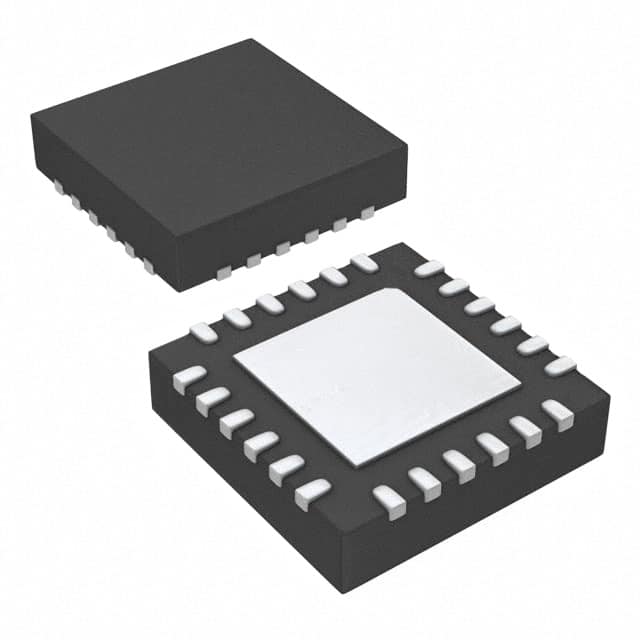
- Part No.:
- SEC1210/PV-UR2
- Manufacturer:
- Microchip Technology
- Category:
- Specialized
- Package:
- 24-VFQFN Exposed Pad
- Datasheet:
-
 SEC1210/PV-UR2.pdf
- Description:
- IC INTERFACE SPECIALIZED 24QFN
- Quantity:
- Payment:

- Shipping:

Inventory:359
Please send an inquiry. Send us your inquiry, and we will respond immediately.
Product details
Overview
SEC1210/PV-UR2 from Microchip Technology is a dual Smart Card bridge IC supporting UART host interface and two ISO/IEC 7816-compliant Smart Card slots. It integrates an enhanced 8051 core (9.6 MHz max), 16 KB OTP ROM, 1.5 KB RAM, and on-chip Smart Card power regulation (1.8V/3.0V/5.0V). Designed for secure dual-card readers in payment terminals and identity verification systems.
For engineers reviewing the SEC1210/PV-UR2 datasheet, SEC1210/PV-UR2 pinout, SEC1210/PV-UR2 application, or SEC1210/PV-UR2 equivalent, key selection criteria include dual Smart Card support with independent T=0/T=1 protocol handling, UART host interface up to 3 Mbps, embedded EMV timing compliance (CWT/Guard/Timeout timers), and self-contained card power management without external regulators.
Technical Context
The SEC1210/PV-UR2 implements two independent ISO/IEC 7816 interfaces with full EMV 4.2/4.3 and PC/SC compliance, each featuring 261-byte full-packet FIFOs, programmable ETU rates up to 826 Kbps, and hardware-enforced cold/warm reset sequences. Its UART subsystem supports standard PC baud rates plus non-PC 3 Mbps operation.
Controlled by an enhanced 8051 core running at up to 9.6 MHz, the device uses SFR/XDATA register access for all peripherals and includes dedicated protocol timers (Guard, Timeout, CWT) for EMV timing constraint enforcement - including unresponsive card detection and automatic deactivation on removal.
Key Specifications
| Parameter | Value and Actual Design Meaning |
|---|---|
| Smart Card Interfaces | Two independent ISO/IEC 7816 slots with full T=0/T=1 protocol support and EMV 4.2/4.3 timing compliance |
| Host Interface | UART-only (no USB); supports 9600–115200 bps PC standards and 3 Mbps high-speed mode |
| FIFO Depth | 261 bytes per Smart Card interface for full-packet buffering - eliminates real-time software intervention during transmit/receive phases |
| Smart Card Power | On-chip regulator delivering 1.8V/3.0V/5.0V from 3.6–5.5V supply; includes over-current sense interrupt and hardware deactivation on card removal |
| Processor Core | Enhanced 8051 with ~9× speed vs. 80C51; 9.6 MHz max clock; 16 KB OTP ROM, 1.5 KB RAM |
| Protocol Timers | Dedicated Guard, Timeout, and CWT timers for EMV-defined intervals - ensures BGT/EGT/WWT/BWT/WTX compliance without CPU overhead |
| ESD Protection | JESD22-A114D (HBM) and JESD22-A115A (MM) compliant on all Smart Card pins |
Pinout & Package
SEC1210/PV-UR2 is housed in a 24-pin QFN package (4 mm × 4 mm, 0.5 mm pitch) with exposed thermal slug connected to VSS. All Smart Card I/O pins are 5.0 V tolerant and internally protected per JESD22-A114D/A115A.
| Pin/Terminal | Circuit Role | Design Meaning |
|---|---|---|
| SC1_VCC / SC2_VCC | Smart Card power output | Programmable 1.8V/3.0V/5.0V supply per slot; enables Class A/B/C card support without external regulators |
| SC1_RST_N / SC2_RST_N | Active-low card reset | Hardware-triggered cold/warm reset; initiates ATR sequence and asserts FIFO threshold interrupt on completion |
| SC1_CLK / SC2_CLK | Smart Card clock output | Programmable frequency generator synchronized to ETU rate; supports up to 826 Kbps bit rates |
| SC1_IO / SC2_IO | Bidirectional data I/O | Half-duplex serial interface with automatic turnaround - no software intervention required between transmit/receive phases |
| SC1_PRSNT_N / SC2_PRSNT_N | Card presence detection | Active-low input with internal pull-up; triggers hardware deactivation and Wake-On Event if system clock is inactive |
| SPI1_MISO/RXD | UART receive input | Configurable as RXD for UART host interface - supports 3 Mbps high-speed mode when UART is enabled |
| SPI1_MOSI/TXD | UART transmit output | Configurable as TXD for UART host interface - enables direct connection to host MCU UART peripheral |
| VDD5 | Main power input | 3.6–5.5V supply input; powers internal regulators and digital logic - internal 4.8V comparator disables Class A (1.8V) card support if voltage drops below threshold |
Key Features
| Feature | Design Value |
|---|---|
| Dual Smart Card support | Independent control of two ISO/IEC 7816 interfaces with separate FIFOs, clocks, resets, and power rails - enables simultaneous card operations in multi-factor authentication devices |
| EMV-compliant timing engine | Three dedicated hardware timers (Guard, Timeout, CWT) enforce all EMV-defined timing constraints - eliminates firmware timing errors and ensures certification readiness |
| Self-contained card power | Integrated 1.8V/3.0V/5.0V regulator with over-current sensing and hardware-triggered deactivation - removes need for external LDOs, current limiters, or sequencing logic |
| Full-packet FIFO architecture | 261-byte FIFO per interface with byte-granular threshold programming and timeout flush interrupt - decouples host software from real-time exchange deadlines (≤180 ms worst-case response) |
| UART host interface | 3 Mbps high-speed mode + standard PC baud rates (9600–115200); register-compatible with 16450 UART - simplifies integration with existing host firmware stacks |
| Hardware card removal handling | Asynchronous wake-on-event detection and automatic deactivation sequence execution - guarantees compliant power-down even if host CPU is asleep or unresponsive |
Applications
| Payment Terminal Reader | Government ID Verification System |
|---|---|
Use Scenario: Dual-slot reader in EMV-certified point-of-sale terminals accepting chip-and-PIN and contactless companion cards. IC Role / Device Role / Timing Role: Smart Card bridge managing two concurrent ISO/IEC 7816 exchanges via UART host link; enforces EMV timing (CWT, Guard, Timeout) in hardware. Use Value: Eliminates external timing logic and reduces firmware complexity - accelerates EMV Level 1 certification by guaranteeing protocol compliance at silicon level. |
Use Scenario: National eID reader used at border control kiosks requiring simultaneous verification of passport and biometric token. IC Role / Device Role / Timing Role: Dual Smart Card controller interfacing to host ARM processor via UART; provides independent power, reset, and clock per slot with hardware deactivation on card removal. Use Value: Enables true concurrent card reads without software arbitration - improves throughput and meets ICAO Doc 9303 timing requirements for rapid identity validation. |
| Secure Access Control Panel | Healthcare Smart Card Gateway |
Use Scenario: Physical access panel supporting employee badge (Class B) and administrator token (Class C) for tiered authorization. IC Role / Device Role / Timing Role: Dual-interface bridge providing isolated 3.0V and 5.0V Smart Card power rails; handles T=0/T=1 protocol parsing and ATR processing autonomously. Use Value: Removes need for discrete level shifters, voltage translators, and protocol state machines - reduces BOM count and PCB area by >30% vs. discrete solution. |
Use Scenario: HIPAA-compliant medical records terminal reading patient insurance card and clinician credential card simultaneously. IC Role / Device Role / Timing Role: UART-connected Smart Card interface with JESD22-A114D ESD protection on all card pins and hardware-enforced card deactivation on removal. Use Value: Meets IEC 61000-4-2 Level 4 (8 kV contact) requirements out-of-box - avoids costly external TVS arrays and simplifies medical device EMC validation. |
Equivalent & Alternatives
The following parts are listed as comparable options for similar Smart Card bridge applications.
| Alternative Part | Technical Difference | Application Difference | Selection Advice |
|---|---|---|---|
| SEC1210/PV-UR1 | Same die, UART host interface, single Smart Card slot (SC1 only); lacks SC2_VCC/SC2_RST_N/SC2_CLK/SC2_IO pins | Single-card readers only; cannot support dual-card use cases like payment fallback or multi-factor auth | Select SEC1210/PV-UR1 only when BOM cost reduction is critical and dual-slot functionality is unnecessary |
| SEC1210/PV-USB | Same die, USB 2.0 host interface (12 Mbps) instead of UART; pin-compatible but different host interface routing | Plug-and-play USB readers requiring no host UART driver; incompatible with UART-based host firmware | Choose SEC1210/PV-USB for consumer-facing readers; SEC1210/PV-UR2 for industrial/embedded hosts with UART peripherals |
Compared with SEC1210/PV-UR1 and SEC1210/PV-USB, the SEC1210/PV-UR2 uniquely delivers dual Smart Card support over UART - enabling concurrent card operations in space-constrained embedded systems where USB host stack integration is impractical or undesirable.
Availability
SEC1210/PV-UR2 is available at Aetrix Electronics and suitable for payment terminals, government ID verification systems, secure access control panels, and healthcare smart card gateways requiring stable component supply across long product lifecycles.
Supply support for SEC1210/PV-UR2 includes scheduled delivery planning, volume procurement assistance, BOM continuity management, traceable sourcing, and lifecycle availability coordination for OEM customers, industrial embedded developers, connected-device designers, and electronics production programs.
Manufacturer
Microchip Technology Inc. is a leading provider of microcontroller, analog, FPGA, and security solutions, serving automotive, industrial, communications, and consumer markets with high-reliability silicon and development tools.
The SEC1210 product line delivers integrated Smart Card bridge ICs targeting secure transaction infrastructure - designed to reduce certification risk, eliminate external timing components, and accelerate time-to-market for EMV and eID-compliant readers.
FAQ
What host interface does the SEC1210/PV-UR2 support?
The SEC1210/PV-UR2 supports UART-only host communication - not USB. It implements a register-compatible 16450 UART interface with standard PC baud rates (9600–115200 bps) and a high-speed 3 Mbps mode. This configuration is fixed per the PV-UR2 suffix and cannot be reconfigured to USB in-system.
How many Smart Card slots does the SEC1210/PV-UR2 support?
The SEC1210/PV-UR2 supports two independent Smart Card interfaces (SC1 and SC2), each compliant with ISO/IEC 7816, EMV 4.2/4.3, and PC/SC standards. Both slots feature full T=0/T=1 protocol support, 261-byte FIFOs, and programmable 1.8V/3.0V/5.0V power outputs - confirmed by the "2" in the part number suffix and block diagram in DS00001561E.
Does the SEC1210/PV-UR2 include hardware EMV timing compliance?
Yes, the SEC1210/PV-UR2 includes three dedicated hardware protocol timers (Guard, Timeout, CWT) that enforce EMV-defined timing parameters - including BGT, EGT, WWT, BWT, WTX, and CWT intervals. These timers operate independently of the 8051 core and ensure compliance without firmware timing loops.
What Smart Card voltage classes does the SEC1210/PV-UR2 support?
The SEC1210/PV-UR2 supports Class A (1.8V), Class B (3.0V), and Class C (5.0V) Smart Cards via its integrated regulators on SC1_VCC and SC2_VCC. An internal 4.8V comparator disables Class A support if the VDD5 supply falls below specification - a hardware safety feature documented in Section 1.2 of DS00001561E.
Is the SEC1210/PV-UR2 pin-compatible with other SEC1210 variants?
Yes, all SEC1210 variants (including SEC1210/PV-UR2, SEC1210/PV-UR1, and SEC1210/PV-USB) share the same 24-pin QFN package and pinout. Differences are functional (UART vs. USB host interface, single vs. dual Smart Card) - not physical. Pin compatibility is confirmed in Table 3-2 and Figure 4-2 of DS00001561E.
SEC1210/PV-UR2 Specifications
- Product attributes
- Attribute value
- Manufacturer:
- Microchip Technology
- Series:
- -
- Package/Case:
- 24-VFQFN Exposed Pad
- Packaging:
- Tray
- Product Status:
- Active
- Applications:
- Smart Card
- Interface:
- SPI Serial, USB, UART
- Voltage - Supply:
- 3V ~ 5.5V
- Supplier Device Package:
- 24-QFN (5x5)
- Grade:
- -
- Qualification:
- -
- Mounting Type:
- Surface Mount
SEC1210/PV-UR2 FAQ
1.How can I place an order for SEC1210/PV-UR2 through Aetrix?
Please submit a Request for Quotation (RFQ) for SEC1210/PV-UR2 on Aetrix. Our sales agent will provide a competitive quotation and guide you through the order confirmation once you accept the terms.
2.Are the price and stock information for SEC1210/PV-UR2 reliable?
The price and inventory of SEC1210/PV-UR2 are updated periodically and may fluctuate due to market conditions. Stock and pricing data are typically refreshed every 24 hours. Quotation validity for SEC1210/PV-UR2 is usually 5 days.
3.What payment methods are accepted for SEC1210/PV-UR2?
We accept Wire Transfer, PayPal, Credit Card, Western Union, MoneyGram, and Escrow for SEC1210/PV-UR2 transactions.
Note: Certain payment methods may incur a processing fee.
4.How is shipping managed for SEC1210/PV-UR2?
SEC1210/PV-UR2 orders can be shipped via leading logistics carriers, including DHL, UPS, FedEx, TNT, or Registered Mail.
Once your SEC1210/PV-UR2 order is processed, you will receive an email with the shipment details and tracking number.
Note: Tracking information may take up to 24 hours to appear. Express delivery typically takes 3–5 business days.
5.How can I obtain technical support or documentation for SEC1210/PV-UR2?
For technical support, including SEC1210/PV-UR2 datasheets, pinout diagrams, or application guidance, please contact our engineering support team. They can provide detailed documentation and assistance for your SEC1210/PV-UR2 requirements.
6.How does Aetrix verify that SEC1210/PV-UR2 is sourced from the original manufacturer or authorized distributors?
All SEC1210/PV-UR2 products on Aetrix are procured from qualified distributors and authorized channels. Our dedicated quality assurance team conducts strict verification, including traceability checks and, if necessary, third-party testing. This ensures that SEC1210/PV-UR2 meets industry standards.
7.What is the process for return or replacement of SEC1210/PV-UR2?
All SEC1210/PV-UR2 units undergo pre-shipment inspection (PSI). If there is an issue with SEC1210/PV-UR2, returns or replacements are accepted under the following conditions:
1.Quantity discrepancies, incorrect items, or visible external defects (such as breakage or corrosion), acknowledged by Aetrix.
2.The issue is reported within 90 days of delivery.
3.The SEC1210/PV-UR2 part is unused and in its original packaging.
Return procedure for SEC1210/PV-UR2:
1.Submit a request within 90 days.
2.Obtain a Return Material Authorization (RMA) from Aetrix.
SEC1210/PV-UR2 Tags
-
NVT4857UKAZ
NXP Semiconductors
-
TCA8418RTWR
Texas Instruments

-
PCA9546APWR
Texas Instruments

-
MD0100N8-G
Microchip Technology
-
PCA9548APW,118
NXP Semiconductors
-
PCA9540BDP,118
NXP Semiconductors
-
PCA9548APWR
Texas Instruments
-
PCA9546APW,118
NXP Semiconductors
-
PTN3360DBS,518
NXP Semiconductors
-
PCA9546ABS,118
NXP Semiconductors
-
PCA9518PWR
Texas Instruments
-
PCA9545APW,118
NXP Semiconductors
Tech Hub

TTL and CMOS logic families differ in thresholds, loading, output drive, power and timing. This engineering guide compares 74HC and 74HCT, calculates noise margins and checks 3.3 V/5 V compatibility.

A practical engineering guide to 3.3V and 5V logic compatibility, input thresholds, resistor dividers, translator ICs, MOSFET level shifting, I2C pull-ups, timing limits and power-sequencing risks.

The 74HC595 uses push-pull logic outputs, while the TPIC6B595 uses 50 V open-drain DMOS sinks for higher-power loads. This guide compares timing, current limits, 3.3 V interfacing, load wiring, thermal…

The 74HC595 converts serial data into eight stable parallel outputs. This guide covers pin functions, shift and storage timing, OE and MR behavior, drive-current limits, cascading, voltage compatibilit…

A technical comparison of level-sensitive latches and edge-triggered flip-flops, covering timing windows, setup and hold limits, master–slave operation, time borrowing, race-through, HDL inference and…

A D latch stores one bit while Enable controls when data can pass. This reference covers gate-level operation, truth tables, transparency, setup and hold timing, LE versus OE, common ICs and practical …

An SR latch stores one bit through cross-coupled feedback. This engineering reference covers NOR and NAND implementations, truth tables, forbidden-state recovery, gated operation, switch debouncing, fa…

Latch circuits retain one bit through feedback. This technical reference covers SR and D latches, truth tables, transparency, timing limits, latch-versus-flip-flop behavior, applications and common log…

An engineering guide to LED driver operation, constant-current and constant-voltage outputs, linear and switching topologies, dimming, IC selection, calculations, replacement compatibility, and fault c…

Operational amplifier guide covering op amp basics, feedback, ideal vs real op amps, common configurations, buffer circuits, offset, bias current, gain-bandwidth, slew rate, rail-to-rail limits and sel…


