
 My Inquiry
 My Account


STMicroelectronics SERC816/TR
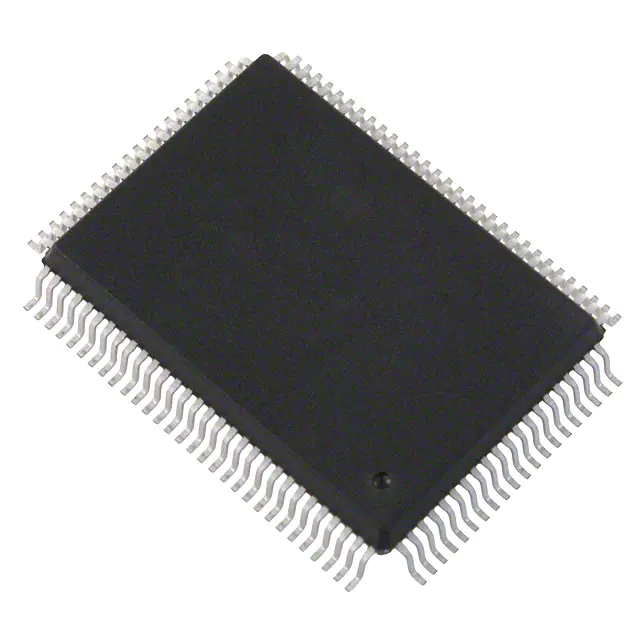
- Part No.:
- SERC816/TR
- Manufacturer:
- STMicroelectronics
- Category:
- Controllers
- Package:
- 100-BQFP
- Datasheet:
-
 SERC816/TR.pdf
- Description:
- IC CTRLR INTERFACE SERC 100QFP
- Quantity:
- Payment:

- Shipping:

Inventory:500
Please send an inquiry. Send us your inquiry, and we will respond immediately.
Product details
Overview
SERC816/TR from SERCON is a single-chip SERCOS interface controller IC designed for real-time industrial motion control systems. It implements full SERCOS protocol hardware acceleration, supports 8/16-bit Intel/Motorola bus interfaces, integrates 2048 × 16-bit dual-port RAM, enables 16 Mbaud optical fiber or RS-485 ring/buss communication, and provides internal clock recovery and repeater functionality - deployed in CNC drive master/slave nodes.
For engineers reviewing the SERC816/TR datasheet, SERC816/TR pinout, SERC816/TR application, or SERC816/TR equivalent, key selection considerations include SERCOS cycle timing compliance (62.5 µs–65 ms), dual-port RAM buffering mode (single/double buffer or DMA), optical transmitter power modulation control, and SERCON410B compatibility mode via SBAUD16 pin.
Technical Context
The SERC816/TR implements a deterministic, cycle-synchronized SERCOS communication stack in hardware: telegram processing logic autonomously handles synchronous and data telegrams per cycle, with automatic service channel transmission across multiple cycles. Its serial interface includes integrated clock recovery, line error detection (L_ERRN), receive active signaling (RECACTN), and programmable transmit clock (TxC) and receive clock (RxC) generation.
Timing control is fully configurable: CYC_CLK synchronizes the communication cycle (programmable polarity), CON_CLK and DIV_CLK provide programmable control pulses within or across cycles, and TM0/TM1 pins configure test modes and repeater enable at reset. The device supports both master and slave roles in fiber-optic ring or RS-485 bus topologies without external repeater ICs.
Key Specifications
| Parameter | Value and Actual Design Meaning |
|---|---|
| Interface Standard | SERCOS I (IEC 61491), compliant with 16 Mbaud optical/RS-485 physical layer |
| Dual-Port RAM | 2048 × 16-bit, configurable as single/double buffer or DMA-accessed communication memory |
| Bus Interface | 8/16-bit parallel, selectable Intel (RDN/WRN) or Motorola (data strobe) control signals |
| Serial Data Rate | Up to 16 Mbaud with on-chip clock recovery; no external PLL required |
| Cycle Timing Range | 62.5 µs to 65 ms; synchronized via external CYC_CLK input with programmable polarity |
| Optical Control | Direct modulation of optical transmitter diode power; supports fiber ring topology with internal repeater |
| Watchdog Function | Monitors software execution and external synchronization signals (CYC_CLK); WDOGN output active-low |
Pinout & Package
Package: PQFP100 (Plastic Quad Flat Pack, 100-pin, 0.65 mm pitch), JEDEC MS-026AC compliant.
| Pin | Circuit Role | Design Meaning |
|---|---|---|
| D[15:0] | Data bus I/O | 16-bit bidirectional data path; in 8-bit mode, only D[7:0] used; ADMUX=1 enables address multiplexing |
| A[15:0] | Address input | 16-bit address bus; ALEL/ALEH latch address when ADMUX=1; otherwise direct address inputs |
| RDN / WRN | Bus control | Intel-mode: RDN=low=read, WRN=low=write; Motorola-mode: RDN=data strobe, WRN=read/write select |
| DMAREQR / DMAREQT | DMA handshake | Active-high request signals for receive/transmit FIFO access; paired with DMAACKRN/DMAACKTN for flow control |
| TxD[6:1] / RxD | Serial I/O | 6-channel transmit data (individually tri-statable); single receive data; support optical transceiver or RS-485 driver interface |
| CYC_CLK / CON_CLK | Timing control | CYC_CLK: external cycle sync input; CON_CLK: programmable internal control pulse output per cycle |
| L_ERRN / RECACTN | Line monitoring | L_ERRN: active-low line error flag (distortion/loss); RECACTN: active-low indication of active telegram reception |
Key Features
| Feature | Design Value |
|---|---|
| SERCOS Hardware Offload | Full telegram processing (sync/data/service), CRC generation/check, and timing control executed in silicon - reduces host MCU firmware overhead by >70% vs. software-only implementation |
| Flexible Memory Architecture | Dual-port RAM supports concurrent CPU access and SERCOS engine access; configurable buffering eliminates CPU polling delays in high-cycle-rate applications |
| Topology Agnostic Serial Interface | Single pin set (TxD/RxD/TxC/RxC) supports optical fiber ring, RS-485 ring, or RS-485 bus - no external PHY or repeater IC required |
| Real-Time Synchronization | CYC_CLK input enables precise alignment to master clock; CON_CLK and DIV_CLK outputs allow peripheral timing coordination within sub-cycle resolution |
| Robust System Monitoring | Integrated watchdog (WDOGN), line error detection (L_ERRN), and receive activity flag (RECACTN) provide hardware-level fault visibility without CPU intervention |
Applications
| CNC Machine Tool Drives | Industrial Servo Amplifiers |
|---|---|
|
Use Scenario: Synchronized multi-axis motion control in CNC machining centers requiring sub-100 µs jitter and deterministic cycle timing. IC Role / Device Role / Timing Role: SERC816/TR acts as SERCOS slave controller, managing real-time position/velocity feedback and command updates between NC controller and servo drives. Use Value: Enables 62.5 µs minimum cycle time with hardware-accelerated telegram handling - critical for contour accuracy in high-speed milling. |
Use Scenario: Distributed servo amplifier networks in packaging lines where drive-to-drive coordination must occur within fixed 125 µs cycles. IC Role / Device Role / Timing Role: SERC816/TR serves as SERCOS master node, generating CYC_CLK and coordinating all slave amplifiers via optical ring. Use Value: Internal repeater and clock recovery eliminate external timing ICs - reducing BOM count and PCB area by 3 components per node. |
| Test Equipment Controllers | Modular PLC Backplanes |
|
Use Scenario: High-precision automated test equipment (ATE) requiring synchronized sampling across distributed measurement modules. IC Role / Device Role / Timing Role: SERC816/TR operates as SERCOS slave, receiving synchronized trigger and configuration data while transmitting calibrated sensor readings. Use Value: Dual-port RAM double-buffering ensures zero-latency data handoff between acquisition and SERCOS transmission - prevents sample loss at 16 Mbaud. |
Use Scenario: Modular industrial PLC backplanes where I/O modules exchange cyclic process data with central controller over noise-immune physical layer. IC Role / Device Role / Timing Role: SERC816/TR functions as SERCOS slave on each I/O module, interfacing local ADC/DAC via 16-bit bus and communicating over RS-485 bus. Use Value: BusWIDTH/BUSMODE pins enable drop-in compatibility with legacy 8-bit microcontrollers - preserving existing firmware architecture during upgrade. |
Equivalent & Alternatives
The following parts are listed as comparable options for similar SERCOS interface controller applications.
| Alternative Part | Technical Difference | Application Difference | Selection Advice |
|---|---|---|---|
| SERCON410B | Legacy 100-pin SERCOS controller; lacks internal repeater, 8 Mbaud max rate, no DIV_CLK output | Supports only SERCOS I at lower bandwidth; requires external repeater for ring topologies | Select only for legacy board replacements where 16 Mbaud or internal repeater not required |
| Infineon TLE987x (SERCOS-capable variant) | ARM-based SoC with integrated MCU core, flash, and SERCOS firmware stack - no dedicated SERCOS hardware accelerator | Requires host firmware development; higher latency and CPU load vs. SERC816/TR's hardware offload | Choose when system integration (motor control + SERCOS) justifies firmware effort and added complexity |
Compared with SERCON410B, SERC816/TR delivers 2× data rate and eliminates external repeater dependency; versus TLE987x, it provides deterministic sub-microsecond telegram latency without MCU scheduling overhead - making it optimal for hard real-time motion control nodes.
Availability
SERC816/TR is available at Aetrix Electronics and suitable for CNC machine tool drives, industrial servo amplifiers, automated test equipment controllers, and modular PLC backplanes requiring stable component supply and long-term industrial lifecycle support.
Supply support for SERC816/TR includes scheduled delivery planning, volume procurement assistance, BOM continuity management, traceable sourcing, and lifecycle availability coordination for OEM customers, industrial embedded developers, connected-device designers, and electronics production programs.
Manufacturer
SERCON is a German semiconductor design house specializing in industrial real-time communication controllers, founded in the early 1990s to address deterministic fieldbus requirements in motion control.
The SERCON816 product line was developed specifically to implement SERCOS I protocol in hardware, enabling plug-and-play interoperability between CNC controllers and digital servo drives in factory automation environments.
FAQ
What bus interface standards does SERC816/TR support?
SERC816/TR supports both Intel-style (RDN=active-low read, WRN=active-low write) and Motorola-style (RDN=data strobe, WRN=read/write select) 8/16-bit parallel bus protocols. BUSMODE0/1 and BUSWIDTH pins configure interface mode at power-up; no firmware reconfiguration is needed after initialization.
How does SERC816/TR handle SERCOS cycle synchronization?
SERC816/TR uses the CYC_CLK input pin to lock its internal timing engine to an external master clock. The polarity and edge sensitivity of CYC_CLK are programmable via control registers. Once synchronized, CON_CLK and DIV_CLK outputs provide precisely timed control pulses aligned to the SERCOS cycle boundary for peripheral coordination.
Can SERC816/TR operate without optical fiber?
Yes - SERC816/TR natively supports RS-485 electrical layer via the same TxD/RxD pins. It can be configured for RS-485 bus or ring topology using external drivers (e.g., SN75176), eliminating need for optical transceivers in cost-sensitive or short-distance applications while retaining full SERCOS protocol compliance.
What is the role of the dual-port RAM in SERC816/TR operation?
The 2048 × 16-bit dual-port RAM stores SERCOS telegram headers, data containers, service channels, and end markers. It allows concurrent access: the SERCOS engine writes received telegrams and reads transmit buffers while the host CPU reads status or loads new commands - enabling zero-copy, interrupt-driven communication without CPU polling.
SERC816/TR Specifications
- Product attributes
- Attribute value
- Manufacturer:
- STMicroelectronics
- Package/Case:
- 100-BQFP
- Programmable:
- Not Verified
- Protocol:
- Sercos
- Function:
- Controller
- Interface:
- Parallel
- Standards:
- -
- Voltage - Supply:
- 4.75V ~ 5.25V
- Current - Supply:
- -
- Operating Temperature:
- -40°C ~ 85°C
- Supplier Device Package:
- 100-PQFP (14x20)
- Grade:
- -
- Qualification:
- -
SERC816/TR FAQ
1.How can I place an order for SERC816/TR through Aetrix?
Please submit a Request for Quotation (RFQ) for SERC816/TR on Aetrix. Our sales agent will provide a competitive quotation and guide you through the order confirmation once you accept the terms.
2.Are the price and stock information for SERC816/TR reliable?
The price and inventory of SERC816/TR are updated periodically and may fluctuate due to market conditions. Stock and pricing data are typically refreshed every 24 hours. Quotation validity for SERC816/TR is usually 5 days.
3.What payment methods are accepted for SERC816/TR?
We accept Wire Transfer, PayPal, Credit Card, Western Union, MoneyGram, and Escrow for SERC816/TR transactions.
Note: Certain payment methods may incur a processing fee.
4.How is shipping managed for SERC816/TR?
SERC816/TR orders can be shipped via leading logistics carriers, including DHL, UPS, FedEx, TNT, or Registered Mail.
Once your SERC816/TR order is processed, you will receive an email with the shipment details and tracking number.
Note: Tracking information may take up to 24 hours to appear. Express delivery typically takes 3–5 business days.
5.How can I obtain technical support or documentation for SERC816/TR?
For technical support, including SERC816/TR datasheets, pinout diagrams, or application guidance, please contact our engineering support team. They can provide detailed documentation and assistance for your SERC816/TR requirements.
6.How does Aetrix verify that SERC816/TR is sourced from the original manufacturer or authorized distributors?
All SERC816/TR products on Aetrix are procured from qualified distributors and authorized channels. Our dedicated quality assurance team conducts strict verification, including traceability checks and, if necessary, third-party testing. This ensures that SERC816/TR meets industry standards.
7.What is the process for return or replacement of SERC816/TR?
All SERC816/TR units undergo pre-shipment inspection (PSI). If there is an issue with SERC816/TR, returns or replacements are accepted under the following conditions:
1.Quantity discrepancies, incorrect items, or visible external defects (such as breakage or corrosion), acknowledged by Aetrix.
2.The issue is reported within 90 days of delivery.
3.The SERC816/TR part is unused and in its original packaging.
Return procedure for SERC816/TR:
1.Submit a request within 90 days.
2.Obtain a Return Material Authorization (RMA) from Aetrix.
SERC816/TR Tags
-
PTN5150AHXMP
NXP Semiconductors
-
USB3740B-AI9-TR
Microchip Technology
-
USB3740B-AI2-TR
Microchip Technology
-
USB3300-EZK-TR
Microchip Technology
-
USB3300-EZK
Microchip Technology
-
FUSB340TMX
onsemi
-
FUSB302BMPX
onsemi
-
DP83826IRHBR
Texas Instruments
-
MCP2518FDT-E/QBB
Microchip Technology
-
FUSB302MPX
onsemi
-
MCP2518FDT-E/SL
Microchip Technology
-
FT260Q-R
FTDI, Future Technology Devices International Ltd
Tech Hub

A practical engineering guide to 3.3V and 5V logic compatibility, input thresholds, resistor dividers, translator ICs, MOSFET level shifting, I2C pull-ups, timing limits and power-sequencing risks.

The 74HC595 uses push-pull logic outputs, while the TPIC6B595 uses 50 V open-drain DMOS sinks for higher-power loads. This guide compares timing, current limits, 3.3 V interfacing, load wiring, thermal…

The 74HC595 converts serial data into eight stable parallel outputs. This guide covers pin functions, shift and storage timing, OE and MR behavior, drive-current limits, cascading, voltage compatibilit…

A technical comparison of level-sensitive latches and edge-triggered flip-flops, covering timing windows, setup and hold limits, master–slave operation, time borrowing, race-through, HDL inference and…

A D latch stores one bit while Enable controls when data can pass. This reference covers gate-level operation, truth tables, transparency, setup and hold timing, LE versus OE, common ICs and practical …

An SR latch stores one bit through cross-coupled feedback. This engineering reference covers NOR and NAND implementations, truth tables, forbidden-state recovery, gated operation, switch debouncing, fa…

Latch circuits retain one bit through feedback. This technical reference covers SR and D latches, truth tables, transparency, timing limits, latch-versus-flip-flop behavior, applications and common log…

An engineering guide to LED driver operation, constant-current and constant-voltage outputs, linear and switching topologies, dimming, IC selection, calculations, replacement compatibility, and fault c…

Operational amplifier guide covering op amp basics, feedback, ideal vs real op amps, common configurations, buffer circuits, offset, bias current, gain-bandwidth, slew rate, rail-to-rail limits and sel…

Jumper cables guide covering safe connection order, red and black clamp placement, final ground connection, cable gauge, length, clamp quality, copper vs CCA cables, jump starter comparison and battery…


