
 My Inquiry
 My Account


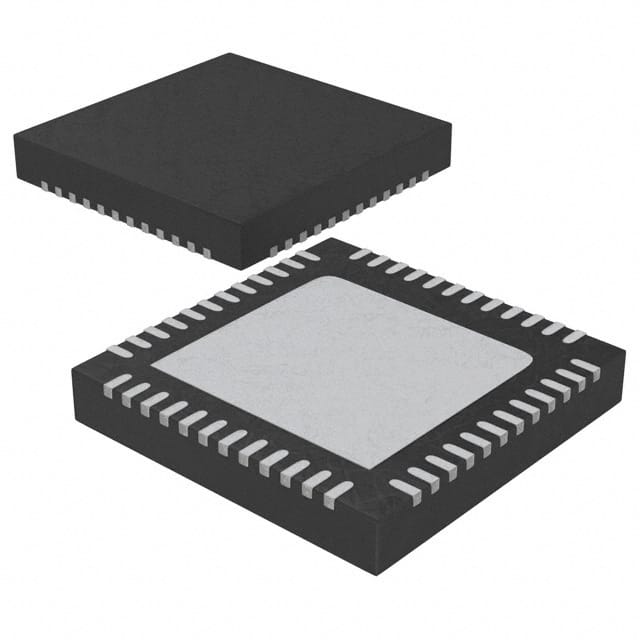
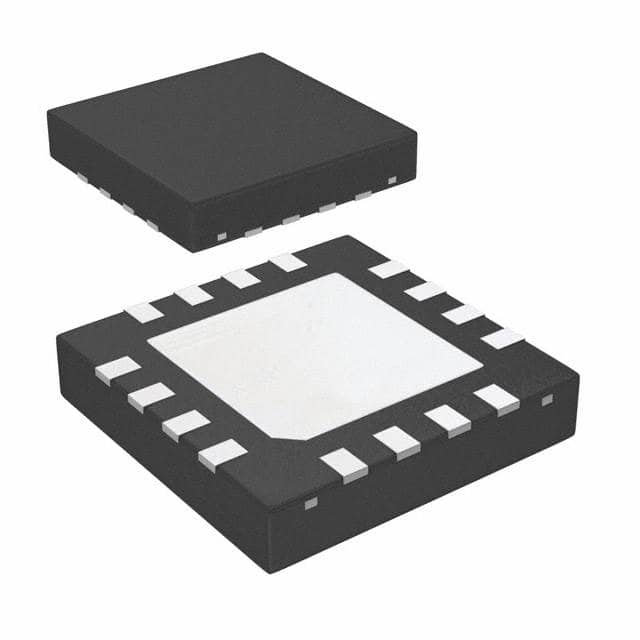
Skyworks Solutions Inc. SI2168-B40-GMR
- Part No.:
- SI2168-B40-GMR
- Manufacturer:
- Skyworks Solutions Inc.
- Category:
- Video Processing
- Package:
- 48-VFQFN Exposed Pad
- Datasheet:
-
 SI2168-B40-GMR.pdf
- Description:
- IC VIDEO DEMODULATOR 48QFN
- Quantity:
- Payment:

- Shipping:

Inventory:1,767
Please send an inquiry. Send us your inquiry, and we will respond immediately.
Product details
Overview
Si2168-B40-GMR from Silicon Labs is a DVB-T2/T/C digital TV demodulator IC integrating COFDM and QAM demodulation, LDPC/BCH FEC decoding, and programmable MPEG transport stream interface in a single 7×7 mm QFN-48 package. It supports 1.7–8 MHz bandwidths, 256-QAM (DVB-T2), up to 255 PLPs, and operates from 1.2 V and 3.3 V supplies for terrestrial/cable TV front-ends.
For engineers reviewing the Si2168-B40-GMR datasheet, Si2168-B40-GMR pinout, Si2168-B40-GMR application, or Si2168-B40-GMR equivalent, key selection criteria include DVB-T2 L1 signaling parsing autonomy, blind scanning capability for DVB-C, IF/low-IF input flexibility, and pin-to-pin compatibility with Si2168/Si2164 series.
Technical Context
The Si2168-B40-GMR implements a mixed-signal architecture with dedicated DVB-T2/T and DVB-C demodulation paths sharing a common ADC front-end (TC_ADC_P/TC_ADC_N), PLL-based clock synthesis, and dual I²C interfaces (host and master) for tuner control and host communication. Its firmware-controlled operation enables field-upgradable demodulation algorithms without hardware change.
It delivers autonomous signal acquisition across all standards - including 600 kHz DVB-T2 acquisition range, FEF management, SISO/MISO support, and automatic DVB-T/T2 detection - while supporting parallel or serial TS output with TS_SYNC/TS_VAL/TS_CLK timing alignment and TS_ERR status reporting.
Key Specifications
| Parameter | Value and Actual Design Meaning |
|---|---|
| Demod Standards | DVB-T2 (ETSI EN 302 755 v1.3.1), DVB-T (EN 300 744), DVB-C (EN 300 429)/ITU J.83 A/B/C - full standard compliance with T2-Lite mode support |
| Input Bandwidth | 1.7, 5, 6, 7, or 8 MHz (plus extended BW) - enables reception across global terrestrial channel plans |
| FEC Support | LDPC + BCH decoding for DVB-T2; enhanced Viterbi + RS for DVB-T; Reed-Solomon for DVB-C - standardized error correction per spec |
| Power Supplies | VDD_VCORE = 1.2 V ±60 mV; VDD_VANA/VDD_VIO = 3.3 V ±300 mV - dual-rail operation minimizes analog/digital noise coupling |
| Reference Clock | 4–30 MHz external clock or 16–30 MHz crystal on XTAL_I/XTAL_O - flexible clock sourcing for tuner integration |
| TS Interface | Programmable serial/parallel output with TS_DATA[0:7], TS_CLK, TS_SYNC, TS_VAL, TS_ERR - compatible with all MPEG decoders and CA modules |
| Package | 7×7 mm QFN-48, exposed thermal pad (GND_PAD), RoHS-compliant - optimized thermal dissipation (θJA = 23°C/W on 4-layer PCB) |
Pinout & Package
Si2168-B40-GMR uses a 7×7 mm, 48-pin QFN package with exposed thermal pad (GND_PAD) for enhanced thermal performance. Pin assignments are validated per official Silicon Labs Si2168-B40 pinout diagram (Rev. B).
| Pin/Terminal | Circuit Role | Design Meaning |
|---|---|---|
| XTAL_I / XTAL_O | Crystal oscillator input/output | Accepts 16–30 MHz crystal for internal clock generation;也可 driven by external 4–30 MHz clock |
| SCL_HOST / SDA_HOST | Host I²C interface | Connects to system microcontroller for configuration and status readback (standard I²C protocol) |
| SCL_MAST / SDA_MAST | Tuner I²C master interface | Drives tuner (e.g., Si2178) via I²C to configure RF front-end and synchronize demod lock |
| TS_DATA[0:7], TS_CLK, TS_SYNC, TS_VAL, TS_ERR | MPEG transport stream interface | Parallel 8-bit TS output with embedded timing signals; TS_ERR doubles as GPIO_1 |
| RESETB | Active-low reset input | Asynchronous hardware reset; low pulse ≥1 µs required to initialize internal state machines and firmware |
| GPIO_0 | General-purpose I/O | Configurable as input/output; used for AGC control or external interrupt signaling |
| MP_A / MP_B / MP_C / MP_D | Multi-purpose analog ports | Support independent AGC voltage outputs or analog monitoring points for tuner feedback loops |
| TC_ADC_P / TC_ADC_N | Differential IF input | Accepts standard 36 MHz IF or low-IF signals; high dynamic range ADC enables robust reception in noisy environments |
Key Features
| Feature | Design Value |
|---|---|
| DVB-T2 auto-detection & L1 parsing | Fully autonomous acquisition without host intervention - reduces software stack complexity and boot time in STB/iDTV systems |
| Blind scanning for DVB-C | Enables rapid channel search without prior frequency/knowledge - critical for cable operator deployments with unknown symbol rates |
| Dual I²C interfaces | Separate host and tuner control buses eliminate bus contention and simplify system-level timing coordination |
| Flexible TS output modes | Software-selectable serial or parallel TS format - ensures interoperability with legacy and next-gen MPEG decoders |
| Pin-to-pin compatibility | Direct replacement for Si2168/Si2164/62/60/66B/67B/69B - enables reuse of existing PCB layouts and firmware drivers |
Applications
| iDTV Front-End (On-Board) | Advanced Set-Top Box (STB) |
|---|---|
Use Scenario: Integrated digital TV receiver in flat-panel displays with built-in terrestrial/cable tuner. IC Role / Device Role / Timing Role: Primary DVB-T2/T/C demodulator converting IF signal to MPEG-TS; synchronizes TS output to system decoder clock. Use Value: Enables single-chip support for global broadcast standards (including NorDig Unified v2.4/D-Book 7 V2), reducing BOM count and board area. | Use Scenario: High-performance STB supporting hybrid DVB-T2 and DVB-C delivery in multi-operator networks. IC Role / Device Role / Timing Role: Core demodulator interfacing with tuner and MPEG decoder; provides TS_ERR flag for real-time signal integrity monitoring. Use Value: Fast lock times (<500 ms typical for DVB-T2) and blind scan accelerate channel setup and improve user experience during initial installation. |
| PC-TV Accessories | PVR/DVD/Blu-ray Recorders |
Use Scenario: USB or PCIe-based TV tuner dongles for Windows/macOS media center applications. IC Role / Device Role / Timing Role: Demodulator with configurable TS interface driving host-side USB bridge chip; GPIO_0 used for tuner power enable. Use Value: Low-power operation (190 mW typ. DVB-T2) extends battery life in portable tuners; firmware upgradeability supports future standard updates. | Use Scenario: Digital video recorders capturing live broadcast streams for time-shifted playback. IC Role / Device Role / Timing Role: Transport stream source feeding recording engine; TS_SYNC/TS_VAL ensure bit-accurate timestamp alignment for seamless playback. Use Value: Support for 255 PLPs allows simultaneous recording of multiple services from a single DVB-T2 multiplex without stream re-multiplexing. |
Equivalent & Alternatives
The following parts are listed as comparable options for similar DVB-T2/T/C demodulator applications.
| Alternative Part | Technical Difference | Application Difference | Selection Advice |
|---|---|---|---|
| Si2168-A40-GM/R | Same die, different firmware revision; lacks T2-Lite support and some DVB-T2 pilot pattern coverage per ETSI EN 302 755 v1.2.1 | Not suitable for NorDig Unified v2.4 or D-Book 7 V2 deployments requiring full T2-Lite compliance | Select Si2168-B40-GMR when full DVB-T2 v1.3.1 conformance and T2-Lite operation are mandatory. |
| MT8222A | MediaTek DVB-T2/T/C demodulator; requires external memory for firmware; no integrated blind scan for DVB-C | Higher BOM cost due to external SPI Flash; longer channel acquisition latency in cable environments | Choose Si2168-B40-GMR for turnkey firmware-in-ROM operation and faster DVB-C channel lock. |
Compared with Si2168-A40-GM/R and MT8222A, the Si2168-B40-GMR delivers verified T2-Lite compliance, on-chip blind scanning, and zero-external-memory firmware execution - reducing design risk, test overhead, and time-to-market for global broadcast equipment.
Availability
Si2168-B40-GMR is available at Aetrix Electronics and suitable for iDTV front-ends, advanced STBs, and PC-TV accessories requiring stable component supply, long-term lifecycle assurance, and RoHS-compliant packaging.
Supply support for Si2168-B40-GMR includes scheduled delivery planning, volume procurement assistance, BOM continuity management, traceable sourcing, and lifecycle availability coordination for OEM customers, industrial embedded developers, connected-device designers, and electronics production programs.
Manufacturer
Silicon Labs is a U.S.-based fabless semiconductor company specializing in mixed-signal ICs for timing, wireless, and broadcast applications, with core expertise in high-performance analog and digital signal processing.
The Si2168 product line delivers highly integrated, standards-compliant digital TV demodulators targeting global broadcast markets - designed to replace discrete demodulator + FEC + interface solutions with single-chip, low-power, firmware-upgradeable alternatives.
FAQ
What standards does the Si2168-B40-GMR support?
The Si2168-B40-GMR supports DVB-T2 (ETSI EN 302 755 v1.3.1), DVB-T (EN 300 744), and DVB-C (EN 300 429)/ITU J.83 Annex A/B/C. It includes full T2-Lite mode, NorDig Unified v2.4, and D-Book 7 V2 compliance. The Si2168-B40-GMR implements LDPC+BCH FEC for DVB-T2 and enhanced Viterbi+RS for DVB-T/C, ensuring interoperability with certified broadcast infrastructure.
Does the Si2168-B40-GMR require external firmware loading?
No. The Si2168-B40-GMR contains ROM-resident firmware that executes on power-up without external memory. Firmware updates are delivered via I²C host interface using Silicon Labs' proprietary patch mechanism - eliminating need for external SPI Flash and simplifying system design. This behavior is intrinsic to the Si2168-B40-GMR silicon revision.
What is the function of TS_ERR/GPIO_1 on the Si2168-B40-GMR?
TS_ERR/GPIO_1 is a dual-function pin on the Si2168-B40-GMR: in default TS interface mode, it reports transport stream error status (e.g., sync loss, CRC failure); when configured as GPIO, it serves as a general-purpose digital I/O. Configuration is controlled via firmware register settings, and the pin shares internal logic with the TS data path - it cannot operate as GPIO while TS_ERR functionality is active.
Can the Si2168-B40-GMR accept both IF and low-IF inputs?
Yes. The Si2168-B40-GMR accepts standard 36 MHz IF or low-IF inputs via its differential TC_ADC_P/TC_ADC_N pins. Its ADC and digital front-end are calibrated to handle both configurations without external circuit changes. Input range and gain settings are adjusted automatically based on detected signal type - a feature confirmed in the Si2168-B40-GMR datasheet Section 8.2.
Is the Si2168-B40-GMR pin-compatible with earlier Si2168 variants?
Yes. The Si2168-B40-GMR is pin-to-pin and software compatible with Si2168, Si2164, Si2162, Si2160, Si2166B, Si2167B, and Si2169B. This includes identical QFN-48 footprint, power pin mapping, I²C interface locations, and TS signal assignments - enabling drop-in replacement in existing designs without layout modification.
SI2168-B40-GMR Specifications
- Product attributes
- Attribute value
- Manufacturer:
- Skyworks Solutions Inc.
- Series:
- -
- Package/Case:
- 48-VFQFN Exposed Pad
- Packaging:
- Tape & Reel (TR)
- Product Status:
- Obsolete
- Function:
- Demodulator
- Applications:
- Consumer Video
- Standards:
- -
- Control Interface:
- I2C, Serial
- Voltage - Supply:
- 1.14V ~ 3.6V
- Mounting Type:
- Surface Mount
- Grade:
- -
- Qualification:
- -
- Supplier Device Package:
- 48-QFN (7x7)
SI2168-B40-GMR FAQ
1.How can I place an order for SI2168-B40-GMR through Aetrix?
Please submit a Request for Quotation (RFQ) for SI2168-B40-GMR on Aetrix. Our sales agent will provide a competitive quotation and guide you through the order confirmation once you accept the terms.
2.Are the price and stock information for SI2168-B40-GMR reliable?
The price and inventory of SI2168-B40-GMR are updated periodically and may fluctuate due to market conditions. Stock and pricing data are typically refreshed every 24 hours. Quotation validity for SI2168-B40-GMR is usually 5 days.
3.What payment methods are accepted for SI2168-B40-GMR?
We accept Wire Transfer, PayPal, Credit Card, Western Union, MoneyGram, and Escrow for SI2168-B40-GMR transactions.
Note: Certain payment methods may incur a processing fee.
4.How is shipping managed for SI2168-B40-GMR?
SI2168-B40-GMR orders can be shipped via leading logistics carriers, including DHL, UPS, FedEx, TNT, or Registered Mail.
Once your SI2168-B40-GMR order is processed, you will receive an email with the shipment details and tracking number.
Note: Tracking information may take up to 24 hours to appear. Express delivery typically takes 3–5 business days.
5.How can I obtain technical support or documentation for SI2168-B40-GMR?
For technical support, including SI2168-B40-GMR datasheets, pinout diagrams, or application guidance, please contact our engineering support team. They can provide detailed documentation and assistance for your SI2168-B40-GMR requirements.
6.How does Aetrix verify that SI2168-B40-GMR is sourced from the original manufacturer or authorized distributors?
All SI2168-B40-GMR products on Aetrix are procured from qualified distributors and authorized channels. Our dedicated quality assurance team conducts strict verification, including traceability checks and, if necessary, third-party testing. This ensures that SI2168-B40-GMR meets industry standards.
7.What is the process for return or replacement of SI2168-B40-GMR?
All SI2168-B40-GMR units undergo pre-shipment inspection (PSI). If there is an issue with SI2168-B40-GMR, returns or replacements are accepted under the following conditions:
1.Quantity discrepancies, incorrect items, or visible external defects (such as breakage or corrosion), acknowledged by Aetrix.
2.The issue is reported within 90 days of delivery.
3.The SI2168-B40-GMR part is unused and in its original packaging.
Return procedure for SI2168-B40-GMR:
1.Submit a request within 90 days.
2.Obtain a Return Material Authorization (RMA) from Aetrix.
SI2168-B40-GMR Tags
-
HDMI2C1-6C1
STMicroelectronics
-
ADA4430-1YKSZ-R7
Analog Devices Inc.

-
LM1881MX/NOPB
Texas Instruments
-
SN75DP130SSRGZR
Texas Instruments
-
EQCO30T5.2
Microchip Technology
-
LMH1980MM/NOPB
Texas Instruments
-
EQCO30R5.D
Microchip Technology

-
SII9022ACNU
Lattice Semiconductor Corporation
-
SN65DP159RGZR
Texas Instruments
-
SN65DP159RSBR
Texas Instruments
-
SN65DP141RLJR
Texas Instruments
-
LMH0303SQ/NOPB
Texas Instruments
Tech Hub

Counterfeit components can hide behind convincing markings and passing basic function tests. This engineering reference covers source traceability, external inspection, X-ray, XRF, electrical testing, …

A practical engineering and sourcing framework covering lifecycle verification, lifetime-buy calculations, replacement qualification, supplier checks and counterfeit-risk controls.

TTL and CMOS logic families differ in thresholds, loading, output drive, power and timing. This engineering guide compares 74HC and 74HCT, calculates noise margins and checks 3.3 V/5 V compatibility.

A practical engineering guide to 3.3V and 5V logic compatibility, input thresholds, resistor dividers, translator ICs, MOSFET level shifting, I2C pull-ups, timing limits and power-sequencing risks.

The 74HC595 uses push-pull logic outputs, while the TPIC6B595 uses 50 V open-drain DMOS sinks for higher-power loads. This guide compares timing, current limits, 3.3 V interfacing, load wiring, thermal…

The 74HC595 converts serial data into eight stable parallel outputs. This guide covers pin functions, shift and storage timing, OE and MR behavior, drive-current limits, cascading, voltage compatibilit…

A technical comparison of level-sensitive latches and edge-triggered flip-flops, covering timing windows, setup and hold limits, master–slave operation, time borrowing, race-through, HDL inference and…

A D latch stores one bit while Enable controls when data can pass. This reference covers gate-level operation, truth tables, transparency, setup and hold timing, LE versus OE, common ICs and practical …

An SR latch stores one bit through cross-coupled feedback. This engineering reference covers NOR and NAND implementations, truth tables, forbidden-state recovery, gated operation, switch debouncing, fa…

Latch circuits retain one bit through feedback. This technical reference covers SR and D latches, truth tables, transparency, timing limits, latch-versus-flip-flop behavior, applications and common log…


