
 My Inquiry
 My Account


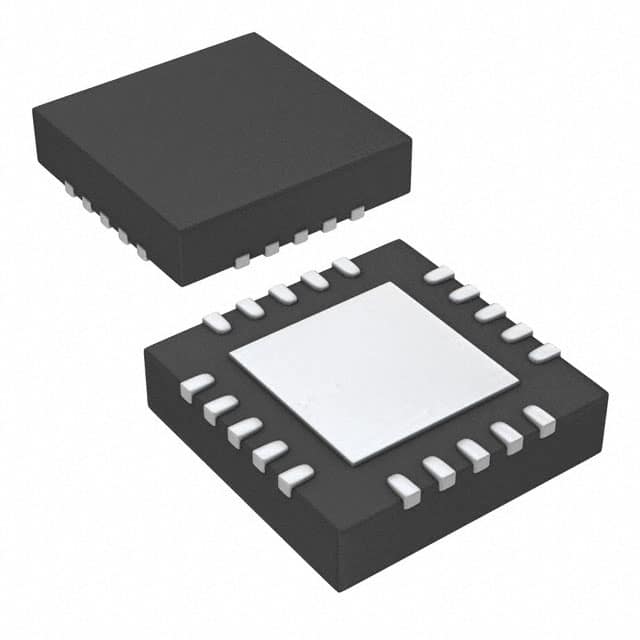
Skyworks Solutions Inc. SI3019-F-GMR
- Part No.:
- SI3019-F-GMR
- Manufacturer:
- Skyworks Solutions Inc.
- Category:
- Telecom
- Package:
- 20-VFQFN Exposed Pad
- Datasheet:
-
 SI3019-F-GMR.pdf
- Description:
- IC TELECOM INTERFACE 20QFN
- Quantity:
- Payment:

- Shipping:

Inventory:2,326
Please send an inquiry. Send us your inquiry, and we will respond immediately.
Product details
Overview
SI3019-F-GMR from Skyworks Solutions is a line-side voice Data Access Arrangement (DAA) IC for FXO analog telephony interfaces, implementing patented capacitive isolation (≥5000 V), programmable AC/DC termination, and integrated ring detection. It operates at 3.3 V, supports 8–16 kHz sampling, delivers 80 dB dynamic range, and pairs with the Si3050 system-side controller in VoIP gateways and IP-PBX systems.
For engineers reviewing the SI3019-F-GMR datasheet, SI3019-F-GMR pinout, SI3019-F-GMR application, or SI3019-F-GMR equivalent, this page provides verified technical context, exact pin functions, real-world use scenarios in DSL IADs and DECT base stations, and validated alternative options for global FXO interface design.
Technical Context
The SI3019-F-GMR implements a fully programmable FXO line interface with dual-mode DC termination (configurable for 20–120 mA loop current), adaptive ring detection (three voltage thresholds: 15/21.5/45 VRMS), and integrated analog hybrid for 2-wire to 4-wire conversion. It supports ground-start and loop-start signaling while maintaining <5 µA on-hook leakage.
It features SPI-controlled digital gain adjustment in 0.1 dB steps, programmable transhybrid balance (30 dB typical at 1 kHz), and dual filter paths-FIR (74 dB stopband attenuation) and IIR-for transmit/receive signal conditioning across 300–3400 Hz voice band.
Key Specifications
| Parameter | Value and Actual Design Meaning |
|---|---|
| Isolation Voltage | ≥5000 V RMS - eliminates need for external isolation transformers, relays, or optocouplers |
| Dynamic Range | 80 dB - enables high-fidelity voice capture and playback over full 300–3400 Hz telephony band |
| Loop Current Range | 10–120 mA - supports global PSTN line requirements including ground-start and loop-start operation |
| Ring Detect Threshold | 15 / 21.5 / 45 VRMS - configurable for regional ring signal standards (Type I/II caller ID) |
| Supply Voltage | 3.3 V ±10% - single-rail operation compatible with standard digital logic domains |
| On-Hook Leakage | ≤5 µA - ensures low standby power and compliance with ITU-T K.21 surge immunity requirements |
| Sampling Rate | 8–16 kHz - supports narrowband PCM and wideband GCI highway interfaces |
Pinout & Package
SI3019-F-GMR is housed in a 20-pin QFN package (4 mm × 4 mm, 0.5 mm pitch) with exposed thermal pad. Pinout is validated per Skyworks Rev. 1.5 datasheet Section 7 and Package Outline #15.
| Pin/Terminal | Circuit Role | Design Meaning |
|---|---|---|
| GND | Ground reference | Primary analog/digital return path; connects to thermal pad for thermal management |
| VREG | Internal regulator output | Provides regulated 3.3 V supply to internal analog blocks; requires 1 µF decoupling |
| TGD | Transhybrid balance control | Analog input for setting impedance matching network to minimize echo in 2-wire interface |
| TGDE | Transhybrid enable | Active-high control enabling/disabling adaptive transhybrid compensation circuitry |
| RNG1 / RNG2 | Ring detect inputs | Differential pair sensing ring voltage; supports three programmable threshold levels |
| QE / QE2 | Quiescent current sense | Monitor pins for loop current measurement during off-hook and on-hook states |
| IB | Line current sense | Analog output proportional to TIP-RING loop current; used for supervision and overload detection |
| SC | Supervision control | Configurable GPIO for polarity reversal detection, parallel handset detection, or custom signaling |
| DCT / DCT2 / DCT3 | DC termination control | Three-bit bus selecting DC termination voltage (9–40 V) and current limit mode (ILIM) |
| RGDT | Ring detect trigger | Open-drain interrupt output asserting on valid ring event; level- or edge-triggered via register |
| RESET | Hardware reset input | Active-low asynchronous reset requiring ≥250 ns pulse width and synchronization with PCLK |
| CS / SCLK / SDI / SDO | SPI interface | Standard 4-wire SPI for configuration, calibration, and status readback (up to 16 MHz clock) |
| AOUT/INT | Multi-function pin | Configurable as PWM audio output or interrupt request signal (e.g., ring detect, overload) |
| RG | Ring generator control | Drives external ringer circuitry; supports programmable frequency (13–68 Hz) and amplitude |
| NC | No connect | Pins 3, 12, 13, 16, 21 - must be left unconnected per datasheet |
Key Features
| Feature | Design Value |
|---|---|
| Patented capacitive isolation | Replaces discrete isolation components, reducing BOM count and PCB area while achieving >5 kV surge immunity |
| Programmable DC termination | Supports 10–120 mA loop current with selectable voltage (9–40 V) and current-limit modes for global PSTN compatibility |
| Triple-threshold ring detection | Enables robust ring recognition across North American (15 V), European (21.5 V), and Japanese (45 V) standards |
| Integrated analog hybrid + digital transhybrid | Delivers ≥30 dB echo suppression at 1 kHz without external components or DSP intervention |
| Caller ID support (Type I/II) | Includes enhanced CID circuitry with 1.5 V peak full-scale level and 62 dB dynamic range for reliable data decoding |
| Low-power sleep modes | Deep sleep draws only 1.3–1.5 mA - critical for battery-backed or energy-constrained IAD deployments |
Applications
| DSL IADs | VoIP Gateways |
|---|---|
Use Scenario: Residential broadband gateway integrating DSL modem and analog phone ports. IC Role / Device Role / Timing Role: Line-side DAA handling PSTN line supervision, ringing, off-hook detection, and voice codec interfacing. Use Value: Enables transformerless FXO interface with ≤5 µA on-hook leakage and programmable ring detection for multi-region deployment. |
Use Scenario: Enterprise VoIP gateway connecting SIP trunk to legacy analog phones. IC Role / Device Role / Timing Role: Analog front-end providing isolated TIP/RING interface, echo cancellation, and PCM/GCI data transport. Use Value: Delivers 80 dB dynamic range and FIR-filtered 300–3400 Hz passband for carrier-grade voice clarity. |
| PBX and IP-PBX Systems | DECT Base Stations |
Use Scenario: On-premise business telephone system supporting analog station ports and trunk lines. IC Role / Device Role / Timing Role: FXO line interface managing loop start/ground start signaling, caller ID decoding, and pulse dialing. Use Value: Supports both pulse and DTMF dialing with integrated spark quenching and billing tone filtering capability. |
Use Scenario: Cordless phone base station with integrated analog line interface for PSTN backup. IC Role / Device Role / Timing Role: Low-power line-side controller enabling standby monitoring and fast ring response. Use Value: Deep sleep current of 1.3–1.5 mA extends battery life during idle periods while maintaining ring detect readiness. |
Equivalent & Alternatives
The following parts are listed as comparable options for similar FXO line interface applications.
| Alternative Part | Technical Difference | Application Difference | Selection Advice |
|---|---|---|---|
| Si3018-F-GMR | Same 20-pin QFN package and pinout; differs in default ring detect threshold (15 V only) and lacks enhanced caller ID circuitry (DRCID = 50 dB vs. 62 dB) | Targeted for cost-sensitive, single-region (e.g., North America) deployments where Type II CID is not required | Select when lower BOM cost and simplified configuration outweigh need for multi-threshold ring detection and enhanced CID performance |
| SLIC1200-IM | Monolithic SLIC (not DAA); requires external codec and isolation; higher power consumption (ID > 15 mA active) | Used in high-channel-count carrier systems where centralized SLIC + separate codec architecture is preferred | Choose only when system-level architecture mandates discrete SLIC + codec partitioning and transformer-based isolation is acceptable |
Compared with SI3019-F-GMR, Si3018-F-GMR offers identical form-factor and basic FXO functionality but reduced ring flexibility and CID fidelity, while SLIC1200-IM represents a fundamentally different architectural approach requiring additional components and higher power.
Availability
SI3019-F-GMR is available at Aetrix Electronics and suitable for DSL IADs, VoIP gateways, and IP-PBX systems requiring stable component supply, long-term lifecycle support, and RoHS-compliant packaging.
Supply support for SI3019-F-GMR includes scheduled delivery planning, volume procurement assistance, BOM continuity management, traceable sourcing, and lifecycle availability coordination for OEM customers, industrial embedded developers, connected-device designers, and electronics production programs.
Manufacturer
Skyworks Solutions is a global semiconductor company specializing in analog and mixed-signal connectivity solutions for wireless, broadband, automotive, and industrial markets.
The SI3019-F-GMR belongs to Skyworks' Voice DAA chipset family, engineered specifically for transformerless, globally compliant FXO analog telephony interfaces in next-generation VoIP infrastructure.
FAQ
What is the primary function of the SI3019-F-GMR in a voice communication system?
The SI3019-F-GMR serves as the line-side Data Access Arrangement (DAA) IC in an FXO interface, handling all physical-layer functions between the PSTN telephone line (TIP/RING) and the system-side controller (e.g., Si3050). It manages loop supervision, ring detection, off-hook signaling, DC/AC termination, and voice signal conditioning - all using Skyworks' patented capacitive isolation technology. The SI3019-F-GMR enables transformerless, globally compliant analog telephony connectivity.
Does the SI3019-F-GMR require external isolation components?
No, the SI3019-F-GMR does not require external isolation transformers, relays, or optocouplers. It integrates Skyworks' patented capacitive isolation technology, delivering ≥5000 V RMS isolation between the line side and system side. This eliminates associated BOM cost, board space, and reliability concerns of discrete isolation components while meeting ITU-T K.21 surge immunity requirements. The SI3019-F-GMR achieves this with internal high-voltage capacitors and proprietary barrier architecture.
How does the SI3019-F-GMR support multiple regional ring standards?
The SI3019-F-GMR supports three programmable ring detect voltage thresholds - 15 VRMS, 21.5 VRMS, and 45 VRMS - selectable via register configuration. These correspond to North American (Type I), European (Type II), and Japanese ring signal standards respectively. The device uses differential inputs RNG1/RNG2 and internal comparators to reliably detect ring events across all three ranges without hardware changes. This configurability makes the SI3019-F-GMR suitable for global product deployment.
What power supply requirements does the SI3019-F-GMR have?
The SI3019-F-GMR operates from a single 3.3 V ±10% supply (VD = 3.0–3.6 V), drawing 8.5–10 mA in active mode and as low as 1.3–1.5 mA in deep sleep mode. It includes an internal VREG output that supplies regulated 3.3 V to its analog sections and requires a 1 µF ceramic capacitor for stability. No secondary voltage rails or LDOs are needed, simplifying power design. All digital I/Os are 3.3 V tolerant, eliminating level-shifting requirements when interfacing with common microcontrollers.
Can the SI3019-F-GMR be used without the Si3050 system-side controller?
No - the SI3019-F-GMR is designed exclusively as a line-side companion to the Si3050 system-side controller and cannot operate autonomously. It relies on the Si3050 for PCM/GCI data transport, SPI register access, clock generation (PCLK, FSYNC), and overall state management. The two devices form a tightly coupled chipset: the Si3050 handles digital interface, codec, and control logic, while the SI3019-F-GMR handles high-voltage line-side analog functions. Their interface is defined in the Skyworks Si3050+Si3011/18/19 datasheet Rev. 1.5.
SI3019-F-GMR Specifications
- Product attributes
- Attribute value
- Manufacturer:
- Skyworks Solutions Inc.
- Series:
- -
- Package/Case:
- 20-VFQFN Exposed Pad
- Packaging:
- Tape & Reel (TR)
- Product Status:
- Obsolete
- Function:
- Direct Access Arrangement (DAA)
- Interface:
- GCI, PCM, SPI
- Number of Circuits:
- 1
- Voltage - Supply:
- 3V ~ 3.6V
- Current - Supply:
- 8.5mA
- Power (Watts):
- -
- Operating Temperature:
- -40°C ~ 85°C
- Grade:
- -
- Qualification:
- -
- Mounting Type:
- Surface Mount
- Supplier Device Package:
- 20-QFN (3x3)
SI3019-F-GMR FAQ
1.How can I place an order for SI3019-F-GMR through Aetrix?
Please submit a Request for Quotation (RFQ) for SI3019-F-GMR on Aetrix. Our sales agent will provide a competitive quotation and guide you through the order confirmation once you accept the terms.
2.Are the price and stock information for SI3019-F-GMR reliable?
The price and inventory of SI3019-F-GMR are updated periodically and may fluctuate due to market conditions. Stock and pricing data are typically refreshed every 24 hours. Quotation validity for SI3019-F-GMR is usually 5 days.
3.What payment methods are accepted for SI3019-F-GMR?
We accept Wire Transfer, PayPal, Credit Card, Western Union, MoneyGram, and Escrow for SI3019-F-GMR transactions.
Note: Certain payment methods may incur a processing fee.
4.How is shipping managed for SI3019-F-GMR?
SI3019-F-GMR orders can be shipped via leading logistics carriers, including DHL, UPS, FedEx, TNT, or Registered Mail.
Once your SI3019-F-GMR order is processed, you will receive an email with the shipment details and tracking number.
Note: Tracking information may take up to 24 hours to appear. Express delivery typically takes 3–5 business days.
5.How can I obtain technical support or documentation for SI3019-F-GMR?
For technical support, including SI3019-F-GMR datasheets, pinout diagrams, or application guidance, please contact our engineering support team. They can provide detailed documentation and assistance for your SI3019-F-GMR requirements.
6.How does Aetrix verify that SI3019-F-GMR is sourced from the original manufacturer or authorized distributors?
All SI3019-F-GMR products on Aetrix are procured from qualified distributors and authorized channels. Our dedicated quality assurance team conducts strict verification, including traceability checks and, if necessary, third-party testing. This ensures that SI3019-F-GMR meets industry standards.
7.What is the process for return or replacement of SI3019-F-GMR?
All SI3019-F-GMR units undergo pre-shipment inspection (PSI). If there is an issue with SI3019-F-GMR, returns or replacements are accepted under the following conditions:
1.Quantity discrepancies, incorrect items, or visible external defects (such as breakage or corrosion), acknowledged by Aetrix.
2.The issue is reported within 90 days of delivery.
3.The SI3019-F-GMR part is unused and in its original packaging.
Return procedure for SI3019-F-GMR:
1.Submit a request within 90 days.
2.Obtain a Return Material Authorization (RMA) from Aetrix.
SI3019-F-GMR Tags

-
LMC567CMX/NOPB
Texas Instruments
-
LM567CMX/NOPB
Texas Instruments
-
LM567CM/NOPB
Texas Instruments
-
VSC8531XMW-02
Microchip Technology
-
VSC8531XMW-05
Microchip Technology

-
GPY115C0VI
MaxLinear, Inc.
-
SI32185-A-FMR
Skyworks Solutions Inc.
-
VSC8541XMV-05
Microchip Technology
-
SI32178-B-FM1R
Skyworks Solutions Inc.
-
GPY215C0VI
MaxLinear, Inc.
-
CPC7514ZTR
Littelfuse Inc.
-
VSC8502XML-03
Microchip Technology
Tech Hub
Counterfeit components can hide behind convincing markings and passing basic function tests. This engineering reference covers source traceability, external inspection, X-ray, XRF, electrical testing, …

A practical engineering and sourcing framework covering lifecycle verification, lifetime-buy calculations, replacement qualification, supplier checks and counterfeit-risk controls.

TTL and CMOS logic families differ in thresholds, loading, output drive, power and timing. This engineering guide compares 74HC and 74HCT, calculates noise margins and checks 3.3 V/5 V compatibility.

A practical engineering guide to 3.3V and 5V logic compatibility, input thresholds, resistor dividers, translator ICs, MOSFET level shifting, I2C pull-ups, timing limits and power-sequencing risks.

The 74HC595 uses push-pull logic outputs, while the TPIC6B595 uses 50 V open-drain DMOS sinks for higher-power loads. This guide compares timing, current limits, 3.3 V interfacing, load wiring, thermal…

The 74HC595 converts serial data into eight stable parallel outputs. This guide covers pin functions, shift and storage timing, OE and MR behavior, drive-current limits, cascading, voltage compatibilit…

A technical comparison of level-sensitive latches and edge-triggered flip-flops, covering timing windows, setup and hold limits, master–slave operation, time borrowing, race-through, HDL inference and…

A D latch stores one bit while Enable controls when data can pass. This reference covers gate-level operation, truth tables, transparency, setup and hold timing, LE versus OE, common ICs and practical …

An SR latch stores one bit through cross-coupled feedback. This engineering reference covers NOR and NAND implementations, truth tables, forbidden-state recovery, gated operation, switch debouncing, fa…

Latch circuits retain one bit through feedback. This technical reference covers SR and D latches, truth tables, transparency, timing limits, latch-versus-flip-flop behavior, applications and common log…


