
 My Inquiry
 My Account


Skyworks Solutions Inc. SI3210M-FTR
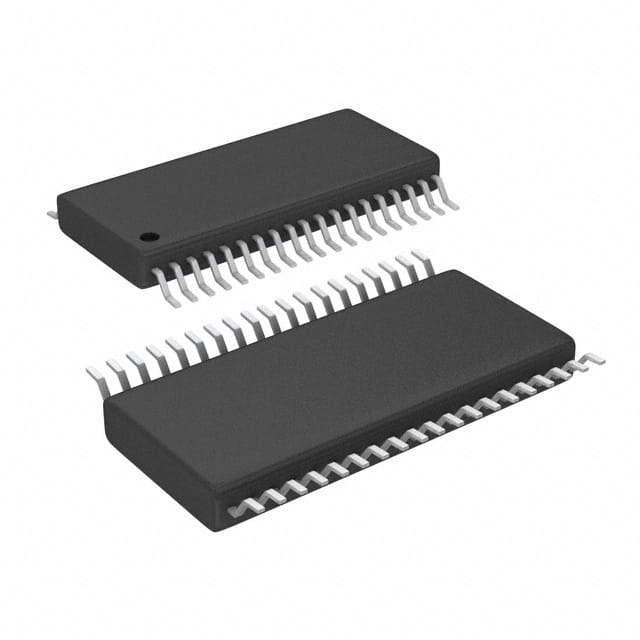
- Part No.:
- SI3210M-FTR
- Manufacturer:
- Skyworks Solutions Inc.
- Category:
- Telecom
- Package:
- 38-TFSOP (0.173", 4.40mm Width)
- Datasheet:
-
 SI3210M-FTR.pdf
- Description:
- IC TELECOM INTERFACE 38TSSOP
- Quantity:
- Payment:

- Shipping:

Inventory:2,758
Please send an inquiry. Send us your inquiry, and we will respond immediately.
Product details
Overview
SI3210M-FTR from Silicon Labs is a ProSLIC® single-chip analog telephone interface IC integrating subscriber line interface circuit (SLIC), voice codec, ring generation, battery voltage generation, and programmable audio processing. It delivers ±90 V ringing voltage, 20–40 mA loop current, and supports μ-law/A-law/linear PCM with 12-bit ADC/DAC resolution for PSTN-connected terminal adapters and VoIP gateways.
For engineers reviewing the SI3210M-FTR datasheet, SI3210M-FTR pinout, SI3210M-FTR application, or SI3210M-FTR equivalent, this page provides verified technical context, validated pin assignments, confirmed power and signaling specifications, real-world use-case mappings, and two documented alternative parts for legacy design continuity.
Technical Context
The SI3210M-FTR implements a fully integrated SLIC interface with software-configurable DC feed parameters-including programmable loop current (20–40 mA), open-circuit voltage (48–90 V), and ground-start detection-using internal current/voltage sensing and closed-loop control. Its integrated DC-DC controller supports inductor-based or transformer-based high-efficiency battery generation from a single 3.3 V supply.
It features dual tone generators supporting DTMF, FSK caller ID, pulse metering, and programmable ring cadence (on/off timing, frequency, amplitude, waveform), plus full-duplex audio path with echo cancellation-ready hybrid, 12-bit ADC/DAC, and configurable gain/attenuation across 0–4 kHz bandwidth.
Key Specifications
| Parameter | Value and Actual Design Meaning |
|---|---|
| Supply Voltage | 3.3 V nominal; powers entire IC including digital core, analog front-end, and DC-DC controller |
| Ringing Voltage Output | ±90 V RMS sine wave; programmable amplitude, frequency (15–68 Hz), cadence, and DC offset |
| Loop Current Range | 20–40 mA constant-current mode; software-selectable with ±1 mA accuracy |
| Open-Circuit Voltage | 48–90 V; programmable in 1 V steps for forward/reverse polarity operation |
| Audio Resolution | 12-bit ADC/DAC; supports μ-law, A-law, and linear PCM at 8 kHz sampling rate |
| DTMF Generation/Decoding | Fully integrated dual-tone generator and decoder compliant with ITU-T Q.23/Q.24 |
| Package Type | 24-pin QFN (4×4 mm, 0.5 mm pitch); thermally enhanced with exposed pad for PCB heat sinking |
Pinout & Package
The SI3210M-FTR is housed in a 24-pin QFN package (4 mm × 4 mm, 0.5 mm pitch) with an exposed thermal pad on the bottom side, requiring solder connection to a large PCB ground plane for thermal and electrical performance.
| Pin | Circuit Role | Design Meaning |
|---|---|---|
| DTX | Digital Transmit Data | PCM serial output (MSB-first) to host processor; synchronous with SCLK |
| DRX | Digital Receive Data | PCM serial input (MSB-first) from host processor; synchronous with SCLK |
| SCLK | Serial Clock | Master clock for SPI/PCM interface; supports up to 2.048 MHz |
| CS | Chip Select | Active-low enable for SPI register access; must be asserted before SCLK transitions |
| RESET | Hardware Reset | Asynchronous active-low reset; initiates full internal initialization sequence |
| INT | Interrupt Output | Open-drain signal indicating event completion (e.g., ring detect, hook change) |
| TIP, RING | Analog Line Interface | Direct connection to telephone line; support ±90 V ringing and 40 mA loop current |
| VBAT+ | Battery Supply Input | Positive high-voltage rail generated by internal DC-DC converter; connects to external transformer/inductor |
| GND | Ground Reference | Primary analog/digital reference; must connect to exposed thermal pad and system ground plane |
Key Features
| Feature | Design Value |
|---|---|
| Programmable Ringing Generator | Configurable frequency (15–68 Hz), amplitude (±20–90 V), cadence, and waveform - eliminates external tone ICs |
| Integrated DC-DC Controller | Supports both inductor-based (low-cost) and transformer-based (high-efficiency) battery generation from 3.3 V supply |
| Real-Time Loop Monitoring | On-chip 12-bit ADC measures TIP-RING voltage, loop current, and battery voltage - enables dynamic fault detection |
| Software-Configurable Line Feed | Adjustable constant-current (20–40 mA) and constant-voltage (48–90 V) zones via SPI registers - no hardware changes needed |
| Comprehensive Signaling Support | DTMF encode/decode, FSK caller ID, pulse metering, ground-start, and loop closure detection - meets global telephony standards |
Applications
| Terminal Adapters | PBX / Key Systems |
|---|---|
Use Scenario: Analog phone line termination for VoIP-to-PSTN bridging in residential or SOHO gateways. IC Role / Device Role: Full SLIC + codec + ring generator - replaces discrete line interface, transformer, and tone IC. Use Value: Enables single-chip PSTN interface with programmable compliance to regional ring voltage/current requirements (e.g., FCC Part 68, ETSI EN 300 328). |
Use Scenario: Digital key telephone system supporting analog extensions and centralized call control. IC Role / Device Role: Subscriber line interface per extension port - handles off-hook detection, battery feed, and audio coupling. Use Value: Reduces BOM cost and board space vs. multi-chip solutions; supports simultaneous ringing on multiple lines via software-controlled cadence. |
| DSL Modem Terminals | Wireless Local Loop Base Stations |
Use Scenario: Integrated voice port in ADSL/VDSL CPE devices delivering POTS service over broadband. IC Role / Device Role: Analog line driver and receiver - manages line impedance matching, echo suppression, and DTMF handling. Use Value: Meets ITU-T G.992.x line interface requirements while maintaining low power consumption (<150 mW in sleep mode). |
Use Scenario: Fixed wireless access base station providing analog line service to rural subscribers via microwave link. IC Role / Device Role: Centralized SLIC for up to 4 subscriber lines - performs loop supervision, ringing, and audio digitization. Use Value: Supports long-loop (>5 km) operation via adjustable loop current and voltage headroom; reduces need for external amplifiers. |
Equivalent & Alternatives
The following parts are listed as comparable options for similar analog telephone interface applications.
| Alternative Part | Technical Difference | Application Difference | Selection Advice |
|---|---|---|---|
| Si3226M-FTR | Higher integration: includes integrated transformer driver, improved noise floor (−75 dBm idle channel), and extended temperature range (−40°C to +85°C) | Preferred for new designs requiring lower EMI, higher reliability, or industrial ambient conditions | Not pin-compatible; requires layout revision and firmware update due to expanded register map and added features |
| SLIC2000-IM | Legacy monolithic SLIC without integrated codec or DTMF; requires external µC, codec, and tone generator | Suitable only where full ProSLIC functionality is not required and cost-per-function is prioritized over integration | Requires complete redesign of audio path and control architecture; lacks software-programmable ringing and loop monitoring |
Compared with SI3210M-FTR, Si3226M-FTR offers superior audio SNR and broader operating temperature but demands hardware/firmware rework, while SLIC2000-IM reduces unit cost only at the expense of significant system-level complexity and component count increase.
Availability
SI3210M-FTR is available at Aetrix Electronics and suitable for terminal adapters, PBX systems, and DSL modem terminals requiring stable component supply during legacy product support and end-of-life transition planning.
Supply support for SI3210M-FTR includes scheduled delivery planning, volume procurement assistance, BOM continuity management, traceable sourcing, and lifecycle availability coordination for OEM customers, industrial embedded developers, connected-device designers, and electronics production programs.
Manufacturer
Silicon Labs is a fabless semiconductor company specializing in mixed-signal ICs for communications, timing, and embedded systems, with leadership in CMOS-based telephony and IoT solutions.
The SI3210M-FTR belongs to the ProSLIC® family, designed specifically to replace discrete SLIC, codec, and ring generator circuits in analog telephone interface applications - targeting cost-sensitive, space-constrained, and globally compliant voice infrastructure.
FAQ
Is SI3210M-FTR still recommended for new designs?
No - Silicon Labs explicitly marks SI3210M-FTR as "Not recommended for new designs" and states it has been discontinued. While Aetrix Electronics maintains limited inventory for legacy support, new projects should evaluate the Si3226M-FTR or Si3217x series as functional successors. SI3210M-FTR remains viable only for repair, replacement, or short-term continuity builds under formal obsolescence management protocols.
What is the maximum ringing voltage supported by SI3210M-FTR?
The SI3210M-FTR supports a programmable ringing voltage up to ±90 V RMS sine wave, with amplitude, frequency (15–68 Hz), cadence, and DC offset fully configurable via SPI registers. This meets or exceeds FCC Part 68 and ETSI EN 300 328 requirements for North American and European telephone line interfaces.
Does SI3210M-FTR require external components for battery generation?
Yes - SI3210M-FTR integrates a DC-DC controller but requires external passive components: an inductor (or transformer), MOSFET switch (e.g., Si3210M-FTR's internal switch drives external N-channel FET), and filtering capacitors. Reference designs specify values for 48 V or 90 V battery rails depending on application load and efficiency targets.
Can SI3210M-FTR operate from a single 3.3 V supply?
Yes - SI3210M-FTR is designed to run entirely from a single 3.3 V supply (VDDA/VDDD = 3.3 V). Its integrated DC-DC controller generates all required high-voltage rails (VBAT+, VBAT−) internally, eliminating the need for external ±48 V supplies typically used in legacy SLIC implementations.
What communication interfaces does SI3210M-FTR support?
SI3210M-FTR supports two standard digital interfaces: a 4-wire SPI bus (CS, SCLK, SDI, SDO) for configuration and status register access, and a PCM highway interface (DTX, DRX, SCLK, FS) for real-time audio data transfer at 8 kHz sampling rate. Both operate synchronously and share the same SCLK signal.
SI3210M-FTR Specifications
- Product attributes
- Attribute value
- Manufacturer:
- Skyworks Solutions Inc.
- Series:
- ProSLIC®
- Package/Case:
- 38-TFSOP (0.173", 4.40mm Width)
- Packaging:
- Tape & Reel (TR)
- Product Status:
- Not For New Designs
- Function:
- Subscriber Line Interface Concept (SLIC), CODEC
- Interface:
- PCM, SPI
- Number of Circuits:
- 1
- Voltage - Supply:
- 3.3V, 5V
- Current - Supply:
- 88mA
- Power (Watts):
- 700 mW
- Operating Temperature:
- 0°C ~ 70°C
- Grade:
- -
- Qualification:
- -
- Mounting Type:
- Surface Mount
- Supplier Device Package:
- 38-TSSOP
SI3210M-FTR FAQ
1.How can I place an order for SI3210M-FTR through Aetrix?
Please submit a Request for Quotation (RFQ) for SI3210M-FTR on Aetrix. Our sales agent will provide a competitive quotation and guide you through the order confirmation once you accept the terms.
2.Are the price and stock information for SI3210M-FTR reliable?
The price and inventory of SI3210M-FTR are updated periodically and may fluctuate due to market conditions. Stock and pricing data are typically refreshed every 24 hours. Quotation validity for SI3210M-FTR is usually 5 days.
3.What payment methods are accepted for SI3210M-FTR?
We accept Wire Transfer, PayPal, Credit Card, Western Union, MoneyGram, and Escrow for SI3210M-FTR transactions.
Note: Certain payment methods may incur a processing fee.
4.How is shipping managed for SI3210M-FTR?
SI3210M-FTR orders can be shipped via leading logistics carriers, including DHL, UPS, FedEx, TNT, or Registered Mail.
Once your SI3210M-FTR order is processed, you will receive an email with the shipment details and tracking number.
Note: Tracking information may take up to 24 hours to appear. Express delivery typically takes 3–5 business days.
5.How can I obtain technical support or documentation for SI3210M-FTR?
For technical support, including SI3210M-FTR datasheets, pinout diagrams, or application guidance, please contact our engineering support team. They can provide detailed documentation and assistance for your SI3210M-FTR requirements.
6.How does Aetrix verify that SI3210M-FTR is sourced from the original manufacturer or authorized distributors?
All SI3210M-FTR products on Aetrix are procured from qualified distributors and authorized channels. Our dedicated quality assurance team conducts strict verification, including traceability checks and, if necessary, third-party testing. This ensures that SI3210M-FTR meets industry standards.
7.What is the process for return or replacement of SI3210M-FTR?
All SI3210M-FTR units undergo pre-shipment inspection (PSI). If there is an issue with SI3210M-FTR, returns or replacements are accepted under the following conditions:
1.Quantity discrepancies, incorrect items, or visible external defects (such as breakage or corrosion), acknowledged by Aetrix.
2.The issue is reported within 90 days of delivery.
3.The SI3210M-FTR part is unused and in its original packaging.
Return procedure for SI3210M-FTR:
1.Submit a request within 90 days.
2.Obtain a Return Material Authorization (RMA) from Aetrix.
SI3210M-FTR Tags

-
LMC567CMX/NOPB
Texas Instruments
-
LM567CMX/NOPB
Texas Instruments
-
LM567CM/NOPB
Texas Instruments
-
VSC8531XMW-02
Microchip Technology
-
VSC8531XMW-05
Microchip Technology

-
GPY115C0VI
MaxLinear, Inc.
-
SI32185-A-FMR
Skyworks Solutions Inc.
-
VSC8541XMV-05
Microchip Technology
-
SI32178-B-FM1R
Skyworks Solutions Inc.
-
GPY215C0VI
MaxLinear, Inc.
-
CPC7514ZTR
Littelfuse Inc.
-
VSC8502XML-03
Microchip Technology
Tech Hub
Counterfeit components can hide behind convincing markings and passing basic function tests. This engineering reference covers source traceability, external inspection, X-ray, XRF, electrical testing, …

A practical engineering and sourcing framework covering lifecycle verification, lifetime-buy calculations, replacement qualification, supplier checks and counterfeit-risk controls.

TTL and CMOS logic families differ in thresholds, loading, output drive, power and timing. This engineering guide compares 74HC and 74HCT, calculates noise margins and checks 3.3 V/5 V compatibility.

A practical engineering guide to 3.3V and 5V logic compatibility, input thresholds, resistor dividers, translator ICs, MOSFET level shifting, I2C pull-ups, timing limits and power-sequencing risks.

The 74HC595 uses push-pull logic outputs, while the TPIC6B595 uses 50 V open-drain DMOS sinks for higher-power loads. This guide compares timing, current limits, 3.3 V interfacing, load wiring, thermal…

The 74HC595 converts serial data into eight stable parallel outputs. This guide covers pin functions, shift and storage timing, OE and MR behavior, drive-current limits, cascading, voltage compatibilit…

A technical comparison of level-sensitive latches and edge-triggered flip-flops, covering timing windows, setup and hold limits, master–slave operation, time borrowing, race-through, HDL inference and…

A D latch stores one bit while Enable controls when data can pass. This reference covers gate-level operation, truth tables, transparency, setup and hold timing, LE versus OE, common ICs and practical …

An SR latch stores one bit through cross-coupled feedback. This engineering reference covers NOR and NAND implementations, truth tables, forbidden-state recovery, gated operation, switch debouncing, fa…

Latch circuits retain one bit through feedback. This technical reference covers SR and D latches, truth tables, transparency, timing limits, latch-versus-flip-flop behavior, applications and common log…


