
 My Inquiry
 My Account


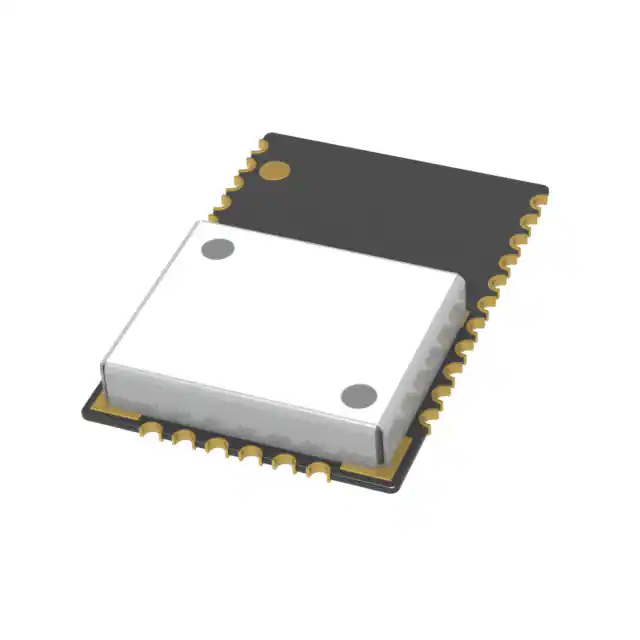
Skyworks Solutions Inc. SI4705-D60-GMR

- Part No.:
- SI4705-D60-GMR
- Manufacturer:
- Skyworks Solutions Inc.
- Category:
- RF Receivers
- Package:
- 20-UFQFN Exposed Pad
- Datasheet:
-
 SI4705-D60-GMR.pdf
- Description:
- RF RCVR FM 64MHZ-108MHZ 20QFN
- Quantity:
- Payment:

- Shipping:

Inventory:2,777
Please send an inquiry. Send us your inquiry, and we will respond immediately.
Product details
Overview
SI4705-D60 from Skyworks Solutions is a broadcast FM radio receiver IC with integrated RDS/RBDS processor, supporting worldwide FM band (64–108 MHz), delivering 2.2 µV EMF sensitivity, 42 dB stereo separation, and digital audio output via I²S interface. It serves as the core tuner in compact consumer audio devices requiring high TDMA noise immunity and high-fidelity analog/digital audio output.
For engineers reviewing the SI4705-D60 datasheet, SI4705-D60 pinout, SI4705-D60 application, or SI4705-D60 equivalent, key selection considerations include RDS decoding capability, dual-supply operation (VA: 2.7–5.5 V / VD: 1.62–3.6 V), QFN-20 or SSOP-24 package options, 2-wire/3-wire control interface, and FM seek time ≤60 ms/channel.
Technical Context
The SI4705-D60 implements a low-IF architecture with integrated VCO and on-chip LNA (input impedance: 4 kΩ, 5 pF), enabling direct antenna coupling without external tuning components. Its DSP-based FM stereo decoder supports programmable de-emphasis (45–80 µs) and advanced audio processing including soft mute and FM hi-cut control.
RDS/RBDS functionality is exclusive to the SI4705-D60 variant (not present in SI4704-D60), with dedicated RDS demodulation, block error rate <5% at 10 µV EMF, and full protocol parsing. Control is implemented via configurable 2-wire (I²C-compatible, up to 400 kHz) or 3-wire serial interface with hardware reset and GPO-driven interrupt signaling.
Key Specifications
| Parameter | Value and Actual Design Meaning |
|---|---|
| FM Frequency Range | 64–108 MHz - covers global FM broadcast bands including Japan (76–90 MHz), Europe (87.5–108 MHz), and Americas (88–108 MHz). |
| Sensitivity (S+N/N = 26 dB) | 2.2 µV EMF - enables reliable reception in weak-signal urban or portable environments with standard ferrite rod or PCB trace antennas. |
| RDS Sensitivity | 10 µV EMF (BLER <5%) - ensures robust RDS data recovery under marginal RF conditions for traffic, station name, and program type display. |
| Audio Output (LOUT/ROUT) | 72–90 mVRMS - drives 10 kΩ single-ended loads directly; supports headphone-level output without external amplification stage. |
| Supply Current (FM Mode, QFN) | 8.2–13.5 mA total (VA + VD) - enables battery-powered operation with typical runtime >20 hours on two AA cells. |
| Digital Audio Interface | I²S-compatible DCLK/DFS/DOUT - provides bit-accurate stereo PCM output synchronized to external or internal 32.768 kHz reference clock. |
| Control Interface | 2-wire (I²C, 400 kHz max) or 3-wire (2.5 MHz max) - allows flexible host MCU integration with minimal GPIO usage and no external level shifters required. |
| Powerdown Current | 3–15 µA - supports ultra-low-power standby in always-on clock radios and IoT audio endpoints. |
Pinout & Package
SI4705-D60 is available in two RoHS-compliant packages: 20-pin QFN (3 mm × 3 mm, 0.5 mm pitch, exposed thermal pad) and 24-pin SSOP (LEAD-FREE, 300 mil width). Both variants share identical functional pin mapping except for NC/GND assignments and power supply voltage ranges (QFN VA: 2.7–5.5 V; SSOP VA: 2.0–5.5 V).
| Pin/Terminal | Circuit Role | Design Meaning |
|---|---|---|
| FMI | FM Antenna Input | High-impedance RF input (4 kΩ || 5 pF); connects directly to monopole, PCB trace, or ferrite rod antenna with no matching network required. |
| RFGND | RF Ground Reference | Dedicated ground return for RF section; must be isolated from digital ground and connected to solid ground plane beneath FMI trace. |
| LOUT / ROUT | Analog Audio Outputs | Single-ended line-level outputs (72–90 mVRMS); each drives 10 kΩ load with ≤1 dB L/R imbalance. |
| DOUT / DFS / DCLK | Digital Audio Interface | I²S data (DOUT), frame sync (DFS), and bit clock (DCLK); support 32.768 kHz reference-derived sampling (e.g., 44.1 kHz). |
| GPO2/[INT] | General-Purpose Output / Interrupt | Configurable open-drain output; asserts low on RDS ready, seek complete, or signal loss events-enables event-driven host wake-up. |
| RST | Hardware Reset Input | Active-low asynchronous reset; requires ≥100 µs pulse width after supplies stabilize; controls boot mode selection (2-/3-wire). |
| SDIO / SCLK / SEN | Serial Control Interface | 2-wire: SDIO bidirectional, SCLK clock; 3-wire: SDIO data, SCLK clock, SEN chip select-no external pull-ups needed in 3-wire mode. |
| VA / VD | Analog & Digital Supplies | VA powers RF/analog blocks (2.7–5.5 V QFN); VD powers digital core/I/O (1.62–3.6 V); independent regulation enables mixed-voltage system design. |
Key Features
| Feature | Design Value |
|---|---|
| RDS/RBDS Processor | Full protocol stack implementation (groups A–E) with error correction; delivers station ID, program service name, traffic announcements, and clock time to host MCU via register reads. |
| Advanced FM Seek Tuning | Automatic channel scan with programmable threshold (RSSI > –70 dBm) and adjacent-channel rejection; completes full-band seek in <2 seconds. |
| Integrated LDO Regulator | On-chip analog LDO supplies internal RF blocks; eliminates need for external 3.3 V regulator in cost-sensitive designs. |
| EN55020 Compliance | Meets CISPR 20 / EN 55020 radiated emission limits without shielding cans or ferrite beads-reduces BOM and layout complexity. |
| No Manual Alignment Required | Factory-trimmed VCO and AGC loop eliminate production calibration steps; reduces manufacturing test time and fixture cost. |
| Programmable Reference Clock | Accepts 31.13–40 MHz external clock or 32.768 kHz crystal; enables precise frequency synthesis and jitter-free audio timing across temperature. |
Applications
| Portable FM Radios | Clock Radios |
|---|---|
Use Scenario: Battery-powered handheld radios with LCD display and speaker output. IC Role / Device Role / Timing Role: Primary FM tuner and RDS decoder; provides audio output and station metadata to MCU for UI rendering. Use Value: 2.2 µV sensitivity ensures usable reception indoors; 3–15 µA powerdown current extends AA battery life to >6 months in standby. | Use Scenario: Bedside alarm clocks with FM preset stations and time-synced RDS clock update. IC Role / Device Role / Timing Role: FM receiver with embedded real-time clock synchronization via RDS time-of-day packets. Use Value: Eliminates need for separate RTC crystal; RDS time accuracy ±1 second per day reduces manual clock correction. |
| CD/DVD Players | Mini Hi-Fi Docking Stations |
Use Scenario: Home entertainment systems integrating FM radio alongside optical disc playback. IC Role / Device Role / Timing Role: Analog audio source feeding line-in amplifier; digital audio output routed to DAC for multi-source mixing. Use Value: 42 dB stereo separation prevents crosstalk between FM and CD audio paths; EN55020 compliance avoids EMI interference with sensitive analog stages. | Use Scenario: iPhone/iPod docking stations offering FM radio alongside docked device audio. IC Role / Device Role / Timing Role: Standalone tuner subsystem with I²S output synchronized to host SoC audio clock domain. Use Value: I²S interface enables bit-perfect digital audio routing without ADC/DAC conversion loss; GPO2 interrupt signals RDS updates to host without polling overhead. |
Equivalent & Alternatives
The following parts are listed as comparable options for similar FM radio receiver applications.
| Alternative Part | Technical Difference | Application Difference | Selection Advice |
|---|---|---|---|
| SI4702-D60 | Lacks RDS/RBDS processor; otherwise identical FM performance, pinout, and software interface. | Not suitable for RDS-dependent applications (e.g., traffic alerts, station name display). | Select SI4702-D60 only when RDS functionality is unnecessary and BOM cost reduction is critical. |
| TEF6686HN/V1 | Wider frequency range (16–108 MHz AM/FM/SW/LW); higher sensitivity (1.5 µV); requires external crystal and more passive components. | Supports AM/SW bands and automotive-grade temp range (–40°C to +105°C); larger footprint and higher system cost. | Choose TEF6686HN/V1 for multi-band receivers or automotive environments where extended temp and AM capability are required. |
Compared with SI4702-D60, SI4705-D60 adds essential RDS decoding without increasing board area or power consumption; versus TEF6686HN/V1, it offers lower system cost and simpler layout for FM-only consumer audio, trading multi-band flexibility for integration density.
Availability
SI4705-D60 is available at Aetrix Electronics and suitable for portable FM radios, clock radios, and CD/DVD players requiring stable component supply, long-term lifecycle support, and RoHS-compliant packaging.
Supply support for SI4705-D60 includes scheduled delivery planning, volume procurement assistance, BOM continuity management, traceable sourcing, and lifecycle availability coordination for OEM customers, industrial embedded developers, connected-device designers, and electronics production programs.
Manufacturer
Skyworks Solutions is a global semiconductor company specializing in analog and mixed-signal connectivity solutions for wireless, automotive, and industrial markets.
The SI4705-D60 belongs to Skyworks' Si470x broadcast receiver family, engineered for cost-sensitive consumer audio applications demanding high-performance FM reception, RDS metadata, and minimal external components.
FAQ
What is the primary function of the SI4705-D60?
The SI4705-D60 is a fully integrated FM radio receiver IC with built-in RDS/RBDS decoding capability. It converts RF signals from 64–108 MHz into analog line-level audio (LOUT/ROUT) and/or digital I²S audio (DOUT/DFS/DCLK), while parsing RDS data such as station name, program type, and traffic announcements. Its role in a system is to serve as the complete tuner front-end without requiring external IF filters, mixers, or demodulators.
Does the SI4705-D60 require an external crystal oscillator?
The SI4705-D60 supports both external crystal (32.768 kHz) and external clock (31.13–40 MHz) inputs on the RCLK pin. A crystal is optional but recommended for stable FM seek/tune accuracy (±50 ppm tolerance required for 50 kHz channel spacing). When using the crystal, external load capacitors (e.g., 22 pF) are required per the datasheet layout guidelines.
How does the SI4705-D60 handle antenna interfacing?
The SI4705-D60 features a high-impedance FM antenna input (FMI) with nominal 4 kΩ resistance and 5 pF capacitance, enabling direct connection to PCB trace antennas, wire antennas, or ferrite rods without impedance-matching networks. The dedicated RFGND pin must be tied to a clean RF ground plane, and FMI traces should be kept short and isolated from digital routing to maintain sensitivity and selectivity.
What are the power supply requirements for the SI4705-D60?
The SI4705-D60 requires two independent supplies: VA (analog, 2.7–5.5 V for QFN or 2.0–5.5 V for SSOP) and VD (digital/I/O, 1.62–3.6 V). VA powers the LNA, mixer, IF, and DAC; VD powers the digital core, interface logic, and GPOs. Decoupling capacitors (22 nF near VA, 100 nF near VD) are mandatory per the application schematic to ensure stable operation and low-noise performance.
Can the SI4705-D60 be used in battery-powered devices?
Yes, the SI4705-D60 is optimized for battery operation: typical FM-mode supply current is 8.2–13.5 mA (QFN), and powerdown current is as low as 3 µA. Its wide VA range (2.0–5.5 V) supports direct connection to 2×AA/AAA cells (3.0 V nominal) or Li-ion (3.7 V), and the 3–15 µA powerdown state enables multi-month standby in clock radios and portable radios without compromising startup time (110 ms from powerdown).
SI4705-D60-GMR Specifications
- Product attributes
- Attribute value
- Manufacturer:
- Skyworks Solutions Inc.
- Series:
- -
- Package/Case:
- 20-UFQFN Exposed Pad
- Packaging:
- Tape & Reel (TR)
- Product Status:
- Active
- Frequency:
- 64MHz ~ 108MHz
- Sensitivity:
- -
- Data Rate (Max):
- -
- Modulation or Protocol:
- FM
- Applications:
- General Purpose
- Current - Receiving:
- 10.5mA
- Data Interface:
- PCB, Surface Mount
- Memory Size:
- -
- Antenna Connector:
- PCB, Surface Mount
- Features:
- -
- Voltage - Supply:
- 2.7V ~ 5.5V
- Operating Temperature:
- -20°C ~ 85°C
- Grade:
- -
- Qualification:
- -
- Mounting Type:
- Surface Mount
- Supplier Device Package:
- 20-QFN (3x3)
SI4705-D60-GMR FAQ
1.How can I place an order for SI4705-D60-GMR through Aetrix?
Please submit a Request for Quotation (RFQ) for SI4705-D60-GMR on Aetrix. Our sales agent will provide a competitive quotation and guide you through the order confirmation once you accept the terms.
2.Are the price and stock information for SI4705-D60-GMR reliable?
The price and inventory of SI4705-D60-GMR are updated periodically and may fluctuate due to market conditions. Stock and pricing data are typically refreshed every 24 hours. Quotation validity for SI4705-D60-GMR is usually 5 days.
3.What payment methods are accepted for SI4705-D60-GMR?
We accept Wire Transfer, PayPal, Credit Card, Western Union, MoneyGram, and Escrow for SI4705-D60-GMR transactions.
Note: Certain payment methods may incur a processing fee.
4.How is shipping managed for SI4705-D60-GMR?
SI4705-D60-GMR orders can be shipped via leading logistics carriers, including DHL, UPS, FedEx, TNT, or Registered Mail.
Once your SI4705-D60-GMR order is processed, you will receive an email with the shipment details and tracking number.
Note: Tracking information may take up to 24 hours to appear. Express delivery typically takes 3–5 business days.
5.How can I obtain technical support or documentation for SI4705-D60-GMR?
For technical support, including SI4705-D60-GMR datasheets, pinout diagrams, or application guidance, please contact our engineering support team. They can provide detailed documentation and assistance for your SI4705-D60-GMR requirements.
6.How does Aetrix verify that SI4705-D60-GMR is sourced from the original manufacturer or authorized distributors?
All SI4705-D60-GMR products on Aetrix are procured from qualified distributors and authorized channels. Our dedicated quality assurance team conducts strict verification, including traceability checks and, if necessary, third-party testing. This ensures that SI4705-D60-GMR meets industry standards.
7.What is the process for return or replacement of SI4705-D60-GMR?
All SI4705-D60-GMR units undergo pre-shipment inspection (PSI). If there is an issue with SI4705-D60-GMR, returns or replacements are accepted under the following conditions:
1.Quantity discrepancies, incorrect items, or visible external defects (such as breakage or corrosion), acknowledged by Aetrix.
2.The issue is reported within 90 days of delivery.
3.The SI4705-D60-GMR part is unused and in its original packaging.
Return procedure for SI4705-D60-GMR:
1.Submit a request within 90 days.
2.Obtain a Return Material Authorization (RMA) from Aetrix.
SI4705-D60-GMR Tags
-
MICRF220AYQS-TR
Microchip Technology
-
SX1239IMLTRT
Semtech Corporation
-
SI4356-B1A-FMR
Silicon Labs

-
SI4362-C2A-GMR
Silicon Labs

-
MAX1473EUI+T
Analog Devices Inc./Maxim Integrated

-
CMX992Q3
CML Micro

-
CMX994AQ4
CML Micro

-
MAX2112ETI+
Analog Devices Inc./Maxim Integrated
-
MAX2112ETI+T
Analog Devices Inc./Maxim Integrated
-
TESEO-LIV3R
STMicroelectronics
-
M20048-1
Antenova
-
CMX994EQ4
CML Micro
Tech Hub

Counterfeit components can hide behind convincing markings and passing basic function tests. This engineering reference covers source traceability, external inspection, X-ray, XRF, electrical testing, …

A practical engineering and sourcing framework covering lifecycle verification, lifetime-buy calculations, replacement qualification, supplier checks and counterfeit-risk controls.

TTL and CMOS logic families differ in thresholds, loading, output drive, power and timing. This engineering guide compares 74HC and 74HCT, calculates noise margins and checks 3.3 V/5 V compatibility.

A practical engineering guide to 3.3V and 5V logic compatibility, input thresholds, resistor dividers, translator ICs, MOSFET level shifting, I2C pull-ups, timing limits and power-sequencing risks.

The 74HC595 uses push-pull logic outputs, while the TPIC6B595 uses 50 V open-drain DMOS sinks for higher-power loads. This guide compares timing, current limits, 3.3 V interfacing, load wiring, thermal…

The 74HC595 converts serial data into eight stable parallel outputs. This guide covers pin functions, shift and storage timing, OE and MR behavior, drive-current limits, cascading, voltage compatibilit…

A technical comparison of level-sensitive latches and edge-triggered flip-flops, covering timing windows, setup and hold limits, master–slave operation, time borrowing, race-through, HDL inference and…

A D latch stores one bit while Enable controls when data can pass. This reference covers gate-level operation, truth tables, transparency, setup and hold timing, LE versus OE, common ICs and practical …

An SR latch stores one bit through cross-coupled feedback. This engineering reference covers NOR and NAND implementations, truth tables, forbidden-state recovery, gated operation, switch debouncing, fa…

Latch circuits retain one bit through feedback. This technical reference covers SR and D latches, truth tables, transparency, timing limits, latch-versus-flip-flop behavior, applications and common log…


