
 My Inquiry
 My Account


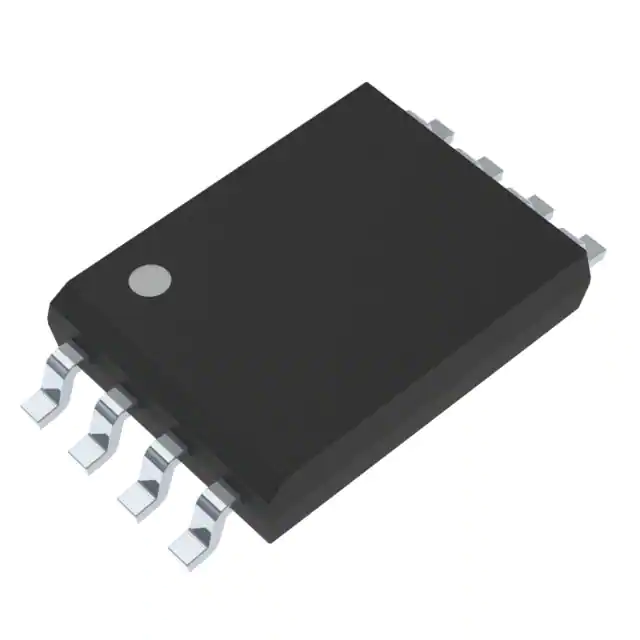
Skyworks Solutions Inc. SI8261BAD-C-ISR
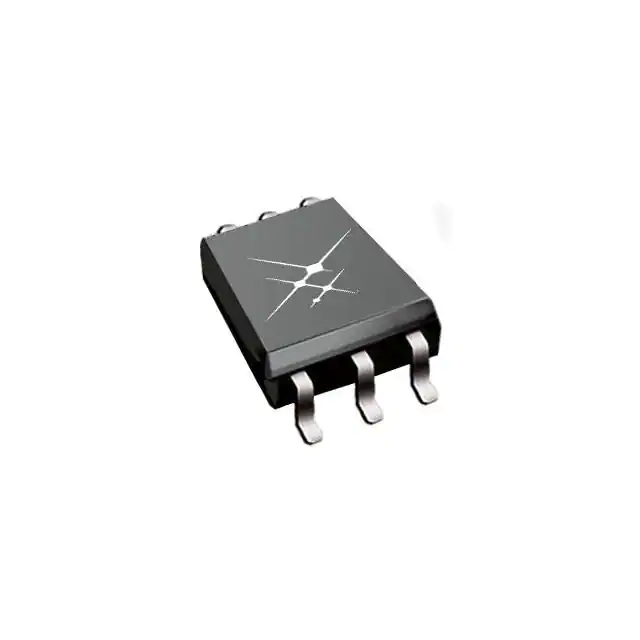
- Part No.:
- SI8261BAD-C-ISR
- Manufacturer:
- Skyworks Solutions Inc.
- Category:
- Isolators - Gate Drivers
- Package:
- 6-SOIC (0.295", 7.50mm Width)
- Datasheet:
-
 SI8261BAD-C-ISR.pdf
- Description:
- DGTL ISO 5KV 1CH GT DVR 6SDIP GW
- Quantity:
- Payment:

- Shipping:

Inventory:12,945
Please send an inquiry. Send us your inquiry, and we will respond immediately.
Product details
Overview
SI8261BAD-C-ISR from Skyworks Solutions is a 5 kVRMS isolated gate driver with LED-emulator input and 4.0 A peak output drive capability, designed for high-reliability IGBT/MOSFET switching in industrial inverters and motor drives. It features 60 ns propagation delay (independent of input current), rail-to-rail output, 6.5–30 V wide VDD range, and –40 to +125 °C operating temperature.
For engineers reviewing the SI8261BAD-C-ISR datasheet, SI8261BAD-C-ISR pinout, SI8261BAD-C-ISR application, or SI8261BAD-C-ISR equivalent, this page delivers verified specifications, SOIC-8 package mapping, UVLO threshold (8 V typ), CMTI (>50 kV/µs), and drop-in compatibility with HCPL-3120/ACPL-3130 - critical for high-speed, high-noise power stage design.
Technical Context
The SI8261BAD-C-ISR implements silicon-based RF isolation across a reinforced barrier, replacing optocoupler-based gate drivers without requiring layout changes. Its diode-emulator input mimics LED forward characteristics while reducing required drive current to 6–30 mA and eliminating age- and temperature-dependent degradation.
Internally, it integrates noise filtering (15 ns pulse rejection), under-voltage lockout with 8.4 V rising threshold and 500 mV hysteresis, and dual VO pins that must be shorted to achieve full 4.0 A sink capability. Propagation delay variation is tightly controlled (PWD ≤ 28 ns) due to input-current-independent timing architecture.
Key Specifications
| Parameter | Value and Actual Design Meaning |
|---|---|
| Isolation Rating | 5000 VRMS (UL1577), 10 kV surge (VDE 0884-10) - enables reinforced insulation in 690 VAC industrial systems |
| Output Drive | 4.0 A sink / 1.8 A source (Si8261B variant) - supports fast turn-off of high-Qg IGBTs in 10–20 kHz inverters |
| Propagation Delay | 20–60 ns (tPLH), 10–50 ns (tPHL) - ensures precise timing alignment across parallel gate drivers |
| UVLO Threshold | 8.4 V (rising), 7.9 V (falling), 500 mV hysteresis - prevents erratic switching during brown-out conditions |
| CMTI | 50 kV/µs typical - maintains signal integrity during high dv/dt transients in SiC/GaN half-bridges |
| Supply Range | 6.5–30 V VDD - compatible with 12 V and 15 V control rails without external regulators |
| Operating Temp | –40 to +125 °C ambient - qualified for under-hood automotive and industrial enclosure environments |
Pinout & Package
SI8261BAD-C-ISR is housed in an 8-pin narrow-body SOIC package (SOIC-8, 3.9 mm width) with industry-standard pinout for direct replacement of optocoupled drivers. Pin 1 = ANODE, Pin 2 = CATHODE, Pin 3 = NC, Pin 4 = VDD, Pin 5 = GND, Pin 6 = UVLO, Pin 7 = VO, Pin 8 = VO.
| Pin/Terminal | Circuit Role | Design Meaning |
|---|---|---|
| 1 (ANODE) | Input anode terminal | Accepts 6–30 mA forward current; reverse voltage limited to 0.3 V - requires external clamping if driven by open-collector logic |
| 2 (CATHODE) | Input cathode terminal | Reference for input current path; must be tied to controller ground or isolated return - not internally connected to GND |
| 3 (NC) | No-connect | Not bonded; must remain unconnected - floating or tied to GND may cause EMI or latch-up |
| 4 (VDD) | Primary-side supply | Power for input side and isolator core; requires local 1 µF ceramic + 10 µF bulk decoupling per datasheet Figure 2 |
| 5 (GND) | Primary-side ground | Return for VDD and input circuit; must be separated from power ground to maintain isolation integrity |
| 6 (UVLO) | UVLO enable/disable control | Active-low pin; pulled low disables output - used for system-level fault shutdown or soft-start sequencing |
| 7 & 8 (VO) | Output driver terminals | Must be shorted externally to deliver full 4.0 A sink current; each pin rated for 2 A - enables low-inductance PCB routing |
Key Features
| Feature | Design Value |
|---|---|
| LED-emulator input | Reduces required drive current to 6 mA (vs. 10–20 mA for optocouplers), enabling direct MCU/FPGA I/O drive without buffer stages |
| Rail-to-rail output | VOH = VDD – 0.25 V (min), VOL = 80 mV (max at 100 mA) - ensures full logic swing into gate resistors down to 10 Ω |
| Input noise filter | Rejects transients <15 ns wide - eliminates false triggering from ESD or switching noise on long input traces |
| 14× tighter matching | Part-to-part propagation delay variation <25 ns (vs. >100 ns for optocouplers) - critical for paralleled IGBTs in multi-phase inverters |
| AEC-Q100 qualified | Grade 1 (–40 to +125 °C) qualification - supports automotive traction inverter and onboard charger designs |
Applications
| Industrial Motor Drives | Renewable Energy Inverters |
|---|---|
|
Use Scenario: Driving 600 V IGBTs in 3-phase VFDs for HVAC compressors and pump systems. IC Role / Device Role / Timing Role: Isolated high-side gate driver delivering 4.0 A sink current to rapidly discharge gate charge and minimize Miller-induced shoot-through. Use Value: 60 ns propagation delay and 50 kV/µs CMTI prevent timing skew and false turn-on during bus transients up to 1200 V/µs. |
Use Scenario: Controlling SiC MOSFETs in string-level solar inverters operating at 100 kHz switching frequency. IC Role / Device Role / Timing Role: Primary-side gate driver with UVLO monitoring of 15 V auxiliary supply to halt switching during DC-link undervoltage events. Use Value: 8.4 V UVLO threshold with 500 mV hysteresis avoids oscillatory behavior during grid-sag conditions common in distributed PV systems. |
| Automotive Onboard Chargers | UPS Power Stages |
|
Use Scenario: Driving high-side GaN HEMTs in bidirectional AC/DC converters for EV OBCs compliant with ISO 15118. IC Role / Device Role / Timing Role: Reinforced-isolation gate driver enabling safe separation between 400 V battery domain and 230 V AC mains domain. Use Value: 5000 VRMS isolation rating and VDE 0884-10 certification meet reinforced insulation requirements for medical-grade and automotive safety standards. |
Use Scenario: Gate driving IGBT modules in double-conversion UPS systems with 480 VAC output and 10 ms hold-up time. IC Role / Device Role / Timing Role: Fault-tolerant gate driver with active UVLO and short-circuit protection coordination via UVLO pin tie-in to system supervisor IC. Use Value: UVLO pin allows centralized disable of all gate drivers during overtemperature or overcurrent faults - simplifying system-level protection architecture. |
Equivalent & Alternatives
The following parts are listed as comparable options for similar isolated gate driver applications.
| Alternative Part | Technical Difference | Application Difference | Selection Advice |
|---|---|---|---|
| HCPL-3120 | Optocoupler-based, 2.5 A output, 100 ns typical propagation delay, no integrated UVLO, 3.75 kVRMS isolation | Legacy opto design requiring higher input current (16 mA), less robust against CMTI, no AEC-Q100 qualification | Choose only for cost-sensitive, low-volume legacy replacements where 5 kVRMS and automotive qualification are not required |
| SIL1225D | Capacitive isolation, 4 A output, 65 ns propagation delay, 5 kVRMS, but only 105 °C max ambient rating | Lacks AEC-Q100 Grade 1 qualification and VDE 0884-10 certification - unsuitable for automotive or medical applications | Select when board space is constrained and automotive qualification is unnecessary; verify thermal derating at 125 °C ambient |
Compared with HCPL-3120 and SIL1225D, SI8261BAD-C-ISR delivers superior reliability (10× lower FIT), tighter timing matching (14×), and full automotive qualification - making it the preferred choice for new designs targeting industrial longevity and functional safety compliance.
Availability
SI8261BAD-C-ISR is available at Aetrix Electronics and suitable for industrial motor drives, renewable energy inverters, and automotive onboard chargers requiring stable component supply, long-term lifecycle support, and certified reinforced isolation.
Supply support for SI8261BAD-C-ISR includes scheduled delivery planning, volume procurement assistance, BOM continuity management, traceable sourcing, and lifecycle availability coordination for OEM customers, industrial embedded developers, connected-device designers, and electronics production programs.
Manufacturer
Skyworks Solutions is a global semiconductor company specializing in analog and mixed-signal connectivity solutions, with leadership in RF, timing, and isolation technologies for high-performance wireless and power systems.
The Si826x product line was engineered to replace aging optocoupled gate drivers with silicon-isolated alternatives offering higher reliability, tighter timing, and enhanced safety certification - specifically targeting industrial, automotive, and renewable energy power conversion.
FAQ
What is the UVLO threshold configuration for SI8261BAD-C-ISR?
The SI8261BAD-C-ISR uses the 'B' variant UVLO setting: 8.4 V (rising) and 7.9 V (falling) with 500 mV hysteresis. This is factory-configured and non-adjustable. The threshold ensures reliable disablement during 12 V rail brown-outs while preventing chatter near nominal supply levels. SI8261BAD-C-ISR does not require external components to set UVLO - it is fully integrated and tested per VDE 0884-10.
Can SI8261BAD-C-ISR drive 4.0 A without external parallel devices?
Yes - SI8261BAD-C-ISR delivers 4.0 A sink current natively when both VO pins (7 and 8) are shorted together on the PCB, as specified in Table 2 footnote 3. No external MOSFETs or paralleling circuits are needed. Attempting to use only one VO pin limits output to 2.0 A and risks thermal overstress. SI8261BAD-C-ISR's dual-VO architecture is designed explicitly for this 4.0 A configuration.
Is SI8261BAD-C-ISR pin-compatible with HCPL-3120?
Yes - SI8261BAD-C-ISR uses identical SOIC-8 pinout (ANODE/CATHODE/VDD/GND/VO/VO/UVLO/NC) and is explicitly marketed as a drop-in upgrade for HCPL-3120. No PCB redesign is required. However, note that SI8261BAD-C-ISR's UVLO pin (Pin 6) is active-low and must be pulled high (e.g., via 10 kΩ to VDD) for normal operation - unlike HCPL-3120 which has no such pin.
Does SI8261BAD-C-ISR support 3.3 V microcontroller inputs?
Yes - SI8261BAD-C-ISR's LED-emulator input operates with as little as 6 mA forward current and tolerates VF(ON) from 1.6–2.8 V. A standard 3.3 V GPIO can drive it directly using a 330 Ω series resistor (IF ≈ 9 mA), well within the 6–30 mA recommended range. No level-shifting or buffer ICs are needed, simplifying MCU interface design.
What certifications apply to SI8261BAD-C-ISR?
SI8261BAD-C-ISR is UL 1577 recognized (5000 VRMS), VDE 0884-10 certified (reinforced insulation), CSA Component Acceptance Notice 5A (IEC 60950-1/60601-1), and CQC GB4943.1 certified. It also meets AEC-Q100 Grade 1 for automotive use. All certifications apply to the 5.0 kVRMS-rated version and were validated on the SOIC-8 package used by SI8261BAD-C-ISR.
SI8261BAD-C-ISR Specifications
- Product attributes
- Attribute value
- Manufacturer:
- Skyworks Solutions Inc.
- Series:
- -
- Package/Case:
- 6-SOIC (0.295", 7.50mm Width)
- Packaging:
- Tape & Reel (TR)
- Product Status:
- Active
- Technology:
- Capacitive Coupling
- Number of Channels:
- 1
- Voltage - Isolation:
- 5000Vrms
- Common Mode Transient Immunity (Min):
- 35kV/µs
- Propagation Delay tpLH / tpHL (Max):
- 60ns, 50ns
- Pulse Width Distortion (Max):
- 28ns
- Rise / Fall Time (Typ):
- 5.5ns, 8.5ns
- Current - Output High, Low:
- 500mA, 1.2A
- Current - Peak Output:
- 4A
- Voltage - Forward (Vf) (Typ):
- 2.8V (Max)
- Current - DC Forward (If) (Max):
- 30 mA
- Voltage - Output Supply:
- 6.5V ~ 30V
- Grade:
- Automotive
- Qualification:
- AEC-Q100
- Operating Temperature:
- -40°C ~ 125°C
- Mounting Type:
- Surface Mount
- Supplier Device Package:
- 6-SDIP Gull Wing
- Approval Agency:
- CQC, CSA, UR, VDE
SI8261BAD-C-ISR FAQ
1.How can I place an order for SI8261BAD-C-ISR through Aetrix?
Please submit a Request for Quotation (RFQ) for SI8261BAD-C-ISR on Aetrix. Our sales agent will provide a competitive quotation and guide you through the order confirmation once you accept the terms.
2.Are the price and stock information for SI8261BAD-C-ISR reliable?
The price and inventory of SI8261BAD-C-ISR are updated periodically and may fluctuate due to market conditions. Stock and pricing data are typically refreshed every 24 hours. Quotation validity for SI8261BAD-C-ISR is usually 5 days.
3.What payment methods are accepted for SI8261BAD-C-ISR?
We accept Wire Transfer, PayPal, Credit Card, Western Union, MoneyGram, and Escrow for SI8261BAD-C-ISR transactions.
Note: Certain payment methods may incur a processing fee.
4.How is shipping managed for SI8261BAD-C-ISR?
SI8261BAD-C-ISR orders can be shipped via leading logistics carriers, including DHL, UPS, FedEx, TNT, or Registered Mail.
Once your SI8261BAD-C-ISR order is processed, you will receive an email with the shipment details and tracking number.
Note: Tracking information may take up to 24 hours to appear. Express delivery typically takes 3–5 business days.
5.How can I obtain technical support or documentation for SI8261BAD-C-ISR?
For technical support, including SI8261BAD-C-ISR datasheets, pinout diagrams, or application guidance, please contact our engineering support team. They can provide detailed documentation and assistance for your SI8261BAD-C-ISR requirements.
6.How does Aetrix verify that SI8261BAD-C-ISR is sourced from the original manufacturer or authorized distributors?
All SI8261BAD-C-ISR products on Aetrix are procured from qualified distributors and authorized channels. Our dedicated quality assurance team conducts strict verification, including traceability checks and, if necessary, third-party testing. This ensures that SI8261BAD-C-ISR meets industry standards.
7.What is the process for return or replacement of SI8261BAD-C-ISR?
All SI8261BAD-C-ISR units undergo pre-shipment inspection (PSI). If there is an issue with SI8261BAD-C-ISR, returns or replacements are accepted under the following conditions:
1.Quantity discrepancies, incorrect items, or visible external defects (such as breakage or corrosion), acknowledged by Aetrix.
2.The issue is reported within 90 days of delivery.
3.The SI8261BAD-C-ISR part is unused and in its original packaging.
Return procedure for SI8261BAD-C-ISR:
1.Submit a request within 90 days.
2.Obtain a Return Material Authorization (RMA) from Aetrix.
SI8261BAD-C-ISR Tags
.JPG)
-
TLP152(TPL,E
Toshiba Semiconductor and Storage

-
HT0740LG-G
Microchip Technology
-
FOD8314TR2
onsemi
-
1EDI60N12AFXUMA1
Infineon Technologies
-
1EDB7275FXUMA1
Infineon Technologies
-
UCC5350MCDR
Texas Instruments

-
2EDB7259KXUMA1
Infineon Technologies

-
UCC5304DWVR
Texas Instruments
-
SI8261BBC-C-ISR
Skyworks Solutions Inc.
-
HT0440LG-G
Microchip Technology
-
HCPL-0302-500E
Broadcom Limited
-
STGAP2HSCMTR
STMicroelectronics
Tech Hub
Counterfeit components can hide behind convincing markings and passing basic function tests. This engineering reference covers source traceability, external inspection, X-ray, XRF, electrical testing, …

A practical engineering and sourcing framework covering lifecycle verification, lifetime-buy calculations, replacement qualification, supplier checks and counterfeit-risk controls.

TTL and CMOS logic families differ in thresholds, loading, output drive, power and timing. This engineering guide compares 74HC and 74HCT, calculates noise margins and checks 3.3 V/5 V compatibility.

A practical engineering guide to 3.3V and 5V logic compatibility, input thresholds, resistor dividers, translator ICs, MOSFET level shifting, I2C pull-ups, timing limits and power-sequencing risks.

The 74HC595 uses push-pull logic outputs, while the TPIC6B595 uses 50 V open-drain DMOS sinks for higher-power loads. This guide compares timing, current limits, 3.3 V interfacing, load wiring, thermal…

The 74HC595 converts serial data into eight stable parallel outputs. This guide covers pin functions, shift and storage timing, OE and MR behavior, drive-current limits, cascading, voltage compatibilit…

A technical comparison of level-sensitive latches and edge-triggered flip-flops, covering timing windows, setup and hold limits, master–slave operation, time borrowing, race-through, HDL inference and…

A D latch stores one bit while Enable controls when data can pass. This reference covers gate-level operation, truth tables, transparency, setup and hold timing, LE versus OE, common ICs and practical …

An SR latch stores one bit through cross-coupled feedback. This engineering reference covers NOR and NAND implementations, truth tables, forbidden-state recovery, gated operation, switch debouncing, fa…

Latch circuits retain one bit through feedback. This technical reference covers SR and D latches, truth tables, transparency, timing limits, latch-versus-flip-flop behavior, applications and common log…


