
 My Inquiry
 My Account


Skyworks Solutions Inc. SI8380S-IUR
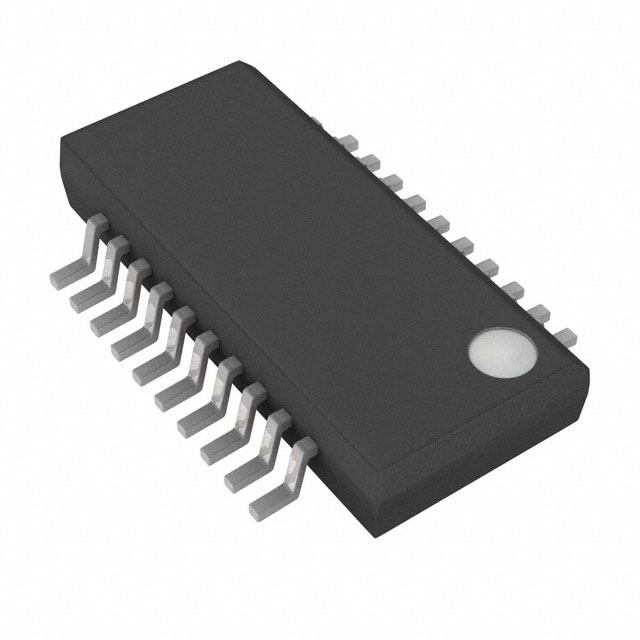
- Part No.:
- SI8380S-IUR
- Manufacturer:
- Skyworks Solutions Inc.
- Category:
- Digital Isolators
- Package:
- 20-SSOP (0.154", 3.90mm Width)
- Datasheet:
-
 SI8380S-IUR.pdf
- Description:
- DGT ISOL 2500VRMS 8CH SPI 20QSOP
- Quantity:
- Payment:

- Shipping:

Inventory:1,185
Please send an inquiry. Send us your inquiry, and we will respond immediately.
Product details
Overview
SI8380S-IUR from Skyworks Solutions is an 8-channel isolated digital field input IC for industrial PLCs and I/O modules, featuring bipolar (sinking/sourcing) 24 V inputs, integrated 2.5 kVRMS CMOS isolation, serial SPI interface with per-channel configurable debounce filtering, and flow-through output architecture. It enables IEC 61131-2 Type 1/2/3 compliance without field-side VDD.
For engineers reviewing the SI8380S-IUR datasheet, SI8380S-IUR pinout, SI8380S-IUR application, or SI8380S-IUR equivalent, this device supports daisy-chained SPI configuration of up to 16 devices (128 total channels), per-channel filter mode/delay selection (deglitch/low-pass/blanking; 0/10/30/100 ms), and operates from 2.25–5.5 V with –40 to +125 °C temperature range.
Technical Context
The SI8380S-IUR implements a capacitive CMOS isolation barrier with OOK modulation, eliminating optical degradation and enabling high CMTI (300 kV/μs), low propagation delay variation, and stable performance over temperature and lifetime. Its LED emulator front-end requires no field-side power supply while supporting both sourcing and sinking 24 V logic interfaces via internal diode bridge.
It integrates an SPI slave interface with five dedicated registers (CHAN_STATUS, DBNC_MODE0/1, DBNC_DLY0/1) for real-time channel status monitoring and independent debounce configuration per channel - a capability absent in parallel-output Si838x variants. The MOSI_THRU pin enables deterministic daisy-chain timing with CID-based addressing across up to 16 devices.
Key Specifications
| Parameter | Value and Actual Design Meaning |
|---|---|
| Isolation Rating | 2.5 kVRMS withstand voltage per UL 1577, VDE 0884-10, CSA 5A - ensures safety-critical separation between field and logic sides |
| Input Voltage Range | 24 V nominal bipolar (sinking or sourcing) - compatible with standard industrial digital field wiring without external bias |
| Input Current | 1 mA typical - enables low-power operation and compatibility with legacy PLC input circuits |
| Data Rate | Up to 2 Mbps - supports high-speed discrete monitoring in motion control and CNC applications |
| Debounce Flexibility | Per-channel selectable filter mode (deglitch/low-pass/blanking) and delay (0/10/30/100 ms) via SPI - eliminates fixed-filter design compromises |
| Operating Temperature | –40 to +125 °C - validated for harsh industrial environments including cabinet interiors and motor drive proximity |
| VDD Supply Range | 2.25–5.5 V - interoperable with 3.3 V and 5 V MCU systems without level-shifting |
Pinout & Package
SI8380S-IUR is housed in a RoHS-compliant 20-pin QSOP package (5.3 mm × 10.2 mm, 0.65 mm pitch) with reinforced creepage/clearance for industrial isolation requirements.
| Pin/Terminal | Circuit Role | Design Meaning |
|---|---|---|
| A1–A8 | Field-side input channels | Bipolar digital inputs accepting 24 V sinking or sourcing current; no field-side VDD required |
| COM | Field-side common reference | Shared return path for all eight input channels; connects to field ground or supply rail |
| VDD | Logic-side supply | 2.25–5.5 V power for internal circuitry and output drivers; bypassed with 0.1 µF capacitor |
| GND | Logic-side ground | Reference for output signals and SPI interface; galvanically isolated from COM |
| SCLK, NSS, MOSI, MISO | SPI interface signals | Standard 4-wire SPI slave interface for configuration and status readback |
| MOSI_THRU | Daisy-chain output | Passes MOSI signal to next device in chain with CID[3:0] decrement; enables single-MCU control of 16 devices |
| NC | No-connect | Pins 11, 12, 14 are unconnected; must be left floating or tied to GND per layout guidelines |
Key Features
| Feature | Design Value |
|---|---|
| Bipolar LED emulator input | Enables 24 V sinking or sourcing operation without field-side power supply - reduces BOM count and simplifies field wiring |
| Per-channel SPI-configurable debounce | Independent selection of filter mode (deglitch/low-pass/blanking) and delay (0/10/30/100 ms) for each of eight inputs - replaces external RC networks and firmware polling |
| Daisy-chain SPI capability | Single MCU interface controls up to 16 SI8380S-IUR devices (128 channels) using MOSI_THRU and CID-based addressing - minimizes GPIO and routing complexity |
| High CMTI (300 kV/μs) | Immunity to fast transient noise across isolation barrier - critical for reliable operation near VFDs, solenoids, and switching power supplies |
| IEC 61131-2 Type 1/2/3 compliance | Configurable input thresholds and filtering enable certification for all three PLC switch types using same hardware - accelerates system-level safety approval |
Applications
| Programmable Logic Controllers (PLCs) | Industrial Data Acquisition Systems |
|---|---|
Use Scenario: Monitoring discrete on/off signals from sensors, limit switches, and pushbuttons in modular rack-mounted PLC backplanes. IC Role / Device Role / Timing Role: Isolated digital input conditioner converting 24 V field signals to clean, debounced logic-level outputs for MCU or FPGA processing. Use Value: Eliminates optocoupler aging drift and enables per-input filter tuning to suppress contact bounce and EMI without redesigning PCB layout. | Use Scenario: High-density acquisition of binary status from distributed field devices across factory floors using compact remote I/O nodes. IC Role / Device Role / Timing Role: Eight-channel isolated input front-end with serial SPI interface for centralized configuration and status reporting over RS-485 or Ethernet/IP. Use Value: Reduces interconnect wiring by enabling daisy-chained SPI communication - cuts harness cost and improves modularity versus parallel-output alternatives. |
| Distributed Control Systems (DCS) | Motion Control I/O Modules |
Use Scenario: Integrating safety-rated digital inputs into redundant controller cabinets where long-term reliability and thermal stability are mandatory. IC Role / Device Role / Timing Role: Field-side isolated input interface with 2.5 kVRMS withstand voltage and –40 to +125 °C operation for continuous duty in control room environments. Use Value: Delivers >10× longer service life than optocouplers under thermal cycling, reducing unplanned maintenance and calibration intervals. | Use Scenario: Real-time monitoring of encoder index pulses, brake status, and emergency stop signals in servo drives and CNC machine controllers. IC Role / Device Role / Timing Role: High-CMTI (300 kV/μs) isolated input handling fast transients near motor windings while maintaining sub-microsecond propagation delay consistency. Use Value: Prevents false triggering during IGBT switching events, ensuring deterministic response for safety-critical motion sequences. |
Equivalent & Alternatives
The following parts are listed as comparable options for similar digital field input applications.
| Alternative Part | Technical Difference | Application Difference | Selection Advice |
|---|---|---|---|
| SI8380P-IUR | Parallel-output variant with fixed 0 ms debounce; no SPI interface or per-channel filtering | Suitable only for high-speed, uniform-filter applications where MCU GPIO count permits 8+ output lines | Select when simplicity and minimal latency outweigh configurability needs |
| ADUM1401ARWZ | Quad-channel digital isolator without integrated field-side input conditioning or debounce logic | Requires external resistor networks, Schmitt triggers, and MCU-based filtering - increases design effort and component count | Select only when augmenting existing isolated digital I/O with custom analog front-end or mixed-signal requirements |
Compared with SI8380P-IUR, the SI8380S-IUR trades parallel pin count for SPI configurability and daisy-chain scalability; compared with ADUM1401ARWZ, it delivers complete bipolar input signal conditioning in one package - reducing bill-of-materials, layout area, and qualification effort for industrial digital input systems.
Availability
SI8380S-IUR is available at Aetrix Electronics and suitable for programmable logic controllers, industrial data acquisition systems, and distributed control systems requiring stable component supply, long-term lifecycle support, and certified isolation performance.
Supply support for SI8380S-IUR includes scheduled delivery planning, volume procurement assistance, BOM continuity management, traceable sourcing, and lifecycle availability coordination for OEM customers, industrial embedded developers, connected-device designers, and electronics production programs.
Manufacturer
Skyworks Solutions is a global semiconductor company specializing in analog and mixed-signal connectivity solutions, with leadership in RF, timing, and isolation technologies.
The Si838x product line was designed specifically for industrial digital input conditioning - replacing aging optocoupler-based designs with robust, long-life CMOS isolation and intelligent per-channel configuration.
FAQ
What is the isolation rating of the SI8380S-IUR and which safety standards does it meet?
The SI8380S-IUR provides 2.5 kVRMS isolation rating and is certified to UL 1577, VDE 0884-10, CSA Component Notice 5A, IEC 60950-1, IEC 62368-1, and GB4943.1. These approvals validate its use in safety-critical industrial equipment where reinforced insulation between field and logic domains is mandated. The SI8380S-IUR achieves this through Skyworks' proprietary capacitive CMOS isolation technology - not optocouplers - ensuring stable performance over time and temperature.
Does the SI8380S-IUR require a power supply on the field side?
No, the SI8380S-IUR does not require a field-side VDD. Its bipolar LED emulator input draws operating current directly from the 24 V field signal - whether sinking or sourcing - eliminating the need for auxiliary field-side power rails or isolated DC-DC converters. This simplifies system architecture and reduces failure points. The SI8380S-IUR itself only requires a single 2.25–5.5 V logic-side supply (VDD) referenced to GND.
How many SI8380S-IUR devices can be daisy-chained on a single SPI bus?
Up to 16 SI8380S-IUR devices can be daisy-chained using the MOSI_THRU pin and CID-based addressing, supporting a total of 128 isolated digital input channels controlled by one MCU SPI interface. Each device is uniquely addressed via the 4-bit CID field in the SPI control byte, which decrements as the signal propagates down the chain. The SI8380S-IUR's built-in combinational delay on MOSI_THRU limits maximum SCLK frequency based on chain length - full-rate operation is maintained up to 8 devices.
What debounce filter options are available on the SI8380S-IUR and how are they configured?
The SI8380S-IUR supports three debounce filter modes - deglitch, low-pass, and blanking - with four delay options: 0 ms, 10 ms, 30 ms, or 100 ms. These are configured per channel via SPI registers DBNC_MODE0/1 and DBNC_DLY0/1. Unlike parallel-output Si838x variants, the SI8380S-IUR allows independent settings for each of its eight channels. A fixed 4 µs low-pass filter is always active on low-speed paths, but user-selectable delays override this base value. Configuration is performed in-system without hardware changes.
Is the SI8380S-IUR compatible with IEC 61131-2 switch types, and how is compliance achieved?
Yes, the SI8380S-IUR supports IEC 61131-2 Type 1, Type 2, and Type 3 switch compliance through configurable input thresholds and debounce behavior. Compliance is achieved by selecting appropriate external resistor networks (per Section 4.2 of the datasheet) and programming the SI8380S-IUR's per-channel debounce mode and delay via SPI. For example, Type 3 (fast response) uses deglitch mode with 0 ms delay, while Type 1 (slow, noise-immune) uses low-pass mode with 100 ms delay. The SI8380S-IUR's flexibility eliminates the need for multiple part numbers to meet different PLC input specifications.
SI8380S-IUR Specifications
- Product attributes
- Attribute value
- Manufacturer:
- Skyworks Solutions Inc.
- Series:
- -
- Package/Case:
- 20-SSOP (0.154", 3.90mm Width)
- Packaging:
- Tape & Reel (TR)
- Product Status:
- Active
- Technology:
- Capacitive Coupling
- Type:
- SPI
- Isolated Power:
- No
- Number of Channels:
- 8
- Inputs - Side 1/Side 2:
- 8/0
- Channel Type:
- Unidirectional
- Voltage - Isolation:
- 2500Vrms
- Common Mode Transient Immunity (Min):
- 200kV/µs
- Data Rate:
- 250kbps
- Propagation Delay tpLH / tpHL (Max):
- -
- Pulse Width Distortion (Max):
- -
- Rise / Fall Time (Typ):
- 3.9ns, 3.7ns
- Voltage - Supply:
- 2.25V ~ 5.5V
- Grade:
- -
- Qualification:
- -
- Operating Temperature:
- -40°C ~ 125°C
- Mounting Type:
- Surface Mount
- Supplier Device Package:
- 20-QSOP
SI8380S-IUR FAQ
1.How can I place an order for SI8380S-IUR through Aetrix?
Please submit a Request for Quotation (RFQ) for SI8380S-IUR on Aetrix. Our sales agent will provide a competitive quotation and guide you through the order confirmation once you accept the terms.
2.Are the price and stock information for SI8380S-IUR reliable?
The price and inventory of SI8380S-IUR are updated periodically and may fluctuate due to market conditions. Stock and pricing data are typically refreshed every 24 hours. Quotation validity for SI8380S-IUR is usually 5 days.
3.What payment methods are accepted for SI8380S-IUR?
We accept Wire Transfer, PayPal, Credit Card, Western Union, MoneyGram, and Escrow for SI8380S-IUR transactions.
Note: Certain payment methods may incur a processing fee.
4.How is shipping managed for SI8380S-IUR?
SI8380S-IUR orders can be shipped via leading logistics carriers, including DHL, UPS, FedEx, TNT, or Registered Mail.
Once your SI8380S-IUR order is processed, you will receive an email with the shipment details and tracking number.
Note: Tracking information may take up to 24 hours to appear. Express delivery typically takes 3–5 business days.
5.How can I obtain technical support or documentation for SI8380S-IUR?
For technical support, including SI8380S-IUR datasheets, pinout diagrams, or application guidance, please contact our engineering support team. They can provide detailed documentation and assistance for your SI8380S-IUR requirements.
6.How does Aetrix verify that SI8380S-IUR is sourced from the original manufacturer or authorized distributors?
All SI8380S-IUR products on Aetrix are procured from qualified distributors and authorized channels. Our dedicated quality assurance team conducts strict verification, including traceability checks and, if necessary, third-party testing. This ensures that SI8380S-IUR meets industry standards.
7.What is the process for return or replacement of SI8380S-IUR?
All SI8380S-IUR units undergo pre-shipment inspection (PSI). If there is an issue with SI8380S-IUR, returns or replacements are accepted under the following conditions:
1.Quantity discrepancies, incorrect items, or visible external defects (such as breakage or corrosion), acknowledged by Aetrix.
2.The issue is reported within 90 days of delivery.
3.The SI8380S-IUR part is unused and in its original packaging.
Return procedure for SI8380S-IUR:
1.Submit a request within 90 days.
2.Obtain a Return Material Authorization (RMA) from Aetrix.
SI8380S-IUR Tags

-
ISO1212DBQR
Texas Instruments
-
ISO6721BDR
Texas Instruments
-
SI8710AC-B-ISR
Skyworks Solutions Inc.
-
ISO7720FDR
Texas Instruments
-
ISO7721DR
Texas Instruments
-
ISO7721FDR
Texas Instruments
-
SI8710CC-B-ISR
Skyworks Solutions Inc.
-
ISO6741FQDWRQ1
Texas Instruments

-
ISO7721DWVR
Texas Instruments
-
ISO7762FDBQR
Texas Instruments

-
ISO7741DWR
Texas Instruments
-
ISO7741FDWR
Texas Instruments
Tech Hub
Counterfeit components can hide behind convincing markings and passing basic function tests. This engineering reference covers source traceability, external inspection, X-ray, XRF, electrical testing, …

A practical engineering and sourcing framework covering lifecycle verification, lifetime-buy calculations, replacement qualification, supplier checks and counterfeit-risk controls.

TTL and CMOS logic families differ in thresholds, loading, output drive, power and timing. This engineering guide compares 74HC and 74HCT, calculates noise margins and checks 3.3 V/5 V compatibility.

A practical engineering guide to 3.3V and 5V logic compatibility, input thresholds, resistor dividers, translator ICs, MOSFET level shifting, I2C pull-ups, timing limits and power-sequencing risks.

The 74HC595 uses push-pull logic outputs, while the TPIC6B595 uses 50 V open-drain DMOS sinks for higher-power loads. This guide compares timing, current limits, 3.3 V interfacing, load wiring, thermal…

The 74HC595 converts serial data into eight stable parallel outputs. This guide covers pin functions, shift and storage timing, OE and MR behavior, drive-current limits, cascading, voltage compatibilit…

A technical comparison of level-sensitive latches and edge-triggered flip-flops, covering timing windows, setup and hold limits, master–slave operation, time borrowing, race-through, HDL inference and…

A D latch stores one bit while Enable controls when data can pass. This reference covers gate-level operation, truth tables, transparency, setup and hold timing, LE versus OE, common ICs and practical …

An SR latch stores one bit through cross-coupled feedback. This engineering reference covers NOR and NAND implementations, truth tables, forbidden-state recovery, gated operation, switch debouncing, fa…

Latch circuits retain one bit through feedback. This technical reference covers SR and D latches, truth tables, transparency, timing limits, latch-versus-flip-flop behavior, applications and common log…


