
 My Inquiry
 My Account


Skyworks Solutions Inc. SI8384P-IUR
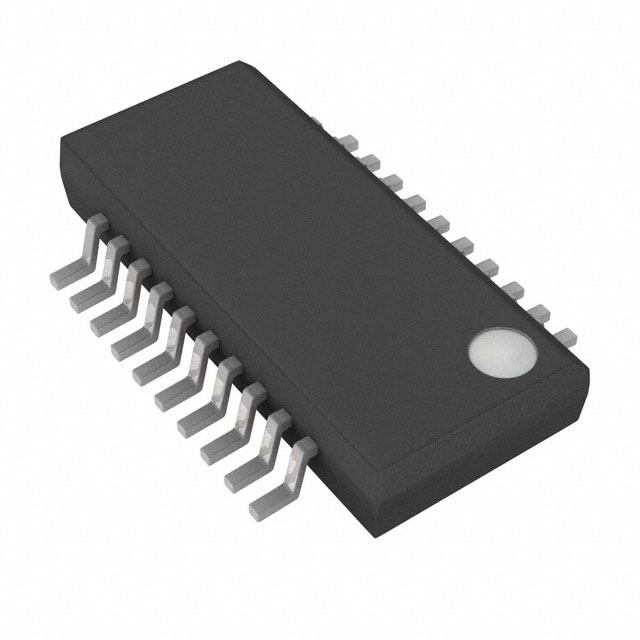
- Part No.:
- SI8384P-IUR
- Manufacturer:
- Skyworks Solutions Inc.
- Category:
- Digital Isolators
- Package:
- 20-SSOP (0.154", 3.90mm Width)
- Datasheet:
-
 SI8384P-IUR.pdf
- Description:
- DGTL ISO 2500VRMS 8CH GP 20QSOP
- Quantity:
- Payment:

- Shipping:

Inventory:1,758
Please send an inquiry. Send us your inquiry, and we will respond immediately.
Product details
Overview
SI8384P-IUR from Skyworks Solutions is an 8-channel bipolar digital field input isolator for industrial PLC and I/O module applications. It supports 24 V sinking or sourcing inputs with integrated 2.5 kVRMS CMOS isolation, no VDD required on the field side, and parallel output interface with four low-speed channels configured for 30 ms debounce filtering. It complies with IEC 61131-2 Type 1/2/3 switch standards.
For engineers reviewing the SI8384P-IUR datasheet, SI8384P-IUR pinout, SI8384P-IUR application, or SI8384P-IUR equivalent, key selection considerations include channel count (4 debounced), isolation rating (2.5 kVRMS), CMTI (300 kV/μs), operating voltage range (2.25–5.5 V), and QSOP-20 package compatibility with industrial control board layouts.
Technical Context
The SI8384P-IUR implements Skyworks' CMOS-based capacitive isolation with OOK modulation across an internal barrier, enabling bipolar (sinking/sourcing) 24 V input operation without field-side power. Each of its four low-speed input channels includes a fixed 30 ms low-pass debounce filter, while the remaining four channels are high-speed (no filter).
Its parallel output architecture delivers flow-through logic-level signals (Bx/BHx) directly to MCU or FPGA inputs, supporting up to 2 Mbps data rate. The device features undervoltage lockout (UVLO), built-in 4 µs low-pass filtering on all low-speed channels, and operates across –40 °C to +125 °C.
Key Specifications
| Parameter | Value and Actual Design Meaning |
|---|---|
| Input Channels | 8 total: 4 high-speed (BHx), 4 low-speed (Bx) with fixed 30 ms debounce |
| Isolation Rating | 2.5 kVRMS withstand voltage per UL 1577, VDE 0884-10, CSA 5A |
| Data Rate | Up to 2 Mbps - enables real-time status monitoring in fast-response industrial systems |
| Input Voltage Range | 24 V nominal bipolar (sinking or sourcing); compatible with IEC 61131-2 Types 1, 2, 3 via external resistor network |
| Propagation Delay | Typ. 120 ns (high-speed), 30.012 ms (low-speed with 30 ms filter) - deterministic timing for safety-critical edge detection |
| Supply Voltage | 2.25–5.5 V VDD - interoperable with 3.3 V and 5 V logic domains |
| CMTI | 300 kV/μs minimum - robust against fast transients in motor drive and factory floor environments |
Pinout & Package
SI8384P-IUR is housed in a RoHS-compliant 20-pin QSOP package (7.0 mm × 9.9 mm, 0.65 mm pitch) with reinforced creepage/clearance for industrial isolation requirements.
| Pin/Terminal | Circuit Role | Design Meaning |
|---|---|---|
| A1–A8 | Field-side input terminals | Eight isolated bipolar inputs; A1–A4 connect to low-speed (debounced) channels, A5–A8 to high-speed channels |
| COM (A4, A5) | Common reference for field-side inputs | Dual COM pins support independent sourcing/sinking configurations per channel group |
| B1–B8 | Logic-side output terminals | Parallel outputs: B1–B4 = debounced low-speed, B5–B8 = high-speed; active-high, CMOS-compatible |
| VDD (Pin 16) | Primary supply | 2.25–5.5 V logic-side power; powers output drivers and internal isolation circuitry |
| GND (Pin 15) | Logic-side ground reference | Return path for VDD and output signals; must be separated from field-side ground by isolation barrier |
| NC (Pins 11, 12, 14) | No-connect | Unbonded pins; must remain unconnected per datasheet layout guidance |
Key Features
| Feature | Design Value |
|---|---|
| Bipolar LED emulator input | Enables 24 V sinking or sourcing without field-side VDD - eliminates isolated DC/DC converter in sensor interface stage |
| Integrated 2.5 kVRMS isolation | Replaces optocouplers with higher reliability, tighter channel matching, and no LED aging degradation |
| Fixed 30 ms debounce on 4 channels | Hardware-filtered noise rejection for slow-switching industrial sensors (e.g., limit switches, emergency stops) |
| Flow-through parallel outputs | Direct connection to MCU GPIOs without protocol translation - reduces firmware overhead vs. SPI alternatives |
| –40 °C to +125 °C operation | Validated performance across extended industrial temperature range without derating |
Applications
| Programmable Logic Controllers (PLCs) | Industrial I/O Modules |
|---|---|
Use Scenario: Digital input card in modular PLC rack accepting 24 V DC field signals from pushbuttons, relays, and proximity sensors. IC Role / Device Role / Timing Role: Isolated field-to-controller interface providing galvanic separation and noise-immune signal conditioning. Use Value: Four 30 ms debounced channels reliably capture slow mechanical contacts; four high-speed channels monitor encoder quadrature or fast status changes. | Use Scenario: Standalone DIN-rail mounted I/O module converting 24 V field wiring into serial or parallel digital bus signals. IC Role / Device Role / Timing Role: Primary input conditioner delivering eight isolated, logic-level outputs to local microcontroller or FPGA. Use Value: Eliminates need for discrete optocouplers and external RC filters - reduces BOM count and PCB area by >60% vs. legacy designs. |
| Distributed Control Systems (DCS) | Motion Control Systems |
Use Scenario: Remote I/O node in hazardous-area plant automation collecting valve position feedback and alarm signals. IC Role / Device Role / Timing Role: Safety-rated input isolator meeting IEC 61131-2 Type 2 compliance for fail-safe digital input acquisition. Use Value: 2.5 kVRMS isolation and 300 kV/μs CMTI ensure immunity to EMI from variable-frequency drives and welding equipment. | Use Scenario: Servo drive control board monitoring emergency stop (E-stop) circuits and homing switches. IC Role / Device Role / Timing Role: Debounced safety input interface with deterministic 30 ms response window for Category 3/PLd safety functions. Use Value: Hardware-enforced filtering prevents false triggering during contact bounce - avoids unsafe motion restarts without software intervention. |
Equivalent & Alternatives
The following parts are listed as comparable options for similar digital field input isolator applications.
| Alternative Part | Technical Difference | Application Difference | Selection Advice |
|---|---|---|---|
| SI8382P-IUR | 4-channel parallel output, same 30 ms debounce, identical QSOP-20 package and pinout | Half the channel count; suitable for space-constrained or lower-density I/O modules | Select when only four isolated inputs are required and PCB footprint must match SI8384P-IUR layout |
| SI8384PF-IUR | Same 8-channel parallel configuration but with 10 ms debounce instead of 30 ms | Reduced filtering time - better for faster mechanical switches or where shorter response latency is critical | Choose when system timing budget requires sub-30 ms debounce without sacrificing channel count |
Compared with SI8382P-IUR, SI8384P-IUR doubles channel density in the same footprint; compared with SI8384PF-IUR, it extends debounce duration for higher noise immunity in electrically harsh environments like motor control cabinets - enabling one hardware variant to serve both standard and safety-critical input roles.
Availability
SI8384P-IUR is available at Aetrix Electronics and suitable for programmable logic controllers, industrial I/O modules, and distributed control systems requiring stable component supply, long-term lifecycle support, and certified isolation performance.
Supply support for SI8384P-IUR includes scheduled delivery planning, volume procurement assistance, BOM continuity management, traceable sourcing, and lifecycle availability coordination for OEM customers, industrial embedded developers, connected-device designers, and electronics production programs.
Manufacturer
Skyworks Solutions is a global semiconductor company specializing in analog and mixed-signal connectivity solutions for communications, industrial, and automotive markets.
The Si838x product line was developed specifically to replace aging optocoupler-based digital input stages in industrial automation equipment with higher-reliability, higher-performance CMOS isolation technology.
FAQ
What is the debounce behavior of the SI8384P-IUR, and how is it implemented?
The SI8384P-IUR provides fixed 30 ms low-pass debounce filtering on its four low-speed input channels (A1–A4). This is implemented entirely in hardware using an integrated RC-based filter stage, with an additional 4 µs inherent low-pass delay common to all low-speed channels. No configuration or SPI interface is required - the 30 ms value is set at manufacture and cannot be modified. This ensures deterministic, jitter-free filtering for mechanical switch inputs in safety-critical applications.
Does the SI8384P-IUR require a power supply on the field side?
No, the SI8384P-IUR does not require a field-side VDD. Its bipolar LED emulator input draws operating current directly from the 24 V field signal through an external resistor network, powering the isolation transmitter without auxiliary supply. This eliminates the need for isolated DC/DC converters or separate field-side regulators - simplifying design and reducing bill-of-materials cost.
How does the SI8384P-IUR differ from the SI8380S serial-output variant?
The SI8384P-IUR uses a parallel output interface with eight dedicated logic-level output pins (B1–B8), whereas the SI8380S uses a 4-wire SPI interface with daisy-chain capability. SI8384P-IUR offers simpler integration with MCUs lacking SPI peripherals or requiring minimal firmware overhead, while SI8380S enables per-channel configurable debounce and cascading of up to 128 channels. They share identical isolation, input, and temperature specifications.
What safety certifications apply to the SI8384P-IUR?
The SI8384P-IUR is certified to UL 1577 (2500 VRMS, 1 min), CSA Component Acceptance Notice 5A, VDE 0884-10, IEC 60950-1, IEC 62368-1, CQC, and GB4943.1. These approvals validate its reinforced insulation barrier for use in industrial equipment requiring functional isolation and protection against electric shock in mains-connected systems.
Can the SI8384P-IUR be used with 12 V or 48 V field inputs?
Yes - the SI8384P-IUR's bipolar LED emulator input supports field voltages beyond 24 V. By adjusting the external series resistor network per Section 4.2 of the datasheet, it can be configured for 12 V (Type 1), 24 V (Type 2), or 48 V (Type 3) IEC 61131-2 compliance. Input current remains within specification (typ. 1 mA) across this range, preserving noise immunity and isolation integrity.
SI8384P-IUR Specifications
- Product attributes
- Attribute value
- Manufacturer:
- Skyworks Solutions Inc.
- Series:
- -
- Package/Case:
- 20-SSOP (0.154", 3.90mm Width)
- Packaging:
- Tape & Reel (TR)
- Product Status:
- Active
- Technology:
- Capacitive Coupling
- Type:
- General Purpose
- Isolated Power:
- No
- Number of Channels:
- 8
- Inputs - Side 1/Side 2:
- 8/0
- Channel Type:
- Unidirectional
- Voltage - Isolation:
- 2500Vrms
- Common Mode Transient Immunity (Min):
- -
- Data Rate:
- 2Mbps
- Propagation Delay tpLH / tpHL (Max):
- -
- Pulse Width Distortion (Max):
- -
- Rise / Fall Time (Typ):
- 3.9ns, 3.7ns
- Voltage - Supply:
- 2.25V ~ 5.5V
- Grade:
- -
- Qualification:
- -
- Operating Temperature:
- -40°C ~ 125°C
- Mounting Type:
- Surface Mount
- Supplier Device Package:
- 20-QSOP
SI8384P-IUR FAQ
1.How can I place an order for SI8384P-IUR through Aetrix?
Please submit a Request for Quotation (RFQ) for SI8384P-IUR on Aetrix. Our sales agent will provide a competitive quotation and guide you through the order confirmation once you accept the terms.
2.Are the price and stock information for SI8384P-IUR reliable?
The price and inventory of SI8384P-IUR are updated periodically and may fluctuate due to market conditions. Stock and pricing data are typically refreshed every 24 hours. Quotation validity for SI8384P-IUR is usually 5 days.
3.What payment methods are accepted for SI8384P-IUR?
We accept Wire Transfer, PayPal, Credit Card, Western Union, MoneyGram, and Escrow for SI8384P-IUR transactions.
Note: Certain payment methods may incur a processing fee.
4.How is shipping managed for SI8384P-IUR?
SI8384P-IUR orders can be shipped via leading logistics carriers, including DHL, UPS, FedEx, TNT, or Registered Mail.
Once your SI8384P-IUR order is processed, you will receive an email with the shipment details and tracking number.
Note: Tracking information may take up to 24 hours to appear. Express delivery typically takes 3–5 business days.
5.How can I obtain technical support or documentation for SI8384P-IUR?
For technical support, including SI8384P-IUR datasheets, pinout diagrams, or application guidance, please contact our engineering support team. They can provide detailed documentation and assistance for your SI8384P-IUR requirements.
6.How does Aetrix verify that SI8384P-IUR is sourced from the original manufacturer or authorized distributors?
All SI8384P-IUR products on Aetrix are procured from qualified distributors and authorized channels. Our dedicated quality assurance team conducts strict verification, including traceability checks and, if necessary, third-party testing. This ensures that SI8384P-IUR meets industry standards.
7.What is the process for return or replacement of SI8384P-IUR?
All SI8384P-IUR units undergo pre-shipment inspection (PSI). If there is an issue with SI8384P-IUR, returns or replacements are accepted under the following conditions:
1.Quantity discrepancies, incorrect items, or visible external defects (such as breakage or corrosion), acknowledged by Aetrix.
2.The issue is reported within 90 days of delivery.
3.The SI8384P-IUR part is unused and in its original packaging.
Return procedure for SI8384P-IUR:
1.Submit a request within 90 days.
2.Obtain a Return Material Authorization (RMA) from Aetrix.
SI8384P-IUR Tags

-
ISO1212DBQR
Texas Instruments
-
ISO6721BDR
Texas Instruments
-
SI8710AC-B-ISR
Skyworks Solutions Inc.
-
ISO7720FDR
Texas Instruments
-
ISO7721DR
Texas Instruments
-
ISO7721FDR
Texas Instruments
-
SI8710CC-B-ISR
Skyworks Solutions Inc.
-
ISO6741FQDWRQ1
Texas Instruments

-
ISO7721DWVR
Texas Instruments
-
ISO7762FDBQR
Texas Instruments

-
ISO7741DWR
Texas Instruments
-
ISO7741FDWR
Texas Instruments
Tech Hub

Counterfeit components can hide behind convincing markings and passing basic function tests. This engineering reference covers source traceability, external inspection, X-ray, XRF, electrical testing, …

A practical engineering and sourcing framework covering lifecycle verification, lifetime-buy calculations, replacement qualification, supplier checks and counterfeit-risk controls.

TTL and CMOS logic families differ in thresholds, loading, output drive, power and timing. This engineering guide compares 74HC and 74HCT, calculates noise margins and checks 3.3 V/5 V compatibility.

A practical engineering guide to 3.3V and 5V logic compatibility, input thresholds, resistor dividers, translator ICs, MOSFET level shifting, I2C pull-ups, timing limits and power-sequencing risks.

The 74HC595 uses push-pull logic outputs, while the TPIC6B595 uses 50 V open-drain DMOS sinks for higher-power loads. This guide compares timing, current limits, 3.3 V interfacing, load wiring, thermal…

The 74HC595 converts serial data into eight stable parallel outputs. This guide covers pin functions, shift and storage timing, OE and MR behavior, drive-current limits, cascading, voltage compatibilit…

A technical comparison of level-sensitive latches and edge-triggered flip-flops, covering timing windows, setup and hold limits, master–slave operation, time borrowing, race-through, HDL inference and…

A D latch stores one bit while Enable controls when data can pass. This reference covers gate-level operation, truth tables, transparency, setup and hold timing, LE versus OE, common ICs and practical …

An SR latch stores one bit through cross-coupled feedback. This engineering reference covers NOR and NAND implementations, truth tables, forbidden-state recovery, gated operation, switch debouncing, fa…

Latch circuits retain one bit through feedback. This technical reference covers SR and D latches, truth tables, transparency, timing limits, latch-versus-flip-flop behavior, applications and common log…


