
 My Inquiry
 My Account


Microchip Technology SIO1000-JV
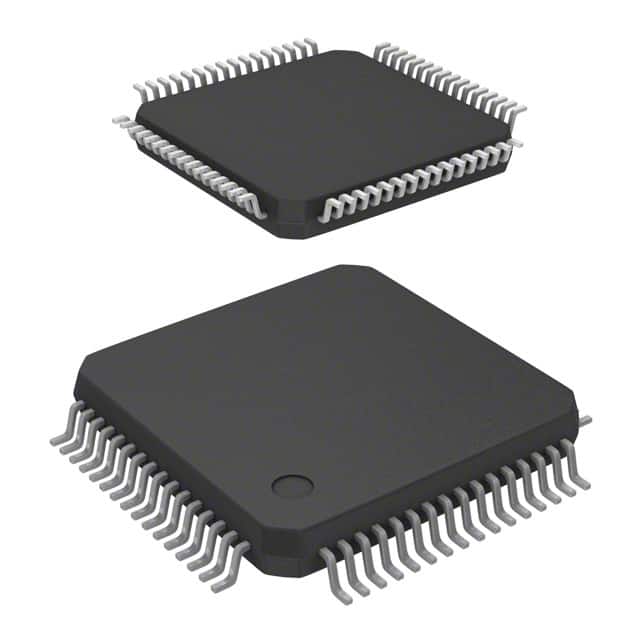
- Part No.:
- SIO1000-JV
- Manufacturer:
- Microchip Technology
- Category:
- Specialized
- Package:
- 64-LQFP
- Datasheet:
-
 SIO1000-JV.pdf
- Description:
- IC INTFACE SPECIALIZED 64STQFP
- Quantity:
- Payment:

- Shipping:

Inventory:4,625
Please send an inquiry. Send us your inquiry, and we will respond immediately.
Product details
Overview
SIO1000-JV from SMSC is a 3.3 V, RoHS-compliant Super I/O controller in a 64-pin STQFP package, implementing LPC bus interface, one 16C550A-compatible UART with 16-byte FIFO, dual IR interfaces (IrDA v1.2 4 Mbps + Consumer IR with NEC/RC5), and a multi-mode IEEE 1284 parallel port with ChiProtect™-used in legacy PC motherboard I/O hub designs.
For engineers reviewing the SIO1000-JV datasheet, SIO1000-JV pinout, SIO1000-JV application, or SIO1000-JV equivalent, key selection considerations include LPC host compatibility, ACPI 2.0 power management support (IO_PME#, IO_SMI#), GPIO count (14), serial/parallel/IR resource allocation, and STQFP thermal-mechanical fit for embedded x86 platform integration.
Technical Context
The SIO1000-JV integrates an LPC bus interface with 8-bit I/O and DMA transfers, 16-bit address qualification, Serial IRQ, and PCI CLKRUN# support-enabling direct replacement of ISA-bus Super I/O in modern low-pin-count x86 systems. It implements two independent infrared controllers: one IrCC 2.0-compliant FIR port (IrDA v1.2, HPSIR, ASKIR) and one CIRCC2 port supporting NEC PPM and Phillips RC5 protocols with PME wake-up capability.
Its parallel port supports Standard, EPP 1.7/1.9, and ECP modes per IEEE 1284, with ChiProtect™ circuitry preventing damage from hot-plugged powered printers. Configuration is managed via Software Configurable Logic (SCL) and internal registers compliant with ISA Plug-and-Play v1.0a, allowing dynamic reassignment of I/O addresses, IRQs, and DMA channels.
Key Specifications
| Parameter | Value and Actual Design Meaning |
|---|---|
| Supply Voltage | 3.3 V operation with 5 V tolerant I/O pins-enables direct interfacing to legacy 5 V peripherals without level shifters. |
| LPC Interface | 8-bit multiplexed command/address/data bus with Serial IRQ and CLKRUN#-replaces ISA bus while reducing pin count and PCB routing complexity. |
| UART | One 16C550A-compatible port with 16-byte TX/RX FIFO and programmable baud up to 460 kbps-supports high-speed modem and console communication. |
| Infrared Support | Dual IR controllers: IrDA v1.2 (4 Mbps) + Consumer IR (NEC PPM/RC5 with PME wake)-enables both data transfer and remote control functionality in single chip. |
| Parallel Port | IEEE 1284-compliant multi-mode port (Standard/EPP/ECP) with ChiProtect™-prevents latch-up or damage when printer powers on before host system. |
| GPIO Count | 14 general-purpose I/O pins-provides flexible board-level control, status monitoring, and hardware configuration without external logic. |
| Power Management | ACPI 2.0 compliant with IO_PME# and IO_SMI# pins-enables OS-directed power state transitions and system wake events from IR, serial, or parallel activity. |
Pinout & Package
Package: 64-pin STQFP (7 mm × 7 mm × 1.4 mm body, 0.4 mm pitch), lead-free and RoHS-compliant.
| Pin/Terminal | Circuit Role | Design Meaning |
|---|---|---|
| LAD0–LAD3 | LPC Bus Data/Address | Multiplexed 4-bit bidirectional bus for LPC command, address, and data transfers. |
| LFRAME# | LPC Frame Signal | Indicates start/end of LPC transaction cycle; synchronizes host-to-device communication. |
| LDRQ# | LPC DMA Request | Asserted by SIO1000-JV to request DMA service from LPC host during parallel or serial transfers. |
| IO_PME# | Power Management Event | Open-drain output signaling wake event to host chipset (e.g., from IR receive or serial activity). |
| IO_SMI# | System Management Interrupt | Open-drain output triggering SMM handler for secure firmware-level configuration or diagnostics. |
| TXD1/RXD1 | UART Channel 1 I/O | Full-duplex 16C550A-compatible serial interface for console, modem, or debug port. |
| IRTX2/IRRX2 | FIR Transceiver Signals | IrDA v1.2 4 Mbps infrared transmit/receive pair supporting HPSIR and ASKIR protocols. |
| CIRTX/CIRRX | Consumer IR Signals | Dedicated NEC/RC5 remote control transmit/receive interface with PME wake capability. |
| GP10–GP13 | GPIO Pins | Configurable as input/output with pull-up/down; used for board ID, fan control, or LED drive. |
| SER_IRQ | Serialized IRQ Output | PCI-compatible serialized interrupt signal shared across multiple LPC devices on same bus. |
Key Features
| Feature | Design Value |
|---|---|
| ChiProtect™ Parallel Port | Hardware protection against latch-up when powered printer connects to unpowered SIO1000-JV-eliminates need for external series resistors or isolation diodes. |
| Software Configurable Logic (SCL) | Runtime reconfiguration of UART, parallel port mode, and IRQ/DMA assignments via internal registers-reduces BIOS customization effort and enables field-upgradable I/O mapping. |
| Dual Independent IR Controllers | Separate dedicated hardware blocks for high-speed IrDA data and low-speed consumer remote control-avoids protocol contention and timing conflicts in shared IR PHY designs. |
| LPC Bus Compliance | Full implementation of Intel LPC specification including CLKRUN#, SERIRQ, and 8-bit DMA-ensures interoperability with Intel 8xx/9xx and AMD SB-series chipsets. |
| ACPI 2.0 Power Management | Native support for G0–G3 states with configurable wake sources (IR, serial, parallel, GPIO)-enables Windows-certified suspend/resume behavior without custom AML code. |
Applications
| Legacy PC Motherboard I/O Hub | Industrial x86 Embedded Controller |
|---|---|
Use Scenario: Integrating serial, parallel, and IR connectivity into ATX or microATX motherboard designs where ISA bus is deprecated but legacy peripheral support remains required. IC Role / Device Role / Timing Role: Centralized I/O hub managing LPC-hosted UART, parallel port, and dual IR controllers-replacing discrete 8250/8255/IRDA chips and reducing BOM count by 3–5 components. Use Value: Reduces PCB area by >40% vs. discrete solution and eliminates external filter components for IR and parallel ports-lowering total system cost and improving time-to-market. | Use Scenario: Enabling barcode scanner, receipt printer, and IR remote interface in ruggedized industrial PCs used in point-of-sale or kiosk applications. IC Role / Device Role / Timing Role: System-level I/O aggregator providing standardized LPC-connected peripherals to x86 SoC-handling hot-plug-safe parallel printer control and low-latency IR command decoding. Use Value: ChiProtect™ prevents field failures from printer power sequencing errors; dual IR paths allow simultaneous scanning (FIR) and remote UI control (CIR) without software arbitration. |
| Medical Diagnostic Equipment Console | Network Appliance Management Module |
Use Scenario: Supporting diagnostic tool connectivity (RS-232 serial log export, IR-based patient ID entry) in FDA-cleared medical devices requiring long-lifecycle component availability. IC Role / Device Role / Timing Role: Trusted I/O companion IC for main CPU-providing isolated, configurable serial/parallel/IR resources with deterministic interrupt latency under real-time OS. Use Value: ACPI 2.0 compliance ensures predictable power state transitions during battery-backed sleep; 14 GPIOs enable custom front-panel button/LED control without additional MCU. | Use Scenario: Providing out-of-band management I/O (serial console, IR-based reset, parallel-connected LCD status display) in rack-mounted network appliances. IC Role / Device Role / Timing Role: Dedicated management-domain I/O controller-decoupling baseboard management functions from main application processor to improve security and reliability. Use Value: IO_PME# and IO_SMI# enable hardware-triggered recovery actions (e.g., IR remote reboot); LPC isolation prevents management I/O faults from affecting primary data plane. |
Equivalent & Alternatives
The following parts are listed as comparable options for similar Super I/O controller applications.
| Alternative Part | Technical Difference | Application Difference | Selection Advice |
|---|---|---|---|
| Nuvoton NCT6776D | Integrated hardware monitor (temperature/voltage/fan), no FIR support, 128-pin LQFP package-requires more PCB area and lacks 4 Mbps infrared capability. | Targeted at modern server/desktop motherboards needing sensor telemetry; unsuitable where FIR data transfer or STQFP footprint is mandatory. | Select only if thermal monitoring is prioritized over IR bandwidth and board space allows larger package. |
| Winbond W83627DHG-P | Supports LPC and ISA, includes TPM interface, 100-pin QFP-broader legacy compatibility but higher pin count and no Consumer IR PME wake feature. | Used in enterprise desktop platforms requiring TPM and dual UARTs; lacks dedicated CIRCC2 block for NEC/RC5 remote wake. | Choose when TPM integration and dual serial ports outweigh need for compact STQFP and IR remote wakeup. |
Compared with NCT6776D and W83627DHG-P, the SIO1000-JV uniquely combines STQFP footprint efficiency, dual IR protocol support (FIR + Consumer), and ChiProtect™-enabled parallel port safety-making it optimal for space-constrained embedded x86 designs requiring robust legacy I/O and remote control capability.
Availability
SIO1000-JV is available at Aetrix Electronics and suitable for legacy PC motherboard I/O hub, industrial x86 embedded controller, and medical diagnostic equipment console applications requiring stable component supply and long-term lifecycle assurance.
Supply support for SIO1000-JV includes scheduled delivery planning, volume procurement assistance, BOM continuity management, traceable sourcing, and lifecycle availability coordination for OEM customers, industrial embedded developers, connected-device designers, and electronics production programs.
Manufacturer
SMSC (Standard Microsystems Corporation) was a fabless semiconductor company specializing in connectivity, embedded control, and mixed-signal ICs before its acquisition by Microchip Technology in 2012.
The SIO1000-JV belongs to SMSC's Super I/O product line, designed specifically to replace ISA-bus peripheral controllers in PC and embedded x86 platforms transitioning to LPC architecture while preserving full legacy I/O functionality.
FAQ
What is the operating voltage range for the SIO1000-JV?
The SIO1000-JV operates at 3.3 V nominal supply voltage with 5 V tolerant I/O pins. This allows direct connection to legacy 5 V peripherals such as printers and modems without external level-shifting circuitry. The device does not support 5 V core operation, and applying 5 V to VCC will cause permanent damage. All I/O pins-including UART, parallel, and IR signals-are specified for 5 V tolerance per the SMSC SIO1000 datasheet revision 0.1.
Does the SIO1000-JV support both IrDA and Consumer IR simultaneously?
Yes, the SIO1000-JV supports simultaneous operation of both infrared interfaces: one IrCC 2.0-compliant FIR port (IrDA v1.2, 4 Mbps, HPSIR, ASKIR) and one dedicated CIRCC2 port for Consumer IR (NEC PPM, Phillips RC5) with PME wake-up capability. These are physically and logically separate blocks-no resource sharing or arbitration is required. The SIO1000-JV datasheet confirms independent clock domains and register sets for each IR controller.
What package type and dimensions does the SIO1000-JV use?
The SIO1000-JV uses a 64-pin STQFP package with 7 mm × 7 mm body size, 1.4 mm height, and 0.4 mm lead pitch. Its footprint matches standard 2 mm grid layouts, and the package is lead-free and RoHS-compliant per the ordering designation "SIO1000-JV FOR 64 PIN, STQFP LEAD-FREE ROHS COMPLIANT PACKAGE." Pin 1 location is marked by a corner chamfer or dot per Figure 2 in the SMSC SIO1000 Product Preview.
How many GPIO pins does the SIO1000-JV provide, and are they configurable?
The SIO1000-JV provides 14 general-purpose I/O pins (GP10–GP13, GP14, GP23, GP4[0:7]). Each pin is software-configurable as input or output with programmable pull-up/pull-down via internal configuration registers. They support interrupt generation and can be mapped to alternate functions in some configurations. This flexibility is documented in the SIO1000-JV's Software Configurable Logic (SCL) section and confirmed in the General Purpose I/O register map of the datasheet.
Is the SIO1000-JV compatible with ACPI 2.0 and PC2001 specifications?
Yes, the SIO1000-JV is explicitly certified compliant with ACPI 2.0, PC99a, and PC2001 specifications. It implements required power management signals (IO_PME#, IO_SMI#), supports G0–G3 system states, and provides OS-directed configuration of I/O resources via Plug-and-Play registers. These compliance statements appear in the General Description and Product Features sections of the official SMSC SIO1000 Product Preview revision 0.1.
SIO1000-JV Specifications
- Product attributes
- Attribute value
- Manufacturer:
- Microchip Technology
- Series:
- -
- Package/Case:
- 64-LQFP
- Packaging:
- Tray
- Product Status:
- Obsolete
- Applications:
- -
- Interface:
- LPC
- Voltage - Supply:
- 3.3V
- Supplier Device Package:
- 64-STQFP (7x7)
- Grade:
- -
- Qualification:
- -
- Mounting Type:
- Surface Mount
SIO1000-JV FAQ
1.How can I place an order for SIO1000-JV through Aetrix?
Please submit a Request for Quotation (RFQ) for SIO1000-JV on Aetrix. Our sales agent will provide a competitive quotation and guide you through the order confirmation once you accept the terms.
2.Are the price and stock information for SIO1000-JV reliable?
The price and inventory of SIO1000-JV are updated periodically and may fluctuate due to market conditions. Stock and pricing data are typically refreshed every 24 hours. Quotation validity for SIO1000-JV is usually 5 days.
3.What payment methods are accepted for SIO1000-JV?
We accept Wire Transfer, PayPal, Credit Card, Western Union, MoneyGram, and Escrow for SIO1000-JV transactions.
Note: Certain payment methods may incur a processing fee.
4.How is shipping managed for SIO1000-JV?
SIO1000-JV orders can be shipped via leading logistics carriers, including DHL, UPS, FedEx, TNT, or Registered Mail.
Once your SIO1000-JV order is processed, you will receive an email with the shipment details and tracking number.
Note: Tracking information may take up to 24 hours to appear. Express delivery typically takes 3–5 business days.
5.How can I obtain technical support or documentation for SIO1000-JV?
For technical support, including SIO1000-JV datasheets, pinout diagrams, or application guidance, please contact our engineering support team. They can provide detailed documentation and assistance for your SIO1000-JV requirements.
6.How does Aetrix verify that SIO1000-JV is sourced from the original manufacturer or authorized distributors?
All SIO1000-JV products on Aetrix are procured from qualified distributors and authorized channels. Our dedicated quality assurance team conducts strict verification, including traceability checks and, if necessary, third-party testing. This ensures that SIO1000-JV meets industry standards.
7.What is the process for return or replacement of SIO1000-JV?
All SIO1000-JV units undergo pre-shipment inspection (PSI). If there is an issue with SIO1000-JV, returns or replacements are accepted under the following conditions:
1.Quantity discrepancies, incorrect items, or visible external defects (such as breakage or corrosion), acknowledged by Aetrix.
2.The issue is reported within 90 days of delivery.
3.The SIO1000-JV part is unused and in its original packaging.
Return procedure for SIO1000-JV:
1.Submit a request within 90 days.
2.Obtain a Return Material Authorization (RMA) from Aetrix.
SIO1000-JV Tags
-
NVT4857UKAZ
NXP Semiconductors
-
TCA8418RTWR
Texas Instruments
-
PCA9546APWR
Texas Instruments

-
MD0100N8-G
Microchip Technology
-
PCA9548APW,118
NXP Semiconductors
-
PCA9540BDP,118
NXP Semiconductors
-
PCA9548APWR
Texas Instruments
-
PCA9546APW,118
NXP Semiconductors
-
PTN3360DBS,518
NXP Semiconductors
-
PCA9546ABS,118
NXP Semiconductors
-
PCA9518PWR
Texas Instruments
-
PCA9545APW,118
NXP Semiconductors
Tech Hub

TTL and CMOS logic families differ in thresholds, loading, output drive, power and timing. This engineering guide compares 74HC and 74HCT, calculates noise margins and checks 3.3 V/5 V compatibility.

A practical engineering guide to 3.3V and 5V logic compatibility, input thresholds, resistor dividers, translator ICs, MOSFET level shifting, I2C pull-ups, timing limits and power-sequencing risks.

The 74HC595 uses push-pull logic outputs, while the TPIC6B595 uses 50 V open-drain DMOS sinks for higher-power loads. This guide compares timing, current limits, 3.3 V interfacing, load wiring, thermal…

The 74HC595 converts serial data into eight stable parallel outputs. This guide covers pin functions, shift and storage timing, OE and MR behavior, drive-current limits, cascading, voltage compatibilit…

A technical comparison of level-sensitive latches and edge-triggered flip-flops, covering timing windows, setup and hold limits, master–slave operation, time borrowing, race-through, HDL inference and…

A D latch stores one bit while Enable controls when data can pass. This reference covers gate-level operation, truth tables, transparency, setup and hold timing, LE versus OE, common ICs and practical …

An SR latch stores one bit through cross-coupled feedback. This engineering reference covers NOR and NAND implementations, truth tables, forbidden-state recovery, gated operation, switch debouncing, fa…

Latch circuits retain one bit through feedback. This technical reference covers SR and D latches, truth tables, transparency, timing limits, latch-versus-flip-flop behavior, applications and common log…

An engineering guide to LED driver operation, constant-current and constant-voltage outputs, linear and switching topologies, dimming, IC selection, calculations, replacement compatibility, and fault c…

Operational amplifier guide covering op amp basics, feedback, ideal vs real op amps, common configurations, buffer circuits, offset, bias current, gain-bandwidth, slew rate, rail-to-rail limits and sel…


