
 My Inquiry
 My Account


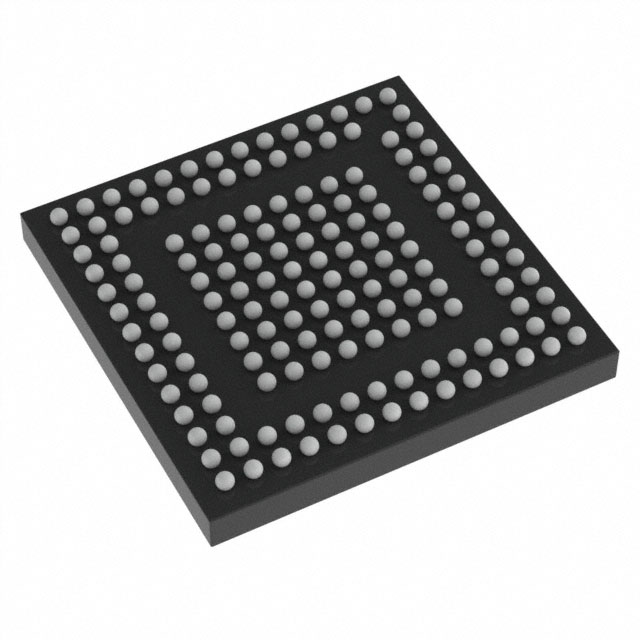
NXP Semiconductors SJA1105QELY
- Part No.:
- SJA1105QELY
- Manufacturer:
- NXP Semiconductors
- Category:
- Controllers
- Package:
- 159-LFBGA
- Datasheet:
-
 SJA1105QELY.pdf
- Description:
- IC ETHERNET SWITCH SPI 159LFBGA
- Quantity:
- Payment:

- Shipping:

Inventory:2,304
Please send an inquiry. Send us your inquiry, and we will respond immediately.
Product details
Overview
SJA1105QELY from NXP Semiconductors is a 5-port automotive Ethernet switch IC supporting configurable 10/100/1000 Mbit/s per port via RGMII/SGMII and 10/100 Mbit/s via MII/RMII, with IEEE 802.1Q VLANs (4096), hardware IEEE 802.1AS timestamping, and AEC-Q100 Grade 2 qualification (-40 °C to +105 °C) for in-vehicle networking.
For engineers reviewing the SJA1105QELY datasheet, SJA1105QELY pinout, SJA1105QELY application, or SJA1105QELY equivalent, key selection considerations include AVB/TSN-ready traffic shaping (16 credit-based shapers), independent I/O voltage domains (1.8/2.5/3.3 V), SPI host interface, LFBGA159 package, and IEEE 1588v2 one-step sync forwarding capability.
Technical Context
The SJA1105QELY implements a store-and-forward switching architecture with per-port MAC-layer configuration, enabling mixed-speed topologies (e.g., RGMII to PHYs, SGMII for cascading). It integrates dedicated hardware accelerators for IEEE 802.1Qav credit-based shaping and IEEE 802.1AS timestamping-both executed without CPU intervention.
Its interface flexibility includes MII/RMII for Fast Ethernet, RGMII with internal delay compensation for Gigabit Ethernet, and SGMII for SerDes links. The device uses a 1.2 V core supply with three independently configurable I/O voltage domains, supporting heterogeneous SoC and PHY interfacing in automotive ECUs.
Key Specifications
| Parameter | Value and Actual Design Meaning |
|---|---|
| Port count | 5-port switch with full-duplex store-and-forward operation |
| Data rates per port | Configurable 10/100 Mbit/s (MII/RMII) or 10/100/1000 Mbit/s (RGMII/SGMII) |
| VLAN support | 4096 IEEE 802.1Q VLANs with priority-based QoS |
| AVB/TSN acceleration | Hardware IEEE 802.1AS timestamping and 16 credit-based shapers per port |
| Operating temperature | AEC-Q100 Grade 2: -40 °C to +105 °C ambient |
| Core & I/O voltages | 1.2 V core; selectable 1.8/2.5/3.3 V for MII/RMII/RGMII and host interface |
| Package | LFBGA159 (12 mm × 12 mm, 0.8 mm pitch) |
Pinout & Package
LFBGA159 (12 mm × 12 mm, 0.8 mm pitch) package with 159 solder balls; thermal pad on underside for enhanced heat dissipation in automotive under-hood environments.
| Pin/Terminal | Circuit Role | Design Meaning |
|---|---|---|
| VDDIO_1 / VDDIO_2 / VDDIO_3 | I/O power supply domains | Independent 1.8/2.5/3.3 V supplies for MII/RMII/RGMII, host interface, and SGMII domains |
| VDD_CORE | Core logic supply | 1.2 V regulated supply required for internal switching fabric and control logic |
| REFCLK_IN | System clock input | 25 MHz single-ended or crystal-driven reference clock for timing synchronization |
| REFCLK_OUT | Reference clock output | 25 MHz buffered clock output for daisy-chained devices or external PHYs |
| SPI_CS / SPI_SCK / SPI_MOSI / SPI_MISO | Host configuration interface | Quad-wire SPI interface for non-volatile configuration loading and runtime register access |
| SYNC_OUT | Cascading synchronization | Output signal aligning timestamp domains across multiple SJA1105QELY devices |
Key Features
| Feature | Design Value |
|---|---|
| IEEE 802.1AS hardware timestamping | Enables sub-microsecond time synchronization across distributed ECU networks without software overhead |
| 16 credit-based shapers (IEEE 802.1Qav) | Allows precise bandwidth reservation and latency control for SR Class A/B/C AVB streams per port queue |
| RGMII internal delay compensation | Eliminates need for external PCB trace length matching or delay ICs in Gigabit Ethernet designs |
| AEC-Q100 Grade 2 qualification | Validated for continuous operation in automotive engine bay and infotainment environments |
| Programmable drive strength | Adjusts output slew rate and current for signal integrity optimization across varying PCB stackups and trace lengths |
Applications
| Automotive ADAS Domain Controller | IVI Head Unit Networking |
|---|---|
Use Scenario: Aggregating camera, radar, and sensor data streams within a centralized ADAS ECU using deterministic low-latency paths. IC Role / Device Role / Timing Role: Ethernet switch providing synchronized AVB/TSN-aware packet routing with IEEE 802.1AS timestamping and credit-based shaping. Use Value: Enables time-coordinated sensor fusion by guaranteeing bounded latency (< 50 µs) and jitter (< 1 µs) for Class A SR traffic across all five ports. | Use Scenario: Interconnecting infotainment head unit, digital cluster, and telematics module over a unified Ethernet backbone. IC Role / Device Role / Timing Role: Managed switch handling VLAN-segregated audio/video/control traffic with hardware QoS prioritization. Use Value: Delivers uninterrupted high-fidelity audio streaming (Class B) while isolating firmware update traffic in separate VLANs-no packet loss at line rate. |
| Automotive Gateway Module | Vehicle OTA Update Hub |
Use Scenario: Bridging CAN FD, LIN, and Ethernet domains in a zonal gateway, translating protocols and enforcing security policies. IC Role / Device Role / Timing Role: High-reliability Ethernet switch with JTAG debug access and SPI-configurable filtering rules for secure inter-domain routing. Use Value: Supports fail-safe operation during firmware updates via dual-image boot and hardware reset supervision-no network downtime during reflash. | Use Scenario: Centralized distribution point for signed OTA firmware packages to multiple ECUs over Ethernet, with integrity verification and bandwidth throttling. IC Role / Device Role / Timing Role: Traffic-shaping switch enforcing strict bandwidth caps and priority queuing for update payloads versus real-time control traffic. Use Value: Guarantees 100 Mbps minimum guaranteed bandwidth for critical OTA transfers while preserving < 10 µs latency for safety-critical CAN-over-Ethernet tunnels. |
Equivalent & Alternatives
The following parts are listed as comparable options for similar automotive Ethernet switching applications.
| Alternative Part | Technical Difference | Application Difference | Selection Advice |
|---|---|---|---|
| MARVELL 88Q5152 | Supports IEEE 802.1Qbu/802.3br frame preemption; lacks native IEEE 802.1AS timestamping; requires external PHY for SGMII | Better suited for TSN time-triggered scheduling but requires additional components for AVB sync | Select when frame preemption and time-triggered traffic are primary requirements over AVB compatibility |
| TI DP83869HM | Single-port Gigabit PHY with integrated RGMII delay; no switching fabric or VLAN support | Only provides physical layer interface-not a switch-so cannot replace multi-port bridging functionality | Use only as companion PHY for SJA1105QELY's RGMII ports, not as functional alternative |
Compared with MARVELL 88Q5152 and TI DP83869HM, the SJA1105QELY uniquely delivers integrated AVB/TSN switching with hardware timestamping, per-port speed configurability, and AEC-Q100 qualification in a single LFBGA159 package-enabling compact, standards-compliant automotive Ethernet nodes without external timing or shaping logic.
Availability
SJA1105QELY is available at Aetrix Electronics and suitable for automotive ADAS domain controllers, IVI head units, zonal gateways, and OTA update hubs requiring stable component supply, long-term lifecycle assurance, and AEC-Q100-compliant performance.
Supply support for SJA1105QELY includes scheduled delivery planning, volume procurement assistance, BOM continuity management, traceable sourcing, and lifecycle availability coordination for OEM customers, industrial embedded developers, connected-device designers, and electronics production programs.
Manufacturer
NXP Semiconductors is a global semiconductor company specializing in secure connectivity solutions for automotive, industrial, and IoT applications, with leadership in automotive Ethernet and secure microcontrollers.
The SJA1105QELY belongs to NXP's SJA1105P/Q/R/S family of automotive-qualified Ethernet switches designed specifically for deterministic in-vehicle networking with AVB/TSN capabilities and functional safety readiness.
FAQ
What Ethernet standards does the SJA1105QELY support?
The SJA1105QELY supports IEEE 802.3 for physical layer compliance, IEEE 802.1Q for VLAN tagging (up to 4096 VLANs), IEEE 802.1AS for hardware timestamping, and IEEE 802.1Qav for credit-based traffic shaping. It also implements IEEE 1588v2 one-step sync forwarding in hardware-enabling precise time synchronization across automotive networks without host CPU involvement. The SJA1105QELY does not support IEEE 802.1Qbu or 802.3br frame preemption.
Does the SJA1105QELY require external PHYs?
The SJA1105QELY operates as a MAC-only switch and requires external PHYs for physical layer connectivity. It supports direct interfacing with 10/100 Mbit/s PHYs via MII/RMII and 10/100/1000 Mbit/s PHYs via RGMII or SGMII. RGMII includes internal delay compensation, eliminating the need for external delay components. The SJA1105QELY itself does not integrate PHY circuitry, so external PHY selection must match the chosen interface mode and data rate.
What is the purpose of the SYNC_OUT pin on the SJA1105QELY?
SYNC_OUT on the SJA1105QELY provides a hardware-synchronized timing signal used to align timestamp domains across multiple cascaded SJA1105QELY devices. This enables deterministic, sub-microsecond time coordination in multi-switch topologies-critical for distributed AVB/TSN applications like sensor fusion or synchronized audio/video playback. The signal is derived from the internal IEEE 802.1AS clock domain and requires no software configuration to activate.
How is configuration loaded into the SJA1105QELY at power-up?
Configuration for the SJA1105QELY is loaded via its quad-wire SPI interface (SPI_CS, SPI_SCK, SPI_MOSI, SPI_MISO) during initialization. A host processor writes a binary configuration table-including port settings, VLAN maps, and traffic shaper parameters-to the switch's internal registers. The SJA1105QELY has no internal non-volatile memory, so configuration must be reloaded after each reset. Boot-time loading is typically handled by the host bootloader or early firmware stage before network stack initialization.
Is the SJA1105QELY pin-compatible with other members of the SJA1105 family?
Yes-the SJA1105QELY is pin-compatible with SJA1105PEL, SJA1105REL, and SJA1105SEL per the ordering information table in the short data sheet, all housed in the LFBGA159 (SOT1427-1) package. This allows hardware reuse across variants differing in feature sets (e.g., AVB support level, number of shapers, or clocking options), provided the PCB layout accommodates the common 159-ball footprint and thermal pad requirements.
SJA1105QELY Specifications
- Product attributes
- Attribute value
- Manufacturer:
- NXP Semiconductors
- Package/Case:
- 159-LFBGA
- Programmable:
- Not Verified
- Protocol:
- Ethernet
- Function:
- Switch
- Interface:
- SPI
- Standards:
- IEEE 802.3
- Voltage - Supply:
- 1.65V ~ 3.6V
- Current - Supply:
- 3.5mA
- Operating Temperature:
- -40°C ~ 125°C (TJ)
- Supplier Device Package:
- 159-LFBGA (12x12)
- Grade:
- Automotive
- Qualification:
- AEC-Q100
SJA1105QELY FAQ
1.How can I place an order for SJA1105QELY through Aetrix?
Please submit a Request for Quotation (RFQ) for SJA1105QELY on Aetrix. Our sales agent will provide a competitive quotation and guide you through the order confirmation once you accept the terms.
2.Are the price and stock information for SJA1105QELY reliable?
The price and inventory of SJA1105QELY are updated periodically and may fluctuate due to market conditions. Stock and pricing data are typically refreshed every 24 hours. Quotation validity for SJA1105QELY is usually 5 days.
3.What payment methods are accepted for SJA1105QELY?
We accept Wire Transfer, PayPal, Credit Card, Western Union, MoneyGram, and Escrow for SJA1105QELY transactions.
Note: Certain payment methods may incur a processing fee.
4.How is shipping managed for SJA1105QELY?
SJA1105QELY orders can be shipped via leading logistics carriers, including DHL, UPS, FedEx, TNT, or Registered Mail.
Once your SJA1105QELY order is processed, you will receive an email with the shipment details and tracking number.
Note: Tracking information may take up to 24 hours to appear. Express delivery typically takes 3–5 business days.
5.How can I obtain technical support or documentation for SJA1105QELY?
For technical support, including SJA1105QELY datasheets, pinout diagrams, or application guidance, please contact our engineering support team. They can provide detailed documentation and assistance for your SJA1105QELY requirements.
6.How does Aetrix verify that SJA1105QELY is sourced from the original manufacturer or authorized distributors?
All SJA1105QELY products on Aetrix are procured from qualified distributors and authorized channels. Our dedicated quality assurance team conducts strict verification, including traceability checks and, if necessary, third-party testing. This ensures that SJA1105QELY meets industry standards.
7.What is the process for return or replacement of SJA1105QELY?
All SJA1105QELY units undergo pre-shipment inspection (PSI). If there is an issue with SJA1105QELY, returns or replacements are accepted under the following conditions:
1.Quantity discrepancies, incorrect items, or visible external defects (such as breakage or corrosion), acknowledged by Aetrix.
2.The issue is reported within 90 days of delivery.
3.The SJA1105QELY part is unused and in its original packaging.
Return procedure for SJA1105QELY:
1.Submit a request within 90 days.
2.Obtain a Return Material Authorization (RMA) from Aetrix.
SJA1105QELY Tags
-
PTN5150AHXMP
NXP Semiconductors
-
USB3740B-AI9-TR
Microchip Technology
-
USB3740B-AI2-TR
Microchip Technology
-
USB3300-EZK-TR
Microchip Technology
-
USB3300-EZK
Microchip Technology
-
FUSB340TMX
onsemi
-
FUSB302BMPX
onsemi
-
DP83826IRHBR
Texas Instruments
-
MCP2518FDT-E/QBB
Microchip Technology
-
FUSB302MPX
onsemi
-
MCP2518FDT-E/SL
Microchip Technology
-
FT260Q-R
FTDI, Future Technology Devices International Ltd
Tech Hub

A practical engineering guide to 3.3V and 5V logic compatibility, input thresholds, resistor dividers, translator ICs, MOSFET level shifting, I2C pull-ups, timing limits and power-sequencing risks.

The 74HC595 uses push-pull logic outputs, while the TPIC6B595 uses 50 V open-drain DMOS sinks for higher-power loads. This guide compares timing, current limits, 3.3 V interfacing, load wiring, thermal…

The 74HC595 converts serial data into eight stable parallel outputs. This guide covers pin functions, shift and storage timing, OE and MR behavior, drive-current limits, cascading, voltage compatibilit…

A technical comparison of level-sensitive latches and edge-triggered flip-flops, covering timing windows, setup and hold limits, master–slave operation, time borrowing, race-through, HDL inference and…

A D latch stores one bit while Enable controls when data can pass. This reference covers gate-level operation, truth tables, transparency, setup and hold timing, LE versus OE, common ICs and practical …

An SR latch stores one bit through cross-coupled feedback. This engineering reference covers NOR and NAND implementations, truth tables, forbidden-state recovery, gated operation, switch debouncing, fa…

Latch circuits retain one bit through feedback. This technical reference covers SR and D latches, truth tables, transparency, timing limits, latch-versus-flip-flop behavior, applications and common log…

An engineering guide to LED driver operation, constant-current and constant-voltage outputs, linear and switching topologies, dimming, IC selection, calculations, replacement compatibility, and fault c…

Operational amplifier guide covering op amp basics, feedback, ideal vs real op amps, common configurations, buffer circuits, offset, bias current, gain-bandwidth, slew rate, rail-to-rail limits and sel…

Jumper cables guide covering safe connection order, red and black clamp placement, final ground connection, cable gauge, length, clamp quality, copper vs CCA cables, jump starter comparison and battery…


