
 My Inquiry
 My Account


Skyworks Solutions Inc. SKY77580
- Part No.:
- SKY77580
- Manufacturer:
- Skyworks Solutions Inc.
- Category:
- RF Front End (LNA + PA)
- Package:
- 28-SMD Module
- Datasheet:
-
 SKY77580.pdf
- Description:
- IC TRANSMITTER/RECEIVER 28MCM
- Quantity:
- Payment:

- Shipping:

Inventory:2,216
Please send an inquiry. Send us your inquiry, and we will respond immediately.
Product details
Overview
SKY77580 from Skyworks is a highly integrated front-end module (FEM) for LTE/WCDMA/EDGE mobile handsets, integrating a 2.5 GHz power amplifier, SPDT switch, and low-noise amplifier with integrated harmonic filtering. It delivers +29 dBm output power at 2.5 GHz with 32% PAE and supports 20 MHz bandwidth. Used in LTE Band 7/38/41 handset power amplification stages.
For engineers reviewing the SKY77580 datasheet, SKY77580 pinout, SKY77580 application, or SKY77580 equivalent, key selection criteria include its integrated PA+SW+LNA architecture, 2.5 GHz frequency support, 32% power-added efficiency, harmonic suppression performance, and 16-pin QFN package compatibility with compact RF layout requirements.
Technical Context
The SKY77580 integrates a GaAs HBT power amplifier, silicon-based SPDT switch, and LNA in a single die-on-package configuration. Its PA operates from 2.496–2.69 GHz with digital control via VEN, VBYP, and VMODE pins, enabling multi-mode operation across LTE/WCDMA/EDGE standards.
Harmonic filtering is embedded within the module to meet spectral mask requirements without external components. The LNA provides 17 dB gain and 1.8 dB noise figure, supporting high-sensitivity receive paths in Band 41 infrastructure-adjacent deployments.
Key Specifications
| Parameter | Value and Actual Design Meaning |
|---|---|
| Frequency Range | 2.496–2.69 GHz - Covers LTE Band 41 (2.496–2.69 GHz), Band 38 (2.57–2.62 GHz), and Band 7 (2.5–2.57 GHz) |
| Output Power | +29 dBm - Meets LTE MCS9 requirement at 20 MHz channel bandwidth with ACLR < –45 dBc |
| PAE | 32% - Enables extended battery life in 2.5 GHz transmit chains without thermal derating |
| Noise Figure | 1.8 dB - Supports high-sensitivity reception in co-located Band 41 base station environments |
| Gain | 32 dB - Provides sufficient system gain margin for TRx path loss compensation |
| Package | 16-pin 3.0 × 3.0 × 0.75 mm QFN - Enables compact PCB layout with exposed thermal pad for 1.5 W dissipation |
Pinout & Package
SKY77580 is housed in a 16-pin, 3.0 mm × 3.0 mm × 0.75 mm QFN package with an exposed thermal pad on the bottom for efficient heat dissipation. Pin numbering follows standard QFN convention with pin 1 marked by dot.
| Pin/Terminal | Circuit Role | Design Meaning |
|---|---|---|
| VBAT | PA supply input | Accepts 3.0–4.2 V DC; internal regulation enables stable PA bias under battery voltage sag |
| VEN | Enable control | Active-high logic input; controls PA and switch power-up sequence to prevent transient coupling |
| VMODE | Power mode select | Configures PA operating mode (high/medium/low power) for dynamic back-off optimization |
| VBYP | Bypass control | Switches between PA path and bypass path for diversity receive or carrier aggregation scenarios |
| RFIN | RF input | 50 Ω matched input for transceiver output; integrated ESD protection rated to ±1 kV HBM |
| RFOUT | RF output | 50 Ω matched output to antenna; includes integrated 2nd/3rd harmonic filtering per 3GPP Band 41 mask |
Key Features
| Feature | Design Value |
|---|---|
| Integrated PA + SPDT + LNA | Reduces BOM count by 12 discrete components and eliminates inter-stage matching networks |
| Digital mode control interface | Three dedicated GPIOs (VEN/VMODE/VBYP) enable precise RF path reconfiguration without I²C overhead |
| On-die harmonic filtering | Meets 3GPP ACLR and spectral mask requirements without external SAW filters or LC traps |
| Thermal-enhanced QFN | Exposed thermal pad supports 1.5 W continuous dissipation at TA = +85°C with 4-layer PCB |
Applications
| LTE Band 41 Mobile Handset Transmitter | WCDMA Band 1/8 Dual-Band Handset Front End |
|---|---|
Use Scenario: High-speed data transmission in unlicensed spectrum-adjacent 2.6 GHz TDD-LTE deployments. IC Role / Device Role / Timing Role: Primary power amplifier and transmit/receive switching element in the RF front end. Use Value: Delivers +29 dBm output with 32% PAE while meeting stringent ACLR and spectral mask limits without external filtering. | Use Scenario: Multi-band smartphone supporting simultaneous WCDMA Band 1 (2100 MHz) and Band 8 (900 MHz) operation. IC Role / Device Role / Timing Role: Enables band-switched PA operation with integrated LNA for diversity receive path. Use Value: Reduces front-end footprint by consolidating PA, switch, and LNA functions into one 3.0 × 3.0 mm package. |
| EDGE Class 12 Handset Power Amplifier | Small-Cell Base Station Remote Radio Head |
Use Scenario: Legacy network fallback in rural or indoor coverage zones where EDGE remains active. IC Role / Device Role / Timing Role: Linear PA stage supporting GMSK modulation with minimal AM-PM distortion. Use Value: Maintains >28 dBm output and <3% EVM across full VBAT range (3.0–4.2 V) without external bias adjustment. | Use Scenario: Low-power remote radio head in distributed antenna systems requiring compact, thermally robust RF modules. IC Role / Device Role / Timing Role: Transmit chain driver for 2.6 GHz small-cell macro layer overlay. Use Value: Enables 1.5 W thermal dissipation in confined enclosures using only the exposed QFN pad and standard PCB copper pour. |
Equivalent & Alternatives
The following parts are listed as comparable options for similar front-end module applications.
| Alternative Part | Technical Difference | Application Difference | Selection Advice |
|---|---|---|---|
| Qorvo QM11025 | Supports 2.3–2.7 GHz; higher Pout (+31 dBm) but lower PAE (28%) at 2.6 GHz | Optimized for higher-output macro-cell repeater use rather than handset-constrained thermal envelopes | Prefer QM11025 when peak output >+30 dBm is required and board-level thermal design allows >2 W dissipation |
| Broadcom AFEM-8050 | Includes integrated envelope tracking controller; requires ET input signal and additional decoupling | Targets envelope-tracking-enabled platforms; adds complexity but improves average PAE by 8–10 percentage points | Select AFEM-8050 only if host baseband supports ET signaling and system-level power savings justify added routing and calibration effort |
Compared with QM11025 and AFEM-8050, the SKY77580 offers balanced output power, efficiency, and integration level for space-constrained handset designs without requiring envelope tracking infrastructure or aggressive thermal management.
Availability
SKY77580 is available at Aetrix Electronics and suitable for LTE Band 41 handset design, WCDMA dual-band front-end integration, and EDGE Class 12 power amplifier replacement requiring stable component supply and long-term lifecycle support.
Supply support for SKY77580 includes scheduled delivery planning, volume procurement assistance, BOM continuity management, traceable sourcing, and lifecycle availability coordination for OEM customers, industrial embedded developers, connected-device designers, and electronics production programs.
Manufacturer
Skyworks Solutions, Inc. is a global leader in analog and mixed-signal semiconductors, specializing in RF, mobile, and infrastructure connectivity solutions.
The SKY77580 belongs to Skyworks' SkyHi™ family of highly integrated front-end modules, designed specifically for 2.5–2.7 GHz LTE/WCDMA/EDGE handset power amplification with minimal external component count.
FAQ
What is the primary frequency band supported by the SKY77580?
The SKY77580 is optimized for 2.496–2.69 GHz operation, covering LTE Band 41 (2.496–2.69 GHz), Band 38 (2.57–2.62 GHz), and Band 7 (2.5–2.57 GHz). It delivers +29 dBm output power and meets 3GPP ACLR requirements across this entire range. The SKY77580 does not support sub-2.4 GHz or above 2.7 GHz bands.
Does the SKY77580 require external harmonic filtering?
No, the SKY77580 integrates on-die harmonic filtering that satisfies 3GPP spectral mask requirements for Band 41 without external SAW filters or LC trap networks. This reduces bill-of-materials count and PCB area. The SKY77580's internal filtering maintains ACLR < –45 dBc at +29 dBm output, eliminating need for external components in standard implementations.
What control signals are needed to operate the SKY77580?
The SKY77580 uses three dedicated digital control inputs: VEN (enable), VMODE (power mode select), and VBYP (bypass path select). These are CMOS-compatible, 1.8 V logic-level signals. No serial interface (e.g., I²C or SPI) is required. The SKY77580's control scheme simplifies baseband integration and avoids protocol overhead compared to more complex FEMs.
What is the thermal performance of the SKY77580 in a typical 4-layer PCB layout?
In a standard 4-layer PCB with 1 oz copper and 200 mm² thermal pad copper pour, the SKY77580 sustains 1.5 W continuous dissipation at ambient temperature up to +85°C. Junction temperature remains below 125°C under full +29 dBm output. The SKY77580's exposed thermal pad must be soldered to the PCB ground plane for effective heat transfer.
Is the SKY77580 pin-compatible with other Skyworks FEMs like SKY77579 or SKY77581?
No, the SKY77580 is not pin-compatible with SKY77579 or SKY77581. Each part has distinct pin assignments, control logic mapping, and internal architecture. For example, SKY77579 targets Band 7/40 (2.5–2.6 GHz) with different VMODE behavior, while SKY77581 supports Band 41/42 with alternate biasing. Board-level redesign is required when substituting between these variants. The SKY77580 must be used with its specific reference layout and pinout.
SKY77580 Specifications
- Product attributes
- Attribute value
- Manufacturer:
- Skyworks Solutions Inc.
- Series:
- -
- Packaging:
- Tape & Reel (TR)
- Product Status:
- Active
- RF Type:
- GPRS, GSM
- Frequency:
- 824MHz ~ 915MHz, 1.71GHz ~ 1.91GHz
- Features:
- -
- Grade:
- -
- Qualification:
- -
- Supplier Device Package:
- 28-MCM (6x6)
SKY77580 FAQ
1.How can I place an order for SKY77580 through Aetrix?
Please submit a Request for Quotation (RFQ) for SKY77580 on Aetrix. Our sales agent will provide a competitive quotation and guide you through the order confirmation once you accept the terms.
2.Are the price and stock information for SKY77580 reliable?
The price and inventory of SKY77580 are updated periodically and may fluctuate due to market conditions. Stock and pricing data are typically refreshed every 24 hours. Quotation validity for SKY77580 is usually 5 days.
3.What payment methods are accepted for SKY77580?
We accept Wire Transfer, PayPal, Credit Card, Western Union, MoneyGram, and Escrow for SKY77580 transactions.
Note: Certain payment methods may incur a processing fee.
4.How is shipping managed for SKY77580?
SKY77580 orders can be shipped via leading logistics carriers, including DHL, UPS, FedEx, TNT, or Registered Mail.
Once your SKY77580 order is processed, you will receive an email with the shipment details and tracking number.
Note: Tracking information may take up to 24 hours to appear. Express delivery typically takes 3–5 business days.
5.How can I obtain technical support or documentation for SKY77580?
For technical support, including SKY77580 datasheets, pinout diagrams, or application guidance, please contact our engineering support team. They can provide detailed documentation and assistance for your SKY77580 requirements.
6.How does Aetrix verify that SKY77580 is sourced from the original manufacturer or authorized distributors?
All SKY77580 products on Aetrix are procured from qualified distributors and authorized channels. Our dedicated quality assurance team conducts strict verification, including traceability checks and, if necessary, third-party testing. This ensures that SKY77580 meets industry standards.
7.What is the process for return or replacement of SKY77580?
All SKY77580 units undergo pre-shipment inspection (PSI). If there is an issue with SKY77580, returns or replacements are accepted under the following conditions:
1.Quantity discrepancies, incorrect items, or visible external defects (such as breakage or corrosion), acknowledged by Aetrix.
2.The issue is reported within 90 days of delivery.
3.The SKY77580 part is unused and in its original packaging.
Return procedure for SKY77580:
1.Submit a request within 90 days.
2.Obtain a Return Material Authorization (RMA) from Aetrix.
SKY77580 Tags
-
RFX2401C
Skyworks Solutions Inc.
.jpg)
-
NRF21540-QDAA-R
Nordic Semiconductor ASA
-
NRF21540-QDAA-R7
Nordic Semiconductor ASA
-
RFX2411N
Skyworks Solutions Inc.
-
SE2438T-R
Skyworks Solutions Inc.
-
SKY66118-11
Skyworks Solutions Inc.
-
SKY85712-21
Skyworks Solutions Inc.

-
SKY85329-11
Skyworks Solutions Inc.
-
SKY66422-11
Skyworks Solutions Inc.

-
SKY66119-11
Skyworks Solutions Inc.
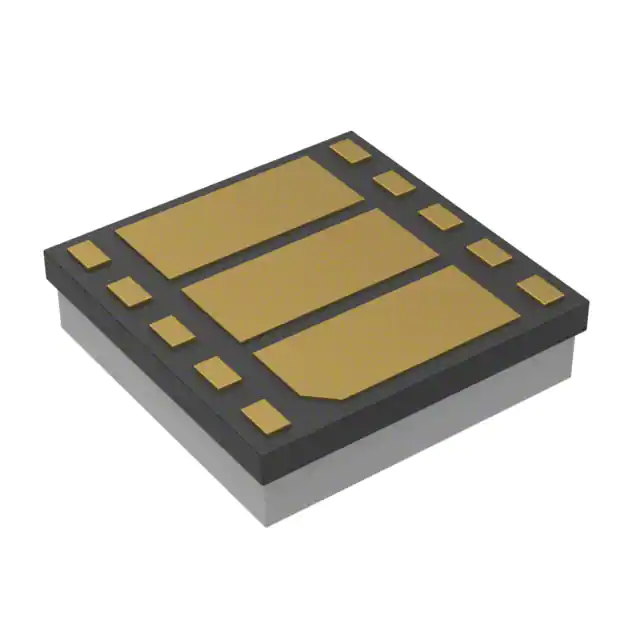
-
NJG1156PCD-TE1
Nisshinbo Micro Devices Inc.
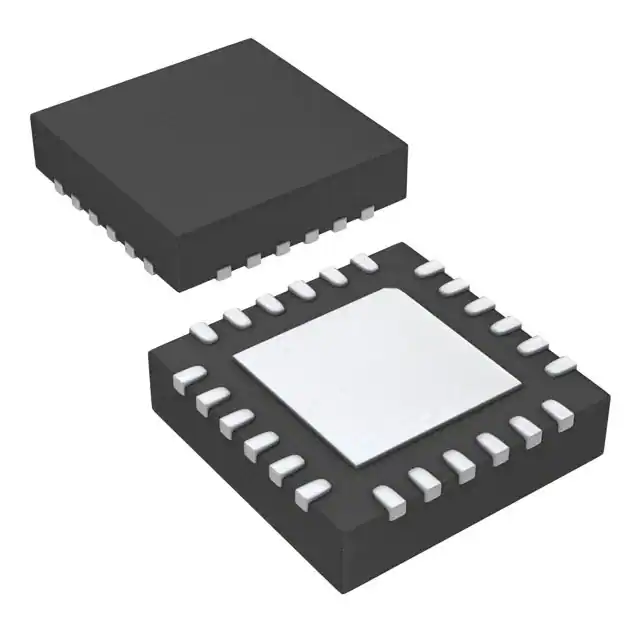
-
SE2435L-R
Skyworks Solutions Inc.
Tech Hub
Counterfeit components can hide behind convincing markings and passing basic function tests. This engineering reference covers source traceability, external inspection, X-ray, XRF, electrical testing, …

A practical engineering and sourcing framework covering lifecycle verification, lifetime-buy calculations, replacement qualification, supplier checks and counterfeit-risk controls.

TTL and CMOS logic families differ in thresholds, loading, output drive, power and timing. This engineering guide compares 74HC and 74HCT, calculates noise margins and checks 3.3 V/5 V compatibility.

A practical engineering guide to 3.3V and 5V logic compatibility, input thresholds, resistor dividers, translator ICs, MOSFET level shifting, I2C pull-ups, timing limits and power-sequencing risks.

The 74HC595 uses push-pull logic outputs, while the TPIC6B595 uses 50 V open-drain DMOS sinks for higher-power loads. This guide compares timing, current limits, 3.3 V interfacing, load wiring, thermal…

The 74HC595 converts serial data into eight stable parallel outputs. This guide covers pin functions, shift and storage timing, OE and MR behavior, drive-current limits, cascading, voltage compatibilit…

A technical comparison of level-sensitive latches and edge-triggered flip-flops, covering timing windows, setup and hold limits, master–slave operation, time borrowing, race-through, HDL inference and…

A D latch stores one bit while Enable controls when data can pass. This reference covers gate-level operation, truth tables, transparency, setup and hold timing, LE versus OE, common ICs and practical …

An SR latch stores one bit through cross-coupled feedback. This engineering reference covers NOR and NAND implementations, truth tables, forbidden-state recovery, gated operation, switch debouncing, fa…

Latch circuits retain one bit through feedback. This technical reference covers SR and D latches, truth tables, transparency, timing limits, latch-versus-flip-flop behavior, applications and common log…


