
 My Inquiry
 My Account


Skyworks Solutions Inc. SL28EB740AZI
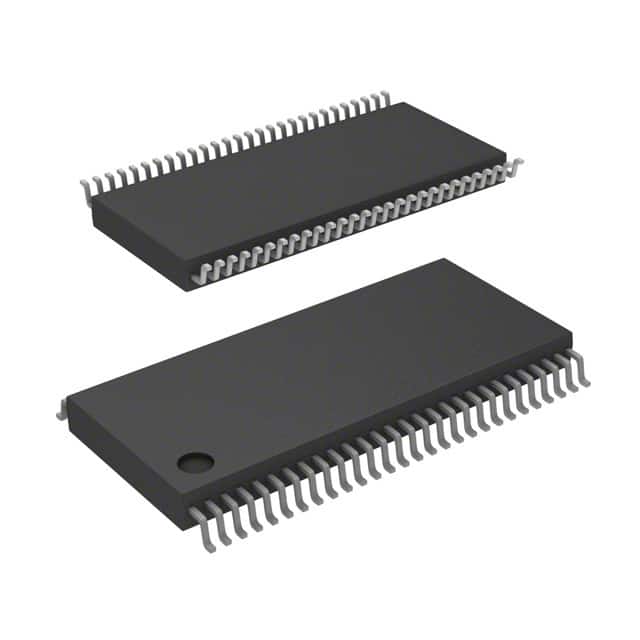
- Part No.:
- SL28EB740AZI
- Manufacturer:
- Skyworks Solutions Inc.
- Category:
- Application Specific Clock/Timing
- Package:
- 56-TFSOP (0.240", 6.10mm Width)
- Datasheet:
-
 SL28EB740AZI.pdf
- Description:
- IC CLK CK505 TNLCK/TPCLF 56TSSOP
- Quantity:
- Payment:

- Shipping:

Inventory:4,888
Please send an inquiry. Send us your inquiry, and we will respond immediately.
Product details
Overview
SL28EB740AZI from Silicon Labs is a programmable EProClock® clock generator optimized for Intel Tunnel Creek and Top Cliff platforms, delivering differential CPU clocks (up to 166 MHz), 100 MHz SRC outputs, 75/100 MHz SATA clocks, 96 MHz DOT, 48/12 MHz USB, 14.318 MHz, and 25 MHz reference clocks - all with I²C programmability, spread-spectrum control, and Wake-on-LAN support.
For engineers reviewing the SL28EB740AZI datasheet, SL28EB740AZI pinout, SL28EB740AZI application, or SL28EB740AZI equivalent, this device serves as a CK505-compliant, industrial-grade (–40°C to +85°C), 56-pin TSSOP timing solution for embedded x86 compute platforms requiring precise multi-output clock synthesis with dynamic output enable, slew rate tuning, and low-power stop modes.
Technical Context
The SL28EB740AZI integrates four independent PLLs - three non-SSC and one SSC-enabled - supporting simultaneous generation of CPU, SRC, SATA, DOT, PCI, and USB clocks from a single 25 MHz crystal or external clock input. Its EProClock® non-volatile configuration allows factory-programmed frequency sets, differential skew/duty cycle/amplitude control, and per-output enable/disable via SMBus.
It implements hardware-strapped and SMBus-configurable frequency selection (via FS[3:0] pins), supports synchronous clock stopping via CPU_STP# and PCI/SRC_STP#, and features dual-function CKPWRGD/PD# for power-down sequencing. All differential outputs comply with Intel CK505 AC/DC specifications including <100 ps cycle-to-cycle jitter and ±100 ppm long-term accuracy.
Key Specifications
| Parameter | Value and Actual Design Meaning |
|---|---|
| CPU Clock Outputs | Differential true/complement pairs at 83.33/100/133/166 MHz - selectable via FS pins and SMBus; enables direct interface to Intel Atom processors without external level-shifting. |
| SRC Clock Outputs | Six 100 MHz differential SRC outputs (SRC0–SRC5) plus SRC6 configurable as SRC or CPU2 - meets Intel CK505 serial reference clock requirements for chipset synchronization. |
| SATA Clock | 75 MHz or 100 MHz differential SATA clock (SATA75M/SRC0) - selectable via SEL_SATA75 pin; supports both SATA I/II and Intel SRC compliance. |
| DOT & USB Clocks | Fixed 96 MHz differential DOT clock and 48 MHz (or 12 MHz) USB clock - provides pixel clock for display controllers and timing for USB 2.0 PHYs. |
| Reference & Control | 25 MHz buffered reference output; 14.318 MHz fixed output; I²C (SMBus) interface with readback; triangular spread-spectrum modulation up to –0.5% for EMI reduction. |
| Power & Environment | Single 3.3 V supply; industrial temperature range (–40°C to +85°C); 56-pin TSSOP package; <1 mA power-down current; CK505-compliant AC/DC electrical specs. |
Pinout & Package
SL28EB740AZI is housed in a 56-pin Thin Shrink Small Outline Package (TSSOP) with 0.5 mm pitch, thermally enhanced for industrial compute applications. Pin assignments are fully defined in the official Silicon Labs SP-AP-0006 Rev. AC documentation.
| Pin/Terminal | Circuit Role | Design Meaning |
|---|---|---|
| 1, 2, 56 | No Connect (NC) | Unused pins; must remain unconnected per design guidelines. |
| 3–4, 9, 16, 45–46, 54 | CLKREQ#1/2/3, FSB, CPU_STP#, PCI/SRC_STP#, FSC | 3.3 V-tolerant control inputs with internal pull-down/pull-up; used for clock request, frequency selection, and synchronous output stopping. |
| 5, 8, 10, 12, 48, 52 | PCI0/SEL_SATA75, PCIF/ITP_EN, 12_48M/SEL12_48, 48M/FSA, XIN/CLKIN, CKPWRGD/WOL_STP#/PD# | Multi-function I/O pins enabling SATA/SRC mode selection, USB clock choice, crystal/clock input, and dual-mode power-good/power-down signaling. |
| 14–15, 18–19, 21–32, 35–36, 37–41 | DOT96/DOT96#, SATA75M/SRC0/SRC0#, SRC1–SRC6 (true/complement), CPU0–CPU2 (true/complement) | Differential clock outputs with 0.7 V swing; each pair delivers matched rise/fall times (2.5–8 V/ns), <100 ps C2C jitter, and programmable amplitude (700–1000 mV). |
| 43–44 | SCLK, SDATA | SMBus-compatible serial interface pins - support byte/block read/write for full register-level configuration and real-time status readback. |
Key Features
| Feature | Design Value |
|---|---|
| EProClock® Non-Volatile Programmability | Factory-programmable >4000-bit configuration space enables custom frequency sets, differential skew/duty cycle tuning, and spread-spectrum profiles - eliminating board respins for timing validation. |
| Intel CK505 Compliance | Fully meets Intel's CK505 clock specification for CPU, SRC, SATA, and PCI clocks - including AC parameters (jitter, skew, duty cycle) and DC levels - ensuring plug-and-play compatibility with Tunnel Creek/Top Cliff designs. |
| Wake-On-LAN Support | 25 MHz reference clock remains active during S3/S4 suspend states when WOL_EN = 1; enables network controller wake capability without main rail power. |
| Wireless-Friendly Slew Control | 3-bit programmable slew rate on all single-ended clocks (e.g., 48M, 14.318M) - reduces EMI in RF-sensitive environments while maintaining signal integrity. |
| Per-Output Enable/Disable | Individual SMBus-controlled output enables (e.g., DOT96_OE, SATA75/SRC0_OE, CPU0_OE) allow dynamic power gating of unused clocks to reduce system-level power consumption. |
Applications
| Intel Atom-Based Industrial PCs | Embedded Network Appliances |
|---|---|
|
Use Scenario: Fanless industrial PC using Intel Tunnel Creek SoC for machine vision edge inference. IC Role / Device Role / Timing Role: Primary clock generator providing synchronized CPU (133 MHz), SRC (100 MHz), SATA (75 MHz), and DOT (96 MHz) clocks to SoC, chipset, storage, and display interfaces. Use Value: Eliminates need for multiple discrete oscillators; EProClock® tuning ensures timing margin closure across temperature and voltage variation without hardware changes. |
Use Scenario: Rack-mounted firewall appliance with dual Intel Atom processors and Gigabit Ethernet + SATA storage. IC Role / Device Role / Timing Role: Centralized clock source delivering CPU, SRC, PCI, and 25 MHz reference clocks to dual CPUs, network controllers, and SATA PHYs. Use Value: Single-chip solution reduces BOM count and layout complexity; WOL_EN-enabled 25 MHz reference supports remote management during deep sleep. |
| Medical Imaging Terminals | Transportation Infotainment Systems |
|
Use Scenario: DICOM-compliant diagnostic display terminal with high-resolution LCD and solid-state storage. IC Role / Device Role / Timing Role: Generates 96 MHz DOT clock for LVDS display interface and 48 MHz USB clock for peripheral connectivity, alongside CPU/SRC clocks. Use Value: Differential DOT96 output meets EMI limits for Class B medical equipment; programmable slew rate minimizes interference with sensitive analog sensor circuits. |
Use Scenario: In-vehicle infotainment head unit based on Intel Top Cliff platform with HDMI, USB, and SATA-based navigation storage. IC Role / Device Role / Timing Role: Supplies 100 MHz SRC clocks to PCH, 48 MHz USB clock to USB hub, and 14.318 MHz legacy audio clock - all from one IC. Use Value: Industrial temperature rating (–40°C to +85°C) ensures reliability in automotive cabin environments; CK505 compliance guarantees interoperability with Intel reference designs. |
Equivalent & Alternatives
The following parts are listed as comparable options for similar clock generator applications.
| Alternative Part | Technical Difference | Application Difference | Selection Advice |
|---|---|---|---|
| ICS9LPRS495AKLFT | Fixed-frequency, non-programmable 49-output clock generator; no I²C interface or spread spectrum; requires external crystal oscillator. | Lacks EProClock® flexibility and WOL support; suited only for static, cost-sensitive designs where frequencies never change post-BOM. | Select only if design requires zero firmware dependency and all clock frequencies are immutable across product lifetime. |
| PI6C557-03LEX | 3-output PCIe Gen2 clock generator with integrated fanout buffers; no CPU/SRC/SATA multiplexing; no CK505 compliance or industrial temp rating. | Targeted at PCIe add-in cards, not full-platform clock synthesis; cannot replace SL28EB740AZI in Intel Atom motherboard designs. | Use only for PCIe endpoint timing; not a functional substitute for SL28EB740AZI in CPU-centric embedded x86 systems. |
Compared with ICS9LPRS495AKLFT and PI6C557-03LEX, the SL28EB740AZI uniquely combines Intel CK505 compliance, EProClock® field-programmability, WOL-ready 25 MHz reference, and full differential output flexibility - making it irreplaceable for validated Tunnel Creek/Top Cliff platform designs requiring timing adaptability and industrial reliability.
Availability
SL28EB740AZI is available at Aetrix Electronics and suitable for Intel Atom-based industrial PCs, embedded network appliances, medical imaging terminals, and transportation infotainment systems requiring stable component supply, long-lifecycle support, and CK505-compliant timing performance.
Supply support for SL28EB740AZI includes scheduled delivery planning, volume procurement assistance, BOM continuity management, traceable sourcing, and lifecycle availability coordination for OEM customers, industrial embedded developers, connected-device designers, and electronics production programs.
Manufacturer
Silicon Labs is a fabless semiconductor company specializing in timing, wireless, and MCU solutions for embedded systems, with leadership in programmable clock technology and energy-efficient mixed-signal ICs.
The SL28EB740AZI belongs to Silicon Labs' EProClock® family - engineered specifically for Intel Atom processor platforms to deliver CK505-compliant, software-configurable, low-jitter clock synthesis with industrial-grade reliability and EMI mitigation.
FAQ
What is the primary function of the SL28EB740AZI in Intel Tunnel Creek and Top Cliff platforms?
The SL28EB740AZI serves as the central clock generator for Intel Tunnel Creek and Top Cliff platforms, synthesizing and distributing multiple synchronized clock domains - including differential CPU (up to 166 MHz), SRC (100 MHz), SATA (75/100 MHz), DOT (96 MHz), USB (48/12 MHz), and reference (25 MHz/14.318 MHz) clocks - all compliant with Intel CK505 specifications. Its EProClock® programmability enables precise tuning of output characteristics without hardware modification.
Does the SL28EB740AZI support spread-spectrum clocking, and how is it configured?
Yes, the SL28EB740AZI supports triangular spread-spectrum clocking (SSC) on CPU, SRC, and PCI outputs with a default modulation depth of –0.5%. Spread enable is controlled via Bit 5 of Control Register 0 (Spread Enable), accessible through the SMBus interface. The SSC profile is non-volatile and can be programmed during manufacturing or system initialization - no runtime reconfiguration is required once set.
How does the SL28EB740AZI implement Wake-On-LAN functionality?
The SL28EB740AZI supports Wake-On-LAN by maintaining its 25 MHz reference clock output during system suspend states (S3/S4) when the WOL_EN bit (Byte 1, Bit 1) is set to "1". This occurs even when only VDD_SUSPEND is powered - enabling network controllers to remain operational for remote wake events. When WOL_EN = 0, the CKPWRGD/WOL_STP#/PD# pin functions solely as a power-down signal.
Can the SL28EB740AZI generate both 75 MHz and 100 MHz SATA clocks, and how is the selection made?
Yes, the SL28EB740AZI generates either 75 MHz or 100 MHz SATA clocks on the SATA75M/SRC0 differential pair. Selection is controlled by the SEL_SATA75 pin (Pin 5): logic low selects 100 MHz, logic high selects 75 MHz. This hardware-strapped option is sampled at CKPWRGD assertion and cannot be changed dynamically - ensuring deterministic SATA clock behavior at boot.
What package type and thermal characteristics does the SL28EB740AZI use?
The SL28EB740AZI uses a 56-pin TSSOP package with 0.5 mm pitch and JEDEC-standard thermal metrics: θJA = 60°C/W and θJC = 20°C/W. It operates across the industrial temperature range of –40°C to +85°C ambient, with maximum junction temperature rated at 150°C. Power dissipation is managed via configurable output enables and low-power stop modes, keeping typical IDD below 115 mA under full load.
SL28EB740AZI Specifications
- Product attributes
- Attribute value
- Manufacturer:
- Skyworks Solutions Inc.
- Series:
- EProClock®
- Package/Case:
- 56-TFSOP (0.240", 6.10mm Width)
- Packaging:
- Tube
- Product Status:
- Obsolete
- Programmable:
- Not Verified
- PLL:
- Yes
- Main Purpose:
- Intel CPU Servers
- Input:
- Clock, Crystal
- Output:
- HCSL, LVCMOS
- Number of Circuits:
- 1
- Ratio - Input:Output:
- 1:16
- Differential - Input:Output:
- No/Yes
- Frequency - Max:
- 166.67MHz
- Voltage - Supply:
- 3.135V ~ 3.465V
- Operating Temperature:
- -40°C ~ 85°C
- Mounting Type:
- Surface Mount
- Grade:
- -
- Qualification:
- -
- Supplier Device Package:
- 56-TSSOP II
SL28EB740AZI FAQ
1.How can I place an order for SL28EB740AZI through Aetrix?
Please submit a Request for Quotation (RFQ) for SL28EB740AZI on Aetrix. Our sales agent will provide a competitive quotation and guide you through the order confirmation once you accept the terms.
2.Are the price and stock information for SL28EB740AZI reliable?
The price and inventory of SL28EB740AZI are updated periodically and may fluctuate due to market conditions. Stock and pricing data are typically refreshed every 24 hours. Quotation validity for SL28EB740AZI is usually 5 days.
3.What payment methods are accepted for SL28EB740AZI?
We accept Wire Transfer, PayPal, Credit Card, Western Union, MoneyGram, and Escrow for SL28EB740AZI transactions.
Note: Certain payment methods may incur a processing fee.
4.How is shipping managed for SL28EB740AZI?
SL28EB740AZI orders can be shipped via leading logistics carriers, including DHL, UPS, FedEx, TNT, or Registered Mail.
Once your SL28EB740AZI order is processed, you will receive an email with the shipment details and tracking number.
Note: Tracking information may take up to 24 hours to appear. Express delivery typically takes 3–5 business days.
5.How can I obtain technical support or documentation for SL28EB740AZI?
For technical support, including SL28EB740AZI datasheets, pinout diagrams, or application guidance, please contact our engineering support team. They can provide detailed documentation and assistance for your SL28EB740AZI requirements.
6.How does Aetrix verify that SL28EB740AZI is sourced from the original manufacturer or authorized distributors?
All SL28EB740AZI products on Aetrix are procured from qualified distributors and authorized channels. Our dedicated quality assurance team conducts strict verification, including traceability checks and, if necessary, third-party testing. This ensures that SL28EB740AZI meets industry standards.
7.What is the process for return or replacement of SL28EB740AZI?
All SL28EB740AZI units undergo pre-shipment inspection (PSI). If there is an issue with SL28EB740AZI, returns or replacements are accepted under the following conditions:
1.Quantity discrepancies, incorrect items, or visible external defects (such as breakage or corrosion), acknowledged by Aetrix.
2.The issue is reported within 90 days of delivery.
3.The SL28EB740AZI part is unused and in its original packaging.
Return procedure for SL28EB740AZI:
1.Submit a request within 90 days.
2.Obtain a Return Material Authorization (RMA) from Aetrix.
SL28EB740AZI Tags
-
LMK00334RTVRQ1
Texas Instruments
.jpg)
-
DSC557-0344FI0T
Microchip Technology
-
9FGV0241AKILFT
Renesas

-
9DBL0452CKILFT
Renesas
-
DSC557-0344FL1T
Microchip Technology
-
RC19008AGND#KB0
Renesas
-
RC19008AGND#BB0
Renesas
-
9DB403DGILFT
Renesas
-
9DB233AGILFT
Renesas
-
9DB803DGILFT
Renesas
-
9FGL0851DKILFT
Renesas
-
AB-557-03-HCHC-F-L-C-T
Abracon LLC
Tech Hub
Counterfeit components can hide behind convincing markings and passing basic function tests. This engineering reference covers source traceability, external inspection, X-ray, XRF, electrical testing, …

A practical engineering and sourcing framework covering lifecycle verification, lifetime-buy calculations, replacement qualification, supplier checks and counterfeit-risk controls.

TTL and CMOS logic families differ in thresholds, loading, output drive, power and timing. This engineering guide compares 74HC and 74HCT, calculates noise margins and checks 3.3 V/5 V compatibility.

A practical engineering guide to 3.3V and 5V logic compatibility, input thresholds, resistor dividers, translator ICs, MOSFET level shifting, I2C pull-ups, timing limits and power-sequencing risks.

The 74HC595 uses push-pull logic outputs, while the TPIC6B595 uses 50 V open-drain DMOS sinks for higher-power loads. This guide compares timing, current limits, 3.3 V interfacing, load wiring, thermal…

The 74HC595 converts serial data into eight stable parallel outputs. This guide covers pin functions, shift and storage timing, OE and MR behavior, drive-current limits, cascading, voltage compatibilit…

A technical comparison of level-sensitive latches and edge-triggered flip-flops, covering timing windows, setup and hold limits, master–slave operation, time borrowing, race-through, HDL inference and…

A D latch stores one bit while Enable controls when data can pass. This reference covers gate-level operation, truth tables, transparency, setup and hold timing, LE versus OE, common ICs and practical …

An SR latch stores one bit through cross-coupled feedback. This engineering reference covers NOR and NAND implementations, truth tables, forbidden-state recovery, gated operation, switch debouncing, fa…

Latch circuits retain one bit through feedback. This technical reference covers SR and D latches, truth tables, transparency, timing limits, latch-versus-flip-flop behavior, applications and common log…


