
 My Inquiry
 My Account


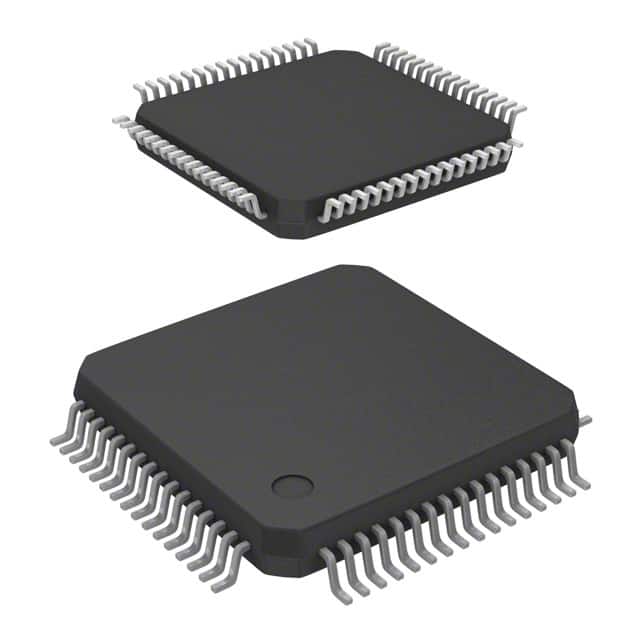
Renesas SM2400A-MQEQ-Y
- Part No.:
- SM2400A-MQEQ-Y
- Manufacturer:
- Renesas
- Category:
- Telecom
- Package:
- 64-LQFP
- Datasheet:
-
 SM2400A-MQEQ-Y.pdf
- Description:
- IC TELECOM INTERFACE 64QFP
- Quantity:
- Payment:

- Shipping:

Inventory:3,514
Please send an inquiry. Send us your inquiry, and we will respond immediately.
Product details
Overview
SM2400A-MQEQ-Y from Adesto Technologies is a narrowband power line communication (N-PLC) transceiver SoC with dual-core architecture, integrated 256-bit AES-CCM* encryption engine, configurable 5–500 kHz operational band compliant with CENELEC/FCC/ARIB, OFDM/FSK/S-FSK modulation support, and receiver sensitivity of −80 dBV - deployed in smart metering and AMI systems.
For engineers reviewing the SM2400A-MQEQ-Y datasheet, SM2400A-MQEQ-Y pinout, SM2400A-MQEQ-Y application, or SM2400A-MQEQ-Y equivalent, key selection criteria include IEEE 1901.2/G3-PLC/PRIME protocol compliance, programmable modulation schemes (BPSK/QPSK/8PSK/16QAM), embedded RISC protocol engine, SPI/UART host interface, and LQFP64 package compatibility with industrial temperature range (−40 °C to +105 °C).
Technical Context
The SM2400A-MQEQ-Y implements a dedicated DSP core for PHY-layer signal processing and a 32-bit RISC controller for MAC/data link layer operations, enabling concurrent real-time OFDM tone mapping, adaptive bit loading, and jammer cancellation. It supports both standardized (IEEE 1901.2, G3-PLC 1.3.6/1.4, PRIME) and proprietary robust modes (XR, XXR) with full firmware configurability.
Analog front-end integration includes 12-bit ADC/DAC, two programmable gain op-amps, PGA, and zero-crossing detector input - all optimized for direct coupling to external high-voltage line drivers. Boot options include SPI master, UART CI, and SPI slave interfaces, with firmware loaded from internal memory or external SPI flash.
Key Specifications
| Parameter | Value and Actual Design Meaning |
|---|---|
| Modulation Support | OFDM, FSK/S-FSK, differential/coherent BPSK/QPSK/8PSK/16QAM - enables multi-standard interoperability and channel-adaptive physical layer design |
| Frequency Band | Configurable 5–500 kHz - covers CENELEC A/B/C/D, FCC Part 15, ARIB STD-T108 bands without hardware change |
| Data Rate | Up to 500 kbps - achieved via adaptive tone mapping and FEC concatenation (Convolutional + Reed-Solomon) |
| Encryption | AES-256 CCM* engine - provides FIPS 197-compliant secure packet encryption for IEEE 1901.2 and G3-PLC deployments |
| Receiver Sensitivity | −80 dBV - ensures reliable reception under high-attenuation, noisy power line conditions typical in underground distribution networks |
| Operating Temp | −40 °C to +105 °C - qualified for outdoor metering enclosures and street lighting control cabinets |
| Digital I/O | 3.3 V with 5 V tolerance - simplifies interface to legacy microcontrollers and level-shifting circuitry |
Pinout & Package
LQFP64 package with exposed thermal pad; RoHS-compliant, moisture sensitivity level 3.
| Pin/Terminal | Circuit Role | Design Meaning |
|---|---|---|
| VDDIO | Digital I/O supply | 3.3 V ±10% supply for GPIOs, SPI, UART; tolerant to 5 V inputs |
| AVDD / AVSS | Analog power/ground | Separate analog domain for ADC/DAC/PGA to minimize digital noise coupling |
| ADC_INP / ADC_INN | Differential RX input | Accepts conditioned analog PLC signal from external line driver; 12-bit resolution |
| DAC_OUTP / DAC_OUTN | Differential TX output | Drives external line driver amplifier; rail-to-rail output swing |
| ZCD_IN | Zero-crossing detector input | Accepts TTL/CMOS-level zero-crossing pulse from external 50/60 Hz line sync circuit |
| SPI_MOSI / MISO / SCLK / SSb0 | SPI master interface | Boot and firmware update interface to external SPI flash memory |
| UART_TX / RX | Command interface | Host MCU communication path for configuration, diagnostics, and packet forwarding |
| JTAG_TCK / TMS / TDI / TDO | Debug interface | Full boundary-scan and firmware debug access per IEEE 1149.1 standard |
Key Features
| Feature | Design Value |
|---|---|
| Dual-core N-PLC architecture | Independent DSP (PHY) and RISC (MAC) cores eliminate software-defined radio bottlenecks and enable deterministic real-time OFDM symbol processing |
| Multi-standard firmware bundles | Pre-certified IEEE 1901.2, G3-PLC 1.3.6/1.4, PRIME, and CTIA/EIA-709.2 protocol stacks reduce time-to-certification by >6 months |
| Proprietary XR/XXR modes | Patented extra-robust operation delivers 10× longer packet success rate than standard OFDM in high-noise environments (e.g., industrial substations) |
| Integrated analog front end | On-chip ADC/DAC, PGA, and dual op-amps eliminate 7 external components vs. discrete AFE solutions, reducing BOM cost by ~$1.20/unit |
| Programmable frequency notching | Real-time spectral null insertion suppresses narrowband interference (e.g., carrier telephony, RF leakage) without sacrificing data throughput |
Applications
| Smart Grid Communication | Advanced Metering Infrastructure (AMI) |
|---|---|
Use Scenario: Two-way communication between utility substation and endpoint meters over medium-voltage distribution lines. IC Role / Device Role / Timing Role: N-PLC transceiver handling PHY/MAC layers, channel adaptation, and AES-encrypted packet framing. Use Value: −80 dBV sensitivity and XR mode ensure >99.5% packet delivery in high-attenuation rural feeders with aging infrastructure. | Use Scenario: Daily automated meter reading and demand response signaling across residential and commercial meter fleets. IC Role / Device Role / Timing Role: Protocol engine executing G3-PLC 1.4 stack with IPv6/6LoWPAN adaptation for meshed network formation. Use Value: Integrated 6LoWPAN layer enables direct IP routing without gateway translation, cutting latency by 35 ms per hop. |
| Street Lighting Control | Solar Energy Management |
Use Scenario: Remote dimming, fault reporting, and energy monitoring for LED streetlights powered from municipal grid lines. IC Role / Device Role / Timing Role: Low-power listen/receive mode with zero-crossing synchronization for precise phase-aligned command execution. Use Value: Listen mode draws <15 µA, extending battery backup life to >10 years in off-grid solar-powered controllers. | Use Scenario: Monitoring and control of distributed solar inverters and battery storage units connected to low-voltage residential feeders. IC Role / Device Role / Timing Role: Multi-carrier OFDM modem adapting to time-varying impedance and harmonic distortion on photovoltaic-fed lines. Use Value: Adaptive tone mapping and jammer cancellation maintain 380 kbps throughput despite 3rd/5th harmonic distortion >40 dBc. |
Equivalent & Alternatives
The following parts are listed as comparable options for similar N-PLC transceiver applications.
| Alternative Part | Technical Difference | Application Difference | Selection Advice |
|---|---|---|---|
| ST7580 from STMicroelectronics | LQFP64, single-core ARM Cortex-M0+ with external PHY; no integrated AFE; requires external ADC/DAC/op-amps | Targets cost-sensitive AMR only; lacks IEEE 1901.2/G3-PLC certification; no XR/XXR modes | Choose ST7580 only when BOM flexibility and external AFE tuning are required, and standards compliance is secondary. |
| MAX2992 from Analog Devices | QFN48, integrated AFE with 14-bit ADC; supports PRIME v1.4 only; no G3-PLC or IEEE 1901.2 firmware | Optimized for European PRIME deployments; limited to CENELEC bands; no 500 kHz wideband operation | Choose MAX2992 where PRIME-only certification and smaller footprint outweigh need for multi-standard agility. |
Compared with ST7580 and MAX2992, SM2400A-MQEQ-Y uniquely integrates dual-core processing, full multi-standard firmware, and complete AFE - delivering certified interoperability across IEEE 1901.2, G3-PLC, and PRIME while reducing system component count by ≥9 versus discrete alternatives.
Availability
SM2400A-MQEQ-Y is available at Aetrix Electronics and suitable for smart grid communication, advanced metering infrastructure (AMI), and street lighting control requiring stable component supply across long-lifecycle utility programs.
Supply support for SM2400A-MQEQ-Y includes scheduled delivery planning, volume procurement assistance, BOM continuity management, traceable sourcing, and lifecycle availability coordination for OEM customers, industrial embedded developers, connected-device designers, and electronics production programs.
Manufacturer
Adesto Technologies is a fabless semiconductor company specializing in ultra-low-power, secure connectivity ICs for IoT and industrial edge devices, acquired by Dialog Semiconductor in 2020 and now part of Renesas Electronics.
The SM2400 product line was designed specifically for narrowband power line communication in utility-grade smart metering and grid automation - emphasizing protocol agility, field-proven robustness, and system-level BOM reduction through integrated analog/mixed-signal functions.
FAQ
What communication standards does the SM2400A-MQEQ-Y support out of the box?
The SM2400A-MQEQ-Y supports IEEE 1901.2, G3-PLC 1.3.6 and 1.4, PRIME, and CTIA/EIA-709.2 via preloaded firmware bundles. It also implements proprietary XR and XXR modes for non-standardized, ultra-robust operation. All standard modes are fully certified and field-deployed in utility AMI networks. The SM2400A-MQEQ-Y does not require external protocol stack licensing.
Does the SM2400A-MQEQ-Y include an integrated analog front end?
Yes, the SM2400A-MQEQ-Y integrates a complete analog front end: 12-bit ADC, 12-bit DAC, programmable gain amplifier (PGA), and two op-amps for RX and TX signal conditioning. This eliminates the need for external AFE components in most N-PLC designs, reducing BOM count and PCB area. External coupling circuitry and a high-voltage line driver remain required.
What is the operating temperature range of the SM2400A-MQEQ-Y?
The SM2400A-MQEQ-Y is rated for −40 °C to +105 °C ambient operation, qualified per AEC-Q100 stress test requirements for automotive-grade reliability. This range supports deployment in outdoor meter enclosures, underground junction boxes, and streetlight control cabinets exposed to direct sunlight or freezing conditions. The SM2400A-MQEQ-Y maintains full performance across this range without derating.
How is firmware loaded onto the SM2400A-MQEQ-Y?
Firmware for the SM2400A-MQEQ-Y can be loaded via four boot modes: SPI master (from external flash), UART command interface, SPI slave (host MCU-driven), or reserved. Firmware executes from internal memory after boot. No external ROM or EEPROM is required. The SM2400A-MQEQ-Y supports field firmware updates over UART or SPI without hardware reset.
Is the SM2400A-MQEQ-Y pin-compatible with earlier SM2400 variants?
Yes, the SM2400A-MQEQ-Y maintains identical LQFP64 pinout and electrical characteristics with prior SM2400 family members (e.g., SM2400A-MQEQ-W). All GPIO, analog, and interface signals retain the same assignment and timing behavior. Migration requires only firmware update - no PCB redesign or layout changes are needed when upgrading to SM2400A-MQEQ-Y.
SM2400A-MQEQ-Y Specifications
- Product attributes
- Attribute value
- Manufacturer:
- Renesas
- Series:
- -
- Package/Case:
- 64-LQFP
- Packaging:
- Tray
- Product Status:
- Discontinued at Digi-Key
- Function:
- Transceiver
- Interface:
- SPI, UART
- Number of Circuits:
- 1
- Voltage - Supply:
- 3.3V
- Current - Supply:
- -
- Power (Watts):
- -
- Operating Temperature:
- -40°C ~ 105°C
- Grade:
- -
- Qualification:
- -
- Mounting Type:
- Surface Mount
- Supplier Device Package:
- 64-QFP
SM2400A-MQEQ-Y FAQ
1.How can I place an order for SM2400A-MQEQ-Y through Aetrix?
Please submit a Request for Quotation (RFQ) for SM2400A-MQEQ-Y on Aetrix. Our sales agent will provide a competitive quotation and guide you through the order confirmation once you accept the terms.
2.Are the price and stock information for SM2400A-MQEQ-Y reliable?
The price and inventory of SM2400A-MQEQ-Y are updated periodically and may fluctuate due to market conditions. Stock and pricing data are typically refreshed every 24 hours. Quotation validity for SM2400A-MQEQ-Y is usually 5 days.
3.What payment methods are accepted for SM2400A-MQEQ-Y?
We accept Wire Transfer, PayPal, Credit Card, Western Union, MoneyGram, and Escrow for SM2400A-MQEQ-Y transactions.
Note: Certain payment methods may incur a processing fee.
4.How is shipping managed for SM2400A-MQEQ-Y?
SM2400A-MQEQ-Y orders can be shipped via leading logistics carriers, including DHL, UPS, FedEx, TNT, or Registered Mail.
Once your SM2400A-MQEQ-Y order is processed, you will receive an email with the shipment details and tracking number.
Note: Tracking information may take up to 24 hours to appear. Express delivery typically takes 3–5 business days.
5.How can I obtain technical support or documentation for SM2400A-MQEQ-Y?
For technical support, including SM2400A-MQEQ-Y datasheets, pinout diagrams, or application guidance, please contact our engineering support team. They can provide detailed documentation and assistance for your SM2400A-MQEQ-Y requirements.
6.How does Aetrix verify that SM2400A-MQEQ-Y is sourced from the original manufacturer or authorized distributors?
All SM2400A-MQEQ-Y products on Aetrix are procured from qualified distributors and authorized channels. Our dedicated quality assurance team conducts strict verification, including traceability checks and, if necessary, third-party testing. This ensures that SM2400A-MQEQ-Y meets industry standards.
7.What is the process for return or replacement of SM2400A-MQEQ-Y?
All SM2400A-MQEQ-Y units undergo pre-shipment inspection (PSI). If there is an issue with SM2400A-MQEQ-Y, returns or replacements are accepted under the following conditions:
1.Quantity discrepancies, incorrect items, or visible external defects (such as breakage or corrosion), acknowledged by Aetrix.
2.The issue is reported within 90 days of delivery.
3.The SM2400A-MQEQ-Y part is unused and in its original packaging.
Return procedure for SM2400A-MQEQ-Y:
1.Submit a request within 90 days.
2.Obtain a Return Material Authorization (RMA) from Aetrix.
SM2400A-MQEQ-Y Tags

-
LMC567CMX/NOPB
Texas Instruments
-
LM567CMX/NOPB
Texas Instruments
-
LM567CM/NOPB
Texas Instruments
-
VSC8531XMW-02
Microchip Technology
-
VSC8531XMW-05
Microchip Technology

-
GPY115C0VI
MaxLinear, Inc.
-
SI32185-A-FMR
Skyworks Solutions Inc.
-
VSC8541XMV-05
Microchip Technology
-
SI32178-B-FM1R
Skyworks Solutions Inc.
-
GPY215C0VI
MaxLinear, Inc.
-
CPC7514ZTR
Littelfuse Inc.
-
VSC8502XML-03
Microchip Technology
Tech Hub

TTL and CMOS logic families differ in thresholds, loading, output drive, power and timing. This engineering guide compares 74HC and 74HCT, calculates noise margins and checks 3.3 V/5 V compatibility.

A practical engineering guide to 3.3V and 5V logic compatibility, input thresholds, resistor dividers, translator ICs, MOSFET level shifting, I2C pull-ups, timing limits and power-sequencing risks.

The 74HC595 uses push-pull logic outputs, while the TPIC6B595 uses 50 V open-drain DMOS sinks for higher-power loads. This guide compares timing, current limits, 3.3 V interfacing, load wiring, thermal…

The 74HC595 converts serial data into eight stable parallel outputs. This guide covers pin functions, shift and storage timing, OE and MR behavior, drive-current limits, cascading, voltage compatibilit…

A technical comparison of level-sensitive latches and edge-triggered flip-flops, covering timing windows, setup and hold limits, master–slave operation, time borrowing, race-through, HDL inference and…

A D latch stores one bit while Enable controls when data can pass. This reference covers gate-level operation, truth tables, transparency, setup and hold timing, LE versus OE, common ICs and practical …

An SR latch stores one bit through cross-coupled feedback. This engineering reference covers NOR and NAND implementations, truth tables, forbidden-state recovery, gated operation, switch debouncing, fa…

Latch circuits retain one bit through feedback. This technical reference covers SR and D latches, truth tables, transparency, timing limits, latch-versus-flip-flop behavior, applications and common log…

An engineering guide to LED driver operation, constant-current and constant-voltage outputs, linear and switching topologies, dimming, IC selection, calculations, replacement compatibility, and fault c…

Operational amplifier guide covering op amp basics, feedback, ideal vs real op amps, common configurations, buffer circuits, offset, bias current, gain-bandwidth, slew rate, rail-to-rail limits and sel…


