
 My Inquiry
 My Account


Microchip Technology SM843001-212KA-TR
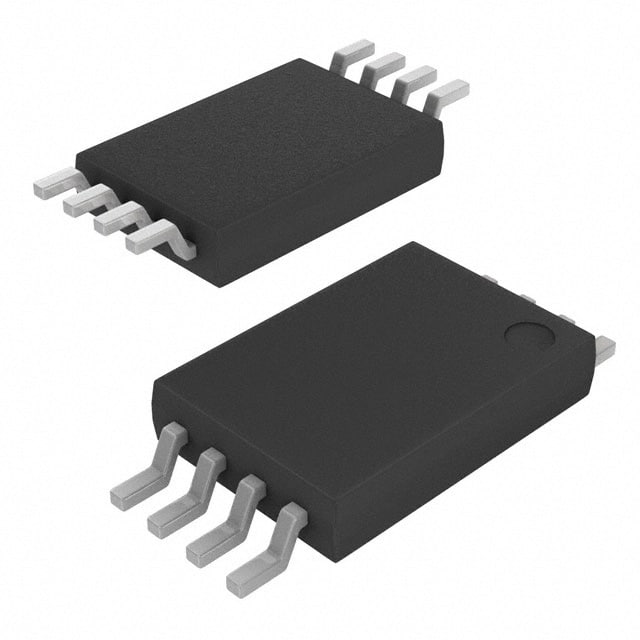
- Part No.:
- SM843001-212KA-TR
- Manufacturer:
- Microchip Technology
- Category:
- Application Specific Clock/Timing
- Package:
- 8-TSSOP (0.173", 4.40mm Width)
- Datasheet:
-
 SM843001-212KA-TR.pdf
- Description:
- IC CLK SYNTHESIZER FIBRE 8-TSSOP
- Quantity:
- Payment:

- Shipping:

Inventory:3,571
Please send an inquiry. Send us your inquiry, and we will respond immediately.
Product details
Overview
SM843001-212KA-TR from Micrel is a Fibre Channel–optimized LVPECL clock frequency synthesizer generating a precise 212.5MHz output with ultra-low phase jitter (170fs RMS, 637kHz–10MHz), powered by a 26.5625MHz crystal reference and supporting dual supply voltages (2.5V or 3.3V) for high-speed storage networking timing.
For engineers reviewing the SM843001-212KA-TR datasheet, SM843001-212KA-TR pinout, SM843001-212KA-TR application, or SM843001-212KA-TR equivalent, key selection criteria include LVPECL differential output integrity, industrial temperature operation (–40°C to +85°C), TSSOP-8 package compatibility, and direct replacement capability for IDT FemtoClocks® in Fibre Channel PHY timing paths.
Technical Context
The SM843001-212KA-TR implements Micrel's patented RotaryWave® architecture to achieve stable low-phase-noise synthesis without external loop filters. It operates as a fixed-ratio frequency multiplier (212.5MHz / 26.5625MHz = 8×) with integrated crystal oscillator circuitry eliminating external load capacitors.
Its dual-power-domain design separates analog (VDDA) and core (VDD) supplies to minimize supply-induced jitter coupling. The device delivers LVPECL outputs (Q0 and /Q0) with controlled swing (0.6–1.0Vpp), duty cycle (48–52%), and fast edge rates (80–350ps rise/fall), meeting Fibre Channel FC-PI-4 timing compliance requirements.
Key Specifications
| Parameter | Value and Actual Design Meaning |
|---|---|
| Output Frequency | 212.5MHz - precisely matches Fibre Channel 2G/4G/8G line-rate clocking requirements. |
| RMS Phase Jitter | 170fs (637kHz–10MHz) - ensures bit-error-rate (BER) <1e−12 in high-speed serial links. |
| Crystal Reference | 26.5625MHz - enables exact 8× multiplication with no PFD spurs or fractional-N complexity. |
| Supply Voltage | 2.5V or 3.3V - supports legacy and modern ASIC/FPGA I/O voltage domains without level-shifting. |
| Phase Noise @ 1MHz | −138dBc/Hz - suppresses close-in noise critical for clock recovery in CDR circuits. |
| Package | 8-pin TSSOP (K-8) - surface-mount compatible with standard PCB assembly and thermal management (θJA = 141°C/W). |
| Operating Temperature | –40°C to +85°C - qualified for industrial-grade storage area network (SAN) equipment environments. |
Pinout & Package
Package: 8-pin TSSOP (K-8), RoHS- and PFOS-compliant, green molding compound.
| Pin/Terminal | Circuit Role | Design Meaning |
|---|---|---|
| 1 - VDDA | Analog power supply | Provides clean 2.5V/3.3V bias to PLL and crystal oscillator; no external filter resistor required. |
| 2 - VEE | Ground reference | Common return for analog and digital sections; must be low-impedance connection to system ground plane. |
| 3 - XTAL_OUT | Clock reference output | Drives 12pF parallel-resonant fundamental-mode crystal; no external load capacitors needed. |
| 4 - XTAL_IN | Clock reference input | Receives crystal feedback signal; paired with XTAL_OUT to form Pierce oscillator with 26.5625MHz crystal. |
| 5 - NC | No connect | Internally unconnected; must remain floating - no PCB trace or via allowed. |
| 6 - /Q0 | Differential LVPECL output (complement) | LVPECL logic-level inverted clock output; requires 50Ω termination to VDD − 2V. |
| 7 - Q0 | Differential LVPECL output (true) | LVPECL logic-level true clock output; used with /Q0 for balanced transmission and common-mode noise rejection. |
| 8 - VDD | Digital/core power supply | Supplies 2.5V/3.3V to output buffer and control logic; decoupling capacitor required near pin. |
Key Features
| Feature | Design Value |
|---|---|
| RotaryWave® architecture | Patented PLL topology delivering 170fs RMS jitter without external loop components or tuning. |
| Integrated crystal oscillator | Eliminates need for external load capacitors and reduces BOM count and layout sensitivity. |
| Dual independent supplies | VDDA (analog) and VDD (core) isolation minimizes supply noise coupling into timing path. |
| LVPECL differential outputs | Q0 and /Q0 provide robust 0.8Vpp swing, 50% duty cycle, and sub-350ps edge rates for EMI-resistant signaling. |
| Industrial temperature range | Validated operation from –40°C to +85°C ensures reliability in rack-mounted SAN switches and HBAs. |
Applications
| Fibre Channel Line Interface | Storage Area Network Switch |
|---|---|
Use Scenario: Timing generation for 2G/4G/8G Fibre Channel transceivers in host bus adapters (HBAs) and line cards. IC Role / Device Role / Timing Role: Primary clock source for SERDES CDR blocks, providing low-jitter 212.5MHz reference aligned to FC-PI-4 specification. Use Value: Meets FC-PI-4 jitter budget (<200fs RMS) enabling reliable 8.5Gbps serial link operation without retiming. | Use Scenario: Synchronization of multiple switch fabric ASICs and buffer memory controllers in enterprise SAN directors. IC Role / Device Role / Timing Role: Centralized low-noise clock distribution node feeding multiple downstream clock buffers and PLLs. Use Value: 170fs jitter prevents accumulation across multi-stage clock trees, maintaining deterministic latency across 64-port switching fabrics. |
| FC-AL Disk Array Controller | High-Availability RAID Enclosure |
Use Scenario: Clocking for Fibre Channel Arbitrated Loop (FC-AL) disk controllers in legacy storage subsystems. IC Role / Device Role / Timing Role: Fixed-frequency synthesizer replacing discrete crystal oscillators to improve phase stability under thermal stress. Use Value: −138dBc/Hz phase noise at 1MHz offset suppresses data-dependent jitter in long-loop FC-AL topologies. | Use Scenario: Redundant clock source in hot-swappable RAID enclosures requiring failover-capable timing. IC Role / Device Role / Timing Role: Primary and backup clock generator with identical 212.5MHz LVPECL outputs for controller redundancy. Use Value: Identical pinout and electrical specs enable seamless dual-supply clock switchover without FPGA reconfiguration. |
Equivalent & Alternatives
The following parts are listed as comparable options for similar clock synthesizer applications.
| Alternative Part | Technical Difference | Application Difference | Selection Advice |
|---|---|---|---|
| IDT 8T49N241-212 | Programmable output (I²C-configurable), higher integration (dual outputs), but higher typical jitter (220fs). | Used in multi-protocol systems requiring reconfiguration; not pin-compatible. | Select when flexibility across FC, SAS, and PCIe protocols is required over lowest jitter. |
| Micrel SY89429L | Same 212.5MHz fixed output, identical TSSOP-8 package, but lacks integrated crystal oscillator (requires external XO). | Deployed where board space allows separate XO; lower cost but higher layout sensitivity. | Select when existing designs already use external 26.5625MHz XO and require drop-in replacement with same pinout. |
Compared with IDT 8T49N241-212 and Micrel SY89429L, the SM843001-212KA-TR uniquely combines fixed 212.5MHz LVPECL output, integrated crystal oscillator, and industry-leading 170fs jitter in a single TSSOP-8 package-making it optimal for cost-sensitive, high-reliability Fibre Channel PHY timing where programmability is unnecessary.
Availability
SM843001-212KA-TR is available at Aetrix Electronics and suitable for Fibre Channel HBA design, enterprise SAN switch production, and high-availability RAID enclosure manufacturing requiring stable component supply and long-term lifecycle support.
Supply support for SM843001-212KA-TR includes scheduled delivery planning, volume procurement assistance, BOM continuity management, traceable sourcing, and lifecycle availability coordination for OEM customers, industrial embedded developers, connected-device designers, and electronics production programs.
Manufacturer
Micrel, Inc. was a U.S.-based semiconductor company specializing in analog, power management, and timing solutions before its acquisition by Microchip Technology in 2015; known for high-performance clock ICs and RF front-end products.
The SM843001-212KA-TR belongs to Micrel's ClockWorks™ family, engineered specifically to deliver ultra-low-jitter, crystal-based clock synthesis for Fibre Channel and storage networking infrastructure where deterministic timing is non-negotiable.
FAQ
What is the primary function of the SM843001-212KA-TR?
The SM843001-212KA-TR is a fixed-frequency LVPECL clock synthesizer that generates a precise 212.5MHz output from a 26.5625MHz crystal reference. Its primary function is to serve as a low-jitter timing source for Fibre Channel transceivers and storage networking ASICs. The SM843001-212KA-TR achieves this using Micrel's RotaryWave® architecture and integrated crystal oscillator circuitry, eliminating external components while maintaining 170fs RMS phase jitter.
Does the SM843001-212KA-TR require external load capacitors for the crystal?
No, the SM843001-212KA-TR does not require external load capacitors for the 26.5625MHz crystal. Its internal oscillator circuit is designed for direct connection to a 12pF parallel-resonant fundamental-mode crystal, as confirmed in the Pin Description and Crystal Characteristics sections of the official datasheet. This simplifies layout and improves repeatability across production batches of the SM843001-212KA-TR.
What supply voltages does the SM843001-212KA-TR support?
The SM843001-212KA-TR supports two independent supply rails: VDDA (analog supply) and VDD (core supply), each configurable for either 2.5V ±5% or 3.3V ±5%. Both rails must be set to the same voltage level per operating condition. The SM843001-212KA-TR maintains full AC and DC specifications-including 170fs jitter and LVPECL output swing-across both voltage options, enabling interoperability with mixed-voltage system designs.
Is the SM843001-212KA-TR pin-compatible with IDT FemtoClocks® devices?
The SM843001-212KA-TR is positioned as an improved replacement for IDT FemtoClocks® in Fibre Channel applications, but it is not pin-compatible with any specific IDT part. Its 8-pin TSSOP (K-8) footprint differs from common IDT packages like SOIC-8 or VFQFN. While functional substitution is feasible with board-level redesign, the SM843001-212KA-TR requires dedicated layout due to its unique pin assignment-including separate VDDA/VDD supplies and integrated crystal interface.
What is the operating temperature range for the SM843001-212KA-TR?
The SM843001-212KA-TR is rated for industrial temperature operation from –40°C to +85°C ambient. This range is validated per the Absolute Maximum and Operating Ratings tables in the datasheet and applies to all specified electrical characteristics, including 212.5MHz output frequency accuracy, 170fs RMS jitter, and LVPECL output voltage swing. The SM843001-212KA-TR meets this spec in the 8-pin TSSOP package with θJA = 141°C/W under standard airflow conditions.
SM843001-212KA-TR Specifications
- Product attributes
- Attribute value
- Manufacturer:
- Microchip Technology
- Series:
- ClockWorks™, RotaryWave™
- Package/Case:
- 8-TSSOP (0.173", 4.40mm Width)
- Packaging:
- Tape & Reel (TR)
- Product Status:
- Active
- Programmable:
- Not Verified
- PLL:
- Yes
- Main Purpose:
- Fibre Channel
- Input:
- Crystal
- Output:
- LVPECL
- Number of Circuits:
- 1
- Ratio - Input:Output:
- 1:1
- Differential - Input:Output:
- No/Yes
- Frequency - Max:
- 212.5MHz
- Voltage - Supply:
- 2.375V ~ 3.465V
- Operating Temperature:
- -40°C ~ 85°C
- Mounting Type:
- Surface Mount
- Grade:
- -
- Qualification:
- -
- Supplier Device Package:
- 8-TSSOP
SM843001-212KA-TR FAQ
1.How can I place an order for SM843001-212KA-TR through Aetrix?
Please submit a Request for Quotation (RFQ) for SM843001-212KA-TR on Aetrix. Our sales agent will provide a competitive quotation and guide you through the order confirmation once you accept the terms.
2.Are the price and stock information for SM843001-212KA-TR reliable?
The price and inventory of SM843001-212KA-TR are updated periodically and may fluctuate due to market conditions. Stock and pricing data are typically refreshed every 24 hours. Quotation validity for SM843001-212KA-TR is usually 5 days.
3.What payment methods are accepted for SM843001-212KA-TR?
We accept Wire Transfer, PayPal, Credit Card, Western Union, MoneyGram, and Escrow for SM843001-212KA-TR transactions.
Note: Certain payment methods may incur a processing fee.
4.How is shipping managed for SM843001-212KA-TR?
SM843001-212KA-TR orders can be shipped via leading logistics carriers, including DHL, UPS, FedEx, TNT, or Registered Mail.
Once your SM843001-212KA-TR order is processed, you will receive an email with the shipment details and tracking number.
Note: Tracking information may take up to 24 hours to appear. Express delivery typically takes 3–5 business days.
5.How can I obtain technical support or documentation for SM843001-212KA-TR?
For technical support, including SM843001-212KA-TR datasheets, pinout diagrams, or application guidance, please contact our engineering support team. They can provide detailed documentation and assistance for your SM843001-212KA-TR requirements.
6.How does Aetrix verify that SM843001-212KA-TR is sourced from the original manufacturer or authorized distributors?
All SM843001-212KA-TR products on Aetrix are procured from qualified distributors and authorized channels. Our dedicated quality assurance team conducts strict verification, including traceability checks and, if necessary, third-party testing. This ensures that SM843001-212KA-TR meets industry standards.
7.What is the process for return or replacement of SM843001-212KA-TR?
All SM843001-212KA-TR units undergo pre-shipment inspection (PSI). If there is an issue with SM843001-212KA-TR, returns or replacements are accepted under the following conditions:
1.Quantity discrepancies, incorrect items, or visible external defects (such as breakage or corrosion), acknowledged by Aetrix.
2.The issue is reported within 90 days of delivery.
3.The SM843001-212KA-TR part is unused and in its original packaging.
Return procedure for SM843001-212KA-TR:
1.Submit a request within 90 days.
2.Obtain a Return Material Authorization (RMA) from Aetrix.
SM843001-212KA-TR Tags
-
LMK00334RTVRQ1
Texas Instruments
.jpg)
-
DSC557-0344FI0T
Microchip Technology
-
9FGV0241AKILFT
Renesas

-
9DBL0452CKILFT
Renesas
-
DSC557-0344FL1T
Microchip Technology
-
RC19008AGND#KB0
Renesas
-
RC19008AGND#BB0
Renesas
-
9DB403DGILFT
Renesas
-
9DB233AGILFT
Renesas
-
9DB803DGILFT
Renesas
-
9FGL0851DKILFT
Renesas
-
AB-557-03-HCHC-F-L-C-T
Abracon LLC
Tech Hub

TTL and CMOS logic families differ in thresholds, loading, output drive, power and timing. This engineering guide compares 74HC and 74HCT, calculates noise margins and checks 3.3 V/5 V compatibility.

A practical engineering guide to 3.3V and 5V logic compatibility, input thresholds, resistor dividers, translator ICs, MOSFET level shifting, I2C pull-ups, timing limits and power-sequencing risks.

The 74HC595 uses push-pull logic outputs, while the TPIC6B595 uses 50 V open-drain DMOS sinks for higher-power loads. This guide compares timing, current limits, 3.3 V interfacing, load wiring, thermal…

The 74HC595 converts serial data into eight stable parallel outputs. This guide covers pin functions, shift and storage timing, OE and MR behavior, drive-current limits, cascading, voltage compatibilit…

A technical comparison of level-sensitive latches and edge-triggered flip-flops, covering timing windows, setup and hold limits, master–slave operation, time borrowing, race-through, HDL inference and…

A D latch stores one bit while Enable controls when data can pass. This reference covers gate-level operation, truth tables, transparency, setup and hold timing, LE versus OE, common ICs and practical …

An SR latch stores one bit through cross-coupled feedback. This engineering reference covers NOR and NAND implementations, truth tables, forbidden-state recovery, gated operation, switch debouncing, fa…

Latch circuits retain one bit through feedback. This technical reference covers SR and D latches, truth tables, transparency, timing limits, latch-versus-flip-flop behavior, applications and common log…

An engineering guide to LED driver operation, constant-current and constant-voltage outputs, linear and switching topologies, dimming, IC selection, calculations, replacement compatibility, and fault c…

Operational amplifier guide covering op amp basics, feedback, ideal vs real op amps, common configurations, buffer circuits, offset, bias current, gain-bandwidth, slew rate, rail-to-rail limits and sel…


