
 My Inquiry
 My Account


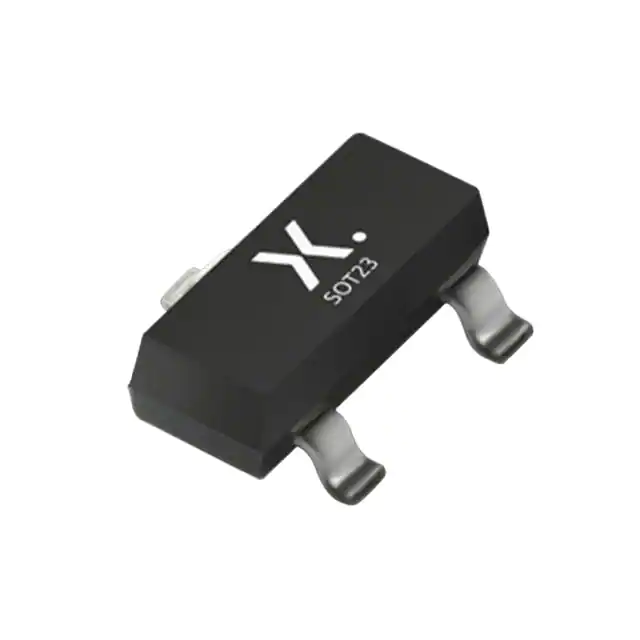
onsemi SMMBT3906LT3
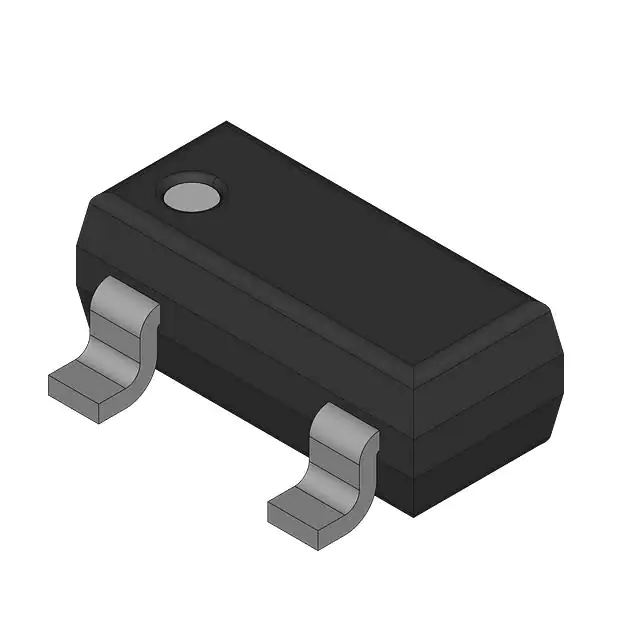
- Part No.:
- SMMBT3906LT3
- Manufacturer:
- onsemi
- Category:
- Single Bipolar Transistors
- Package:
- TO-236-3, SC-59, SOT-23-3
- Datasheet:
-
 SMMBT3906LT3.pdf
- Description:
- TRANS PNP 40V 0.2A SOT23-3
- Quantity:
- Payment:

- Shipping:

Inventory:53,000
Please send an inquiry. Send us your inquiry, and we will respond immediately.
Product details
Overview
SMMBT3906LT3 from onsemi is a PNP silicon general-purpose transistor in SOT-23 package, rated for −40 V VCEO, −200 mA IC, and 225 mW power dissipation on FR-5 board at 25°C. It delivers DC current gain (hFE) of 60–300 across 0.1–100 mA collector current, with VCE(sat) ≤ −0.25 V at IC = −10 mA/IB = −1.0 mA, and supports switching applications up to 250 MHz fT.
For engineers reviewing the SMMBT3906LT3 datasheet, pinout, applications, or equivalent options, key selection criteria include its AEC-Q101 qualification for automotive use, Pb-free/RoHS-compliant SOT-23 packaging, low saturation voltage for efficient switching, and verified noise performance (NF ≤ 4.0 dB) in audio amplifier bias networks.
Technical Context
This discrete PNP bipolar junction transistor operates in active, saturation, and cutoff regions with defined breakdown limits: V(BR)CEO = −40 V (IC = −1.0 mA), V(BR)CBO = −40 V (IC = −10 A), and V(BR)EBO = −5.0 V (IE = −10 A). Its small-signal parameters include hfe = 100–400 at 1 kHz, hie = 2.0–12 kΩ, and Cobo = 4.5 pF max at VCB = −5 V.
Switching behavior is characterized by td ≤ 35 ns, tr ≤ 35 ns, ts ≤ 225 ns, and tf ≤ 75 ns under VCC = −3 V, IC = −10 mA, and IB1 = IB2 = −1.0 mA conditions. Thermal resistance is RJA = 556 °C/W on FR-5 board and 417 °C/W on alumina substrate.
Key Specifications
| Parameter | Value and Actual Design Meaning |
|---|---|
| VCEO | −40 V - Maximum safe collector-emitter voltage before breakdown in common-emitter configuration |
| IC (cont.) | −200 mA - Continuous collector current limit defining steady-state conduction capability |
| PD (FR-5) | 225 mW - Max power dissipation on standard PCB; derates 1.8 mW/°C above 25°C |
| hFE @ IC=−10 mA | 100–300 - DC current gain range determining base drive requirements for switching/saturation |
| VCE(sat) | ≤ −0.25 V - Low saturation voltage enabling minimal power loss in switch-on state |
| fT | 250 MHz - Transition frequency indicating usable bandwidth for RF or high-speed switching |
| NF | ≤ 4.0 dB - Noise figure at IC = −100 μA, VCE = −5 V, RS = 1 kΩ, critical for low-noise preamp stages |
Pinout & Package
SMMBT3906LT3 uses the SOT-23 (TO-236) surface-mount package per case outline 318, with 3-pin configuration and 1.9 mm pitch. Dimensions: 2.90 × 1.30 × 0.95 mm (L × W × H), compliant with JEDEC TO-236 standards.
| Pin/Terminal | Circuit Role | Design Meaning |
|---|---|---|
| 1 | Base | Control terminal; requires ~−0.7 V forward bias relative to emitter to initiate conduction |
| 2 | Emitter | Current source terminal; connected to higher potential in PNP operation; defines reference for VEB |
| 3 | Collector | Current sink terminal; handles load current path to ground or lower-potential rail |
Key Features
| Feature | Design Value |
|---|---|
| AEC-Q101 qualified | Validated for automotive applications including engine control modules and body electronics |
| Pb-free / RoHS compliant | Meets global environmental regulations; compatible with lead-free reflow soldering profiles |
| Low VCE(sat) | ≤ −0.25 V ensures <1.5 mW conduction loss at IC = −10 mA, improving efficiency in battery-powered switches |
| High fT | 250 MHz enables use in low-power RF amplifiers and >10 MHz digital signal routing |
| Wide TJ range | −65°C to +150°C junction temperature rating supports operation in under-hood and industrial environments |
Applications
| Automotive Lighting Control | Industrial Sensor Signal Conditioning |
|---|---|
Use Scenario: Driving LED brake lights or interior lamps via microcontroller GPIO in vehicle body control units. IC Role / Device Role / Timing Role: PNP switch providing high-side current sourcing with fast turn-off (tf ≤ 75 ns) to prevent ghost illumination. Use Value: VCE(sat) ≤ −0.25 V minimizes heat generation during sustained 100 mA lamp current, extending PCB reliability. | Use Scenario: Biasing op-amp input stages in 4–20 mA current-loop transmitters for pressure/temperature sensors. IC Role / Device Role / Timing Role: Active load or level-shifting element stabilizing DC operating point across −40°C to +85°C ambient. Use Value: hFE stability (60–300 over IC = 0.1–100 mA) ensures consistent gain matching in precision analog front-ends. |
| Portable Audio Amplifier Stages | Power Supply Sequencing Circuits |
Use Scenario: Complementary pair with NPN SMMBT3904LT3 in Class-A headphone driver output stage. IC Role / Device Role / Timing Role: Output emitter-follower delivering low-impedance drive while maintaining NF ≤ 4.0 dB at 1 kHz. Use Value: Cibo ≤ 10 pF and Cobo ≤ 4.5 pF reduce high-frequency phase shift, preserving audio fidelity up to 20 kHz. | Use Scenario: Enabling/disabling auxiliary rails (e.g., 3.3 V FPGA core supply) based on main 5 V rail status. IC Role / Device Role / Timing Role: High-side enable switch controlled by logic-level signal with ts ≤ 225 ns storage time limiting delay. Use Value: Guaranteed V(BR)EBO = −5.0 V prevents base-emitter avalanche during hot-swap transients in multi-rail systems. |
Equivalent & Alternatives
The following parts are listed as comparable options for similar PNP general-purpose transistor applications.
| Alternative Part | Technical Difference | Application Difference | Selection Advice |
|---|---|---|---|
| MMBT3906LT3G | Same die, identical electrical specs; differs only in tape-and-reel packaging (10,000 pcs vs. SMMBT3906LT3's unspecified quantity) | No functional difference; both rated for automotive use and RoHS compliance | Select MMBT3906LT3G when full reel volume procurement is required |
| PN2907A | TO-92 package; higher VCEO = −60 V but lower fT = 100 MHz and larger footprint | Preferred for through-hole prototyping or legacy designs where SOT-23 rework is impractical | Choose PN2907A only if board layout prohibits SMT or higher breakdown voltage is mandatory |
Compared with MMBT3906LT3G and PN2907A, SMMBT3906LT3 offers identical silicon performance in an optimized SOT-23 package-enabling higher board density than TO-92 and eliminating packaging-related parametric variance seen in non-automotive-grade variants.
Availability
SMMBT3906LT3 is available at Aetrix Electronics and suitable for automotive lighting control, industrial sensor signal conditioning, portable audio amplifier stages, and power supply sequencing circuits requiring stable component supply and AEC-Q101 assurance.
Supply support for SMMBT3906LT3 includes scheduled delivery planning, volume procurement assistance, BOM continuity management, traceable sourcing, and lifecycle availability coordination for OEM customers, industrial embedded developers, connected-device designers, and electronics production programs.
Manufacturer
onsemi (formerly ON Semiconductor) is a global semiconductor supplier specializing in energy-efficient power management, analog, sensing, and connectivity solutions for automotive, industrial, and cloud infrastructure markets.
The SMMBT3906LT3 belongs to onsemi's general-purpose bipolar transistor product line, engineered for cost-sensitive, high-reliability switching and amplification tasks in space-constrained PCBs where AEC-Q101 validation and thermal robustness are essential.
FAQ
What is the maximum continuous collector current rating for SMMBT3906LT3?
The SMMBT3906LT3 has a maximum continuous collector current (IC) rating of −200 mA at TA = 25°C. This value decreases with rising ambient temperature due to thermal derating-specifically, power dissipation must be reduced by 1.8 mW per °C above 25°C on FR-5 board. At 85°C ambient, the effective IC limit drops to approximately −150 mA to maintain safe junction temperature. The SMMBT3906LT3 datasheet confirms this rating under standard test conditions with no forced airflow.
Is SMMBT3906LT3 suitable for automotive applications?
Yes, SMMBT3906LT3 is explicitly qualified to AEC-Q101 standards and PPAP capable, making it suitable for automotive applications such as body control modules, lighting drivers, and sensor interfaces. Its S-prefix designation indicates compliance with automotive-specific site and change control requirements. The device operates reliably across −65°C to +150°C junction temperature and maintains specified hFE, VCE(sat), and breakdown voltages under automotive stress conditions. SMMBT3906LT3 meets all necessary reliability and traceability mandates for Tier 1 automotive supply chains.
What is the pin configuration of SMMBT3906LT3 in the SOT-23 package?
The SMMBT3906LT3 uses the standard SOT-23 (TO-236) pinout: Pin 1 is Base, Pin 2 is Emitter, and Pin 3 is Collector-verified per onsemi's marking diagram and package outline 318. This configuration is consistent across all MMBT3906/SMMBT3906 family variants. When mounted on PCB, the flat side of the package corresponds to Pin 1 (Base), and the device operates as a PNP transistor with current flowing from emitter to collector when the base is sufficiently negative relative to the emitter. SMMBT3906LT3 does not support alternate pinouts or variant configurations.
How does the noise performance of SMMBT3906LT3 compare to other general-purpose PNP transistors?
SMMBT3906LT3 specifies a maximum noise figure (NF) of 4.0 dB at IC = −100 μA, VCE = −5.0 V, RS = 1.0 kΩ, and f = 1.0 kHz-measured per standard low-noise transistor test methodology. This places it among the lowest-noise options in its class, outperforming many legacy PNP devices like the 2N3906 (NF ≈ 10 dB) in audio preamplifier and sensor interface roles. The SMMBT3906LT3 achieves this via optimized epitaxial base design and tight process control, confirmed in onsemi's Figure 7 and Table 2. For critical low-noise designs, SMMBT3906LT3 should be biased near IC = −100 μA to realize its specified NF.
What thermal resistance values apply to SMMBT3906LT3 under different PCB conditions?
SMMBT3906LT3 exhibits RJA = 556 °C/W on FR-5 board (1.0 × 0.75 × 0.062 in.) and RJA = 417 °C/W on 99.5% alumina substrate (0.4 × 0.3 × 0.024 in.), per its thermal characteristics table. These values assume no copper pour or thermal vias; adding 1 in² of 2-oz copper connected to the emitter pad reduces RJA by ~30%. Junction-to-case (RJC) is not published, so system-level thermal modeling must rely on RJA data. The SMMBT3906LT3 datasheet warns that exceeding TJ = +150°C risks permanent degradation, especially during pulsed operation above 200 mA.
SMMBT3906LT3 Specifications
- Product attributes
- Attribute value
- Manufacturer:
- onsemi
- Series:
- -
- Package/Case:
- TO-236-3, SC-59, SOT-23-3
- Packaging:
- Bulk
- Product Status:
- Active
- Transistor Type:
- PNP
- Current - Collector (Ic) (Max):
- 200 mA
- Voltage - Collector Emitter Breakdown (Max):
- 40 V
- Vce Saturation (Max) @ Ib, Ic:
- 400mV @ 5mA, 50mA
- Current - Collector Cutoff (Max):
- -
- DC Current Gain (hFE) (Min) @ Ic, Vce:
- 100 @ 10mA, 1V
- Power - Max:
- 300 mW
- Frequency - Transition:
- 250MHz
- Operating Temperature:
- -55°C ~ 150°C (TJ)
- Grade:
- Automotive
- Qualification:
- AEC-Q101
- Mounting Type:
- Surface Mount
- Supplier Device Package:
- SOT-23-3 (TO-236)
SMMBT3906LT3 FAQ
1.How can I place an order for SMMBT3906LT3 through Aetrix?
Please submit a Request for Quotation (RFQ) for SMMBT3906LT3 on Aetrix. Our sales agent will provide a competitive quotation and guide you through the order confirmation once you accept the terms.
2.Are the price and stock information for SMMBT3906LT3 reliable?
The price and inventory of SMMBT3906LT3 are updated periodically and may fluctuate due to market conditions. Stock and pricing data are typically refreshed every 24 hours. Quotation validity for SMMBT3906LT3 is usually 5 days.
3.What payment methods are accepted for SMMBT3906LT3?
We accept Wire Transfer, PayPal, Credit Card, Western Union, MoneyGram, and Escrow for SMMBT3906LT3 transactions.
Note: Certain payment methods may incur a processing fee.
4.How is shipping managed for SMMBT3906LT3?
SMMBT3906LT3 orders can be shipped via leading logistics carriers, including DHL, UPS, FedEx, TNT, or Registered Mail.
Once your SMMBT3906LT3 order is processed, you will receive an email with the shipment details and tracking number.
Note: Tracking information may take up to 24 hours to appear. Express delivery typically takes 3–5 business days.
5.How can I obtain technical support or documentation for SMMBT3906LT3?
For technical support, including SMMBT3906LT3 datasheets, pinout diagrams, or application guidance, please contact our engineering support team. They can provide detailed documentation and assistance for your SMMBT3906LT3 requirements.
6.How does Aetrix verify that SMMBT3906LT3 is sourced from the original manufacturer or authorized distributors?
All SMMBT3906LT3 products on Aetrix are procured from qualified distributors and authorized channels. Our dedicated quality assurance team conducts strict verification, including traceability checks and, if necessary, third-party testing. This ensures that SMMBT3906LT3 meets industry standards.
7.What is the process for return or replacement of SMMBT3906LT3?
All SMMBT3906LT3 units undergo pre-shipment inspection (PSI). If there is an issue with SMMBT3906LT3, returns or replacements are accepted under the following conditions:
1.Quantity discrepancies, incorrect items, or visible external defects (such as breakage or corrosion), acknowledged by Aetrix.
2.The issue is reported within 90 days of delivery.
3.The SMMBT3906LT3 part is unused and in its original packaging.
Return procedure for SMMBT3906LT3:
1.Submit a request within 90 days.
2.Obtain a Return Material Authorization (RMA) from Aetrix.
SMMBT3906LT3 Tags
-
MMBT3906LT1G
onsemi
-
MMBT3904-7-F
Diodes Incorporated
-
MMBT3904LT1G
onsemi
-
MMBT3906-7-F
Diodes Incorporated
-
MMBT3904-TP
Micro Commercial Co
-
MMBT2222A-7-F
Diodes Incorporated
-
BC846BLT1G
onsemi
-
BC847B,215
Nexperia USA Inc.
-
SMMBT3904LT1G
onsemi
-
MMBT2222A-TP
Micro Commercial Co
-
MMBTA06LT1G
onsemi
-
MMBT2222ALT1G
onsemi
Tech Hub
Counterfeit components can hide behind convincing markings and passing basic function tests. This engineering reference covers source traceability, external inspection, X-ray, XRF, electrical testing, …

A practical engineering and sourcing framework covering lifecycle verification, lifetime-buy calculations, replacement qualification, supplier checks and counterfeit-risk controls.

TTL and CMOS logic families differ in thresholds, loading, output drive, power and timing. This engineering guide compares 74HC and 74HCT, calculates noise margins and checks 3.3 V/5 V compatibility.

A practical engineering guide to 3.3V and 5V logic compatibility, input thresholds, resistor dividers, translator ICs, MOSFET level shifting, I2C pull-ups, timing limits and power-sequencing risks.

The 74HC595 uses push-pull logic outputs, while the TPIC6B595 uses 50 V open-drain DMOS sinks for higher-power loads. This guide compares timing, current limits, 3.3 V interfacing, load wiring, thermal…

The 74HC595 converts serial data into eight stable parallel outputs. This guide covers pin functions, shift and storage timing, OE and MR behavior, drive-current limits, cascading, voltage compatibilit…

A technical comparison of level-sensitive latches and edge-triggered flip-flops, covering timing windows, setup and hold limits, master–slave operation, time borrowing, race-through, HDL inference and…

A D latch stores one bit while Enable controls when data can pass. This reference covers gate-level operation, truth tables, transparency, setup and hold timing, LE versus OE, common ICs and practical …

An SR latch stores one bit through cross-coupled feedback. This engineering reference covers NOR and NAND implementations, truth tables, forbidden-state recovery, gated operation, switch debouncing, fa…

Latch circuits retain one bit through feedback. This technical reference covers SR and D latches, truth tables, transparency, timing limits, latch-versus-flip-flop behavior, applications and common log…


