
 My Inquiry
 My Account


STMicroelectronics SN250QT
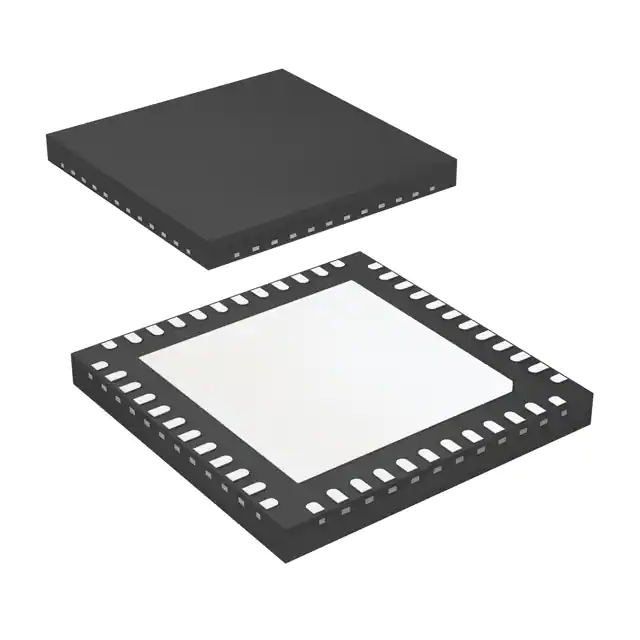
- Part No.:
- SN250QT
- Manufacturer:
- STMicroelectronics
- Category:
- RF Transceiver ICs
- Package:
- 48-VFQFN Exposed Pad
- Datasheet:
-
 SN250QT.pdf
- Description:
- IC RF TXRX+MCU 802.15.4 48QFN
- Quantity:
- Payment:

- Shipping:

Inventory:3,103
Please send an inquiry. Send us your inquiry, and we will respond immediately.
Product details
Overview
SN250QT from STMicroelectronics is a single-chip ZigBee®/IEEE 802.15.4 SoC integrating a 2.4GHz transceiver, 16-bit XAP2b microprocessor, 128KB Flash, 5KB SRAM, and hardware-accelerated AES encryption. It delivers −97 dBm RX sensitivity (1% PER), +3 dBm nominal TX power, and deep-sleep current of 1.0 µA - enabling battery-powered wireless sensor nodes for home automation and asset tracking.
For engineers reviewing the SN250QT datasheet, SN250QT pinout, SN250QT application, or SN250QT equivalent, this page provides verified technical context on its low-IF radio architecture, integrated MAC offload, dual serial controllers with DMA, 17 GPIOs with alternate functions, and hardware debug via SIF - all critical for ZigBee stack integration and ultra-low-power system design.
Technical Context
The SN250QT implements a low-IF super-heterodyne receiver with differential RF paths, integrated VCO/loop filter, and digital calibration logic - enabling coexistence with 802.11g/Bluetooth in the 2.4GHz ISM band. Its hardware MAC handles ACK generation, clear-channel assessment, automatic backoff, and packet filtering to meet IEEE 802.15.4-2003 timing constraints.
The XAP2b CPU operates in two privilege modes: System Mode (full chip access for ZNet stack) and Application Mode (restricted memory/register access for user code), enforcing runtime stability. Clocking supports 24MHz crystal (±20ppm), optional 32.768kHz crystal, and internal RC oscillator - with dedicated 1.8V supplies for RF, core, flash, and analog blocks.
Key Specifications
| Parameter | Value and Actual Design Meaning |
|---|---|
| RX Sensitivity | −97 dBm at 1% PER (20-byte packet); enables reliable link budget in noisy 2.4GHz environments |
| TX Output Power | +3 dBm nominal; +5 dBm in boost mode - sufficient for 10–30 m indoor range without external PA |
| Deep Sleep Current | 1.0 µA (1.5 µA with 32.768kHz XO enabled); supports >10-year battery life in coin-cell applications |
| Memory | 128 KB Flash (wear-leveled), 5 KB SRAM - hosts full ZNet stack plus application firmware |
| ADC | 12-bit sigma-delta converter with 4 analog inputs - supports sensor interface without external ADC |
| Security | Hardware AES accelerator - offloads encryption/decryption from CPU, reducing latency and power |
| Serial Interfaces | Two SCs: SC1 (I²C/SPI/UART), SC2 (I²C/SPI master/slave); both support DMA for zero-CPU packet handling |
| Timers | Two 16-bit general-purpose timers + one 16-bit sleep timer - enable precise event scheduling and wake-up control |
Pinout & Package
SN250QT uses a 48-pin QFN package (7 mm × 7 mm, 0.5 mm pitch) with exposed thermal pad (Pin 49). Pin functions are configurable via GPIO_CFG register; multiple peripherals share pins through software-selectable alternate functions.
| Pin/Terminal | Circuit Role | Design Meaning |
|---|---|---|
| RF_P / RF_N | Differential RF I/O | Main transceiver interface; requires 50Ω differential PCB trace and balun for antenna coupling |
| TX_ACTIVE | Logic-level control output | Drives external RX/TX switch during transmit - synchronizes PA enable with RF burst |
| OSC32A / OSC32B | 32.768 kHz crystal terminals | Supports high-accuracy sleep timer and real-time clock when external crystal is used |
| SIF_CLK / SIF_MOSI / SIF_MISO / nSIF_LOADB | Non-intrusive debug interface | Enables in-circuit programming and real-time tracing without halting CPU execution |
| GPIO0–GPIO16 | Configurable digital I/O | 17 pins with programmable pull-ups/downs, interrupt capability, and alternate peripheral mapping |
Key Features
| Feature | Design Value |
|---|---|
| Integrated IEEE 802.15.4 PHY + lower MAC | Offloads frame validation, ACK generation, and CCA - reduces host CPU load by >40% vs. software-only MAC |
| Packet Trace Interface (PTI) | Real-time visibility into MAC-layer events (RX/TX, ACK, CCA) for protocol-level debugging in InSight IDE |
| Boost Mode RF Configuration | Software-selectable mode increasing RX sensitivity to −98 dBm and TX power to +5 dBm - extends range without BOM change |
| Memory Protection Scheme | Configurable read/write/execute permissions per Flash/SRAM region - prevents stack overflow or accidental overwrite of ZNet code |
| Integrated 1.8V Regulator | Single-input (2.1–3.6V) regulator powers all digital and RF domains - eliminates need for external LDOs |
| Two Serial Controllers with DMA | Enables concurrent UART-to-SPI bridging and I²C sensor polling while CPU sleeps - critical for multi-peripheral sensor hubs |
Applications
| Home Automation Sensor Node | Industrial Asset Tracker |
|---|---|
|
Use Scenario: Battery-powered temperature/humidity sensor reporting every 5 minutes to ZigBee coordinator. IC Role / Device Role / Timing Role: Full-stack SoC executing ZNet, managing RF timing, sampling ADC, and entering deep sleep between transmissions. Use Value: 1.0 µA deep-sleep current and hardware MAC reduce average power to <15 µA - enabling 5+ years on CR2032. |
Use Scenario: GPS-tagged pallet tracker transmitting location every 2 hours via ZigBee mesh to gateway. IC Role / Device Role / Timing Role: Low-power node coordinating with ZNet stack, using sleep timer for periodic wake-up and RF_P/RF_N for robust 2.4GHz transmission. Use Value: −97 dBm sensitivity ensures reliable reception in metal-rich warehouse environments with multipath interference. |
| Smart Lighting Control Unit | Building Energy Monitor |
|
Use Scenario: Wall-mounted dimmer switch controlling LED fixtures via ZigBee Light Link profile. IC Role / Device Role / Timing Role: Application-mode processor running user UI logic while System Mode handles ZNet stack and secure key exchange. Use Value: Dual privilege mode isolates application code from stack memory - preventing firmware corruption during OTA updates. |
Use Scenario: HVAC submeter collecting voltage/current data from CT sensors and relaying via ZigBee mesh. IC Role / Device Role / Timing Role: Integrated 12-bit sigma-delta ADC samples analog sensor outputs; hardware AES encrypts data before transmission. Use Value: On-chip ADC and AES eliminate discrete components - reducing BOM cost and PCB area by ~35% vs. MCU+transceiver solution. |
Equivalent & Alternatives
The following parts are listed as comparable options for similar ZigBee SoC applications.
| Alternative Part | Technical Difference | Application Difference | Selection Advice |
|---|---|---|---|
| EM357-RTR (Silicon Labs) | Higher TX power (+8 dBm), larger Flash (256 KB), but no integrated voltage regulator - requires external 1.8V LDO | Better suited for long-range outdoor mesh where RF headroom matters more than BOM count | Choose EM357 if >30 m range is required and board space allows extra LDO + decoupling |
| CC2530F256 (Texas Instruments) | 8051 core (vs. XAP2b), lower RX sensitivity (−97 dBm same, but no boost mode), no hardware PTI - relies on SW-based debug | Lower development tooling cost, but limited real-time MAC visibility and no RF performance boost option | Choose CC2530 if legacy 8051 toolchain familiarity outweighs need for advanced debug and RF margin |
Compared with EM357-RTR and CC2530F256, SN250QT uniquely integrates a voltage regulator, boost-mode RF tuning, and non-intrusive SIF debug - making it optimal for compact, battery-constrained, and protocol-debug-intensive ZigBee designs where supply simplicity and development velocity are prioritized.
Availability
SN250QT is available at Aetrix Electronics and suitable for home automation sensor nodes, industrial asset trackers, smart lighting controls, and building energy monitors requiring stable component supply across multi-year production cycles.
Supply support for SN250QT includes scheduled delivery planning, volume procurement assistance, BOM continuity management, traceable sourcing, and lifecycle availability coordination for OEM customers, industrial embedded developers, connected-device designers, and electronics production programs.
Manufacturer
STMicroelectronics is a global semiconductor leader headquartered in Geneva, specializing in microcontrollers, power management, and wireless solutions for industrial and consumer markets.
SN250QT belongs to ST's ZigBee SoC product line, designed specifically to integrate radio, processing, memory, and security into a single low-power device for standards-compliant mesh networking in resource-constrained endpoints.
FAQ
Does SN250QT require an external 24MHz crystal?
Yes - the SN250QT requires a 24MHz crystal connected to OSCA/OSCB pins for primary system clock generation. The crystal must meet ±20ppm tolerance and use recommended load capacitance per ST's reference design. An external clock signal may substitute, but crystal operation is mandatory for ZigBee timing compliance and RF stability.
Can SN250QT operate without the 32.768kHz crystal?
Yes - the 32.768kHz crystal on OSC32A/OSC32B is optional. When omitted, the internal RC oscillator provides sleep timer functionality with ±5% accuracy. For applications requiring precise timekeeping (e.g., scheduled wake-up within ±100 ppm), the external crystal must be installed and enabled via register configuration.
What debug interfaces does SN250QT support?
SN250QT supports only the non-intrusive Serial Interface (SIF) - using SIF_CLK, SIF_MOSI, SIF_MISO, and nSIF_LOADB pins. It does not support JTAG or SWD. SIF enables full-speed programming, real-time register inspection, and Packet Trace Interface (PTI) streaming without halting the XAP2b core - essential for debugging time-critical ZigBee protocol behavior.
Is the AES accelerator usable outside the ZNet stack?
Yes - the hardware AES module is accessible via memory-mapped registers and can be invoked directly by application firmware for custom encryption/decryption tasks. It supports ECB, CBC, and CTR modes with 128-bit keys. Usage requires explicit initialization and key loading; no ZNet stack dependency exists for basic AES operations.
SN250QT Specifications
- Product attributes
- Attribute value
- Manufacturer:
- STMicroelectronics
- Series:
- -
- Package/Case:
- 48-VFQFN Exposed Pad
- Packaging:
- Tape & Reel (TR)
- Product Status:
- Obsolete
- Programmable:
- Not Verified
- Type:
- TxRx + MCU
- RF Family/Standard:
- 802.15.4
- Protocol:
- Zigbee®
- Modulation:
- O-QPSK
- Frequency:
- 2.4GHz
- Data Rate (Max):
- 12Mbps
- Power - Output:
- 5dBm
- Sensitivity:
- -98dBm
- Memory Size:
- 128kB Flash, 5kB SRAM
- Serial Interfaces:
- I2C, SPI, UART
- GPIO:
- 17
- Voltage - Supply:
- 2.1V ~ 3.6V
- Current - Receiving:
- 27mA ~ 35.5mA
- Current - Transmitting:
- 19.5mA ~ 35.5mA
- Operating Temperature:
- -40°C ~ 85°C
- Grade:
- -
- Qualification:
- -
- Supplier Device Package:
- 48-QFN (7x7)
SN250QT FAQ
1.How can I place an order for SN250QT through Aetrix?
Please submit a Request for Quotation (RFQ) for SN250QT on Aetrix. Our sales agent will provide a competitive quotation and guide you through the order confirmation once you accept the terms.
2.Are the price and stock information for SN250QT reliable?
The price and inventory of SN250QT are updated periodically and may fluctuate due to market conditions. Stock and pricing data are typically refreshed every 24 hours. Quotation validity for SN250QT is usually 5 days.
3.What payment methods are accepted for SN250QT?
We accept Wire Transfer, PayPal, Credit Card, Western Union, MoneyGram, and Escrow for SN250QT transactions.
Note: Certain payment methods may incur a processing fee.
4.How is shipping managed for SN250QT?
SN250QT orders can be shipped via leading logistics carriers, including DHL, UPS, FedEx, TNT, or Registered Mail.
Once your SN250QT order is processed, you will receive an email with the shipment details and tracking number.
Note: Tracking information may take up to 24 hours to appear. Express delivery typically takes 3–5 business days.
5.How can I obtain technical support or documentation for SN250QT?
For technical support, including SN250QT datasheets, pinout diagrams, or application guidance, please contact our engineering support team. They can provide detailed documentation and assistance for your SN250QT requirements.
6.How does Aetrix verify that SN250QT is sourced from the original manufacturer or authorized distributors?
All SN250QT products on Aetrix are procured from qualified distributors and authorized channels. Our dedicated quality assurance team conducts strict verification, including traceability checks and, if necessary, third-party testing. This ensures that SN250QT meets industry standards.
7.What is the process for return or replacement of SN250QT?
All SN250QT units undergo pre-shipment inspection (PSI). If there is an issue with SN250QT, returns or replacements are accepted under the following conditions:
1.Quantity discrepancies, incorrect items, or visible external defects (such as breakage or corrosion), acknowledged by Aetrix.
2.The issue is reported within 90 days of delivery.
3.The SN250QT part is unused and in its original packaging.
Return procedure for SN250QT:
1.Submit a request within 90 days.
2.Obtain a Return Material Authorization (RMA) from Aetrix.
SN250QT Tags
-
ESP32-D0WD-V3
Espressif Systems
-
ESP8266EX
Espressif Systems

-
ESP32-S3
Espressif Systems
-
NRF24L01P-R7
Nordic Semiconductor ASA
-
NRF24L01P-R
Nordic Semiconductor ASA
-
ESP32-U4WDH
Espressif Systems
-
DA14531-00000OG2
Renesas
-
ESP32-C6FH4
Espressif Systems
-
DA14531-00000FX2
Renesas
-
NRF24L01P-T
Nordic Semiconductor ASA
-
NRF52810-QCAA-R
Nordic Semiconductor ASA
-
ESP32-S3FN8
Espressif Systems
Tech Hub

A practical engineering guide to 3.3V and 5V logic compatibility, input thresholds, resistor dividers, translator ICs, MOSFET level shifting, I2C pull-ups, timing limits and power-sequencing risks.

The 74HC595 uses push-pull logic outputs, while the TPIC6B595 uses 50 V open-drain DMOS sinks for higher-power loads. This guide compares timing, current limits, 3.3 V interfacing, load wiring, thermal…

The 74HC595 converts serial data into eight stable parallel outputs. This guide covers pin functions, shift and storage timing, OE and MR behavior, drive-current limits, cascading, voltage compatibilit…

A technical comparison of level-sensitive latches and edge-triggered flip-flops, covering timing windows, setup and hold limits, master–slave operation, time borrowing, race-through, HDL inference and…

A D latch stores one bit while Enable controls when data can pass. This reference covers gate-level operation, truth tables, transparency, setup and hold timing, LE versus OE, common ICs and practical …

An SR latch stores one bit through cross-coupled feedback. This engineering reference covers NOR and NAND implementations, truth tables, forbidden-state recovery, gated operation, switch debouncing, fa…

Latch circuits retain one bit through feedback. This technical reference covers SR and D latches, truth tables, transparency, timing limits, latch-versus-flip-flop behavior, applications and common log…

An engineering guide to LED driver operation, constant-current and constant-voltage outputs, linear and switching topologies, dimming, IC selection, calculations, replacement compatibility, and fault c…

Operational amplifier guide covering op amp basics, feedback, ideal vs real op amps, common configurations, buffer circuits, offset, bias current, gain-bandwidth, slew rate, rail-to-rail limits and sel…

Jumper cables guide covering safe connection order, red and black clamp placement, final ground connection, cable gauge, length, clamp quality, copper vs CCA cables, jump starter comparison and battery…


