
 My Inquiry
 My Account


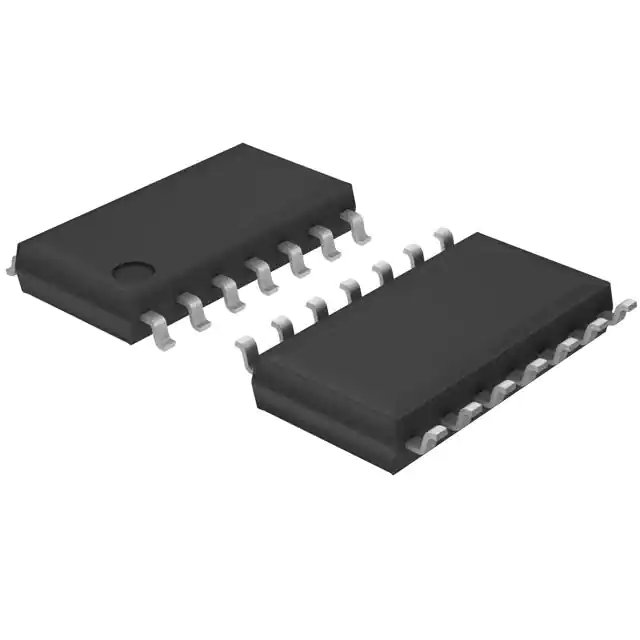
Texas Instruments SN74ALS32NSR
- Part No.:
- SN74ALS32NSR
- Manufacturer:
- Texas Instruments
- Category:
- Gates and Inverters
- Package:
- 14-SOIC (0.209", 5.30mm Width)
- Datasheet:
-
 SN74ALS32NSR.pdf
- Description:
- IC GATE OR 4CH 2-INP 14SO
- Quantity:
- Payment:

- Shipping:

Inventory:4,021
Please send an inquiry. Send us your inquiry, and we will respond immediately.
Product details
Overview
SN74ALS32NSR from Texas Instruments is a quadruple 2-input positive-OR gate logic IC in a 14-pin SOP (NS) package, operating from 0°C to 70°C with VCC = 4.5–5.5 V, tPHL/tPLH ≤ 14 ns (max), and IOL = 4 mA (min). It performs Y = A + B in positive logic and is used in digital control signal routing, bus arbitration, and discrete logic consolidation in industrial control panels.
For engineers reviewing the SN74ALS32NSR datasheet, SN74ALS32NSR pinout, SN74ALS32NSR application, or SN74ALS32NSR equivalent, this page delivers verified electrical specs, package dimensions, functional role in TTL-compatible systems, and validated drop-in alternatives for legacy board refreshes and repair sourcing.
Technical Context
This device belongs to the 74ALS family and implements four independent OR gates using bipolar Schottky-clamped transistor logic. Each gate accepts two inputs and drives a totem-pole output capable of sinking 4 mA or sourcing –0.4 mA under standard conditions.
It operates strictly within TTL voltage thresholds: VIL = 0.8 V (max), VIH = 2.0 V (min), VOL = 0.4 V (max at 4 mA), and VOH = VCC – 2 V (min). Propagation delay is characterized at CL = 50 pF and RL = 500 Ω across the full commercial temperature range.
Key Specifications
| Parameter | Value and Actual Design Meaning |
|---|---|
| VCC Range | 4.5 V to 5.5 V - compatible with standard 5 V TTL supply rails without regulation overhead |
| Propagation Delay (tPHL/tPLH) | ≤ 14 ns max - ensures timing predictability in synchronous control paths up to ~35 MHz toggle rate |
| Output Drive (IOL) | 4 mA min - sufficient to directly drive multiple 74LS inputs or small LEDs without buffering |
| Input Thresholds | VIH ≥ 2.0 V, VIL ≤ 0.8 V - guarantees interoperability with 74LS, 74S, and legacy TTL families |
| Operating Temperature | 0°C to 70°C - qualified for commercial-grade embedded systems, test equipment, and office automation |
| Package | SOP (NS), 14-pin - surface-mount footprint with 1.27 mm pitch, 8.1 mm × 10.4 mm body, RoHS-compliant NiPdAu finish |
Pinout & Package
SOP (NS) package: 14-pin small-outline plastic package, 1.27 mm lead pitch, 8.1 mm × 10.4 mm body size, 1.75 mm max height, moisture sensitivity level (MSL) 1, peak reflow 260°C.
| Pin/Terminal | Circuit Role | Design Meaning |
|---|---|---|
| 1 (1A) | Input A of Gate 1 | First input to first OR gate; accepts standard TTL logic levels |
| 2 (1B) | Input B of Gate 1 | Second input to first OR gate; enables Boolean OR function Y = A + B |
| 3 (1Y) | Output of Gate 1 | Active-high totem-pole output; sinks up to 4 mA, sources –0.4 mA |
| 4 (2A) | Input A of Gate 2 | First input to second OR gate; electrically isolated from other gates |
| 5 (2B) | Input B of Gate 2 | Second input to second OR gate; shares no internal coupling with Gate 1 |
| 6 (2Y) | Output of Gate 2 | Dedicated output; identical drive strength and voltage specs as 1Y |
| 7 (GND) | Ground Reference | Power return path for all gates; must be low-impedance for noise immunity |
| 8 (VCC) | Positive Supply | 5 V nominal supply; decoupling capacitor required within 10 mm of pin |
| 9 (3A) | Input A of Gate 3 | Third gate's first input; matches timing and threshold behavior of Gates 1–2 |
| 10 (3B) | Input B of Gate 3 | Third gate's second input; supports independent OR logic per channel |
| 11 (3Y) | Output of Gate 3 | Third independent output; fully buffered, no fanout limitation beyond IOL/IOH |
| 12 (4A) | Input A of Gate 4 | Final gate input; completes quad-gate integration in single SOIC footprint |
| 13 (4B) | Input B of Gate 4 | Final gate second input; enables compact replacement of four discrete OR functions |
| 14 (4Y) | Output of Gate 4 | Fourth output; identical AC/DC specs; usable for priority encoding or status aggregation |
Key Features
| Feature | Design Value |
|---|---|
| Quad 2-input OR functionality | Four independent gates in one 14-pin SOP - reduces PCB area vs. discrete solutions or multiple DIPs |
| TTL-compatible input thresholds | VIH ≥ 2.0 V / VIL ≤ 0.8 V - ensures reliable interfacing with 74LS, 74S, and microcontroller GPIO |
| Low propagation delay | tPHL/tPLH ≤ 14 ns - supports high-speed control logic in real-time sequencers and state machines |
| Robust output drive | IOL = 4 mA min - eliminates need for external buffers when driving multiple TTL loads or indicator circuits |
| Commercial temperature qualification | 0°C to 70°C operation - certified for use in office equipment, instrumentation, and industrial HMI panels |
Applications
| Industrial Control Logic | Legacy System Repair |
|---|---|
|
Use Scenario: Combining multiple sensor fault signals into a single "system alarm" line in PLC backplanes. IC Role / Device Role / Timing Role: OR gate aggregating four independent digital fault flags (e.g., overtemp, overcurrent, communication loss, watchdog timeout). Use Value: Eliminates wiring complexity and discrete diode-OR networks while preserving TTL-level compatibility and deterministic propagation delay. |
Use Scenario: Replacing obsolete 74LS32 or 74S32 on aging test equipment motherboards where layout cannot be modified. IC Role / Device Role / Timing Role: Pin-compatible logic replacement maintaining identical truth table, voltage thresholds, and load-driving capability. Use Value: Enables field repair without redesign; SOP (NS) footprint matches original SOIC-14 land pattern and thermal profile. |
| Microcontroller I/O Expansion | Bus Arbitration Interface |
|
Use Scenario: Extending limited GPIO count on an 8-bit MCU by OR-ing multiple interrupt sources before feeding a single INT pin. IC Role / Device Role / Timing Role: Level-sensitive combiner that asserts interrupt when any of four peripheral events occur. Use Value: Reduces firmware polling overhead and guarantees sub-15 ns response latency from event to MCU recognition. |
Use Scenario: Resolving bus master contention in multi-master UART or SPI systems using hardware priority encoding. IC Role / Device Role / Timing Role: First-stage logic in priority encoder tree, detecting active request lines before decoding rank order. Use Value: Provides deterministic, race-free arbitration with known worst-case delay-critical for time-critical shared-bus protocols. |
Equivalent & Alternatives
The following parts are listed as comparable options for similar OR gate applications.
| Alternative Part | Technical Difference | Application Difference | Selection Advice |
|---|---|---|---|
| SN74ALS32N | Same logic function, electrical specs, and temperature range; PDIP-14 through-hole package instead of SOP-14 | Requires through-hole assembly and larger PCB area; not suitable for automated SMT lines | Select when hand-soldering, prototyping, or replacing legacy DIP sockets |
| SN74AS32NSR | Faster propagation (≤ 5.8 ns max), higher drive (IOL = 20 mA), but higher ICC (16.5 mA typical) and same SOP-14 footprint | Better suited for high-speed timing-critical paths but increases power and heat in static logic networks | Select when <10 ns delay is mandatory and power budget allows; verify thermal derating in dense layouts |
Compared with SN74ALS32N, SN74ALS32NSR saves board space and enables automated assembly, while SN74AS32NSR trades higher power for significantly faster switching-making SN74ALS32NSR optimal for cost-sensitive, space-constrained commercial logic consolidation.
Availability
SN74ALS32NSR is available at Aetrix Electronics and suitable for industrial control logic, legacy system repair, and microcontroller I/O expansion requiring stable component supply and long-term obsolescence mitigation.
Supply support for SN74ALS32NSR includes scheduled delivery planning, volume procurement assistance, BOM continuity management, traceable sourcing, and lifecycle availability coordination for OEM customers, industrial embedded developers, connected-device designers, and electronics production programs.
Manufacturer
Texas Instruments is a global semiconductor leader founded in 1930, specializing in analog, embedded processing, and logic solutions with broad industrial and automotive qualification.
The SN74ALS32NSR belongs to TI's legacy 74ALS logic family, designed specifically for TTL-compatible digital systems requiring improved speed-power balance over standard 74LS while maintaining pin and functional equivalence.
FAQ
What logic family does SN74ALS32NSR belong to, and how does it differ from 74LS?
SN74ALS32NSR is part of the 74ALS (Advanced Low-Power Schottky) family. It offers faster propagation delay (≤14 ns vs. ≤17 ns for 74LS32) and lower power consumption (ICCL ≈ 4.9 mA vs. ≈ 8 mA for 74LS32) while retaining identical pinout, truth table, and TTL-compatible voltage thresholds. This makes SN74ALS32NSR a direct performance upgrade for existing 74LS32 designs without layout changes.
Is SN74ALS32NSR pin-compatible with SN74ALS32N?
Yes, SN74ALS32NSR is functionally and pinout-compatible with SN74ALS32N. Both share identical logic behavior, electrical specifications, and 14-pin assignment (1A–4Y, GND, VCC). The only difference is package type: NSR is SOP (surface-mount), N is PDIP (through-hole). Land patterns differ, but signal routing and netlist remain unchanged.
What is the maximum capacitive load SN74ALS32NSR can drive reliably?
SN74ALS32NSR is characterized for CL = 50 pF in its switching specifications, with tPHL/tPLH guaranteed ≤14 ns under those conditions. Driving loads >50 pF increases propagation delay nonlinearly and may cause marginal timing in high-speed chains. For >100 pF, add a buffer stage or reduce trace length and stubs to maintain signal integrity.
Can SN74ALS32NSR operate at 3.3 V?
No. SN74ALS32NSR is specified only for VCC = 4.5 V to 5.5 V. At 3.3 V, it fails to meet VIH/VIL thresholds, exhibits excessive propagation delay, and risks unreliable output states. For 3.3 V systems, consider TI's 74LVC32 or 74AUP1G32 families instead of SN74ALS32NSR.
Does SN74ALS32NSR have ESD protection, and what is its rating?
SN74ALS32NSR includes built-in ESD protection on all pins, rated per JEDEC JS-001 to ±2 kV HBM (Human Body Model). This meets standard handling requirements for automated assembly and bench testing but does not replace proper ESD-safe practices during PCB handling or system integration. No additional external protection is needed for typical factory environments.
SN74ALS32NSR Specifications
- Product attributes
- Attribute value
- Manufacturer:
- Texas Instruments
- Series:
- 74ALS
- Package/Case:
- 14-SOIC (0.209", 5.30mm Width)
- Packaging:
- Tape & Reel (TR)
- Product Status:
- Active
- Logic Type:
- OR Gate
- Number of Circuits:
- 4
- Number of Inputs:
- 2
- Features:
- -
- Voltage - Supply:
- 4.5V ~ 5.5V
- Current - Quiescent (Max):
- 4 mA
- Current - Output High, Low:
- 400µA, 8mA
- Input Logic Level - Low:
- 0.8V
- Input Logic Level - High:
- 2V
- Max Propagation Delay @ V, Max CL:
- 14ns @ 5V, 50pF
- Operating Temperature:
- 0°C ~ 70°C
- Grade:
- -
- Qualification:
- -
- Mounting Type:
- Surface Mount
- Supplier Device Package:
- 14-SO
SN74ALS32NSR FAQ
1.How can I place an order for SN74ALS32NSR through Aetrix?
Please submit a Request for Quotation (RFQ) for SN74ALS32NSR on Aetrix. Our sales agent will provide a competitive quotation and guide you through the order confirmation once you accept the terms.
2.Are the price and stock information for SN74ALS32NSR reliable?
The price and inventory of SN74ALS32NSR are updated periodically and may fluctuate due to market conditions. Stock and pricing data are typically refreshed every 24 hours. Quotation validity for SN74ALS32NSR is usually 5 days.
3.What payment methods are accepted for SN74ALS32NSR?
We accept Wire Transfer, PayPal, Credit Card, Western Union, MoneyGram, and Escrow for SN74ALS32NSR transactions.
Note: Certain payment methods may incur a processing fee.
4.How is shipping managed for SN74ALS32NSR?
SN74ALS32NSR orders can be shipped via leading logistics carriers, including DHL, UPS, FedEx, TNT, or Registered Mail.
Once your SN74ALS32NSR order is processed, you will receive an email with the shipment details and tracking number.
Note: Tracking information may take up to 24 hours to appear. Express delivery typically takes 3–5 business days.
5.How can I obtain technical support or documentation for SN74ALS32NSR?
For technical support, including SN74ALS32NSR datasheets, pinout diagrams, or application guidance, please contact our engineering support team. They can provide detailed documentation and assistance for your SN74ALS32NSR requirements.
6.How does Aetrix verify that SN74ALS32NSR is sourced from the original manufacturer or authorized distributors?
All SN74ALS32NSR products on Aetrix are procured from qualified distributors and authorized channels. Our dedicated quality assurance team conducts strict verification, including traceability checks and, if necessary, third-party testing. This ensures that SN74ALS32NSR meets industry standards.
7.What is the process for return or replacement of SN74ALS32NSR?
All SN74ALS32NSR units undergo pre-shipment inspection (PSI). If there is an issue with SN74ALS32NSR, returns or replacements are accepted under the following conditions:
1.Quantity discrepancies, incorrect items, or visible external defects (such as breakage or corrosion), acknowledged by Aetrix.
2.The issue is reported within 90 days of delivery.
3.The SN74ALS32NSR part is unused and in its original packaging.
Return procedure for SN74ALS32NSR:
1.Submit a request within 90 days.
2.Obtain a Return Material Authorization (RMA) from Aetrix.
SN74ALS32NSR Tags
-
SN74LVC1G14DBVR
Texas Instruments
-
SN74LVC1G14DCKR
Texas Instruments
-
SN74AHC1G14DBVR
Texas Instruments
-
SN74LVC1G08DBVR
Texas Instruments
-
SN74LVC1G08DCKR
Texas Instruments
-
SN74LVC1G32DCKR
Texas Instruments
-
SN74LVC1G04DBVR
Texas Instruments
.jpg)
-
74LVC1G08GW,125
Nexperia USA Inc.
-
SN74LVC1G04DCKR
Texas Instruments
-
SN74AHC1G08DBVR
Texas Instruments
-
SN74LVC1G32DBVR
Texas Instruments
-
SN74AHCT1G08DBVR
Texas Instruments
Tech Hub
An SR latch stores one bit through cross-coupled feedback. This engineering reference covers NOR and NAND implementations, truth tables, forbidden-state recovery, gated operation, switch debouncing, fa…

Latch circuits retain one bit through feedback. This technical reference covers SR and D latches, truth tables, transparency, timing limits, latch-versus-flip-flop behavior, applications and common log…

An engineering guide to LED driver operation, constant-current and constant-voltage outputs, linear and switching topologies, dimming, IC selection, calculations, replacement compatibility, and fault c…

Operational amplifier guide covering op amp basics, feedback, ideal vs real op amps, common configurations, buffer circuits, offset, bias current, gain-bandwidth, slew rate, rail-to-rail limits and sel…

Jumper cables guide covering safe connection order, red and black clamp placement, final ground connection, cable gauge, length, clamp quality, copper vs CCA cables, jump starter comparison and battery…

LDO regulator guide covering low dropout voltage, power dissipation, thermal design, PSRR, output noise, capacitor stability, adjustable LDO circuits, LDO vs buck converter and datasheet selection chec…

Conditional Access Module guide covering CAM meaning, CI/CI+ interface, smart card authorization, DVB security workflow, TV and set-top box compatibility, internal electronics, ESD protection, connecto…

Guide to electronic component obsolescence covering EOL risk, PCN/PDN notices, last-time buy planning, replacement options, form-fit-function validation, counterfeit risk and BOM lifecycle management.

18650 battery guide covering lithium-ion cell basics, 3.6V/3.7V voltage, 4.2V charging, mAh and Wh capacity, protected cells, chargers, BMS, series-parallel packs, holders, welding and sourcing checks.…

Hall effect sensor guide covering working principle, linear and digital sensors, Arduino circuits, current sensing, speed detection, automotive applications, A3144 examples, signal filtering and datash…


